Workflow
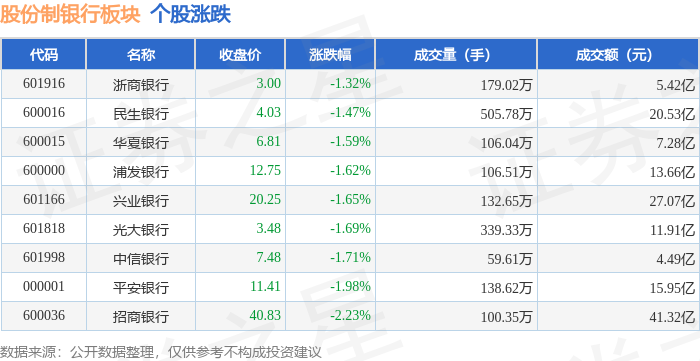
CMBC(600016)
icon
Search documents
金融观察员|中金公司迎来新任总裁;东海证券遭6000万巨额罚单
Guan Cha Zhe Wang· 2025-09-01 08:51
Group 1: Donghai Securities - Donghai Securities was fined 60 million yuan by the China Securities Regulatory Commission for significant omissions and false records in its advisory role for Jinzhou Chihang Group's major asset restructuring in 2015, which is 2.55 times its net profit for the previous year and over half of its net profit for the first half of this year [1] - The fine may hinder Donghai Securities' ongoing IPO process, which has been in progress since March 2022, as regulatory bodies may require comprehensive internal control rectifications [1] - The company has faced frequent violations and management changes, with its investment banking revenue dropping 56.6% year-on-year in the first half of 2025, posing further challenges to its operations and IPO progress [1] Group 2: Minsheng Bank - Minsheng Bank reported a revenue of 72.384 billion yuan for the first half of 2025, a year-on-year increase of 7.83%, with a net interest margin rising by 1 basis point to 1.39% [2] - The bank's non-performing loan ratio was 1.48% as of June 30, 2025, an increase of 0.01 percentage points from the end of the previous year, while the proportion of special mention loans rose to 2.72% [2] - Minsheng Bank plans to distribute a cash dividend of 1.36 yuan per 10 shares to its A and H shareholders [2] Group 3: Sanxiang Bank - Sanxiang Bank reported a net loss of 214 million yuan for the first time in its nine-year history, primarily due to macroeconomic downturns and rising credit risks among small and micro enterprises [3] - The bank's shift from relying on personal loans through internet platforms to developing self-operated businesses like tax票 loans has led to increased losses due to insufficient risk control [3] - Frequent management changes and the introduction of talent from internet giants aim to drive digital transformation, but the bank's ability to return to profitability remains uncertain [3] Group 4: Jingjia Co. - Jingjia Co. announced that its controlling shareholder is involved in a significant lawsuit related to a borrowing contract dispute, with the amount in question reaching 67.85 million yuan [4] - Over the past year, the controlling shareholder and related parties have been involved in 15 major lawsuits, with a total amount exceeding 4 billion yuan [4] - The company's revenue and net profit for the first half of 2025 decreased by 16.56% and 32.54% respectively, indicating financial pressure [4] Group 5: Xiamen International Bank - Xiamen International Bank reported a revenue of 6.462 billion yuan for the first half of 2025, a year-on-year increase of 11.19%, with a net profit of 1.03 billion yuan, up 5.93% [4] - The bank's total assets and liabilities were 1.153 trillion yuan and 1.064 trillion yuan respectively, with a net asset value of 88.891 billion yuan [4] Group 6: Wenzhou Bank - Wenzhou Bank's revenue reached 4.664 billion yuan for the first half of 2025, reflecting a year-on-year growth of 14.23%, while its net profit increased by 2.43% to 1.146 billion yuan [4] - The bank's total assets and liabilities were 508 billion yuan and 477 billion yuan respectively, with a net asset value of 31.396 billion yuan [4] Group 7: Qingdao Bank - Qingdao Bank reported a revenue of 7.662 billion yuan for the first half of 2025, a year-on-year increase of 7.5%, with a net profit of 3.152 billion yuan, up 16.25% [5] - The bank's total assets and liabilities were 743 billion yuan and 696 billion yuan respectively, with a net asset value of 47.084 billion yuan [5] Group 8: Agricultural Bank of China - Agricultural Bank of China signed a significant agreement with Volant Aviation for 10 confirmed orders and 110 intended orders of aircraft, totaling a value of 3 billion yuan [6] - This partnership is supported by a 1 billion yuan credit facility from the Shanghai branch of Agricultural Bank of China [6] Group 9: Jiutai Rural Commercial Bank - Jiutai Rural Commercial Bank expects a net loss of 898 million yuan for the first half of 2025, primarily due to increased asset impairment losses despite rising revenue [7] - The bank anticipates a full-year net loss between 1.7 billion and 1.9 billion yuan for 2024, driven by reduced interest income and cautious credit risk assessments [7] Group 10: CICC - CICC appointed Wang Shuguang as the new president after a 16-month vacancy, with the company reporting a 43.96% increase in revenue and a 94.35% increase in net profit for the first half of 2025 [8] - The investment banking revenue surged by 149.70%, significantly contributing to the overall performance [8]
民生银行张斌答21记者:上半年AI智能体新增场景持平去年全年
Core Viewpoint - Minsheng Bank reported a total asset of 77,689.21 billion yuan as of the end of the reporting period, a decrease of 460.48 billion yuan or 0.59% compared to the end of the previous year, while achieving an operating income of 723.84 billion yuan, an increase of 52.57 billion yuan or 7.83% year-on-year, and a net profit attributable to shareholders of 213.80 billion yuan, a decrease of 4.87% [1] Group 1 - The bank's Chief Information Officer stated that AI is a significant driver of technological and operational transformation in banking, with the bank expanding its AI application scenarios to 78 in the first half of 2025, nearly matching the total of 80 for the entire year of 2024 [1] - The daily usage of large model applications increased threefold by the end of June 2025 compared to the end of the previous year, with key applications in credit due diligence, retail marketing, remote customer service, business operations, and knowledge Q&A [1][2] Group 2 - In the credit due diligence area, large models assisted in generating various risk analysis reports, enhancing customer risk analysis and prediction capabilities, with 80% of new credit scenarios utilizing these functions [2] - The bank has implemented a comprehensive digital transformation strategy, integrating large models into all phases of software development, including demand, development, quality inspection, testing, and operation [2] Group 3 - Minsheng Bank's technological capabilities supporting operational resilience have been enhanced, with the completion of the second phase of the Mapo Data Center, which employs efficient water cooling technology and large cold storage tanks to save energy [3] - The bank has improved its business continuity capabilities, including more comprehensive emergency response plans and effective handling processes, successfully completing large-scale disaster recovery tests in June [3] Group 4 - The bank has 11 major digital and intelligent projects this year aimed at improving customer experience and internal process efficiency, including an end-to-end optimization project for corporate credit and a unified channel platform for employee efficiency [4] - The Minsheng e-home platform, designed for small and micro enterprises, has been continuously upgraded, serving nearly 30,000 small and micro enterprises, with enhancements in core functions such as personnel salary and tax management, financial management, and expense control [4]
民生银行汕头潮南支行成功拦截“低价黄金”诈骗,保障客户资金安全
Sou Hu Cai Jing· 2025-09-01 04:19
Group 1 - The core viewpoint of the article highlights the successful identification and prevention of a fraudulent investment app by the staff of Minsheng Bank's Shantou Chaonan branch, protecting the client's funds from further loss [1][2][3] Group 2 - On July 31, during a transaction to adjust a client's non-counter withdrawal limit, the bank staff noticed unusual account activity, including frequent large transactions and numerous unfamiliar trading partners [2] - The client was investing in an app called "Jinrong China," claiming high returns and state-owned background, with over 10,000 yuan already deposited [2] - Upon investigation, the bank staff found the app to be poorly designed, with discrepancies in the claimed gold product prices compared to the legitimate market, and the payment accounts were linked to unknown individuals [2] - The staff reported the suspicious app to the local anti-fraud center, which confirmed it as a typical fraudulent investment platform with many reports from victims, complicating recovery efforts [2] - The bank staff, in collaboration with the anti-fraud center, successfully advised the client to cease investments in the app, ensuring the preservation of the client's funds [2][3] Group 3 - This case underscores the hidden dangers and risks of new financial scams, emphasizing the critical role of frontline bank employees as gatekeepers against financial risks [3] - With the rapid development of financial technology, illegal financial activities are evolving, often disguised as professional, state-backed, high-return investments [3] - It is essential for bank staff to continuously enhance their ability to recognize new scam patterns to prevent actual financial losses and fulfill their responsibilities in maintaining social stability and protecting public assets [3]
中国民生银行依法合规推进个人消费贷款贴息工作
Jin Tou Wang· 2025-09-01 03:24
Core Viewpoint - China Minsheng Bank is implementing a fiscal interest subsidy policy for personal consumption loans to reduce consumer credit costs and stimulate consumer spending potential from September 1, 2025, to August 31, 2026 [1] Group 1: Fiscal Subsidy Execution Period and Scope - The subsidy applies to personal consumption loans used for consumption, excluding credit card transactions, with identifiable consumption transaction information [1] - The subsidy covers single transactions below 50,000 yuan and significant expenditures in key areas such as automobiles, education, and healthcare [1] Group 2: Fiscal Subsidy Standards - The annual subsidy rate is set at 1 percentage point, with a maximum of 50% of the loan contract interest rate [2] - The total subsidy limit for each individual customer is capped at 3,000 yuan, with a specific limit of 1,000 yuan for transactions below 50,000 yuan [2] Group 3: Fiscal Subsidy Rules - Customers must authorize China Minsheng Bank to access transaction information to qualify for the subsidy, which can be done through the bank's mobile app [3] - The signing of the subsidy agreement does not affect the normal application and use of personal consumption loans, but failure to sign will result in ineligibility for the subsidy [4] Group 4: Consumption Transaction Identification - The bank will identify transactions through system recognition or manual review to determine eligibility for the subsidy [5] Group 5: Subsidy Loan Interest Calculation and Settlement - The bank will calculate the subsidy amount daily based on the stipulated rate and limits, deducting it from the loan interest charged [6] - If a loan that has received a subsidy is later deemed ineligible, the bank reserves the right to reclaim the subsidy amount [6] Group 6: Additional Information - China Minsheng Bank will not charge any fees for processing the subsidy and advises customers to be cautious of potential fraud [7]
超17家银行将派发2375亿“红包”,国有大行成绝对主力
Bei Jing Shang Bao· 2025-08-31 14:05
Core Viewpoint - The mid-term profit distribution plans of listed banks in A-shares for 2025 show a significant increase in total dividends, reaching 237.54 billion yuan, with state-owned banks being the primary contributors [2][3][4]. Group 1: Dividend Distribution Overview - Among 42 listed banks, 17 have announced their mid-term dividend plans for 2025, with a total dividend amount of 237.54 billion yuan [2][3]. - The six major state-owned banks contributed 204.66 billion yuan, accounting for 86% of the total dividends announced by the 17 banks [3][4]. - Industrial and Commercial Bank of China leads with a dividend of 50.40 billion yuan, followed by China Construction Bank and Agricultural Bank of China with 48.61 billion yuan and 41.82 billion yuan respectively [3][4]. Group 2: Factors Influencing Dividend Decisions - The ability of state-owned banks to distribute dividends is supported by their strong capital strength, stable profitability, and ample cash flow, allowing them to maintain high dividend payouts [4][9]. - The decision to distribute dividends is influenced by a balance of capital adequacy, business expansion needs, regulatory requirements, and shareholder return expectations [4][9][10]. - Some banks, such as Zhengzhou Bank and Qingdao Rural Commercial Bank, have explicitly stated they will not distribute dividends for the first half of 2025, citing performance pressures and capital replenishment needs [8][9]. Group 3: Trends in Dividend Distribution - The trend of increasing mid-term and quarterly dividends among listed banks has been noted since the introduction of the new "National Nine Articles" policy, which encourages multiple dividend distributions within a year [2][4]. - Several joint-stock banks, including CITIC Bank and Minsheng Bank, have announced their mid-term dividend plans, with CITIC Bank aiming for a dividend payout ratio of 30.7% [4][6]. - The distribution landscape shows a clear differentiation, with some banks actively pursuing dividends while others pause due to various operational challenges [8][9].
13家银行个人存款同比仍增11.9万亿,定期化趋势未显著缓解
Di Yi Cai Jing· 2025-08-31 12:40
Core Viewpoint - The continuous decline in deposit rates, coupled with the concentration of fixed deposits maturing, is expected to significantly improve the cost of liabilities for banks [1][8]. Group 1: Deposit Trends - Recent reports indicate a trend of residents moving deposits from banks to other financial products such as funds and wealth management products [2][3]. - As of mid-2025, the total personal deposit balance of 13 major commercial banks reached 112.07 trillion yuan, an increase of 11.9 trillion yuan year-on-year [4][5]. - The average cost of deposits for these banks in the first half of 2025 was 1.61%, a decrease of 34 basis points compared to the same period in 2024 [12]. Group 2: Wealth Management Business Growth - The shift of deposits to wealth management products has led to significant growth in banks' wealth management income, with Agricultural Bank's wealth management income increasing by 62.3% [6]. - The total scale of bank wealth management products reached 30.67 trillion yuan by the end of June, with an estimated increase of about 2 trillion yuan by the end of July [6]. Group 3: Interest Margin and Cost of Liabilities - Despite the reduction in deposit costs, banks are still facing pressure on net interest margins, which have decreased to 1.42% as of the second quarter of 2025 [15][16]. - The average net interest margin for the 13 banks was 1.5%, down from 1.62% year-on-year [15]. - The decline in net interest margins is attributed to factors such as the reduction in the Loan Prime Rate (LPR) and adjustments in existing mortgage rates [17][18]. Group 4: Future Outlook - Analysts predict that the concentration of maturing fixed deposits will lead to a significant reduction in the cost of liabilities for banks in the coming years, with expected decreases of 17 to 24 basis points across different types of banks [11]. - The trend of increasing fixed deposits is expected to continue, with the proportion of fixed deposits among total deposits rising to approximately 59.7% in the first half of 2025 [9][10].
机器学习因子选股月报(2025年9月)-20250831
Southwest Securities· 2025-08-31 04:12
Quantitative Models and Construction Methods - **Model Name**: GAN_GRU **Model Construction Idea**: The GAN_GRU model combines Generative Adversarial Networks (GAN) for processing volume-price time-series features and Gated Recurrent Unit (GRU) for encoding time-series features to create a stock selection factor[4][13][41] **Model Construction Process**: 1. **GRU Component**: - Input features include 18 volume-price features such as closing price, opening price, turnover, and turnover rate[14][17][19] - Training data consists of the past 400 days of these features, sampled every 5 trading days, forming a 40x18 matrix to predict cumulative returns over the next 20 trading days[18] - Data preprocessing includes outlier removal and normalization at both time-series and cross-sectional levels[18] - Model architecture: Two GRU layers (128, 128) followed by an MLP (256, 64, 64), with the final output being the predicted return (pRet), which serves as the stock selection factor[22] - Training method: Semi-annual rolling training, with training conducted on June 30 and December 31 each year[18] - Optimization: Adam optimizer, learning rate of 1e-4, IC loss function, early stopping after 10 epochs, and a maximum of 50 training epochs[18] 2. **GAN Component**: - GAN consists of a generator (G) and a discriminator (D)[23] - Generator: Uses LSTM to preserve the time-series nature of the input features, transforming random noise into realistic data samples[33][37] - Loss function: $$ L_{G} = -\mathbb{E}_{z\sim P_{z}(z)}[\log(D(G(z)))] $$ where \( z \) represents random noise, \( G(z) \) is the generated data, and \( D(G(z)) \) is the discriminator's output probability[24][25] - Discriminator: Uses CNN to process the two-dimensional volume-price time-series features, distinguishing between real and generated data[33][37] - Loss function: $$ L_{D} = -\mathbb{E}_{x\sim P_{data}(x)}[\log D(x)] - \mathbb{E}_{z\sim P_{z}(z)}[\log(1-D(G(z)))] $$ where \( x \) is real data, \( D(x) \) is the discriminator's output for real data, and \( D(G(z)) \) is the output for generated data[27][29] - Training: Alternating updates of the generator and discriminator parameters until convergence[30] **Model Evaluation**: The GAN_GRU model effectively captures both time-series and cross-sectional features, leveraging the strengths of GAN and GRU for stock selection[4][13][41] --- Model Backtesting Results - **GAN_GRU Model**: - **IC Mean**: 11.36%[41][42] - **ICIR (Non-Annualized)**: 0.88[42] - **Turnover Rate**: 0.83[42] - **Recent IC**: -2.56%[41][42] - **1-Year IC Mean**: 8.94%[41][42] - **Annualized Return**: 38.09%[42] - **Annualized Volatility**: 23.68%[42] - **IR**: 1.61[42] - **Maximum Drawdown**: 27.29%[42] - **Annualized Excess Return**: 23.52%[41][42] --- Quantitative Factors and Construction Methods - **Factor Name**: GAN_GRU Factor **Factor Construction Idea**: Derived from the GAN_GRU model, this factor encodes volume-price time-series features to predict stock returns[4][13][41] **Factor Construction Process**: - The factor is generated using the output of the GAN_GRU model, which combines GAN-based feature generation and GRU-based time-series encoding[4][13][41] - The factor undergoes industry and market capitalization neutralization, as well as standardization, before being used for testing[22] **Factor Evaluation**: The GAN_GRU factor demonstrates strong predictive power across various industries, with consistent outperformance in recent years[4][13][41] --- Factor Backtesting Results - **GAN_GRU Factor**: - **IC Mean**: 11.36%[41][42] - **ICIR (Non-Annualized)**: 0.88[42] - **Turnover Rate**: 0.83[42] - **Recent IC**: -2.56%[41][42] - **1-Year IC Mean**: 8.94%[41][42] - **Annualized Return**: 38.09%[42] - **Annualized Volatility**: 23.68%[42] - **IR**: 1.61[42] - **Maximum Drawdown**: 27.29%[42] - **Annualized Excess Return**: 23.52%[41][42]
上海大消息!20多家银行宣布:调整
Zhong Guo Ji Jin Bao· 2025-08-30 01:53
Core Viewpoint - Shanghai's new housing policy has led to a reduction in mortgage rates for existing loans and a minimum rate of 3.09% for new second-home loans, aligning them with first-home rates [1][3]. Group 1: New Mortgage Rates - The new policy eliminates the distinction between first and second home mortgage rates in Shanghai, with the specific rate determined by the market rate pricing mechanism and individual bank conditions [2][10]. - The minimum mortgage rate for new second-home loans in Shanghai is set at 3.09%, which is consistent with the first-home loan rate [3][2]. Group 2: Existing Mortgage Adjustments - Existing mortgage rates can be adjusted for eligible borrowers, particularly if their current rate exceeds the national average by more than 30 basis points [4][11]. - For example, a second-home loan with a current rate of 3.45% could potentially be reduced to 3.36% [6][4]. - The adjustment process will not incur any fees and will begin on September 1, 2025 [7][14]. Group 3: Implementation and Communication - Banks in Shanghai, including major institutions like ICBC and Bank of China, have issued announcements regarding the new mortgage rate adjustments [1][9]. - Borrowers can check their eligibility for rate adjustments through their respective banks starting September 1, 2025 [12][13].
民生银行发布2025年半年度报告:净利润下降4.87%、资产总额下降0.59%
Guan Cha Zhe Wang· 2025-08-30 01:39
8月29日,民生银行公布了2025年中期业绩报告。相关数据显示,报告期内,该行经营稳中有进,核心 指标表现稳健。 财务数据方面,民生银行上半年实现营业收入723.84亿元,同比增长7.83%;归属于本行股东的净利润 213.80亿元,同比下降4.87%。截至6月末,资产总额约7.77万亿元,降幅为0.59%;发放贷款和垫款总 额约4.47万亿元,增幅0.44%;吸收存款总额约4.31万亿元,较上年末增1.46%。 负债数据方面,截至6月末,民生银行负债总额70666.09亿元,比上年末下降917.92亿元,降幅1.28%。 在资产质量方面,截止六月末,不良贷款总额660.52亿元,比上年末增加4.42亿元;不良贷款率 1.48%,比上年末上升0.01个百分点;拨备覆盖率145.06%,比上年末上升3.12个百分点。 值得注意的是,民商银行的房地产业务不良率也在今年上半年出现了下降。 截至6月末,民生银行对公房地产相关的贷款、表外授信、标准债权投资、非标债权投资、债券投资等 承担信用风险的授信业务余额3906.53亿元,比上年末减少45.11亿元,降幅1.14%。其中,房地产业不 良贷款余额115.86亿元,比 ...
民生加银基金上半年资产管理总规模2139.88亿元
Cai Jing Wang· 2025-08-30 01:09
Group 1 - The core point of the article is that Minsheng Bank's semi-annual performance report reveals significant growth in asset management and fund assets [1] Group 2 - As of the end of the reporting period, Minsheng Jianyin Fund's total assets amounted to 2.486 billion yuan, with net assets of 1.959 billion yuan [1] - The total asset management scale of the company reached 213.988 billion yuan, representing a year-on-year growth of 15.31% compared to the end of the previous year [1]