Baosteel(600019)

Search documents
宝钢股份(600019) - 宝钢股份2025年第四次临时股东会决议公告
2025-11-13 11:00
证券代码:600019 证券简称:宝钢股份 公告编号:临 2025-060 宝山钢铁股份有限公司 2025年第四次临时股东会决议公告 本公司董事会及全体董事保证本公告内容不存在任何虚假记载、误导性陈述 或者重大遗漏,并对其内容的真实性、准确性和完整性承担法律责任。 重要内容提示: 本次会议是否有否决议案:无 一、 会议召开和出席情况 | 1、出席会议的股东和代理人人数 | 1,376 | | --- | --- | | 2、出席会议的股东所持有表决权的股份总数(股) | 10,290,090,752 | | 3、出席会议的股东所持有表决权股份数占公司有表决权股 | | | 份总数的比例(%) | 48.1356 | (四) 表决方式是否符合《公司法》及《公司章程》的规定,股东会主持情况 等。 本次股东会由公司董事会召集,公司董事周学东先生担任会议主席主持会 议。本次股东会采用现场投票和网络投票相结合的方式表决,会议的召集、召开 程序符合《公司法》《证券法》《上市公司股东会规则》等有关法律、法规、规范 (一) 股东会召开的时间:2025 年 11 月 13 日 (二) 股东会召开的地点:上海市宝山区富锦路 88 ...

宝钢股份(600019) - 上海市方达律师事务所关于宝山钢铁股份有限公司2025年第四次临时股东会之法律意见书
2025-11-13 11:00
FANGDA PARTNERS 中国上海市石门一路 288 号 电子邮件 E-mail: email@fangdalaw.com 兴业太古汇香港兴业中心二座 24 楼 电 话 Tel.: +86-21-2208 1166 邮政编码:200041 传 真 Fax.: +86-21-5298 5599 24/F, HKRI Centre Two HKRI Taikoo Hui 288 Shi Men Yi Road Shanghai, PRC 200041 上海市方达律师事务所 关于宝山钢铁股份有限公司 http://www.fangdalaw.com 2025 年第四次临时股东会之法律意见书 致:宝山钢铁股份有限公司 上海市方达律师事务所(以下简称"本所")是具有中华人民共和国境内法 律执业资格的律师事务所。根据相关法律顾问协议,本所指派律师出席宝山钢铁 股份有限公司(以下简称"宝钢股份"或"公司")2025 年第四次临时股东会(以下 简称"本次股东会"),并就本次股东会的召集和召开程序、参与表决和召集会议 人员的资格、表决程序和表决结果等有关事宜出具本法律意见书。 本法律意见书依据《中华人民共和国公司法》《中 ...
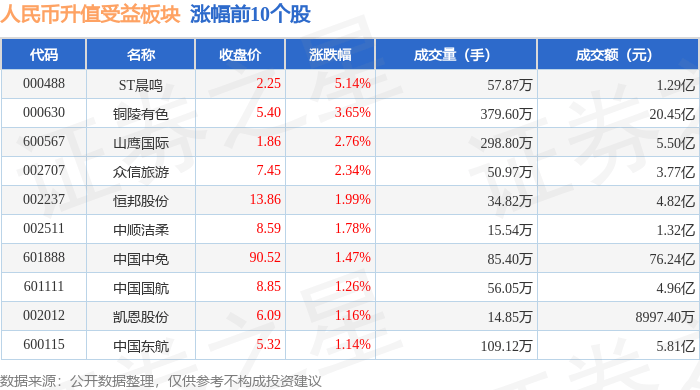
人民币升值受益板块11月13日涨1.03%,ST晨鸣领涨,主力资金净流入4174.51万元
Sou Hu Cai Jing· 2025-11-13 09:04
Core Insights - The appreciation of the Renminbi has led to a 1.03% increase in the benefiting sectors compared to the previous trading day, with ST Chenming leading the gains [1] - The Shanghai Composite Index closed at 4029.5, up 0.73%, while the Shenzhen Component Index closed at 13476.52, up 1.78% [1] Sector Performance - ST Chenming (000488) closed at 2.25, with a gain of 5.14% and a trading volume of 578,700 shares, amounting to a transaction value of 129 million [1] - Tongling Nonferrous Metals (000630) closed at 5.40, up 3.65%, with a trading volume of 3,796,000 shares and a transaction value of 204.5 million [1] - Shanying International (600567) closed at 1.86, gaining 2.76%, with a trading volume of 2,988,000 shares and a transaction value of 550 million [1] - China National Duty-Free (601888) closed at 90.52, up 1.47%, with a trading volume of 854,000 shares and a transaction value of 7.624 billion [1] Capital Flow - The net inflow of main funds in the Renminbi appreciation benefiting sector was 41.75 million, while retail funds saw a net inflow of 64.44 million [2] - The net outflow of speculative funds was 106 million [2] Individual Stock Capital Flow - Tongling Nonferrous Metals (000630) had a main fund net inflow of 1.29 billion, but speculative and retail funds saw net outflows of 55.30 million and 73.20 million respectively [3] - China National Duty-Free (601888) experienced a main fund net inflow of 64.16 million, while retail funds had a net outflow of 103 million [3] - ST Chenming (000488) had a significant main fund net inflow of 38.29 million, but both speculative and retail funds experienced net outflows [3]




央企ETF(159959)开盘涨0.44%,重仓股澜起科技跌0.55%,中芯国际跌0.53%
Xin Lang Cai Jing· 2025-11-13 03:19
Core Viewpoint - The Central Enterprise ETF (159959) opened with a slight increase of 0.44%, priced at 1.602 yuan, reflecting the performance of its underlying assets and market conditions [1] Group 1: ETF Performance - The Central Enterprise ETF (159959) has a benchmark performance index of the CSI Central Enterprise Structural Adjustment Index [1] - Since its establishment on October 22, 2018, the fund has achieved a return of 59.39% [1] - The fund's return over the past month has been -0.19% [1] Group 2: Major Holdings - Key stocks in the ETF include: - 澜起科技 (Lianqi Technology) down 0.55% - 中芯国际 (SMIC) down 0.53% - 海康威视 (Hikvision) down 0.10% - 国电南瑞 (Guodian NARI) down 0.29% - 招商银行 (China Merchants Bank) up 0.09% - 宝钢股份 (Baosteel) up 0.26% - 中国神华 (China Shenhua) up 0.21% - 长安汽车 (Changan Automobile) up 0.16% - 中国电信 (China Telecom) unchanged - 中国建筑 (China State Construction) unchanged [1]




国务院国资委发布中央企业品牌重要名单
中国能源报· 2025-11-13 01:40
Core Viewpoint - The second batch of achievements from the Central Enterprise Brand Leading Action has been officially released, with 90 representative brands selected by the State-owned Assets Supervision and Administration Commission (SASAC) by 2025 [1]. Group 1: Group Brands - China National Nuclear Corporation (CNNC) is recognized as the national team for nuclear energy development, possessing a complete nuclear technology industrial system [2]. - China Petroleum is the largest comprehensive energy and chemical enterprise in China, operating in over 120 countries and regions, and is a key player in global energy cooperation [2]. - China Three Gorges Corporation has built the world's largest clean energy corridor and is the largest hydropower developer and operator globally [3]. - China Unicom supports the construction of a strong digital network and ensures national network and information security [3]. - China Mobile aims to be a world-class information service technology innovation company, focusing on digital transformation [3]. - China FAW Group, established in 1956, has consistently ranked among the top in the Chinese automotive industry [4]. Group 2: Enterprise Brands - China Nuclear Power has achieved over 300 safe operating years and ranks first globally in the WANO comprehensive index for eight consecutive years [8]. - NORINCO is a pioneer in China's military trade, operating in over 130 countries [8]. - NARI Technology has received numerous national-level awards and operates in over 130 countries and regions [8]. - China Huadian Corporation is a leader in the hydrogen energy industry with multiple technologies at the international leading level [8]. - China Three Gorges Energy is recognized as a major player in the global renewable energy sector [9]. Group 3: Product Brands - China’s largest Tokamak device, the China Circulation No. 3, is dedicated to exploring fusion energy [14]. - The Tianhe brand represents China's manned space program and is a significant symbol of China's aerospace capabilities [14]. - The LeKai brand leads the domestic market in silver salt color photographic paper [14]. - The Kuaizhou brand has established a complete commercial launch service system, leading the transition of China's commercial space industry [15]. - The Yulong brand represents China's first fully independent aviation engine, breaking foreign technology monopolies [15]. Group 4: Service Brands - Kunlun Haoke has nearly 20,000 stores nationwide, establishing a leading position in the retail industry [25]. - Yipai Ke has over 190,000 registered enterprises on its platform, with a cumulative transaction amount exceeding 3 trillion yuan [25]. - The "Double Satisfaction" service brand plays a crucial role in supporting national economic development and enhancing people's lives [25]. - The "Daiyue City" brand has established over 40 commercial projects across more than 20 cities, creating a significant urban commercial landmark [29].



重塑全球铁矿石供应格局
Qi Huo Ri Bao Wang· 2025-11-13 01:15
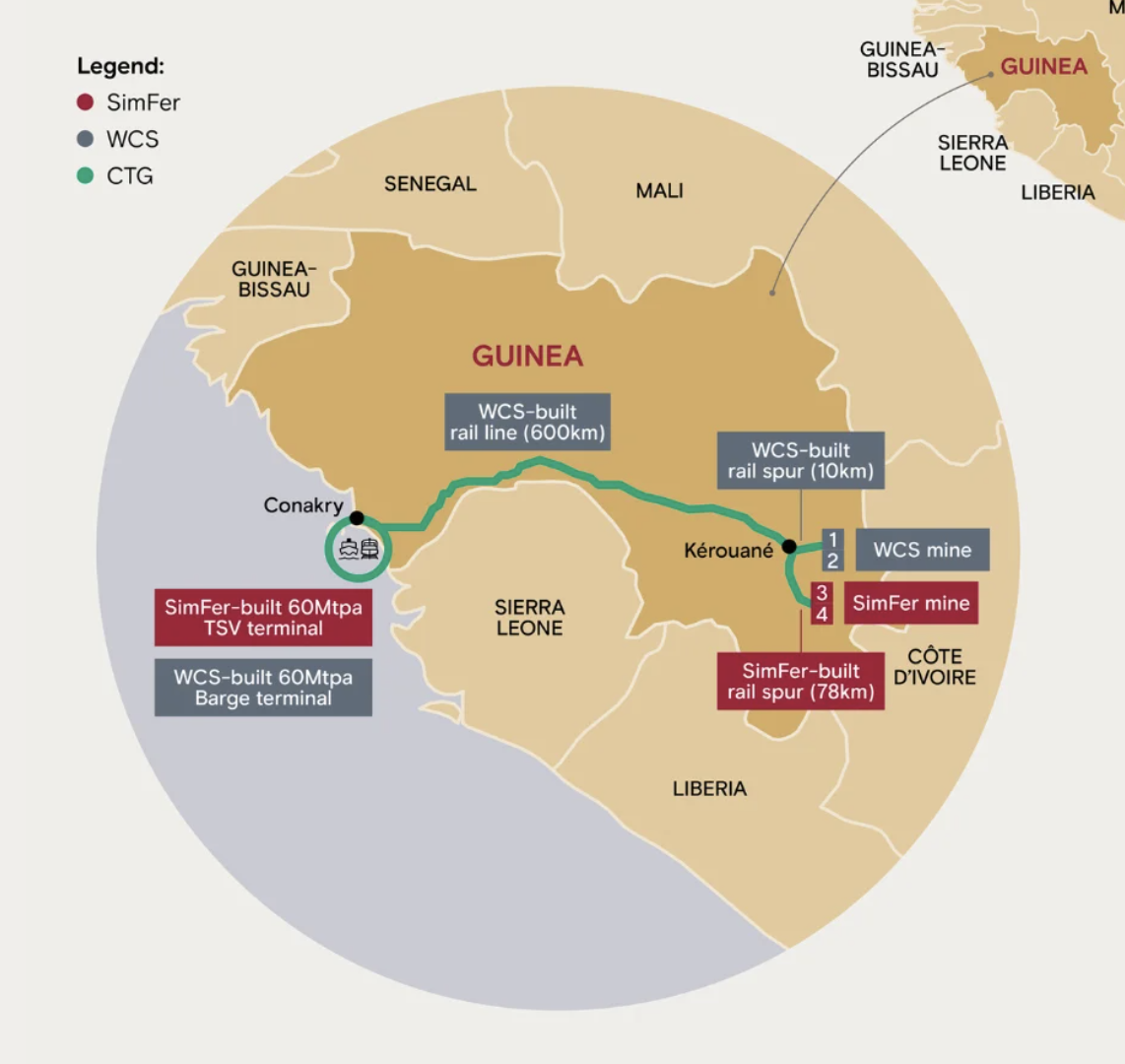
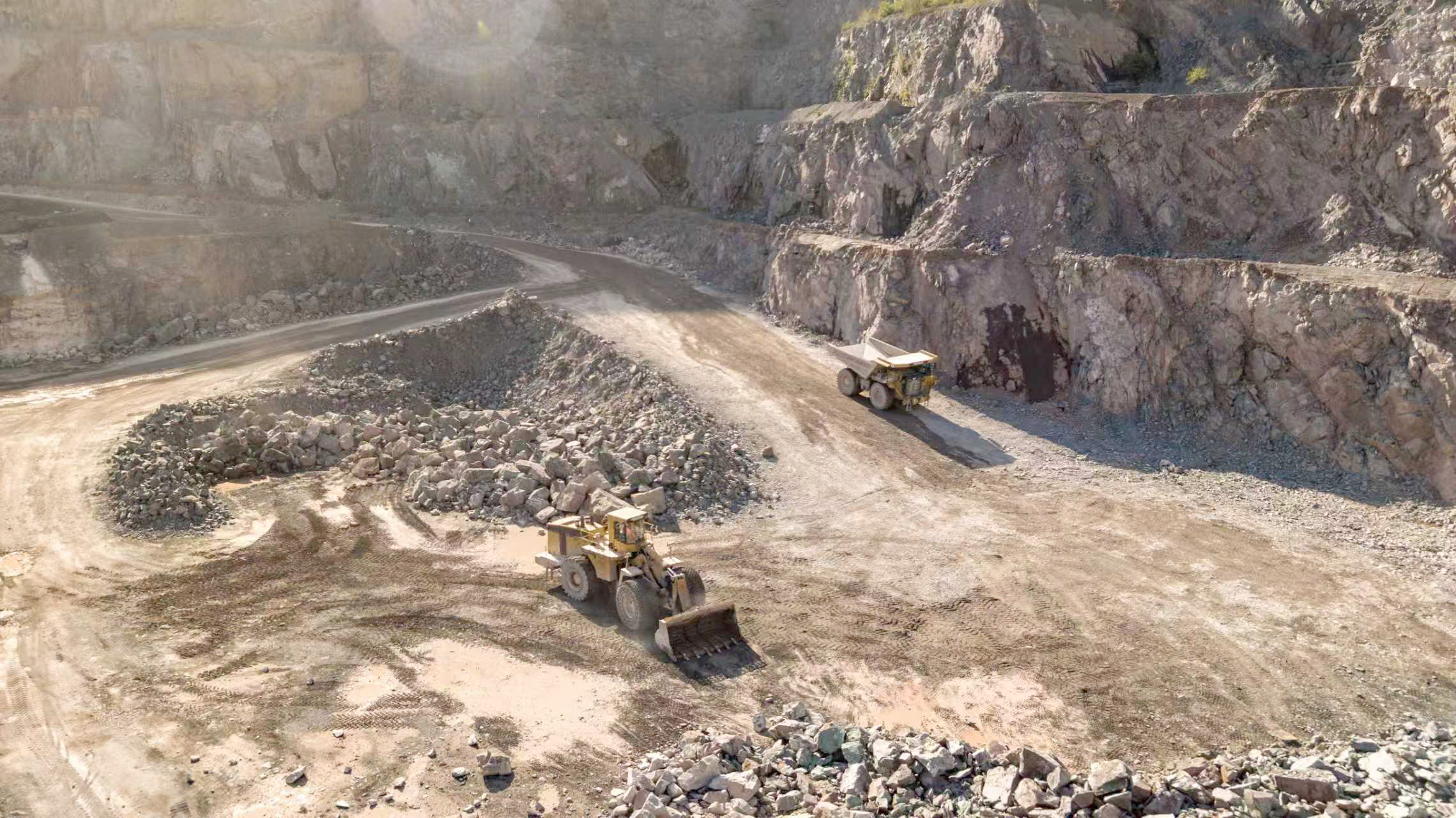
Project Overview and Latest Developments - The Simandou iron ore project in southeastern Guinea is one of the largest undeveloped mines globally, with iron ore reserves of 2.4 billion tons and a total resource estimate nearing 5 billion tons, featuring high-grade ore with a content of 66%-67% [2] - The project includes a vertically integrated mining operation and unprecedented infrastructure development in Guinea, with a total designed annual capacity of 120 million tons from its four mining blocks [2] - The project is a joint investment exceeding $20 billion, involving multiple stakeholders including China Baowu, Rio Tinto, and the Guinean government [2] Transportation Infrastructure - A comprehensive transportation system has been constructed, including a 650-kilometer railway connecting the inland mine to the coast and a port with a total export capacity of 120 million tons per year [3] - The total investment in the transportation infrastructure is approximately $12.3 billion, with $8.8 billion allocated for rail and $3.5 billion for port facilities [3] Production and Economic Impact - The project officially commenced commercial operations on November 11, 2025, with an expected GDP growth contribution of 26% for Guinea by 2030 [4] - The first shipment of 2 million tons of iron ore departed for China, with annual shipments projected to be between 2.5 million and 3 million tons in 2025 [4] - Production will ramp up gradually, with expectations of reaching 60 million tons annually by 2026 [5] Market Influence - The project is set to alter the global iron ore supply landscape, potentially increasing Africa's share from 3% to 10%-15% by 2030, while reducing Australia's share from 60% to 45%-50% [6][7] - Upon full production, Simandou will add 120 million tons of high-grade iron ore to the market, accounting for approximately 5% of global supply [7] Pricing Dynamics - The project is expected to challenge the existing pricing structure dominated by Australian and Brazilian companies, enhancing China's bargaining power in iron ore negotiations [8][10] - The introduction of a new pricing index, the "North Iron Index," will directly compete with traditional pricing benchmarks [9] Steel Industry Transformation - The high-grade iron ore from Simandou is anticipated to drive upgrades in the steel industry, supporting lower carbon emissions and aligning with global green steel trends [11] - The project is expected to reduce steel production costs by 10%-15%, saving over 20 billion yuan annually for Chinese steel companies [11][12] Cost Structure and Future Projections - The production cost of Simandou is estimated to be between $60-$70 per ton, competitive with other major producers despite higher infrastructure costs [13] - In the medium to long term, the project is likely to lead to a decline in iron ore prices, with projections suggesting a drop to $70-$80 per ton over the next 2-5 years [15]



几内亚西芒杜铁矿项目投产,美媒:让世界再次意识到中国在非洲的影响力
Guan Cha Zhe Wang· 2025-11-12 13:39
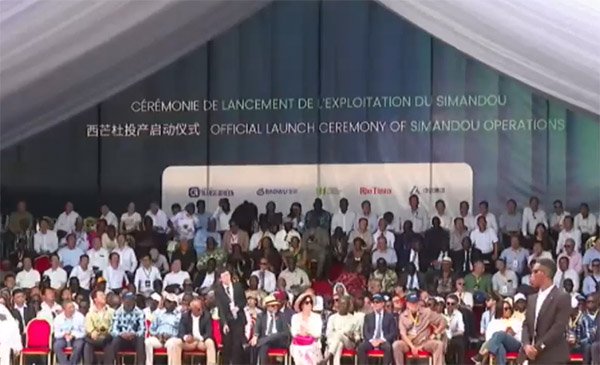
Core Insights - The Simandou iron ore project in Guinea has officially commenced production after 28 years of development, marking it as the largest greenfield iron ore project globally and one of Africa's largest mining investments with a total investment of $23 billion [1][11] - The project has proven iron ore reserves of 4.4 billion tons with an average iron content exceeding 65%, and it is expected to reach an annual production capacity of 120 million tons, potentially reshaping the global iron ore market [1][7] Investment and Economic Impact - The project is anticipated to significantly boost Guinea's economy, with the International Monetary Fund estimating a 26% increase in the country's GDP by 2030 due to the project [9] - The successful operation of the Simandou project is expected to provide a new high-grade iron ore source, enhancing the profitability of steel mills and potentially allowing for a premium pricing of around $14 per ton [7][16] Strategic Partnerships and Development Model - The project is a collaboration between the Guinean government, the SimFer joint venture (comprising Rio Tinto and Chalco), and the Winning Consortium, which acquired mining rights for the northern blocks in 2019 for $14 billion [3][11] - The development model emphasizes "infrastructure for resources," showcasing a long-term commitment to local development and infrastructure investment, contrasting with the short-term speculative nature of Western investments in Africa [14][21] Global Market Implications - With China being the largest importer of iron ore, a significant portion of the iron produced from Simandou is expected to be exported to China, potentially accounting for 7% of global iron ore trade once fully operational [2][16] - The project is seen as a game changer in the iron ore market, increasing supply and creating competitive pressure on major exporters like Australia [16][17] Infrastructure Development - The project includes extensive infrastructure development, such as a railway spanning 552 kilometers and a port with an annual throughput capacity exceeding 120 million tons, essential for transporting the iron ore [11][14] - The construction approach utilized by the Winning Consortium, leveraging Chinese standards and materials, has been noted for its efficiency compared to traditional Western methods [14][15]
宝武总经理侯安贵会见商船三井社长桥本刚
Zheng Quan Shi Bao Wang· 2025-11-12 11:55
Core Viewpoint - The meeting between Baowu's General Manager Hou Angui and Mitsui O.S.K. Lines President Hashimoto Takeshi focused on the current state of the shipping industry and international maritime trends, emphasizing the importance of collaboration for sustainable development and mutual benefits [1] Group 1: Company Developments - Baowu and Mitsui O.S.K. Lines shared updates on their respective business developments during the meeting [1] - Both companies are committed to maintaining close communication and strengthening cooperation to address industry challenges [1] Group 2: Industry Trends - The discussion included insights on the overall situation of the shipping industry and the international maritime landscape [1] - There was a focus on the industry's green and low-carbon transformation, highlighting the need for sustainable practices [1]
多国总统见证世界级矿山投产,中资深度参与
Di Yi Cai Jing· 2025-11-12 05:21
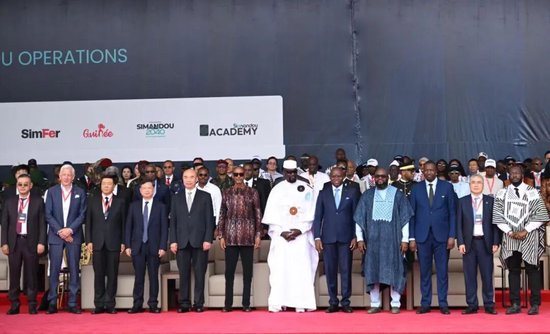
Core Viewpoint - The launch of the Simandou iron ore project in Guinea marks a significant milestone in the global mining industry, with deep involvement from Chinese enterprises, which is expected to influence the iron ore market and pricing dynamics in the future [3][4][7]. Group 1: Project Overview - The Simandou iron ore project is one of the largest and highest quality mining projects globally, with a total investment exceeding $20 billion and proven reserves of 4.4 billion tons, with an average iron content of over 65% [4]. - The project includes mining, railway, and port systems, with a total production capacity of 120 million tons per year once fully operational [4]. - The project is developed by the Guinean government, SimFer, and the Winning Consortium, with the infrastructure and equipment to be operated by the Cross Guinea Company, which is jointly owned by SimFer and Winning Consortium [4]. Group 2: Stakeholders and Ownership - The Winning Consortium consists of Weili International Group, Weiqiao Aluminum, and other companies, holding a collective 51% stake, while Baowu Resources holds 49% [4]. - Simfer Jersey, which holds the rights to the Simandou blocks 3 and 4, is a joint venture between Rio Tinto (53%) and Chalco Iron Ore (47%), with Chalco Iron Ore being led by Chalco Group and including several Chinese state-owned enterprises [5]. Group 3: Market Impact - The involvement of Chinese companies in the Simandou project is expected to significantly impact the iron ore market and pricing, potentially altering the global mining landscape [7]. - The successful operation of the Simandou project will provide a solid green raw material foundation for the steel industry in China and globally [7]. - China's iron ore imports from January to October 2023 reached 1,028.886 million tons, a year-on-year increase of 0.7%, with an average import price of $96.6 per ton [8]. - It is projected that the total iron ore import volume for the year will reach 1.2 billion tons, but domestic crude steel production is expected to continue its slow decline [8].
延宕28年后西芒杜项目投产,将重塑全球铁矿格局
Xin Lang Cai Jing· 2025-11-12 03:04
Core Viewpoint - The official production launch of the Simandou iron ore project in Guinea marks a historic moment for the global iron ore market, expected to reshape supply dynamics and enhance the bargaining power of consuming countries like China [3][8]. Group 1: Project Overview - The Simandou iron ore project, known as the "pearl on Guinea's crown," has a mineral reserve of approximately 4 billion tons, making it the largest undeveloped iron ore reserve globally [3][4]. - The project consists of two main blocks, with the northern section acquired by a consortium led by Winning Consortium for $14 billion in November 2019 [4][5]. - The infrastructure development for the Simandou project is set to begin in 2024, with an investment of $6.2 billion allocated for port and railway infrastructure [5]. Group 2: Market Impact - The production of Simandou is expected to alleviate supply constraints in China, which imports about 70% of the world's iron ore, and could meet nearly 10% of China's iron ore import needs with an annual output of 12 million tons [6][9]. - The project will significantly impact global iron ore prices, with expectations of downward pressure due to increased supply amid already high port inventories [10][11]. - The average iron content of Simandou ore is 65%, which is higher than most other iron ores, potentially leading to lower environmental impact during processing [14][15]. Group 3: Economic Implications - The International Monetary Fund predicts that the Simandou project will contribute to a 26% increase in Guinea's GDP by 2030 [16]. - The project is also anticipated to force some high-cost suppliers out of the market due to increased competition and supply [13].