
Baosteel(600019)

Search documents
中国宝武邹继新的三方面建议
Xin Lang Cai Jing· 2026-02-04 12:21
2026年2月4日上午,上海市政协十四届四次会议举行专题会议,在"着力深化'五个中心'建设,全面提 升城市核心功能,奋力推动高质量发展取得新突破"专题会议上,市政协常委,中国宝武钢铁集团有限 公司党委常委,宝钢股份党委书记、董事长邹继新结合宝钢股份产业转型升级的管理实践,围绕推动钢 铁产业提质升级、更好融入上海"十五五"产业规划,提出三方面建议。 一是更大力度支持钢铁企业提升数智化水平。具体来说,他建议,可以加大数字化转型示范企业、示范 项目的激励力度,发挥领军企业数字化转型对全球产业链的带动作用;搭建数字化转型成果转移转化平 台,统筹推进产学研攻关、成果转化与推广应用;鼓励、引导企业、高校、科研院所加速研发范式变 革,推动基于行业数据库和知识大模型的数字化研发基座建设,构建数据、知识双引擎的AI数字化研 发平台及示范应用。 二是更大力度支持钢铁企业加快绿色化转型。 他认为,可以构建"从供给侧激励到需求侧引导"的绿色 低碳产品激励体系,对冶金低碳工艺产线建设运营给予支持,在产能、能耗双控与减排政策上予以倾 斜;加强绿色供应链体系建设,加大绿色低碳钢材在市政重大项目和工程中的使用比例,促进上海市整 体碳减排;加 ...

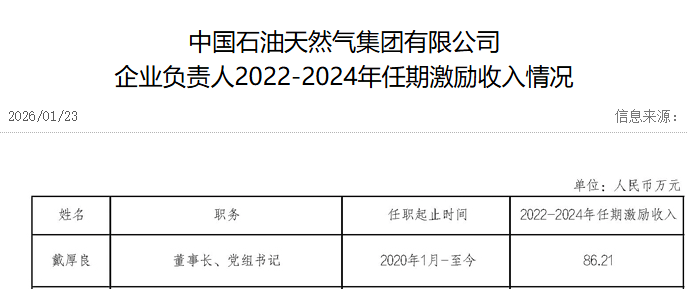
87家央企负责人任期激励收入披露:中石油董事长86.21万元、中石化董事长84.81万元、中国移动总经理21.61万元……



Sou Hu Cai Jing· 2026-02-04 04:20
Core Viewpoint - The State-owned Assets Supervision and Administration Commission (SASAC) announced the incentive income for executives of central enterprises for the 2022-2024 term, with a total of 87 enterprises disclosing their incentive income figures. Group 1: Incentive Income Overview - The total incentive income for central enterprise executives consists of annual salary and term incentive income, with the latter being distributed every three years [1]. - Notable figures include: - Jiao Houliang, Chairman of China National Petroleum Corporation, with an incentive income of 86.21 million RMB for the 2022-2024 term [1]. - Ma Yongsheng, Chairman of Sinopec, with an incentive income of 84.81 million RMB [3]. - Wang Dongjin, Chairman of China National Offshore Oil Corporation, with an incentive income of 86.06 million RMB [4]. Group 2: Specific Executive Incentive Income - Zhang Wei, Chairman of the National Oil and Gas Pipeline Group, has an incentive income of 78.17 million RMB [6]. - Meng Zhenping, Chairman of China Southern Power Grid, has an incentive income of 83.54 million RMB [8]. - Temperature of incentive income varies across different enterprises, with some executives like Liu Mingsheng from China Power Investment Corporation receiving 26.02 million RMB for the 2022-2024 term [13]. Group 3: Additional Notable Executives - Chen Zhongyue, Chairman of China Unicom, has an incentive income of 80.49 million RMB [17]. - Xu Peng, from China First Automobile Group, has an incentive income of 82.54 million RMB [23]. - Wang Xianming, Chairman of China Resources Group, has an incentive income of 82.44 million RMB [54].

深度|商业航天新材料全景图:新材料企业的机遇与投资逻辑(附20+报告)
材料汇· 2026-02-02 14:42
Core Viewpoint - The global commercial aerospace market is experiencing unprecedented growth, with projections indicating a market size of $75-125 billion in 2024 and expected to reach $140 billion in 2025. China's commercial aerospace market is particularly rapid, projected to reach 2.3 trillion RMB in 2024, a year-on-year growth of 22.9%, and expected to exceed 2.8 trillion RMB in 2025. Material technology is becoming a core factor determining the competitiveness of commercial aerospace companies [1]. Group 1: Material Demand Characteristics - The demand for materials in commercial aerospace differs significantly from traditional aerospace, focusing on lightweight materials to reduce launch costs, with savings of approximately 20,000-30,000 RMB per kilogram of payload. The core logic for material selection is "lightweight equals increased energy, temperature resistance equals increased efficiency, and reliability equals cost" [1]. - Breakthroughs in reusable technology require materials to withstand over 100 uses and extreme temperature ranges from -270°C to 3000°C, as well as complex space environments [1]. Group 2: Overview of Key New Materials - A total of 128 new materials have been identified as critical for commercial aerospace applications, including aluminum-lithium alloys, titanium alloys, stainless steel, high-temperature alloys, and various composite materials [3][4]. - Key materials such as carbon fiber composites are highlighted for their strength-to-weight ratio, with T700 grade carbon fiber being used in less critical components and T1100 grade for primary load-bearing structures [9][11]. Group 3: Carbon Fiber Composites - Carbon fiber composites (CFRP) are essential in commercial aerospace, accounting for 15%-20% of the manufacturing cost of medium-sized reusable rockets, with values exceeding 20 million RMB per unit. In satellite manufacturing, CFRP costs represent 12%-15% of total manufacturing costs for low Earth orbit satellites [10][11]. - The domestic market for carbon fiber is dominated by companies like Zhongjian Technology and Guangwei Composites, with a significant market share in high-strength carbon fiber applications [12][13]. Group 4: Stainless Steel as a Core Material - Stainless steel is recognized for its low cost, high temperature resistance, and strength, making it a key material for reusable rocket technology. It is used in major structural components like rocket bodies and fuel tanks, aligning with the commercial aerospace principle of "reliability equals cost" [15][16]. - The main grades of stainless steel used can withstand temperatures up to 1400°C and maintain structural stability across a wide temperature range, significantly reducing manufacturing costs compared to advanced materials like titanium alloys [15][16]. Group 5: High-Temperature Materials and Refractory Metals - High-temperature materials are critical for rocket engine technology, directly influencing thrust, efficiency, and reusability. Materials such as ceramic matrix composites and nickel-based superalloys are essential for components exposed to extreme temperatures [19][20][25]. - The domestic production of high-temperature alloys, such as GH4169, has reached over 95% localization, indicating a strong domestic supply chain for aerospace applications [26].




钢铁行业周度更新报告:25Q4板块预披业绩总亏约119亿
GUOTAI HAITONG SECURITIES· 2026-02-01 13:30
Investment Rating - The report maintains an "Overweight" rating for the steel industry [5]. Core Insights - Demand is expected to gradually stabilize, while supply-side constraints are anticipated to continue, leading to a potential recovery in the steel industry's fundamentals. If supply policies are implemented, the contraction in supply may accelerate, facilitating a quicker industry upturn [3][4]. Summary by Sections Steel Market Overview - Steel prices have decreased, with the Shanghai rebar price dropping by 20 CNY/ton to 3240 CNY/ton, a decline of 0.61%. The total inventory of steel has increased by 1.70% to 12.7851 million tons [8][12]. - Apparent consumption of five major steel products was 8.0174 million tons, down 0.96% week-on-week but up 28.96% year-on-year [21]. - The production of five major steel products was 8.2317 million tons, an increase of 0.44% week-on-week [12][37]. Supply and Demand Dynamics - Approximately 60% of steel companies are currently operating at a loss, indicating a market-driven supply clearance is beginning to occur [4]. - The construction sector's demand for steel is expected to stabilize, while demand from infrastructure and manufacturing is projected to grow steadily [4]. Profitability and Production Margins - The average gross profit for rebar was 196.9 CNY/ton, down 11.7 CNY/ton from the previous week, while hot-rolled coil profit increased by 2.3 CNY/ton to 46.9 CNY/ton [39]. - The profitability rate of 247 steel companies was 39.39%, a decrease of 1.3% from the previous week [28]. Recommendations - The report recommends focusing on companies with leading technology and product structures, such as Baosteel and Hualing Steel, as well as low-cost firms like Fangda Special Steel and New Steel [4]. - It also highlights the potential of upstream resource companies like Hebei Resources and Erdos, which may benefit from a recovery in demand [4].




金属、新材料行业周报:资金博弈加剧,金属板块波动放大-20260201
Shenwan Hongyuan Securities· 2026-02-01 13:10
Investment Rating - The report maintains a "Positive" outlook on the metals and new materials industry [3]. Core Insights - The report highlights increased volatility in the metals sector due to intensified capital competition, with the non-ferrous metals index outperforming the broader market indices [2][5]. - The report suggests that the precious metals sector is poised for recovery, driven by central bank gold purchases and a favorable long-term outlook for gold prices [4][24]. - Industrial metals, particularly copper and aluminum, are expected to see price increases due to stable supply-demand dynamics and significant infrastructure investments [4][48]. Weekly Market Review - The Shanghai Composite Index fell by 0.44%, while the Shenzhen Component Index dropped by 1.62%. In contrast, the non-ferrous metals index rose by 3.37%, outperforming the CSI 300 Index by 3.29 percentage points [5][8]. - Year-to-date, the non-ferrous metals index has increased by 22.59%, surpassing the CSI 300 Index by 20.94 percentage points [9]. Price Changes - The report details price fluctuations for various metals, with copper prices increasing by 0.32% and aluminum prices decreasing by 0.79% week-on-week [16]. - Precious metals saw significant price changes, with gold prices down by 1.52% and silver prices down by 17.44% [16]. Inventory Changes - Copper inventories in domestic markets decreased by 0.7 million tons, while exchange inventories increased by 2.5 million tons [33]. - Aluminum social inventories totaled 102.55 million tons, reflecting a week-on-week increase of 6.05 million tons [49]. Sector-Specific Insights - **Precious Metals**: The report emphasizes the potential for gold prices to rise due to increased central bank purchases and a favorable economic outlook [24]. - **Industrial Metals**: Copper demand is expected to remain strong, supported by infrastructure investments and a stable supply chain [4][33]. - **Aluminum**: The report notes a decrease in the operating rates of downstream processing enterprises, indicating potential supply constraints [48]. Growth Cycle Investment Analysis - The report recommends focusing on stable supply-demand dynamics in the new energy manufacturing sector, highlighting companies such as Huafeng Aluminum and Baowu Magnesium [4].




欲速则不达
GOLDEN SUN SECURITIES· 2026-02-01 06:51
Investment Rating - The report maintains a "Buy" rating for several key companies in the steel sector, including Hualing Steel, Nanjing Steel, Baosteel, and New Steel [8]. Core Insights - The steel industry is experiencing a slight decline in daily molten iron production, with the average dropping to 227.9 thousand tons, while steel production has seen a minor increase [13]. - Total steel inventory has expanded, with a week-on-week increase of 1.7%, indicating a growing supply in the market [23]. - Apparent consumption of steel has weakened slightly, with rebar demand decreasing by 13.4% week-on-week [39]. - Iron ore prices are trending downwards, influenced by increased shipments from Australia and Brazil, alongside rising port inventories [48]. - The current steel price index has decreased by 0.2% week-on-week, reflecting a general weakening in the market [72]. Summary by Sections 1. Supply - Daily molten iron production has decreased by 0.2 thousand tons to 227.9 thousand tons, with a slight recovery in steel production [13]. - The capacity utilization rate of 247 steel mills is at 85.5%, down 0.1 percentage points week-on-week but up 0.8 percentage points year-on-year [17]. 2. Inventory - The total inventory of five major steel products has increased by 1.7% week-on-week, with social inventory rising to 890.7 thousand tons [25]. - Rebar social inventory has increased by 7.7% week-on-week, while hot-rolled coil inventory has decreased by 1.0% [25]. 3. Demand - Apparent consumption of five major steel products has decreased by 1.0% week-on-week, with rebar consumption down by 4.9% [49]. - Weekly average transaction volume for construction steel has dropped to 67 thousand tons, a decline of 13.4% [41]. 4. Raw Materials - Iron ore prices have weakened, with the Platts 62% iron ore price index at $103.2 per ton, down 1.4% week-on-week [58]. - The total port inventory of iron ore has increased by 1.5% week-on-week, indicating a supply surplus [58]. 5. Prices and Profits - The comprehensive steel price index has decreased to 121.6, reflecting a 0.2% decline week-on-week [72]. - The current profit margins for long-process rebar and hot-rolled coils are negative, indicating cost pressures in the industry [74].


钢铁周报 20260201:原料补库基本完成,关注地产政策变化-20260201
Minsheng Securities· 2026-02-01 03:16
Investment Rating - The report maintains a "Buy" rating for several steel companies, including Hualing Steel, Baosteel, Nanjing Steel, and others, indicating a positive outlook for their performance [2][4]. Core Insights - The report highlights that raw material inventory replenishment is nearly complete, with a focus on changes in real estate policies. It notes that steel production and apparent consumption are stabilizing, with a narrowing year-on-year decline in demand [8][32]. - The report anticipates that steel mill profits may continue to recover due to improved margins from raw material cost reductions and potential easing of real estate regulations [8][32]. Summary by Sections Domestic Steel Market - As of January 30, 2026, steel prices have decreased, with rebar priced at 3,240 CNY/ton, down 20 CNY from the previous week. Hot-rolled and cold-rolled prices also saw declines [15][16]. - The total production of major steel products reached 8.23 million tons, with an increase in inventory levels [8][32]. Profitability Analysis - The report estimates weekly gross margins for rebar, hot-rolled, and cold-rolled steel to have changed by -17 CNY/ton, +3 CNY/ton, and -19 CNY/ton respectively, indicating fluctuations in profitability [8][32]. Production and Inventory - The total inventory of major steel products rose by 222,100 tons to 8.89 million tons, with a slight decrease in steel mill inventory [8][32]. - Apparent consumption of rebar was estimated at 1.764 million tons, reflecting a decrease of 91,200 tons week-on-week [8][32]. Investment Recommendations - The report recommends several companies based on their market position: 1. Leading companies in the general steel sector: Hualing Steel, Baosteel, Nanjing Steel 2. Specialty steel sector: Xianglou New Materials, CITIC Special Steel, Fangda Special Steel 3. Pipe manufacturers: Jiuli Special Materials, Youfa Group, Changbao Co. 4. Raw material companies with clear growth: Dazhong Mining (iron ore + lithium) and Fangda Carbon [8][32].


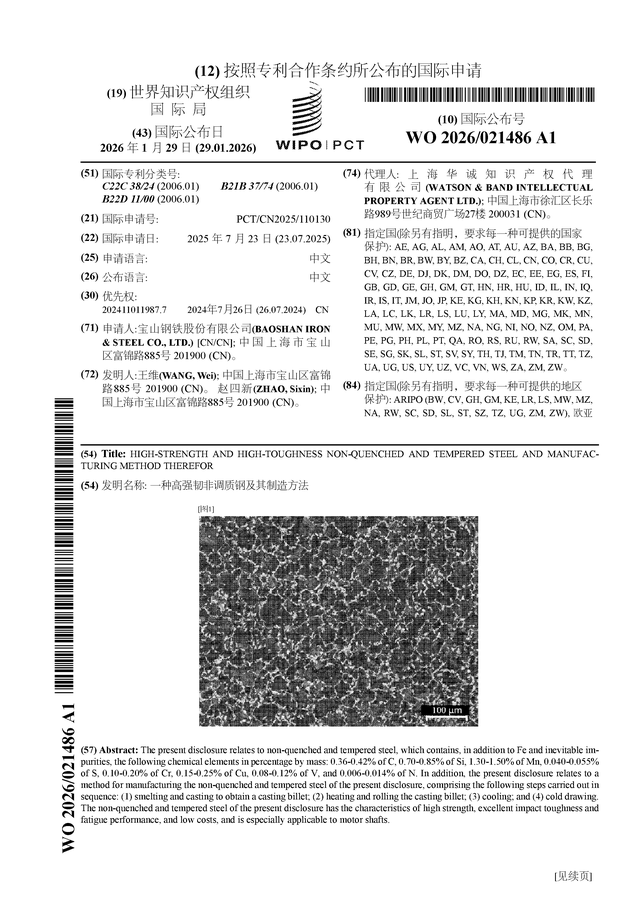
宝钢股份公布国际专利申请:“一种高强韧非调质钢及其制造方法”
Sou Hu Cai Jing· 2026-01-30 22:54
数据来源:企查查 以上内容为证券之星据公开信息整理,由AI算法生成(网信算备310104345710301240019号),不构成 投资建议。 证券之星消息,根据企查查数据显示宝钢股份(600019)公布了一项国际专利申请,专利名为"一种高 强韧非调质钢及其制造方法",专利申请号为PCT/CN2025/110130,国际公布日为2026年1月29日。 图片来源:世界知识产权组织(WIPO) 专利详情如下: 今年以来宝钢股份已公布的国际专利申请21个,较去年同期增加了133.33%。结合公司2025年中报财务 数据,2025上半年公司在研发方面投入了16.76亿元,同比增7.77%。 ...
顺周期回暖+内需消费分层,现金流ETF嘉实(159221)备受市场关注
Xin Lang Cai Jing· 2026-01-30 03:25
Group 1 - The Guozheng Free Cash Flow Index fell by 2.86% as of January 30, 2026, with mixed performance among constituent stocks, led by Fostar, while Nanshan Aluminum experienced the largest decline [1] - CICC pointed out that the supply-demand gap for electrolytic aluminum continues to widen, and with global fiscal and monetary policies resonating, aluminum prices are expected to reach new highs, with profit per ton of aluminum likely to expand as prices rise [1] - Guotai Junan Securities noted that while copper prices are currently affected by macro sentiment and AI-related demand adjustments, the long-term outlook remains strong due to ongoing tight supply of copper mines and declining spot processing fees [1] Group 2 - The National Grid's fixed asset investment for the "14th Five-Year Plan" is expected to reach 4 trillion yuan, a 40% increase compared to the previous plan, which supports the copper price outlook [1] - Yingda Securities emphasized the importance of following the "14th Five-Year Plan" and subsequent policy directions, suggesting a focus on technology growth stocks with earnings support, as well as cyclical varieties, domestic consumption, dividend stocks, and sectors with improving economic conditions [1] - The top ten weighted stocks in the Guozheng Free Cash Flow Index as of December 31, 2025, include China National Offshore Oil Corporation, SAIC Motor, Gree Electric Appliances, and others, accounting for 51.95% of the index [2]



中国宝武与光大集团签署新一轮战略合作框架协议
Xin Lang Cai Jing· 2026-01-29 12:12
Core Viewpoint - China Baowu and China Everbright Group signed a new strategic cooperation framework agreement to deepen financial and industrial collaboration, aiming for mutual benefits and high-quality development [1][3][9]. Group 1 - The signing took place on January 29, with key leaders from both companies, including China Baowu's Chairman Hu Wangming and Everbright Group's Chairman Wu Lijun, participating in discussions [1][7]. - Both companies reviewed their successful cooperation since the initial agreement in 2020, highlighting fruitful outcomes across various fields [3][9]. - The new agreement is seen as an opportunity to further enhance strategic cooperation, expand collaboration areas, and support industrial transformation and upgrading [3][9]. Group 2 - The signing was represented by China Baowu's Chief Accountant Li Lina and Everbright Group's Vice President Hong Bo, with other relevant department heads and subsidiary leaders in attendance [4][10].
