
Rnm(600259)

Search documents
行业周报:有色金属周报:稀土供改落地迎戴维斯双击-20250824
SINOLINK SECURITIES· 2025-08-24 11:17
Investment Ratings - The report does not explicitly provide investment ratings for the industries discussed [2][3][4][5][6]. Core Insights - The copper market shows a stable upward trend with expectations of demand recovery in mid-September, despite current seasonal weakness [15]. - The aluminum sector is stabilizing at the bottom, with a slight increase in processing rates among leading companies [16]. - The gold market remains highly active, influenced by international geopolitical developments and trade agreements [17]. - The rare earth sector is experiencing significant price increases and regulatory changes, indicating a bullish outlook [35]. - The antimony market is expected to see price recovery due to improved export expectations and domestic production cuts [36]. - The molybdenum market is witnessing price increases driven by rising demand from steel manufacturers [37]. Summary by Sections 1. Base and Precious Metals Market Overview - Copper prices decreased slightly, with LME copper at $9734.50 per ton and SHFE copper at ¥78,700 per ton [15]. - Aluminum prices also fell, with LME aluminum at $2593.00 per ton and SHFE aluminum at ¥20,600 per ton [16]. - Gold prices showed a minor increase, with COMEX gold at $3383.50 per ounce [17]. 2. Base and Precious Metals Fundamental Updates 2.1 Copper - The copper processing fee index dropped to -$41.15 per ton, and domestic copper inventory decreased by 0.2 thousand tons to 13.17 thousand tons [15]. - The operating rate in the copper industry fell by 7.39% to 52.1% due to raw material shortages [15]. 2.2 Aluminum - Domestic aluminum ingot inventory decreased by 1.1 thousand tons to 596 thousand tons, while the operating rate for aluminum processing companies rose by 0.5% to 60.0% [16]. - The complete cost of electrolytic aluminum is ¥16,718 per ton, with industry profits around ¥3,960 per ton [16]. 2.3 Precious Metals - The gold market is influenced by international trade agreements and geopolitical tensions, maintaining a volatile trading environment [17]. 3. Minor Metals and Rare Earth Market Overview - The rare earth sector is seeing price increases, with praseodymium-neodymium oxide at ¥622,300 per ton, up 11.61% [35]. - Antimony prices are expected to recover due to improved export conditions and domestic production cuts [36]. - Molybdenum prices are rising as demand from steel manufacturers increases, with molybdenum concentrate prices at ¥4,420 per ton [37]. 4. Minor Metals and Rare Earth Fundamental Updates 4.1 Rare Earth - Regulatory changes in the rare earth industry are expected to enhance market conditions, with significant price increases anticipated [35]. 4.2 Antimony - The antimony market is poised for recovery, supported by export expectations and production cuts [36]. 4.3 Molybdenum - Molybdenum prices are on the rise due to increased demand from the steel sector, with a notable recovery in steel procurement volumes [37].


广晟有色涨2.01%,成交额1.71亿元,主力资金净流入604.89万元
Xin Lang Cai Jing· 2025-08-22 03:01
Company Overview - Guangsheng Nonferrous Metals Co., Ltd. is located in Panyu District, Guangzhou, Guangdong Province, and was established on June 18, 1993. The company was listed on May 25, 2000. Its main business involves non-ferrous metals [3]. Stock Performance - As of August 22, Guangsheng's stock price increased by 2.01%, reaching 64.49 CNY per share, with a trading volume of 171 million CNY and a turnover rate of 0.79%. The total market capitalization is 21.697 billion CNY [1]. - Year-to-date, Guangsheng's stock price has risen by 131.90%. In the last five trading days, it increased by 8.75%, while over the last 20 days, it saw a slight increase of 0.14%, and over the last 60 days, it rose by 46.34% [2]. Capital Flow - In terms of capital flow, there was a net inflow of 6.0489 million CNY from main funds, with large orders accounting for 18.11% of purchases and 16.67% of sales. Notably, there were no sales from special large orders [1]. Shareholder Information - As of June 30, the number of shareholders for Guangsheng reached 55,500, an increase of 32.18% from the previous period. The average circulating shares per person decreased by 24.34% to 6,061 shares [3]. Financial Performance - For the period from January to March 2025, Guangsheng reported a revenue of 1.506 billion CNY, reflecting a year-on-year decrease of 14.05%. The company has cumulatively distributed 4.268 million CNY in dividends since its A-share listing, with no dividends distributed in the last three years [3]. Institutional Holdings - As of March 31, 2025, Hong Kong Central Clearing Limited is the sixth-largest circulating shareholder, holding 1.823 million shares, which is an increase of 75,500 shares from the previous period [3].
美联储重磅,美股承压!这一关键金属持续涨价,产业链迎机遇
Zheng Quan Shi Bao· 2025-08-21 00:29
Group 1: Tungsten Price Trends - Tungsten prices have been on the rise throughout the year, with significant increases noted in recent weeks. As of August 20, the price of 65% tungsten concentrate reached 217,000 yuan/ton, up 3,000 yuan/ton from August 19, marking a 51.75% increase since the beginning of the year [5][8] - The price of ammonium paratungstate (APT) at 88.5% purity is reported at 311,500 yuan/ton, reflecting a 47.98% increase year-to-date, while tungsten powder is priced at 482.5 yuan/kg, up 53.91% since the start of the year [5][8] Group 2: Supply and Demand Dynamics - The surge in tungsten prices is attributed to tightening supply and emerging demand. The Ministry of Natural Resources has set a control target for tungsten mining at 58,000 tons for 2025, a reduction of 4,000 tons or 6.45% from the previous year [8] - Major tungsten-producing regions, such as Jiangxi and Yunnan, have also seen reductions in mining output, contributing to a significant decrease in market circulation [8] - Demand for tungsten is growing in various sectors, including aerospace, defense, and electronics, with notable increases in the renewable energy sector, particularly in photovoltaic applications [8] Group 3: Market Performance and Stock Analysis - Tungsten-related stocks in the A-share market have generally performed well, with an average increase of 10.1% since August. Leading stocks include Luoyang Molybdenum, Zhongtung High-tech, and Xianglu Tungsten, with respective gains of 22.48%, 18.99%, and 17.41% [10][14] - The valuation of some tungsten concept stocks remains low, with a median rolling P/E ratio of 30.24 times, and several stocks, including Shengtun Mining and Luoyang Molybdenum, having P/E ratios below 20 times [11][12] - Luoyang Molybdenum is expected to report a net profit of 8.2 to 9.1 billion yuan for the first half of the year, representing a year-on-year growth of 51.37% to 67.98% [12]





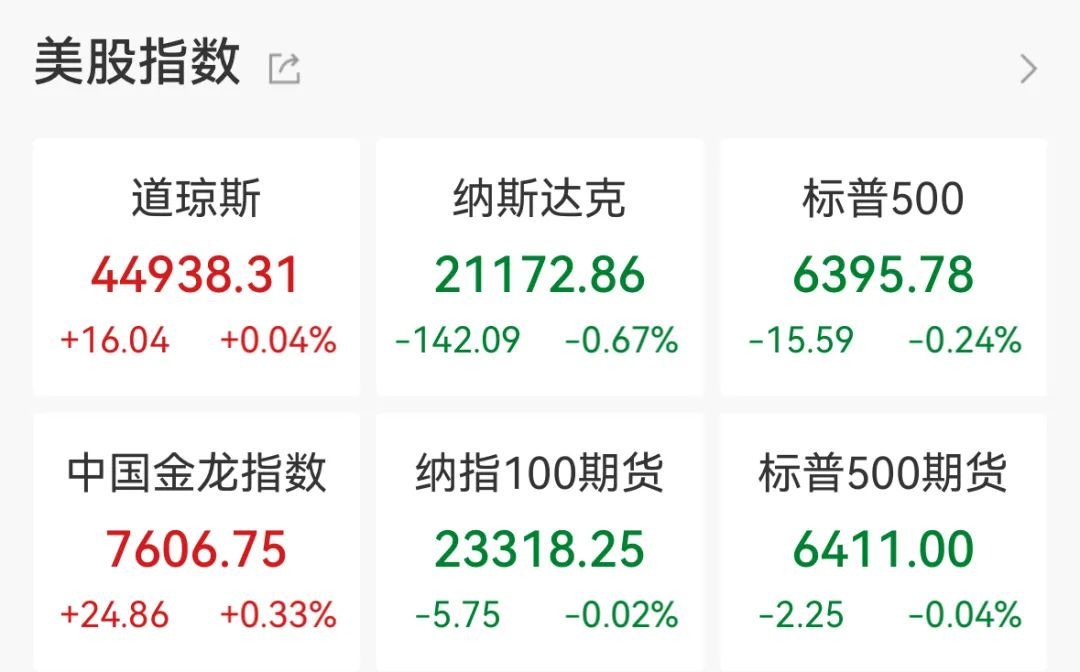
稀土板块盘中涨幅超2%
Mei Ri Jing Ji Xin Wen· 2025-08-19 01:57
Core Viewpoint - The rare earth sector experienced a significant increase, with several companies showing notable gains in their stock prices [1] Group 1: Company Performance - Huahong Technology saw a substantial rise of 8.35% in its stock price [1] - Northern Rare Earth increased by 4.52% [1] - Shenghe Resources rose by 2.80% [1] - Xiamen Tungsten gained 1.21% [1] - Guangsheng Nonferrous Metals experienced a 0.83% increase [1]


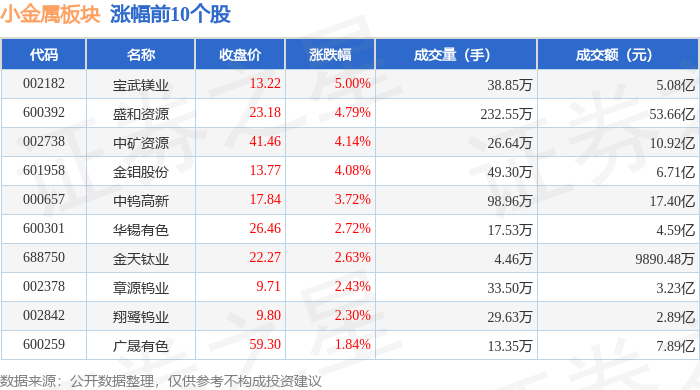
小金属板块8月15日涨2.32%,宝武镁业领涨,主力资金净流入10.28亿元
Zheng Xing Xing Ye Ri Bao· 2025-08-15 08:37
Market Performance - The small metals sector increased by 2.32% on August 15, with Baowu Magnesium leading the gains [1] - The Shanghai Composite Index closed at 3696.77, up 0.83%, while the Shenzhen Component Index closed at 11634.67, up 1.6% [1] Individual Stock Performance - Baowu Magnesium (002182) closed at 13.22, up 5.00% with a trading volume of 388,500 shares and a transaction value of 508 million [1] - Shenghe Resources (600392) closed at 23.18, up 4.79% with a trading volume of 2,325,500 shares and a transaction value of 5.366 billion [1] - Zhongkuang Resources (002738) closed at 41.46, up 4.14% with a trading volume of 266,400 shares and a transaction value of 1.092 billion [1] - Other notable performers include Jinyao Co. (601958) up 4.08%, and China Tungsten High-tech (000657) up 3.72% [1] Capital Flow Analysis - The small metals sector saw a net inflow of 1.028 billion from institutional investors, while retail investors experienced a net outflow of 395 million [1] - Major stocks like Shenghe Resources and Baowu Magnesium had significant net inflows from institutional investors, indicating strong interest [2] - Retail investors showed a net outflow in several stocks, including Shenghe Resources and Zhongkuang Resources, suggesting a cautious sentiment among retail participants [2]


短线防风险 192只个股短期均线现死叉
Zheng Quan Shi Bao Wang· 2025-08-14 08:15
证券时报·数据宝统计,截至下午收盘,上证综指3666.44点,涨跌幅为-0.46%,A股总成交额为23062.83 亿元。到目前为止,今日有192只A股的5日均线主动下穿10日均线,其中万达信息、联合化学、登云股 份等个股的5日均线较10日均线距离最大,分别达-1.22%、-1.15%、-1.06%。(数据宝) 部分5日、10日均线死叉个股 | 代码 | 简称 | 今日涨跌 | 今日换手 | 5日均线 | 10日均线 | 5日较10日均线 | 最新价 | 较10日均线乖 | | --- | --- | --- | --- | --- | --- | --- | --- | --- | | | | (%) | 率(%) | (元) | (元) | 距离(%) | (元) | 离率(%) | | 300168 | 万达 | -2.38 | 2.46 | 7.96 | 8.06 | -1.22 | 7.78 | -3.43 | | | 信息 | | | | | | | | | 301209 | 联合 | -2.39 | 2.89 | 93.16 | 94.25 | -1.15 | 90.72 | -3.74 | | ...


短线防风险 96只个股短期均线现死叉
Zheng Quan Shi Bao Wang· 2025-08-14 03:03
Market Overview - The Shanghai Composite Index is at 3701.99 points, with a change of +0.50% [1] - The total trading volume of A-shares is 103.51 billion yuan [1] Technical Analysis - 96 A-shares have seen their 5-day moving average cross below the 10-day moving average [1] - Notable stocks with significant distance between their 5-day and 10-day moving averages include: - Dengyun Co., Ltd. (002715) with a distance of -1.02% [1] - United Chemical (301209) with a distance of -0.93% [1] - Guangsheng Nonferrous (600259) with a distance of -0.79% [1] Individual Stock Performance - Dengyun Co., Ltd. (002715) has decreased by 2.88% with a latest price of 16.87 yuan [1] - United Chemical (301209) has decreased by 0.17% with a latest price of 92.78 yuan [1] - Guangsheng Nonferrous (600259) has decreased by 0.81% with a latest price of 58.82 yuan [1] - Other notable stocks with declines include: - Guoneng Rixin (301162) down 2.29% [1] - Daqian Energy (688303) down 2.44% [1] - Yijiahe (603666) down 0.43% [1] Additional Stock Data - Stocks with minor declines include: - Ningbo Bank (002142) up 0.25% with a latest price of 28.25 yuan [2] - Huayang New Materials (600281) down 0.59% with a latest price of 6.75 yuan [2] - The overall trend indicates a cautious market sentiment with several stocks experiencing downward pressure [1][2]




广晟有色(600259)8月13日主力资金净流出1401.10万元
Sou Hu Cai Jing· 2025-08-13 12:16
通过天眼查大数据分析,广晟有色金属股份有限公司共对外投资了27家企业,参与招投标项目32次,专 利信息16条,此外企业还拥有行政许可6个。 来源:金融界 广晟有色最新一期业绩显示,截至2025一季报,公司营业总收入15.06亿元、同比减少14.05%,归属净 利润4727.12万元,同比增长115.55%,扣非净利润4506.21万元,同比增长114.78%,流动比率1.264、速 动比率0.523、资产负债率52.77%。 天眼查商业履历信息显示,广晟有色金属股份有限公司,成立于1993年,位于海口市,是一家以从事有 色金属冶炼和压延加工业为主的企业。企业注册资本33643.591万人民币,实缴资本12937.2517万人民 币。公司法定代表人为杨杰。 金融界消息 截至2025年8月13日收盘,广晟有色(600259)报收于59.3元,上涨0.54%,换手率3.76%, 成交量12.66万手,成交金额7.49亿元。 资金流向方面,今日主力资金净流出1401.10万元,占比成交额1.87%。其中,超大单净流入777.58万 元、占成交额1.04%,大单净流出2178.68万元、占成交额2.91%,中单净流出流 ...
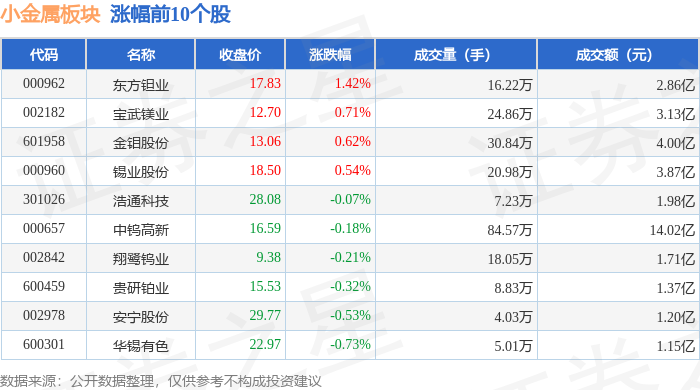
小金属板块8月12日跌2.02%,盛和资源领跌,主力资金净流出29.7亿元
Zheng Xing Xing Ye Ri Bao· 2025-08-12 08:24
证券之星消息,8月12日小金属板块较上一交易日下跌2.02%,盛和资源领跌。当日上证指数报收于 3665.92,上涨0.5%。深证成指报收于11351.63,上涨0.53%。小金属板块个股涨跌见下表: | 代码 | 名称 | 收盘价 | 涨跌幅 | 成交量(手) | 成交额(元) | | | --- | --- | --- | --- | --- | --- | --- | | 000962 | 东方银业 | 17.83 | 1.42% | 16.22万 | | 2.86亿 | | 002182 | 宝武镁业 | 12.70 | 0.71% | 24.86万 | | 3.13亿 | | 601958 | 金铝股份 | 13.06 | 0.62% | 30.84万 | | 4.00亿 | | 000960 | 锡业股份 | 18.50 | 0.54% | 1 20.98万 | | 3.87亿 | | 301026 | 浩通科技 | 28.08 | -0.07% | 7.23万 | | 1.9867 | | 000657 | 中钨高新 | 16.59 | -0.18% | 84.57万 | | 14.02亿 | ...

广东稀土集团100%股权拟划转 中国稀土集团将成广晟有色实控人
Xin Hua Wang· 2025-08-12 05:47
Core Viewpoint - The transfer of 100% equity of Guangdong Rare Earth Group from Guangsheng Group to China Rare Earth Group marks a significant step in the consolidation of the rare earth industry, enhancing resource allocation and ensuring national strategic resource security [1][2]. Company Summary - Guangsheng Youse primarily engages in rare earth mining, smelting separation, deep processing, and non-ferrous metal trading, holding all approved rare earth mining licenses in Guangdong Province and controlling over 120,000 tons of medium and heavy rare earth resources [2][3]. - The company signed a strategic cooperation agreement with China Rare Earth Group in October 2022 to enhance collaboration in various fields, aiming to accelerate high-quality development of China's rare earth industry through resource integration and industrial complementarity [2][3]. Industry Summary - The rare earth industry has seen accelerated consolidation, with the establishment of six major state-owned rare earth groups by 2016, and the formation of China Rare Earth Group in December 2021, which integrates several key players in the sector [3]. - The ongoing consolidation is expected to enhance the industry's concentration and control over rare earth prices, promoting healthy development across the upstream and downstream supply chains [2][3]. - The integration of the rare earth industry is crucial for improving China's international influence, fostering technological innovation, and increasing employment and tax revenue [3].
