
KWEICHOW MOUTAI(600519)

Search documents
错版“马茅”引关注,茅台:正在修正,已提货的消费者可换货
Nan Fang Du Shi Bao· 2026-01-22 06:47
Core Viewpoint - A printing error on the packaging of the "Ma Moutai" liquor has drawn attention, with the character "昴" mistakenly printed as "昂" [1][3] Group 1: Company Response - Guizhou Moutai has acknowledged the printing error and has contacted the supply chain to rectify the issue promptly [3] - The company has offered consumers the option to exchange the product at local Moutai stores if they wish to do so [3] - Moutai is considering designing a mold for consumers to correct the error themselves, with notifications to follow if feasible [3] Group 2: Market Reaction - The "Ma Moutai" classic version was launched on January 6, priced at 1,899 yuan per bottle and 3,789 yuan per gift box, and has garnered significant consumer interest [3] - As of January 22, both the classic version and gift box have sold out, with self-selected date products also being quickly purchased [3] - Analyst Xiao Zhuqing suggests that the rarity of the misprinted "Ma Moutai" could enhance its collectible value in the future [3] Group 3: Product Availability - The "Ma Moutai" premium version will be released in specific time slots during key periods such as the Spring Festival, brand days, and Mid-Autumn Festival [4]


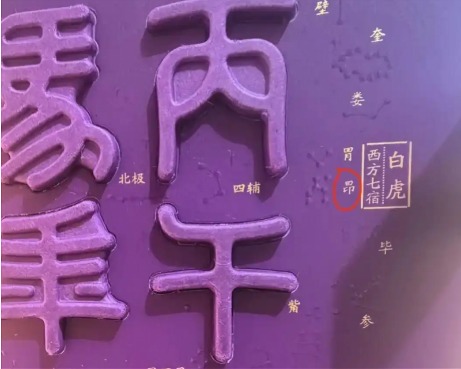
马年生肖酒少一“丿” 贵州茅台紧急回应
Xi Niu Cai Jing· 2026-01-22 06:12
Group 1 - A consumer reported a typo on the packaging of the 53%vol 500ml Guizhou Moutai liquor (Bingwu Year) Classic Edition, where "昴" was incorrectly written as "昂" [2] - Guizhou Moutai's official WeChat account confirmed the error and stated that they are working with the supply chain team to correct the packaging [4] - The company offered consumers the option to exchange the product at local Moutai stores and plans to design a mold for consumers to fix the typo themselves [4] Group 2 - The 53%vol 500ml Guizhou Moutai liquor (Bingwu Year) was officially launched for sale on January 6, 2026 [4] - The product is available in three versions: Classic Edition priced at 1899 yuan per bottle, Rare Enjoyment Edition at 2499 yuan per bottle, and Gift Box Edition at 3789 yuan per box [5]

马年生肖茅台惊现“错字”,官方回应可退换
Huan Qiu Wang· 2026-01-22 06:01
Core Viewpoint - The recent controversy surrounding a packaging error on a limited edition Guizhou Moutai liquor has sparked discussions about its potential impact on the product's value and collectibility [1][3]. Group 1: Incident Overview - A 53-degree 500ml Guizhou Moutai liquor (Bingwu Year) was found to have a printing error, miswriting the character "昴" as "昂" on its packaging [1]. - Guizhou Moutai quickly acknowledged the mistake and offered a replacement service for consumers [1]. - The company humorously suggested a creative solution for consumers to fix the error themselves, promoting a sense of co-creation with the brand [1]. Group 2: Historical Context and Collectibility - This is not the first instance of Moutai experiencing a similar "error"; a notable case occurred in 1990 when a temporary label was used, leading to the creation of a sought-after collectible [3]. - The unique characteristics of the misprinted bottles have historically led to increased value among collectors, as seen in past auction results [4]. - Market reactions to the current error are mixed, with some viewing it as a potential catalyst for future appreciation in value due to its rarity [4]. - Industry analysts suggest that the limited production batch and the nature of the error may enhance the collectible value of this Moutai liquor in the future [4].

张坤等知名基金经理罕见发声!
天天基金网· 2026-01-22 05:20
Group 1 - The core viewpoint of the article highlights the strategic adjustments made by prominent fund managers at E Fund in their investment portfolios for Q4 2025, focusing on sectors like AI, healthcare, consumer goods, and technology [2][4][6][10] Group 2 - Zhang Kun adjusted the structure of investments in the healthcare, consumer, and technology sectors while maintaining a stable position in top holdings, which include Tencent Holdings, Kweichow Moutai, and Alibaba-W [4][5] - Zhang Kun expressed confidence in the improvement of living standards and social security in China over the next decade, suggesting a narrowing gap with developed countries [4] - The AI wave is seen as a significant driver for innovation, with strong domestic demand expected to attract global resources and talent [4][5] Group 3 - Chen Hao focused heavily on AI-related sectors, increasing allocations in power equipment, new energy, non-bank financials, and chemicals, which yielded positive returns [7][8] - Chen Hao anticipates a transition of the AI industry from an acceleration phase in 2025 to a stable growth phase in 2026, emphasizing the importance of structural opportunities and the integration of AI with local applications [7][8] Group 4 - Xiao Nan reduced allocations in high-end and sub-high-end liquor sectors while increasing investments in the livestock industry, anticipating inflation-driven cost increases over the next two years [10] - The top holdings in Xiao Nan's consumer sector fund remained unchanged, including Kweichow Moutai and Midea Group [10]






i茅台回应“马茅”包装印刷问题:已联系供应链加班加点修改
Cai Jing Wang· 2026-01-22 04:34
近日,小茅i茅台官方公众号发布消息。当中介绍,小茅在53%vol 500ml贵州茅台(600519)酒(丙午 马年)经典版的包装盒侧面上将二十八星宿中的"昴"写成了"昂",小茅第一时间查证,发现确实少了 一"丿",由"昴"变成了"昂",感谢小伙伴们的及时提醒。 第一时间,小茅已联系供应链的伙伴正加班加点修改。已经提到货的顾客,如有意调换,可以就近前往 当地茅台自营店进行更换。小茅还脑洞大开,想设计一个模具,由顾客自己把这一"丿"补上去,也算共 创了,如果可行,小茅第一时间通知大家。 ...
马年生肖茅台“昴”写成“昂”茅台回应,茅台“错版”不是首次
Xin Jing Bao· 2026-01-22 03:57
Core Viewpoint - The recent discovery of a printing error on the packaging of the 53-degree 500ml Guizhou Moutai (600519) liquor has sparked discussions about its potential collectible value, as the error involves a misprint of a character on the box [1][2]. Group 1: Company Response - The "i Moutai" official account acknowledged the error, confirming that the character "昴" was incorrectly printed as "昂" and expressed gratitude for consumer feedback [1]. - The company has contacted its supply chain to rectify the issue and is offering exchanges for consumers who have already received the product [1]. - "i Moutai" is considering creating a mold for consumers to correct the error themselves, promoting a sense of co-creation [1]. Group 2: Collectible Value - The term "error version" is recognized in the collectibles community, typically referring to items like stamps and coins that have printing mistakes [2]. - Historical instances of Moutai liquor with similar errors have been noted, such as the "前五背飞" Moutai from 1990, which has become a sought-after collectible [2]. - Industry analysts suggest that the current misprint on the Moutai liquor could lead to increased collectible value due to its rarity and uniqueness, similar to past collectible markets [2]. - Some consumers view the error version as more valuable, but caution is advised regarding authenticity and market conditions [2].
马年茅台酒包装印错字,i茅台:已加班修改,可换
Xin Jing Bao· 2026-01-22 03:57
i茅台方面表示,公司已联系供应链的员工加班加点修改,已经收到货的消费者若有意调换,可以就近 前往当地茅台自营店进行更换。 新京报贝壳财经记者阎侠编辑陈莉校对王心 1月21日深夜,i茅台官方微博发文确认茅台酒包装印错字。据悉,其53%vol500ml贵州茅台(600519) 酒(丙午马年)经典版的包装盒侧面将二十八星宿中的"昴"写成了"昂"。 ...
易方达蓝筹精选规模缩水65亿 业绩多期“不佳”,张坤坚信中国消费“有鱼可钓” 四季度增持阿里减持京东
Xin Lang Ji Jin· 2026-01-22 03:50
Core Insights - The article highlights the significant decline in the assets under management of fund manager Zhang Kun, with a reduction of 8.16 billion yuan to 48.38 billion yuan in Q4 2025 [1] - Zhang Kun's flagship fund, E Fund Blue Chip Select Mixed Fund, experienced an 8.93% drop in net value during Q4, underperforming the average of similar funds by 7.39% [2] - The fund's performance over the past year and three years has been notably poor, with returns of 11.56% and a cumulative decline of 19.93%, respectively, compared to the average returns of 41.32% and 19.81% for similar funds [2] Fund Performance - In Q4, the E Fund Blue Chip Select Mixed Fund's net value fell by 8.93%, ranking in the bottom 25% among peers [2] - Over the past year, the fund's return of 11.56% significantly lagged behind the average return of 41.32% for equity mixed funds and the 23.23% increase in the CSI 300 index [2] - The fund's three-year performance shows a cumulative decline of 19.93%, while similar products averaged a 19.81% increase [2] Portfolio Adjustments - Despite performance challenges, Zhang Kun maintained a high stock position of over 94% in the E Fund Blue Chip Select Mixed Fund, consistent with his investment style [5] - The top holdings remained stable, with Tencent and Kweichow Moutai leading, while Wuliangye's ranking improved from seventh to third [5] - Adjustments included a slight increase in Alibaba holdings by 3.22%, while significant reductions were made in JD Health and Focus Media by 45.52% and 20.56%, respectively [5] Macro Economic Insights - Zhang Kun provided an extensive analysis of the macroeconomic environment, emphasizing the importance of boosting consumption as a key policy focus for 2026 [6] - He argued that despite recent weak consumption data, the long-term outlook remains positive, citing potential growth in GDP and improvements in living standards [7] - Zhang Kun believes that the market will eventually recognize investment opportunities in domestic companies, despite current skepticism [7]

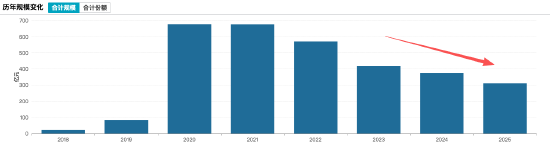
组合中企业“护城河还在,城在不在”?张坤在2025年四季报中给出了明确回答
Xin Lang Cai Jing· 2026-01-22 03:40
Core Viewpoint - The report highlights the investment strategies of top fund managers, particularly focusing on Zhang Kun from E Fund, who has made adjustments in his portfolio amidst market fluctuations, maintaining a long-term optimistic outlook on China's economic transformation and the growth of domestic demand [1][10]. Fund Performance - As of the end of Q4 2025, Zhang Kun managed funds totaling 48.383 billion yuan, with three A-share focused products underperforming against benchmarks, while the E Fund Asia Select, which invests in overseas Chinese stocks, achieved a positive return of 4.53% [1][2][10]. - The performance of the funds is as follows: - E Fund Blue Chip Select: -8.93% return, 31.021 billion yuan in size - E Fund Quality Select: -8.42% return, 11.385 billion yuan in size - E Fund Quality Enterprise Three-Year Holding: -6.82% return, 2.585 billion yuan in size - E Fund Asia Select: 4.53% return, 3.392 billion yuan in size [2][12]. Portfolio Adjustments - In Q4 2025, Zhang Kun reduced holdings in key stocks such as Kweichow Moutai, Wuliangye, Shanxi Fenjiu, and Luzhou Laojiao, while maintaining overall stock positions but adjusting sector allocations towards pharmaceuticals, consumer goods, and technology [3][13]. - The top holdings in the portfolio include Tencent Holdings (6.93%), Kweichow Moutai (6.87%), and Wuliangye (6.70%), with notable reductions in their respective weightings [3][13]. Economic Outlook - Zhang Kun expressed a long-term optimistic view on macroeconomic conditions, predicting significant improvements in living standards and social security in China over the next decade, narrowing the gap with developed countries [4][14]. - He emphasized the unique advantages of the Chinese market in the context of the global AI wave, suggesting that a strong domestic demand market is a crucial driver for technological innovation [4][14]. Investment Philosophy - The report indicates that despite current market pessimism regarding core assets, Zhang Kun believes that the intrinsic value of quality companies remains intact, presenting attractive investment opportunities for long-term investors [5][15]. - The central economic work conference highlighted the importance of boosting consumption and expanding domestic demand as key tasks for 2026, reinforcing the focus on consumer-driven growth [6][16]. GDP Growth Projections - According to the "14th Five-Year Plan," China aims to achieve a per capita GDP of $23,400 by 2035, requiring a compound annual growth rate of 5.27% from the current level of $13,300 [7][17]. - The report notes that the decline in housing prices over the past five years has negatively impacted consumer wealth and spending, but this trend may be reversing, potentially improving consumer sentiment and demand [8][18].



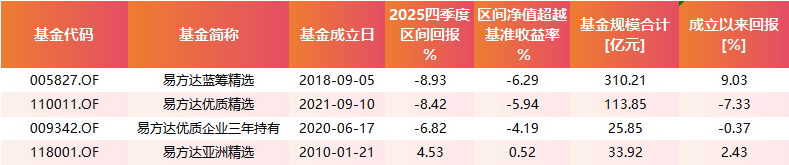
张坤2025四季报发声:强大内需不仅是“消费引擎”,更是“科技创新的燃料”
Xin Lang Cai Jing· 2026-01-22 03:34
Core Viewpoint - The report highlights the investment strategies of top fund managers, particularly focusing on Zhang Kun from E Fund, who has made adjustments in his portfolio amidst market fluctuations, maintaining a long-term optimistic outlook on China's economic transformation and the growth of the domestic market [1][10]. Fund Performance - As of the end of Q4 2025, Zhang Kun managed a total fund size of 48.383 billion yuan, which reflects adjustments from the previous quarter [1]. - Three of the funds primarily investing in A-shares reported negative quarterly returns, failing to outperform their benchmarks, while the E Fund Asia Select, which focuses on overseas Chinese stocks, achieved a positive return of 4.53%, significantly exceeding its benchmark [2][10]. Portfolio Adjustments - In Q4 2025, there was a reduction in holdings of key stocks such as Kweichow Moutai, Wuliangye, Shanxi Fenjiu, and Luzhou Laojiao, while maintaining a stable stock position overall [3][13]. - The adjustments focused on reallocating investments in sectors such as pharmaceuticals, consumer goods, and technology [3][13]. Economic Outlook - Zhang Kun expressed a long-term optimistic view on the macroeconomic environment, predicting significant improvements in living standards and social security in China over the next decade, narrowing the gap with developed countries [4][14]. - He emphasized the unique advantages of the Chinese market in the context of the global AI wave, noting that a strong domestic demand market is a crucial driver for technological innovation [4][14]. Investment Philosophy - The report addresses concerns regarding the long-term value of core assets, with Zhang Kun asserting that the underlying value remains intact and that current market pessimism has created attractive valuations for quality companies [5][15]. - He believes that the current low valuation of quality assets presents a rare opportunity for long-term investors [5][15]. Policy Context - The Central Economic Work Conference in December emphasized the importance of boosting consumption and expanding domestic demand as a key task for 2026, highlighting the government's commitment to enhancing consumer spending [6][16]. - The report notes that recent indicators show domestic consumption has been weak, particularly for companies focused on domestic demand compared to those reliant on exports [6][16]. GDP Growth Projections - According to the "14th Five-Year Plan," China aims to achieve a per capita GDP level comparable to that of middle-income developed countries by 2035, requiring a compound annual growth rate of 5.27% [7][17]. - The report suggests that the decline in housing prices over the past five years has negatively impacted consumer wealth and spending, but this trend may be reversing due to potential policy support and lower interest rates [7][17].