HZBank(600926)

Search documents
多家A股上市城商行成绩单出炉,谁在领跑
Jin Rong Shi Bao· 2025-04-28 13:31
Core Insights - Regional banks in China have shown stable growth in asset size and revenue for 2024, with several banks surpassing significant milestones in both categories [1][2] Group 1: Asset Growth - As of the end of 2024, six regional banks have surpassed an asset scale of 2 trillion yuan, including Beijing Bank with an asset total of 4.22 trillion yuan, a 12.61% increase from 2023 [1] - Hangzhou Bank's asset total reached 2.11 trillion yuan, marking a 14.72% year-on-year growth, achieving a significant milestone [1] - Other banks like Chengdu Bank and Changsha Bank also joined the "trillion club," while several others maintained over 10% growth in asset size [1] Group 2: Revenue Growth - A-share listed regional banks maintained overall revenue growth in 2024, with Jiangsu Bank leading at 808.15 million yuan, an 8.78% increase [2] - Non-interest income has been a major contributor to revenue growth, with Shanghai Bank's non-interest net income reaching 204.99 million yuan, a 33.11% increase [2] Group 3: Investment Income - The bond market bull run in 2024 significantly boosted investment income for regional banks, with Shanghai Bank reporting a 94.42% increase in investment income to 131.66 million yuan [3] - Other banks like Hangzhou Bank and Jiangsu Bank also saw substantial growth in investment income, contributing to overall revenue recovery [3] Group 4: Profitability - Leading banks in terms of net profit include Jiangsu Bank with 318.43 million yuan, followed by Ningbo Bank and Beijing Bank [4] - The fastest-growing banks in net profit were Qingdao Bank, Hangzhou Bank, and Qilu Bank, with growth rates of 20.16%, 18.07%, and 17.77% respectively [4] Group 5: Challenges and Asset Quality - Some banks faced revenue or net profit declines, such as Zhengzhou Bank with a 5.78% drop in revenue [5] - The non-performing loan (NPL) ratio for regional banks remained stable, with most banks reporting ratios between 0.66% and 1.79% [5] - Regional banks are increasing credit support for key sectors like technology and manufacturing, while also focusing on retail and digital transformation strategies [5]






杭州银行一季度净赚超60亿增逾17%,增速较去年同期有所回落
Xin Lang Cai Jing· 2025-04-28 12:27
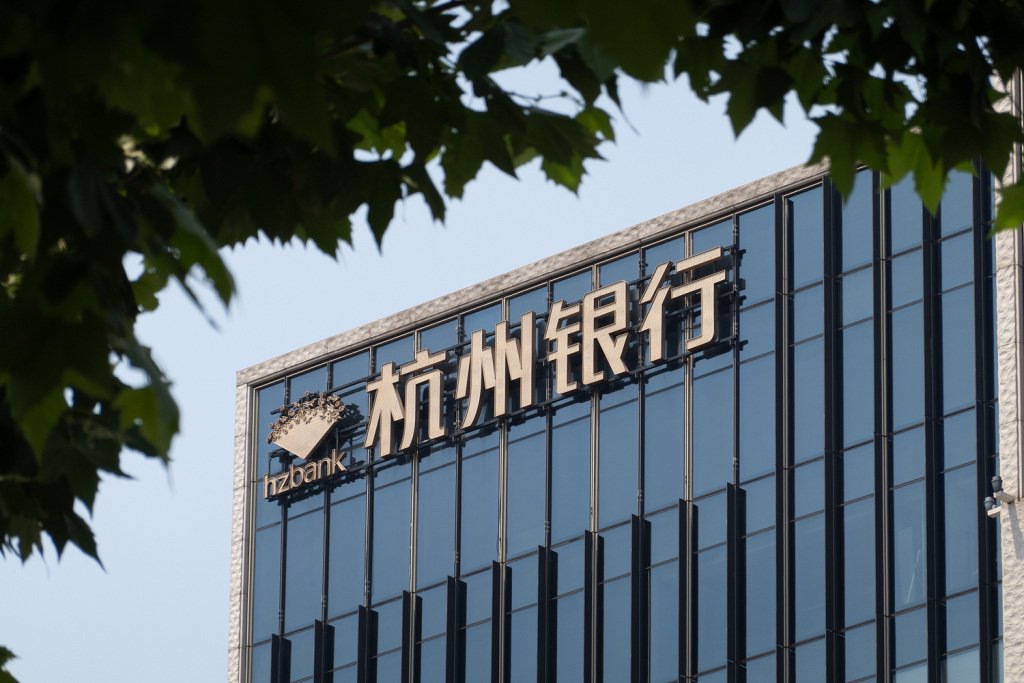
杭州银行 视觉中国 资料图 杭州银行(600926.SH)一季度净赚超60亿元,营收、净利同比增速较去年同期微降。 4月28日,杭州银行披露的2025年第一季度报告显示,2025年一季度,杭州银行实现营业收入99.78亿元,同比增长2.22%;实现归母净利润60.21 亿元,同比增长17.3%。 截至2025年3月末,杭州银行资产总额22222.16亿元,较上年末增长5.2%,其中贷款总额9951.96亿元,较上年末增长6.15%;负债总额20762.94亿 元,较上年末增长5.06%;存款总额13487.79亿元,较上年末增长5.99%。 截至2025年一季度末,杭州银行不良贷款率0.76%,与上年末持平;拨备覆盖率530.07%,较上年末下降11.38个百分点;拨贷比4.04%,较上年末 下降0.07个百分点。 截至一季度末,杭州银行资本充足率、一级资本充足率、核心一级资本充足率分别为14.05%、11.34%、9.01%,较上年末分别上升0.25个百分点、 0.29个百分点、0.16个百分点。 杭州银行2024年年度报告显示,2024年,杭州银行实现营业收入383.81亿元,同比增长9.61%;实现归母 ...

杭州银行(600926) - 杭州银行第八届董事会第十七次会议决议公告
2025-04-28 11:40
证券代码:600926 证券简称:杭州银行 公告编号:2025-023 优先股代码:360027 优先股简称:杭银优 1 可转债代码:110079 可转债简称:杭银转债 杭州银行股份有限公司 具体详见公司同日在上海证券交易所披露的《杭州银行股份 有限公司 2025 年第一季度报告》。 1 二、审议通过《杭州银行股份有限公司 2025 年第一季度第 三支柱信息披露报告》 第八届董事会第十七次会议决议公告 本公司董事会及全体董事保证本公告内容不存在任何虚假 记载、误导性陈述或者重大遗漏,并对其内容的真实性、准确 性和完整性承担法律责任。 杭州银行股份有限公司(以下简称"公司")第八届董事会 第十七次会议于 2025 年 4 月 18 日以电子邮件及书面方式发出会 议通知,并于 2025 年 4 月 28 日以书面传签方式召开。本次会议 应出席董事 11 名,实际出席董事 11 名。本次会议的召开符合《中 华人民共和国公司法》等法律法规及《杭州银行股份有限公司章 程》的有关规定,会议所形成的决议合法、有效。 会议审议并通过决议如下: 一、审议通过《杭州银行股份有限公司 2025 年第一季度报 告》 批准公司 202 ...
杭州银行(600926) - 2025 Q1 - 季度财报
2025-04-28 11:00
Financial Performance - In Q1 2025, the company's operating income reached RMB 9,977,642, an increase of 2.22% compared to RMB 9,760,688 in Q1 2024[5] - Net profit attributable to shareholders was RMB 6,021,119, reflecting a 17.30% increase from RMB 5,133,233 in the same period last year[6] - Basic earnings per share rose to RMB 0.94, up 14.63% from RMB 0.82 in Q1 2024[6] - The company reported a total of 49,269 shareholders as of the end of the reporting period[10] - The company reported a comprehensive diluted return on equity of 4.95%, up from 4.86%[17] - Net profit for Q1 2025 was RMB 6,021,119 thousand, up from RMB 5,133,233 thousand in Q1 2024, reflecting an increase of about 17.3%[49] - Net profit for Q1 2025 was RMB 5,755,853 thousand, representing a 18.3% increase compared to RMB 4,866,796 thousand in Q1 2024[53] Cash Flow - The net cash flow from operating activities surged to RMB 47,295,319, a significant increase of 513.87% compared to -RMB 11,427,621 in Q1 2024[6] - The net cash flow from operating activities improved significantly to RMB 47,295,319 thousand, compared to a negative cash flow of RMB (11,427,621) thousand in the same period last year[57] - Net cash flow from operating activities for Q1 2025 was RMB 42,945,969 thousand, a significant improvement compared to a net outflow of RMB (9,882,311) thousand in Q1 2024[61] - Cash inflow from investment activities totaled RMB 217,619,383 thousand in Q1 2025, up from RMB 182,752,944 thousand in Q1 2024[61] - Net cash flow from financing activities reached RMB 24,601,868 thousand in Q1 2025, compared to RMB 8,048,401 thousand in Q1 2024[63] Assets and Liabilities - Total assets as of March 31, 2025, were RMB 2,222,216,225, representing a 5.20% increase from RMB 2,112,355,860 at the end of 2024[6] - Total liabilities increased to RMB 2,076,293,816 thousand from RMB 1,976,307,861 thousand[17] - Total assets at the end of Q1 2025 amounted to 222.2216 billion yuan, reflecting a growth of 5.20% from the end of the previous year[29] - Total liabilities as of March 31, 2025, amounted to RMB 2,076,293,816 thousand, an increase from RMB 1,976,307,861 thousand as of December 31, 2024, marking a growth of about 5.1%[41] Deposits and Loans - Total deposits rose to RMB 1,348,779,344 thousand, up from RMB 1,272,551,288 thousand[17] - The bank's total deposits as of March 31, 2025, were RMB 1,366,203,000 thousand, an increase from RMB 1,289,515,182 thousand as of December 31, 2024, reflecting a growth of approximately 6.0%[41] - The balance of loans in the corporate finance segment reached 631.637 billion yuan, an increase of 11.73% year-on-year[31] - Total loans amounted to RMB 995,196,394 thousand, compared to RMB 937,498,709 thousand previously[17] Investment and Income - The bank's investment income for Q1 2025 was RMB 4,137,373 thousand, significantly higher than RMB 1,913,624 thousand in Q1 2024, showing an increase of about 116.0%[49] - The bank's investment income surged to RMB 4,136,386 thousand, compared to RMB 1,913,192 thousand in Q1 2024, indicating strong performance in investment activities[53] Ratios and Returns - The weighted average return on equity increased to 5.15%, up 0.16 percentage points from 4.99% in Q1 2024[6] - Core Tier 1 capital adequacy ratio improved to 9.01% from 8.85%[20] - Liquidity coverage ratio increased to 301.42% from 244.42%[24] - Cost-to-income ratio improved to 23.70% from 24.10%[17] - The non-performing loan ratio remained stable at 0.76%[26] - The non-performing loan ratio remained stable at 0.76%, consistent with the end of the previous year[30] Shareholder Information - The top ten shareholders held a total of 3,000,000,000 shares, accounting for 47.09% of the total shareholding[10] - The number of ordinary shares outstanding increased by 4.35% to 6,312,359 thousand shares compared to 6,049,255 thousand shares at the end of 2024[6]
依旧高增长,依旧低不良——杭州银行2024年财报分析
数说者· 2025-04-26 15:06
杭州银行前身是 1996 年由杭州市 33 家城市信用社股东、信用联社股东及杭州市财政局等股东共同 发 起设立的 杭州城市联合银行 , 1998 年更名为杭州银行, 2016 年 10 月在上交所上市,股票代码为 600926 。 杭州银行主要业务分布在浙江省杭州市以及浙江省其他市县,坚持做精杭州、深耕浙江,同时积极 拓展长三角区域及国内一线城市业务。 2024 年杭州银行的营业收入中有 79.58% 来自浙江省 ,其中 来自杭州的占比 58.36% ;营业利润 中有 79.36% 来自浙江省 , 来自杭州的有 57.01% 。除对浙江省内各地级市业务全覆盖外,杭州银行还 在 北京、上海、深圳、南京和合肥 5 地设有分行。 此外,杭州银行拥有 杭银理财有限责任公司 ( 2019 年设立) 100% 股权,持有 杭银消费金融股 份有限公司 42.95% 股份,持有 石嘴山银行股份有限公司 18.39% 股份,另在河南济源、登封、兰考、 伊川、渑池和浙江缙云等地持有 村镇银行 的股份。 截至 2024 年末杭州银行集团共有员工人数 14409 人。 一、高速增长依旧,规模超部分股份行 截至 2024 年末,杭州银 ...
深入打造“数智杭银” 杭州银行以数字化转型赋能可持续发展
Zhong Guo Ji Jin Bao· 2025-04-25 12:02
Core Viewpoint - Hangzhou Bank is leveraging digital technology to enhance financial services and drive sustainable development, focusing on five key areas for digital transformation in 2024 [1] Group 1: Business Development Empowered by Technology - The bank is enhancing its technology infrastructure to create value for business development, with a focus on artificial intelligence applications and a unified modeling platform [2] - A smart service system is being developed, improving transaction security with a 40% increase in accuracy for transaction monitoring and interception [2] - The bank is promoting a collaborative development of online and offline services, achieving a 30% improvement in risk model accuracy through integrated data [2] Group 2: Data-Driven Service Enhancement - The bank is strengthening its data governance by deploying 17 business systems and building various data platforms to enhance operational capabilities [3] - Continuous optimization of data mining platforms is underway, with the development of over 10 customer acquisition models [3] - A digital joint operation team has been established for customer profiling and potential opportunity identification [3] Group 3: Technology Support for Stable Operations - The bank is upgrading its information technology infrastructure to enhance operational safety, achieving a core system availability rate of over 99.99% [4] - Measures are in place to protect customer privacy and data security, with no incidents of data or privacy breaches reported in 2024 [4] Group 4: Innovation-Driven Efficiency Improvement - A product-centered technology support system has been established, focusing on cross-departmental collaboration and the formation of 30 specialized product teams [5] - Continuous training and capacity building for technology personnel are being implemented to enhance professional capabilities [5] Group 5: Ongoing Exploration of Technology Output - The bank has developed a product system comprising 28 systems across various categories, with initial success in external technology output [6] - Participation in major financial exhibitions showcases the bank's innovations in integrating digital technology with financial services [6] - In the previous year, the bank's digital transformation investment accounted for 4.25% of revenue, with a 100% implementation rate of intelligent outlets and a 7.53% share of financial technology talent [6]
长三角谁最强?“3万亿俱乐部”再添一员,上海银行不良率最高
Xin Lang Cai Jing· 2025-04-25 00:25
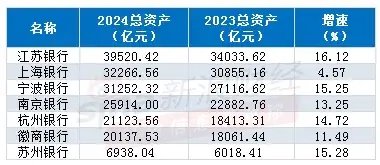
Core Insights - The Yangtze River Delta urban agglomeration is a crucial intersection of the "Belt and Road" initiative and the Yangtze River Economic Belt, comprising Shanghai, Jiangsu, Zhejiang, and Anhui provinces, with seven listed city commercial banks [1] - In 2024, the total asset scale of these seven banks reached 17.72 trillion yuan, with Jiangsu Bank, Shanghai Bank, and Ningbo Bank each exceeding 3 trillion yuan [1][3] - All seven banks reported positive growth in revenue and net profit, with asset quality remaining strong, as six banks maintained non-performing loan ratios below 1% [1][18] Asset Scale and Growth - Jiangsu Bank's total assets reached 39,520.42 billion yuan, a 16.12% increase from the previous year [3][5] - Shanghai Bank's total assets were 32,266.56 billion yuan, growing by 4.57% [3][5] - Ningbo Bank's total assets amounted to 31,252.32 billion yuan, with a growth rate of 15.25% [3][5] - Nanjing Bank, Hangzhou Bank, and Huishang Bank surpassed 20 trillion yuan in assets, while Suzhou Bank had the smallest asset scale at nearly 700 billion yuan [1][3] Revenue and Profitability - Jiangsu Bank led in revenue with 808.15 billion yuan, marking an 8.78% increase [10][12] - Ningbo Bank followed with 666.31 billion yuan in revenue, up 8.19% [10][12] - Nanjing Bank achieved a revenue growth rate of 11.32%, the only bank with double-digit growth [10][12] - Net profit for Jiangsu Bank exceeded 300 billion yuan, with a growth of 10.76% [13][12] Asset Quality - The non-performing loan ratio for Jiangsu Bank was 0.89%, while Ningbo and Hangzhou Banks had the lowest at 0.76% [18][19] - Shanghai Bank had the highest non-performing loan ratio at 1.18% [17][18] - The provision coverage ratios for most banks were robust, with Jiangsu, Nanjing, and Ningbo Banks exceeding 300% [20][18] Loan Distribution - Jiangsu Bank's loans in Jiangsu province accounted for 86.13% of its total loans, with significant portions also allocated to the Yangtze River Delta and Guangdong-Hong Kong-Macau Greater Bay Area [7] - Nanjing Bank's loans were primarily distributed in Jiangsu, with 84.92% of its loans in the province [7] - Huishang Bank's loans were predominantly in Anhui, making up 88.87% of its total [8]
银行股热度持续攀升 去年四季度业绩改善“强势出圈”
Zheng Quan Shi Bao· 2025-04-24 22:13
Group 1 - Since April, 9 bank stocks have reached historical highs, indicating a sustained increase in industry interest [1][2] - In Q4 2024, bank performance has significantly improved, with many banks reporting positive results in Q1 of this year [1][5] - The total cash dividends for the banking sector are expected to reach a new high, with 12 bank stocks each exceeding 10 billion yuan in annual dividends [1][7] Group 2 - On April 24, the banking index closed up 1.16%, with major banks like Bank of China, Agricultural Bank of China, and Industrial and Commercial Bank of China hitting record highs [2] - The stock prices of major banks have steadily increased this year, with Shanghai Bank showing a year-to-date increase of 15.52% [2] - The banking sector is favored as a low-valuation, high-dividend defensive asset amid ongoing market fluctuations [3] Group 3 - Over 90% of the 36 bank stocks that have released their 2024 annual reports or performance forecasts reported year-on-year profit growth [5] - Shanghai Pudong Development Bank reported the highest year-on-year profit growth at 23.31%, driven by rapid credit growth and improved asset quality [5] - The total net profit of the disclosed bank stocks in Q4 2024 exceeded 480 billion yuan, marking a 5.66% increase from the previous year [5] Group 4 - Five bank stocks have released Q1 2025 performance reports, with several banks reporting year-on-year profit growth [6] - Major banks have indicated ongoing improvements in their asset-liability structures and operational efficiency [6] Group 5 - As of April 24, 29 bank stocks have announced dividend plans, with a total cash dividend amounting to 357.84 billion yuan [7] - The cumulative cash dividends for the banking sector in 2024 have reached 616.13 billion yuan, surpassing the previous year's total [8] - Industrial and Commercial Bank of China announced a cash dividend of 1.646 yuan per 10 shares, totaling 58.66 billion yuan, marking a continuous growth for nine years [8]




超6000亿元分红!本周正式开启
21世纪经济报道· 2025-04-24 14:56
Core Viewpoint - The article discusses the commencement of the bank dividend season in China, highlighting the significant cash dividends announced by various banks, particularly state-owned banks, and the trends in dividend distribution for 2024. Group 1: Dividend Announcements - Starting from this week, the bank dividend season officially begins, with China Bank announcing a cash dividend of 0.1216 yuan per share for the year-end of 2024 [2] - As of April 23, 36 banks have disclosed their dividend plans, with a total dividend amount of 616.26 billion yuan, including over 230 billion yuan in interim dividends from the previous year [3][8] - China Bank's annual dividend distribution is notably earlier than in previous years, which typically occurred between June and July [5] Group 2: Dividend Distribution Details - According to the distribution plan, China Bank will distribute a total cash dividend of 35.798 billion yuan based on its total ordinary share capital of 29.4388 billion shares, with A-shares accounting for 25.629 billion yuan of this total [6][7] - The total cash dividend for the year 2024, including interim dividends, amounts to 0.2424 yuan per share, totaling approximately 71.36 billion yuan [7] Group 3: Performance of Major Banks - The six major state-owned banks have collectively announced dividends exceeding 420 billion yuan, with all six banks increasing their dividend amounts compared to the previous year, totaling nearly 100 billion yuan more [8][9] - The total dividend amount for the six major banks accounts for over 70% of the entire banking sector's dividend total, indicating their strong profitability and dividend capacity [9] Group 4: Dividend Yields and Trends - Industrial and Commercial Bank of China leads with a dividend amount of 109.773 billion yuan, followed by China Construction Bank with 100.754 billion yuan, and Agricultural Bank of China and China Bank with 84.661 billion yuan and 71.36 billion yuan, respectively [9][10] - The average dividend payout ratio for state-owned banks remains stable at 30% or higher, with an increasing trend in dividend frequency to twice a year [9][11] Group 5: Individual Bank Strategies - China Merchants Bank plans to initiate interim dividends for 2025, marking its first such distribution, with a cash dividend ratio of 35.3% last year [10] - Other banks, such as Industrial Bank and Huaxia Bank, have also committed to maintaining or increasing their dividend payout ratios above 30% [11][15] - Zhejiang Merchants Bank's cash dividend for 2024 is 4.284 billion yuan, maintaining a payout ratio above 30%, although slightly lower than previous years [13] Group 6: Overall Market Sentiment - The trend of increasing dividends is seen as a way to enhance investor confidence and stabilize stock prices, with analysts emphasizing the importance of sustainable dividend policies based on solid operational performance [16]




“大象股”也疯狂!这个板块密集新高
Zheng Quan Shi Bao Wang· 2025-04-24 11:03
Group 1 - The banking sector has seen 9 stocks reach historical highs this month, including major state-owned banks like ICBC, ABC, and CCB, with significant year-to-date gains [2][4] - The banking sector index rose by 1.16% on April 24, outperforming the market, with notable increases in stock prices for major banks [2][3] - The overall performance of the banking sector improved significantly in Q4 of the previous year, with 33 out of 36 banks reporting year-on-year profit growth [4][5] Group 2 - The total cash dividends announced by banks for 2024 have reached a record high of 6,161.26 billion yuan, surpassing the previous year's total [6][7] - Major banks like ICBC, CCB, and ABC have declared dividends exceeding 500 billion yuan, contributing to the sector's reputation for high dividends [6][7] - Ningbo Bank reported the highest year-on-year increase in dividends at 50%, indicating a strong commitment to shareholder returns [7]