
INDUSTRIAL BANK(601166)

Search documents
银发浪潮下的金融答卷:一种不断生长的力量|五篇大文章调研行
Hua Xia Shi Bao· 2026-01-12 10:11
Core Viewpoint - The aging population presents both challenges and opportunities, with the financial industry playing a crucial role in developing innovative pension financial services to support the elderly [2] Group 1: Aging Population and Financial Services - The central financial work conference in 2023 included "pension finance" as one of the key topics, highlighting its importance in addressing the needs of the aging population [2] - Commercial banks are tasked with leveraging their resources to provide supportive services for the elderly, marking a new area of exploration [2] Group 2: Enhancing Elderly Services - The Chengdu Qingyang branch of Industrial Bank has undergone comprehensive renovations to create an elderly-friendly environment, including features like non-slip flooring and emergency alert systems [3] - The branch offers personalized services for elderly clients, ensuring they receive assistance without long wait times [3] - Industrial Bank has launched a "big font version" of its mobile banking app and established a green channel for elderly customers to bridge the digital divide [3] Group 3: Innovative Financial Products - Industrial Bank introduced the first "loan linked to the usage rate of elderly care beds," allowing for interest rate reductions based on occupancy rates, benefiting both financial needs and social outcomes [4] Group 4: Community Engagement and Learning - The Chengdu Qingyang branch supports a senior university, providing various courses and activities that engage the elderly community, with the capacity to serve up to 9,000 participants annually [5] - The bank has established "An Yu Learning Hall" in 122 branches, offering diverse classes that cater to the interests of elderly clients [5] Group 5: Expanding Financial Services - Industrial Bank has created the "Silver Talent Reception Hall" to connect retired professionals with societal needs, fostering opportunities for the elderly to contribute their expertise [6] - The bank has been conducting "Respect for the Elderly Month" activities for 11 consecutive years, promoting community engagement and support for the elderly [6] Group 6: Social Security Card Services - The bank has implemented a "face recognition payment" system linked to social security cards, enhancing convenience for elderly customers in dining and other services [7] - As of September 2025, the bank has issued over 1.86 million social security cards across 22 provinces, establishing 173 convenient service points [8] Group 7: Strategic Development in Pension Finance - Since 2012, Industrial Bank has developed a comprehensive pension financial service system, including pension accounts for over 7.6 million individuals by October 2025 [9] - The bank aims to enhance its pension finance services through a "365" action plan, focusing on three main areas: pension finance, elderly service finance, and elderly industry finance [10] - By October 2025, the bank served 29 million clients aged 50 and above, managing over 2 trillion yuan in financial assets [10]



兴业银行入选“2025中国企业ESG百强”榜单
Xin Lang Cai Jing· 2026-01-12 10:04
Group 1 - The core viewpoint of the article emphasizes the growing importance of ESG (Environmental, Social, and Governance) as a key metric for high-quality corporate development and a vital link between corporate value and social value [1][2] - The "2025 China Enterprise ESG Top 100" list was released by Sina Finance, evaluating over 5,000 A-share listed companies and mainland enterprises listed in Hong Kong using 18 industry ESG evaluation models and over 150 ESG indicators [1][2] - The list serves as a benchmark for industry development and provides valuable decision-making references for investors [1][2] Group 2 - Industrial Bank was recognized in the "2025 China Enterprise ESG Top 100" list, ranking 31st, highlighting its significant achievements in ESG practices [2] - The publication of the list is seen as an authoritative recognition of the sustainable development practices of the listed companies and promotes the core values of ESG across the industry [2] - Companies are encouraged to integrate ESG principles into their strategic planning, operations, and supply chain collaboration to achieve a symbiotic relationship between commercial and social value [2] Group 3 - The top companies in the "2025 China Enterprise ESG Top 100" list include major players such as China Construction Bank, China Mobile, Agricultural Bank of China, Tencent, and Bank of China, all receiving a five-star rating [4][5] - The list reflects a diverse range of industries, including finance, telecommunications, information technology, and renewable energy, showcasing the broad application of ESG principles [4][5][6] Group 4 - The Sina Finance ESG Rating Center is the first Chinese professional information and rating aggregation platform focused on ESG, promoting sustainable development and responsible investment [11] - The center aims to establish ESG evaluation standards suitable for China's characteristics and to enhance corporate ratings in the ESG domain [11]

首华燃气:为控股子公司提供2亿元担保
Mei Ri Jing Ji Xin Wen· 2026-01-12 09:33
本次提供担保后,公司及控股子公司的担保额度总金额为8亿元,公司及控股子公司对外担保总余额6亿 元,约占公司2024年末经审计净资产的30.18%,均为公司或子公司对合并报表范围内单位提供的担 保。 每经头条(nbdtoutiao)——年产量是传统大田120倍以上,1个人管理1栋楼!实探中国"植物工厂":水 稻生产期从120天减到60天,没有虫害不用打农药 (记者 王晓波) 每经AI快讯,首华燃气1月12日晚间发布公告称,公司控股子公司北京中海沃邦能源投资有限公司(以 下简称"中海沃邦")拟通过额度授信的方式向兴业银行股份有限公司(简称"兴业银行")申请授信。授 信总金额不超过人民币捌亿元整(小写:800,000,000元),其中:贰亿元用于中、短期流动资金贷款 (中期流贷敞口不超过壹亿元,期限不超过3年)、开立银行承兑汇票、商票贴现、国内反向保理,担 保方式为首华燃气科技(上海)股份有限公司提供连带责任保证担保。 公司于2026年1月12日召开第六届董事会第十五次会议,审议通过了《关于为控股子公司提供担保的议 案》,同意公司为上述用于中、短期流动资金贷款、开立银行承兑汇票、商票贴现、国内反向保理的贰 亿元授信 ...

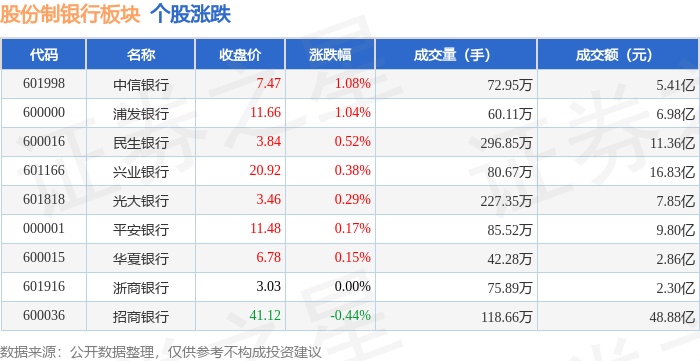
股份制银行板块1月12日涨0.26%,中信银行领涨,主力资金净流出10.83亿元
Zheng Xing Xing Ye Ri Bao· 2026-01-12 09:04
Group 1 - The banking sector saw a slight increase of 0.26% on January 12, with CITIC Bank leading the gains [1] - The Shanghai Composite Index closed at 4165.29, up 1.09%, while the Shenzhen Component Index closed at 14366.91, up 1.75% [1] - The trading volume and turnover for major banks were significant, with CITIC Bank's closing price at 7.47, reflecting a 1.08% increase and a turnover of 541 million yuan [1] Group 2 - The net outflow of main funds from the banking sector was 1.083 billion yuan, while retail investors saw a net inflow of 579 million yuan [1] - CITIC Bank had a net inflow of 53.24 million yuan from main funds, despite a net outflow from retail investors [1] - The overall fund flow indicated a mixed sentiment, with some banks experiencing significant net outflows from main funds, such as Industrial Bank with a net outflow of 75.54 million yuan [1]




兴业银行关于调整代理贵金属手续费服务项目的公告
Xin Lang Cai Jing· 2026-01-12 07:01
兴业银行此前发布公告,将调整服务价目表"代理贵金属手续费"服务项目,细化完善代理实物贵金属手 续费。自2026年4月15日起按我行服务价目表中代理贵金属手续费项下代理实物贵金属手续费的收费标 准向相关合作机构收取代理实物贵金属销售、代理实物黄金回购业务手续费,现将调整后的相关收费情 况公告如下,对零售客户收费标准为代理上海黄金交易所贵金属交易手续费不超过成交金额的万分之 八,其中延期品种客户平今仓交易免收交易手续费(以上海黄金交易所最新规则为准)。对机构客户: 包含上海黄金交易所收取的手续费;自主交易的投资客户手续费标准为万分之十一,可根据本行政策与 分行协商优惠幅度。(兴业银行) ...
银华活钱宝货币市场基金F类基金份额恢复及暂停部分代销机构的机构投资者大额申购(含定期定额投资及转换转入)业务的公告
Shang Hai Zheng Quan Bao· 2026-01-11 18:51
Group 1 - The company, Yinhua Fund Management Co., Ltd., will resume large-scale subscriptions (over 100,000 yuan) for the F-class fund shares of Yinhua Active Money Market Fund for institutional investors from January 12, 2026, and will suspend these subscriptions starting January 13, 2026 [1] - During the suspension period, institutional investors can still make subscriptions (up to 100,000 yuan) through various banks and financial institutions, including Industrial Bank Co., Ltd. and China Postal Savings Bank Co., Ltd. [2] - The company will continue to process redemptions and conversions for all classes of fund shares, including A, B, C, D, E, and F classes, as well as large-scale subscriptions for individual investors during the suspension period [3]
过渡期收官在即,银行业首席合规官密集就位
Mei Ri Jing Ji Xin Wen· 2026-01-11 12:29
Core Insights - The banking industry is undergoing a restructuring wave in risk and compliance systems due to tightening regulatory rules and a complex risk environment [1][2] - A surge in appointments for Chief Risk Officers (CROs) and Chief Compliance Officers (CCOs) is expected by the end of 2025 and early 2026, with over 20 banks and branches already approved for relevant positions since the beginning of 2025 [1][2] Regulatory Changes - The "Measures for Compliance Management of Financial Institutions" requires financial institutions to establish a CCO at their headquarters, who will be classified as a senior management position [2] - The transitional period for compliance with this regulation is set to expire one year after its implementation on March 1, 2025 [2] Appointment Trends - A variety of banks, including Ping An Bank, Industrial Bank, and Minsheng Bank, have announced the appointment of CCOs as the transitional deadline approaches [2] - The trend shows a mix of large, medium, and small institutions moving forward with these appointments [2] Governance Models - Two governance models are emerging: "one person holding multiple roles" and "independent separation" for CCOs and CROs [3] - The "one person holding multiple roles" model is prevalent among smaller banks, allowing for unified decision-making in risk and compliance management [3] - The "independent separation" model is more common in larger banks, emphasizing specialized development and independent oversight in risk management [3][4] Talent Acquisition Challenges - The establishment of CCO and CRO positions presents new challenges for talent acquisition, with a preference for candidates possessing a combination of frontline business experience, cross-regional vision, and professional qualifications [6] - Some banks are adopting market-based recruitment strategies for CCOs, breaking traditional selection models [6] Compensation Trends - The compensation for CCOs is rising, with annual total income expected to be no less than the average for senior management positions [6] - Reports indicate that the reference monthly salary for these positions can reach between 100,000 to 130,000 yuan [6] Compliance Management Evolution - Effective compliance management is evolving from a "cost center" to a "value guardian," playing a crucial role in mitigating credit, market, and liquidity risks [7] - The compliance governance system is expected to become more institutionalized and refined, with clearer responsibilities and a growing demand for composite compliance talent [7][8] Core Competencies for CCOs - The core competencies for CCOs are identified as business insight, regulatory interpretation, execution capability, and cross-departmental collaboration [8] - These competencies are essential for CCOs to effectively support governance and create compliance value [8]


兴业银行鲁政委:碳核算相关领域发展机遇值得重点关注
Xin Lang Cai Jing· 2026-01-10 11:20
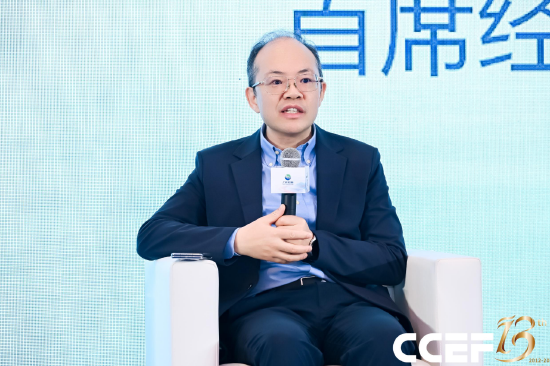
专题:2026中国首席经济学家论坛年会 2026年中国首席经济学家论坛年会于1月10-11日在上海举行,主题为"棋至中局:承前启后 建设强国"。 兴业银行首席经济学家鲁政委出席并发言。 鲁政委表示,未来五年我国减碳将逐步形成六碳的治理机制,即地方碳考核、地方碳管控、企业碳管 理、项目碳评价、产品碳足迹以及国际碳协调。这一切的基础是碳核算,只有明确碳核算的模型、规 范、监测、数据、审计、认证等标准,才能精准把握达峰峰值、制定减排路径,也才能在国际贸易中开 展有效协调。 他指出,由此将带来两大重要市场机遇:一是碳市场扩围;二是电力市场的分化,绿电与非绿电将形成 明确的价值差异,推动绿色能源的市场化定价与应用。碳核算相关领域的发展机遇值得重点关注。 新浪声明:所有会议实录均为现场速记整理,未经演讲者审阅,新浪网登载此文出于传递更多信息之目 的,并不意味着赞同其观点或证实其描述。 责任编辑:王翔 ...
过渡期收官在即,银行业首席合规官密集就位,如何推进从“被动遵循”到“主动治理”?
Mei Ri Jing Ji Xin Wen· 2026-01-09 10:51
Core Viewpoint - The tightening of regulatory rules and the complexity of the risk environment are driving a restructuring wave in the banking industry's risk and compliance systems [1][7]. Group 1: Appointment Trends - A surge in appointments for Chief Risk Officers (CROs) and Chief Compliance Officers (CCOs) is expected from late 2025 to early 2026, with nearly 10 banks increasing related personnel configurations in the past month [1][7]. - Since the beginning of 2025, over 20 banks and branches have had relevant qualifications approved by regulators [1][7]. - The trend is influenced by the impending expiration of a one-year transition period set by the "Financial Institutions Compliance Management Measures," which requires financial institutions to establish a CCO at their headquarters [1][7]. Group 2: Governance Models - The banking sector exhibits two governance models for CCOs and CROs: "one person holding both positions" and "independent separation" [2][9]. - The "one person holding both positions" model is prevalent, particularly in smaller banks, allowing for unified decision-making in risk and compliance management [2][9]. - Conversely, the "independent separation" model is more common in larger banks, enhancing professional checks and balances within the risk control system [3][10]. Group 3: Talent Acquisition and Challenges - The demand for composite talents is rising, with banks favoring candidates with extensive experience in finance or legal compliance [11][12]. - Some banks are adopting market-based recruitment methods for CCOs, breaking traditional selection models [11]. - Salary levels for CCO positions are increasing, with some banks offering monthly salaries between 100,000 to 130,000 yuan [11]. Group 4: Compliance Management Evolution - Effective compliance management is evolving from a "cost center" to a "value guardian," playing a crucial role in mitigating credit, market, and liquidity risks [12][13]. - The future of compliance governance in the banking industry is expected to become more institutionalized and refined, with clearer responsibilities and a focus on composite compliance talents [12][13]. - The core competencies for CCOs are expected to include deep business insight, precise regulatory interpretation, efficient execution, and strong cross-departmental collaboration [13].

债券融资超百亿 兴业银行乌鲁木齐分行谱写新疆高质量发展新篇章
Zheng Quan Shi Bao Wang· 2026-01-09 10:22
Core Insights - The Xinjiang branch of Industrial Bank is actively supporting the local economy and bond market by underwriting over 10 billion yuan in debt financing tools for non-financial enterprises during the "14th Five-Year Plan" period [1] - The branch has led the market in innovative products, including the first private sector perpetual medium-term note and the first technology innovation bond under new regulations in the region [1] - The branch is also facilitating the issuance of offshore RMB bonds for Kazakhstan, marking significant milestones in cross-border financial cooperation [2] Group 1 - The Xinjiang branch of Industrial Bank has underwritten over 10 billion yuan in debt financing tools for non-financial enterprises, supporting local quality issuers in utilizing direct financing tools to reduce costs [1] - The branch has achieved regional leadership in bond underwriting scale and has introduced innovative products, including the first private sector perpetual medium-term note and the first technology innovation bond under new regulations [1] - The branch has participated in all technology innovation note issuances in the region, contributing to the development of new productive forces in Xinjiang [1] Group 2 - The branch has assisted Kazakhstan's Development Bank in issuing offshore RMB bonds in Hong Kong, marking the first public issuance of RMB bonds by a Central Asian issuer [2] - The branch also supported Kazakhstan's National Oil and Gas Company in issuing a 5-year offshore RMB bond, providing key pricing references for future financing operations in the offshore RMB bond market [2] - The branch is committed to creating a favorable environment for the healthy development of the Xinjiang bond market by collaborating with intermediary institutions and investors [2] Group 3 - The Xinjiang branch of Industrial Bank plans to continue serving the real economy and enhance its investment banking profile, aiming to provide quality services to more issuers in the region [3]