INDUSTRIAL BANK(601166)

Search documents
债券融资超百亿 兴业银行乌鲁木齐分行谱写新疆高质量发展新篇章
Zheng Quan Shi Bao Wang· 2026-01-09 10:22
Core Insights - The Xinjiang branch of Industrial Bank is actively supporting the local economy and bond market by underwriting over 10 billion yuan in debt financing tools for non-financial enterprises during the "14th Five-Year Plan" period [1] - The branch has led the market in innovative products, including the first private sector perpetual medium-term note and the first technology innovation bond under new regulations in the region [1] - The branch is also facilitating the issuance of offshore RMB bonds for Kazakhstan, marking significant milestones in cross-border financial cooperation [2] Group 1 - The Xinjiang branch of Industrial Bank has underwritten over 10 billion yuan in debt financing tools for non-financial enterprises, supporting local quality issuers in utilizing direct financing tools to reduce costs [1] - The branch has achieved regional leadership in bond underwriting scale and has introduced innovative products, including the first private sector perpetual medium-term note and the first technology innovation bond under new regulations [1] - The branch has participated in all technology innovation note issuances in the region, contributing to the development of new productive forces in Xinjiang [1] Group 2 - The branch has assisted Kazakhstan's Development Bank in issuing offshore RMB bonds in Hong Kong, marking the first public issuance of RMB bonds by a Central Asian issuer [2] - The branch also supported Kazakhstan's National Oil and Gas Company in issuing a 5-year offshore RMB bond, providing key pricing references for future financing operations in the offshore RMB bond market [2] - The branch is committed to creating a favorable environment for the healthy development of the Xinjiang bond market by collaborating with intermediary institutions and investors [2] Group 3 - The Xinjiang branch of Industrial Bank plans to continue serving the real economy and enhance its investment banking profile, aiming to provide quality services to more issuers in the region [3]

12.41亿元资金今日流出银行股
Zheng Quan Shi Bao Wang· 2026-01-09 09:32
Market Overview - The Shanghai Composite Index rose by 0.92% on January 9, with 29 out of the 31 sectors experiencing gains, led by the media and comprehensive sectors, which increased by 5.31% and 3.60% respectively [1] - The banking and non-bank financial sectors were the biggest losers, declining by 0.44% and 0.20% respectively, with the banking sector at the top of the decline list [1] Capital Flow Analysis - The net outflow of capital from the two markets was 24.126 billion yuan, with 8 sectors seeing net inflows, the media sector leading with a net inflow of 9.703 billion yuan and a daily increase of 5.31% [1] - The non-ferrous metals sector followed with a daily increase of 2.78% and a net inflow of 4.552 billion yuan [1] - A total of 23 sectors experienced net outflows, with the electronics sector seeing the largest outflow of 9.149 billion yuan, followed by the power equipment sector with an outflow of 8.936 billion yuan [1] Banking Sector Performance - The banking sector declined by 0.44% with a total net outflow of 1.241 billion yuan, comprising 42 stocks, of which 13 rose and 23 fell [2] - Among the stocks with net inflows, Hangzhou Bank led with a net inflow of 148 million yuan, followed by Jiangsu Bank and CITIC Bank with inflows of 120 million yuan and 6.873 million yuan respectively [2] - The stocks with the largest net outflows included China Merchants Bank, Industrial Bank, and Bank of China, with outflows of 686 million yuan, 119 million yuan, and 110 million yuan respectively [2] Detailed Banking Sector Capital Flow - The table of capital flow in the banking sector shows various banks' performance, with China Merchants Bank experiencing a decline of 0.67% and a net outflow of 686.29 million yuan, while CITIC Bank had a slight decline of 0.27% with a net inflow of 6.873 million yuan [2][3] - Other notable banks with significant net outflows include Industrial Bank (-0.38%, -119.25 million yuan) and Bank of China (-0.54%, -109.60 million yuan) [2][3]


“微”观行业之变|从一笔联合贷款看“精准滴灌”下金融与科技双向奔赴
Zhong Guo Jin Rong Xin Xi Wang· 2026-01-09 07:37
Core Insights - The article emphasizes the importance of financial support for "hard technology" companies to thrive, highlighting innovative financial models that facilitate precise credit allocation to tech innovation sectors [1][7]. Group 1: Financial Models and Innovations - The "joint credit" model and "common growth plan" are examples of innovative financial strategies that guide resources towards technology innovation, enabling financial institutions to share in the growth of tech companies [1][2]. - The "Zhejiang Science Leading Joint Loan" was introduced by multiple banks to address the diverse financing needs of tech companies, allowing for risk-sharing and resource complementarity among banks [2][3]. - The "Common Growth Plan" allows banks to share the growth benefits of tech companies while managing early-stage risks through strategic cooperation agreements [5][6]. Group 2: Regional Success Stories - In Hangzhou, Yundongchu Technology Co., Ltd. successfully raised over 500 million yuan in C-round financing, aided by a 5 million yuan credit loan from Hangzhou Bank [1][2]. - In Hefei, Zhongke Haoyin Intelligent Technology Co., Ltd. received an 8 million yuan credit loan under the "Common Growth Plan," enabling its growth into a specialized small giant enterprise [5][6]. - In Suzhou, a new digital credit platform has facilitated the collection of over 1.6 billion enterprise operation data points, helping nearly 6,000 companies secure 265.8 billion yuan in credit [6][7]. Group 3: Industry Growth and Trends - The high-tech manufacturing sector has shown significant growth, with a 9.6% increase in value added in the first three quarters of 2025, outpacing overall economic growth [3][7]. - As of September 2025, technology loans in China grew by 11.8%, with loans to small and medium-sized tech enterprises reaching 3.6 trillion yuan, reflecting a 22.3% year-on-year increase [7][8]. - The establishment of a multi-layered financial service system has led to the issuance of 669.1 billion yuan in technology innovation bonds, indicating a robust support framework for tech enterprises [8][9]. Group 4: Future Directions - The "14th Five-Year Plan" emphasizes the need to develop a technology finance system that supports innovation and industry development, aiming for a market-oriented and policy-supported financial ecosystem [8][9]. - Industry experts suggest enhancing financial services for tech innovation through lifecycle support, tailored financial tools, and digital transformation to foster a virtuous cycle between technology, industry, and finance [9].


国泰瑞乐6个月持有期混合型发起式基金中基金(FOF)基金份额发售公告
Zhong Guo Zheng Quan Bao - Zhong Zheng Wang· 2026-01-08 23:07
Group 1 - The fund is named "Guotai Ruili 6-Month Holding Period Mixed Fund of Funds (FOF)" and has been approved for registration by the China Securities Regulatory Commission (CSRC) [1] - The fund is a mixed-type fund of funds (FOF) with a minimum holding period of 6 months, during which shares cannot be redeemed or converted [2][18] - The fund will be publicly offered starting from January 12, 2026, with a maximum fundraising period of 3 months [3][26] Group 2 - The fund has a minimum total subscription of 10 million shares and a minimum fundraising amount of no less than 10 million RMB [3][20] - The fund's management company is Guotai Fund Management Co., Ltd., and the custodian is Industrial Bank Co., Ltd. [3][4] - The fund is open to individual investors, institutional investors, qualified foreign investors, and other investors permitted by laws and regulations [2][23] Group 3 - The fund shares are offered at a face value of 1.00 RMB [22][28] - Investors can subscribe to the fund through direct sales or other sales institutions, with specific procedures outlined for each [4][37] - The fund allows multiple subscriptions during the fundraising period, and the subscription fee varies depending on the sales channel [29][36] Group 4 - The fund's assets may be invested in publicly offered securities investment funds, and it may also invest in Hong Kong stocks under the Stock Connect mechanism [10][11] - The fund may face specific risks associated with investments in Hong Kong stocks, including market volatility and liquidity risks [10][11] - The fund's contract will automatically terminate if the net asset value falls below 200 million RMB three years after the contract's effective date [12]
股份行AIC异军突起 聚焦战略性新兴产业
Shang Hai Zheng Quan Bao· 2026-01-08 16:49
Core Insights - The establishment of AICs (Asset Investment Companies) under joint-stock banks marks a shift from state-owned banks' dominance to a more diversified development model in the industry [3][4] Group 1: Investment Activities - Joint-stock bank AICs, including Xingyin Investment, Zhaoyin Investment, and Xinyin Jintou, have successfully launched their first projects since opening in late 2025, focusing on strategic emerging industries such as semiconductors and new energy [1][2] - Xingyin Investment has invested over 6 billion yuan, targeting high-growth sectors and employing a "equity + debt" model to address financing needs across different cycles [2] - The investment projects primarily cover semiconductor, photovoltaic, lithium mining, and engineering plastics industries, with a focus on high transparency and quality listed company subsidiaries [2] Group 2: Differentiation from State-Owned Banks - Joint-stock bank AICs are characterized by their flexibility and market sensitivity, allowing them to effectively fill the financing gap for technology-oriented SMEs [3][4] - The investment logic, industry focus, and operational mechanisms of joint-stock bank AICs differ significantly from those of state-owned banks, which tend to focus on large state-owned enterprises and risk-averse investments [3][4] Group 3: Challenges and Recommendations - Joint-stock bank AICs face challenges such as a lack of experience in equity investment and risk management, necessitating the establishment of a risk management mechanism aligned with equity investment [5] - Experts suggest adopting a "dual GP + dual partnership" model to enhance collaboration between banks and industry capital, as well as implementing a long-term assessment mechanism to improve risk tolerance [5] Group 4: Role in Financial Services - The role of bank-affiliated equity investment is still in its infancy, serving more as a supplementary channel for diversified funding rather than a dominant force in the market [6][7] - Joint-stock bank AICs typically act as general partners (GPs) in investment funds, allowing for deeper involvement in project selection and risk management, which is crucial given their relatively limited capital compared to state-owned banks [7]

股份制银行板块1月8日跌1.16%,浦发银行领跌,主力资金净流出6.74亿元
Zheng Xing Xing Ye Ri Bao· 2026-01-08 08:56
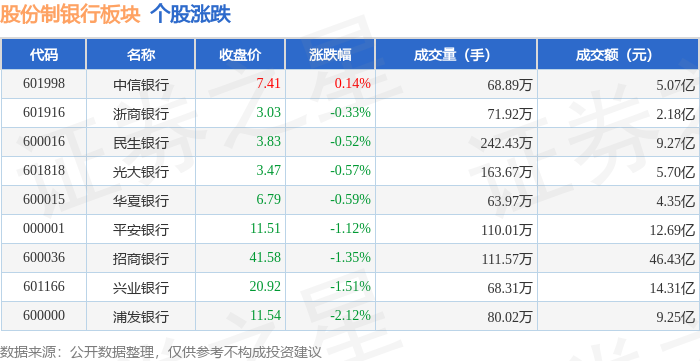
Market Performance - The banking sector saw a decline of 1.16% on January 8, with Pudong Development Bank leading the drop [1] - The Shanghai Composite Index closed at 4082.98, down 0.07%, while the Shenzhen Component Index closed at 13959.48, down 0.51% [1] Individual Bank Performance - CITIC Bank closed at 7.41, with a slight increase of 0.14%, while other banks like Zhejiang Commercial Bank and Minsheng Bank experienced declines of 0.33% and 0.52% respectively [1] - The largest decline was seen in Pudong Development Bank, which fell by 2.12% to close at 11.54 [1] Trading Volume and Capital Flow - The banking sector experienced a net outflow of 674 million yuan from main funds, while retail investors saw a net inflow of 313 million yuan [1] - The trading volume for CITIC Bank was 688,900 shares, with a transaction value of 507 million yuan, while the total transaction value for the banking sector was significant [1] Capital Inflow Analysis - Industrial Bank had a net inflow of 67.52 million yuan from main funds, but also saw a net outflow from retail investors of 63.06 million yuan [2] - Huaxia Bank experienced a substantial net outflow of 89.46 million yuan from main funds, despite a net inflow of 66.32 million yuan from speculative funds [2]





银行积存金投资门槛大摸底
Bei Jing Shang Bao· 2026-01-08 06:43
Core Viewpoint - The recent announcement by Industrial and Commercial Bank of China (ICBC) to raise the risk acceptance level for personal gold accumulation business to C3 (balanced) and above has triggered significant changes in the precious metals investment market, reflecting a broader industry trend towards stricter risk management in response to increased market volatility and rising gold prices [1][6]. Group 1: Industry Trends - Major banks have collectively raised the entry-level risk tolerance for gold accumulation products to at least a balanced level (C3), with some banks even setting it to aggressive levels, indicating a comprehensive industry-wide upgrade in risk control measures [1][3][4]. - The international gold price has surpassed $4,400 per ounce, prompting banks to filter out investors with lower risk tolerance to prevent significant losses due to market volatility [6][7]. Group 2: Bank-Specific Requirements - ICBC requires personal clients to achieve a C3 (balanced) risk assessment result to engage in gold accumulation business, a shift from the previous requirement of C1 (conservative) [3][4]. - Other banks, such as Postal Savings Bank and Shanghai Rural Commercial Bank, have also raised their risk assessment standards, with some requiring a minimum of C3 or higher for participation in gold accumulation products [4][6]. - Banks like China CITIC Bank and Ningbo Bank have announced future adjustments to their risk assessment requirements, aligning with the trend of increasing risk thresholds for gold investment [6][7]. Group 3: Investor Behavior and Risks - There is a growing concern about investors attempting to misrepresent their risk tolerance in order to qualify for gold accumulation products, which undermines the integrity of the risk assessment process [8][9]. - The industry is urged to enhance investor education and awareness regarding the risks associated with gold investments, especially in a volatile market environment [8][9].




金融机构养老金融进阶之路
2 1 Shi Ji Jing Ji Bao Dao· 2026-01-07 23:14
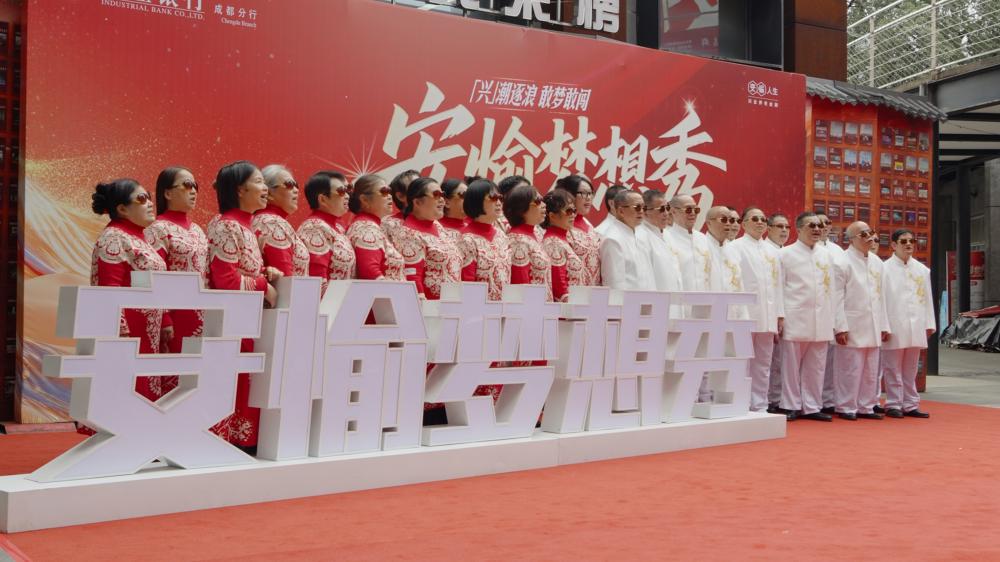
Core Viewpoint - The news highlights the proactive efforts of Industrial Bank in expanding its elderly financial services, aligning with national strategies to address population aging and enhance the quality of life for senior citizens [2][6]. Group 1: Community Engagement and Activities - Industrial Bank's Chengdu branch organized the "Anyu Dream Show," a cultural performance event for elderly individuals, which has successfully attracted over 10,000 participants across 30 community performances in Chengdu [1]. - The "Anyu Dream Show" is part of a broader initiative to extend financial services for the elderly, aiming to create a warmer and higher-quality living experience for senior citizens [1][6]. Group 2: Strategic Development in Elderly Financial Services - The Central Financial Work Conference in late 2023 emphasized the importance of developing elderly financial services as part of a national strategy, which Industrial Bank is actively responding to [2]. - Since 2012, Industrial Bank has been a pioneer in the elderly financial sector, launching the "Anyu Life" brand to integrate financial services with elderly needs, and has been refining its offerings for over a decade [2][5]. Group 3: Innovative Financial Solutions - Industrial Bank has implemented a "365" action plan to enhance its elderly financial services, focusing on three main areas: pension finance, elderly service finance, and elderly industry finance [2]. - The bank has developed a comprehensive retail customer service system, referred to as the "hexagonal" service model, which includes accounts, strategies, rights, outlets, teams, and platforms [2]. Group 4: Social Security Card Integration - The bank has introduced a "face payment" system in senior dining facilities to facilitate transactions for elderly customers, demonstrating its commitment to enhancing convenience for this demographic [3]. - Industrial Bank has issued over 1.86 million financial security cards in collaboration with local social security departments, expanding the functionality of social security cards beyond traditional uses [4]. Group 5: Multi-Pillar Pension System Participation - Industrial Bank has been involved in the design of the personal pension system since 2018 and is among the first commercial banks to offer personal pension services, with over 7.6 million personal pension accounts opened [5]. - The bank manages a balance of 5.8 billion yuan in pension-related funds and has introduced 246 personal pension products, positioning itself as a leader in the industry [5]. Group 6: Building a New Elderly Service Ecosystem - The "Anyu Classroom" initiative, in partnership with local elderly universities, represents a new model of integrating financial services with elderly education, enhancing community engagement [6][7]. - Industrial Bank aims to create a sustainable ecosystem for elderly services, moving beyond traditional financial service roles to become a co-builder of a comprehensive elderly care environment [6][7]. Group 7: Future Outlook - Looking ahead, Industrial Bank plans to continue its focus on elderly financial services, emphasizing its commitment to serving the aging population and contributing to the development of a Chinese-style elderly care system [7].
一线调研|金融机构养老金融进阶之路
2 1 Shi Ji Jing Ji Bao Dao· 2026-01-07 23:13
Core Viewpoint - The articles highlight the proactive efforts of Industrial Bank in expanding its elderly financial services, aligning with national strategies to address aging population issues and enhance the quality of life for senior citizens through various community engagement activities and innovative financial solutions [2][4][10]. Group 1: Community Engagement and Activities - The "Anyu Dream Show" organized by Industrial Bank in Chengdu has successfully engaged thousands of elderly participants, showcasing their talents and fostering community spirit [1][5]. - Over the past 72 days, 30 community performances have been held across Chengdu, attracting over 10,000 elderly participants, marking the third consecutive year of this initiative [1][2]. - The bank has collaborated with local senior universities to create the "Anyu Classroom," providing educational opportunities for seniors and enhancing their engagement in community activities [8][9]. Group 2: Financial Services and Innovations - Industrial Bank has launched the "Anyu Life" pension financial brand in 2012, integrating financial services with elderly care needs, and has been refining its offerings for over a decade [2][4]. - The bank's "365" action plan aims to deepen its services in three key areas: pension finance, elderly service finance, and elderly industry finance, creating a comprehensive service system [2][4]. - As of October 2025, the bank has issued over 1.86 million financial security cards in collaboration with local social security departments, enhancing the accessibility of financial services for seniors [4][6]. Group 3: Social Responsibility and Strategic Vision - The bank's initiatives reflect a commitment to social responsibility, addressing the needs of the aging population while also creating new growth opportunities within the financial sector [2][10]. - Industrial Bank aims to build a sustainable ecosystem for elderly services, transitioning from a mere financial service provider to a co-builder of a comprehensive elderly care environment [8][9]. - The bank has managed over 58 billion yuan in pension funds and opened more than 760,000 personal pension accounts, positioning itself as a leader in the industry [4][6].
兴业银行1月7日大宗交易成交1062.00万元
Zheng Quan Shi Bao Wang· 2026-01-07 14:43
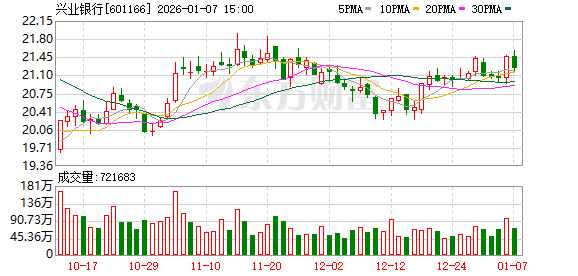
兴业银行1月7日大宗交易平台出现一笔成交,成交量50.00万股,成交金额1062.00万元,大宗交易成交 价为21.24元。该笔交易的买方营业部为广发证券股份有限公司总部,卖方营业部为招商证券股份有限 公司北京景辉街证券营业部。 进一步统计,近3个月内该股累计发生3笔大宗交易,合计成交金额为7.41亿元。 两融数据显示,该股最新融资余额为85.02亿元,近5日增加3.14亿元,增幅为3.84%。(数据宝) 1月7日兴业银行大宗交易一览 | 成交量 | 成交金额 | 成交价格 | 相对当日收盘折 | 买方营业部 | 卖方营业部 | | --- | --- | --- | --- | --- | --- | | (万股) | (万元) | (元) | 溢价(%) | | | | | | | | 广发证券股份有 | 招商证券股份有限公司北京 | | 50.00 | 1062.00 | 21.24 | 0.00 | 限公司总部 | 景辉街证券营业部 | (文章来源:证券时报网) 证券时报·数据宝统计显示,兴业银行今日收盘价为21.24元,下跌1.03%,日换手率为0.34%,成交额为 15.36亿元,全天主力资金净流 ...