AGRICULTURAL BANK OF CHINA(601288)

Search documents
农业银行将终止个人掌银手机盾业务
Bei Jing Shang Bao· 2026-01-07 02:43
Core Viewpoint - Agricultural Bank of China announced the termination of its personal mobile security service, "Mobile Shield," effective January 9, 2026, to enhance service experience and efficiency [1] Group 1 - The decision to discontinue the Mobile Shield service aims to optimize user experience and improve service efficiency [1] - After the Mobile Shield service is discontinued, users will still have access to other authentication methods provided by the bank [1] - The bank emphasizes that the alternative methods will ensure account security while offering a more convenient operation process and a wider range of applicable scenarios [1]
2025年A股银行板块涨幅放缓 个股分化显著 机构看好2026年上市银行营收利润增速改善
Xin Lang Cai Jing· 2026-01-06 23:23
Core Viewpoint - The A-share banking sector is expected to achieve a market value breakthrough in 2025, but the overall growth rate is slowing and underperforming compared to the broader market, with significant individual stock differentiation [1][7]. Market Performance - As of December 31, 2025, the Wind Banking Index reached 7180.68 points, with an annual growth of 12.04%, lower than the previous year's 43.56%. The total market value of the sector at year-end was 15.71 trillion yuan, an increase of over 15% from the beginning of the year, having briefly surpassed 16 trillion yuan [1][7]. - The banking sector exhibited a clear phase differentiation throughout the year, with a mild increase in Q1, a significant rise in Q2, a deep correction in Q3, and a recovery in Q4 [2][8]. Individual Stock Performance - In 2025, 35 out of 42 A-share listed banks saw their stock prices rise, accounting for over 83%. Among the six banks with over 20% growth, Agricultural Bank led with a 52.66% increase, followed by Xiamen Bank, Shanghai Pudong Development Bank, Chongqing Bank, Industrial and Commercial Bank, and Ningbo Bank with growth rates ranging from 20.68% to 35.78% [3][9]. - Conversely, seven banks experienced declines, with Huaxia Bank at the bottom with a 9.82% drop, and Zhengzhou Bank, Beijing Bank, and China Everbright Bank all declining by over 5% [3][9]. Future Outlook - Multiple brokerage firms predict an improvement in revenue and profit growth for listed banks in 2026, with expected revenue growth rates of +2.5% and +3.6% for 2026 and 2027, respectively, and net profit growth rates of +1.9% and +2.6% [4][10]. - The improvement in revenue and profit growth is attributed to several factors, including a reduction in net interest margin pressure, a shift towards quality in credit issuance, and a stabilization in fee income growth [4][10]. Investment Strategy - In light of the different characteristics of new inflows, the equity market in 2025 is characterized by increased stable return strategy products, enhanced structural trends, and greater individual stock volatility. For 2026, it is recommended to prioritize stable stocks and adopt a bottom-fishing strategy, while also considering elastic stocks for rotation trading [6][12].




中国农业银行西藏自治区分行贷款余额历史性突破2000亿元大关
Xin Lang Cai Jing· 2026-01-06 13:19
Core Insights - The Agricultural Bank of China (ABC) Tibet Branch has achieved a historic milestone by surpassing a loan balance of 200 billion RMB, with corporate loans exceeding 100 billion RMB, marking a significant "double hundred billion" achievement [1][3] Group 1: Financial Performance - The loan balance of the ABC Tibet Branch has reached over 200 billion RMB, indicating a strong financial capability to support the economic and social development of Tibet [1] - The corporate loan balance has crossed the 100 billion RMB mark, reflecting the bank's commitment to enhancing its financial services in the region [1] Group 2: Strategic Initiatives - ABC Tibet Branch has established a "1+N" panoramic rural revitalization service system, focusing on directing credit resources towards county areas and the agricultural sector [3] - The bank promotes specialized financial products such as "Yak Industry Loan," "Smart Animal Husbandry Loan," and "Rural Tourism Loan" to support local industries like barley, yaks, Tibetan medicine, and tourism [3] Group 3: Future Projections - By 2025, the bank plans to issue a total of 20.3 billion RMB in personal loans to farmers, with a balance of 43 billion RMB, and 29 billion RMB in agricultural loans, with a balance of 62.8 billion RMB [3] - The bank aims to provide over 28 billion RMB in loans for major projects, with a balance exceeding 68 billion RMB, and 20.8 billion RMB in green loans, with a balance surpassing 41 billion RMB by 2025 [3] Group 4: Commitment to Development - The bank's leadership emphasizes a commitment to supporting the region's development by aligning with national strategies and focusing on key areas such as transportation infrastructure, energy, and resource development [5] - The bank aims to enhance its role as a "financial national team" to promote national unity and contribute to building a beautiful and prosperous Tibet [5]


金融资产提升活动密集来袭,2026年银行零售AUM战火渐起
Bei Jing Shang Bao· 2026-01-06 13:17
Core Viewpoint - The retail wealth management competition among banks has intensified at the beginning of the new year, with various financial institutions launching promotional activities to enhance asset management scale (AUM) by incentivizing users to optimize their asset allocation [1][3]. Group 1: Retail AUM Competition - Multiple banks, including Agricultural Bank of China and Nanjing Bank, have initiated the "Asset Enhancement Gift" campaign, offering tiered rewards to encourage users to increase their financial assets [3][4]. - Agricultural Bank's campaign allows users to participate in a lottery based on their average financial assets from January 2026 compared to December 2025, with rewards ranging from 5,200 to 2.4 million points based on asset tiers [3][4]. - Nanjing Bank targets premium customers with dual campaigns, rewarding them for asset increases and diversified product holdings, with potential rewards of up to 80,000 points monthly [4]. Group 2: Trends in Wealth Management - The competition in wealth management has shifted from product sales to comprehensive management of customer financial assets, reflecting a transformation in retail banking strategies [5]. - Key trends include a transition from interest margin-driven models to those focused on asset management fees, with AUM becoming a critical measure of retail competitiveness [5]. - The focus has moved from comparing single product yields to evaluating customer-centric asset allocation and lifecycle service capabilities [5]. Group 3: Long-term Service Capability - Retail AUM is a key indicator of a bank's ability to attract and manage individual customer wealth, with several banks reporting growth in retail customer numbers and AUM [7]. - For instance, China Merchants Bank reported a retail customer base of 220 million and an AUM of approximately 16.6 trillion yuan, reflecting an 11.19% increase year-on-year [7]. - Banks are encouraged to shift from product promotion to asset allocation assistance, enhancing their service ecosystems to better meet customer needs [8]. Group 4: Sustainable Growth Mechanisms - To achieve sustainable growth in retail AUM, banks must move beyond short-term promotional strategies and focus on systematic capability development [8]. - Strategies include deepening customer segmentation, enhancing investment research capabilities, and fostering channel collaboration to improve customer engagement [8][9]. - Leveraging data and technology for precise marketing and service delivery is essential for creating a comprehensive operational system that supports long-term customer relationships [8].






年内举牌超30次 让险资为之“疯狂”的机构都有哪些特点
Mei Ri Jing Ji Xin Wen· 2026-01-06 10:36
Core Viewpoint - Insurance capital's involvement in listed companies is increasing, with a record number of shareholding actions in 2025, particularly favoring the financial sector, especially H-shares [1][2][4]. Group 1: Shareholding Activities - By the end of 2025, insurance capital had conducted over 30 shareholding actions, marking a significant increase compared to previous years [1]. - A total of 14 insurance institutions participated in 35 shareholding actions in 2025, with Ping An Life being the most active, conducting 12 actions [2]. - The month of August saw the highest activity, with 7 shareholding actions, including Ping An Life's investments in major banks [2]. Group 2: Investment Preferences - Financial stocks, particularly H-shares of banks, are the primary targets for insurance capital, with 15 actions in the financial sector [4]. - Insurance companies prefer low-valuation, high-dividend stocks with stable performance, which aligns with the new accounting standards that favor high-dividend stocks [4][5]. - The valuation of H-shares is generally lower than A-shares, providing greater appreciation potential, along with tax benefits through the Hong Kong Stock Connect [4][5]. Group 3: Market Impact and Trends - The shareholding actions by insurance capital have positively influenced stock prices, with notable increases following such actions [7]. - Major insurance companies have shown strong stock performance, with significant annual increases in share prices, outperforming the broader market indices [9]. - The trend of insurance capital's involvement in the equity market is expected to continue, driven by considerations of dividend yield and return on equity (ROE) [10].


939亿增持狂潮!523家A股公司扫货,多家银行股将披露业绩
2 1 Shi Ji Jing Ji Bao Dao· 2026-01-06 10:18
记者丨叶静 编辑丨曾芳 根据同花顺统计,截至1月6日,A股上市银行2025年度报告预约披露时间均出炉,平安银行将成为最早 披露年报的上市银行,预约披露时间为3月21日,这已经是平安银行连续第二年率先披露年报了。 同一日披露年报的还有中信银行。去年银行板块上涨12.05%,虽然表现不如2024年,但42家银行的总 市值突破15万亿元大关,较2024年12月31日收盘时的总市值增加约2.1万亿元。对于2026年的银行行 情,多数机构依然表示看好。 国有大行三月末扎堆披露业绩 继平安银行、中信银行之后,紧接着是渝农商行,该行预约于3月26日披露年报;青岛银行、瑞丰银 行、兴业银行则是3月27日披露年报。厦门银行、苏农银行和江苏银行3家上市银行最晚披露年报,预约 披露时间均为4月30日。 最受关注的国有大行披露日,多是集中在3月末,其中最早的交通银行、建设银行和邮储银行,披露日 同为3月28日,紧接着3月31日,农业银行、工商银行和中国银行选择同日披露年报。 从上市银行整体年报披露节奏来看,3月31日当日有10家银行披露2025年的"成绩单"为最多的一日。进 入4月份,4月23日上市银行年报披露将迎来另一个高峰,当日 ...


年内举牌超30次 让险资为之“疯狂”的机构都有哪些特点⋯⋯
Mei Ri Jing Ji Xin Wen· 2026-01-06 10:17
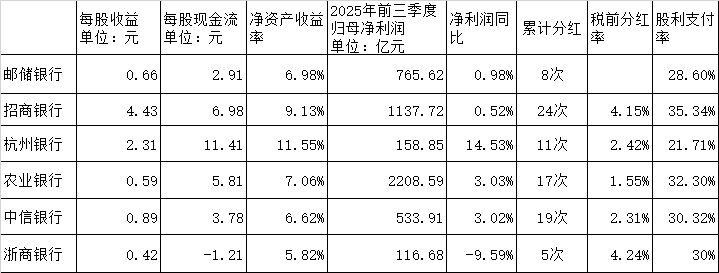
Core Viewpoint - Insurance capital's stake in listed companies has significantly increased, with over 30 instances of stake acquisitions in 2025, marking a new high in recent years [1][10]. Group 1: Stake Acquisition Trends - In 2025, insurance companies made 35 stake acquisitions, up from 20 in 2024, indicating a growing trend in equity market participation [2][11]. - The financial sector is the primary focus for insurance capital, with 15 stake acquisitions involving 6 banks and 2 insurance companies [1][4]. - The H-share market is the main venue for these acquisitions, as it offers better valuation opportunities compared to A-shares [1][4]. Group 2: Active Participants - A total of 14 insurance institutions participated in stake acquisitions in 2025, with Ping An Life leading with 12 acquisitions [2][11]. - Other notable participants include Great Wall Life and China Post Life, each with 4 acquisitions, and several others with fewer [2][11]. - August 2025 was particularly active, with 7 acquisitions, including Ping An Life's significant stake in Postal Savings Bank [2][11]. Group 3: Investment Characteristics - Insurance capital favors low-valuation, high-dividend stocks with stable performance, particularly in the banking sector [4][13]. - The new accounting standards encourage insurance companies to increase stake acquisitions to stabilize profit and loss fluctuations [3][12]. - Financial stocks, especially H-shares, are preferred due to their higher dividend yields compared to long-term bond yields [4][13]. Group 4: Financial Performance of Target Companies - Six banks targeted by insurance capital showed a range of return on equity (ROE) from approximately 6% to 11.55% [5][14]. - The banks reported stable dividend distributions, with China Merchants Bank having the highest number of cumulative dividends at 24 [5][14]. - In the first three quarters of 2025, five banks reported year-on-year profit increases, with Postal Savings Bank achieving a net profit of 765.62 billion yuan, up 0.98% [5][14]. Group 5: Market Reactions and Future Outlook - Stake acquisitions by insurance capital have positively influenced stock prices, often leading to short-term price surges [6][16]. - Insurance stocks have outperformed other sectors, with significant annual increases in stock prices for major insurance companies [8][18]. - The trend of insurance capital acquisitions is expected to continue into 2026, driven by considerations of dividend yield and return on equity [9][19].

939亿增持狂潮!523家A股公司扫货,多家银行股将披露业绩
21世纪经济报道· 2026-01-06 10:10
Core Viewpoint - The banking sector in A-shares is expected to perform well in 2026, driven by stable fundamentals and increased dividend attractiveness, despite a less impressive performance in 2025 compared to previous years [4][9][10]. Group 1: Annual Report Disclosure - Ping An Bank will be the first to disclose its annual report on March 21, followed by CITIC Bank on the same day [1]. - A total of 10 banks will disclose their 2025 annual reports on March 31, marking the highest number of disclosures on a single day [3]. - The total market capitalization of 42 A-share banks exceeded 15 trillion yuan, increasing by approximately 2.1 trillion yuan from the end of 2024 [2][3]. Group 2: Market Performance - The banking sector index rose by 12.05% in 2025, underperforming the CSI 300 index, which increased by 17.66% [3]. - Among the 42 banks, 35 experienced stock price increases, with Agricultural Bank of China leading at a 52.66% rise [3]. - The overall market sentiment towards bank annual reports is positive, with expectations of continued growth in 2026 [4][9]. Group 3: Investment Drivers - The strong performance of the banking sector in 2025 was supported by both funding and fundamental factors, including inflows from passive index funds and insurance [4]. - Significant shareholder buybacks have also contributed to the rise in bank stocks, with 523 companies increasing their holdings, totaling 939.6 billion yuan [6]. - Analysts predict that the demand for high-dividend stocks will remain strong, particularly for state-owned banks known for stable returns [10]. Group 4: Future Outlook - Analysts expect the banking sector to maintain stable performance in 2026, supported by a recovering real economy and high dividend yields [9]. - The issuance of ETFs linked to broad indices and dividend indices is expected to continue, attracting more passive fund inflows into the banking sector [9]. - The differentiation in performance among various banks is anticipated to become a key theme, with larger banks likely to see more consistent revenue growth compared to smaller banks [10]. Group 5: Seasonal Trends - Historical data shows that the banking sector has a high success rate for absolute and excess returns before the Spring Festival, with an average absolute return of 4.4% [11]. - The upcoming Spring Festival in 2026 is expected to see continued strong performance in bank stocks, driven by balanced market styles and robust demand for high-dividend stocks [12]. - Recommendations for stock allocation include a stable base in state-owned banks and a more aggressive approach with quality joint-stock and city commercial banks [12].

农业银行(601288) - 农业银行H股公告
2026-01-06 09:30
致:香港交易及結算所有限公司 呈交日期: 2026年1月6日 股份發行人及根據《上市規則》第十九B章上市的香港預託證券發行人的證券變動月報表 截至月份: 2025年12月31日 狀態: 新提交 I. 法定/註冊股本變動 | 1. 股份分類 | 普通股 | 股份類別 | H | | 於香港聯交所上市 (註1) | | 是 | | | --- | --- | --- | --- | --- | --- | --- | --- | --- | | 證券代號 (如上市) | 01288 | 說明 | | | | | | | | | | 法定/註冊股份數目 | | | 面值 | | 法定/註冊股本 | | | 上月底結存 | | | 30,738,823,096 | RMB | | 1 RMB | | 30,738,823,096 | | 增加 / 減少 (-) | | | 0 | | | RMB | | 0 | | 本月底結存 | | | 30,738,823,096 | RMB | | 1 RMB | | 30,738,823,096 | 公司名稱: 中國農業銀行股份有限公司 | 2. 股份分類 | 普通股 | 股 ...
3月末银行扎堆晒“成绩单” 2026机构仍看好银行板块
2 1 Shi Ji Jing Ji Bao Dao· 2026-01-06 09:09
Group 1 - The core viewpoint of the articles highlights the upcoming annual report disclosures of A-share listed banks, with Ping An Bank being the first to report on March 21, 2025, marking its second consecutive year of early disclosure [1][2] - The banking sector index increased by 12.05% in 2025, underperforming compared to the Shanghai and Shenzhen 300 index, which rose by 17.66% [3] - The total market capitalization of 42 A-share banks surpassed 15 trillion yuan, increasing by approximately 2.1 trillion yuan compared to the end of 2024 [3] Group 2 - Major state-owned banks are set to disclose their performance reports at the end of March, with a peak of 10 banks reporting on March 31, 2025 [2] - The performance of the banking sector in 2025 was driven by both funding and fundamental factors, with significant contributions from passive index funds and northbound capital [3] - A total of 35 out of 42 banks saw their stock prices rise, with Agricultural Bank of China leading with a 52.66% increase [3] Group 3 - Analysts expect the banking sector to maintain stable performance in 2026, supported by high dividend yields and a favorable market environment for dividend stocks [6] - The demand for high-dividend assets is anticipated to rise, particularly for stable state-owned banks, as new funds from the insurance industry are expected to exceed 2 trillion yuan in 2026 [7] - The banking sector is projected to experience a valuation recovery, with estimates suggesting a return to a price-to-book ratio of around 1 [7] Group 4 - Historical data indicates that the banking sector has a high success rate for absolute and excess returns before the Spring Festival, with an average absolute return of 4.4% [8] - Recommendations for stock allocation include a stable base of 30% in state-owned banks and a more aggressive 70% in quality joint-stock banks and city commercial banks [9]