PICC(601319)
Search documents
保险板块11月12日涨2.26%,中国人保领涨,主力资金净流入4.95亿元
Zheng Xing Xing Ye Ri Bao· 2025-11-12 08:49
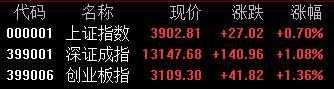
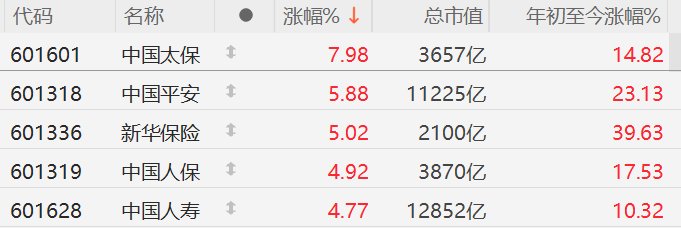
Core Insights - The insurance sector experienced a rise of 2.26% on November 12, with China Life Insurance leading the gains [1] - The Shanghai Composite Index closed at 4000.14, down 0.07%, while the Shenzhen Component Index closed at 13240.62, down 0.36% [1] Insurance Sector Performance - China Pacific Insurance (601318) closed at 60.03, up 1.40%, with a trading volume of 1.49 million shares and a transaction value of 8.99517 billion [1] - China Life Insurance (601628) closed at 44.60, up 1.99%, with a trading volume of 172,600 shares and a transaction value of 766 million [1] - China Property & Casualty Insurance (601601) closed at 36.50, up 2.56%, with a trading volume of 485,400 shares and a transaction value of 1.763 billion [1] - New China Life Insurance (601336) closed at 69.48, up 3.56%, with a trading volume of 273,500 shares and a transaction value of 1.887 billion [1] - China Reinsurance (601319) closed at 8.82, up 4.01%, with a trading volume of 1.2669 million shares and a transaction value of 1.107 billion [1] Capital Flow Analysis - The insurance sector saw a net inflow of 495 million from institutional investors, while retail investors experienced a net outflow of 669 million [1] - China Life Insurance (601318) had a net inflow of 27.3 million from institutional investors, while retail investors had a net outflow of 357 million [2] - New China Life Insurance (601336) had a net inflow of 13.1 million from institutional investors, with a net outflow of 15 million from retail investors [2] - China Property & Casualty Insurance (601601) experienced a net outflow of 7.24 million from institutional investors and a net outflow of 1.46 million from retail investors [2] - China Reinsurance (601319) had a net inflow of 7.018 million from institutional investors, but retail investors had a significant net outflow of 64.42 million [2]
决定险资投向的关键---FVOCI是什么?
Hua Er Jie Jian Wen· 2025-11-12 07:37
Core Viewpoint - The implementation of the new accounting standards in the insurance industry, particularly the FVOCI category, is significantly impacting the asset allocation strategies of insurance companies [1][2][4]. Group 1: Accounting Standards and Implementation - The FVOCI (Fair Value Through Other Comprehensive Income) category will be fully implemented by January 1, 2026, replacing the previous four-category model with a three-category system [2][4]. - The new classification system includes FVOCI, FVTPL (Fair Value Through Profit or Loss), and AC (Amortized Cost) [2][4]. - Non-listed insurance companies must implement the new standards by the specified date, while some companies like China Ping An have already adopted them since 2018 [4]. Group 2: Impact on Profitability - Investment income is crucial for insurance companies, with total investment income contributing significantly to net profit for major players like China Life and China Ping An, with ratios reaching 192% and 194% respectively in the first half of 2025 [8]. - The choice between FVOCI and FVTPL for equity assets can greatly influence profit volatility, with FVOCI potentially offering a more stable profit profile for companies with long-term liabilities [11]. Group 3: Asset Allocation Trends - As of mid-2025, the proportion of equity assets classified under FVOCI has increased for major insurance companies, with China Life's FVOCI equity assets rising by 10.6 percentage points to 22.6% [12]. - The increase in FVOCI equity allocation is attributed to a low-interest-rate environment and a shortage of alternative investments, making FVOCI stocks a short-term substitute for bonds [15]. - In the bond category, the FVOCI proportion has also seen increases, with China Life's bond assets under FVOCI rising by 1.8 percentage points to 87.3% [16]. Group 4: Strategic Considerations - Different insurance companies have varying requirements regarding profit volatility, leading some to prefer a higher allocation to FVOCI assets while others may favor FVTPL for potential higher returns [17]. - The classification of assets is not standardized across the industry, allowing companies to tailor their strategies based on their specific operational needs and investment capabilities [17].
钦州监管分局同意中国人保财险钦州市钦北支公司变更营业场所
Jin Tou Wang· 2025-11-12 03:42
Group 1 - The National Financial Supervision Administration of Qinzhou approved the request from China People's Property Insurance Company Limited Qinzhou Branch to change the business location of its Qinbei Sub-branch [1] - The new business location is specified as the third floor of the East Building of the Qinzhou Federation of Trade Unions Office Complex, located at No. 7 Yongfu East Street, Qinbei District, Qinzhou City, Guangxi Zhuang Autonomous Region [1] - China People's Property Insurance Company Limited is required to handle the change and obtain the necessary permits in accordance with relevant regulations [1]
今年前三季度,南京以知识产权作支点
Nan Jing Ri Bao· 2025-11-12 02:46
Core Insights - The "2025 Jiangsu Province Patent Auction Season" focused on the software and information service industry, highlighting significant patent transfer and licensing activities in Nanjing [1] - Nanjing's patent transfer and licensing reached 12,900 instances from January to September, with 2,516 cases from universities and research institutions [1] - Intellectual property pledge financing benefited 996 companies, amounting to 9.534 billion yuan [1] Group 1 - 18 high-value patents from 11 universities, including Nanjing University and Southeast University, were signed on-site, covering fields such as new generation information technology, biomedicine, new materials, and environmental protection, with an intended amount exceeding 27 million yuan [1] - A strategic collaboration was established between China People's Property Insurance Company and various concept verification centers to enhance risk mitigation and financial empowerment in patent conversion [1][2] Group 2 - The insurance product matrix developed by China People's Property Insurance covers the entire process from concept verification to achievement transformation, with a premium rate of 3% to 10% for concept verification insurance [2] - The Southeast University Concept Verification Center has selected 10 quality projects from over 60 for support, accelerating the implementation of projects in fields like medical engineering and new materials [2] Group 3 - The event featured a promotion of 2,660 "Double Five-Star" patents and 320 open licensing patents, along with a focus on key patents in the software and information service sector [2] - Various technology demands were announced by units in the Nanjing metropolitan area, promoting cross-regional collaborative innovation [2][3]
中国人保擘画高质量发展新蓝图:深耕非车险蓝海 开拓国际化新局
财联社· 2025-11-11 23:10
Core Viewpoint - China Pacific Insurance aims to accelerate the high-quality development of non-auto insurance while consolidating its advantages in auto insurance, aligning with the national "14th Five-Year Plan" and responding to the evolving market dynamics [1][2]. Group 1: Non-Auto Insurance Development - Non-auto insurance is a key area for the insurance industry to fulfill its dual functions and serve national development [1]. - In the first three quarters, China Pacific Insurance achieved insurance service revenue of 431.34 billion yuan, a year-on-year increase of 6.8%, and a net profit of 46.822 billion yuan, up 28.9% year-on-year [2]. - The company has established six core capabilities in non-auto insurance, including rapid pricing, comprehensive channel development, rigorous underwriting, professional claims service, strong reinsurance support, and advanced risk reduction services [3]. Group 2: Market Opportunities and Regulatory Changes - The non-auto insurance market is undergoing significant transformation, with new regulations marking the end of chaotic growth and the beginning of a more regulated development phase [2]. - By the end of the "14th Five-Year Plan," direct foreign investment is expected to exceed 220 billion USD, R&D expenditures will surpass 4.5 trillion yuan, and total social logistics will exceed 450 trillion yuan, indicating strong growth potential for non-auto insurance [3]. Group 3: International Expansion - China Pacific Insurance is focusing on expanding its overseas business, responding to the national strategy for high-level opening-up [4]. - The company aims for overseas business growth to account for approximately 30% of the total growth across all insurance types within five years [5]. - As of September, the company’s overseas interests have covered 148 countries and regions, providing risk protection amounting to 1.7 trillion yuan [6]. Group 4: Internet Health Insurance Growth - The internet health insurance segment has seen a compound annual growth rate of 46.8%, with premiums growing from 30 million yuan in 2017 to 17.8 billion yuan in 2024 [7]. - The company has covered over 80 million customers in the internet health insurance market, holding more than one-third of the market share [7]. - Innovative products such as guaranteed renewals for long-term medical insurance and tax-advantaged nursing insurance have been launched, reflecting a customer-centric approach [8]. Group 5: Technological Innovation and Digital Transformation - China Pacific Insurance is actively promoting digital technology to enhance its insurance services, including the deployment of AI in internet health insurance [10]. - The company has implemented a digital employee system to automate report generation and anomaly detection, improving operational efficiency [10]. - The focus on digital transformation aims to enhance operational efficiency, customer experience, and service capabilities in non-auto insurance management [10].
保险板块11月11日跌1.23%,新华保险领跌,主力资金净流出3213.39万元
Zheng Xing Xing Ye Ri Bao· 2025-11-11 08:46
Core Insights - The insurance sector experienced a decline of 1.23% on November 11, with New China Life Insurance leading the drop [1] - The Shanghai Composite Index closed at 4002.76, down 0.39%, while the Shenzhen Component Index closed at 13289.0, down 1.03% [1] Company Performance - China Ping An (601318) closed at 59.20, down 0.17%, with a trading volume of 362,500 shares and a transaction value of 2.144 billion [1] - China Pacific Insurance (601601) closed at 35.59, down 1.28%, with a trading volume of 267,400 shares and a transaction value of 954 million [1] - China Life Insurance (601628) closed at 43.73, down 1.62%, with a trading volume of 128,600 shares and a transaction value of 562 million [1] - China Property & Casualty Insurance (601336) closed at 8.48, down 1.74%, with a trading volume of 440,500 shares and a transaction value of 375.1 million [1] - New China Life Insurance (601336) closed at 67.09, down 2.23%, with a trading volume of 150,400 shares and a transaction value of 1.019 billion [1] Fund Flow Analysis - The insurance sector saw a net outflow of 32.134 million from institutional investors, while retail investors experienced a net outflow of 84.0465 million [1] - The net inflow from speculative funds was 116 million [1] Individual Stock Fund Flow - New China Life Insurance had a net inflow of 25.5731 million from institutional investors, while retail investors had a net outflow of 76.2197 million [2] - China Life Insurance experienced a net outflow of 0.5293 million from institutional investors and a net inflow of 33.4407 million from speculative funds [2] - China Pacific Insurance had a net outflow of 8.7693 million from institutional investors and a net inflow of 45.3669 million from speculative funds [2] - China Property & Casualty Insurance had a net outflow of 17.9751 million from institutional investors and a net inflow of 26.2701 million from speculative funds [2] - China Ping An had a net outflow of 30.4332 million from institutional investors, with retail investors showing a net inflow of 69.9772 million [2]
中金:25Q3险企NBV延续高增速 向后看负债端对股价影响或增强
Zhi Tong Cai Jing· 2025-11-11 07:50
Group 1 - The core viewpoint is that the new business value (NBV) of Chinese life insurance companies continues to show high growth, with optimistic outlooks for the liability side [2][1] - In 9M25, the NBV growth rates for major life insurance companies are as follows: China Life +76.6%, Ping An +46.2%, China Life +41.8%, and Taiping +31.2% [2][1] - The first-year premium value rates for Ping An and Taiping increased by 7.6 percentage points and 1.7 percentage points to 25.2% and 18.0%, respectively [2][1] Group 2 - The comprehensive cost ratio (CoR) for property insurance companies is improving, with the following year-on-year changes: China Property -2.1 percentage points to 96.1%, Ping An Property -0.8 percentage points to 97.0%, and Taiping Property -1.1 percentage points to 97.6% [3][1] - Regulatory measures have led to improvements in the quality and efficiency of auto insurance, and the current focus on non-auto insurance governance is expected to enhance profitability for leading property insurance companies [3][1] Group 3 - Net profits are experiencing significant growth, driven by strong stock market performance, with annualized total investment returns for China Life and Xinhua increasing by 1.0 and 1.8 percentage points to 6.4% and 8.6%, respectively [4][1] - Taiping and China Property's non-annualized total investment returns increased by 0.5 and 0.8 percentage points to 5.2% and 5.4%, while Ping An's non-annualized comprehensive investment return rose by 1.0 percentage point to 5.4% [4][1] Group 4 - The impact of the liability side on stock prices may increase, as the high investment return-driven market may be nearing its end, leading to a higher probability of weakened asset-side elasticity [5][1] - The focus should be on optimizing liability product structures, reducing costs, and highlighting growth trends in quality life insurance [5][1] - The industry ranking remains as follows: Ping An (601318.SH), China Taiping (00966), China Taiping (601601.SH), China Life (02628), and China Property (601319) [5][1]
中国人保_2025 年投资者日_非车险业务优势将放大;预计到 2030 年海外业务将贡献约 30% 的保费增量
2025-11-11 06:06
Summary of PICC Group Investor Day 2025 Company Overview - **Company**: PICC Group (1339.HK) - **Event**: Investor Day 2025 - **Date**: November 7, 2025 Key Industry Insights Non-Auto Business - **Competitive Advantages**: PICC P&C anticipates that ongoing regulatory strengthening will enhance its competitive advantages in various areas including pricing, distribution, underwriting, claims management, reinsurance, and risk prevention [2][2][2] - **Industry Collaboration**: The top three insurers are collaborating to establish industry standards for risk premium rates, self-determined pricing factors, and insurance liabilities, which will help mitigate risks associated with insufficient premiums [2][2][2] - **Regulatory Support**: Local regulatory bodies will support the filing of non-auto products, which will be managed by local regulators [2][2][2] - **Pricing Standards Timeline**: PICC aims to finalize pricing standards for specific non-auto insurance products by February 1, 2026, with revisions for other products by the end of 2026 [2][2][2] P&C Overseas Business - **Growth Target**: Management targets overseas business to contribute approximately 30% of incremental premiums by 2030, driven by: - **Overseas Chinese Interest Business**: Premiums from this segment grew 11% year-over-year to RMB 1.67 billion in the first nine months of 2025 [2][2][2] - **Coverage for Chinese Products**: Insurance for products made in China, such as NEVs, ships, and aircraft, leveraging PICC's pricing advantages [2][2][2] - **Key Pillars for Overseas Business**: 1. Risk prevention through data collection via reinsurance [2][2][2] 2. Tailor-made solutions based on feedback from various teams [2][2][2] 3. Synergies between onshore and offshore sales teams [2][2][2] 4. Global service network with partnerships with 37 overseas insurers established in 2025 [2][2][2] Health Business - **Growth Metrics**: PICC Health's Internet business, launched in 2017, achieved a GWP CAGR of 46.8%, reaching RMB 17.8 billion in 2024, with a customer base exceeding 80 million [2][2][2] - **Market Share**: PICC Health holds over one-third market share among life insurers nationwide [2][2][2] - **Future Growth Drivers**: 1. Product upgrades based on customer demand [5][5][5] 2. AI deployment to enhance operational efficiency [5][5][5] 3. Synergies between health insurance and health management services, with a new specialized health management services company approved in August 2025 [5][5][5] Financial Outlook - **Share Price and Returns**: Current price is HK$7.20 with a target price of HK$7.50, indicating an expected share price return of 4.2% and a dividend yield of 3.3%, leading to a total expected return of 7.5% [3][3][3] - **Market Capitalization**: Approximately HK$318.4 billion (US$40.95 billion) [3][3][3] Risk Factors - **Downside Risks**: Key risks include prolonged P&C down-cycle, A-share market slump, strengthened regulation on the life industry, and macroeconomic deterioration [8][8][8] Conclusion PICC Group is strategically positioning itself to enhance its non-auto and overseas business segments while leveraging technology and regulatory support to drive growth in its health insurance offerings. The company aims to maintain a competitive edge through collaboration and innovation, despite facing potential market risks.
非银金融行业周报:非车险“报行合一”指引落地,把握年末风格切换的配置机遇-20251111
Donghai Securities· 2025-11-11 05:34
Investment Rating - The industry investment rating is "Overweight" indicating a positive outlook for the sector relative to the broader market [1][33]. Core Insights - The report highlights a mixed performance in the non-bank financial sector, with insurance stocks showing significant gains while brokerage stocks faced declines. The insurance index rose by 1.2%, while the brokerage index fell by 0.7% [4][8]. - The report emphasizes the importance of regulatory changes in the non-auto insurance sector, which are expected to create investment opportunities as companies adapt to new guidelines [4][31]. - The overall market sentiment remains optimistic, with expectations for steady growth in the capital markets supported by improved investor structures and strategic policy directions [4][8]. Summary by Sections Market Overview - The non-bank financial index decreased by 0.2% last week, underperforming the CSI 300 by 1.0 percentage points. The average daily trading volume for stock funds was 25,001 billion yuan, a decrease of 13.3% week-on-week [4][16]. - New account openings on the Shanghai Stock Exchange in October were 2.4672 million, down 21.4% from September, but the year-to-date total reached 22.46 million, up 10.6% year-on-year [4][16]. Insurance Sector - The implementation of the "reporting and operation integration" guidelines for non-auto insurance is expected to enhance investment value, particularly as the year-end approaches and market sentiment shifts [4][31]. - The report suggests focusing on large comprehensive insurance companies that have competitive advantages, especially in light of the new regulatory framework aimed at high-quality development [4][31]. Brokerage Sector - The report notes a decline in new account openings due to a high base effect from the previous year, but the overall market sentiment remains strong, indicating potential for future growth [4][8]. - It recommends focusing on large brokerages with strong capital positions and stable operations, particularly in the context of ongoing mergers and acquisitions and wealth management transformations [4][31]. Investment Recommendations - For brokerages, the report advises capitalizing on the new "National Nine Articles" policy framework, which aims to cultivate top-tier investment banks and support long-term market activity [4][31]. - For insurance companies, the focus should be on those that can optimize product design and enhance channel value under the new regulatory environment [4][31].
人保资产聚力创一流 做好金融“五篇大文章”提质效
Xin Hua Wang· 2025-11-11 02:14
Core Viewpoint - China People's Insurance Asset Management Co., Ltd. (referred to as "People's Asset") focuses on serving national strategies and enhancing financial services through various thematic financial initiatives, including technology finance, green finance, inclusive finance, pension finance, and digital finance [1][2][3]. Group 1: Technology Finance - People's Asset emphasizes investment in high-tech sectors such as artificial intelligence, biomedicine, and advanced manufacturing, with 49 projects in key technology industrialization and 52 invested companies recognized as national "little giant" enterprises [1]. - The "People's Asset - Advanced Manufacturing Industry Fund Equity Investment Plan" aims to support critical technology projects, contributing to the national manufacturing strategy [1]. Group 2: Green Finance - The company has launched the first "dual carbon" themed asset management product and several green debt investment plans, including projects in Henan and Beijing, to support green transformation and reduce carbon intensity in economic development [2]. - People's Asset is also involved in financing blue economy initiatives, such as offshore wind power construction in Guangdong [2]. Group 3: Inclusive Finance - People's Asset focuses on rural revitalization by introducing third-party funding to support local agricultural projects, including the establishment of an unmanned smart farm in Heilongjiang [2]. - The "People's Asset - Zhongguancun Technology Leasing No. 1 Asset Support Plan" is designed to empower small and micro enterprises through targeted financial support [2]. Group 4: Pension Finance - The company is actively participating in the construction of a multi-tiered pension insurance system and is developing high-quality pension financial products to support the aging population [3]. - People's Asset aims to identify investment opportunities in health care, elderly services, and smart aging sectors to enhance the vitality of the silver economy [3]. Group 5: Digital Finance - People's Asset is establishing a digital financial governance framework that integrates technology, data, and AI governance to enhance investment research and risk management [3]. - The company has developed a comprehensive information system platform to support various operational areas, contributing to the growth of China's digital economy [3].