
BANK COMM(601328)

Search documents
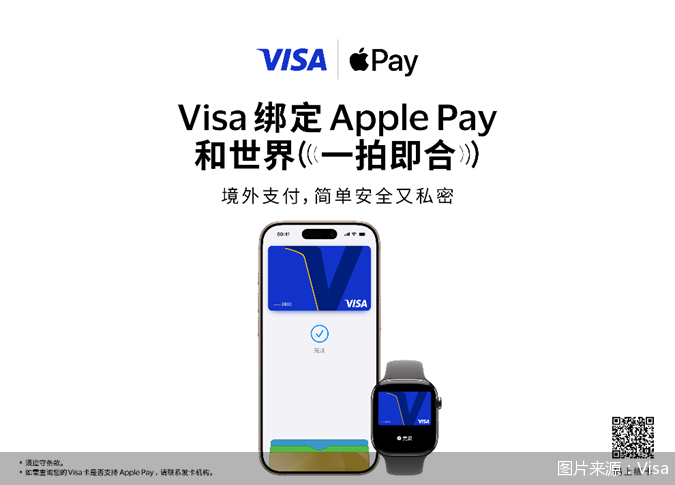
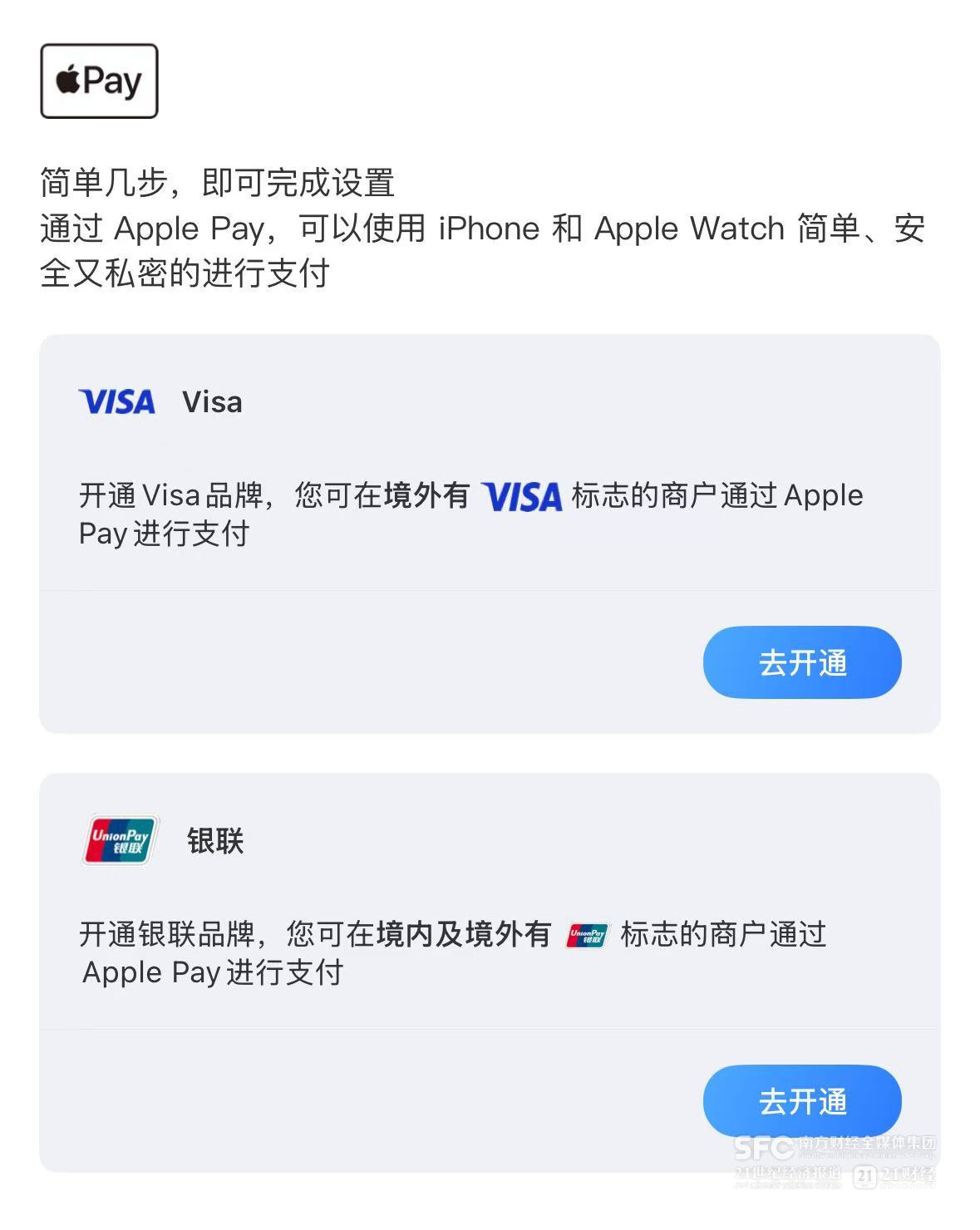
八家银行率先落地Visa支持Apple Pay绑卡,加码跨境支付场景布局
Bei Jing Shang Bao· 2026-01-15 08:14
Core Insights - Visa and Apple Pay have launched a collaboration to allow Chinese cardholders to link their Visa cards to Apple Pay for seamless cross-border payments, enhancing the efficiency and experience of international transactions [1][3][6] Group 1: Collaboration Details - The partnership enables Chinese cardholders to use Apple Pay for payments at overseas merchants, mobile apps, and online platforms, facilitating contactless transactions [3][4] - The initial participating banks include Industrial and Commercial Bank of China, Bank of China, Agricultural Bank of China, and others, with more banks expected to join in the future [4][6] Group 2: Consumer Benefits - The integration of Visa and Apple Pay allows for a streamlined payment process, reducing the need for repeated entry of card information, thus enhancing user convenience [5][6] - Apple Pay's standardized interface is designed to lower the usage threshold for consumers, making it easier to conduct transactions abroad [5][6] Group 3: Security Features - The collaboration incorporates advanced security measures, such as the use of a unique device account number generated by Visa's tokenization technology, which helps mitigate fraud risks [6][7] - Sensitive payment information is not stored on devices or Apple servers, ensuring a higher level of security for users [6][7] Group 4: Bank Strategy - This partnership represents a strategic move for banks to deepen their cross-border financial services and enhance customer engagement by embedding their card products into global mobile payment scenarios [6] - Banks are also launching promotional activities to encourage users to link their Visa cards to Apple Pay, enhancing the overall value proposition for consumers [5][6]





交通银行王冠:新时代的商业银行应该肩负三个使命
Xin Lang Cai Jing· 2026-01-15 07:13
专题:金麒麟论坛 · 2025金融新启航 委书记王冠 交通银行北京市分行党 1月15日金融一线消息,由新浪财经主办的"第18届金麒麟论坛•金融新启航"今日在北京召开。交通银行 北京市分行党委书记王冠出席,并针新时代的商业银行应该肩负三个使命发表演讲。 王冠表示,交通银行经过研究认为,新时代的商业银行应该肩负三个使命:第一,要做创新生态的共建 者,以适配性的金融服务来培育新质生产力;第二,要做普惠共享的践行者,以人民为中心的金融服务 增进民生和福祉;第三,要做绿色转型的引领者,以系统性金融实践支持可持续发展。 以下为发言实录 主持人:感谢刘晓春先生的精彩阐述!也再次感谢三位嘉宾的主旨演讲! 下面,让我们以热烈的掌声欢迎交通银行北京市分行党委书记王冠女士,掌声有请! 王冠:尊敬的各位来宾,非常荣幸能够参加金麒麟论坛,刚才听了于主席、王行长、刘院长的分享,我 也很受启发,今天想跟各位专家共同探讨以金融提质增效助力经济高质量发展这个课题。 党的二十届四中全会已经为我们描绘了未来发展的宏伟蓝图,从银行的角度可以看到,创新驱动、民生 福祉、绿色转型这几个方面已经成为推动未来高质量发展的关键路径,这也为商业银行未来的发展开 ...


Apple Pay支持绑定Visa卡!有银行“即办即绑即用”
2 1 Shi Ji Jing Ji Bao Dao· 2026-01-15 05:50
Core Insights - Apple and Visa announced support for Visa cards issued in mainland China to be linked to Apple Pay, enhancing mobile payment options for users [1] - The initiative aims to address the mobile payment needs of existing cardholders, particularly for cross-border transactions and frequent travelers [2] Group 1: Market Context - The current mobile payment landscape in China is dominated by QR code payments, with lower acceptance of "tap-to-pay" methods like Apple Pay [3] - Visa reported that 79% of global offline transactions come from "tap-to-pay" solutions, indicating a significant gap in domestic adoption compared to international markets [2] Group 2: User Experience and Security - When a credit card is linked to Apple Pay, the actual card number is not stored on the device or Apple's servers, enhancing security through tokenization [3] - The system generates a unique device account number that is encrypted and stored securely, ensuring safe transactions for users [3] Group 3: Operational Details - Users can add their Visa cards to Apple Pay via the Wallet app or directly through their bank's app, enabling immediate use on compatible devices [4] - Some banks, like China Merchants Bank, are innovating with an "instant activation" process, allowing users to apply for and use Visa cards without waiting for physical cards [4] Group 4: Future Outlook - The support for Visa card linking is expected to attract new user groups and increase usage scenarios for Apple Pay, contingent on the growth of Apple's user base and outbound consumption demand [5] - Future integration of more international payment networks is anticipated, with existing technological infrastructure supporting such developments, although regulatory compliance remains a key challenge [5]

“一周进了2亿多”,“大户一下单就是一两百万”
Zhong Guo Ji Jin Bao· 2026-01-15 04:35
Core Insights - The public FOF (Fund of Funds) market in China has seen a significant resurgence, with new products selling out quickly and existing products experiencing substantial inflows of capital [1][4] - Recent data indicates that one fund company received over 200 million yuan in inflows within a week, with "fixed income plus" products attracting the most capital, followed by FOFs [2][3] Fund Inflows - Several fund companies have reported notable inflows into their FOF products, which is a departure from the historically low sales since the first public FOFs were launched in 2017 [3][4] - A newly launched FOF product from a joint venture fund company also received attention, although the inflow was not as significant [5] Purchase Limits - To manage operations and maintain returns, some fund companies have announced purchase limits for their FOF products. For instance, on January 13, a fund company set a daily purchase limit of 100,000 yuan for certain FOFs [7] - The number of FOFs imposing purchase limits has increased significantly this year, with 14 announcements made since January 12, compared to 39 for the entire previous year [8] Bank Channel Development - The rising interest in FOFs is attributed to the increasing efforts of banks in promoting these products. For example, the "TREE Long-term Profit Plan" from China Merchants Bank has gained popularity among clients [10] - The demand for FOFs is partly driven by clients seeking alternatives to low-interest deposits, with FOFs and fixed-income products being key options [10] Product Innovation and Market Growth - The growth in FOFs is supported by clear product lines that cater to different risk and return preferences, as well as the ability to provide a one-stop solution for asset allocation [13] - In 2025, the total fundraising for public FOFs reached 84.53 billion yuan, marking an over eightfold increase year-on-year, and by November 2025, the total scale of public FOFs reached 235.54 billion yuan, a nearly 70% increase from the end of 2024 [13]


2025中国企业ESG“金责奖”优秀奖评选结果揭晓


Xin Lang Cai Jing· 2026-01-15 03:45
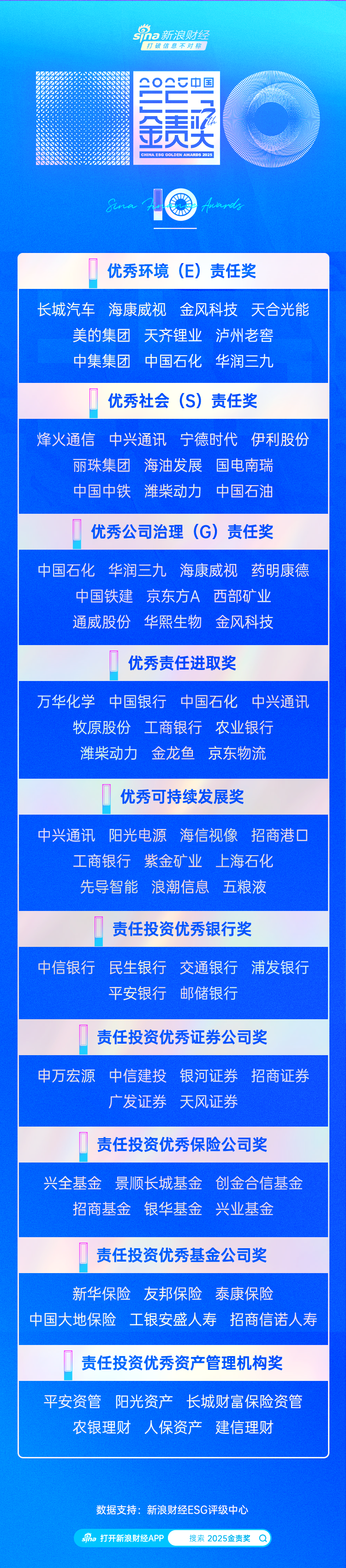
Core Viewpoint - The 2025 China Enterprise ESG "Golden Responsibility Award" aims to recognize companies and institutions that have made significant contributions to ESG initiatives in China, reflecting a shift from voluntary practices to compliance requirements in ESG performance [1][12]. Group 1: ESG Development and Awards Overview - By 2025, China's ESG development has transitioned from "setting standards" to "strengthening regulations," with a comprehensive disclosure standard system being established [1][12]. - The award selection attracted over 5,000 companies, with results based on ESG performance, online voting, and professional evaluations [2][12]. Group 2: Award Categories and Winners - The award categories include Excellent Environmental Responsibility Award, Excellent Social Responsibility Award, Excellent Corporate Governance Responsibility Award, Excellent Responsibility Initiative Award, Excellent Sustainable Development Award, and various responsibility investment awards [1][12]. - Notable winners of the Excellent Environmental Responsibility Award include Great Wall Motors, Hikvision, and China Petroleum [7][24]. - The Excellent Social Responsibility Award was awarded to companies such as YF Communication, ZTE, and Ningde Times [7][24]. - Winners of the Excellent Corporate Governance Responsibility Award include China Petroleum, Hikvision, and WuXi AppTec [7][24]. - The Excellent Responsibility Initiative Award was given to companies like ZTE, Sunlight Power, and Industrial and Commercial Bank of China [7][24]. - The Excellent Sustainable Development Award included companies such as WanHua Chemical, China Bank, and China Petroleum [7][24]. Group 3: Responsibility Investment Awards - The Responsibility Investment Excellent Bank Award was given to institutions like CITIC Bank and Minsheng Bank [5][21]. - The Responsibility Investment Excellent Securities Company Award included firms such as Shenwan Hongyuan and CITIC Securities [5][22]. - The Responsibility Investment Excellent Insurance Company Award recognized companies like New China Life and AIA [5][26]. - The Responsibility Investment Excellent Fund Company Award included firms such as Xinhua Fund and Harvest Fund [5][27]. - The Responsibility Investment Excellent Asset Management Institution Award recognized institutions like Ping An Asset Management and Sunshine Asset Management [5][28]. Group 4: Call to Action and Future Directions - The award committee encourages more Chinese enterprises to integrate ESG principles into their operations and strategic planning, emphasizing the importance of balancing commercial and social values [10][29].
Visa支持中国消费者Apple Pay绑卡
Xin Lang Cai Jing· 2026-01-15 02:55
1月15日金融一线消息,Visa今日宣布支持中国持卡人 ApplePay绑卡。Visa将与Apple一起,支持中国持 卡人将Visa卡绑定至ApplePay,并在境外的线下商户、移动app或线上网站等多种场景进行支付。目 前,全球79%的线下交易来自"一拍即付"。 Visa中国区总裁尹小龙表示:"全球数字支付飞速发展的同时,消费者对基于手机的、互联互通的移动 支付方式的需求也与日俱增。一直以来,Visa致力于为中国持卡人提供多元的支付选择,让他们无论身 处何地,都能安心自在地畅享支付之旅。此次,Visa秉持着对中国市场和持卡人长期不变的承诺,在数 据安全与支付安全领域加大投入,推出支付标记化服务并率先实现其在跨境场景的应用。我们很高兴与 Apple及金融机构携手,率先为中国持卡人带来更安全、更便捷的移动支付新体验。" 首批支持的发卡银行包括:中国工商银行、中国银行、中国农业银行、交通银行、招商银行、中信银 行、平安银行及兴业银行。Visa和Apple正在与包括上海浦东发展银行、中国建设银行、中国民生银 行、中国光大银行在内的更多银行伙伴紧密合作,相关功能将于未来陆续上线。 责任编辑:王馨茹 Visa中国区总裁 ...



交银施罗德中证A500指数增强型发起式证券投资基金基金份额发售公告
Shang Hai Zheng Quan Bao· 2026-01-14 17:37
Fund Overview - The fund is named "Jiao Yin Shi Luo De Zhong Zheng A500 Index Enhanced Initiating Securities Investment Fund" and is classified as an equity securities investment fund [18] - It operates as a contractual open-end fund with an indefinite duration [18] - The initial face value of the fund shares is set at 1.00 RMB per share [18] Fund Categories - The fund offers two categories of shares: Class A and Class C. Class A shares incur subscription fees, while Class C shares do not [19][20] - Class A shares have a specific fund code (026736) and are available for subscription through direct sales channels without fees [21] - Class C shares have a different fund code (026737) and are available through other sales institutions [21] Subscription Details - The subscription period for the fund is from January 26, 2026, to February 6, 2026, with a maximum duration of three months [25] - The minimum subscription amount for direct sales institutions is 1 million RMB for the first subscription and 100,000 RMB for subsequent subscriptions, while other sales institutions accept a minimum of 1 RMB [5][33] - Investors can make multiple subscriptions during the fundraising period, and subscription fees are calculated separately for each application [5][33] Investor Requirements - Investors must open a fund account with the management company before subscribing, and only one account per investor is allowed [4] - The fund is open to individual investors, institutional investors, qualified foreign investors, and other investors permitted by law [4][21] Fund Management - The fund is managed by Jiao Yin Shi Luo De Fund Management Co., Ltd., and the custodian is Industrial and Commercial Bank of China [1] - The management company is responsible for the fund's operations and must adhere to regulatory requirements [1][54] Sales Channels - Subscriptions can be made through the management company's direct sales counter, online trading platform, and other sales institutions [3][22] - The management company may select additional qualified institutions for fund sales as per legal requirements [24] Fund Operation and Verification - The fund's effective contract will be established after meeting the necessary conditions and undergoing verification by a qualified accounting firm [50][51] - If the fundraising conditions are not met by the end of the subscription period, the management company will return the subscription funds to investors [49]
“马币马钞”因何抢不上?多家银行释疑,二手市场价已飙至千元
Xin Lang Cai Jing· 2026-01-14 11:11
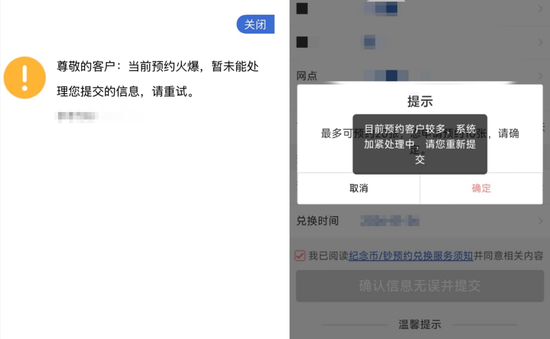
Core Viewpoint - The reservation for the Year of the Horse commemorative coins and banknotes has officially started, but many users are facing difficulties in securing their reservations due to high demand and technical issues with banking apps [1][3][5]. Group 1: Reservation Issues - The reservation process for the Year of the Horse commemorative coins and banknotes has become a trending topic on social media, with many users expressing frustration over the inability to secure their reservations despite being online at the designated time [3][5]. - Users reported various issues with banking apps, including page loading failures and system crashes, leading to a significant number of complaints about the reservation process [6][8]. - Bank representatives attributed the technical difficulties to the overwhelming number of simultaneous reservation attempts, stating that the systems were functioning normally despite the high traffic [8][10]. Group 2: Pricing and Market Demand - The official prices for the commemorative coins and banknotes are set at 200 yuan for a set of 20 coins and 400 yuan for a set of 20 banknotes, totaling 600 yuan [1][12]. - However, on secondary trading platforms, the prices for these sets have surged, with listings exceeding 1000 yuan and some reaching as high as 1500 yuan, indicating a strong demand in the collector's market [11][12]. - The popularity of commemorative coins and banknotes has been described as "phenomenal," with previous releases also experiencing similar high demand and rapid sellouts [14].

保本同时也能博取更高收益?多家银行发行挂钩黄金的结构性存款
Mei Ri Jing Ji Xin Wen· 2026-01-14 09:53
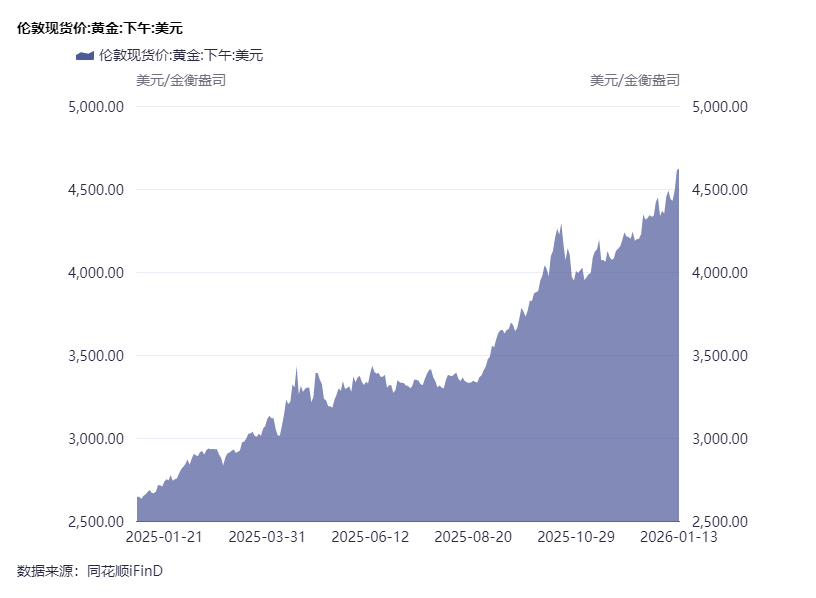
国际金价连创新高,众多投资者活跃参与,部分投资者赚得盆满钵满,但对于一些厌恶投资风险的投资者而言,担心的却是金价下行带来投资 损失。 近期不少银行推出了与黄金挂钩的结构性存款产品,正是抓住了这部分投资者既不甘心亏本又想博取更高收益的需求。 业内人士认为,2026年一季度还处在前几年利率较高的定期存款集中到期高峰阶段,此时商业银行推出结构性存款还可以解决资金稳定性的问 题。 挂钩黄金的结构性存款产品密集推出 当前,国内银行存款利率处于低位。部分银行短期存款利率已经到了0开头,如工商银行个人人民币3月期整存整取存款当前执行利率为 0.65%,甚至3个月期限20万元起存的大额存单年化利率也仅为0.9%。 存款利率下行,与之相对的黄金市场却一路走高,这也使得多家银行顺势密集推出挂钩黄金的结构性存款产品。这类产品凭借"本金保障+收益 浮动"的核心优势与灵活期限选择,成为风险厌恶型投资者的新选项。 2025年,国际金价走出史诗级牛市,伦敦现货黄金价格从年初约2646美元/盎司攀升至年底超4367.8美元/盎司,全年累计涨幅约65%。 自2025年初以来伦敦现货黄金价格走势(单位:美元/盎司) 以招商银行为例,该行于1月1 ...

真金白银促消费 交通银行金融“暖实力”助燃市场“消费力”
Xin Hua Wang· 2026-01-14 07:18
近期,岁末新春消费旺季叠加政策红利,全国消费市场持续升温。交通银行积极响应国家扩内需、促消 费号召,联动多地政府及商户,推出以旧换新、文化旅游及餐饮消费等主题优惠活动,配套多元化补 贴,以真金白银激活消费潜力,为市场注入"暖动能"。 加码支持以旧换新助力释放封关红利 在海南自贸港封关运作启动之际,交行顺应消费场景升级新趋势,在当地推出"4+N"主题促消费行动, 紧扣"衣食住行游购娱"民生重点及免税购物等热点,开展各类惠民优惠活动。例如,围绕"以旧换新"核 心场景,交行海南省分行推出"满3000元立减150元"家电及电子数码优惠券,客户在享受政府补贴后可 叠加使用,切实降低居民消费焕新成本,激发品质消费意愿。 "封关后选择更多,刚好叠加了政府补贴和交行优惠活动,双重补贴太实在了。"海口市市民陈女士趁着 优惠,以7849.35元拿下原价9411元的电视机,累计省下1561.65元。 后续,该行将在海南主要商圈、连锁超市等线下场景,及抖音、携程、支付宝等线上平台,上线消费满 减、分期免息等活动,精准对接封关后免税购物、跨境消费等需求,提升岛民日常消费与游客跨境购物 体验。 深度打造文旅金融场景助燃冰雪经济升温 随着 ...