
SFC(601595)

Search documents
上海国企改革板块11月21日跌2.97%,西藏城投领跌,主力资金净流出25.9亿元


Sou Hu Cai Jing· 2025-11-21 09:52
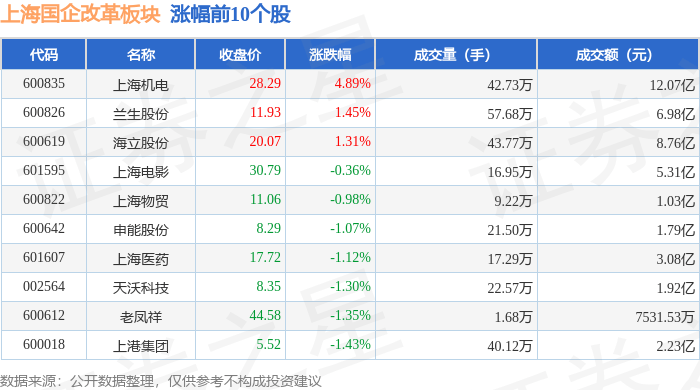
Market Overview - On November 21, the Shanghai State-Owned Enterprise Reform sector fell by 2.97% compared to the previous trading day, with Tibet City Investment leading the decline [1] - The Shanghai Composite Index closed at 3834.89, down 2.45%, while the Shenzhen Component Index closed at 12538.07, down 3.41% [1] Stock Performance - Shanghai Mechanical and Electrical (600835) saw a closing price of 28.29, with an increase of 4.89% and a trading volume of 427,300 shares, amounting to a transaction value of 1.207 billion [1] - Tibet City Investment (600773) experienced a significant drop of 10.02%, closing at 12.93, with a trading volume of 473,100 shares [2] - Hydrogen Alkali Chemical (600618) and Data Port (603881) also faced declines of 9.53% and 7.83%, respectively [2] Capital Flow - The Shanghai State-Owned Enterprise Reform sector saw a net outflow of 2.59 billion yuan from institutional investors, while retail investors had a net inflow of 2.12 billion yuan [2] - The main capital flow data indicates that Shanghai Mechanical and Electrical had a net inflow of 1.20 billion yuan from institutional investors, while retail investors had a net outflow of 43.99 million yuan [3]

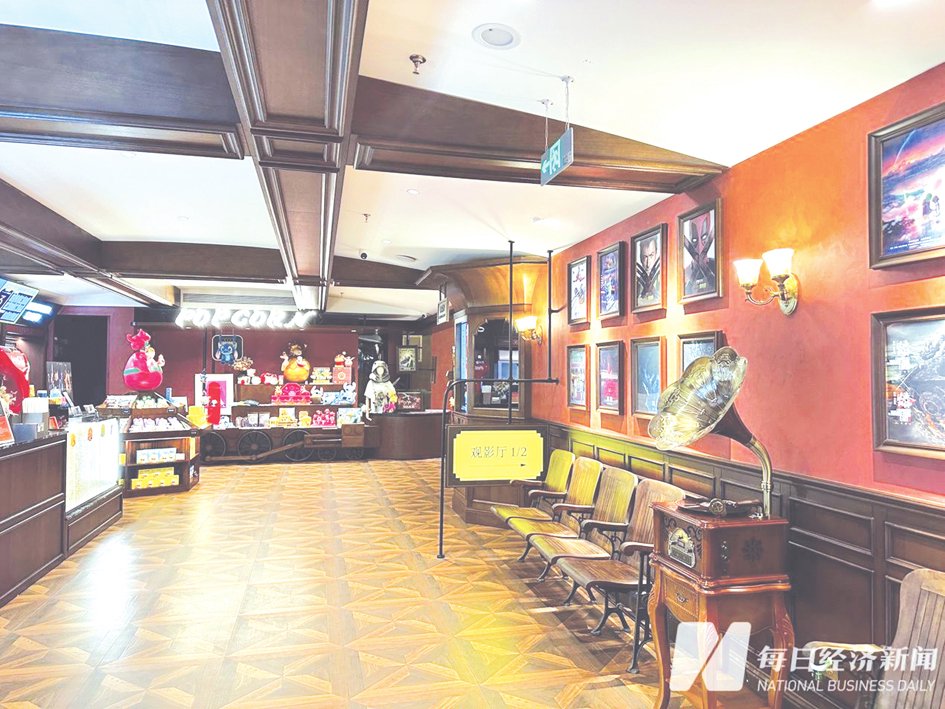
万达电影“收权”,上海电影“扩网” 不需要那么多影院 每经解密龙头公司存量战
Mei Ri Jing Ji Xin Wen· 2025-11-20 12:57
Core Insights - The cinema industry is facing significant challenges as box office revenues per screen have dropped below 500,000 yuan, leading to over 15 cinema closures in just half a month [1][3] - Major cinema chains like Wanda Film and Shanghai Film are adapting their strategies, with Wanda Film shifting focus from franchise models to direct ownership of cinemas [5][6] - The industry is transitioning from a growth phase to a focus on optimizing existing assets, emphasizing the need for differentiation and enhanced consumer experiences [8][11] Industry Trends - The number of cinema screens in China is approaching 100,000, but the average annual box office per screen is declining [1] - Major cinema chains are experiencing structural challenges despite holding significant market shares, indicating a need for transformation [1][3] - Non-box office revenue streams are becoming increasingly important, with competition in this area likely to shape the industry's future [3][9] Company Strategies - Wanda Film has paused its franchise model and is focusing on direct ownership, which currently accounts for about 15% of its total box office revenue [5][6] - The company is implementing standardized management practices across its direct cinemas to ensure brand consistency and operational efficiency [7] - Shanghai Film is also exploring diverse revenue streams and enhancing customer experiences to remain competitive in a saturated market [8][11] Financial Performance - Wanda Film's direct cinemas have increased to 229 locations, reflecting a strategy aimed at improving operational efficiency and profitability [7] - The non-box office revenue is rapidly growing, with significant contributions from IP collaborations and merchandise sales, indicating a shift in revenue generation strategies [10][12] Market Dynamics - The cinema market is entering a phase of optimization, where operational excellence and unique consumer experiences are critical for survival [8][11] - The industry is witnessing a shift in consumer behavior, necessitating cinemas to innovate and adapt to changing preferences [9][12] - The focus is moving towards creating immersive experiences and leveraging technology to attract a broader audience [11][12]

千亿谷子市场破局,还得靠动画电影?
3 6 Ke· 2025-11-20 12:26
Core Insights - The animation film industry in China is experiencing a resurgence, shifting focus from creating standalone works to developing intellectual properties (IPs) that can generate multiple revenue streams [2][3][22] Industry Trends - Domestic animation films have a clear advantage in the IP sector due to their broad audience appeal and reduced risks associated with geopolitical tensions, particularly with Japan [3] - Despite a generally sluggish film market, animation has shown strong performance, with titles like "Nezha: Birth of the Demon Child" and "Boonie Bears" achieving significant box office success [3][6] Company Strategies - Companies like Light Chaser Animation have pivoted towards IP management, with successful franchises like "Nezha" leading to extensive merchandise development, covering over 30 categories and 500 products, with potential total sales reaching hundreds of billions [5] - Shanghai Film has also capitalized on IPs, with "Wandering Earth" contributing to a 101.6% year-on-year revenue increase in Q3, amounting to 3.61 billion yuan [6] - Wanda Film, leveraging its strong distribution channels, has expanded into gaming and merchandise, creating over 60 types of products related to "White Snake: The Legend" [11] Future Developments - Light Chaser is advancing multiple projects, including sequels and new IPs, while also exploring merchandise opportunities in various sectors, including gaming and theme parks [7] - Shanghai Film is actively developing its own products and collaborating with over 40 brands, with expectations for derivative sales to exceed 2.5 billion yuan by year-end [9] - Companies like Maoyan Entertainment are entering the animation space with new brands and IP collaborations, indicating a growing trend in the industry [19][20] Market Dynamics - The industry is witnessing a shift towards non-box office revenue, with companies aiming to replicate the successful revenue models seen in Hollywood, where box office and non-box office income are more balanced [22] - The current wave of IP and derivative product development reflects a strategic response to market trends, with companies diversifying their offerings beyond traditional film revenue streams [22]


影视院线板块11月20日跌1.67%,幸福蓝海领跌,主力资金净流出4.05亿元
Zheng Xing Xing Ye Ri Bao· 2025-11-20 09:16
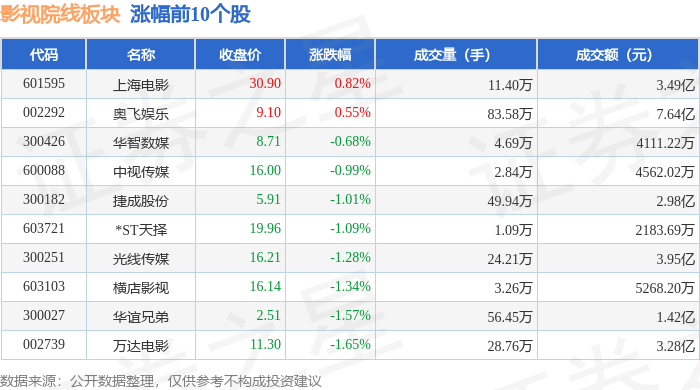
Market Overview - The film and theater sector declined by 1.67% on November 20, with Happiness Blue Sea leading the drop [1] - The Shanghai Composite Index closed at 3931.05, down 0.4%, while the Shenzhen Component Index closed at 12980.82, down 0.76% [1] Stock Performance - Shanghai Film (601595) closed at 30.90, up 0.82% with a trading volume of 114,000 shares and a turnover of 349 million [1] - AoFei Entertainment (002292) closed at 9.10, up 0.55% with a trading volume of 835,800 shares and a turnover of 764 million [1] - Happiness Blue Sea (300528) led the decline, closing at 21.15, down 5.58% with a trading volume of 241,300 shares and a turnover of 519 million [2] - China Film (600977) closed at 16.41, down 2.78% with a trading volume of 480,500 shares and a turnover of 797 million [2] Capital Flow - The film and theater sector experienced a net outflow of 405 million from institutional investors, while retail investors saw a net inflow of 468 million [2] - The data indicates that retail investors are more active in the sector despite the overall decline [2] Individual Stock Capital Flow - AoFei Entertainment had a net inflow of 48.85 million from institutional investors, while retail investors had a net outflow of 88.64 million [3] - Happiness Blue Sea saw a significant net outflow of 14.14 million from institutional investors, indicating weaker institutional interest [3] - Shanghai Film experienced a net outflow of 7.86 million from institutional investors, suggesting a cautious stance among larger investors [3]


上海电影涨2.02%,成交额2.31亿元,主力资金净流出1620.42万元
Xin Lang Cai Jing· 2025-11-20 05:31
Core Viewpoint - Shanghai Film's stock has shown a significant increase this year, with a year-to-date rise of 26.85% and a recent uptick of 6.29% over the last five trading days, indicating positive market sentiment towards the company [1] Company Overview - Shanghai Film Co., Ltd. was established on October 7, 1994, and went public on August 17, 2016. The company primarily engages in film distribution and exhibition, including film rights sales, cinema operations, advertising, and technical services [2] - The revenue composition of Shanghai Film includes 81.28% from film exhibition and other services, 11.07% from intellectual property licensing, 6.12% from cinema lines, and 5.33% from film investment management and distribution [2] - As of September 30, 2025, the company had 43,800 shareholders, an increase of 75.76% from the previous period, with an average of 10,232 circulating shares per shareholder, down 43.10% [2] Financial Performance - For the period from January to September 2025, Shanghai Film reported a revenue of 723 million yuan, representing a year-on-year growth of 29.09%, and a net profit attributable to shareholders of 139 million yuan, up 29.81% year-on-year [2] Dividend Information - Since its A-share listing, Shanghai Film has distributed a total of 434 million yuan in dividends, with 116 million yuan distributed over the past three years [3] Institutional Holdings - As of September 30, 2025, major shareholders include Guangfa Value Leading Mixed Fund, which increased its holdings by 666,100 shares, and new entrants like Guangfa Gathering Wealth Mixed Fund and Nan Fang CSI 1000 ETF [3]
不需要那么多影院了,万达电影“收权”、上海电影“扩网”⋯⋯独家对话:解密龙头公司存量战
3 6 Ke· 2025-11-19 12:31
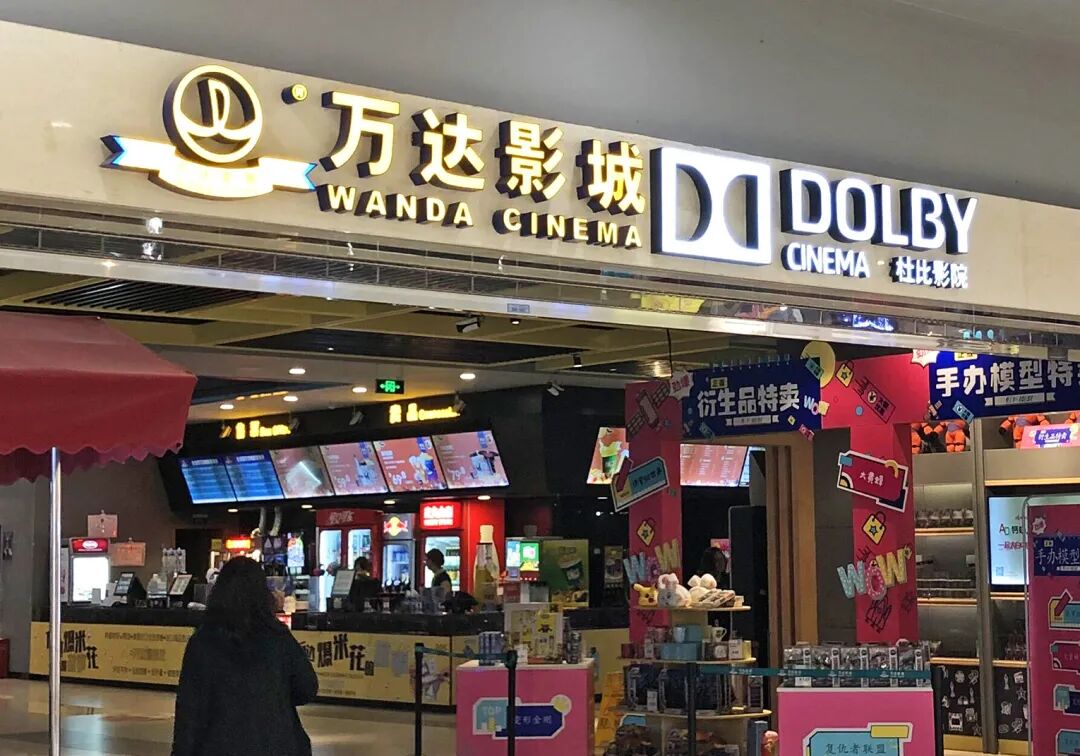
Core Insights - The cinema industry is facing significant challenges, with a decline in annual box office revenue per screen dropping below 500,000 yuan, leading to over 15 cinema closures in just half a month [1] - Major cinema chains like Wanda Film and Shanghai Film are adapting their strategies, with Wanda shifting focus from franchise models to direct management, while Shanghai continues to expand its franchise network [1][3] - The competition in the cinema industry is increasingly shifting towards non-box office revenue streams, which will play a crucial role in determining the industry's future landscape [1] Group 1: Industry Challenges - The number of cinema screens is approaching 100,000, but the average annual box office per screen has decreased significantly [1] - The market is experiencing a "window period" after the popularity of films like "Nezha: Birth of the Demon Child" has waned, highlighting the need for strategic adjustments [1] - The structural challenges faced by leading cinema chains reflect the broader transformation challenges within the industry [1] Group 2: Strategic Shifts - Wanda Film has halted new franchise agreements, focusing instead on direct management of its cinemas, which account for approximately 15% of its total box office revenue [5] - The shift in strategy is linked to Wanda's recent transition to an independent publicly listed company, moving away from the Wanda Group's previous operational model [5] - Shanghai Film continues to open franchise opportunities, indicating a divergence in strategic approaches among leading cinema chains [1][3] Group 3: Non-Box Office Revenue - The competition for non-box office revenue is expected to intensify, with cinema operators exploring diverse business models to enhance profitability [1] - Wanda Film has successfully integrated gaming and other entertainment experiences into its cinema offerings, generating significant additional revenue [12] - Shanghai Film is also pursuing a comprehensive approach to IP management, demonstrating the potential for substantial non-box office income through merchandise and brand collaborations [13][15]
不需要那么多影院了!万达电影“收权”、上海电影“扩网”⋯⋯独家对话:解密龙头公司存量战
Mei Ri Jing Ji Xin Wen· 2025-11-19 10:40
Core Insights - The cinema industry is facing significant challenges, with a decline in annual box office revenue per screen dropping below 500,000 yuan, leading to over 15 cinema closures in just half a month [1] - Major cinema chains like Wanda Film and Shanghai Film are adapting their strategies, with Wanda shifting focus from franchise models to direct management [1][5] - The industry is transitioning from a growth phase to a focus on optimizing existing assets and enhancing quality, with an emphasis on non-box office revenue streams [10][12] Group 1: Industry Challenges - The number of cinema screens is approaching 100,000, but the average annual box office per screen is decreasing, indicating a saturated market [1] - The market is experiencing a "window period" after the popularity of films like "Nezha: Birth of the Demon Child" has waned, highlighting the need for strategic shifts among cinema operators [1] - The competitive landscape is intensifying as cinema chains must innovate beyond traditional box office revenue to survive [1][10] Group 2: Strategic Shifts - Wanda Film has halted new franchise agreements, focusing instead on direct management of its cinemas, which account for approximately 17% of the industry’s total box office [5][6] - The shift to a direct management model is a response to the company's recent independence from the Wanda Group, allowing for a more focused operational strategy [5][6] - Shanghai Film continues to open franchise opportunities, indicating a divergence in strategy among leading cinema chains [1][5] Group 3: Non-Box Office Revenue - The cinema industry is increasingly looking to enhance non-box office revenue through diversified offerings, such as partnerships with gaming and merchandise [12][13] - Wanda Film has successfully integrated gaming experiences into its cinemas, generating significant additional revenue [12][13] - The focus on creating unique consumer experiences and leveraging intellectual property (IP) is seen as essential for future growth and sustainability in the cinema sector [10][12][15]
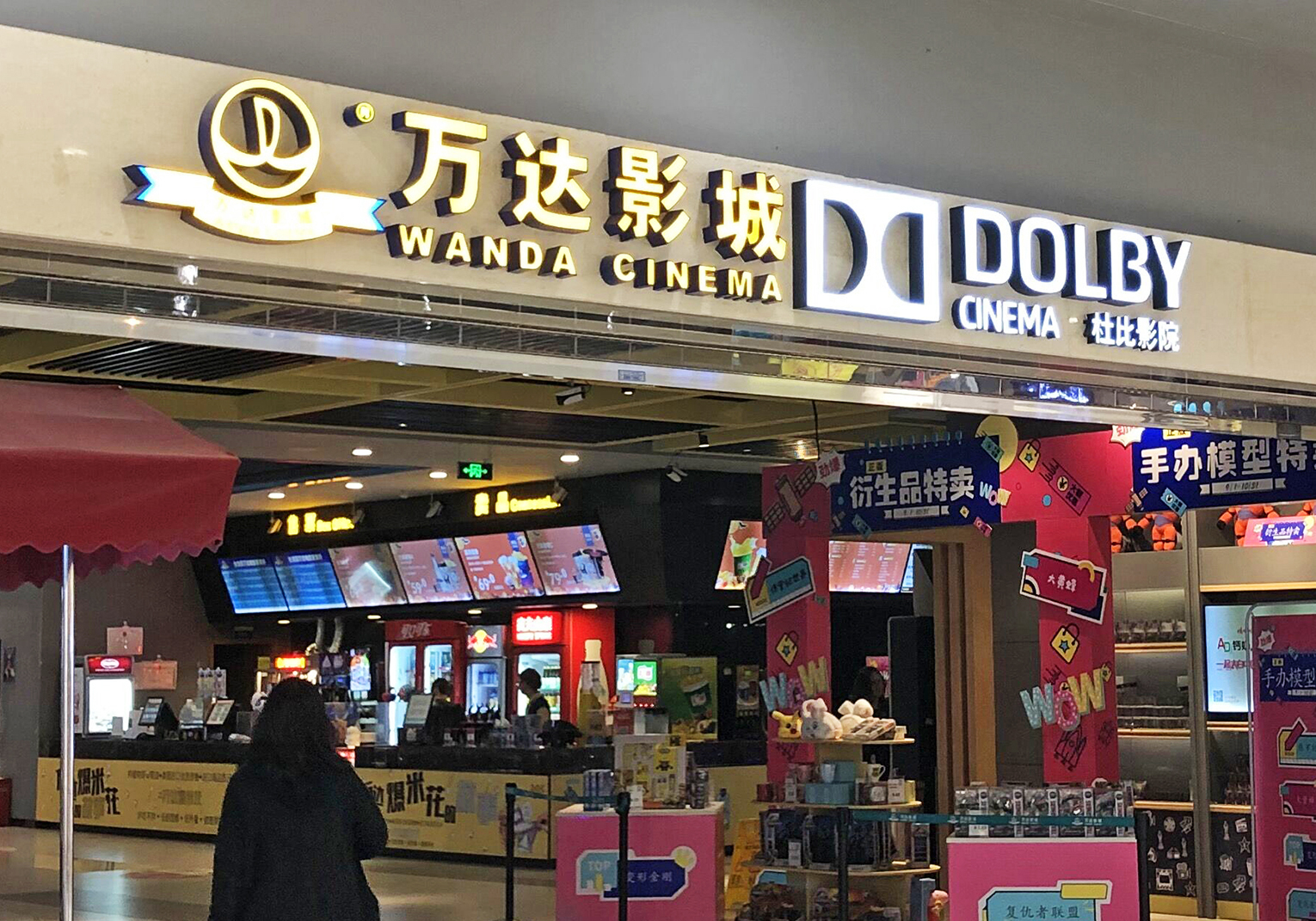
不需要那么多影院了!万达电影“收权”、上海电影“扩网”独家对话:解密龙头公司存量战
Mei Ri Jing Ji Xin Wen· 2025-11-19 10:39
Core Insights - The cinema industry is facing significant challenges, with a decline in annual box office revenue per screen dropping below 500,000 yuan, leading to over 15 cinema closures in just half a month [2] - Major cinema chains like Wanda Film and Shanghai Film are adapting their strategies in response to market pressures, focusing on direct management rather than franchise models [4][6] Industry Overview - The number of cinema screens in China is approaching 100,000, yet the market is experiencing a structural downturn, prompting leading cinema investment companies to rethink their operational strategies [2] - The shift from a franchise model to a focus on direct management is evident, with Wanda Film halting new franchise agreements while Shanghai Film continues to expand its franchise network [2][4] Strategic Adjustments - Wanda Film's management has emphasized a strategic pivot towards direct operations, which currently account for approximately 15% of its total box office revenue, as opposed to the 2% from franchise operations [6] - The company is undergoing a transition following its acquisition by Ru Yi Film, moving away from the Wanda Group's influence and focusing on long-term operational sustainability [6][7] Market Trends - The cinema industry is entering a phase of optimization, where the focus is shifting from expansion to enhancing operational efficiency and customer experience [9] - The competition is expected to intensify in non-box office revenue streams, with companies exploring diverse business models to attract audiences beyond traditional film screenings [11][12] Revenue Diversification - Companies are increasingly looking to enhance non-box office revenues through collaborations with popular IPs and gaming, as seen with Wanda Film's partnerships that have generated significant additional revenue [11][12] - The success of films like "Wang Wang Mountain Little Monster" demonstrates the potential for substantial non-box office income, with the IP generating over 2.5 billion yuan in merchandise sales [13]
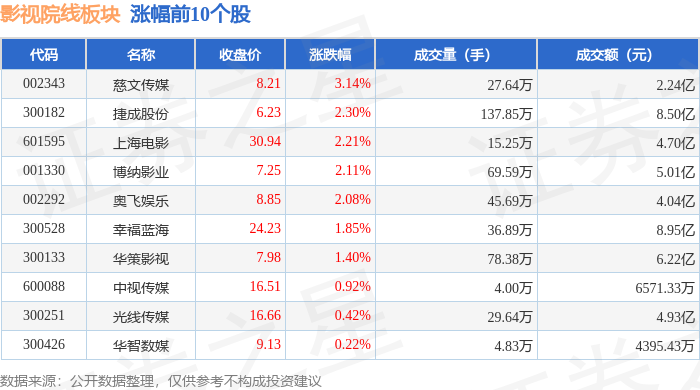
影视院线板块11月18日涨1.06%,慈文传媒领涨,主力资金净流入1277.2万元
Zheng Xing Xing Ye Ri Bao· 2025-11-18 08:11
Market Performance - The film and television industry sector rose by 1.06% on November 18, with Ciwen Media leading the gains [1] - The Shanghai Composite Index closed at 3939.81, down 0.81%, while the Shenzhen Component Index closed at 13080.49, down 0.92% [1] Individual Stock Performance - Ciwen Media (002343) closed at 8.21, up 3.14% with a trading volume of 276,400 shares and a transaction value of 224 million [1] - Other notable gainers included: - Jiecheng Co. (300182) at 6.23, up 2.30% [1] - Yihai Film (601595) at 30.94, up 2.21% [1] - Bona Film (001330) at 7.25, up 2.11% [1] - Aofei Entertainment (002292) at 8.85, up 2.08% [1] Capital Flow Analysis - The film and television sector saw a net inflow of 12.77 million from institutional investors, while retail investors experienced a net outflow of 42.06 million [2] - The sector's overall capital flow indicates a mixed sentiment among different investor types [2] Detailed Capital Flow for Selected Stocks - Shanghai Film (601595) had a net inflow of 98.89 million from institutional investors, but a net outflow of 56.96 million from retail investors [3] - Jiecheng Co. (300182) saw a net inflow of 52.41 million from institutional investors, with retail investors experiencing a net outflow of 82.48 million [3] - Bona Film (001330) had a net inflow of 34.11 million from institutional investors, while retail investors had a net outflow of 34.76 million [3]


上海电影涨2.02%,成交额2.01亿元,主力资金净流入2547.70万元
Xin Lang Cai Jing· 2025-11-18 03:39
Core Viewpoint - Shanghai Film's stock has shown a significant increase in price and trading activity, indicating positive market sentiment and potential growth in the film industry [1][2]. Group 1: Stock Performance - On November 18, Shanghai Film's stock rose by 2.02%, reaching 30.88 CNY per share, with a trading volume of 201 million CNY and a turnover rate of 1.47%, resulting in a total market capitalization of 13.84 billion CNY [1]. - Year-to-date, Shanghai Film's stock price has increased by 25.26%, with a 3.66% rise over the last five trading days and a 12.08% increase over the last 20 days, although it has decreased by 9.79% over the past 60 days [1]. Group 2: Financial Performance - For the period from January to September 2025, Shanghai Film reported a revenue of 723 million CNY, reflecting a year-on-year growth of 29.09%, and a net profit attributable to shareholders of 139 million CNY, which is a 29.81% increase compared to the previous year [2]. - The company has distributed a total of 434 million CNY in dividends since its A-share listing, with 116 million CNY distributed over the past three years [3]. Group 3: Shareholder Structure - As of September 30, 2025, the number of shareholders for Shanghai Film increased to 43,800, a rise of 75.76%, while the average number of tradable shares per shareholder decreased by 43.10% to 10,232 shares [2]. - Notable changes in institutional holdings include an increase in shares held by Guangfa Value Leading Mixed Fund, which became the third-largest shareholder with 3.34 million shares, while Guangfa Ruiyi Leading Mixed Fund saw a decrease in holdings [3].