
China Life(601628)

Search documents
4Q25人身保险业利率研究专家咨询委员会例会点评:预定利率研究值或已筑底确认,中期再迎“炒停售”季概率较低
ZHONGTAI SECURITIES· 2026-01-21 05:37
Investment Rating - The report maintains an "Overweight" rating for the industry [1]. Core Insights - The current preset interest rate for ordinary life insurance products is 1.89%, a slight decrease from the previous value of 1.90%, indicating a narrowing decline in the preset interest rate research values over recent quarters [4]. - The report highlights that the long-end interest rates have stabilized since 2025, with a gradual upward trend established in the second half of 2025, suggesting a positive outlook for the industry [4]. - The report emphasizes the implementation of a dynamic adjustment mechanism linking preset interest rates to market rates, which is expected to guide companies in prudent pricing and asset-liability management [4]. - The likelihood of a "buy-stop" season in 2026 is considered low, as the preset interest rate research value is close to the maximum allowable rate for current products, making significant adjustments unlikely [4]. Summary by Sections Industry Overview - The report notes that the preset interest rate research values have shown a decreasing trend, with recent declines of 21bps, 14bps, 9bps, and 1bps, indicating a gradual stabilization [3]. - The financial regulatory authority has issued guidelines to link preset interest rates with market rates, which is expected to enhance the industry's pricing strategies [4]. Market Trends - The report indicates that the 5-year LPR remains at 3.5%, the 5-year fixed deposit benchmark rate at 1.3%, and the 10-year government bond yield at 1.85%, all showing stability compared to the previous quarter [4]. - The report suggests that the insurance sector has experienced a positive cyclical recovery since December of the previous year, with expectations for improved performance and valuation recovery [4]. Investment Recommendations - The report recommends continued attention to key players in the insurance sector, including China Life, China Pacific Insurance, Ping An Insurance, New China Life, China Property & Casualty Insurance, and AIA Group, as they are expected to benefit from the anticipated market conditions [4].



楚雄金融监管分局同意中国人寿财险楚雄市支公司营业场所变更
Jin Tou Wang· 2026-01-21 03:33
2026年1月8日,楚雄金融监管分局发布批复称,《关于中国人寿(601628)财产保险股份有限公司楚雄 市支公司申请变更营业场所的请示》(国寿财险楚发〔2025〕142号)收悉。经审核,现批复如下: 二、中国人寿财产保险股份有限公司应按照有关规定及时办理变更及许可证换领事宜。 一、同意中国人寿财产保险股份有限公司楚雄市支公司营业场所变更为:云南省楚雄彝族自治州楚雄市 开发区紫溪大道三号桥头北侧尚城商务中心主楼14层14-4室。 ...
中国人寿养老金融实践入选人民网“2025建设金融强国创新实践案例库”
Jin Rong Jie Zi Xun· 2026-01-21 02:24
近日,人民网2025建设金融强国创新实践案例评选结果揭晓,中国人寿保险股份有限公司(以下简 称"中国人寿",股票代码:601628.SH,2628.HK)选报的创新实践案例——"银龄安康·金融敬老"项目 成功入选,并纳入"2025建设金融强国创新实践案例库"。 本次评选由人民网财经研究院发起,是落实中央金融工作会议精神的重要举措。评选以科技金融、绿色 金融、普惠金融、养老金融、数字金融"五篇大文章"为核心维度,面向全社会征集2024-2025年度创新 实践案例。历经四个月征集与专家评审,最终遴选出兼具创新性、可持续性、可复制性的典型案例,旨 在展示推广金融更好赋能新质生产力发展、助力中国式现代化建设的创新举措与务实成果。 党的二十大提出要扩大普惠性养老金融覆盖,构建市场化、可持续的养老金融生态。针对高龄老人保险 产品少、孤寡独居突发风险响应不及时、看病找专家难及长者食堂可持续经营不易等问题,中国人寿福 建省龙岩分公司创新推出"银龄安康·金融敬老"项目,以"五+"模式破解养老难题,助力实现"老有所 养、老有所医、老有所安、老有所乐、老有所为"。 行业+专业,探索社区养老帮扶模式。创新长者食堂结对帮扶模式,解决长 ...

科技驱动理赔全面提速
Jin Rong Shi Bao· 2026-01-21 01:44
Core Insights - The insurance industry has significantly improved claims processing speed and service efficiency by 2025, with "fast and full compensation" becoming a standard service feature [1][2][3] Group 1: Claims Processing Efficiency - In the life insurance sector, Xinhua Insurance reports that claims for small medical insurance under 5,000 yuan are settled in an average of 0.5 days, with 17% of claims processed within one hour and 70% within eight hours [1] - Ping An Life achieved a record claim payment in just 8 seconds, while ICBC-AXA's medical insurance claims can be settled in as little as 8 minutes for major claims [1] - China Life Property Insurance processed a claim in just 2.5 minutes, demonstrating strong emergency service capabilities even in complex disaster scenarios [2] Group 2: Digital Transformation and Technology Integration - The rapid improvement in claims speed is attributed to the implementation of digital transformation strategies and advanced technologies in the insurance sector [3] - Ping An Life introduced the DeepSeek model for intelligent claims review, achieving 93% of automated claims processed within 60 seconds [3] - China Life Health's intelligent claims review increased by 33.2% year-on-year, with an intelligent input rate exceeding 69% [3] Group 3: Expanded Insurance Services - Insurance services are evolving beyond mere financial compensation to encompass comprehensive health management and proactive risk reduction [4] - China Pacific Insurance aims to bridge the digital divide by providing personalized services for the elderly and vulnerable groups, reaching 947,000 people through online claims services [4] - The integration of technology is reshaping every aspect of the claims value chain, from reporting to payment, creating a more efficient and customer-friendly insurance service environment [4]



未成年人关注呼吸道疾病 中青年群体警惕重大疾病
Jin Rong Shi Bao· 2026-01-21 01:44
Core Insights - The total claims amount for life insurance companies in 2025 has increased significantly, with four companies exceeding 10 billion yuan in claims [1] - The data reflects not only the payout capabilities of insurance companies but also the health risks faced by different demographics [2] Group 1: Claims Data Overview - China Life Insurance reported over 62.24 million claims totaling over 100.4 billion yuan; Ping An Life paid out 4.958 million claims amounting to 41.51 billion yuan; Taiping Life had 4.243 million claims totaling 20.1 billion yuan; and Xinhua Insurance processed 5.01 million claims totaling 14.7 billion yuan [1] - The trend indicates that commercial insurance has shifted from being a low-frequency rescue tool to a high-frequency payment method for everyday medical expenses [3] Group 2: Medical Insurance Insights - Medical insurance claims are predominantly high-frequency and low-amount, with Taiping Life's medical claims accounting for 94.4% of total claims, and 93% of Taikang Life's claims being medical [3] - The age distribution of medical claims shows that the under-17 demographic accounts for 39.4% of claims, primarily due to respiratory infections and accidental injuries [4] Group 3: Critical Illness Insurance Analysis - Critical illness insurance remains the highest payout category among life insurance companies, with Ping An Life's payouts exceeding 20.86 billion yuan, accounting for over 50% of total claims [5] - The report indicates that male policyholders should be cautious of lung cancer, thyroid cancer, and liver cancer, while female policyholders should focus on thyroid cancer, breast cancer, and lung cancer [5] - The average payout for critical illness claims is notably low, with many claims falling below 300,000 yuan, highlighting a significant gap between average payouts and actual treatment costs [6][7]
地址变更公告
Xin Lang Cai Jing· 2026-01-20 21:54
Group 1 - The address of China Life Insurance Co., Ltd. Fangzheng Branch has been changed to the second and first floors of the residential building of the Urban Construction Bureau on Victory Street, Fangzheng Town, Fangzheng County, Harbin City, Heilongjiang Province [1] - The responsible person for the branch is Li Chunyu [1] - The institution code is 000005230124, and the license serial number is 00156967 [1]
贝莱德减持中国人寿约2079.18万股 每股作价约32.69港元
Zhi Tong Cai Jing· 2026-01-20 18:19
Group 1 - The core point of the article highlights that BlackRock has reduced its stake in China Life Insurance by selling approximately 20.79 million shares at a price of HKD 32.6945 per share, totaling around HKD 680 million [2] - Following the sale, BlackRock's remaining shareholding in China Life Insurance is approximately 516 million shares, representing a holding percentage of 6.94% [2] Group 2 - The stock price of China Life Insurance is currently at HKD 48.29, reflecting a daily increase of 0.77% [1] - The stock has shown various percentage changes over different time frames, including 1.62% for the past week, 2.78% for the past month, and 1.85% for the past three months [1]
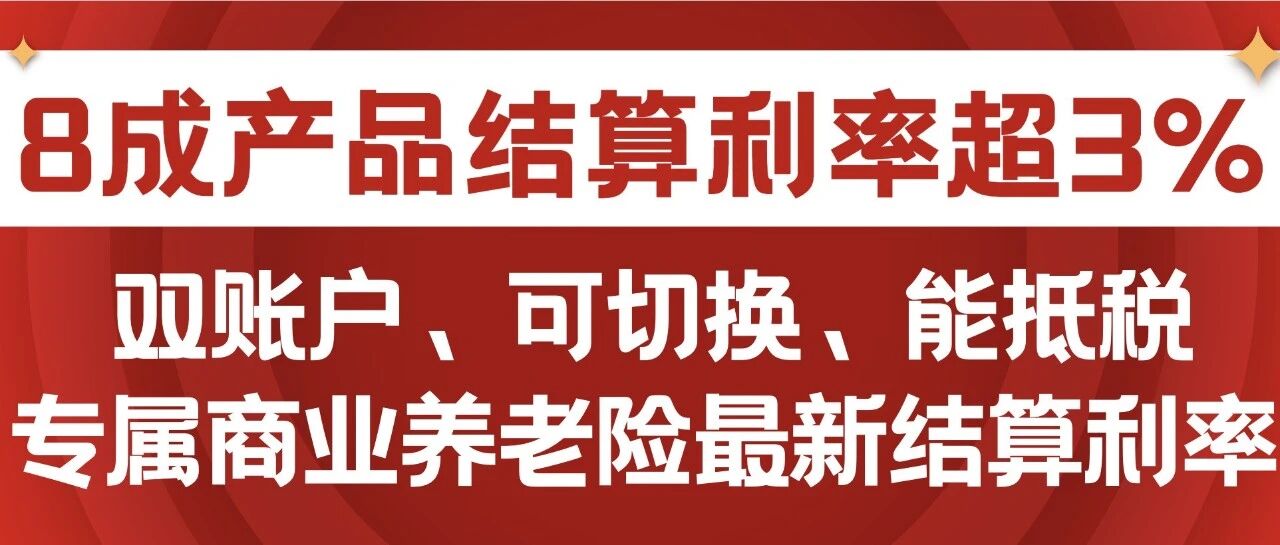
最高破4%!2025年专属商业养老保险结算利率:8成超3%,6款破4%,连续5年结算利率均值超3%...
13个精算师· 2026-01-20 15:43
Core Viewpoint - The article discusses the performance and prospects of exclusive commercial pension insurance products, highlighting their competitive settlement rates and the growing demand for stable, long-term investment options in the current market environment [1][6][8]. Summary by Sections Exclusive Commercial Pension Insurance - In 2025, 80% of exclusive commercial pension insurance accounts are expected to have settlement rates exceeding 3%, with 95% of accounts surpassing 2.75% [1][8]. - Six products from Agricultural Bank Life and National Pension have settlement rates exceeding 4% [9][10]. - The average settlement rate for 80 accounts in 2025 is projected to be 3.3%, an increase of 1 percentage point from the previous year [16][20]. Product Performance - The average settlement rate for exclusive commercial pension insurance has consistently been above 3% since 2021, with the first batch of products achieving an average of 4% over five years [13][17]. - The top six products with the highest settlement rates in 2025 include various offerings from Agricultural Bank Life and National Pension, all exceeding 4% [11][14]. Market Trends - The demand for long-term, stable, and higher-yielding products has surged due to external interest rate declines and the upcoming maturity of large deposits, estimated to be around 50 trillion yuan [6][8]. - The insurance industry is actively promoting the development of dividend insurance and "guaranteed + floating yield" products to enhance competitiveness and improve liability quality [6][8]. Consumer Insights - Exclusive commercial pension insurance products offer several advantages, including flexible investment options, guaranteed minimum returns, and tax benefits for personal pension contributions [24][27]. - The products feature both conservative and aggressive account types, allowing consumers to switch between them during the contract period [27][30].
内险股盘中拉升 个险和银保开门红均超预期 上市险企首份业绩预告出炉
Zhi Tong Cai Jing· 2026-01-20 14:43
Group 1 - The insurance stocks experienced a significant increase, with China Life rising by 4% to HKD 33.3, China Pacific up by 3.51% to HKD 23.6, China Taiping increasing by 2.41% to HKD 39.06, and Ping An rising by 1.61% to HKD 69.5 [2] - In the first week of January 2026, listed insurance companies reported impressive premium income from the bancassurance channel, with China Life, Ping An Life, and PICC Life achieving over 100% year-on-year growth [2] - Individual insurance premium income also saw a general increase of over 30% year-on-year [2] Group 2 - On January 19, China Taiping released the first earnings forecast among listed insurance companies, projecting a substantial net profit increase of 215% to 225% for the year 2025 [2] - According to Open Source Securities, the performance of individual insurance and bancassurance exceeded expectations, indicating a potential continuation of catalysts on both the liability and asset sides [2] - Citigroup's research report anticipates a historic opportunity for the life insurance industry in 2026, driven by retail investors seeking higher reinvestment returns for maturing bank deposits [2] - Citigroup favors industry leaders such as China Life and Ping An in their 2026 outlook [2]
1794亿投资 + 123.5亿赔付 中国人寿河北分公司:金融活水润燕赵 民生保障护平安
Zhong Guo Jin Rong Xin Xi Wang· 2026-01-20 10:23
Core Viewpoint - China Life Insurance Company Hebei Branch is committed to integrating its development with local strategies, providing quality financial insurance services to contribute to the modernization of Hebei province [1] Group 1: Party Building and Organizational Development - The company leads the pilot work for party organization in Hebei, establishing a leadership group and work team to promote a new pattern of party building [2] - It has organized training sessions to interpret the spirit of the 20th National Congress, resulting in 26 high-quality research papers [2] - The company emphasizes collaboration between provincial and local levels to enhance the effectiveness of party building activities [2] Group 2: Professional Services and Social Contributions - The company has provided insurance services to over 34 million clients in the province, with 10.22 million new clients and a risk coverage amount of 11.7 trillion yuan [3] - It supports rural revitalization with over 7.98 million insured service participants in agricultural insurance [3] - The company has contributed over 50% to the personal pension market and provided risk coverage of 164.48 billion yuan for technology and emerging industries [3] Group 3: Investment and Economic Development - China Life Group has invested 179.4 billion yuan in Hebei, supporting the construction of the Xiong'an New Area and other infrastructure projects [4] - The company has initiated a 10 billion yuan fund for the silver economy, with an initial scale of 5 billion yuan [4] Group 4: Customer Experience and Service Enhancement - The company operates 160 customer service outlets and employs 857 service personnel, leading the industry in Hebei [5] - It has implemented various upgrades to enhance customer experience, including accessibility improvements for elderly clients [5] - The company has organized themed activities to support students during exam seasons, providing dedicated services at multiple outlets [5] Group 5: Compliance and Risk Management - The company prioritizes compliance and has established a robust risk management framework to prevent and mitigate various risks [6][7] - It has implemented a "1st Project" for risk inspection and monitoring illegal financial activities [7] - The company is actively involved in social responsibility initiatives, including insurance donations totaling 18 billion yuan for organ donation families and children in need [7]