
China Life(601628)

Search documents
图解丨南下资金连续10日净买入腾讯,连续12日净卖出中国移动
Ge Long Hui A P P· 2026-01-20 10:07
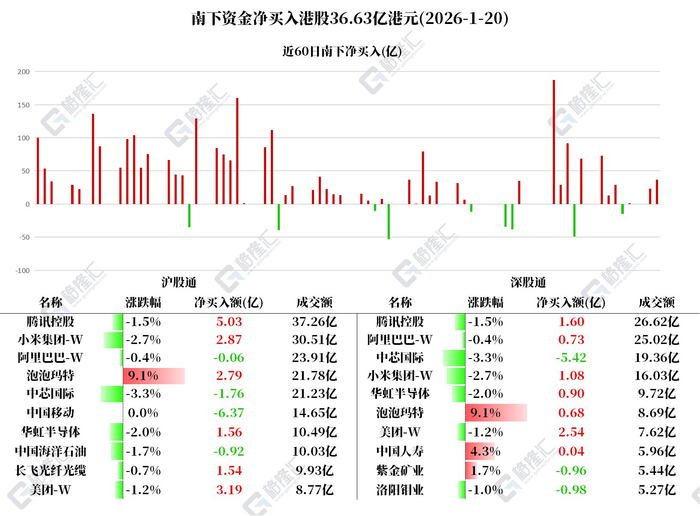
Group 1 - Southbound funds net bought Hong Kong stocks worth HKD 3.663 billion today [1] - The top net purchases included Tencent Holdings at HKD 663 million, Meituan-W at HKD 573 million, and Xiaomi Group-W at HKD 395 million [1] - Continuous net buying trends were observed for Tencent over 10 days totaling HKD 10.62116 billion and Alibaba over 7 days totaling HKD 4.75655 billion [1] Group 2 - Southbound funds net sold shares of SMIC at HKD 717 million and China Mobile at HKD 637 million [1] - China Mobile has seen continuous net selling for 12 days, amounting to HKD 9.29936 billion [1] - Hua Hong Semiconductor and Xiaomi also experienced net buying trends over multiple days, with Hua Hong totaling HKD 1.33901 billion over 4 days and Xiaomi HKD 1.42914 billion over 3 days [1]





保险板块1月20日涨0.86%,中国人寿领涨,主力资金净流入7.64亿元
Zheng Xing Xing Ye Ri Bao· 2026-01-20 08:56
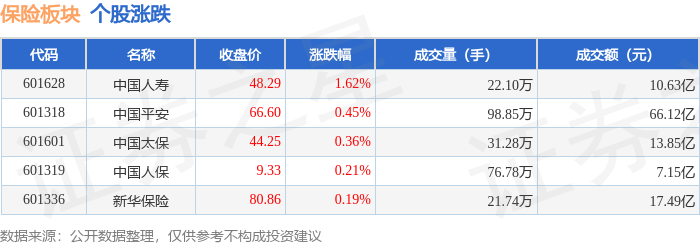
Group 1 - The insurance sector increased by 0.86% on January 20, with China Life leading the gains [1] - The Shanghai Composite Index closed at 4113.65, down 0.01%, while the Shenzhen Component Index closed at 14155.63, down 0.97% [1] - Key stock performances in the insurance sector included China Life at 48.29 with a rise of 1.62%, Ping An at 66.60 with a rise of 0.45%, and China Pacific Insurance at 44.25 with a rise of 0.36% [1] Group 2 - The net inflow of main funds in the insurance sector was 764 million yuan, while retail funds experienced a net outflow of 354 million yuan [1] - Major fund flows for key companies included Ping An with a net inflow of 332 million yuan, New China Life with 180 million yuan, and China Pacific Insurance with 124 million yuan [2] - Retail fund flows showed significant outflows for China Life and New China Life, with outflows of 132 million yuan and 1.22 billion yuan respectively [2]





净资产比率排行丨增速大幅减缓!46%险企下降,数量翻倍,形势严峻
Xin Lang Cai Jing· 2026-01-20 08:47
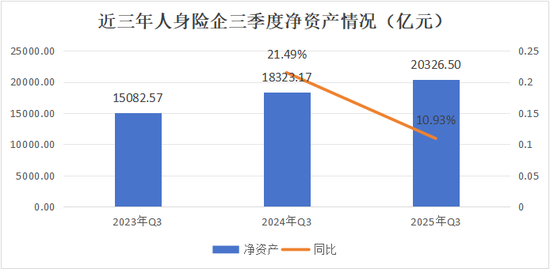
Core Insights - The net asset scale of the life insurance industry reached 2.03 trillion yuan in Q3 2025, an increase of approximately 200 billion yuan compared to the same period in 2024, reflecting a year-on-year growth of 10.93%, but the growth rate has significantly slowed down [1][36] - The increase in net assets is primarily driven by the stable growth of large and medium-sized insurance companies and the capital raising activities of smaller firms [2][36] - Among the 72 life insurance companies that reported their Q3 2025 net assets, 54% achieved positive growth, while 46% experienced a year-on-year decline, indicating a challenging industry environment [4][38] Net Asset Growth - The top 10 companies in terms of net asset growth are dominated by large and medium-sized insurers, with the top seven including China Life, Ping An, New China, Taiping, AIA, PICC Health, and China Post Life, collectively increasing their net assets by 206.17 billion yuan [1][36] - The number of companies experiencing a decline in net assets has doubled compared to the previous year, with 33 companies reporting a decrease in Q3 2025, up from 14 in Q3 2024 [4][40] - The proportion of companies with a net asset ratio exceeding 10% is only 28%, while 72% of companies fall below this threshold, indicating a significant disparity in financial health across the industry [23][36] Capital Raising Activities - A total of 12 life insurance companies have been approved for capital increases from October 1, 2024, to September 30, 2025, with several smaller firms showing significant growth due to capital injections [8][36] - The issuance of bonds for capital supplementation has also been a key strategy for many smaller insurers, with 16 companies issuing bonds during the same period [9][36] Net Asset Ratio Trends - The number of companies with an increasing net asset ratio has dropped sharply from 38 in Q3 2024 to only 20 in Q3 2025, while 72% of companies have seen their ratios decline [24][36] - The net asset ratio of the top 10 companies is predominantly above 20%, but five of these companies have experienced a decline in their ratios compared to the previous year [27][36] Performance of Major Insurers - The "big four" insurers (China Life, Ping An, Taiping, and Taikang) collectively hold 1.33 trillion yuan in net assets, accounting for 65.37% of the industry's total net assets [7][41] - Notable changes in rankings have occurred, with China Post Life entering the top 10 due to significant capital increases [40][41] Challenges and Future Outlook - The industry faces significant challenges, with many companies struggling to maintain positive growth amid changing accounting standards and market conditions [20][41] - The future landscape of the industry will likely be shaped by the resilience and internal capital generation capabilities of insurers as the effects of recent capital-raising activities and accounting changes stabilize [33][41]
港股收盘 | 恒指收跌0.29% 黄金、消费股走高 泡泡玛特劲升9%领跑蓝筹
Zhi Tong Cai Jing· 2026-01-20 08:37
Market Overview - The Hong Kong stock market experienced fluctuations today, with all three major indices closing lower. The Hang Seng Index fell by 0.29% or 76.39 points to 26,487.51 points, with a total turnover of HKD 2,377.66 million. The Hang Seng China Enterprises Index decreased by 0.43% to 9,094.76 points, and the Hang Seng Tech Index dropped by 1.16% to 5,683.44 points [1] Blue Chip Performance - Pop Mart (09992) led the blue-chip stocks, rising by 9.07% to HKD 197.2, contributing 19.52 points to the Hang Seng Index. The company announced a share buyback of 1.4 million shares for HKD 2.51 million at prices between HKD 177.7 and HKD 181.2. Morgan Stanley noted that this buyback could attract more investors [2] - Other notable blue-chip performances included China Life (601628) (02628) up 4.31% to HKD 33.4, contributing 16.6 points, and China Resources Land (01109) up 3.71% to HKD 29.64, contributing 5.52 points. Conversely, WuXi AppTec (603259) (02359) fell by 4.13% to HKD 113.7, detracting 3.73 points, and SMIC (00981) dropped by 3.25% to HKD 74.5, detracting 18.11 points [2] Sector Highlights - The technology sector showed mixed results, with Baidu rising by 0.95% while Tencent fell over 1%. Gold stocks rebounded, with spot gold surpassing USD 4,700 for the first time, and consumer stocks gained traction due to favorable consumption policies. Notably, Pop Mart's buyback led to a price increase of over 10% [3] - Gold stocks saw a recovery, with Zijin Mining International (02259) up 5.47% to HKD 179.4, Chifeng Jilong Gold Mining (600988) (06693) up 3.6% to HKD 33.94, Shandong Gold Mining (600547) (01787) up 2.73% to HKD 43.7, and China National Gold International (600916) (02099) up 2.04% to HKD 195 [3] Real Estate Sector - The National Bureau of Statistics reported a 0.3% month-on-month decline in new residential sales prices in first-tier cities for December 2025, with the decline narrowing by 0.1 percentage points from the previous month. Shenwan Hongyuan believes that the real estate sector has undergone deep adjustments, and recent central government directives to stabilize the market may lead to positive policy changes [5] - The real estate sector showed positive performance, with China Overseas Land & Investment (00081) up 4.93% to HKD 2.13, and China Resources Land (01109) up 3.71% to HKD 29.64 [4][5] Insurance Sector - The insurance sector performed well, with China Pacific Insurance (00966) up 4.39% to HKD 23.8, China Life (02628) up 4.31% to HKD 33.4, and New China Life Insurance (601336) (01336) up 2.72% to HKD 62.35. Reports indicated that major insurance companies saw significant growth in premium income through bancassurance channels [4][5] Aviation Sector - The aviation sector continued its upward trend, with China Southern Airlines (600029) (01055) up 4.57% to HKD 6.18, China National Aviation (601111) (00753) up 3.91% to HKD 7.45, and Cathay Pacific (00293) up 1.63% to HKD 12.49. Analysts expect strong demand during the upcoming Spring Festival travel season, with improved ticket pricing and revenue management driving profitability [6] Notable Stock Movements - Youjia Innovation (02431) saw a significant increase of 7.21% to HKD 15.77 after signing a memorandum of understanding with India's Sterling Tools Ltd. to focus on the automotive market [7] - Nanshan Aluminum International (02610) reached a new high, rising 6.04% to HKD 71.95, as the company plans to initiate a 250,000-ton electrolytic aluminum project with an estimated investment of USD 436.6 million [8] - GigaDevice Semiconductor (603986) (03986) continued to rise by 5.52% to HKD 306, benefiting from a tight supply of memory chips [9] - Shanghai Petrochemical (600688) (00338) issued a profit warning, expecting a net loss of approximately RMB 1.289 billion to RMB 1.576 billion for the year ending December 31, 2025 [10]



花旗:上调寿险股目标价 料今年进入黄金时期 偏好中国人寿和中国平安等龙头
Zhi Tong Cai Jing· 2026-01-20 08:15
Group 1 - The life insurance industry is expected to experience historic opportunities due to wealth reallocation as retail investors seek higher reinvestment returns from maturing bank deposits by 2026 [1][2] - Profit margins are anticipated to remain stable, as the pricing rate cut in September 2025 is expected to offset margin erosion caused by changes in product mix [1][2] - The preference for leading companies such as China Life (601628) and Ping An (601318) is highlighted, as a K-shaped growth divergence is expected between large and small insurance companies amid tightening regulations [1] Group 2 - The Chinese life insurance industry is entering a golden period this year, driven by the maturity of substantial bank deposits (estimated to exceed 70 trillion RMB) deposited after 2021, with retail investors facing a low reinvestment rate environment [2] - The shift from savings-type products to dividend-type products is expected to help insurance companies reduce new business costs and mitigate interest rate risks, while the recovery of protection-type products may serve as a gradual long-term driver for margin improvement [2] - The non-auto insurance business is expected to see a reasonable cost rate adjustment, and the management of auto insurance costs is anticipated to improve under regulatory support [1]
花旗展望2026中国保险业:寿险迈入黄金时代,财险CoR持续改善
Hua Er Jie Jian Wen· 2026-01-20 08:15
Core Viewpoint - Citi believes that the Chinese life insurance industry is facing a significant turning point in 2026, with historical growth opportunities expected due to the maturation of over 70 trillion RMB in bank deposits and a shift in retail investor preferences towards higher-yielding insurance products [1][2]. Life Insurance Industry - The life insurance sector is projected to experience historic growth opportunities as retail investors seek higher returns in a low-interest environment, particularly through insurance products linked to the stock market [2]. - The proportion of insurance in Chinese household financial asset allocation is significantly lower than in mature markets like Japan, Singapore, and the UK, indicating substantial growth potential [2]. - Major life insurance companies, including China Life, Pacific Insurance, and Ping An Life, have reported strong new business value (NBV) growth in 2024 and the first half of 2025, with double-digit growth on a comparable basis [2]. - The shift towards participating insurance products is evident, with Pacific Life's participating insurance accounting for 42.5% of first-year premiums, Ping An Life at 40%, and China Life exceeding 50% in its agency channel [2][3]. - Life insurance profit margins are expected to remain stable, with the pricing rate adjustment in September 2025 offsetting potential margin erosion from the shift towards participating insurance [3]. Property and Casualty Insurance Industry - The property and casualty (P&C) insurance sector is anticipated to achieve a steady 4% growth in premiums in 2026, driven primarily by auto and personal insurance businesses [4]. - There is significant room for improvement in the combined ratio (CoR), especially after excluding natural disaster losses, supported by regulatory benefits [4]. - Regulatory measures, such as extending compliance management to non-auto insurance and enhancing auto insurance fee management, are expected to support CoR improvements [4][5]. - The relaxation of the pricing coefficient cap for new energy vehicle insurance from 1.35 to 1.5 will provide insurers with greater pricing flexibility [4]. - The top three P&C insurers have shown CoR improvements, with PICC, holding approximately 32% market share, expected to benefit the most from regulatory support [4]. Regulatory Environment - Since 2025, Chinese insurance regulators have introduced a series of supportive policies aimed at enhancing industry growth and profit margins [5][6]. - New regulations emphasize compliance and profitability over mere premium growth, requiring insurers to optimize key performance indicators and manage expenses effectively [6]. - Policies encouraging the development of commercial health insurance and long-term care insurance are also in place, promoting the growth of participating long-term health insurance products [6]. - A directive mandates that large state-owned insurers invest 30% of new premiums in the A-share market starting in 2025, which is expected to enhance investment returns, particularly during bullish market conditions [6].
中国人寿海外公司24亿港元支持香港多币种数码绿色债券
Jin Rong Jie Zi Xun· 2026-01-20 07:55
Core Insights - China Life Overseas Company has become a leading Chinese insurance company and institutional investor in the Hong Kong and Macau regions, with total assets exceeding HKD 452.8 billion [1] - The company focuses on long-term capital investment strategies that emphasize risk management and value creation, contributing to the sustainable development of Hong Kong as an international financial center [1] - China Life Overseas actively supports the issuance of government bonds in Hong Kong, participating in a total subscription of approximately HKD 2.4 billion across multiple currency-denominated green bonds [1] Investment Activities - The company subscribed to USD 600 million of the Chinese Ministry of Finance's USD 4 billion bond issuance, reinforcing its position as the largest subscriber among Chinese insurance firms [2] - This participation aligns with national financial policies aimed at enhancing state-owned financial support for fiscal measures and reducing financing costs, while also signaling global confidence in the Chinese economy [2] - China Life Overseas is involved in multiple Hong Kong H-share IPOs, supporting the listing of innovative companies in sectors such as semiconductors, AI, and healthcare [2] Notable Investments - The company has invested in several prominent firms, including Hesai Technology, a leader in the 3D sensor field, which aims to produce over 1 million laser radars by 2025 [2] - MiniMax, a leader in the AGI sector, is set to list on the Hong Kong Stock Exchange in January 2026, showcasing the company's commitment to investing in cutting-edge technology [3] - Weisheng Pharmaceutical, focused on rare endocrine diseases, successfully listed in March 2025, exemplifying the bridge between global technology and the Greater China market [3] Industry Engagement - China Life Overseas hosted the "Hong Kong Alternative Investment Strategy Conference" in 2025, gathering nearly 800 experts to discuss opportunities in alternative investments [4] - The company regularly organizes high-level investment forums and communication events, enhancing Hong Kong's position as an international insurance and asset management hub [4] - Through various initiatives, China Life Overseas aims to strengthen Hong Kong's role in the global financial landscape and support national strategic goals [4]
盘中,涨停!A股,突然异动!
Zhong Guo Ji Jin Bao· 2026-01-20 04:23
Market Overview - A-shares opened high but closed lower, with the Shanghai Composite Index down 0.3% at 4101.62 points, Shenzhen Component down 1.22%, and ChiNext Index down 1.83% [1] - The total trading volume in the Shanghai and Shenzhen markets reached 1.85 trillion yuan, an increase of 568 billion yuan compared to the previous trading day [2] Sector Performance - The communication equipment, aerospace military, electronic components, basic metals, and energy equipment sectors experienced significant declines [2] - The banking and insurance sectors saw a notable rise, with food and beverage, real estate, and semiconductor sectors also performing well [2] Banking and Insurance Sector - The banking and insurance sector showed resilience, with major insurance stocks like China Life and Ping An rising over 1% [3] - Key banking stocks such as CITIC Bank increased by over 2%, while other banks like China Construction Bank and Bank of China rose by over 1% [5] - A report from China Galaxy Securities indicated that structural monetary policy tools and a marginal improvement in RMB credit could support bank lending [5] Food and Beverage Sector - The food and beverage sector was active, with food processing stocks leading the gains, including Hongmian Co., Jingji Zhino, and Weizhi Xiang, all hitting the daily limit [6] - Notable performers included Hongmian Co. with a 10.13% increase and Jingji Zhino with a 10.01% increase [7] Real Estate Sector - The real estate sector showed a rebound, with stocks like Dayue City and Chengtou Holdings hitting the daily limit, and others like China Merchants Shekou and Binjiang Group rising over 5% [8] - Recent data from the National Bureau of Statistics indicated a slight decrease in new residential sales prices in first-tier cities, which may influence market sentiment [10] Aerospace and Military Sector - The aerospace and military sector faced significant declines, with stocks like Tongyu Communication and Aerospace Power hitting the daily limit down, and Aerospace Hongtu dropping 13% [11] - Other companies in the sector, such as China Satellite and China Aerospace, also saw declines exceeding 6% [12]







A股保险股拉升,中国人寿涨2.5%
Jin Rong Jie· 2026-01-20 03:20
Group 1 - The A-share market saw a rise in insurance stocks, with China Life increasing by 2.5% [1] - China Ping An and China Pacific Insurance both experienced gains of over 1% [1]
中国保险:2026 展望:寿险迎来历史性机遇;产险受益于持续监管红利-China Insurance-2026E Outlook Life Embarking on a Historic Opportunity; P&C Riding on Continued Regulatory Tailwinds
2026-01-20 03:19
Summary of Conference Call Notes Industry Overview - **Industry**: Life and Property & Casualty (P&C) Insurance in China - **Key Trends**: The life insurance sector is expected to experience significant growth opportunities due to a large volume of bank deposits maturing, estimated at over Rmb70 trillion, and a low-interest rate environment for reinvestment [22][2]. The P&C sector is projected to see a steady premium growth of 4% in 2026E, driven by auto insurance and personal P&C lines [3]. Core Insights Life Insurance Sector - **Growth Potential**: The life insurance industry is entering a "golden era" as retail investors seek higher returns from insurance products due to maturing bank deposits [2]. - **Margin Stability**: Margins are expected to remain stable, with pricing rate adjustments in September 2025 potentially offsetting margin erosion from a shift towards participating products [2][1]. - **Preferred Companies**: Industry leaders such as China Life and Ping An are favored due to anticipated K-shaped growth divergence between larger and smaller insurers amid regulatory tightening [2][1]. Property & Casualty (P&C) Insurance Sector - **Premium Growth**: The P&C industry is expected to achieve a 4% growth in premiums in 2026E, supported by regulatory tailwinds and expense rationalization [3]. - **Cost of Risk (CoR) Enhancement**: There is significant room for CoR improvement, driven by regulatory measures including expense management and adjustments in NEV insurance pricing [3]. - **Top Performers**: PICC P&C is expected to benefit the most from these trends, potentially delivering best-in-class results [3][1]. Financial Projections - **China Life Insurance**: Target price raised to HK$38 from HK$27.70, with EPS estimates for FY25E/FY26E/FY27E increased by 105%/48%/46% respectively, reflecting improved investment performance [7]. - **China Pacific Insurance**: Target price increased to HK$44.40 from HK$40.50, with FY25E/FY26E EPS estimates raised by 27%/14% [9]. - **Ping An Insurance**: Target price lifted to HK$79 from HK$68, with slight adjustments to EPS estimates [20]. Regulatory Environment - **Regulatory Changes**: New regulations are being implemented to strengthen supervision over insurers' asset liability management and expense management, focusing on quality-oriented metrics rather than volume [27][28]. - **Impact on Life Insurance**: Regulations will require life insurers to maintain specific liquidity and coverage ratios, which could affect their operational strategies [27]. - **P&C Insurance Regulations**: The P&C sector is seeing a shift towards more stringent expense management and compliance with quality metrics [27]. Additional Insights - **Market Dynamics**: The life insurance market is witnessing a shift towards bancassurance channels as consumers reallocate their wealth [44]. - **Product Mix Changes**: Insurers are increasingly shifting their product mix towards participating products, which may lower the cost of in-force books [41]. - **Investment Opportunities**: The anticipated interest rate hikes in China are expected to enhance investment returns for insurers, further supporting their growth [11][12]. This summary encapsulates the key points from the conference call, highlighting the growth potential and regulatory landscape of the life and P&C insurance sectors in China.