CHINA TELECOM(601728)
Search documents
大行评级丨高盛:维持三大中资电讯股“买入”评级 派息比率可望稳步提升
Ge Long Hui· 2025-12-02 08:04
Core Viewpoint - Goldman Sachs' research report indicates that despite weak revenue growth in traditional telecommunications, Chinese telecom companies can leverage value-added services to drive consumption, with new business areas such as data centers, computing power, and AI solutions becoming major beneficiaries of AI development [1] Group 1: Financial Metrics - The report examines ten key indicators including capital expenditure, dividends, user numbers, cash conversion cycles, free cash flow margins, average revenue per user (ARPU), EBITDA margins, new business synergies, internet data center performance, and valuations [1] - It is expected that the capital expenditure budgets of China Mobile, China Unicom, and China Telecom are shifting towards investments in computing infrastructure to capitalize on the growing demand for AI in China [1] Group 2: Investment Outlook - Goldman Sachs maintains a "Buy" rating on China Mobile, China Unicom, and China Telecom, anticipating an increase in the contribution from new businesses and a steady rise in dividend payout ratios, which will continue to provide returns for investors [1]
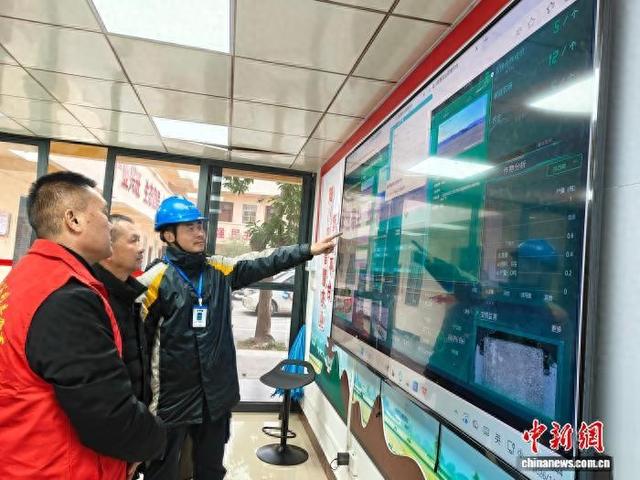
一网”兜起大小事,“一算”驱动未来城:智云南京上线重塑“城市大管家
Yang Zi Wan Bao Wang· 2025-12-02 05:55
Core Insights - The article discusses the launch of "Smart Cloud Nanjing," a new urban information service brand aimed at enhancing urban governance through AI and data integration [1][8] - The initiative is part of China Telecom's strategy to transform urban management from a fragmented approach to a more integrated and intelligent system [4][8] Group 1: Smart Cloud Nanjing Overview - "Smart Cloud Nanjing" was officially launched on November 12, focusing on AI ubiquity, accessible computing power, and intelligent governance [1] - The service model aims to transition Nanjing from a digital city to a smart city, enhancing governance efficiency and citizen engagement [1][4] Group 2: Integration and Efficiency - The initiative integrates 36 citizen service channels into a unified platform, improving response times and reducing bureaucratic delays [2][4] - By breaking down information silos, "Smart Cloud Nanjing" enables real-time data sharing among various government departments, enhancing collaborative governance [4][8] Group 3: Technological Innovations - The platform utilizes advanced data processing capabilities, including a "Star Sea" data intelligence center that aggregates high-quality data for better decision-making [4][5] - AI applications, such as the "AI Cloud Steward," provide 24/7 support and automate various administrative tasks, improving service delivery [5][7] Group 4: Future Directions - The initiative aims to expand its model beyond Jiangning District to other areas in Nanjing, promoting a more resilient and sustainable urban environment [9] - The focus is on evolving from "perceptual intelligence" to "cognitive intelligence," enhancing the overall quality of urban governance [9]
中国千兆及以上宽带接入用户达2.38亿户 占总用户数超1/3
Sou Hu Cai Jing· 2025-12-02 05:35
Core Insights - The China Academy of Information and Communications Technology reported the economic operation of the telecommunications industry for the first ten months of 2025, highlighting significant growth in broadband access and user numbers [1] Group 1: Broadband Access Growth - As of the end of October, the total number of internet broadband access ports in China reached 1.243 billion, representing a net increase of 40.89 million compared to the end of the previous year [1] - The total number of fixed internet broadband access users among the three major telecom operators (China Mobile, China Unicom, and China Telecom) reached 697 million, with a net increase of 27.01 million users since the end of last year [1] Group 2: High-Speed Internet Adoption - The number of fixed internet broadband access users with speeds of 100 Mbps and above reached 663 million, accounting for 95.1% of the total user base [1] - Users with access speeds of 1000 Mbps and above reached 238 million, marking a net increase of 31.13 million users, which is a historical high [2] - The proportion of users with gigabit access (1000 Mbps and above) expanded to 34.1%, an increase of 3.3 percentage points compared to the end of the previous year [2]
科技赋能 守护成长,中国电信助力济宁构建智慧托育服务新格局
Qi Lu Wan Bao· 2025-12-02 05:35
Core Viewpoint - The article highlights the role of China Telecom's Shandong branch in enhancing childcare services through the development of a smart management cloud platform, aligning with national strategies for digital development and population growth [1][5]. Group 1: Smart Management Cloud Platform - The smart management cloud platform serves as a "smart hub" for efficient operation of childcare services in Jining, allowing real-time monitoring of 910 childcare institutions and providing comprehensive oversight [2][3]. - The platform integrates a dedicated information system called "One Network and Six Platforms," focusing on government management, institutional operations, parental services, quality assessment, child health, and staff training [2][3]. - A notable feature is the "Childcare Map," which utilizes VR technology to provide parents with a 360-degree view of childcare facilities, facilitating informed decisions without physical visits [2][3]. Group 2: Data-Driven Management - The platform enables dynamic monitoring of various data points, including the distribution of childcare institutions, the number of children, staff qualifications, and financial statistics, aiding in policy formulation and regulatory oversight [3]. - Digital management of enrollment, daily operations, and communication with parents enhances efficiency and reduces operational costs for childcare institutions [3][4]. - The "1168" service system focuses on creating a comprehensive health data repository for infants, improving management standards and decision-making capabilities [3][4]. Group 3: Safety and Security - China Telecom has implemented an intelligent security monitoring system to ensure the safety of children, featuring comprehensive surveillance and AI algorithms for risk detection [4]. - Data security measures include encrypted storage of sensitive information and strict access controls to protect privacy [4]. Group 4: Impact and Future Directions - The implementation of the platform has significantly improved operational efficiency and parent satisfaction in childcare institutions, with 910 registered facilities and over 45,000 available spots [4][5]. - China Telecom aims to continue enhancing service quality and innovation, contributing to the advancement of quality childcare services in Jining [5].
中国电信-一站式定制化云服务聚焦优质项目;自由现金流增长支撑股息发放;给予 “买入” 评级
2025-12-02 02:08
Summary of China Telecom Conference Call Company Overview - **Company**: China Telecom (0728.HK) - **Industry**: Telecommunications and Cloud Services Key Points Financial Performance - China Telecom's revenue decreased by 1% year-over-year to Rmb125.5 billion in Q3 2025, compared to a 3% increase in Q2 2025 [1][4] - The company is expected to maintain steady free cash flow (FCF) growth, supporting its dividend payout ratio [1] - Earnings for 2026 and 2027 have been revised upwards by 3% and 5% respectively, while near-term revenues have been lowered due to a focus on higher quality projects [4] Business Strategy - The company is shifting its focus towards computing infrastructure and integrated services, including AI and cloud solutions [1][2] - Management emphasized the importance of project quality, with operating cash flow and profitability as core KPIs [3] - China Telecom has a strong emphasis on serving government clients, which may slow down AI project deployment due to security and scale requirements [3] Market Position and Risks - The company has high exposure to government clients, which presents both opportunities and challenges in project deployment [3] - Key risks identified include intensified industry competition affecting mobile average revenue per user (ARPU), lower returns on 5G investments, and potential loss of market share in the wireline broadband sector [13] Valuation and Price Target - The 12-month target price for China Telecom is set at HK$7.9, reflecting a 33% upside from the current price of HK$5.94 [14] - The target price is based on a 2026E EV/EBITDA multiple of 3.5x, consistent with the company's historical trading range since 2017 [8][13] Operational Metrics - The operating margin is projected to improve from 7.7% in 2025E to 8.5% in 2027E, driven by disciplined capital expenditure [4][12] - The company aims to enhance its gross margin from 69.2% in 2025E to 68.5% in 2027E [12] Dividend Policy - The dividend payout ratio is expected to increase from 73% in 2025E to 75% in 2027E, indicating a commitment to returning value to shareholders [12][14] Conclusion - China Telecom is positioned for long-term growth in the cloud and AI sectors, with a focus on quality projects and government contracts. However, it faces challenges from competition and market dynamics. The revised earnings outlook and target price reflect a positive sentiment towards the company's strategic direction and operational efficiency [1][4][13]
中国电信运营商-资本开支转向算力基础设施,支撑 AI 与云增长;股息支付稳步提升-China Telcos_ Capex shift to computing infrastructure to support AI_ Cloud growth; dividend payout to steadily increase
2025-12-02 02:08
Summary of China Telcos Conference Call Industry Overview - **Industry**: Telecommunications in China - **Key Players**: China Mobile, China Unicom, China Telecom Key Metrics Reviewed 1. **Capex Spending**: - Capital expenditures (capex) for China telcos are expected to decrease in 2025 due to reduced spending on traditional telecom networks, particularly 5G. However, there is a shift towards increased investment in AI and computing infrastructure to meet rising demand [2][3][6] - China Telecom's capex is guided at Rmb84 billion for 2025, down from Rmb94 billion in 2024, while China Unicom's capex is expected to be Rmb55 billion, down from Rmb61 billion [3] 2. **Dividend Payout**: - The dividend payout ratio for China telcos has increased to 60%-72% in 1H25, compared to 50%-67% in 2022. Management anticipates a gradual increase in payout ratios moving forward [6][9] 3. **Subscriber Growth**: - Total subscriber growth has been muted, with 5G penetration increasing from 59% in 1Q to 63% in 3Q25. The method of calculating 5G subscribers was revised, impacting the reported figures [12][15] 4. **Cash Conversion Cycle (CCC) Days**: - Average accounts receivable days increased from 34 days in 2018 to 47 days in 2024, indicating a focus on cash payments. Inventory days decreased to 8 days in 2024, while accounts payable days rose to 392 days [16] 5. **Free Cash Flow (FCF)**: - The average FCF margin improved from 8% in 2018 to 11% in 2024, driven by higher operating cash flow and disciplined capex focused on AI infrastructure [24][26] 6. **Average Revenue Per User (ARPU)**: - Mobile ARPU decreased from Rmb48.9 in 1H21 to Rmb47.9 in 1H25, while household ARPU increased from Rmb44.0 in 2018 to Rmb46.4 in 2024 [27][30] 7. **EBITDA Margin**: - The average EBITDA margin declined from 31% in 2018 to 28% in 2024, but there was a recovery in 1H25 due to disciplined operating expense management [33][35] 8. **New Business Contributions**: - Revenue from new business segments, including industrial internet and digitalization, rose to 26% in 1H25 from 19% in 2021, indicating a key growth driver supported by AI deployment [36][39] 9. **IDC Business**: - The number of IDC cabinets increased from 363k in 2022 to 400k in 2023, with a focus on upgrading to high-power IDC cabinets to enhance AI computing capabilities [40] 10. **Valuation**: - The average EV/EBITDA for China telcos ranges from 2.6x to 4.4x, with expectations of upside due to rising AI demand and comprehensive service offerings [43] Additional Insights - **Investment Outlook**: Despite traditional revenue growth challenges, China telcos are positioned as beneficiaries of AI and cloud growth, with a focus on value-added services [1] - **Management Guidance**: Companies are optimistic about future growth driven by new business segments and improved operational efficiencies [6][9][36]
2025年中国AI基础设施行业产业链、投资规模、竞争格局、企业支出及发展趋势研判:为应对未来大模型的潜在算力需求,企业基础设施投资额将保持增长[图]
Chan Ye Xin Xi Wang· 2025-12-02 01:21
Core Insights - AI infrastructure is a crucial foundation for the development of artificial intelligence technology, with 58% of enterprises in China currently utilizing AI, significantly higher than the global average, positioning China as a leader in the field [1][8] - The demand for AI infrastructure computing power in China is surging due to complex scenarios, massive data, and ultra-large models, with investments expected to reach 169.6 billion yuan in 2024, an increase of 105.4 billion yuan from 2023, and projected to grow to 275 billion yuan by 2025 [1][8] AI Infrastructure Industry Definition and Classification - AI computing infrastructure is essential for the rapid development of AI, requiring telecom operators to deploy appropriate technical architectures to provide high-performance AI computing capabilities [2] - The infrastructure consists of hardware (including AI chips like GPU, FPGA, and ASIC) and software components (including foundational software platforms and AI-enabled service platforms) [2] AI Infrastructure Industry Development Status - The AI industry is a key area of global development, accelerating technological and economic progress, with increasing application scenarios, explosive data growth, and exponential increases in algorithm model parameters, necessitating higher performance from supporting infrastructure [4] AI Infrastructure Investment Trends - Global AI infrastructure investment is rapidly increasing, projected to reach 598.5 billion yuan in 2024, up 169.9 billion yuan from 2023, and expected to grow to 1.374 trillion yuan by 2025 [5][6] AI Infrastructure Industry Value Chain - The industry value chain includes upstream components (computing hardware, network hardware, storage hardware), midstream system integration and solution service providers, and downstream AI application companies across various sectors such as finance, healthcare, and smart cities [8][9] AI Infrastructure Industry Competitive Landscape - The competitive landscape is dominated by telecom operators, third-party IDC service providers, and major cloud service giants, including China Telecom, China Mobile, China Unicom, and cloud services from Alibaba, Tencent, Baidu, and Huawei [10] - In Q1 2025, Alibaba Cloud led the market with a 33% share, followed by Huawei Cloud at 18% and Tencent Cloud at 10%, indicating a strong focus on AI deployment among these companies [10][11] Future Development of AI Infrastructure - To meet the potential computing power demands from the rapid development of large models, operators should actively build new AI computing infrastructure, focusing on comprehensive layouts across computing, platforms, models, and applications [12]
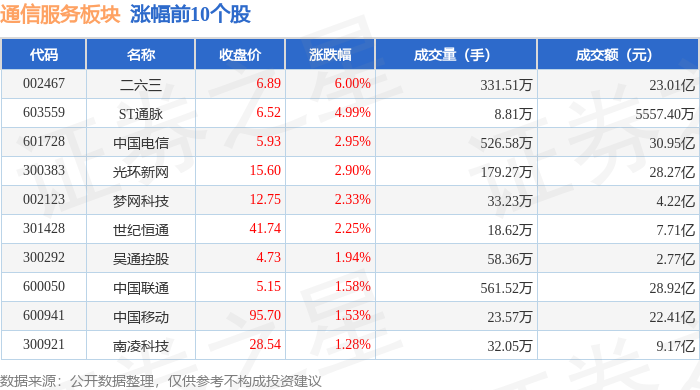
中国电信(601728)披露股份发行人的证券变动月报表,12月1日股价上涨0.29%
Sou Hu Cai Jing· 2025-12-01 14:29
Core Points - As of December 1, 2025, China Telecom (601728) closed at 6.88 CNY, up 0.29% from the previous trading day, with a total market capitalization of 629.57 billion CNY [1] - The stock opened at 6.85 CNY, reached a high of 6.89 CNY, and a low of 6.82 CNY, with a trading volume of 558 million CNY and a turnover rate of 0.1% [1] - The company recently released a monthly report on securities changes, indicating no changes in the legal/registered capital of both H-shares and A-shares as of November 30, 2025 [1] - The total number of issued shares and treasury shares remained unchanged, with H-shares totaling 13,877,410,000 shares and A-shares totaling 77,629,728,699 shares, each with a par value of 1 CNY [1] - The total legal/registered capital at the end of the month was 91.51 billion CNY [1]
通信行业资金流入榜:中兴通讯、广和通等净流入资金居前
Zheng Quan Shi Bao Wang· 2025-12-01 08:49
Market Overview - The Shanghai Composite Index rose by 0.65% on December 1, with 28 out of 31 sectors experiencing gains, led by the metals and communications sectors, which increased by 2.85% and 2.81% respectively [1] - The total net inflow of capital in the two markets was 775 million yuan, with 11 sectors seeing net inflows [1] Sector Performance - The electronics sector had the highest net inflow of capital, amounting to 7.22 billion yuan, and saw a rise of 1.58% [1] - The communications sector also performed well, with a net inflow of 5.56 billion yuan and a daily increase of 2.81% [1] Individual Stock Performance in Communications Sector - The communications sector had 124 stocks, with 102 stocks rising and 8 hitting the daily limit up [2] - ZTE Corporation led the net inflow with 4.39 billion yuan, followed by Guanghetong and Zhongji Xuchuang with 1.03 billion yuan and 809 million yuan respectively [2] - The top gainers in the communications sector included ZTE Corporation (10.00% increase), Guanghetong (20.01% increase), and Zhongji Xuchuang (4.57% increase) [2] Capital Outflow in Communications Sector - The communications sector also had stocks with significant capital outflows, with Changxin Bochuang leading at 703 million yuan, followed by Guangku Technology and China Mobile with 422 million yuan and 272 million yuan respectively [3] - The top decliners included Changxin Bochuang (-4.35%), Guangku Technology (-1.81%), and China Mobile (-0.60%) [3]
中国电信(601728) - 中国电信股份有限公司H股公告-股份发行人的证券变动月报表

2025-12-01 08:45
截至月份: 2025年11月30日 狀態: 新提交 股份發行人及根據《上市規則》第十九B章上市的香港預託證券發行人的證券變動月報表 第 1 頁 共 10 頁 v 1.1.1 公司名稱: 中國電信股份有限公司 呈交日期: 2025年12月1日 I. 法定/註冊股本變動 | 1. 股份分類 | 普通股 | 股份類別 | H | | 於香港聯交所上市 (註1) | | 是 | | | --- | --- | --- | --- | --- | --- | --- | --- | --- | | 證券代號 (如上市) | 00728 | 說明 | H股 | | | | | | | | | 法定/註冊股份數目 | | | 面值 | | 法定/註冊股本 | | | 上月底結存 | | | 13,877,410,000 | RMB | | 1 RMB | | 13,877,410,000 | | 增加 / 減少 (-) | | | 0 | | | RMB | | 0 | | 本月底結存 | | | 13,877,410,000 | RMB | | 1 RMB | | 13,877,410,000 | | 2. 股份分類 | ...