CHINA TELECOM(601728)

Search documents
通信服务板块9月26日跌1.36%,线上线下领跌,主力资金净流出9亿元
Zheng Xing Xing Ye Ri Bao· 2025-09-26 08:48
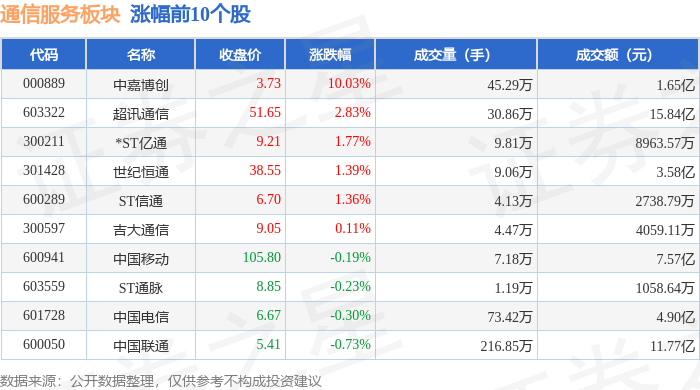
Market Overview - On September 26, the communication services sector declined by 1.36%, with significant losses in both online and offline segments [1] - The Shanghai Composite Index closed at 3828.11, down 0.65%, while the Shenzhen Component Index closed at 13209.0, down 1.76% [1] Stock Performance - Notable gainers in the communication services sector included: - Zhongjia Bochuan (000889) with a closing price of 3.73, up 10.03% and a trading volume of 452,900 shares [1] - Jiangxun Communication (603322) closed at 51.65, up 2.83% with a trading volume of 308,600 shares [1] - Major decliners included: - Online and Offline (300959) which fell by 10.37% to a closing price of 75.18 with a trading volume of 137,800 shares [2] - Ohfly Data (300738) down 5.54% to 21.98 with a trading volume of 708,100 shares [2] Capital Flow - The communication services sector experienced a net outflow of 900 million yuan from institutional investors, while retail investors saw a net inflow of 947 million yuan [2][3] - Specific stock capital flows showed: - Chaoxun Communication (603322) had a net inflow of 79.93 million yuan from institutional investors [3] - Zhongjia Bochuan (000889) saw a net inflow of 63.87 million yuan from institutional investors [3]






超10万亿Tokens的高质量数据集是怎么炼成的?专访中国电信天翼AI阮宜龙
量子位· 2025-09-26 02:08
Core Viewpoint - The article emphasizes the importance of high-quality datasets in developing and training AI models, highlighting that such datasets are crucial for enhancing model performance and accuracy [4][6][14]. Group 1: High-Quality Data Sets - The company has amassed over 10 trillion tokens of general model corpus data and specialized datasets covering 14 key industries, with a total storage capacity of 350TB [1][6]. - These datasets are not just raw data but are meticulously labeled and optimized, making them ready for immediate application in various industries [3][4]. - High-quality datasets are essential as they directly influence the accuracy, generalization, and usability of AI models, serving as the foundation for effective model training [4][5]. Group 2: Technological Infrastructure - The company has developed the Xingchen MaaS platform, which operates as a data refinery, creating a complete closed loop of "data-model-service" [6][17]. - The platform includes a data toolchain that efficiently processes various data types and a model toolchain that enhances data into usable models, ensuring a robust data lifecycle management [18][19]. - The platform's capabilities allow for the generation of synthetic data for rare or extreme scenarios, enhancing model robustness and safety [18][19]. Group 3: Strategic Considerations - The company's investment in high-quality datasets is driven by national strategy, market demand, and its own operational advantages, positioning itself as a key player in the AI landscape [15][16]. - The government has recognized AI as a national strategy, prompting the company to build data infrastructure that supports AI technology breakthroughs [15][16]. - The company aims to leverage its extensive data resources and customer base to enhance its capabilities in high-quality dataset development [16]. Group 4: Industry Applications - The company has successfully implemented AI solutions in various sectors, such as textile quality inspection, achieving over 95% accuracy in defect detection, significantly improving production efficiency [9][26]. - High-quality datasets have been developed for multiple industries, including healthcare, agriculture, and smart cities, demonstrating the versatility and impact of AI applications [36][37]. - The company has collaborated with various sectors to create tailored datasets that address specific industry challenges, enhancing operational efficiency and service quality [36][37]. Group 5: Future Vision - The company envisions becoming a leading provider of general AI services, focusing on technological advancement, inclusive applications, and an open ecosystem for collaboration [42][43]. - It aims to cultivate a skilled workforce in AI, ensuring that technological innovations translate into practical applications that benefit society [43][44]. - The ultimate goal is to enhance the digital economy while ensuring safety and fairness in AI applications, contributing to a more equitable society [44][45].


答卷“十四五” 央企惠民生 | 从天地一体到万物智联 央企重塑通信产业新格局
Zhong Guo Zheng Quan Bao· 2025-09-26 00:00
Core Insights - The introduction of satellite communication services by major Chinese telecom operators marks a significant advancement in emergency communication capabilities, particularly during natural disasters [1][3][4] - The integration of 6G technology, eSIM innovations, and IoT applications is driving the development of a more interconnected and intelligent society, enhancing various industries [1][6][7] Group 1: Satellite Communication Services - China Telecom has launched the world's first commercial satellite direct connection service for mobile phones, overcoming significant technical challenges [3] - China Unicom has received a license for satellite mobile communication services and successfully launched four low-orbit satellites, enabling nationwide mobile direct connection services [3][4] - The expansion of satellite communication services is expected to benefit a wider population and empower various industries, particularly in emergency response scenarios [4] Group 2: Technological Innovations - The eSIM technology is revolutionizing device connectivity, enhancing security and user autonomy while facilitating the evolution of device forms [6] - The application of IoT solutions, such as smart water meters and livestock tracking, demonstrates the practical benefits of connected technologies in resource management [6][7] - The ongoing development of 5G-A networks is set to further enhance smart city initiatives and industrial automation, driving digital transformation across sectors [7] Group 3: Infrastructure Development - China has established the world's largest and most advanced information communication network, with over 464 million 5G base stations and 30.53 million gigabit ports [8][9] - Collaborative efforts between major telecom companies have led to the creation of the largest and fastest 5G SA shared network, significantly reducing investment costs and carbon emissions [9] - The focus on domestic CPU development aims to address supply chain challenges and support the growing demand for artificial intelligence applications [10]
从天地一体到万物智联 央企重塑通信产业新格局
Zhong Guo Zheng Quan Bao· 2025-09-25 22:11
Core Viewpoint - The emergence of satellite mobile communication services in China marks a significant advancement in technology, enhancing connectivity and safety during emergencies, and paving the way for a new era of integrated communication systems [1][2][3] Group 1: Satellite Communication Development - China Telecom has launched the world's first commercial satellite direct connection service for mobile phones, overcoming significant technical challenges [2] - China Unicom has received a license for satellite mobile communication services and successfully launched four low-orbit satellites, expanding the availability of satellite services [2][3] - The integration of satellite communication with terrestrial networks is seen as a key feature of the upcoming 6G era, enhancing disaster response capabilities and everyday connectivity [3][4] Group 2: Technological Innovations - The introduction of eSIM technology is revolutionizing device connectivity, allowing for more secure and flexible communication solutions across various devices [4][5] - The proliferation of IoT applications, such as smart water management and livestock tracking, demonstrates the practical benefits of advanced connectivity solutions [5][6] - The development of 5G-A networks is expected to further empower industries, facilitating digital transformation and enhancing user experiences [5][6] Group 3: Infrastructure and Investment - China has established the largest and most advanced information communication network globally, with over 464 million 5G base stations and significant investments in network infrastructure [6][7] - Collaborative efforts between major telecom companies have led to the creation of the world's largest and fastest 5G SA shared network, resulting in substantial cost savings and environmental benefits [6][7] - The focus on domestic CPU development by companies like China Electronics is addressing supply chain challenges and supporting the growth of AI and other advanced technologies [7]

中国电信全资子公司新增一项450.00万元的招标项目
Xin Lang Cai Jing· 2025-09-25 13:16
快查APP显示,中国电信相关公司中电信量子信息科技集团有限公司于2025年9月25日发布一则招标信 息,项目名称为[中电量子]中电信量子信息科技集团有限公司2025年量子科技和产业大会服务项目(框 架)招标公告,预算金额为450.00万元。 (来源:快查一企业中标了) 快查股权穿透数据显示,该公司为中国电信全资子公司。 ...

首都产业一线科技人才宣讲团走进人民大学,激发青年使命担当
Xin Jing Bao· 2025-09-25 08:22
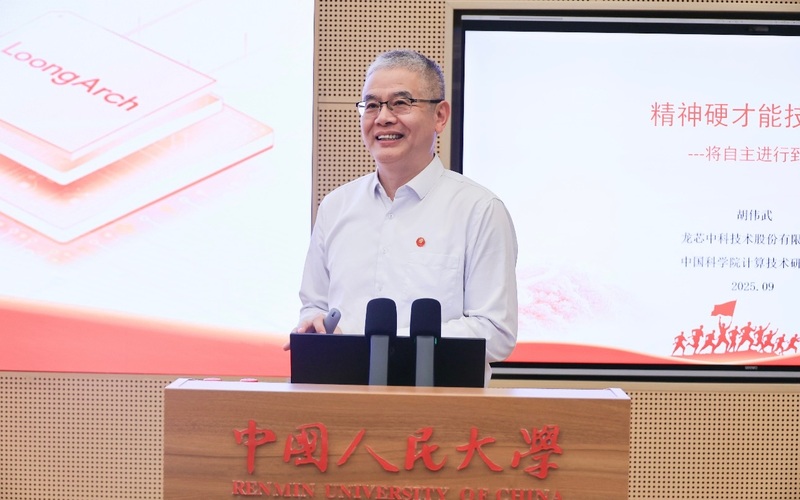
Core Viewpoint - The series of lectures by frontline technology talents aims to inspire students with stories of dedication to national development and to cultivate a sense of mission among the youth [1][12]. Group 1: Event Overview - The event is part of a series of lectures organized by the Beijing Municipal Education and Technology Talent Work Leadership Group, featuring 36 frontline technology talents visiting over 20 universities from mid-September to mid-October [1]. - The lectures combine political education with practical experiences, allowing students to connect with real-world applications of their studies [1][5]. Group 2: Key Speakers and Their Contributions - Notable speakers include Hu Weiwu, Chairman and General Manager of Loongson Technology, who emphasized the importance of setting goals related to national interests and the need for hard work [6][11]. - Liu Qi, Chief Expert in Cybersecurity at China Telecom, shared insights on the importance of perseverance and the value of solitary efforts in achieving significant outcomes [6][7]. - Zheng Yu, Vice President and Chief Data Scientist at JD.com, encouraged students to embrace challenges and maintain a long-term vision for their careers [6][7]. Group 3: Educational Goals - The initiative aims to cultivate innovative talents capable of interdisciplinary thinking and problem-solving, aligning with the urgent needs of technological innovation and industrial transformation [3][4]. - The lectures serve to enrich the teaching materials for ideological and political education in universities, enhancing the relevance and impact of classroom learning [5][12]. Group 4: Student Engagement - Students expressed admiration for the speakers' dedication to national service and their impactful stories, which resonate with the current technological landscape and the importance of contributing to national development [10][11]. - The event aims to instill a sense of responsibility and mission among students, encouraging them to actively participate in the construction of a digital China and contribute to the nation's progress [7][12].


2025年中国国际信息通信展在京开幕,全面展示数实融合成果
Huan Qiu Wang· 2025-09-25 08:16
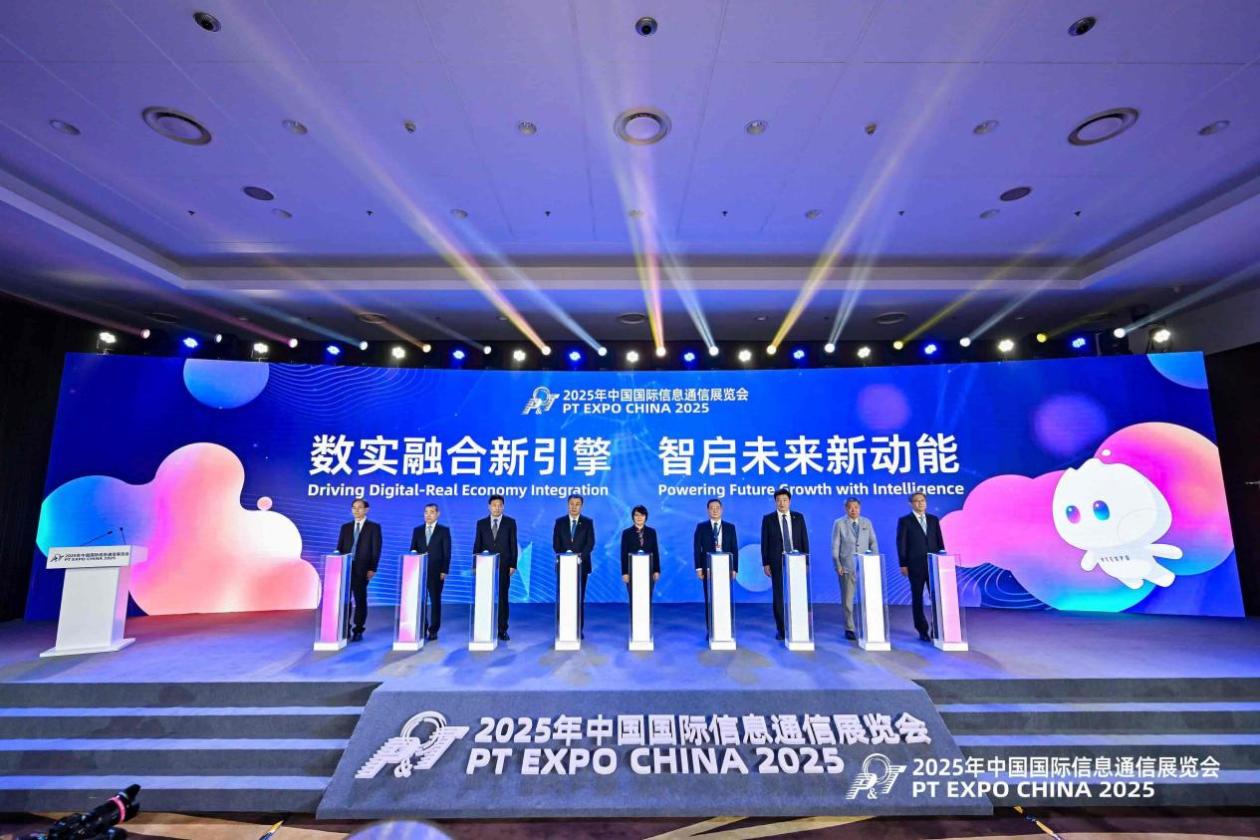
Core Viewpoint - The 2025 China International Information Communication Exhibition emphasizes the integration of digital and real economies, showcasing the latest achievements in the information and communication industry as a new engine for future development [1][3]. Group 1: Industry Insights - The exhibition highlights the role of the information and communication industry in driving the deep integration of digital and real economies, fostering new productivity [1][3]. - The Chief Engineer of the Ministry of Industry and Information Technology, Zhong Zhihong, stated that the current era is crucial for advancing national rejuvenation and that the industry must seize strategic opportunities to promote this integration [5][6]. - The International Telecommunication Union (ITU) praised China's contributions to global technology standards, particularly in AI and quantum computing, and expressed a desire for deeper international cooperation [5][6]. Group 2: Technological Developments - The exhibition features advancements in technologies such as 5G-A, AI applications in spatial governance, low-altitude smart networks, and satellite internet integration [6][8]. - The main forum of the event emphasized the acceleration of new-generation information technologies, including 5G, AI, big data, and cloud computing, as vital carriers of new productivity [8]. - A keynote report highlighted AI as a core variable in the new stage of digital and real economy integration, with cloud computing as a key support [8]. Group 3: Event Highlights - The exhibition will run until September 26, featuring over ten events, including award ceremonies and the release of more than twenty research reports and action plans [8]. - The event also includes the "2025 BRICS Digital Economy and Trade Investment Forum," aimed at expanding international cooperation and building a global digital governance system [8].
推动数实深度融合 促进AI应用繁荣
Ke Ji Ri Bao· 2025-09-24 23:41
Core Insights - The article highlights the advancements in China's information and communication industry, showcasing innovations in 5G technology and artificial intelligence, as well as the importance of integrating digital and physical infrastructures for future growth [1][2][3][4]. Group 1: Industry Developments - As of August 2023, China has established 4.646 million 5G base stations and has 1.154 billion 5G mobile phone users, maintaining a global lead in key metrics such as 5G user penetration and gigabit optical network coverage [2]. - The integration of 5G technology into 86 categories of the national economy is accelerating, with a focus on enhancing production core processes [2]. - The industry is actively pursuing technological innovation, with a push for the development of 5G-A product systems and the advancement of 6G technology [3]. Group 2: Technological Innovations - The introduction of a new disaster-resistant base station by China Tower, capable of withstanding level 8 earthquakes and level 12 winds, demonstrates the commitment to ensuring communication continuity during extreme disasters [1]. - The event showcased the integration of AI and 5G technologies, with applications such as intelligent robots performing alongside human dancers, enabled by ultra-low latency 5G networks [3][4]. - China Telecom and China Mobile are developing comprehensive computing capabilities, including quantum computing and AI models, to meet diverse industry needs [4]. Group 3: Future Outlook - The industry anticipates a shift towards AI-driven applications, with predictions that by 2030, the number of intelligent agents will surpass traditional apps, creating new opportunities for operators [4]. - There is a strong emphasis on fostering the integration of AI and manufacturing, aiming to cultivate a new generation of industrial intelligent agents [5].
中国电信相关公司新增一项625.00万元的招标项目
Xin Lang Cai Jing· 2025-09-24 12:28
Group 1 - China Tower Corporation, a subsidiary of China Telecom, announced a tender for IT system data labeling services with a budget of 6.25 million yuan [1] - The tender was published on September 24, 2025, indicating ongoing investment in IT infrastructure [1] - China Telecom holds a 20.50% stake in China Tower Corporation, highlighting the strategic partnership between the two companies [1]

通信服务板块9月24日涨0.39%,中贝通信领涨,主力资金净流出912.32万元
Zheng Xing Xing Ye Ri Bao· 2025-09-24 08:46
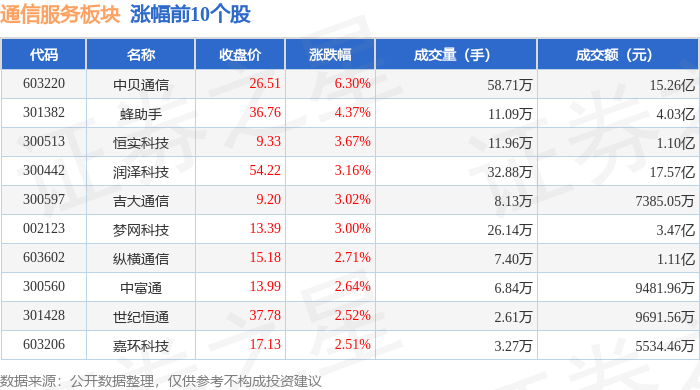
Market Performance - On September 24, the communication services sector rose by 0.39% compared to the previous trading day, with Zhongbei Communication leading the gains [1] - The Shanghai Composite Index closed at 3853.64, up 0.83%, while the Shenzhen Component Index closed at 13356.14, up 1.8% [1] Individual Stock Performance - Zhongbei Communication (603220) closed at 26.51, with a gain of 6.30% and a trading volume of 587,100 shares, amounting to a transaction value of 1.526 billion yuan [1] - Other notable performers included: - Fengzhushou (301382) at 36.76, up 4.37% [1] - Hengshi Technology (300513) at 9.33, up 3.67% [1] - Runze Technology (300442) at 54.22, up 3.16% [1] - Jida Communication (300597) at 9.20, up 3.02% [1] Capital Flow Analysis - The communication services sector experienced a net outflow of 9.1232 million yuan from institutional investors, while retail investors saw a net inflow of 400.1 million yuan [2] - The overall capital flow indicates a mixed sentiment, with institutional investors withdrawing funds while retail investors increased their positions [2] Detailed Capital Flow for Selected Stocks - Zhongbei Communication saw a net inflow of 201 million yuan from institutional investors, but a net outflow of 5.1888 million yuan from speculative funds [3] - China Unicom (600050) had a net inflow of 182 million yuan from institutional investors, with a significant outflow from speculative funds [3] - Other stocks like Putian Technology (002544) and Aofei Data (300738) also showed varied capital flows, indicating differing investor sentiments across the sector [3]