BANK OF CHINA(601988)

Search documents
24家A股银行将现金分红超2600亿元
21世纪经济报道· 2025-11-24 12:38
Core Viewpoint - The recent surge in stock prices of major banks in China is driven by their mid-term dividend announcements, with a total cash dividend amounting to 2638 billion yuan for 2025, indicating significant value potential in the banking sector [2][3][4]. Dividend Announcements - As of November 24, 2025, 24 A-share listed banks have disclosed their mid-term dividend plans, with a total cash dividend of 2638 billion yuan, including first-time mid-term dividends from seven banks [2][4]. - Notably, Wuxi Bank announced a cash dividend of 0.11 yuan per share, totaling 2.41 billion yuan, with the ex-dividend date on November 25, 2025 [4]. - Hangzhou Bank plans to distribute a cash dividend of 0.38 yuan per share, amounting to 27.55 billion yuan, reflecting a 24.10% increase from the previous year [4]. Dividend Yields - The average dividend yield for listed banks as of November 24 is 4.48%, with 12 banks yielding over 5% and 26 banks over 4% [5]. - Major banks like Bank of Communications and Agricultural Bank of China have lower yields, ranging from 3% to 4.18% [5]. Shareholder and Executive Buybacks - There has been a notable increase in share buybacks by major shareholders and executives, signaling positive market sentiment [7][8]. - For instance, Chengdu Bank's major shareholders increased their holdings by approximately 34.24 million shares, investing 611 million yuan [7]. - The banking sector has seen a total of 126.30 billion yuan in buybacks this year, ranking second among industry sectors [8]. Market Performance and Outlook - The banking sector has experienced a net increase in holdings exceeding 90 billion yuan, with significant support for stock prices from shareholder buybacks [6][9]. - Analysts suggest that the upcoming long-term capital allocation period at year-end will further enhance the market performance of bank stocks [9].








多家银行启动2026年博士后研究人员招聘,AI、金融科技成核心方向
Bei Jing Shang Bao· 2025-11-24 11:10
Core Insights - Several banks, including Agricultural Bank of China, Minsheng Bank, Bank of China, and others, have initiated recruitment for postdoctoral researchers for 2026, focusing on strategic research and innovation in the financial sector [1][3][4] - The recruitment emphasizes interdisciplinary backgrounds, particularly in artificial intelligence, big models, and financial technology, reflecting a trend towards integrating technology with traditional finance [5][6] Recruitment Conditions - The recruitment criteria have become stricter, with banks favoring candidates with interdisciplinary and practical financial experience [3][4] - Specific requirements include a PhD obtained within the last three years or expected graduation by July 2026, with an age limit of 35 years [3][4] - Preferred fields of study include economics, finance, statistics, applied mathematics, computer science, big data, and artificial intelligence, with a strong emphasis on research capability and dedication [3][4] Research Focus - The research topics set by banks highlight their strategic priorities, with a strong focus on AI, big models, and financial technology applications [6][7] - Examples of research topics include "AI Empowering Digital Transformation of Commercial Banks" and "Application of AI and Big Model Technology in Risk Management," indicating a direct response to industry needs [6][7] Industry Trends - The recruitment surge is driven by the dual pressures of transformation in the banking sector and technological opportunities, with banks seeking to enhance core competitiveness through technology [7][8] - AI technologies are seen as crucial for improving operational efficiency and risk management, which are key demands in the current banking landscape [7][8] - The focus on practical research outcomes distinguishes bank postdoctoral programs from academic institutions, emphasizing the need for research that addresses real business challenges [7][8]



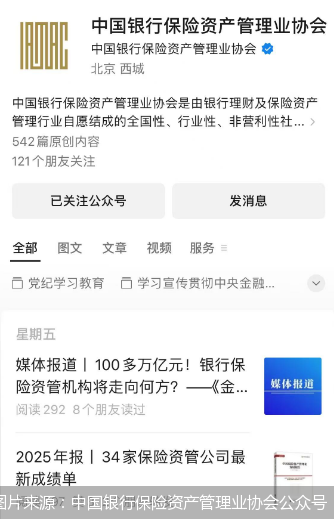
中国保险资产管理业协会公众号更名为中国银行保险资产管理业协会
Bei Jing Shang Bao· 2025-11-24 09:57
Group 1 - The core viewpoint of the article is the renaming of the China Insurance Asset Management Association to the China Banking and Insurance Asset Management Association, indicating a broader coverage of the banking and insurance asset management industry [1] - The new association is described as a national, industry-specific, non-profit social organization formed voluntarily by the banking and insurance asset management sectors [1] - There were prior reports suggesting that the association would become a self-regulatory organization encompassing the entire banking and insurance asset management industry [1]
中国银行(601988) - H股公告-中国银行股份有限公司400亿美元中期票据计划下通过迪拜分行发行的票据在香港联合交易所上市之通告
2025-11-24 09:30
香港交易及結算所有限公司及香港聯合交易所有限公司對本公告之內容概不負責,對其準確性 或完整性亦不發表任何聲明,並明確表示,概不對因本公告全部或任何部分內容而產生或因倚 賴該等內容而引致之任何損失承擔任何責任。 中國銀行股份有限公司 BANK OF CHINA LIMITED (於中華人民共和國註冊成立的股份有限公司) (「本行」) (股份代號:3988) 聯席全球協調人,聯席承銷商及聯席賬簿管理人 | 中國銀行 | 農銀國際 | 交通銀行 | 中信銀行 | | --- | --- | --- | --- | | 中國建設銀行 | 中信建投國際 | 花旗 | 招商銀行 | | 東方匯理銀行 | 阿聯酋國民銀行 | 國泰君安國際 | 華泰國際 | | 華夏銀行股份有限公司 | 中國工商銀行 | 瑞穗 | 法興企業和投資銀行 | 1 本公告僅供參考之用,並不構成收購、購買或認購證券的邀請或要約。根據計劃將予發行的票 據(定義如下)將不會根據經修訂的1933年美國聯邦證券法登記。受制於某些例外情形,根據計 劃將予發行的票據有可能不得在美國境內或向任何美國人士(如證券法S規例定義)或為美國人 士的利益提出要約出售或者進 ...
中国银行(03988.HK):迪拜分行5亿美元浮动利率票据预计11月25日上市
Ge Long Hui· 2025-11-24 09:25
Core Viewpoint - Bank of China (03988.HK) announced the issuance of $500 million floating rate notes under its $40 billion medium-term note program, maturing in 2028, with plans for listing and trading on the Hong Kong Stock Exchange [1] Group 1 - The notes are issued by the Bank of China Dubai Branch [1] - The issuance is part of a broader $40 billion medium-term note program established by the Bank of China [1] - The notes are expected to be approved for listing and trading starting November 25, 2025 [1]
中国银行(03988) - 中国银行股份有限公司400亿美元中期票据计划下通过迪拜分行发行的票据在香...
2025-11-24 09:20
(「本行」) (股份代號:3988) 聯席全球協調人,聯席承銷商及聯席賬簿管理人 中國銀行股份有限公司 BANK OF CHINA LIMITED (於中華人民共和國註冊成立的股份有限公司) 香港交易及結算所有限公司及香港聯合交易所有限公司對本公告之內容概不負責,對其準確性 或完整性亦不發表任何聲明,並明確表示,概不對因本公告全部或任何部分內容而產生或因倚 賴該等內容而引致之任何損失承擔任何責任。 本公告僅供參考之用,並不構成收購、購買或認購證券的邀請或要約。根據計劃將予發行的票 據(定義如下)將不會根據經修訂的1933年美國聯邦證券法登記。受制於某些例外情形,根據計 劃將予發行的票據有可能不得在美國境內或向任何美國人士(如證券法S規例定義)或為美國人 士的利益提出要約出售或者進行出售。本公告不得直接或間接於或向美國境內進行分發。 於香港聯合交易所有限公司 上市之通告 中國銀行股份有限公司迪拜分行(「發行人」) 在中國銀行股份有限公司建立的40,000,000,000美元 中期票據計劃(「計劃」)下發行 於2028年到期的500,000,000美元浮動利率票據(代號:40008) (「票據」) | 中國銀行 ...
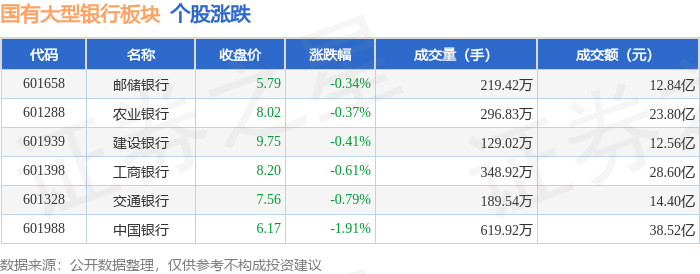
国有大型银行板块11月24日跌0.76%,中国银行领跌,主力资金净流出4767.27万元
Zheng Xing Xing Ye Ri Bao· 2025-11-24 09:12
Core Insights - The state-owned large bank sector experienced a decline of 0.76% on November 24, with China Bank leading the drop [1] - The Shanghai Composite Index closed at 3836.77, up 0.05%, while the Shenzhen Component Index closed at 12585.08, up 0.37% [1] Bank Performance - Postal Savings Bank closed at 5.79, down 0.34% with a trading volume of 2.19 million shares [1] - Agricultural Bank closed at 8.02, down 0.37% with a trading volume of 2.97 million shares [1] - Construction Bank closed at 9.75, down 0.41% with a trading volume of 1.29 million shares [1] - Industrial and Commercial Bank closed at 8.20, down 0.61% with a trading volume of 3.49 million shares [1] - Bank of Communications closed at 7.56, down 0.79% with a trading volume of 1.90 million shares [1] - China Bank closed at 6.17, down 1.91% with a trading volume of 6.20 million shares [1] Capital Flow Analysis - The state-owned large bank sector saw a net outflow of 47.67 million yuan from institutional investors and 23.99 million yuan from retail investors, while individual investors had a net inflow of 71.67 million yuan [1] - The capital flow for individual banks showed varied trends, with Bank of Communications having a net inflow of 72.53 million yuan from institutional investors, while China Bank had a net outflow of 49.25 million yuan [2] - Agricultural Bank experienced a net inflow of 54.10 million yuan from institutional investors, but a net outflow of 66.31 million yuan from retail investors [2]
政银合力精准滴灌,为企业成长注入强劲动能
Chang Sha Wan Bao· 2025-11-24 08:44
Group 1 - The event "One Month One Chain: Financial Empowerment" was held to promote enterprise financing in Hunan Xiangjiang New Area, showcasing collaboration between government and financial institutions to address financing challenges for local businesses [1][3] - The Xiangjiang New Area Enterprise Financing and Listing Service Center provided in-depth explanations of risk compensation policies for enterprises, while experts shared insights on nurturing technology-based companies and planning for funding [3] - The "Financial to Home" initiative aims to bridge the gap in financial services, ensuring that financial resources meet the needs of enterprises directly, aligning with national calls for increased financial support for technological innovation and advanced manufacturing [3] Group 2 - The Xiangjiang New Area is committed to building a comprehensive financing system to support innovative enterprises, reflecting its role as a national-level new area focused on optimizing the business environment and fostering a modern industrial system [3] - The Bank of China Xiangjiang New Area branch emphasizes its commitment to serving the real economy, having provided loans totaling 4.502 billion yuan to 2,305 small and micro enterprises from January to September this year [3]

中国银行取得交易风险控制方法及装置专利
Sou Hu Cai Jing· 2025-11-24 07:52
Core Insights - China Bank has obtained a patent for a "Transaction Risk Control Method and Device," with the authorization announcement number CN 114943446 B, and the application date is May 2022 [1] Company Overview - China Bank, established in 1983 and located in Beijing, primarily engages in monetary financial services [1] - The registered capital of China Bank is approximately 29.44 billion RMB [1] - The company has made investments in 539 enterprises and participated in 5,000 bidding projects [1] - China Bank holds 1,472 trademark records and 5,000 patent records, along with 254 administrative licenses [1]
国有行2046亿分红将落地 股价迭创新高年内市值增2.45万亿
Chang Jiang Shang Bao· 2025-11-24 05:25
Core Viewpoint - The A-share banking sector is experiencing a strong "buying frenzy" driven by market style shifts and substantial mid-term dividend distributions, with Agricultural Bank of China leading the surge with a nearly 60% increase year-to-date [1][4]. Market Performance - As of November 21, the total market capitalization of the six major state-owned banks reached 10.61 trillion yuan, accounting for 69.5% of all listed banks, and increased by 2.45 trillion yuan compared to the end of 2024 [1][5]. - The average dividend yield for listed banks is 4.47%, with 12 banks yielding over 5% [7]. Dividend Distribution - A total of 24 listed banks have announced mid-term dividend plans, with a combined payout of 263.8 billion yuan, of which the six major state-owned banks plan to distribute over 204.6 billion yuan [1][6][7]. - The mid-term dividend distribution is occurring earlier than in 2024, with the record date set for mid-December [7]. Stock Performance - Agricultural Bank of China has seen a year-to-date increase of 57.9%, while other major banks like Industrial and Commercial Bank of China and China Bank have also performed well, with respective increases of 24.77% and 19.41% [4][6]. - The banking sector index has shown a recovery, with a year-to-date increase of nearly 12% as of November 21 [3][5]. Fundamental Strength - The fundamentals of the banking sector remain robust, with state-owned banks reporting a total revenue of 2.72 trillion yuan and a net profit of 1.07 trillion yuan for the first three quarters of 2025, both showing growth [6][7]. - The proportion of net interest income to total revenue has improved to 71.78%, indicating a positive trend [6].