BANK OF CHINA(601988)

Search documents
理财行业新增自律组织 “中国银行保险资产管理业协会”完成更名
2 1 Shi Ji Jing Ji Bao Dao· 2025-11-25 06:00
登录新浪财经APP 搜索【信披】查看更多考评等级 21世纪经济报道记者 吴霜 近日,中国保险资产管理业协会的官方微信公众号名称更名为"中国银行保险资产管理业协会",新 增"银行"二字,意味着对于银行理财的自律监管组织又增一家。 此前,银行理财公司主要的自律组织包括:银行业理财登记托管中心和中国银行业协会理财业务专业委 员会。 目前,"中国银行保险资产管理业协会"官网的名称还暂未更改,其今年6月5日公布的理财子公司会员单 位中,就已经有光大理财、华夏理财、农银理财、平安理财和中银理财五家单位。 而在其8月19日公布的,理财公司会员单位中,已经有共30家会员单位,汇华理财和信银理财两家暂未 列入其中。 除了新加入的银行理财外,"中国银行保险资产管理业协会"会员单位还有公募基金公司及其子公司、证 券公司及其子公司、信托公司、期货公司及其子公司、私募基金公司、金融资产投资公司、基金销售机 构、交易所、律师事务所、投资咨询机构、科技企业、保险资产管理公司、保险机构等。 从功能上看,"中国银行保险资产管理业协会"更多是"发挥市场主体和监管部门之间的桥梁和纽带作 用",面向参与保险资产管理业务的各类机构,实施行业自律,促进 ...


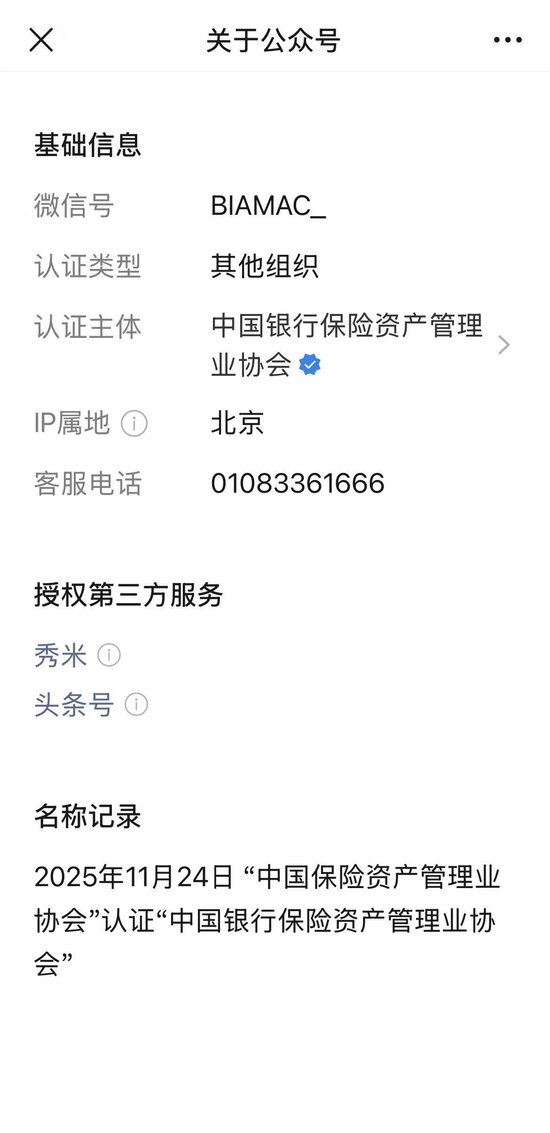
理财行业新增自律组织,“中国银行保险资产管理业协会”完成更名
2 1 Shi Ji Jing Ji Bao Dao· 2025-11-25 05:47
21世纪经济报道记者吴霜 近日,中国保险资产管理业协会的官方微信公众号名称更名为"中国银行保险资产管理业协会",新增"银行"二字,意味着对于银行理财的自律监管组织又增 一家。 此前,银行理财公司主要的自律组织包括:银行业理财登记托管中心和中国银行业协会理财业务专业委员会。 前者是最重要、最核心的银行理财自律管理和基础设施机构,是经财政部、原银监会(现金融监管总局)批准,由中央国债登记结算有限责任公司(简称中 央结算公司)于2016年全资发起设立的中立性理财市场服务机构。主要职能包括:理财信息登记、理财登记托管结算、理财信息披露等。 实际上,根据21世纪经济报道了解,"中国银行保险资产管理业协会"的更名和扩容从去年年底就已经在酝酿。一家股份行理财子在2024年12月底就已经入 会,"我们比较关注协会的角色定位和管理职能",彼时,一位业内人士对记者表示。 直到今年5月,部分国有行理财子和股份行理财子仍在陆续加入。 目前,"中国银行保险资产管理业协会"官网的名称还暂未更改,其今年6月5日公布的理财子公司会员单位中,就已经有光大理财、华夏理财、农银理财、平 安理财和中银理财五家单位。 而在其8月19日公布的,理财公司 ...

四川金融监管局核准吴国琳中国银行双流分行行长助理任职资格
Jin Tou Wang· 2025-11-25 03:50
2025年11月18日,四川金融监管局发布批复称,《中国银行(601988)四川省分行关于吴国琳高级管理 人员任职资格许可的请示》(川中银报〔2025〕197号)收悉。经审查,现批复如下: 一、核准吴国琳中国银行股份有限公司双流分行行长助理的任职资格。 三、中国银行应督促上述核准任职资格人员持续学习和掌握经济金融相关法律法规,牢固树立风险合规 意识,熟悉任职岗位职责,忠实勤勉履职。 未尽事项按金融监管总局有关规定办理。 二、中国银行应要求上述核准任职资格人员严格遵守金融监管总局有关监管规定,自中国银行政许可决 定作出之日起3个月内到任,并将其任职文件及时抄送四川金融监管局和双流金融监管支局。未在上述 规定期限内到任的,本批复文件失效,由四川金融监管局办理行政许可注销手续。 ...
中国银行与地产_个人房产抵押贷款风险几何-China Banks and Property_ How risky are individual property-backed loans_
2025-11-25 01:19
Summary of Conference Call on China Banks and Property Industry Overview - The focus is on the Chinese banking sector and the property market, particularly the risks associated with property-backed loans and the implications for banks and borrowers [2][3][4]. Key Points 1. Rising Risks in Property-Backed Loans - Individual property-backed loan risks are increasing due to ongoing declines in property prices, raising concerns about potential defaults on mortgages and business operating loans [2][3]. - Key metrics indicating risk include: - **Foreclosed Properties**: 2.1 million units, or 1.8% of total properties with mortgages or loans [2]. - **Negative Cash Flow**: 1.2% of mortgage holders and 4.8% of all borrowers may have insufficient income to cover their loans [2][3]. - **Negative Equity**: Expected to rise from 0.7 million units in 2025 to 3.3 million units by 2027, with loan losses projected to reach RMB 232 billion [2][9]. 2. Cash Flow as a Key Driver of Defaults - Cash flow issues, rather than property price declines, are seen as the primary driver of potential defaults [3]. - Historical reference from Hong Kong (1997-2003) shows that despite significant property price declines, delinquency rates remained low, indicating that cash flow is a more critical factor [3][16][17]. 3. Regulatory Measures and Their Implications - Anticipated regulatory measures to mitigate risks include: - Personal credit relief policies to remove small defaults from credit reports [4]. - Delivery of over 7.5 million stalled housing units by the end of 2025 [4]. - Potential mortgage rate cuts below 3% [4]. - These measures could lead to increased secondary market listings, putting further pressure on property prices [4]. 4. Implications for Banks - The banking sector is expected to face manageable risks, with a projected NPL ratio of 3% (1.6% for mortgages and 4.8% for MSE/business operating loans) [5]. - Large state-owned banks may need to make additional provisions equivalent to 11-10 basis points of annualized credit cost [5]. - The estimated additional provisioning needed for banks could amount to RMB 0.3 trillion, representing 7.3% of annual PPOP in 2025 [74]. 5. Foreclosure and Refinancing Risks - The number of foreclosed properties is expected to rise significantly, with estimates of 0.64 million units in 2025 and 2.43 million units by 2027 due to refinancing pressures on business operating loans [25][27]. - The outstanding operating loan amount was RMB 29.4 trillion as of the end of 2023, with a significant portion backed by physical property [24]. 6. Market Sentiment and Future Expectations - A significant increase in respondents indicating they will not buy a house in the next two years, rising from 32% in 2024 to 45% in 2025, reflects a pessimistic outlook on the property market [62]. - Property prices are expected to decline by 10% in 2026 and 5% in 2027, following a 12% decline in 2025 [65][68]. 7. Potential Policy Responses - Forbearance measures, such as repayment extensions and penalty waivers, are expected to be implemented to contain defaults [69]. - The PBOC is considering reforms to the personal credit system to alleviate the impact of delinquencies on borrowers [71]. 8. Conclusion - The overall sentiment indicates that while risks in the property market and banking sector are rising, regulatory measures and cash flow management strategies may help mitigate potential defaults and systemic risks [3][4][5][68].
中国银行业协会副秘书长建言:先“稳中求进”,再“以进促稳”
Huan Qiu Wang· 2025-11-25 01:16
Core Viewpoint - The banking industry must achieve high-quality development through a gradual process, emphasizing stability before progress and promoting stability through advancement [1] Group 1: Financial Contributions - The banking and insurance sectors have provided an additional 170 trillion yuan to the real economy through various means such as credit, bonds, and equity [1] - The balance of loans to inclusive small and micro enterprises stands at 36 trillion yuan, with interest rates decreasing by 2 percentage points [1] Group 2: Financial Industry Development - Financial openness is accelerating, significantly enhancing the international competitiveness and influence of the financial sector [1] - Different types of banking institutions should identify their positioning to achieve specialized operations and differentiated development, contributing to a diverse, orderly, and sustainable financial ecosystem [1] Group 3: Institutional Positioning - Large state-owned banks should focus on steady progress, enhance their strengths, accelerate digital transformation, leverage comprehensive operational advantages, and improve international operational capabilities to support higher levels of openness [1] - Nationwide joint-stock banks should adhere to differentiated development positioning, concentrate on niche areas and key regions, engage in competitive differentiation, and create value for clients through specialization [1] - Small and medium-sized banks should maintain their market positioning, utilize geographical and relational advantages, serve local economies, small and medium enterprises, and rural revitalization, and focus on developing business characteristics [1]
中国银行发行300亿元绿色金融债券
Jin Rong Shi Bao· 2025-11-25 00:40
近日,中国银行成功发行300亿元绿色金融债券,其中,固定利率品种200亿元,票面利率1.72%, 浮动利率品种100亿元,票面利率较1年期LPR减点121个基点(1.79%)。债券得到市场投资者踊跃认 购,全场倍数达1.69倍。 据悉,这是中国银行近10年来首次在境内市场发行浮动利率债券,也是目前境内商业银行单笔发行 规模最大的浮动利率债券,有助于实现资产投放与市场融资在价格方面的精准匹配,进而有效拓宽绿色 产业项目融资渠道。作为《绿色金融支持项目目录(2025年版)》施行以来市场首批适用新目录的商业 银行绿色金融债券,本期债券募集资金将精准投向基础设施绿色升级、能源绿色低碳转型等合规绿色产 业领域。 责任编辑:杨喜亭 数据显示,截至三季度末,中国银行绿色贷款余额超过4.66万亿元,较上年末增长20.11%;绿色债 券投资规模超1000亿元。 ...
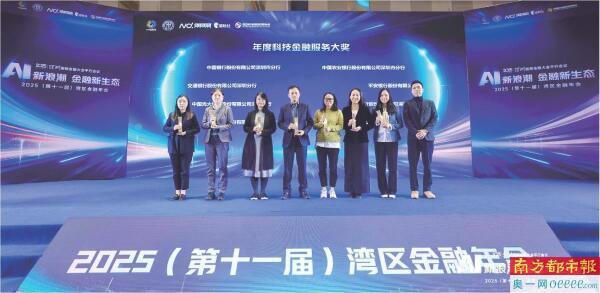
年度科技金融服务大奖
Nan Fang Du Shi Bao· 2025-11-24 23:11
Core Insights - The article highlights the recognition of various banks in Shenzhen for their contributions to providing high-quality financial services to technology innovation enterprises, thereby supporting the development of new industries and economic models [2][3][4][5]. Group 1: Awarded Institutions - The awarded institutions include major banks such as Bank of China, Agricultural Bank of China, Bank of Communications, Ping An Bank, China Everbright Bank, Shanghai Bank, Guangfa Bank, and Zhuhai Huaren Bank [2]. Group 2: Contributions of Awarded Banks - **Bank of China Shenzhen Branch**: Focused on inclusive finance and key industries, serving over 15,000 local tech enterprises with technology loans exceeding 270 billion yuan, and loans for strategic emerging industries and manufacturing surpassing 200 billion yuan each [2]. - **Agricultural Bank of China Shenzhen Branch**: Innovated multiple financial products, including the first knowledge property asset-backed note and a customized loan product for drone technology enterprises [2]. - **Bank of Communications Shenzhen Branch**: Developed the "Kechuang Pengfei Loan" to address financing difficulties for small and medium-sized tech enterprises by integrating 12 lending dimensions into the assessment system [3]. - **Ping An Bank**: Established a technology finance center to create a comprehensive financial service system covering the entire lifecycle of tech enterprises, with specialized teams in key branches [3]. - **China Everbright Bank Shenzhen Branch**: Built a specialized service team and innovative "Sunshine Innovation" products to support enterprises throughout their lifecycle [3]. - **Shanghai Bank Shenzhen Branch**: Focused on providing diversified financial support for tech innovation enterprises, establishing a unique "12345" technology finance service system [3]. - **Guangfa Bank Shenzhen Branch**: Emphasized customer-centric high-quality development and created a comprehensive technology finance service system [4]. - **Zhuhai Huaren Bank**: Engaged in the Bay Area development, focusing on integrating finance with industry to create a technology-driven specialty industrial bank [5].

中国银行间市场交易商协会:累计支持276家企业发行科创债超5300亿元
Zheng Quan Ri Bao· 2025-11-24 16:45
Core Insights - The launch of technology innovation bonds on May 7 has significantly stimulated market activity, with over 530 billion yuan raised for 276 companies by November 21, including 230 tech firms and 46 equity investment institutions [1][2] Group 1: Participation and Market Expansion - The participation of private enterprises has notably increased, with 55 private companies raising 107.4 billion yuan in tech innovation bonds, accounting for 20% of the interbank market's tech bond scale and 88% of the total issuance by private tech firms [1][2] - The interbank market has successfully introduced 24 high-quality enterprises, raising 9.75 billion yuan, including 15 tech firms and 9 equity investment institutions [1][2] Group 2: Financial Support Mechanisms - The effectiveness of risk-sharing tools is evident, with 5 private equity investment institutions raising 1.35 billion yuan in tech bonds, directing funds to support technology innovation [2] - The issuance of tech bonds spans 29 provinces, regions, and municipalities, with Beijing, Guangdong, Zhejiang, Shandong, and Jiangsu leading in issuance scale [2] Group 3: Funding Structure and Flexibility - The funding structure primarily focuses on medium to long-term financing, aligning with research and investment cycles, with examples including a 10-year bond from BOE Technology Group and a 5-year bond from Hefei Jinghe Integrated Circuit [2] - The design of bond terms is flexible and diverse, tailored to the issuer's development stage, industry characteristics, and financing needs [2] Group 4: Mechanism Optimization - Continuous optimization of supporting mechanisms is underway, including the establishment of investment products linked to tech bond indices to enhance secondary market liquidity and pricing efficiency [3] - Innovations in rating methods are being promoted to implement differentiated assessments for high-tech and high-growth companies, improving the rating system to align with the characteristics of technology innovation financing [3]
AI成核心方向 银行启动博士后招聘
Bei Jing Shang Bao· 2025-11-24 15:58
Core Insights - Multiple banks, including Agricultural Bank of China, Minsheng Bank, Bank of China, and others, have initiated recruitment for postdoctoral researchers for 2026, focusing on strategic research and innovation in the financial sector [1][3][4] - The recruitment emphasizes interdisciplinary backgrounds, particularly in artificial intelligence, big data, and financial technology, reflecting a trend towards integrating technology with traditional finance [5][6] Recruitment Conditions - The recruitment criteria are becoming stricter, with banks favoring candidates with interdisciplinary and practical financial experience, typically requiring a PhD obtained within the last three years or expected graduation by mid-2026 [3][4] - Specific banks, such as Nanjing Bank, have set age limits (under 35) and specified fields of study, including economics, finance, statistics, and computer science, with a preference for candidates with financial industry experience [3][4] Research Focus - The research topics reflect banks' strategic priorities, with a strong emphasis on AI, big models, and financial technology applications, particularly in risk management and customer service optimization [6][7] - Each bank has tailored its research topics to align with industry trends and operational needs, such as Nanjing Bank's focus on digital transformation and Agricultural Bank's exploration of AI-driven management models [6][7] Industry Trends - The recruitment surge is driven by the dual pressures of transformation in the banking sector and the opportunities presented by technological advancements, particularly in AI [7] - Experts suggest that the integration of AI in banking operations is crucial for enhancing efficiency and risk management, which are key demands in the current financial landscape [7] Practical Implications - The focus on practical research outcomes distinguishes banking postdoctoral programs from academic institutions, with banks prioritizing research that addresses real-world business challenges [7] - The emphasis on AI and regulatory compliance in research aims to create a balance between innovation speed and risk control, contributing to a safer and more regulated financial technology ecosystem [7]



24家A股银行将现金分红超2600亿元
2 1 Shi Ji Jing Ji Bao Dao· 2025-11-24 12:56
Core Viewpoint - The recent surge in stock prices of major Chinese banks is driven by their mid-term dividend announcements, with a total cash dividend amounting to 2637.90 billion yuan for 2025, indicating significant investment potential in the banking sector [2][4]. Dividend Announcements - As of November 24, 2025, 24 A-share listed banks have disclosed their mid-term dividend plans, with a total cash dividend of 2638 billion yuan [4]. - Notably, seven banks, including Industrial Bank, Changsha Bank, and Ningbo Bank, are implementing mid-term dividends for the first time since their listings [2]. - The six major state-owned banks are expected to distribute over 2046 billion yuan in dividends [5]. Dividend Yield - The average dividend yield for listed banks as of November 24 is 4.48%, with 12 banks yielding over 5% and 26 banks exceeding 4% [6]. - Specific banks like Bank of Communications and China Construction Bank have dividend yields of 4.18% and 3.93%, respectively [6]. Shareholder and Executive Buybacks - There has been a notable increase in share buybacks by major shareholders and executives of listed banks, signaling positive market sentiment [8]. - For instance, Chengdu Bank's major shareholders have collectively bought approximately 34.25 million shares, investing 6.11 billion yuan from August 27 to November 21 [8]. - Nanjing Bank reported that foreign shareholder BNP Paribas increased its stake by over 128 million shares, raising its ownership to 18.06% [9]. Overall Market Sentiment - The banking sector has seen a net increase in holdings exceeding 9 billion yuan, with significant buybacks from shareholders and executives across multiple banks [10]. - The proactive buyback activities reflect confidence in the banks' future strategies and growth prospects, with the banking sector ranking second in shareholder buybacks this year, only behind the transportation sector [10].