CNCB(601998)

Search documents
看好交投持续活跃下优质金融股机会
HTSC· 2026-01-26 02:45
Investment Rating - The report maintains an "Overweight" rating for the securities and banking sectors, while also recommending the insurance sector [8]. Core Insights - The market remains active with an average daily trading volume of 28 trillion yuan in A-shares, and the financing balance stabilizing at 2.7 trillion yuan. However, the ETF market has experienced significant volatility, with major outflows from core broad-based ETFs [11][16]. - The sentiment for market bullishness is strong, and the spring rally is expected to continue, particularly in the insurance sector where beta trading opportunities are anticipated [2][26]. - The central bank's governor indicated that there is still room for interest rate cuts, with the latest Loan Prime Rate (LPR) remaining unchanged for eight consecutive months [11][32]. Securities Sector Summary - The report highlights a positive outlook for the securities sector, with several brokerages reporting significant profit growth for 2025. The recommendation includes top brokerages such as CITIC Securities, Guotai Junan, and GF Securities [2][12]. - The average daily trading volume in the A-share market is noted at 28 trillion yuan, with a stable financing balance, indicating a recovery opportunity for the brokerage sector [11][12]. Insurance Sector Summary - The report suggests focusing on quality leading companies in the insurance sector, as the market sentiment remains strong and the spring rally is expected to continue [26][27]. - The insurance sector's fund holdings have increased, with major stocks like Ping An and China Life being highlighted for their significant market presence [27][31]. Banking Sector Summary - The banking sector is characterized by stable performance, with several banks reporting positive earnings forecasts for 2025. The report recommends quality individual stocks such as Nanjing Bank and Chengdu Bank [3][40]. - The central bank's comments on potential interest rate cuts and the expansion of wealth management products indicate a favorable environment for banks [32][33]. - The report notes a decline in bond allocations within bank wealth management products, with an increase in deposits and funds [37][34].






中信银行VS浦发银行:新晋10万亿规模银行的PK
数说者· 2026-01-25 23:31
Core Viewpoint - Both Pudong Development Bank (浦发银行) and CITIC Bank (中信银行) have reported their 2025 performance, with total assets exceeding 10 trillion yuan, indicating strong growth and competitiveness in the banking sector [2][12]. Group 1: Background and Shareholder Structure - CITIC Bank was established in 1987 and was renamed in 2005, with listings in Shanghai and Hong Kong in 2007 [3]. - The top shareholders of CITIC Bank include China CITIC Financial Holdings Limited (64.75%) and other state-owned enterprises [4]. - Pudong Development Bank, founded in 1993, is the only national joint-stock commercial bank headquartered in Shanghai, listed in 1999 [5][6]. - The top shareholders of Pudong Development Bank include Shanghai International Group (21.25%) and China Mobile Guangdong (17.01%) [6]. Group 2: Operational Regions - As of the end of 2024, Pudong Development Bank has established 39 primary branches and 1,707 sub-branches across 31 provinces, including overseas branches in Hong Kong, Singapore, and London [7][8]. - CITIC Bank operates 1,470 outlets in 153 major cities in China, also covering all 31 provincial-level administrative regions, with overseas branches in Hong Kong and London, and a representative office in Sydney [7][8]. Group 3: Subsidiaries - Pudong Development Bank has six major subsidiaries, including Shanghai International Trust Co., Ltd. and Pudong Development Bank International Holdings [9][10]. - CITIC Bank has seven major subsidiaries, including CITIC International Financial Holdings and CITIC Bank (International) [10]. Group 4: Employee Situation - As of the end of 2024, Pudong Development Bank has approximately 63,000 employees, with 22.30% holding master's degrees or higher [11]. - CITIC Bank has around 65,500 employees, with 29.87% holding master's degrees or higher [11]. Group 5: Financial Performance - By the end of 2025, CITIC Bank's total assets reached 10.13 trillion yuan, while Pudong Development Bank's total assets were 10.08 trillion yuan [12]. - In 2024, CITIC Bank's operating income was 213.65 billion yuan, 1.25 times that of Pudong Development Bank, which was 170.75 billion yuan [12][19]. - CITIC Bank's net profit attributable to shareholders in 2024 was 68.58 billion yuan, 1.52 times that of Pudong Development Bank's 45.26 billion yuan [12][21]. - Asset quality metrics show CITIC Bank's non-performing loan ratio at 1.16% in 2024, compared to Pudong Development Bank's 1.36% [13][39]. Group 6: Long-term Trends - Over the past decade, both banks have shown growth in total assets, with CITIC Bank generally outperforming Pudong Development Bank in revenue and profit since 2021 [17][23]. - The operating income of CITIC Bank has consistently been higher than that of Pudong Development Bank since 2021, with a widening gap [19][23]. - The asset quality of CITIC Bank has remained superior, with lower non-performing loan ratios and higher provision coverage ratios compared to Pudong Development Bank [39][43].

上银基金管理有限公司关于上银可转债精选债券型证券投资基金新增“中信同业+”平台为销售机构的公告
Zhong Guo Zheng Quan Bao - Zhong Zheng Wang· 2026-01-25 23:15
Group 1 - The sales agreement between Boshi Fund Management Co., Ltd. and CITIC Bank Co., Ltd. will allow the latter to sell certain funds managed by the former starting from January 26, 2026 [1] - The specific funds available for sale will be determined in accordance with the fund contracts, prospectuses, and related business announcements [1] - Investors can consult details through CITIC Bank's "CITIC Interbank+" platform or Boshi Fund Management's official website and customer service [1] Group 2 - The announcement is officially made by Boshi Fund Management Co., Ltd. on January 26, 2026 [2] - The mention of MACD golden cross signals indicates potential upward trends in certain stocks [2]
盈利能力保持韧性 资产规模稳步扩张 首批8家上市银行2025年业绩预喜
Shang Hai Zheng Quan Bao· 2026-01-25 18:51
Core Viewpoint - The first batch of eight listed banks in China has reported their 2025 performance, showing overall positive growth in net profit and revenue, with a focus on optimizing business structures and enhancing risk management for 2026 [1][2]. Group 1: Financial Performance - All eight listed banks reported a year-on-year increase in net profit, with seven achieving both revenue and net profit growth [2] - Hangzhou Bank led with a 12.05% increase in net profit, while Ningbo Bank and Nanjing Bank reported growths of 8.13% and 8.08% respectively [2] - Among joint-stock banks, Pudong Development Bank saw a notable 10.52% increase in net profit, while CITIC Bank, China Merchants Bank, and Industrial Bank reported growths of 2.98%, 1.21%, and 0.34% respectively [2] - Seven banks achieved revenue growth, with only CITIC Bank experiencing a slight decline of 0.55% [2] - Ningbo Bank's revenue grew by 8.01% to 71.968 billion yuan, driven by a 30.72% increase in net income from fees and commissions [2] Group 2: Asset Expansion - Total assets of several banks have expanded significantly, with China Merchants Bank surpassing 13 trillion yuan and Industrial Bank reaching 11 trillion yuan [3] - Smaller banks like Nanjing Bank, Ningbo Bank, and Hangzhou Bank saw asset growth rates of 16.63%, 16.11%, and 11.96% respectively, focusing on technology finance, green finance, and inclusive finance [3] Group 3: Asset Quality - The asset quality indicators remain stable, with a decrease in non-performing loan (NPL) ratios for four banks and three remaining stable [4] - Pudong Development Bank reported a significant decrease in NPL ratio by 10 basis points to 1.26%, while CITIC Bank and China Merchants Bank saw declines of 1 basis point to 1.15% and 0.94% respectively [4] - The overall provision coverage ratio has slightly decreased but remains at a high level, with several banks maintaining coverage ratios above 300% [4] Group 4: Future Strategies - Many banks have outlined their 2026 operational focuses, emphasizing business structure optimization, expanding fee income sources, and strengthening risk management [5][6] - Bank of Beijing has set ten key initiatives for 2026, aiming for qualitative and quantitative growth through deepening specific banking services and ensuring compliance [6]
金融行业周报(2026、01、25):业绩比较基准新规正式落地,坚定保险中长期向好逻辑-20260125
Western Securities· 2026-01-25 10:30
Investment Rating - The report maintains a positive long-term outlook for the insurance sector, indicating a strong continuity in market performance despite recent fluctuations [2][12][16]. Core Insights - The financial sector experienced a mixed performance this week, with the non-bank financial index down by 1.45%, underperforming the CSI 300 index by 0.83 percentage points. The insurance sector saw a decline of 4.02%, while the brokerage sector decreased by 0.61% [1][10]. - The insurance sector's performance is driven by two main factors: policy support leading to economic recovery and liquidity easing combined with a strong stock market. The report suggests a shift from liquidity-driven growth to a focus on macro policy support and economic recovery expectations [2][13][16]. - The brokerage sector is expected to benefit from new regulations that enhance investment management quality, with a recommendation to focus on larger, undervalued firms and those involved in mergers and acquisitions [3][18]. - The banking sector is facing a slight decline, but there are signs of recovery in profitability for leading banks, with recommendations to focus on banks with high dividend yields and those expected to benefit from market conditions [19][21]. Summary by Sections Insurance Sector - The insurance sector's recent decline is attributed to short-term market sentiment and liquidity changes, but the long-term outlook remains positive due to strong support from both the liability and asset sides [2][12][16]. - Key recommendations include focusing on companies like China Pacific Insurance, China Ping An, China Life (H), and China Taiping, with a specific recommendation for New China Life [4][16]. Brokerage Sector - The brokerage sector's performance is slightly better than the overall market, with a focus on the new guidelines from the regulatory body that aim to improve fund management quality [3][17]. - Recommended firms include Guotai Junan, Huatai Securities, and others, particularly those with strong merger and acquisition prospects [4][18]. Banking Sector - The banking sector has shown a decline but is expected to stabilize, with recommendations to focus on banks with high earnings elasticity and strong dividend yields [19][21]. - Specific banks to watch include Hangzhou Bank, Ningbo Bank, and others, with a focus on those that have previously been undervalued [4][21].




银行周报(2026/1/19-2026/1/23):银行快报陆续披露,25A业绩稳健增长-20260125
GUOTAI HAITONG SECURITIES· 2026-01-25 07:47
Investment Rating - The report assigns an "Overweight" rating to the banking sector [4]. Core Insights - As of January 23, 2026, eight banks have reported stable growth in performance and maintained asset quality. The outlook for 2026 suggests continued improvement in bank performance, supported by narrowing interest margin declines and decreasing credit costs [2][4]. Summary by Sections 1. Performance Indicators - Eight banks reported their performance for 2025, showing stable growth and asset quality. The revenue growth rates for major banks were as follows: - Shanghai Pudong Development Bank: +1.9% - Industrial Bank: +0.2% - China Merchants Bank: +0.01% - CITIC Bank: -0.6% - Regional banks showed varied performance, with Nanjing Bank at +10.5%, Ningbo Bank at +8.0%, Hangzhou Bank at +1.1%, and Suzhou Rural Bank at +0.4% [4][6]. 2. Scale and Growth - Quality regional banks continued to experience strong credit growth. By the end of 2025, asset growth rates were: - Nanjing Bank: 16.6% - Ningbo Bank: 16.1% - Hangzhou Bank: 12.0% - Loan growth rates were: - Nanjing Bank: 13.4% - Ningbo Bank: 17.4% - Hangzhou Bank: 14.3% - Overall deposit growth remained stable, with city commercial banks maintaining a growth rate of over 10% and joint-stock banks at 7%-8% [4][6]. 3. Asset Quality - The non-performing loan (NPL) ratios showed a stable or declining trend across the eight banks, with Shanghai Pudong Development Bank at 1.26%, Suzhou Rural Bank at 0.88%, and CITIC Bank at 1.15%. The provision coverage ratios remained robust, with Hangzhou Bank and China Merchants Bank showing a decline of over 10 percentage points but still at high absolute levels [4][6]. 4. Outlook for 2026 - The report anticipates continued improvement in bank performance in 2026, driven by: - A narrowing decline in interest margins leading to improved net interest income growth. - Increased fee income from insurance and wealth management channels. - Continued resolution of risks in key corporate sectors and stabilization of retail risk exposure [4][6]. 5. Investment Recommendations - The report suggests focusing on three main investment lines for 2026: 1. Identifying banks with potential for performance growth, recommending Ningbo Bank, China Merchants Bank, and Nanjing Bank. 2. Considering banks with convertible bond expectations, recommending Chongqing Bank and Changshu Bank. 3. Continuing dividend strategies, recommending Bank of Communications, Jiangsu Bank, and Chongqing Rural Commercial Bank [4][6].

金融行研系列:17 中国私人银行业2025发展报告
Xin Lang Cai Jing· 2026-01-24 23:03
Core Insights - The Chinese private banking industry is undergoing a historic shift from "scale expansion" to "value cultivation," with high-quality growth expected by 2025 [3][4] - The number of high-net-worth individuals (HNWIs) in China has surpassed 3 million, with assets under management (AUM) reaching 24.6 trillion yuan, projected to grow to 42 trillion yuan by 2030, reflecting a compound annual growth rate (CAGR) of 9.5% [3][6] - The market is characterized by a dual trend of "head concentration and distinctive breakthroughs," with major state-owned banks dominating the sector [3][8] Industry Overview - The private banking sector in China continues to show steady growth, with AUM reaching 18.8 trillion yuan by mid-2025, a 9.3% increase from the end of 2024 [5][6] - The number of clients served by 16 banks reached 1.649 million, a year-on-year growth of 13.17% [5] - The market is highly concentrated, with the top four state-owned banks holding nearly 70% of the total AUM among the 12 major private banks [8][7] Market Dynamics - Business innovation is becoming a new driving force for industry development, with family trusts and insurance trusts experiencing rapid growth [4][19] - By Q3 2025, the total scale of family trusts exceeded 950 billion yuan, while insurance trusts reached 420 billion yuan, reflecting growth rates of 5.6% and 19.1% respectively [4][19] - The industry faces challenges such as stricter regulations, talent shortages, and intensified competition [4][29] Client Demographics - The number of high-net-worth families in China reached 2.066 million by 2025, with the total wealth of billionaires growing to 1.8 trillion USD, a 22.2% increase [12][6] - The average age of high-net-worth individuals is 35, with a significant portion being young entrepreneurs [13][12] - The income sources of high-net-worth individuals are diverse, with business income being the primary source [13][16] Business Model Innovations - Family office services are rapidly developing, with over 85% of private banking departments establishing independent family office service systems by the end of 2023 [22] - The demand for family office services is expected to grow, with annual expenditures on tax planning projected to reach 2.8 million yuan by 2025 [23] - ESG investments are becoming a key focus, with ESG-themed financial products seeing significant growth [24][25] Digital Transformation - The digital transformation of the private banking sector is entering a deepening phase, with at least 60% of institutions expected to adopt AI-driven advisory systems by 2025 [26][27] - Technology investments are projected to exceed 4.8 billion yuan, with a CAGR of 27.3% [26] - The integration of digital services is crucial for enhancing customer experience and operational efficiency [28] Regulatory Environment - The regulatory environment is becoming stricter, leading to increased compliance costs, which are expected to rise by 23 percentage points of operating income [29][30] - The implementation of new asset management regulations is reshaping product design and increasing the entry barriers for new players [29][30] Talent Shortage - The private banking industry faces a significant talent shortage, with a demand gap of approximately 24,000 professional bankers by 2025 [33][34] - The ratio of talent supply to demand is 1:8, indicating a critical need for skilled professionals [33] - The industry is increasingly focusing on talent training and recruitment to address this gap [34]




2026“创投汇”投融资对接会 云南“能源新材料”专场活动成功举办
Sou Hu Cai Jing· 2026-01-24 09:47
Core Insights - The "2026 Investment and Financing Matchmaking Conference" focused on the "Energy New Materials" sector in Yunnan, aiming to integrate government support, research resources, venture capital, industry leaders, and financial services to foster innovation and development in the industry [1][2] Group 1: Event Overview - The event was co-hosted by CITIC Bank Kunming Branch and Guanggu Entrepreneurship Coffee Yunnan Company, successfully bringing together 12 quality energy new materials companies and 13 well-known investment institutions [1] - The conference served as a platform for deep dialogue between capital and industry, enhancing the momentum for innovation in Yunnan's energy new materials sector [1] Group 2: Financial Support and Innovation - CITIC Bank emphasized its commitment to the energy new materials industry, planning to deepen financial innovation and increase credit investment to support the sector's transformation and high-quality development [2] - The bank introduced specialized financial products tailored to the financing needs of participating companies, which garnered significant interest [2] Group 3: Project Presentations - The project roadshow featured 12 high-quality energy new materials projects, covering various subfields such as hydrogen energy, sodium-ion batteries, and carbon capture technologies [5] - Each project was presented in a 12-minute showcase followed by a 6-minute Q&A, allowing investors to engage with companies on key issues like technology barriers and market expansion [5] Group 4: Collaboration and Networking - A cooperation docking area was set up for face-to-face interactions between companies, investment institutions, government departments, and industry leaders, facilitating discussions on policy support, technology collaboration, and financing needs [5] - The event aimed to strengthen the foundation for cooperation and expand collaboration opportunities within the energy new materials industry [5][6]

平安港股通红利精选混合发起式A:2025年第四季度利润1196.43万元 净值增长率3.5%
Sou Hu Cai Jing· 2026-01-24 09:43
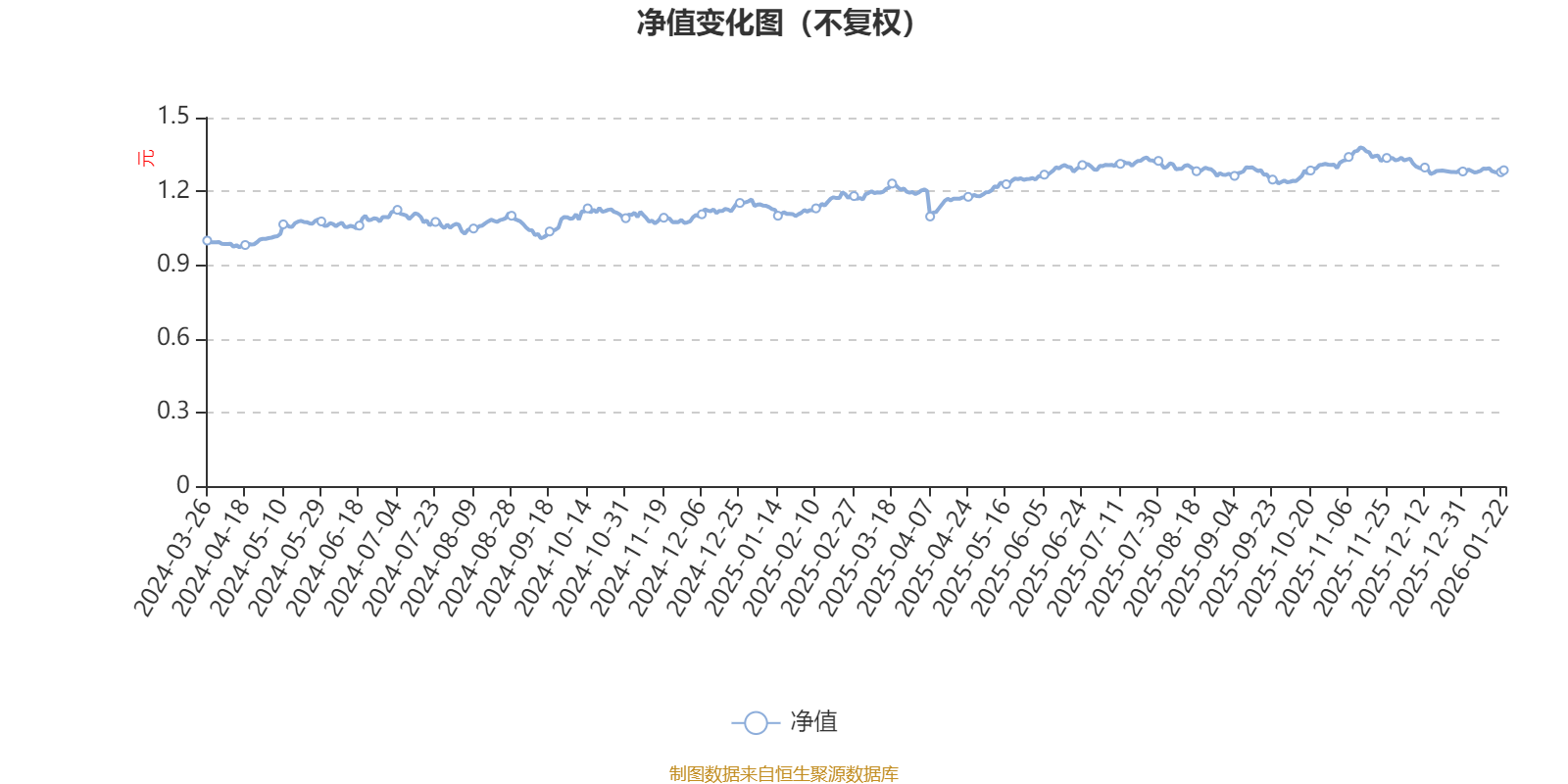
Core Viewpoint - The AI Fund Ping An Hong Kong Stock Connect Dividend Select Mixed Fund A (021046) reported a profit of 11.96 million yuan for Q4 2025, with a net asset value growth rate of 3.5% during the period [3]. Fund Performance - As of January 22, the fund's unit net value was 1.286 yuan, with a fund size of 389 million yuan [3][17]. - The fund's performance over the past three months showed a return of -0.63%, ranking 588 out of 621 comparable funds; over the past six months, it returned -0.69%, ranking 607 out of 621; and over the past year, it achieved a return of 19.68%, ranking 525 out of 613 [4]. Investment Strategy - The fund manager indicated that in the context of declining cash yields, high-dividend assets have shown a "quasi-fixed income" characteristic, becoming a dominant investment style in Q4. In contrast, growth sectors faced increased volatility and pressure due to market sentiment and fluctuating fundamental expectations [3]. - The fund will continue to focus on stable high-dividend stocks, particularly in the financial, telecommunications, energy, and public utility sectors, which are expected to provide visibility and stable profits during the economic recovery [3]. Risk Metrics - The fund's Sharpe ratio since inception is 1.3198, indicating a favorable risk-adjusted return [9]. - The maximum drawdown since inception is 10.87%, with the largest quarterly drawdown occurring in Q2 2025 at 9.1% [12]. Portfolio Composition - The average stock position since inception is 85.49%, with a peak of 89.53% at the end of H1 2024 and a low of 71.51% at the end of Q3 2024 [15]. - The fund has a high concentration of holdings, with the top ten stocks including China National Offshore Oil, China Mobile, CITIC Bank, Bank of China, and others [20].


上市银行首批2025业绩快报来了!多家净利润正增长,三大特点值得关注
券商中国· 2026-01-24 05:32
Core Viewpoint - The first batch of 2025 performance reports from listed banks indicates significant improvement in performance metrics, with asset quality remaining stable [1][2]. Group 1: Performance Highlights - As of January 23, 2025, eight listed banks have released performance reports, with all achieving positive growth in net profit [2]. - Notably, the net profit of China Merchants Bank reached 150.18 billion yuan, showing a slight year-on-year increase, while Hangzhou Bank's net profit grew approximately 12% [1][2]. - Among the eight banks, the majority reported a slowdown in revenue growth, with only CITIC Bank experiencing a slight revenue decline of 0.55% [2]. Group 2: Asset Quality and Loan Performance - All eight listed banks demonstrated steady asset expansion, with smaller banks leading in growth rates [1][4]. - The non-performing loan (NPL) ratio remained favorable, with five banks maintaining NPL ratios below 1% [6][8]. - The NPL ratio for several banks improved, with Shanghai Pudong Development Bank showing the largest decline of 10 basis points to 1.26% [6][8]. Group 3: Provisioning and Coverage Ratios - Many banks increased their provisioning efforts, although the provision coverage ratios generally declined, indicating a strategy to use provisions to support profits [6][9]. - Among the eight banks, seven experienced a decrease in provision coverage ratios, with declines ranging from 5.82 to 58.77 percentage points [9][10]. Group 4: Future Outlook - Analysts predict that the net interest margin (NIM) for banks in 2026 will benefit from monetary policy, with a stabilization in the decline of NIM expected [1][10]. - Revenue and net profit growth for banks in 2026 is anticipated to improve, driven by NIM recovery and reduced credit costs [10][11]. - The banking sector is expected to maintain a stable dividend profile and benefit from economic recovery dynamics in 2026 [11].