
Shanghai Sanyou Medical (688085)

Search documents
三友医疗:获得政府补助合计130万元
Ge Long Hui· 2026-01-29 09:25
格隆汇1月29日丨三友医疗(688085.SH)公布,公司于近期收到政府补助合计130.00万元,占公司2024年 度经审计归属上市公司股东的净利润的比例为11.34%。上述政府补助属于与收益相关的政府补助。 ...

三友医疗(688085) - 关于获得政府补助的公告
2026-01-29 09:15
证券代码:688085 证券简称:三友医疗 公告编号:2026-003 上海三友医疗器械股份有限公司董事会 2026 年 1 月 30 日 上海三友医疗器械股份有限公司 关于获得政府补助的公告 本公司董事会及全体董事保证本公告内容不存在任何虚假记载、误导性陈述 或者重大遗漏,并对其内容的真实性、准确性和完整性依法承担法律责任。 一、获得补助的基本情况 上海三友医疗器械股份有限公司(以下简称"公司")于近期收到政府补助 合计 130.00 万元,占公司 2024 年度经审计归属上市公司股东的净利润的比例为 11.34%。上述政府补助属于与收益相关的政府补助。 二、补助的类型及对公司的影响 公司根据《企业会计准则第 16 号——政府补助》等相关规定,确认上述事 项并划分补助类型。上述政府补助未经审计,具体的会计处理以及对公司相关年 度损益的影响情况最终以审计机构年度审计确认后的结果为准。敬请广大投资者 注意投资风险。 特此公告。 ...
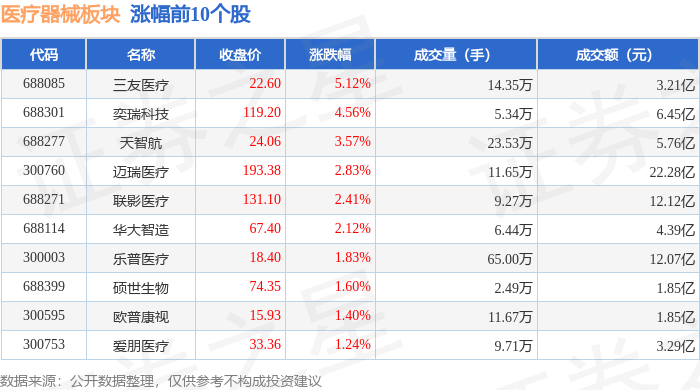
医疗器械板块1月29日涨0.19%,三友医疗领涨,主力资金净流出3.76亿元
Zheng Xing Xing Ye Ri Bao· 2026-01-29 09:03
Group 1 - The medical device sector increased by 0.19% on January 29, with Sanyou Medical leading the gains [1] - The Shanghai Composite Index closed at 4157.98, up 0.16%, while the Shenzhen Component Index closed at 14300.08, down 0.3% [1] - Key stocks in the medical device sector showed varied performance, with Sanyou Medical rising by 5.12% to a closing price of 22.60 [1] Group 2 - Major stocks that declined included Daan Gene, which fell by 9.96% to a closing price of 6.87, and Cap Bio, down 9.88% to 7.94 [2] - The medical device sector experienced a net outflow of 376 million yuan from institutional investors, while retail investors saw a net inflow of 201 million yuan [2][3] - Notable net inflows from retail investors were observed in stocks like Lepu Medical, which had a net inflow of 42.29 million yuan [3]





三友医疗:预计2025年净利润为5600万元到7280万元,控股公司Implanet营业收入同比增长32.62%
Cai Jing Wang· 2026-01-29 05:45
Core Viewpoint - Sanyou Medical expects significant revenue and profit growth for the fiscal year 2025, driven by innovative therapies and product development [1] Financial Performance - Projected revenue for 2025 is between 535 million to 562 million yuan, representing a year-on-year growth of 17.95% to 23.9% [1] - Estimated net profit attributable to shareholders is expected to be between 56 million to 72.8 million yuan, showing a substantial increase of 388.29% to 534.78% year-on-year [1] - Net profit attributable to shareholders, excluding non-recurring gains and losses, is projected to be between 43 million to 61 million yuan, indicating a turnaround from losses to profits [1] Business Growth Drivers - The growth in performance is primarily attributed to the company's advantages in innovative therapies, which have facilitated new product development and partnerships, enhancing sales channels [1] - The ultrasound bone knife business and international operations have also experienced rapid growth, with the subsidiary Implanet reporting a revenue increase of 32.62% year-on-year [1] Future Plans - The company plans to continue its focus on therapy innovation and market expansion, aiming for regulatory approvals for related products to ensure sustainable future growth [1]
上海三友医疗器械股份有限公司2025年度业绩预增预告
Shang Hai Zheng Quan Bao· 2026-01-28 18:34
Core Viewpoint - Shanghai Sanyou Medical Instrument Co., Ltd. anticipates significant growth in its 2025 financial performance, with projected increases in both revenue and net profit compared to the previous year [1][2]. Financial Performance Forecast - The company expects its annual revenue for 2025 to be between 535 million yuan and 562 million yuan, representing an increase of 81.4 million yuan to 108.4 million yuan, or a year-on-year growth of 17.95% to 23.90% [1]. - The projected net profit attributable to shareholders for 2025 is estimated to be between 56 million yuan and 72.8 million yuan, indicating an increase of 44.53 million yuan to 61.33 million yuan, with a year-on-year growth of 388.29% to 534.78% [1][2]. - The net profit after deducting non-recurring gains and losses is expected to be between 43 million yuan and 61 million yuan, marking a turnaround from a loss in the previous year [2]. Previous Year Performance - In 2024, the company reported a revenue of 453.60 million yuan, a total profit of 21.90 million yuan, and a net profit attributable to shareholders of 11.47 million yuan. The net profit after deducting non-recurring gains and losses was a loss of 3.78 million yuan, with earnings per share of 0.05 yuan [4]. Reasons for Performance Change - The company has leveraged its innovative therapy advantages to develop new products and expand its product line, which has contributed to stable sales growth in the orthopedic industry [5]. - The ultrasound knife business has seen rapid growth in both sales and net profit, while international business continues to expand, with the subsidiary Implanet achieving a revenue of 12.47 million euros, a year-on-year increase of 32.62% [5]. - The company is focused on therapy innovation and market expansion, aiming to obtain regulatory approvals for new products and enhance market penetration of existing products [6][7]. Strategic Initiatives - The company plans to promote its ultrasound knife business and other integrated product lines in various medical fields, while also pushing for the sales growth of international products in the Chinese market [6][7]. - A stock incentive plan will be introduced in 2025, with an estimated share-based payment expense of approximately 8.4 million yuan [7].
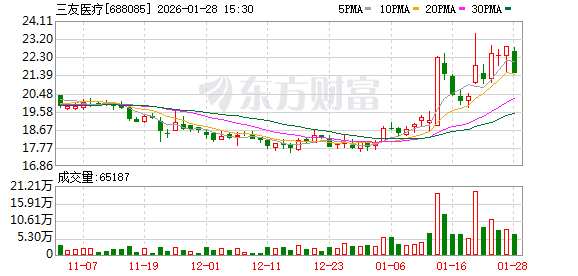
三友医疗2025年净利同比预增388.29%—534.78%
Bei Jing Shang Bao· 2026-01-28 13:24
(文章来源:北京商报) 三友医疗表示,2025年,超声骨刀业务在销售业绩和净利润上均取得了快速的增长。公司国际化业务亦 保持持续快速发展,2025年,公司控股公司Implanet实现营业收入1247.39万欧元,同比增长32.62%,其 中美国市场表现优异,同比增长49.3%。 北京商报讯1月28日晚间,三友医疗(688085)发布2025年业绩预告显示,预计2025年实现归属净利润 5600万元到7280万元,与上年同期(法定披露数据)相比,预计将增加4453.14万元到6133.14万元,同 比增加388.29%到534.78%。 ...
三友医疗:2025年度业绩预增预告
Zheng Quan Ri Bao Zhi Sheng· 2026-01-28 09:48
证券日报网讯 1月28日,三友医疗发布公告称,公司预计2025年年度实现营业收入为53,500.00万元到 56,200.00万元,与上年同期相比,预计将增加8,140.47万元到10,840.47万元,同比增加17.95%到 23.90%;预计2025年年度实现归属于上市公司股东的净利润为5,600.00万元到7,280.00万元,与上年 同期相比,预计将增加4,453.14万元到6,133.14万元,同比增加388.29%到534.78%。 (编辑 丛可心) ...
三友医疗(688085.SH):预计2025年净利润同比增加388.29%到534.78%
Ge Long Hui A P P· 2026-01-28 08:02
Core Viewpoint - Sanyou Medical (688085.SH) is expected to achieve significant revenue and profit growth in 2025, driven by innovative product development and strategic market expansion [1][2] Financial Projections - The company anticipates annual revenue for 2025 to be between 535 million and 562 million yuan, representing a year-on-year increase of 17.95% to 23.90% [1] - The projected net profit attributable to shareholders for 2025 is expected to be between 56 million and 72.8 million yuan, showing a substantial year-on-year increase of 388.29% to 534.78% [1] - The net profit after deducting non-recurring gains and losses is forecasted to be between 43 million and 61 million yuan, indicating a turnaround from losses in the previous year [1] Market Strategy and Product Development - In 2025, the company plans to leverage its innovative therapy advantages to develop new products and enhance its product line, which will support sustained sales growth and deeper market penetration [2] - The company is positioned as a leading player in the domestic orthopedic industry, benefiting from increased market concentration and stable sales performance [2] - The ultrasound knife business is expected to see rapid growth in both sales and net profit, contributing to the overall financial performance [2] International Business Growth - The company's international business is also projected to grow rapidly, with its subsidiary Implanet expected to achieve revenue of 12.47 million euros in 2025, reflecting a year-on-year growth of 32.62% [2] - The performance in the U.S. market is particularly strong, with a year-on-year increase of 49.30% [2]
三友医疗发预增,预计2025年归母净利润5600万元到7280万元,同比增加388.29%到534.78%
Zhi Tong Cai Jing· 2026-01-28 07:56
三友医疗(688085.SH)发布公告,公司预计2025年年度实现归属于上市公司股东的净利润为5600万元到 7280万元,与上年同期(法定披露数据)相比,预计将增加4,453.14万元到6,133.14万元,同比增加 388.29%到534.78%。 ...
三友医疗(688085) - 2025 Q4 - 年度业绩预告
2026-01-28 07:50
证券代码:688085 证券简称:三友医疗 公告编号:2026-002 上海三友医疗器械股份有限公司 2、预计 2025 年年度实现归属于上市公司股东的净利润为 5,600.00 万元到 7,280.00 万元,与上年同期(法定披露数据)相比,预计将增加 4,453.14 万 元到 6,133.14 万元,同比增加 388.29%到 534.78%。 3、预计 2025 年年度归属于上市公司股东的扣除非经常性损益的净利润为 4,300.00 万元到 6,100.00 万元,与上年同期(法定披露数据)相比,预计将 增加 4,678.10 万元到 6,478.10 万元,与上年同期相比,实现扭亏为盈。 (三)本次业绩预告未经注册会计师审计。 2025 年度业绩预增预告 本公司董事会及全体董事保证本公告内容不存在任何虚假记载、误导性陈 述或者重大遗漏,并对其内容的真实性、准确性和完整性依法承担法律责任。 一、本期业绩预告情况 (一)业绩预告期间 2025 年 1 月 1 日至 2025 年 12 月 31 日。 (二)业绩预告情况 1、经公司财务部门初步测算,上海三友医疗器械股份有限公司(以下简称 "公司")预计 ...