Cambricon(688256)

Search documents
供需紧俏助推存储涨价周期延续,科创芯片设计ETF易方达(589030)逆市拉升涨近1%,助力把握存储芯片“超级周期”布局机遇
Xin Lang Cai Jing· 2026-02-13 02:31
Core Viewpoint - The semiconductor design sector in the STAR Market is experiencing significant growth, with key stocks showing strong performance and an increase in ETF investments, driven by rising demand and pricing in the memory and storage markets [1][2]. Group 1: Market Performance - The STAR Market Chip Design Theme Index (950162) rose by 1.10% as of February 13, 2026, with notable increases in constituent stocks such as Shengke Communication (+10.18%) and Jiewate (+6.45%) [1]. - The E Fund STAR Chip Design ETF (589030) increased by 0.94%, with a recent price of 1.07 yuan, and has seen a cumulative increase of 6.74% over the past week [1]. - The ETF recorded a turnover rate of 2.01% during the trading session, with a total transaction volume of 9.3767 million yuan [1]. Group 2: Fund Growth and Inflows - The E Fund STAR Chip Design ETF has seen a significant increase in scale, growing by 1.7171 million yuan over the past two weeks, ranking second among comparable funds [1]. - The ETF's share count increased by 14.1 million in the past month, also ranking second among comparable funds [1]. - Over the last ten trading days, the ETF attracted a total of 10.7451 million yuan in inflows [1]. Group 3: Industry Insights - According to TrendForce, DRAM contract prices have risen by over 40% in Q4 2025, with further increases expected in Q1 2026, particularly in the DDR4 market due to supply-demand imbalances [2]. - Wanlian Securities highlights the ongoing AI wave driving demand for key hardware components, suggesting that storage and PCB sectors are in an expansion cycle, with potential growth in AI consumer electronics [2]. - The E Fund STAR Chip Design ETF has achieved an 80.00% weekly profit percentage and a 77.78% monthly profit probability since its inception [2]. Group 4: Fee Structure and Index Composition - The management fee for the E Fund STAR Chip Design ETF is 0.50%, and the custody fee is 0.10%, which are among the lowest in comparable funds [3]. - The STAR Market Chip Design Theme Index primarily includes companies involved in chip design, with digital chip design accounting for 76.8% of the index weight, benefiting from industry uptrends [3]. - As of January 30, 2026, the top ten weighted stocks in the index account for 58.7% of the total index, including companies like Lanqi Technology and Haiguang Information [3].



AI新催化-产业链全梳理
2026-02-13 02:17
Summary of Key Points from the Conference Call Industry Overview - The AI video production industry is transitioning from high-cost, long-cycle, and high-threshold production to low-cost, efficient, and democratized industrial production, reshaping supply and demand dynamics and creating investment opportunities. However, there are concerns about the potential impact of large model capabilities on applications [2][3]. Core Insights and Arguments - The announcement of price increases by cloud service providers like Amazon AWS indicates the growing scarcity of AI cloud infrastructure, confirming the high demand for global AI computing power. The market is expected to replicate the post-Chinese New Year rally seen in 2025 [2][3]. - The release of models such as CloudOps 4.6 and Zhizhu GLM 5 marks a shift in AI from chatbots to customized team collaboration executors, which is anticipated to drive exponential growth in the industry by 2026 and change digital work patterns for businesses and individuals [2][5]. - Investment opportunities in domestic computing power related to AI applications are promising, with recommendations for GPU companies like Cambricon and self-developed ASIC chips from internet firms. Attention is also drawn to the expected price increases in target materials, with companies like Jiangfeng Electronics, OLAI New Materials, and Ashi Chuang being highlighted [2][6]. Investment Opportunities - The price increase of CCL (copper foil substrate) is expected to manifest in Q1 2026, with a projected overall positive performance for 2026-2027. Beneficiary companies include Nanya New Materials, Shengyi Technology, and Huazheng New Materials [2][8]. - In the AI hardware sector, there are significant investment opportunities related to domestic computing power, particularly due to the high power consumption of various AI applications, especially video-related ones [6][7]. Military Applications of AI - AI is primarily applied in military fields for situational awareness and unmanned operations, with Palantir's $4.3 billion large order demonstrating the substantial commercial potential of AI in military situational awareness [4][10][11]. - The development of unmanned operations is expected to accelerate significantly, with a focus on increasing the proportion of unmanned equipment in military operations [12][13]. Communication Chain Opportunities - Opportunities in the AI industry chain within the communication sector are identified in three main areas: AIS cloud services, network endpoints, and computing endpoints. Price increases in related components are anticipated due to the growth of AI applications and model upgrades [14]. Media and Entertainment Sector - The media and internet industry shows significant investment opportunities in AI applications, particularly with ByteDance's CDS 2.0 model, which enhances video production capabilities and efficiency. Companies with strong IP and distribution capabilities are recommended for investment [15]. Gaming Industry Impact - AI technology is expected to significantly enhance game development efficiency and user experience. Companies like Perfect World and KAEYING Network are highlighted as key investment targets due to their innovative projects [16][17]. Pharmaceutical Industry Potential - AI has substantial potential in the pharmaceutical industry, particularly in drug development, where it can shorten development cycles and improve efficiency. Companies like Hongbo Pharmaceutical and others are noted for their advancements in utilizing AI for drug development [18]. Multimodal Model Development - The development of multimodal models is rapidly advancing, with significant improvements in capabilities and usability. Companies like ByteDance and others are leading in this space, indicating a competitive landscape similar to the early stages of text models [19][20][21][22]. Recommended Companies for Investment - In the multimodal direction, companies such as Wanjing Technology, Haitai Ruisheng, and others are recommended for their strong positions in AI creative tools and applications [26]. This summary encapsulates the key insights and investment opportunities discussed in the conference call, providing a comprehensive overview of the current landscape in the AI industry and its various applications across sectors.




资金风向标|两融余额较上一日增加11.67亿元 电子行业获融资净买入额居首
Sou Hu Cai Jing· 2026-02-13 01:40
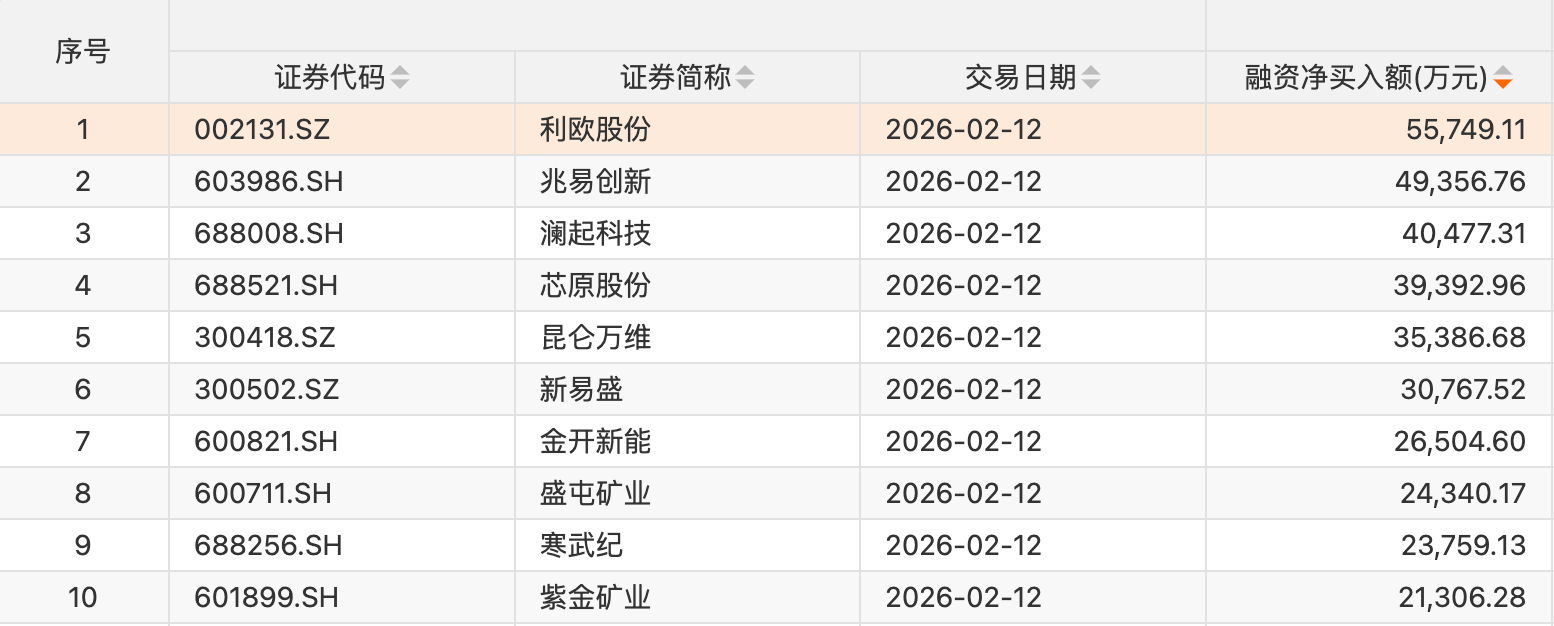
Group 1 - As of February 12, the A-share margin financing balance reached 26,456.02 billion yuan, an increase of 1.17 billion yuan from the previous trading day, accounting for 2.54% of the A-share circulating market value [1] - The margin trading volume on the same day was 2,161.58 billion yuan, which is an increase of 35.52 billion yuan from the previous trading day, representing 10% of the total A-share trading volume [1] - Among the 31 primary industries, 12 experienced net financing inflows, with the electronics industry leading at a net inflow of 759 million yuan [1] Group 2 - A total of 43 stocks had net financing inflows exceeding 100 million yuan, with Liou Co., Ltd. leading at a net inflow of 557 million yuan [2] - Other notable stocks with significant net financing inflows include Zhaoyi Innovation, Lanke Technology, Chip Origin, Kunlun Wanwei, New Yisheng, Jinkai New Energy, Shengtun Mining, Cambricon, and Zijin Mining [2] - According to Guotai Haitong Securities, the price increase of traditional fiberglass electronic cloth has accelerated since February, indicating a tightening supply and rising demand due to AI electronic cloth [2]





寒武纪:公司将利用多种方式或途径,保持与广大投资者的良好互动和交流
Zheng Quan Ri Bao· 2026-02-12 13:43
Group 1 - The company, Cambrian, stated that it strictly adheres to information disclosure regulations, ensuring that significant matters affecting stock trading prices or investment decisions are disclosed through regular reports and announcements on the Shanghai Stock Exchange website and designated media [2] - Cambrian will utilize various methods such as the Shanghai Stock Exchange interactive platform, performance briefings, phone calls, and emails to maintain good interaction and communication with investors [2]
寒武纪:公司持续推动智能芯片产品、基础系统软件平台的迭代升级与优化
Zheng Quan Ri Bao· 2026-02-12 13:41
(文章来源:证券日报) 证券日报网讯 2月12日,寒武纪在互动平台回答投资者提问时表示,公司持续推动智能芯片产品、基础 系统软件平台的迭代升级与优化,提升公司芯片产品的市场竞争力,为客户提供优质的芯片产品。公司 产品信息请以公司在指定披露媒体披露的公告或公司官网发布的信息为准。 ...
寒武纪:公司已于2026年1月31日披露《2025年年度业绩预告》
Zheng Quan Ri Bao· 2026-02-12 13:41
(文章来源:证券日报) 证券日报网讯 2月12日,寒武纪在互动平台回答投资者提问时表示,公司已于2026年1月31日在上海证 券交易所网站披露《2025年年度业绩预告》,可查阅相关内容。2025年度具体业绩情况请关注公司后续 披露的《2025年年度报告》等相关公告。 ...
寒武纪:公司凭借在智能芯片领域里具有竞争力的产品优势及良好的服务,获得了客户的广泛认可
Zheng Quan Ri Bao· 2026-02-12 12:36
Group 1 - The core viewpoint of the article highlights the growth in demand for intelligent computing driven by advancements in large model technology [2] - The company has gained widespread recognition from clients due to its competitive product advantages and good service in the intelligent chip sector [2] - The company aims to closely monitor industry developments and market demands, seizing opportunities in computing power while deepening collaboration with clients [2] Group 2 - The company is committed to focusing on technological innovation in the field of artificial intelligence chip design to enhance its core competitiveness [2] - The company plans to actively expand its market share and accelerate the implementation of its solutions in various scenarios [2] - The overall goal is to promote sustained and positive development for the company [2]
沪市有色“量价齐升”,电子AI“多点开花”
Bei Jing Ri Bao Ke Hu Duan· 2026-02-12 12:24
Group 1: Overall Market Performance - Over 270 companies on the Shanghai Stock Exchange have issued positive performance forecasts for 2025, indicating a robust outlook for the market [1] - Nearly 60% of companies on the Sci-Tech Innovation Board have reported year-on-year profit growth, showcasing the dual dimensions of quality and quantity in the economic trajectory of China [1] Group 2: Nonferrous Metals Industry - The nonferrous metals industry is experiencing a boom driven by resource prices and industrial upgrades, with industrial added value growth of 6.9%, surpassing the national average [2] - The total profit for ten major nonferrous metals reached 528.45 billion yuan, a year-on-year increase of 25.6%, marking a historical peak [2] - Leading companies like Zijin Mining are expected to see significant profit increases, with projected net profits of 51 to 52 billion yuan, reflecting a growth of 59% to 62% [2] Group 3: Electronic Industry - The electronic industry is witnessing growth driven by AI demand, with companies like Huaqin Technology expected to achieve revenues of 170 to 171.5 billion yuan, a year-on-year increase of 54.7% to 56.1% [4] - Shengyi Technology anticipates a net profit increase of 87% to 98%, benefiting from rising sales and improved product structure in the copper-clad laminate sector [4] - Companies are leveraging AI advancements to enhance their product offerings, with firms like Rockchip expected to see revenue growth of 71.97% to 85.42% [5] Group 4: Sci-Tech Innovation Board - The Sci-Tech Innovation Board is showing strong innovation momentum, particularly in the integrated circuit and biopharmaceutical sectors, with a projected net profit increase of approximately 99.49 billion yuan across 87 companies [6] - Companies in the AI chip sector are expected to see revenue growth exceeding 100%, with significant improvements in profitability [6] - The biopharmaceutical industry is transitioning towards commercialization, with notable collaborations and product approvals driving growth [6]




“AI双子星”荣登C位,159363、589520携手狂飙!机构:春季行情值得期待,建议关注科技+周期主线!
Xin Lang Cai Jing· 2026-02-12 12:00
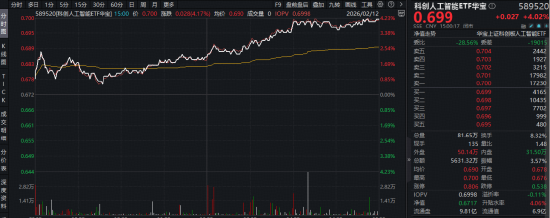
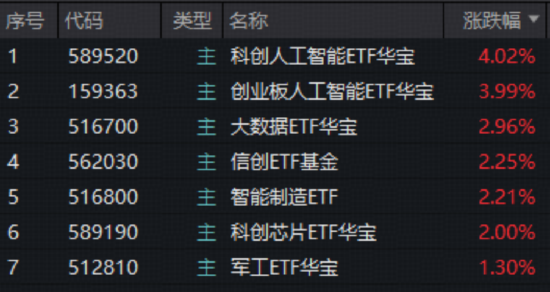
Core Viewpoint - The market is experiencing strong trading enthusiasm ahead of the Spring Festival, with significant movements in the AI sector driven by multiple favorable catalysts [1][2]. Group 1: AI Sector Developments - The State-owned Assets Supervision and Administration Commission (SASAC) is promoting central enterprises to expand effective investment in computing power and advance the synergy between computing power and electricity [1]. - Zhipu AI has launched its new flagship model GLM-5 and increased the subscription price for its AI programming package, while other companies like Deepseek and ByteDance are also releasing new products [1]. - Meta has announced a $10 billion investment to build data centers, indicating strong growth prospects in the AI and cloud computing markets [1][2]. Group 2: Market Performance - The Shanghai Composite Index showed slight fluctuations, while the Shenzhen Component Index and the ChiNext Index performed strongly, with the ChiNext Index leading with over a 1.3% increase [1]. - The total trading volume in the Shanghai, Shenzhen, and Beijing markets reached 2.16 trillion yuan, an increase of 159.8 billion yuan compared to the previous day [1]. Group 3: ETF Performance - The Huabao Science and Technology Innovation Artificial Intelligence ETF (589520) surged by 4.02%, while the Huabao Entrepreneurship Board Artificial Intelligence ETF (159363) rose by 3.99% [3]. - The Huabao Big Data ETF (516700) increased by nearly 3%, marking a six-day winning streak [2][3]. Group 4: Semiconductor and Chip Industry - The GLM-5 model has achieved deep adaptation with major domestic chip platforms, showcasing advancements in domestic chip capabilities [7]. - The semiconductor industry is experiencing a high growth cycle, with significant increases in sales and profits reported by companies like Jingchen Co., which expects a revenue of 6.793 billion yuan in 2025, a 14.63% year-on-year increase [11]. - The global semiconductor sales in January 2026 saw a year-on-year growth of 37.1%, continuing a trend of positive growth for 26 consecutive months [11]. Group 5: Military and Aerospace Sector - The military sector is witnessing a surge in activity, with the Huabao Military ETF (512810) rising by 1.3% as various companies report strong performance [16]. - Recent developments in commercial aerospace, including successful tests of reusable rockets and new aircraft orders, indicate a robust growth trajectory for the industry [17].
智谱GLM-5引爆行情!国产大模型再获突破!科创人工智能ETF(589520)猛拉4%,马斯克:模型发展速度太快!
Xin Lang Cai Jing· 2026-02-12 11:37
Group 1 - The core viewpoint of the article highlights the rapid development of domestic AI models, particularly the launch of Seedance 2.0 and GLM-5, indicating a competitive edge in the global AI landscape [1][3][10] - The performance of the Huabao AI ETF (589520) has been impressive, with a 4.02% increase, recovering above the 20-day moving average, reflecting strong investor interest in the domestic AI sector [1][7][8] - Key stocks within the ETF, such as Yuke (20% limit up), Jingchen (over 15% increase), and Xinyuan (over 12% increase), have shown significant gains, indicating a bullish trend in the AI and semiconductor sectors [8][10] Group 2 - The GLM-5 model, previously known as "PonyAlpha," has been recognized for its advanced capabilities, positioning China among the top tier in sparse architecture and AI model development [3][10] - The model has been optimized for compatibility with major domestic chip platforms, showcasing the capability of Chinese chip clusters to support large-scale generative models, which is a significant step towards a mature ecosystem [10] - According to CITIC Securities, the domestic computing power sector is expected to thrive, with potential for a long-term bullish market similar to the US stock market in 2023, driven by the urgency for domestic semiconductor and AI chip development [3][10]