
CLOUDWALK(688327)

Search documents
AI炸场!35家储能企业同台竞技
行家说储能· 2025-06-13 10:10
Core Viewpoint - The article highlights the significant advancements and collaborations in the energy storage industry showcased at the recent "2025 Global User-side Energy Storage Industry Value Summit and Application Demonstration Exhibition," emphasizing the shift towards energy storage solutions and the introduction of innovative products and partnerships among leading companies in the sector [1][2]. Group 1: Industry Trends and Developments - The exhibition transformed from a photovoltaic focus to a dedicated energy storage event, with a notable increase in the number of storage companies and products presented [1]. - Several companies signed major cooperation agreements and secured GWh-level procurement orders during the event, indicating a robust market demand for energy storage solutions [1][2]. - The introduction of products responding to the 136 policy and market value transformation reflects the industry's adaptation to regulatory changes and market needs [1]. Group 2: Key Product Launches - Companies like采日能源 showcased advanced storage systems, including the Serlattice G3 10MWh intelligent storage system, which aims to reduce costs and expand application scenarios [5]. - 中车株洲所 presented its构网型储能系统 and the "云枢" storage inverter, emphasizing high power density and safety features [6][8]. - 华为数字能源 launched the FusionSolar9.0, a smart string-based energy storage solution that integrates various energy management capabilities [10][12]. Group 3: Notable Collaborations and Agreements - 采日能源 and other companies formed strategic partnerships to enhance their energy storage ecosystems, focusing on comprehensive energy solutions [3][18]. - 南都电源 signed a strategic cooperation agreement with 太蓝新能源 to explore solid-state battery applications in ultra-safe energy storage [23]. - 蜂巢能源 established significant strategic agreements with various industry leaders to enhance its market presence and technological capabilities [87]. Group 4: Company-Specific Innovations - 比亚迪储能 introduced several new products, including the MC Cube-T Pro BESS with a capacity of 6.4MWh, featuring advanced safety and operational efficiency [15]. - 亿纬锂能 launched the 836kWh modular cabinet, designed for flexibility and efficiency in commercial energy storage applications [24][27]. - 国轩高科 unveiled its 20MWh energy storage battery system, which received substantial orders and is designed for long-term reliability and safety [31][32]. Group 5: Emerging Technologies and Solutions - 海博思创 presented its "储能+X" full-scene solutions, integrating various storage technologies for diverse applications [16][18]. - 智光电气 showcased its liquid-cooled commercial storage unit, emphasizing high efficiency and safety in demanding environments [60][62]. - 永泰数能's Aurora 5015 system demonstrated high energy density and cost efficiency, marking a significant advancement in the industry [97]. Group 6: Market Outlook - The article indicates a strong growth trajectory for the energy storage market, driven by technological advancements, regulatory support, and increasing demand for sustainable energy solutions [1][2]. - The collaborations and innovations presented at the exhibition suggest a competitive landscape where companies are actively seeking to enhance their offerings and market positions [1][2].




研判2025!中国自然语言处理行业产业链、相关政策及市场规模分析:技术突破推动行业增长,低成本算力与小样本学习加速技术落地[图]
Chan Ye Xin Xi Wang· 2025-06-08 02:10
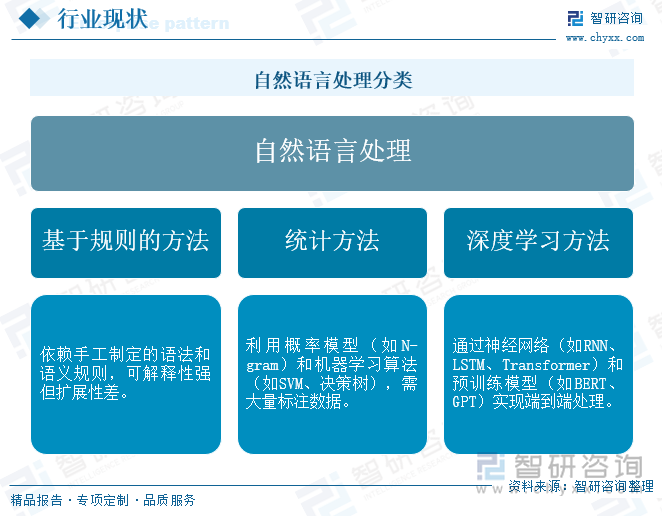
Core Insights - The natural language processing (NLP) industry in China is projected to reach a market size of approximately 12.6 billion yuan in 2024, reflecting a year-on-year growth of 14.55% [1][15] - The cost of model training has significantly decreased due to the "East Data West Computing" initiative, which provides low-cost computing power, and the adoption of few-shot learning frameworks has reduced the demand for training data by 90% [1][15] - Major companies in the NLP sector include Baidu, iFlytek, and Alibaba, each leveraging their technological strengths to capture market share in various applications [2][17][21] Industry Overview - NLP is a crucial branch of computer science and artificial intelligence, aimed at enabling computers to understand, interpret, and generate human language [1][8] - The technology types in NLP are primarily categorized into rule-based methods, statistical methods, and deep learning methods [1][8] Industry Development History - The development of NLP in China has gone through four main stages: the initial phase (1950s-60s) focused on machine translation, the rule-dominated phase (1970s-80s) involved complex rule systems, the statistical learning phase (1990s-2012) integrated statistical models with machine learning, and the deep learning phase (2013-present) is characterized by the dominance of deep learning models and pre-trained language models [4][5][6] Industry Value Chain - The upstream of the NLP industry chain includes hardware devices, data services, open-source models, and cloud services, while the midstream focuses on NLP technology research and development, and the downstream encompasses applications in finance, healthcare, education, and smart manufacturing [1][8] Market Size - The NLP industry in China is experiencing significant growth, with a projected market size of 12.6 billion yuan in 2024, driven by advancements in pre-trained language models and reduced training costs [1][15] Key Companies' Performance - Baidu leads the NLP industry with a strong technological foundation and extensive commercialization, maintaining the largest market share [17][21] - iFlytek excels in voice recognition and machine translation, particularly in the education and healthcare sectors [17][20] - Alibaba has made breakthroughs in machine reading comprehension and natural language understanding, integrating its technology into various business scenarios [17][20] Industry Development Trends - The NLP industry is witnessing a trend towards the integration of large models and multimodal capabilities, enhancing performance and user interaction [24] - There is a growing focus on vertical applications in sectors like healthcare and finance, as well as the integration of NLP with smart hardware [26] - Data security and ethical standards are becoming increasingly important, driving sustainable development in the NLP sector [27]


2025年中国多模态大模型行业核心技术现状 关键在表征、翻译、对齐、融合、协同技术【组图】
Qian Zhan Wang· 2025-06-03 05:12
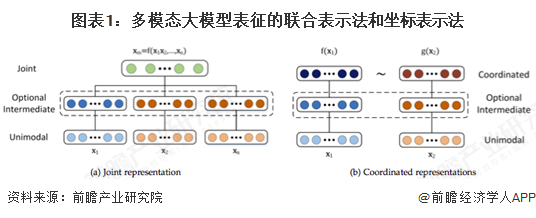
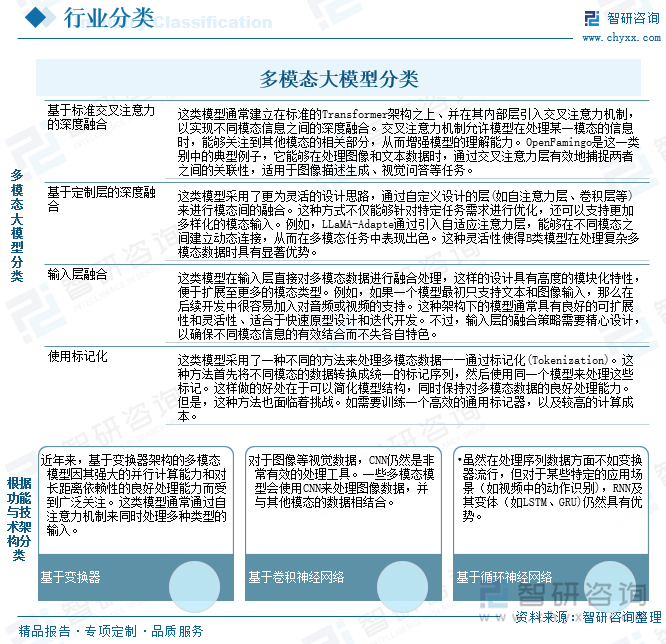
Core Insights - The article discusses the core technologies of multimodal large models, focusing on representation learning, translation, alignment, fusion, and collaborative learning [1][2][7][11][14]. Representation Learning - Representation learning is fundamental for multimodal tasks, addressing challenges such as combining heterogeneous data and handling varying noise levels across different modalities [1]. - Prior to the advent of Transformers, different modalities required distinct representation learning models, such as CNNs for computer vision (CV) and LSTMs for natural language processing (NLP) [1]. - The emergence of Transformers has enabled the unification of multiple modalities and cross-modal tasks, leading to a surge in multimodal pre-training models post-2019 [1]. Translation - Cross-modal translation aims to map source modalities to target modalities, such as generating descriptive sentences from images or vice versa [2]. - The use of syntactic templates allows for structured predictions, where specific words are filled in based on detected attributes [2]. - Encoder-decoder architectures are employed to encode source modality data into latent features, which are then decoded to generate the target modality [2]. Alignment - Alignment is crucial in multimodal learning, focusing on establishing correspondences between different data modalities to enhance understanding of complex scenarios [7]. - Explicit alignment involves categorizing instances with multiple components and measuring similarity, utilizing both unsupervised and supervised methods [7][8]. - Implicit alignment leverages latent representations for tasks without strict alignment, improving performance in applications like visual question answering (VQA) and machine translation [8]. Fusion - Fusion combines multimodal data or features for unified analysis and decision-making, enhancing task performance by integrating information from various modalities [11]. - Early fusion merges features at the feature level, while late fusion combines outputs at the decision level, with hybrid fusion incorporating both approaches [11][12]. - The choice of fusion method depends on the task and data, with neural networks becoming a popular approach for multimodal fusion [12]. Collaborative Learning - Collaborative learning utilizes data from one modality to enhance the model of another modality, categorized into parallel, non-parallel, and hybrid methods [14][15]. - Parallel learning requires direct associations between observations from different modalities, while non-parallel learning relies on overlapping categories [15]. - Hybrid methods connect modalities through shared datasets, allowing one modality to influence the training of another, applicable across various tasks [15].


云从科技多模态大模型登顶OpenCompass全球多模态榜单
news flash· 2025-05-29 07:12
Core Insights - Yuncong Technology's self-developed model, Congrong, has achieved the top position in the latest global multimodal ranking on the OpenCompass platform with a score of 80.7 [1] - The model excels in various professional fields, including medical health, mathematical logic, and art design, demonstrating strong performance across eight core datasets encompassing visual perception, cognitive understanding, and cross-domain applications [1]
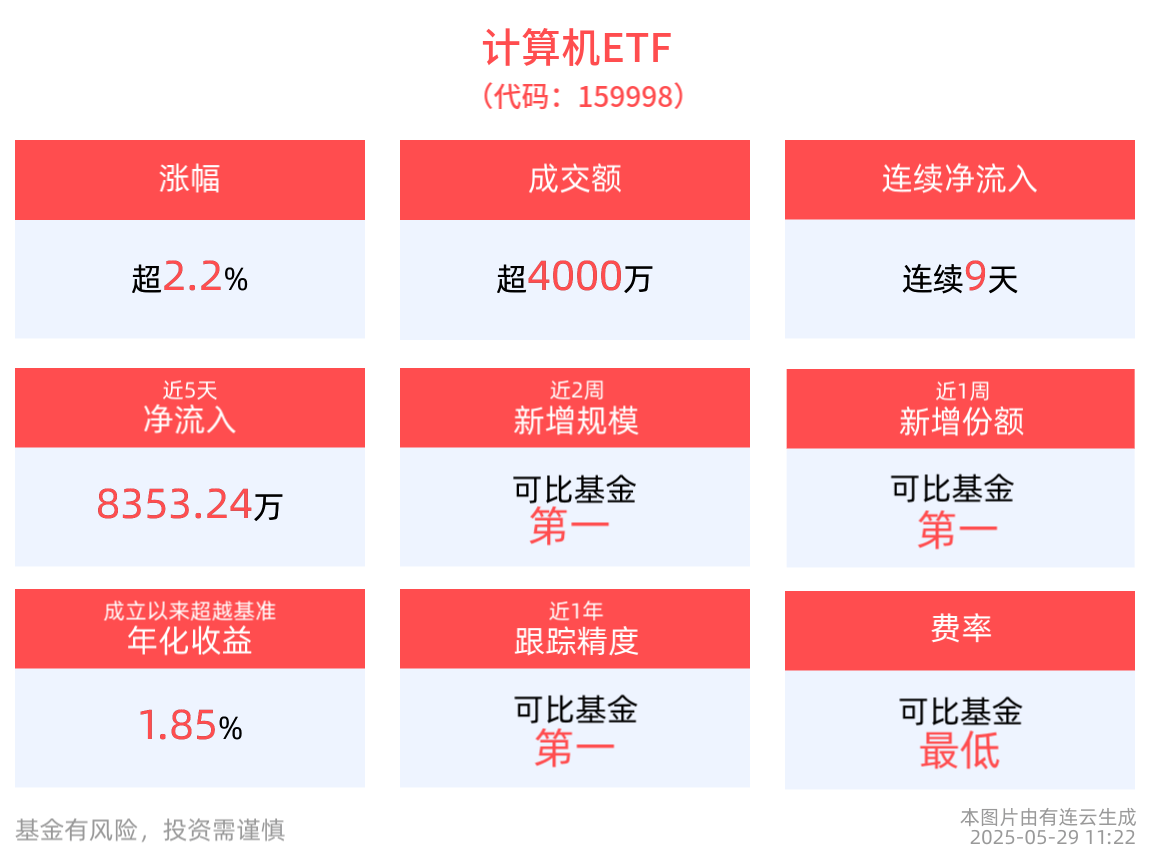
DeepSeekR1模型升级上线,计算机ETF(159998)上涨2.25%,连续9天净流入
Sou Hu Cai Jing· 2025-05-29 04:18
Core Viewpoint - The computer industry is experiencing a strong upward trend, driven by AI demand and policy support, with significant movements in stock prices and ETFs related to cloud computing and chips [3][4][5]. Group 1: Market Performance - The CSI Computer Theme Index rose by 1.93%, with notable gains in stocks such as Langxin Group (up 19.97%) and CloudWalk Technology (up 6.66%) [3]. - The Computer ETF (159998) increased by 2.25%, with a trading volume of 49.08 million yuan and a turnover rate of 1.73% [3]. - The CSI Hong Kong-Shenzhen Cloud Computing Industry Index saw a 1.49% rise, with Longbright Technology and Tianyuan Dike gaining 7.44% and 4.18%, respectively [3]. Group 2: Corporate Developments - On May 25, Zhongke Shuguang and Haiguang Information announced a merger plan to enhance business synergy and focus on AI full-stack solution development [3]. - The merger coincides with the revision of the "Major Asset Restructuring Management Measures for Listed Companies," indicating a new phase in optimizing industrial resource allocation [3]. Group 3: Investment Opportunities - The AI industry is expected to boost downstream demand in the computer sector, with a focus on AI computing power and domestic substitution trends [4]. - Investment strategies should consider the vertical integration capabilities of merged entities in cloud computing, which may enhance gross margins [4]. - The computer ETF has seen a significant increase in scale, growing by 23.02 million yuan over two weeks, and a notable inflow of 1.25 billion yuan over nine days [5].



2025年中国多模态大模型行业市场规模、产业链、竞争格局分析及行业发趋势研判:将更加多元和深入,应用前景越来越广阔[图]
Chan Ye Xin Xi Wang· 2025-05-29 01:47
Core Insights - The multi-modal large model market in China is projected to reach 15.63 billion yuan in 2024, an increase of 6.54 billion yuan from 2023, and is expected to grow to 23.48 billion yuan in 2025, indicating strong market demand and government support [1][6][19] Multi-Modal Large Model Industry Definition and Classification - Multi-modal large models are AI systems capable of processing and understanding various data forms, including text, images, audio, and video, using deep learning technologies like the Transformer architecture [2][4] Industry Development History - The multi-modal large model industry has evolved through several stages: task-oriented phase, visual-language pre-training phase, and the current multi-modal large model phase, focusing on enhancing cross-modal understanding and generation capabilities [4] Current Industry Status - The multi-modal large model industry has gained significant attention due to its data processing capabilities and diverse applications, with a market size projected to grow substantially in the coming years [6][19] Application Scenarios - The largest application share of multi-modal large models is in the digital human sector at 24%, followed by gaming and advertising at 13% each, and smart marketing and social media at 10% each [8] Industry Value Chain - The industry value chain consists of upstream components like AI chips and hardware, midstream multi-modal large models, and downstream applications across various sectors including education, gaming, and public services [10][12] Competitive Landscape - Major players in the multi-modal large model space include institutions and companies like the Chinese Academy of Sciences, Huawei, Baidu, Tencent, and Alibaba, with various models being developed to optimize training costs and enhance capabilities [16][17] Future Development Trends - The multi-modal large model industry is expected to become more intelligent and humanized, providing richer and more personalized user experiences, with applications expanding across various fields such as finance, education, and content creation [19]
广州南沙全力构建人工智能产业新高地
Zhong Guo Zheng Quan Bao· 2025-05-28 20:35
Group 1 - The "Bay Area Artificial Intelligence Industry Innovation Alliance" was officially established in Nansha District, Guangzhou, aiming to create a new high ground for the AI industry in the Guangdong-Hong Kong-Macao Greater Bay Area and globally [1][2] - The alliance is initiated by Hong Kong University of Science and Technology (Guangzhou) and Huawei, focusing on integrating various resources from international, Hong Kong, Macao, and mainland research institutions to empower Nansha and promote it as a leading area for AI innovation [1][2] - Nansha aims to upgrade its AI industry ecosystem by focusing on three core tasks: technological innovation, industrial aggregation, and ecological construction, with a goal to form a trillion-level industrial cluster [2] Group 2 - Nansha's AI-related industry scale is projected to reach approximately 10 billion yuan in 2024, with a year-on-year growth of 12%, establishing itself as a significant application demonstration area for AI in China [2] - Over 100 AI-related companies have gathered in Nansha, including CloudWalk Technology and Pony.ai, covering various fields such as AI chips, basic software algorithms, biometric recognition, and natural language processing [2] - The establishment of the alliance is expected to enhance the support for AI companies, with financial backing of up to 10 million yuan for key elements like computing power, data, and algorithms [2] Group 3 - Pony.ai, which settled in Nansha in 2017, has launched China's first autonomous taxi service and reported a revenue of 12.3 million yuan for its autonomous taxi business in Q1 2025, marking a 200% year-on-year increase [3] - The company has formed a global strategic partnership with Uber, planning to integrate its autonomous taxi services into Uber's platform starting in the Middle East [3] - The Guangdong Province has introduced policies to promote the integration of AI and robotics across various sectors, including education, healthcare, and finance [4] Group 4 - CloudWalk Technology, established in 2015 and listed on the Sci-Tech Innovation Board in 2022, focuses on AI technology and its application in key industries, aiming to deepen technology research and scene implementation [4] - Nansha's fully automated terminal has seen a 41.42% year-on-year increase in container throughput in Q1, showcasing the successful integration of advanced technologies like Beidou navigation and AI [4][5] - The terminal is recognized as the world's first fully automated terminal for multimodal transport, capable of continuous operation with a large fleet of autonomous guided vehicles [5]
云从科技:2024年报与2025年一季报点评短期营收承压,平台化建设支撑发展韧性-20250527
Huachuang Securities· 2025-05-27 09:05
Investment Rating - The report maintains a "Recommendation" rating for the company, expecting it to outperform the benchmark index by 10%-20% over the next six months [4][8]. Core Insights - The company, Yuncong Technology, reported a significant decline in revenue for 2024, with total revenue of 398 million yuan, a year-on-year decrease of 36.69%. The net profit attributable to the parent company was -696 million yuan, indicating a loss that has widened compared to the previous year [2][8]. - In the first quarter of 2025, the company continued to face revenue challenges, achieving 37 million yuan in revenue, down 31.56% year-on-year, but the net loss narrowed to -124 million yuan [2][8]. - The company is focusing on enhancing its large model capabilities and industry adaptability, with ongoing development in language, vision, and multimodal model systems [8]. - A partnership with Huawei is being leveraged to advance deployment in government and financial sectors, enhancing local commercial capabilities [8]. - The company is also collaborating with the National Cybersecurity Base's Intelligent Computing Center to strengthen its foundational infrastructure for large models [8]. Financial Summary - For 2024, the total revenue is projected to be 398 million yuan, with a forecasted growth of 12.6% in 2025, reaching 448 million yuan, and further growth expected in subsequent years [4][8]. - The net profit is expected to improve gradually, with projections of -484 million yuan in 2025 and -358 million yuan in 2026 [4][8]. - The company's gross margin is anticipated to increase from 35.8% in 2024 to 39.8% by 2027, indicating a potential improvement in profitability [4][8].
云从科技(688327):2024年报与2025年一季报点评:短期营收承压,平台化建设支撑发展韧性
Huachuang Securities· 2025-05-27 08:30
Investment Rating - The report maintains a "Recommendation" rating for the company, expecting it to outperform the benchmark index by 10%-20% over the next six months [4][8]. Core Insights - The company reported a revenue of 398 million yuan in 2024, a year-on-year decline of 36.69%, with a net profit attributable to shareholders of -696 million yuan [2][8]. - In Q1 2025, the company achieved a revenue of 37 million yuan, down 31.56% year-on-year, but the net loss narrowed to -124 million yuan compared to the same period last year [2][8]. - The company is enhancing its large model capabilities and industry adaptability, with a focus on deploying AI applications across various sectors [8]. - A partnership with Huawei is being leveraged to strengthen local commercial capabilities in government and financial sectors [8]. - The company is collaborating with the National Cybersecurity Base's Intelligent Computing Center to build a robust infrastructure for its large models [8]. Financial Summary - The total revenue forecast for 2025-2027 is projected to be 448 million yuan, 560 million yuan, and 727 million yuan, reflecting growth rates of 12.6%, 25.0%, and 29.9% respectively [4][8]. - The net profit attributable to shareholders is expected to improve from -484 million yuan in 2025 to -284 million yuan in 2027, with corresponding growth rates of 30.5%, 26.0%, and 20.7% [4][8]. - The company's earnings per share (EPS) is projected to improve from -0.47 yuan in 2025 to -0.27 yuan in 2027 [4][8].
云从科技亮相鲲鹏昇腾开发者大会2025 发布从容大模型智用一体机
Zheng Quan Shi Bao Wang· 2025-05-27 07:49
记者从云从科技(688327)获悉,云从科技作为黄金级赞助商及核心合作伙伴参加了鲲鹏昇腾开发者大会 2025,并在会上携"从容大模型智用一体机"亮相。 以天津港为例,通过全球首个港口大模型PortGPT的部署,天津港将货物调度效率大幅提升;PortGPT 不仅能够实现物流路径的智能优化,还通过数字人助手"天天"简化了港口交接班会议流程,成为智慧港 口建设的标杆案例。 据介绍,从容大模型智用一体机基于昇腾AI基础软硬件平台,深度融合云从科技从容多模态大模型、 DeepSeek语言大模型与工具链,打造从模型训练到推理应用的全流程高效解决方案,为政务、金融、 教育、医疗等行业提供安全可靠、自主创新的一站式人工智能基础设施。 周翔还呼吁行业伙伴携手共建国产算力与大模型融合的生态体系,共拓智能化应用新场景。 据了解,目前云从科技与昇腾已联合国家网安基地、天津港(600717)集团、中国电信(601728)、国 网山东等合作伙伴,在智慧网安、智慧港口、智能制造、智能客服等领域实现规模化应用。 云从科技大模型一体化产品负责人周翔告诉记者,从容大模型智用一体机的核心竞争力在于"多模态大 模型+AI智能体"的双轮驱动,通过高效 ...