TRINA(688599)

Search documents
天合光能(688599) - 天合光能股份有限公司关于召开“天23转债”2026年第一次债券持有人会议的通知
2026-01-23 22:16
重要内容提示: 经中国证券监督管理委员会出具的《关于同意天合光能股份有限公司向不特 定对象发行可转换公司债券注册的批复》(证监许可〔2023〕157 号),同意天合 光能股份有限公司(以下简称"公司")向不特定对象发行 8,864.751 万张可转 换公司债券,每张面值 100 元,募集资金总额为人民币 886,475.10 万元,期限 自发行之日起六年,即自 2023 年 2 月 13 日至 2029 年 2 月 12 日。经上海证券交 易所自律监管决定书([2023]33 号)文同意,公司 886,475.10 万元可转换公司 债券已于 2023 年 3 月 15 日起在上海证券交易所挂牌交易,债券简称"天 23 转 债",债券代码"118031"。 公司于 2026 年 1 月 23 日分别召开了第三届董事会审计委员会 2026 年第二 次会议、第三届董事会第四十次会议,审议通过了《关于募投项目变更并将剩余 募集资金用于新项目的议案》。根据《天合光能股份有限公司向不特定对象发行 可转换公司债券募集说明书》及《天合光能股份有限公司可转换公司债券持有人 会议规则》的相关规定,公司决定召开"天 23 转债"2 ...

天合光能(688599) - 天合光能股份有限公司2026年限制性股票激励计划(草案)
2026-01-23 22:16
天合光能股份有限公司 2026 年限制性股票激励计划(草案) 证券简称:天合光能 证券代码:688599 转债简称:天 23 转债 转债代码:118031 天合光能股份有限公司 2026 年限制性股票激励计划(草案) $$\Xi{\bf{\hat{O}}}\!\to\!\!\Sigma{\bf{\hat{H}}}\!\leftarrow\!\!\Pi$$ 天合光能股份有限公司 2026 年限制性股票激励计划(草案) 声明 本公司及全体董事保证本激励计划及其摘要不存在任何虚假记载、误导性陈 述或者重大遗漏,并对其内容的真实性、准确性和完整性依法承担法律责任。 1 天合光能股份有限公司 2026 年限制性股票激励计划(草案) 特别提示 一、《天合光能股份有限公司 2026 年限制性股票激励计划(草案)》由天 合光能股份有限公司(以下简称"天合光能""公司"或"本公司")依据《中 华人民共和国公司法》《中华人民共和国证券法》《上市公司股权激励管理办法》 《上海证券交易所科创板股票上市规则》《科创板上市公司自律监管指南第 4 号 ——股权激励信息披露》和其他有关法律、行政法规、规范性文件,以及《公司 章程》等有关规定 ...
天合光能(688599) - 天合光能股份有限公司2026年限制性股票激励计划首次授予激励对象名单
2026-01-23 22:16
天合光能股份有限公司 2026 年限制性股票激励计划首次授予激励对象名单 | | | | 获授的第二 | 占本激励计 | | | --- | --- | --- | --- | --- | --- | | 姓名 | 职务 | 国籍 | 类限制性股 | 划拟授出全 | 占公司股本 | | | | | 票数量(万 | 部权益数量 | 总额的比例 | | | | | 股) | 的比例 | | | 一、董事、高级管理人员 | | | | | | | 高纪凡 | 董事长、总经理 | 中国 | 93.5000 | 3.34% | 0.04% | | 高海纯 | 联席董事长 | 中国 | 11.7900 | 0.42% | 0.01% | | 高纪庆 | 副董事长、副总 经理 | 中国 | 16.8300 | 0.60% | 0.01% | | 陈奕峰 | 副总经理、核心 技术人员 | 中国 | 8.7500 | 0.31% | 0.004% | | 吴森 | 副总经理、财务 负责人 | 中国 | 10.0980 | 0.36% | 0.004% | | 朱文瑾 | 职工代表董事 | 中国 | 8.7500 | 0.31% ...
天合光能(688599) - 天合光能股份有限公司2026年限制性股票激励计划(草案)摘要公告
2026-01-23 22:16
| 证券代码:688599 | 证券简称:天合光能 | 公告编号:2026-010 | | --- | --- | --- | | 转债代码:118031 | 转债简称:天23转债 | | 天合光能股份有限公司 2026 年限制性股票激励计划(草案)摘要公告 本公司董事会及全体董事保证本公告内容不存在任何虚假记载、误导性陈述 或者重大遗漏,并对其内容的真实性、准确性和完整性依法承担法律责任。 重要内容提示: | 股权激励方式 | □第一类限制性股票 | | --- | --- | | | √第二类限制性股票 | | | □股票期权 | | | □其他 | | 股份来源 | √发行股份 | | | □回购股份 | | | □其他 | | 本次股权激励计划有效期 | 60个月 | | 本次股权激励计划拟授予的限制性股 | 2,800.7610万股 | | 票数量 | | | 本次股权激励计划拟授予的限制性股 | 1.20% | | 票数量占公司总股本比例 | | | 本次股权激励计划是否有预留 | √是,预留数量280.0800万股; 占本激励计划拟授予限制性股票比例 | | | 10.00% | | | □否 ...
上市公司纷纷布局太空光伏 “追光者”实力参差不齐
Shang Hai Zheng Quan Bao· 2026-01-23 18:12
Group 1 - The core viewpoint of the article highlights the growing interest and investment in space photovoltaic technology among various companies, despite some facing significant losses in the traditional photovoltaic sector [2][3] - Several companies in the photovoltaic industry are actively pursuing space photovoltaic opportunities through investments, acquisitions, and self-research, with some already having products in mass production [2] - The market has seen a surge in stock prices for companies involved in space photovoltaic, such as Optec, JinkoSolar, and others, indicating a renewed optimism in this segment [2] Group 2 - Mingyang Smart Energy is making a strategic move by acquiring control of Zhongshan Dehua Chip Technology Co., which specializes in high-end compound semiconductor technology, to extend its reach into the space photovoltaic sector [4] - Gallium arsenide solar cells are identified as a mature solution for space photovoltaic applications, with Qianzhao Optoelectronics being the leading supplier of gallium arsenide solar cell epitaxial wafers in China [4] - The P-type ultra-thin heterojunction (HJT) battery technology is viewed as a key cost-reduction strategy for satellite solar wings, with companies like Dongfang Risen capable of mass delivery of HJT products [5] Group 3 - Some companies have issued risk warnings regarding their involvement in space photovoltaic, indicating that their products or technologies are not yet applicable in this field [6] - JunDa Co. has highlighted several risks associated with its investment in space photovoltaic, including technical, business, and market uncertainties, emphasizing that its current focus remains on ground photovoltaic applications [6] - Other companies, such as Solar Energy and Yamaton, have stated that their business does not currently involve space photovoltaic technology, focusing instead on their respective core areas [7]





利好来袭!高盛偷偷布局、太空光伏成新主线,22家龙头集体涨停
Sou Hu Cai Jing· 2026-01-23 17:26
Core Viewpoint - The emergence of the "space photovoltaic" concept has led to a significant surge in stock prices for 22 related companies, despite many companies in the terrestrial photovoltaic industry struggling with losses. This reflects a strong market sentiment driven by the rapid development of commercial space ventures [1][18]. Group 1: Market Dynamics - A total of 22 stocks related to space photovoltaic technology reached their daily limit up, indicating a robust market reaction to the potential of this new industry [1][18]. - The market is responding to the anticipated demand for solar panels for satellites, with projections suggesting a market size approaching 200 billion RMB if 10,000 satellites are launched annually [7][22]. Group 2: Technological Advancements - The shift from traditional low-power satellites to high-performance satellites resembling "mini data centers" has drastically increased energy demands, making solar energy the primary power source [6][7]. - New technologies, such as Heterojunction (HJT) and perovskite solar cells, are being explored for space applications, potentially reducing costs significantly compared to traditional gallium arsenide cells [11][13]. Group 3: Policy and Investment Trends - The Chinese government has classified commercial space as a strategic emerging industry, providing policy support that encourages investment in this sector [14][22]. - Major investment firms, including Goldman Sachs, have begun to position themselves in companies involved in space photovoltaic technology, indicating strong institutional interest [19][21]. Group 4: Industry Challenges and Opportunities - The terrestrial photovoltaic industry is facing overcapacity and declining profits, prompting companies to seek new growth avenues, such as space photovoltaic technology [16][17]. - The current market for space photovoltaic is seen as a high-margin opportunity, attracting companies looking to leverage their technological expertise in a new domain [17][22].



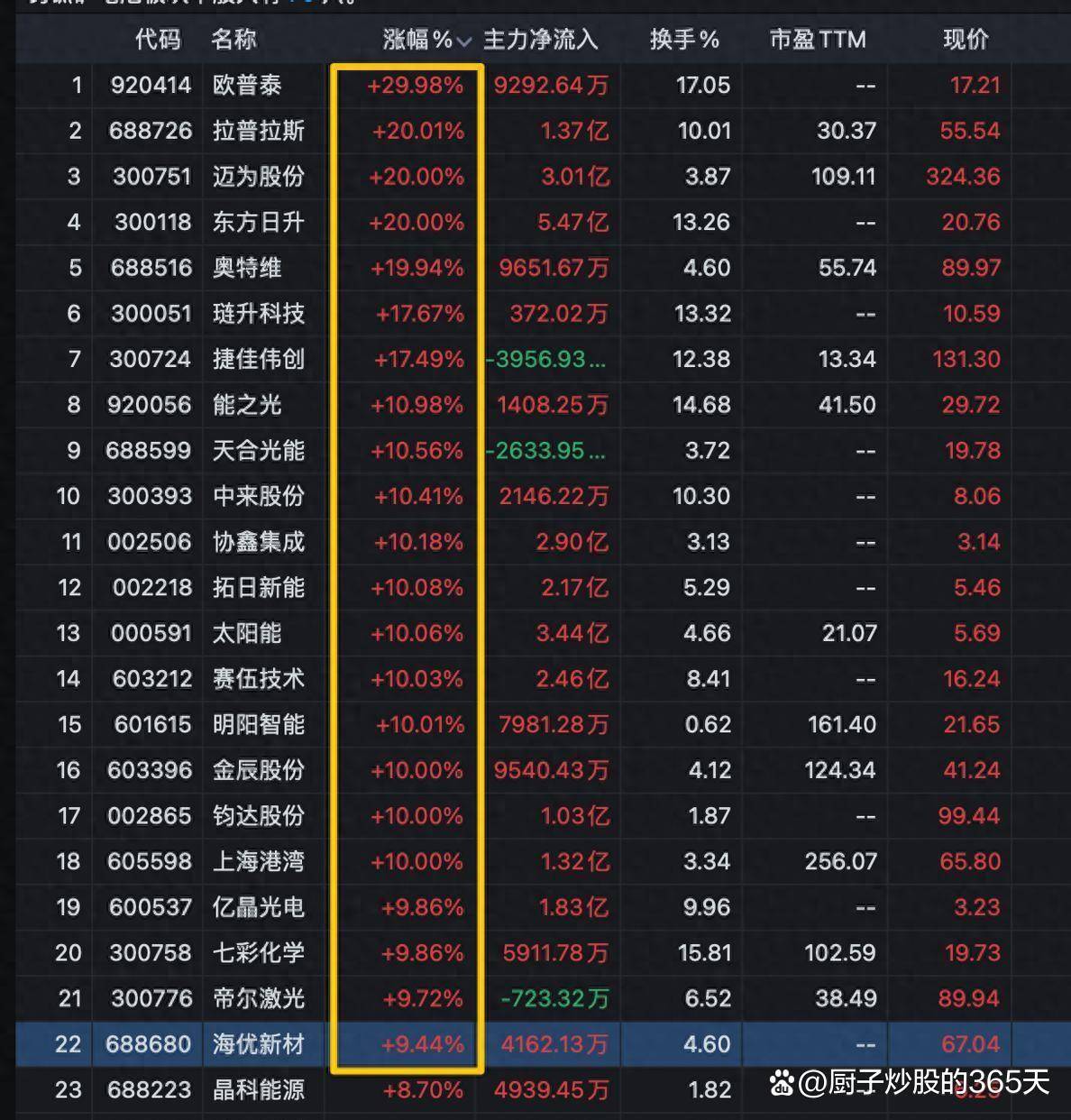
上市公司竞逐太空光伏赛道
Zheng Quan Ri Bao· 2026-01-23 16:45
Core Viewpoint - The commercial aerospace industry in China is entering a new phase of scaled and commercial development, driving the exploration of space photovoltaics due to the increasing demand from low Earth orbit satellite constellations [1] Market Space - The construction of low Earth orbit satellite constellations has accelerated, with ongoing demand in communication, remote sensing, and navigation applications [2] - The reduction in commercial rocket costs and improvements in launch capabilities have made longer operational times and more complex payloads the norm, highlighting the importance of reliable energy support systems [2] - Space photovoltaics are gaining attention due to their ability to convert solar energy into electricity, offering sustainability, stability, and lightweight advantages, making them the most mature energy form for spacecraft [2] Long-term Potential - Perovskite tandem battery technology holds significant potential in space photovoltaics due to its high theoretical efficiency, lightweight, and flexibility, although it still requires validation in stability, lifespan, and radiation resistance [3] - The replacement cycle for space photovoltaics is generally 5 to 8 years, much shorter than the 25 years or more typical for ground-based solar power plants [3] - From 2025 to 2040, the global annual satellite launch quantity is expected to increase from 5,000 to 50,000, with the total demand for photovoltaic batteries projected to rise from 0.024 GW to 1.8 GW, indicating a market space growth of over 30 times by 2035-2040 [3] Company Layout - A-share listed companies are accelerating their layout in the space photovoltaic field, leveraging their experience in materials, components, and system integration to develop efficient batteries and lightweight components [4] - Recent collaborations, such as the strategic partnership between Aerospace Hongtu Information Technology Co., Ltd. and Wuxi Zhongneng Energy Technology Co., Ltd., focus on new energy technologies for space applications [4] - Companies like Zhonglai Co., Ltd. and Trina Solar have reported ongoing developments in adapting their products for space photovoltaic applications, including perovskite and silicon tandem products [4][5] Industry Opportunities - The explosion of commercial aerospace provides photovoltaic companies with cross-industry opportunities, opening a second growth curve [5] - While space photovoltaics may not replace the scale advantages of ground photovoltaics in the short term, their technological leadership and strategic value are expected to shift the industry focus from price competition to technology competition [5]


天合光能:1月23日召开董事会会议
Mei Ri Jing Ji Xin Wen· 2026-01-23 14:25
每经AI快讯,天合光能1月23日晚间发布公告称,公司第三届第四十次董事会会议于2026年1月23日以 现场结合通讯方式召开。会议审议了《关于提请股东会授权董事会办理公司2026年限制性股票激励计划 相关事宜的议案》等文件。 每经头条(nbdtoutiao)——检查糖尿病却查出胰腺癌!仅凭百元CT揪出"癌症之王",医生没看出来的 病,AI是怎么发现的? (记者 张明双) ...
太空光伏站上风口!光伏企业抢滩万亿赛道,股价最高上涨125.89%
Hua Xia Shi Bao· 2026-01-23 14:17
Group 1 - The commercial space sector has become a focal point in the capital market, with space photovoltaics gaining significant attention, as evidenced by a 30.57% increase in the space photovoltaic index over nearly 60 trading days [2] - Key companies in the space photovoltaic sector include Junda Co., Ltd., Tuori New Energy, Zhonglai Co., Ltd., Jinjing Technology, Trina Solar, and Jiejia Weichuang, with Junda Co., Ltd. showing remarkable performance, with a stock price increase of 125.89% in the same period [2] - The acceleration of satellite deployment in low Earth orbit, including SpaceX's approval for 7,500 new Starlink satellites and China's application for 203,000 satellites, has driven the demand for space photovoltaics as a sustainable energy source [3] Group 2 - Space photovoltaics are favored for satellite energy supply due to their advantages, such as immunity to weather interference and simpler installation compared to traditional solar setups [4] - The high cost of space photovoltaics, primarily using gallium arsenide materials, poses a significant challenge, with current prices for space-grade gallium arsenide solar cells being over 1,000 times that of terrestrial silicon cells [4] - Perovskite materials are emerging as a potential next-generation solution for space photovoltaics, although their long-term stability and large-scale production remain to be validated [4] Group 3 - The space photovoltaic concept has gained momentum in 2026, with multiple brokerages predicting a "trillion-level market," prompting various photovoltaic companies to engage in strategic partnerships and research [5] - Recent collaborations include a strategic partnership between Dongfang Risen and Shanghai Port Construction Group to develop perovskite and p-type heterojunction battery technologies for space energy applications [5] - Trina Solar has established a comprehensive layout in three key areas: crystalline silicon batteries, perovskite tandem batteries, and III-V gallium arsenide multi-junction batteries, anticipating significant market potential as reusable rocket technology advances [6] Group 4 - Trina Solar has reported collaborations with leading aerospace companies in Europe and the U.S. for its crystalline silicon products, focusing on perovskite and silicon tandem products for satellite applications [6] - Junda Co., Ltd. has seen its stock price double since embracing the space photovoltaic concept, with a recent closing price of 90.4 yuan per share [6] - Other equipment manufacturers, such as Aotwei and Maiwei, have also experienced significant stock price increases, with Aotwei's stock rising by 74.44% and Maiwei's by 68.58% over 20 trading days [6][7]

今日晚间重要公告抢先看——钧达股份称钙钛矿光伏技术在太空极端环境下的综合成本效益仍有待验证;奥特维称目前“太空光伏”尚处初期探索和研发阶段,产业化进程仍面临较大不确定性
Jin Rong Jie· 2026-01-23 14:10
Group 1 - JunDa Co., Ltd. announced that the comprehensive cost-effectiveness of perovskite photovoltaic technology in extreme space environments remains to be verified [2][5] - The company has invested 30 million yuan to acquire a 16.67% stake in Starwing Chip Energy, but no formal business agreement has been signed for space photovoltaic projects [2][5] - The technology shows potential advantages in lightweight, low cost, and high radiation resistance, but long-term reliability and cost-effectiveness in space are still uncertain [2][5] Group 2 - Aotewei stated that the "space photovoltaic" sector is still in the early exploration and research phase, with significant uncertainties in the industrialization process [3] - The company emphasized that product development to commercial application requires a considerable period, and the impact of related positive expectations on actual operating performance is highly uncertain [3] Group 3 - Tongyu Communications announced its participation in the A1 round financing of Beijing Blue Arrow Hongqing Technology, investing 30 million yuan for a 1.8293% stake [3] - The company will transition from direct to indirect ownership of Hongqing Technology through a partnership agreement [3] Group 4 - Huajin Technology received approval from the China Securities Regulatory Commission for the issuance of H-shares, planning to issue up to 101,573,100 shares [4] - Trina Solar announced a change in the use of remaining raised funds, reallocating 1.7 billion yuan to a new project for distributed smart photovoltaic power station construction [4][5] Group 5 - Yunnan City Investment plans to publicly transfer a 10.5% stake in Qicai Company with a base price of 293 million yuan [6] - Zijin Mining announced the completion of the second phase of the Giant Dragon Copper Mine, increasing production capacity to 350,000 tons per day [6] Group 6 - Shuaifeng Electric expects a net profit loss of 43 million to 62 million yuan in 2025, with potential delisting risk warnings for its stock [7] - Anqi Yeast plans to invest 222 million yuan in a green manufacturing project for yeast products with an annual output of 12,000 tons [7] Group 7 - Zhengzhou Coal and Electricity announced the cessation of production at the Chaohua Coal Mine due to resource depletion and safety risks, expecting a 311 million yuan impairment loss [8] - Oujing Technology announced partial production line shutdowns at its subsidiaries to reduce losses and operating costs [8] Group 8 - North Car Blue Valley plans to invest in the construction of a high-end platform model industrialization and digital upgrade project with a total investment of 1.991 billion yuan [9] - Jingzhida signed a significant contract worth 1.311 billion yuan for semiconductor testing equipment [9] Group 9 - Yanghe Co. announced a cash dividend plan for 2025-2027, committing to distribute no less than 100% of net profit each year [10] - Yanghe Co. also projected a net profit decline of 62.18% to 68.30% for 2025 due to market adjustments and increased channel inventory [10] Group 10 - Huitong Energy expects a net profit decrease of 69.51% to 75.82% for 2025, primarily due to the absence of non-recurring income from property relocation rewards [11] - Dahua Co. reported a net profit increase of 32.65% for 2025, driven by business optimization and cost control [12] Group 11 - Hangzhou Bank reported a net profit increase of 12.05% for 2025, maintaining a stable non-performing loan ratio [12] - Aotejia expects a net profit increase of 41.85% to 79.67% for 2025, supported by sales growth and cost control measures [12] Group 12 - Shenke Co. anticipates a net profit increase of 65.75% to 98.9% for 2025, benefiting from overseas strategy and revenue growth [13] - Pioneering Technology expects a net profit increase of 50.82% to 109.21% for 2025, driven by product technology iterations and market expansion [13] Group 13 - Shanchuang Technology expects a net profit increase of 81.77% to 134.78% for 2025, fueled by demand for enterprise-level storage products [14] - Anshuo Information anticipates a net profit increase of 52.44% to 98.83% for 2025, with government subsidies contributing to the growth [14] Group 14 - Zhongwei Company expects a net profit increase of 28.74% to 34.93% for 2025, driven by increased customer recognition of its plasma etching equipment [15] - Jingfang Technology anticipates a net profit increase of 44.41% to 52.32% for 2025, benefiting from the automotive industry's growth [16] Group 15 - Fuda Alloy expects a net profit increase of 119.14% to 219.95% for 2025, driven by strong demand in emerging applications [17] - Feirongda anticipates a net profit increase of 57.23% to 83.43% for 2025, supported by stable growth in communication and cooling business [17] Group 16 - Licheng Performing Arts expects a net profit decrease of 12.75% to 32.21% for 2025, impacted by regional travel environment fluctuations [22] - Lisheng Pharmaceutical anticipates a net profit increase of 116.77% to 138.44% for 2025, driven by market expansion and product sales [23] Group 17 - JMC reported a net profit decrease of 22.71% for 2025, despite a 2.07% increase in total revenue [27] - Daoshi Technology expects a net profit increase of 206.01% to 269.76% for 2025, driven by overseas business expansion [28] Group 18 - Jin Kai New Energy plans to repurchase shares worth 500 million to 600 million yuan, with a maximum repurchase price of 7.5 yuan per share [29] - Longyun Co. announced a stock suspension due to plans to acquire a 58% stake in Yuheng Film Industry [30]