
TRINA(688599)

Search documents
光伏行业"反内卷"成效进一步显现
Zheng Quan Ri Bao· 2026-02-12 09:29
Core Viewpoint - The photovoltaic industry is experiencing a significant cost gradient differentiation due to fluctuations in silver prices and technological upgrades, leading to a visible "anti-involution" effect within the industry [1]. Cost Pressure - The global silver investment demand is expected to remain strong through 2026, supported by geopolitical tensions and U.S. policy uncertainties, with silver prices having risen by 11% this year after surpassing $100 per ounce for the first time in January [2]. - Despite high prices leading to a projected 17% reduction in global jewelry and silverware demand, industrial demand remains resilient [2]. - A supply shortage of approximately 67 million ounces is anticipated in the global silver market by 2026, marking the sixth consecutive year of deficit, which is expected to keep silver prices strong [2]. - The photovoltaic sector, as a major consumer of silver, will continue to face cost pressures due to high silver prices, accelerating the development of silver paste substitution technologies among leading companies [2][3]. Technological Breakthroughs - Leading companies are rapidly advancing silver paste substitution technologies, with some planning large-scale production of alternative materials in the near future [4]. - Longi Green Energy has announced plans to start large-scale production of non-silver solutions, which could further reduce component costs [4]. - Other major players like JinkoSolar and Aiko are also actively pursuing silver paste alternatives, with significant collaborations aimed at industrializing low-silver technologies by 2026 [4][5]. Industry Restructuring - The shift towards high-efficiency and reliable components is expected to create a competitive landscape where companies with technological advantages can command price premiums, while less efficient capacities face dual pressures from price and demand declines [5][6]. - The Chinese photovoltaic industry is projected to see a significant change in 2026, with new installations expected to range between 180GW and 240GW, following a record high of 315GW in 2025 [5][6]. - The core theme of the industry's "anti-involution" in 2026 will be driven by upgraded end-user demand, pushing manufacturers towards high-quality development through technological iterations and improved market mechanisms [6].




国内光伏组件报价大涨
2 1 Shi Ji Jing Ji Bao Dao· 2026-02-12 07:05
Group 1 - The core point of the article is the significant increase in solar module prices in China, with recent bidding results showing prices exceeding 1 yuan/W for the first time in years [1] - The bidding for Huadian Group's 8GW solar module procurement included two segments: 6GW of N-type high-efficiency modules at an average price of 0.8831 yuan/W and 2GW of N-type conventional modules at an average price of 0.8438 yuan/W [1] - Longi Green Energy reported that high-power (670W) module prices have surpassed 1 yuan/W, indicating a broader trend of rising component prices in the market [1][2] Group 2 - Aiko Solar indicated that their domestic module prices are nearing 0.9 yuan/W, while overseas prices exceed 1 yuan/W, reflecting the overall price increase in the industry [2] - Several companies noted that the recent rise in silver prices is a major factor driving the increase in module prices [3] - According to the China Photovoltaic Industry Association, the average all-in cost of mainstream photovoltaic products varies with silver prices, with costs at 0.783 yuan/W, 0.824 yuan/W, and 0.866 yuan/W at silver prices of 15,000 yuan/kg, 20,000 yuan/kg, and 25,000 yuan/kg respectively [3]
央企光伏组件集采再现1元/W报价 多家公司回应涨价
2 1 Shi Ji Jing Ji Bao Dao· 2026-02-12 06:36
Group 1 - The core point of the news is the significant increase in the prices of photovoltaic (PV) components in China, with recent bidding results showing prices exceeding 1 yuan/W for the first time in years [1][2] - China Huadian Group's recent tender for 8GW of PV components included two segments: 6GW of N-type high-efficiency components (645W) and 2GW of N-type conventional components (620W) [1] - The bidding results revealed that 25 companies participated in the first segment with prices ranging from 0.78 to 1.018 yuan/W, averaging 0.8831 yuan/W, while 31 companies participated in the second segment with prices from 0.76 to 0.923 yuan/W, averaging 0.8438 yuan/W [1] Group 2 - Longi Green Energy reported a noticeable increase in component prices, with high-power (670W) components now exceeding 1 yuan/W [1] - Trina Solar has raised its distributed PV component prices three times this year, with current prices for mid-size and large-size components ranging from 0.88 to 0.92+ yuan/W, and anti-glare components priced at 0.95 to 0.99+ yuan/W [1] - Aiko Solar indicated that domestic component prices are nearing 0.9 yuan/W, while overseas prices exceed 1 yuan/W [2] Group 3 - The increase in component prices is attributed to the rising silver prices, which have been identified as a key factor driving the current price surge [2] - The China Photovoltaic Industry Association's report on the cost analysis of mainstream PV products indicates that the average all-in cost for the TOPCon210R product varies significantly with silver prices, ranging from 0.783 yuan/W to 0.866 yuan/W depending on the silver price per kilogram [2]
或终止项目或剥离资产 部分A股"追光者"止损
Shang Hai Zheng Quan Bao· 2026-02-12 05:51
Core Viewpoint - The photovoltaic industry is transitioning from oversupply to a phase of accelerated capacity clearance, with expectations of a more intense market correction in 2026 compared to 2025 due to weakening demand forecasts [1][4]. Group 1: Company Actions - Several photovoltaic companies, including Mingguan New Materials and Trina Solar, have announced project terminations or fund reallocations to more promising areas due to declining profitability in the photovoltaic packaging materials sector [2]. - Mingguan New Materials terminated its investment in a solar backplane production project, initially planned with a total investment of 5 billion yuan, citing industry competition and rising operational costs as reasons for the decision [2]. - Trina Solar plans to reduce funding for its original project and redirect the remaining funds to a new distributed smart photovoltaic power station project, which is expected to contribute a net profit of 94.91 million yuan annually [2]. Group 2: Production Halts - Some companies, such as Oujing Technology and Tianyi New Materials, have suspended production due to decreased demand from downstream customers, with production utilization rates as low as 14.66% for certain subsidiaries [3]. - *ST Green Kang, a company that crossed into the photovoltaic sector from veterinary medicine, has completely exited the photovoltaic industry by selling all related assets and liabilities to alleviate financial pressure [3]. Group 3: Supply and Demand Dynamics - The photovoltaic industry is facing significant overcapacity, with analysts indicating that the supply-demand imbalance is worsening, leading to accelerated industry consolidation [4][5]. - The China Photovoltaic Industry Association projects that the new photovoltaic installation capacity in China for 2026 will be between 180 GW and 240 GW, a decrease of 24% to 43% compared to 2025's 315.07 GW [4]. - Globally, the new photovoltaic installation capacity is expected to decline slightly in 2026, with estimates ranging from 500 GW to 667 GW, down from 580 GW in 2025 [5]. Group 4: Future Outlook and Strategies - Despite the high levels of existing capacity, the industry may find a path to recovery through necessary market corrections, which could lead to a return to profitability and normal investment cycles [6]. - Companies are encouraged to explore diversification strategies, such as integrating photovoltaic technology with energy storage and hydrogen energy, to mitigate risks associated with reliance on a single business line [8]. - Trina Solar has set ambitious performance targets, aiming for a net profit of no less than 200 million yuan in 2026, reflecting confidence in recovering profitability and growth in related sectors [8].

或终止项目或剥离资产 部分A股“追光者”止损
Shang Hai Zheng Quan Bao· 2026-02-11 17:57
Core Viewpoint - The photovoltaic industry is transitioning from oversupply to a phase of accelerated capacity clearance, with expectations of a more intense market correction in 2026 compared to 2025 due to weakening demand forecasts [1][4]. Group 1: Company Actions - Several photovoltaic companies, including Mingguan New Materials and Trina Solar, have announced project terminations or fund reallocations to more promising areas due to declining profitability in the industry [2]. - Mingguan New Materials terminated its investment in a solar backplane production project, initially planned with a total investment of 5 billion yuan, citing industry competition and rising operational costs as reasons [2]. - Trina Solar plans to reduce funding for its original project and redirect remaining funds to a new distributed smart photovoltaic power station project, which is expected to contribute a net profit of 94.91 million yuan annually [2]. Group 2: Production Adjustments - Some companies, such as Oujing Technology and Tianyi New Materials, have suspended production due to decreased demand from downstream customers, with utilization rates as low as 14.66% for certain subsidiaries [3]. - Cross-industry companies like *ST Lvkang have completely exited the photovoltaic sector to alleviate financial pressures by selling all assets related to photovoltaic film business [3]. Group 3: Supply and Demand Dynamics - The photovoltaic industry is facing significant excess capacity, with analysts noting that the slowdown in short-term demand exacerbates supply chain pressures [4]. - The China Photovoltaic Industry Association projects a decrease in new photovoltaic installations in 2026, estimating a range of 180 GW to 240 GW, down from 315.07 GW in 2025, indicating a decline of 24% to 43% [4]. Group 4: Future Market Outlook - Global photovoltaic installation growth is also expected to slow, with projections for 2026 ranging from 500 GW to 667 GW, compared to 580 GW in 2025 [5]. - Analysts predict that the era of high growth in the photovoltaic sector may be over, with annual growth rates potentially stabilizing at around 3% after 2027 [5]. Group 5: Industry Resilience and New Opportunities - The competitive environment has fostered resilience and adaptability among Chinese companies, prompting them to seek new growth avenues beyond traditional photovoltaic operations [7]. - Companies are focusing on cost control and efficiency improvements to maintain competitiveness, while also exploring diversification into areas like energy storage and new photovoltaic applications [8][9]. - Trina Solar has set ambitious profit targets for 2026, reflecting confidence in recovering profitability and expanding into energy solutions [8].
光伏行业“反内卷”成效进一步显现
Zheng Quan Ri Bao· 2026-02-11 16:28
Core Viewpoint - The photovoltaic industry is experiencing a clear trend of cost differentiation driven by fluctuations in silver prices and technological advancements, leading to a reduction in industry competition [1][8]. Cost Pressure - The global demand for silver is expected to remain strong through 2026, supported by geopolitical tensions and uncertainty in U.S. policies, despite a projected 17% reduction in global jewelry and silverware demand due to high prices [2]. - The silver price has increased by 11% this year, following its historic rise above $100 per ounce in January [2]. - The global silver market is projected to face a supply shortage of approximately 67 million ounces by 2026, marking the sixth consecutive year of deficit [2]. - The photovoltaic sector, as a major consumer of silver, will continue to face cost pressures due to high silver prices, prompting companies to accelerate the development of silver paste alternatives [2][3]. Technological Breakthroughs - Leading companies in the photovoltaic industry are making significant progress in developing silver paste alternatives, with some planning large-scale production of low-cost metal alternatives [4]. - Longi Green Energy has announced plans to start large-scale production of a copper paste solution in Q2 of this year, which could reduce component costs by approximately 0.02 yuan per watt [4]. - Other major players, including Aiko Solar and JinkoSolar, are also actively pursuing silver paste replacement technologies, with JinkoSolar collaborating with Wuxi Dike Electronic Materials to innovate in low-silver metallization techniques [4][5]. Industry Restructuring - The photovoltaic industry is expected to shift towards high-efficiency and reliable components, with companies possessing technological advantages able to command price premiums [6]. - The new installed capacity of photovoltaic systems in China is projected to reach between 180 GW and 240 GW in 2026, marking a significant turning point after years of growth [6]. - The transition towards high-quality development in the photovoltaic sector will be driven by upgraded end-user demand, which will compel manufacturers to enhance technology and market mechanisms [8].
“宇宙订单”,能拯救这个行业吗?
财富FORTUNE· 2026-02-11 13:05
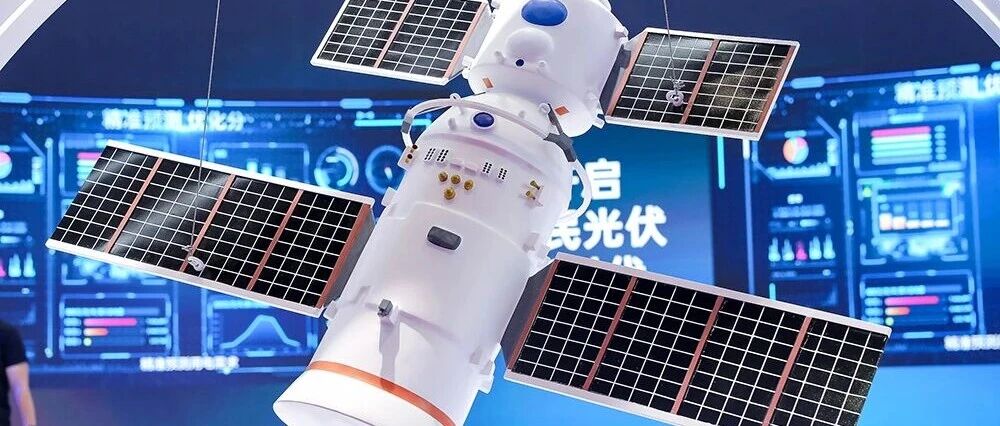
图片来源:视觉中国 "果链"之后,中国制造迎来了一个新名词:"马链"。 马斯克团队近日低调造访数家中国光伏企业,让一个还在价格战泥沼中苦苦挣扎的行业,忽然间站上 了"太空+AI"这个全新故事的舞台中心。 马斯克畅想的是,把高能耗的AI训练和为其提供能源的光伏电站一起搬到太空中,那里"永远是晴天", 阳光无限量供应,光伏发电能力可达地面数倍。在最近参与的一档将近3小时的播客里,他给出了具体 预测:只需36个月,太空就将成为部署AI的最便宜去处,那里不受地面电网、土地和冷却水的制约, 太阳能辐射稳定得像"永动机"。 于是, 一个全新的用电场景——太空算力,让一个已在低谷中徘徊数年、普通人眼中枯燥乏味的制造 业行业一夜之间披上了前沿技术的外衣,变得"性感"起来。 热度之下,一众光伏公司的估值迅速抬升。在马斯克团队来访消息传出后,晶科、天合光能、隆基等几 家光伏组件龙头的股价及相关指数大涨,一举扭转板块此前多月的疲软走势。 冷静看,这些涨幅多数建立在"可能合作"的预期与新奇叙事引发的躁动情绪之上,而没有真实的订单作 为依托。已有分析师援引在太空建电站的工程难度、马斯克一向的"过度承诺而交付不足",以及他很可 能只是在 ...

天合光能2026年储能业务扩张与技术进展引关注
Jing Ji Guan Cha Wang· 2026-02-11 09:57
Core Viewpoint - The company, Trina Solar (688599), is focusing on expanding its energy storage business, technological advancements, and responding to industry policies in 2026, with a target of 15-16 GWh in energy storage shipments and over 12 GWh in overseas orders [1][3]. Business Progress - The energy storage shipment target for 2026 is set at 15-16 GWh, with current overseas orders exceeding 12 GWh, and an expected increase in export ratio [3]. - The cell production capacity is planned to increase from 20 GWh at the end of 2025 to 20-25 GWh in 2026, alongside a supporting system capacity of 40 GWh [3]. Product Development - The company anticipates mass production of pure copper paste products in the first half of 2026 and is advancing steel frame technology to replace aluminum alloy frames [4]. - In the field of space photovoltaics, the company has completed long-term layouts in crystalline silicon cells and perovskite tandem cells, but clarified that there is currently no collaboration with SpaceX and no revenue from this sector yet [4]. Company Status - As of January 31, 2026, the company has repurchased 43.6032 million shares for a total amount of 800 million yuan, with the repurchase plan extended until March 24, 2026, aiming for a total amount of 1-1.2 billion yuan for convertible bond conversion [5]. Industry Policy - The industry is focusing on restoring profitability in the battery component sector, with policies such as strengthening intellectual property protection and canceling export tax rebates potentially benefiting leading companies [6]. - The company has raised the guidance price for distributed component shipments and is optimistic about price increases in 2026 [6]. Performance Outlook - The company has forecasted a loss of 6.5-7.5 billion yuan for 2025, primarily due to supply-demand imbalances and rising costs, while 2026 performance will be influenced by industry recovery, the realization of energy storage business, and cost control [7].
独储爆发年?10大储能实战派锁定这些新机会
行家说储能· 2026-02-11 09:17
Core Viewpoint - The independent energy storage sector is poised for significant growth, particularly in 2026, driven by favorable policies and market dynamics [2][10][11]. Group 1: Policy and Market Dynamics - The National Development and Reform Commission and the National Energy Administration have officially included independent energy storage in the generation-side capacity price mechanism, providing a policy framework for future commercial and industrial energy storage participation [2]. - The independent energy storage market is expected to experience explosive growth in 2026, with many industry representatives predicting it to be a "super explosion year" for the sector [2][10]. - The introduction of the capacity price policy and the increasing demand for renewable energy sources are key drivers for the growth of independent energy storage [13][14]. Group 2: Key Opportunities and Trends - Independent energy storage stations are projected to account for 70-80% of the annual bidding and operational volume, indicating a strong market presence [8]. - The integration of energy storage with renewable sources, such as solar and wind, is becoming increasingly important, with a focus on creating comprehensive energy solutions [4][10]. - The shift towards market-based pricing for electricity is expected to create new revenue opportunities for energy storage systems, particularly in commercial and industrial applications [10][36]. Group 3: Industry Insights and Expert Opinions - Industry experts emphasize the need for energy storage companies to enhance their product capabilities and operational efficiency to adapt to market changes and seize opportunities [10][24]. - The focus on "兜底收益+超额分成" (guaranteed returns plus excess sharing) models is emerging as a strategy to promote the scaling of commercial energy storage [19][22]. - Companies are encouraged to adopt a long-term perspective and collaborate across the energy storage ecosystem to improve project conversion rates and overall market performance [24][25]. Group 4: Technological and Operational Capabilities - Companies must prioritize safety and economic efficiency in their energy storage solutions, ensuring high conversion efficiency and effective operational management [48][51]. - The ability to integrate advanced technologies, such as AI, into energy management systems is becoming crucial for optimizing energy storage operations [42]. - A focus on specialized, stable, and professional capabilities is essential for energy storage firms to meet the increasingly complex demands of the market [46][50].


天合光能(688599):组件提价储能放量 行业筑底修复在即
Xin Lang Cai Jing· 2026-02-11 00:30
Core Viewpoint - The company has raised its shipment guidance price for distributed components, which is expected to support profit recovery, while the energy storage business is anticipated to enhance performance through volume and profit growth [1][2]. Group 1: Price Adjustment and Profit Recovery - The company has increased the shipment guidance price for distributed components, indicating confidence in price increases for 2026 [2]. - The high-performance Supreme N-type components are expected to support profit recovery due to their competitive advantages in the international photovoltaic component market [2]. Group 2: Technological Advancements - The company is developing the first large-area P-type HJT/perovskite tandem battery, with a total of 689 related patent applications, positioning itself as a global leader in this technology [2]. - The combination of technology, patent reserves, and commercialization is expected to provide a competitive edge in the next generation of efficient technology [2]. Group 3: Energy Storage Business Growth - The company plans to exceed 8 GWh in energy storage shipments in 2025 and aims to increase shipments in 2026, with a cumulative global energy storage system shipment expected to surpass 18 GWh by the end of 2025 [3]. - The energy storage business is projected to achieve simultaneous volume and profit growth, providing resilience and long-term flexibility to the company's overall performance [3]. Group 4: Profit Forecast and Valuation - The company has revised its 2025 profit forecast from a loss of 4.294 billion to a loss of 6.903 billion, and the 2026 profit forecast has been adjusted downwards by 242.7% to a loss of 1.643 billion [4]. - Despite current industry challenges, the company has a positive outlook for future recovery and has increased its target price by 50% to 25.5 yuan, indicating a potential upside of 24.3% from the current stock price [4].