
UIGreen(688661)

Search documents
和林微纳:2025年半年度公司实现营业收入43957.889364万元
Zheng Quan Ri Bao Zhi Sheng· 2025-08-15 14:13
Group 1 - The company, Helin Micro-Nano, reported a revenue of 439.57889364 million yuan for the first half of 2025, representing a year-on-year growth of 91.53% [1] - The net profit attributable to shareholders of the listed company was 30.68576047 million yuan [1]

和林微纳:第二届监事会第十五次会议决议的公告
Zheng Quan Ri Bao· 2025-08-15 12:47
Core Viewpoint - Helin Micro-Nano announced the approval of multiple proposals during the 15th meeting of its second supervisory board on the evening of August 15 [2] Group 1 - The company held a supervisory board meeting to discuss and approve various proposals [2]

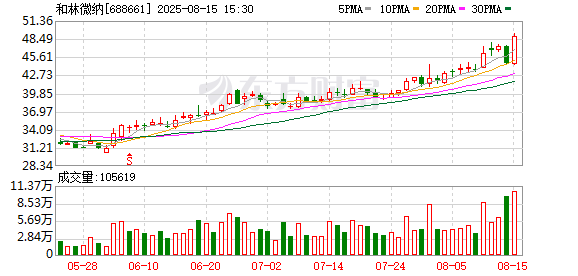
和林微纳: 董事会提名委员会关于独立董事候选人的审查意见
Zheng Quan Zhi Xing· 2025-08-15 11:20
规章与规则,其任职资格、教育背景、工作经历、业务能力符合公司独立董事任 职要求。 综上,我们同意提名徐岩先生、戚啸艳女士、蒋琰女士为公司第三届董事会 独立董事候选人,并同意将该议案提交公司第二届董事会第十八次会议进行审议。 苏州和林微纳科技股份有限公司董事会提名委员会 女士的个人履历等相关资料,上述独立董事候选人未持有公司股份,与公司控股 股东、实际控制人、其他董事、监事、高级管理人员以及持股 5%以上股东不存 在其他关联关系,不存在《公司法》规定的不得担任公司董事的情形;未被中国 证监会采取证券市场禁入措施;未被证券交易所公开认定为不适合担任上市公司 董事;未受过中国证监会行政处罚和证券交易所公开谴责或通报批评;没有因涉 嫌犯罪被司法机关立案侦查或者涉嫌违法违规被中国证监会立案调查等情形;经 查询不属于失信被执行人,符合有关法律、行政法规、部门规章、规范性文件等 规定的任职 资格和独立性要求。 证券代码:688661 证券简称:和林微纳 公告编号:2025-032 苏州和林微纳科技股份有限公司 根据《中华人民共和国公司法》(以下简称"《公司法》")《上市公司独 立董事管理办法》及《苏州和林微纳科技股份有限公 ...
和林微纳H1营收4.4亿元,同比增长91.53%
Ju Chao Zi Xun· 2025-08-15 10:33
Core Insights - The company reported a significant increase in revenue and net profit for the first half of 2025, with revenue reaching 4.4 billion RMB, a 91.53% increase compared to the same period last year [2] - The net profit attributable to shareholders was 30.686 million RMB, an increase of 37.823 million RMB year-on-year [2] - The company is actively expanding its product line and enhancing its market presence through participation in international exhibitions and establishing overseas sales and service points [1][2] Financial Performance - Revenue for the reporting period was 4.395789 billion RMB, compared to 2.295102 billion RMB in the same period last year, marking a 91.53% increase [1] - Total profit for the period was 31.9083 million RMB, a significant turnaround from a loss of 12.3669 million RMB in the previous year [1] - Net profit attributable to shareholders was 30.6858 million RMB, compared to a loss of 7.1372 million RMB in the same period last year [1] - The net profit after deducting non-recurring gains and losses was 28.3453 million RMB, an increase from a loss of 13.4233 million RMB year-on-year [1] - The net cash flow from operating activities was 56.6974 million RMB, a substantial increase from 2.1265 million RMB in the previous year [1] Market Expansion and Product Development - The company has completed temperature testing for its automotive-grade 2D MEMS probe cards and launched a high-pin-count MEMS probe card for wafer testing, achieving industry-leading performance metrics [2] - The first batch of probe cards, equipped with 40,000 pins, has been adopted by leading chip manufacturers [2] - The company is committed to continuously launching new products and expanding its product line to meet market demands and provide greater value to customers [2] - The company is also establishing sales and service points in Japan, Switzerland, the United States, and Singapore, while progressing with the construction of its factory in Japan to capture overseas market opportunities [1]
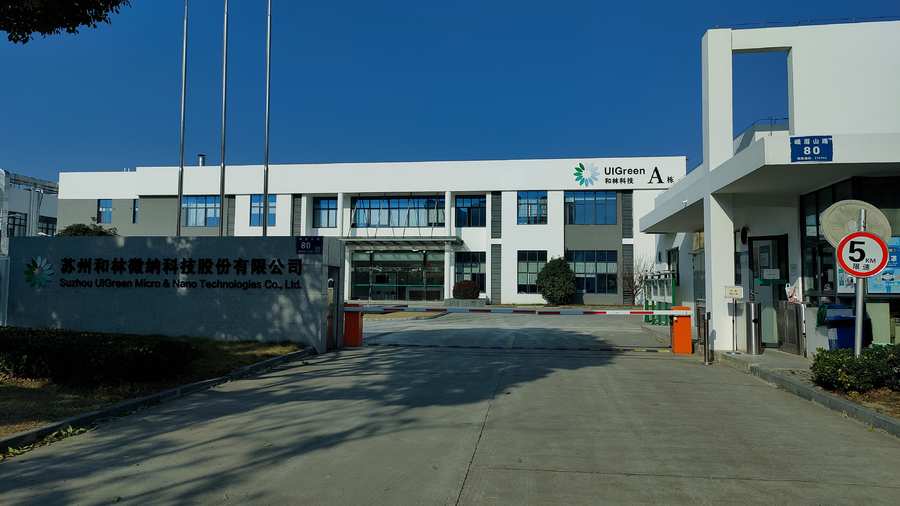
和林微纳: 对外担保管理制度
Zheng Quan Zhi Xing· 2025-08-15 09:18
Core Viewpoint - The company has established a management system to regulate external guarantee behaviors, aiming to control risks and protect investors' rights based on relevant laws and regulations [1][2]. Group 1: General Principles - The company defines "external guarantees" as guarantees provided for others, including those for controlling subsidiaries [1][2]. - All directors and senior management must prudently manage and strictly control the debt risks arising from external guarantees [1][2]. - External guarantees must adhere to principles of equality, voluntariness, fairness, integrity, mutual benefit, prudence, legal compliance, and standardized operations [2]. Group 2: Approval Procedures - Any external guarantee must be uniformly managed by the company, and subordinate departments are prohibited from providing guarantees independently [2]. - External guarantees require approval from the board of directors and shareholders' meeting, with specific conditions outlined for when such approvals are necessary [6][19]. - Guarantees exceeding certain thresholds related to net assets or total assets must be submitted for shareholder approval [19]. Group 3: Risk Management - The company is responsible for monitoring the financial health and operational status of the guaranteed parties, including conducting investigations and audits as necessary [5][30]. - After signing a guarantee contract, the finance department must manage and monitor the guarantee and related documents [30][31]. - The company must take necessary measures to recover debts after fulfilling guarantee obligations [9]. Group 4: Information Disclosure - The company is obligated to disclose external guarantee information in accordance with relevant regulations, including details of the guarantees and their impact on financial health [10][11]. - Any department involved in external guarantees must report to the board secretary and provide necessary documentation for disclosure [36]. Group 5: Responsibilities of Personnel - All directors must carefully manage and control debt risks from external guarantees and may bear joint liability for losses from improper guarantees [39][40]. - Individuals who sign guarantee contracts without proper authorization may be held liable for any resulting losses to the company [40][41].
和林微纳: 关联交易管理制度
Zheng Quan Zhi Xing· 2025-08-15 09:18
Core Viewpoint - The company aims to enhance its corporate governance structure and ensure the legality, necessity, and fairness of related party transactions to protect the rights of all shareholders, especially minority shareholders [1][2]. Summary by Sections Corporate Governance - The company establishes a system to improve its governance structure, promoting independent and scientific decision-making [1]. - The system is in accordance with the Company Law of the People's Republic of China and the relevant regulations of the Shanghai Stock Exchange [1]. Related Party Transactions - Related party transactions must adhere to principles of honesty, legality, necessity, reasonableness, and fairness [1]. - Written agreements are required for transactions with related parties, ensuring equality and voluntary participation [2]. - Directors and shareholders with any interest in related transactions must abstain from voting [1][4]. Definition of Related Parties - Related parties include individuals or organizations that directly or indirectly control the company, major shareholders, and their close family members [2][3]. - Transactions that fall under related party transactions include asset purchases, investments, and guarantees [2][3]. Approval and Disclosure Requirements - Transactions exceeding 300,000 yuan with related individuals or 1% of the company's total assets or market value must be submitted for board approval and disclosed [3][5]. - Related party transactions must be reviewed by non-related directors, and related directors must abstain from voting [4][6]. Financial Assistance and Pricing - The company is prohibited from providing financial assistance to related parties, except under specific conditions [6][7]. - Pricing for daily related transactions should reference market prices and be mutually agreed upon [7]. Reporting and Compliance - The company must disclose related transactions in its annual and interim reports, and any agreements lasting over three years require re-evaluation [7][8]. - The Shanghai Stock Exchange may classify transactions as related based on substance over form principles, necessitating compliance with disclosure obligations [8].
和林微纳: 董事会议事规则
Zheng Quan Zhi Xing· 2025-08-15 09:18
Group 1 - The company aims to standardize the decision-making process of its board of directors to enhance operational efficiency and scientific decision-making levels [1] - The board of directors is required to hold at least two regular meetings annually [3] - Proposals for regular meetings must be formed after consulting all directors and submitted to the chairman for drafting [4] Group 2 - Temporary meetings can be convened under specific circumstances, such as when proposed by shareholders holding more than 10% of voting rights [2][5] - The procedure for proposing a temporary meeting includes submitting a written proposal detailing the proposer’s name, reasons, and specific proposals [2] - The chairman must convene a meeting within ten days of receiving a proposal [2] Group 3 - Board meetings require the presence of more than half of the directors to be valid, and decisions must be approved by a majority [5][10] - Directors are expected to attend meetings in person and may delegate their voting rights under specific conditions [12] - The board has defined decision-making authority for transactions involving significant asset values or profits [15] Group 4 - Meeting notifications must be sent out in advance, with specific content requirements for both regular and temporary meetings [8][9] - Changes to meeting notifications must be communicated at least three days prior to the meeting [9] - Meeting records must be comprehensive and signed by attendees, serving as important documentation for future reference [13][14] Group 5 - The board must ensure that decisions are made within the scope of authority granted by the shareholders and the company’s articles of association [11][15] - Any proposal that is not approved cannot be reconsidered within a month unless significant changes occur [12] - The company is required to disclose board resolutions and significant decisions to the stock exchange promptly [32]
和林微纳: 独立董事工作制度
Zheng Quan Zhi Xing· 2025-08-15 09:18
Core Viewpoint - The company aims to enhance its corporate governance structure by establishing clear guidelines for independent directors, ensuring their independence, qualifications, and responsibilities to protect the interests of minority shareholders and creditors [1][2]. Group 1: Independent Director Qualifications and Responsibilities - Independent directors must not hold any other positions within the company and should have no direct or indirect interests that could affect their judgment [1][2]. - They are required to have at least five years of relevant experience in law, accounting, or economics, and must possess good personal integrity without significant credit issues [2][3]. - Independent directors are obligated to act in good faith and diligence, participating in decision-making and providing professional advice to safeguard the overall interests of the company [2][3]. Group 2: Independence and Nomination Process - Independent directors must maintain independence and cannot have close relationships with major shareholders or the company's management [4][5]. - The nomination of independent directors can be proposed by the board or shareholders holding more than 1% of the company's shares, and must be approved by the shareholders' meeting [6][7]. - Candidates must provide a written commitment to participate in training and obtain an independent director qualification certificate if they do not already possess one [3][6]. Group 3: Rights and Obligations of Independent Directors - Independent directors have the right to independently hire intermediaries for audits or consultations and can propose the convening of temporary shareholder meetings [22][23]. - They are required to attend board meetings personally and must submit a report on their performance to the annual shareholders' meeting [17][18]. - The company must provide necessary working conditions and support for independent directors to fulfill their duties effectively [36][37]. Group 4: Compliance and Reporting - Independent directors must report any conflicts of interest and can request additional information if they find the provided materials insufficient [15][16]. - They are responsible for disclosing their independent opinions on significant matters and must ensure that their views are included in the meeting records [12][14]. - The company is obligated to disclose the independent directors' opinions and any issues that may hinder their ability to perform their duties [11][12].
和林微纳: 股东会议事规则
Zheng Quan Zhi Xing· 2025-08-15 09:17
Core Points - The company establishes rules to ensure the proper conduct of shareholder meetings in accordance with relevant laws and regulations [1][2] - The board of directors is responsible for organizing shareholder meetings and ensuring compliance with legal requirements [1][3] - Shareholder meetings can be annual or temporary, with specific timelines for their convening [1][4] Group 1: Shareholder Meeting Procedures - The company must hire a lawyer to provide legal opinions on the legality of the meeting's procedures, participant qualifications, and voting results [2] - Independent directors can propose temporary shareholder meetings, and the board must respond within 10 days [6][7] - Shareholders holding more than 10% of shares can request a temporary meeting, and the board must respond within 10 days [8][9] Group 2: Proposals and Notifications - Shareholders holding at least 1% of shares can submit temporary proposals 10 days before the meeting [13][14] - Notifications for annual meetings must be sent 20 days in advance, while temporary meetings require 15 days' notice [15][16] - The notification must include detailed information about all proposals and relevant materials for shareholders [16][17] Group 3: Meeting Conduct and Voting - Shareholder meetings must be held at the company's registered location and can utilize online methods for participation [20][21] - Shareholders can vote in person or by proxy, and the voting period must be clearly defined [21][22] - The meeting must maintain order, and measures should be taken against disruptions [22][23] Group 4: Voting Results and Resolutions - Voting results must be announced immediately after the meeting, and resolutions must be disclosed promptly [42][43] - Ordinary resolutions require a simple majority, while special resolutions need at least two-thirds approval [44][45] - The company must implement resolutions regarding dividends or capital increases within two months after the meeting [50][51]
和林微纳(688661.SH)发布半年度业绩,归母净利润3069万元,同比扭亏为盈
智通财经网· 2025-08-15 09:01
智通财经APP讯,和林微纳(688661.SH)披露2025年半年度报告,报告期公司实现营收4.4亿元,同比增 长91.53%;归属于上市公司股东的净利润3069万元,同比扭亏为盈;扣非净利润2835万元,同比扭亏为盈; 基本每股收益0.2020元。 ...