
Wuhan Healthgen Biotechnology Corp.(688765)

Search documents
5.27亿主力资金净流入,重组蛋白概念涨3.72%
Zheng Quan Shi Bao Wang· 2025-10-31 10:04
Core Viewpoint - The recombinant protein concept has seen a significant increase of 3.72%, leading the sector in gains, with notable stocks such as Sangamo Therapeutics and ST Wan Fang reaching their daily limit up [1][2]. Group 1: Market Performance - The recombinant protein sector had 50 stocks rising, with Sangamo Therapeutics hitting a 20% limit up, followed by Zai Lab and others with gains of 16.14%, 13.07%, and 12.33% respectively [1]. - The top decliners included Haoyuan Pharmaceutical, Kefu Medical, and Marubi Biotechnology, which fell by 5.89%, 4.35%, and 4.16% respectively [1]. Group 2: Capital Flow - The recombinant protein sector attracted a net inflow of 527 million yuan, with 26 stocks receiving net inflows, and 8 stocks exceeding 30 million yuan in net inflow [2]. - The leading stock in terms of net inflow was C He Yuan, with a net inflow of 187 million yuan, followed by Sangamo Therapeutics and Maiwei Biotechnology with net inflows of 132 million yuan and 126 million yuan respectively [2][3]. Group 3: Stock Performance Metrics - The top stocks by net inflow ratio included Sangamo Therapeutics at 16.55%, Maiwei Biotechnology at 12.96%, and C He Yuan at 9.88% [3]. - The trading volume and turnover rates for key stocks were notable, with C He Yuan showing a turnover rate of 37.86% and Sangamo Therapeutics at 1.87% [3][4].


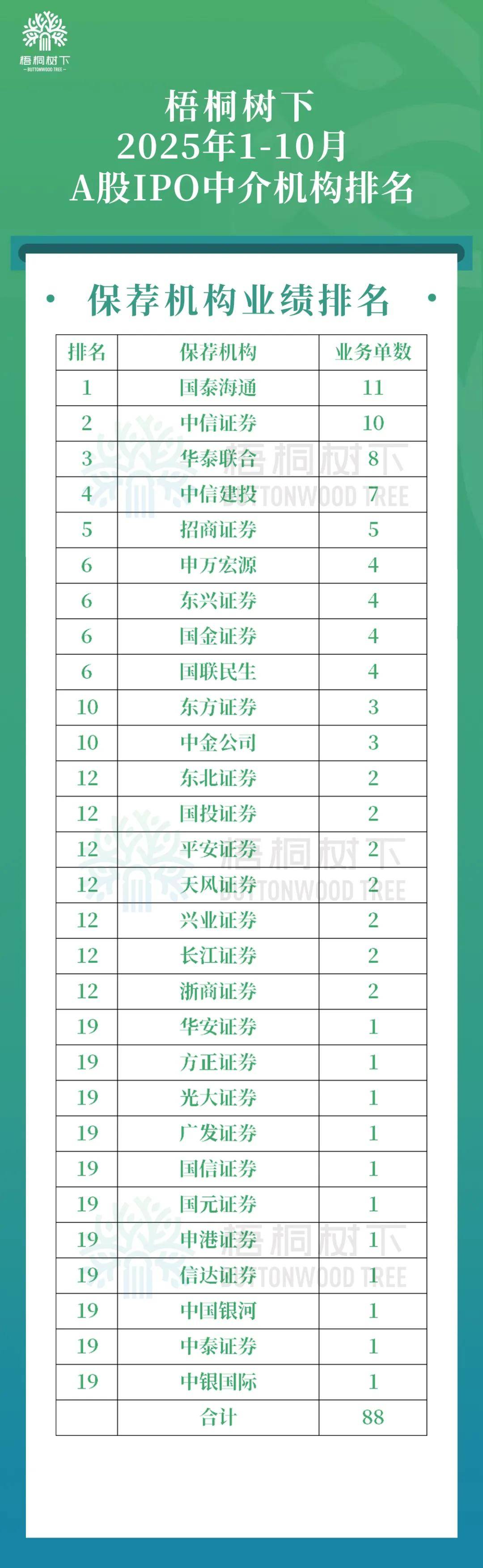
2025年1-10月IPO中介机构排名(A股)
Sou Hu Cai Jing· 2025-10-31 02:43
Core Insights - In the period from January to October 2025, a total of 87 new companies were listed on the A-share market, representing an 8.75% increase compared to the same period last year, which had 80 new listings [1] - The total net fundraising amount for these 87 new listings reached 833.81 billion yuan, marking a significant 77.02% increase from 471.02 billion yuan in the same period last year [1] Underwriting Institutions Performance Ranking - A total of 29 underwriting institutions participated in the IPOs of these 87 new companies, with a total of 88 deals completed [2] - The top five underwriting institutions by number of deals are: - 1st: Guotai Junan with 11 deals - 2nd: CITIC Securities with 10 deals - 3rd: Huatai United with 8 deals - 4th: CITIC Jianzhong with 7 deals - 5th: China Merchants Securities with 5 deals [2][3] Law Firms Performance Ranking - In the same period, 28 law firms provided legal services for the IPOs of the 87 new companies [6] - The top five law firms by number of deals are: - 1st: Shanghai Jintiancheng with 13 deals - 2nd: Beijing Deheng and Beijing Zhonglun, both with 7 deals - 4th: Beijing Guofeng with 6 deals - 5th: Shanghai Tongli with 5 deals [6][7] Accounting Firms Performance Ranking - A total of 16 accounting firms provided auditing services for the 87 new listings [9] - The top five accounting firms by number of deals are: - 1st: Rongcheng with 20 deals - 2nd: Tianjian with 16 deals - 3rd: Lixin and Zhonghui, both with 11 deals - 5th: Ernst & Young Hua Ming, KPMG Huazhen, and Zhongshen Zhonghuan, each with 4 deals [9][10]



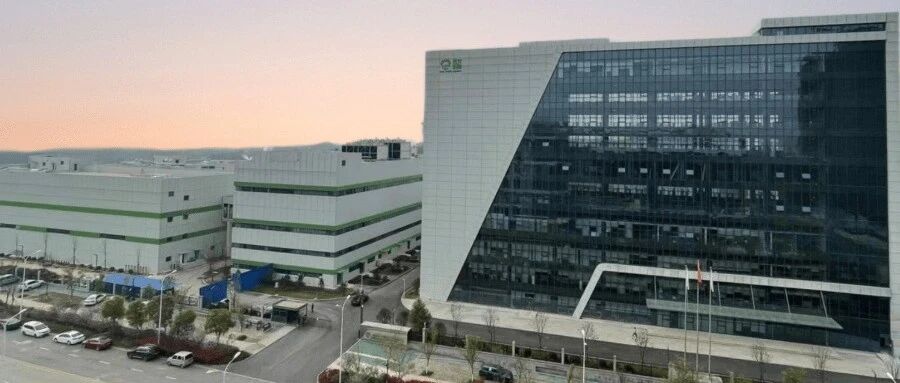
上市首日暴涨213%,禾元生物的“造血水稻”却种在监管悬崖边?
凤凰网财经· 2025-10-31 01:57
Core Viewpoint - The article discusses the recent IPO of Wuhan Heyuan Biotechnology Co., Ltd., which has introduced a novel approach to producing human serum albumin using genetically modified rice, raising questions about its market viability and regulatory challenges [1][3]. Group 1: Company Overview and Financial Performance - Heyuan Biotechnology's IPO raised approximately 2.6 billion yuan, with shares soaring 213.49% on debut, leading to a market capitalization exceeding 30 billion yuan [1]. - The company reported revenues of 13.4 million yuan in 2022, 24.3 million yuan in 2023, and projected 25.2 million yuan in 2024, while incurring net losses of 144 million yuan, 187 million yuan, and 151 million yuan respectively over the same period [7][8]. - R&D expenses significantly outpaced revenue, totaling 110 million yuan in 2022, 159 million yuan in 2023, and 116 million yuan in 2024, leading to a rising debt ratio from 18.8% to 43.4% [9][10]. Group 2: Market Potential and Sales Risks - The primary product, HY1001, has only been approved for a single indication, with a declining patient population projected to decrease from 713,000 in 2017 to 492,000 by 2030, raising concerns about market size [12]. - Initial revenue projections for HY1001 were significantly reduced in subsequent inquiries, indicating potential sales challenges and market competition from other recombinant human albumin products [12][13]. Group 3: Regulatory and Compliance Challenges - The company faces significant regulatory hurdles, as it has not yet obtained the necessary safety certificates for its genetically modified rice, which is essential for large-scale production [15][16]. - The lack of clear regulations for the use of genetically modified plants in pharmaceuticals adds to the uncertainty surrounding the company's operational compliance [17]. Group 4: Legal Issues and Patent Litigation - Heyuan Biotechnology is embroiled in a lengthy patent dispute with Ventria Bioscience, which has raised questions about the company's technological independence and incurred substantial legal costs [18][21]. - The ongoing litigation has resulted in significant financial burdens, with legal fees amounting to approximately 79.1 million yuan over three and a half years, impacting the company's cash flow [24].
C禾元今日大宗交易折价成交3.4万股,成交额392.84万元
Xin Lang Cai Jing· 2025-10-30 09:37
Group 1 - On October 30, C禾元 executed a block trade of 34,000 shares, with a transaction value of 3.9284 million yuan, accounting for 0.2% of the total trading volume for the day [1] - The transaction price was 115.54 yuan, which represents a 2% discount compared to the market closing price of 117.9 yuan [1]

“稻米造血”引资本追捧 禾元生物市值冲高 血制品行业影响几何?
Mei Ri Jing Ji Xin Wen· 2025-10-29 15:16
Core Viewpoint - He Yuan Bio's innovative "rice blood production" technology aims to revolutionize the production of human serum albumin, addressing supply shortages and virus transmission risks associated with traditional plasma extraction methods [2][3][4]. Company Overview - He Yuan Bio, founded by Professor Yang Daichang's team from Wuhan University in 2006, recently launched its core product, HY1001 (recombinant human albumin injection), becoming the first plant-derived recombinant human albumin drug approved in China [2][3]. - The company made its debut on the STAR Market, experiencing a stock price surge of over 200% on its first trading day, with a market capitalization exceeding 405 billion yuan by October 29 [3][4]. Technology and Innovation - The "rice blood production" technology involves inserting the human serum albumin gene into rice cells, allowing for the extraction and purification of recombinant human serum albumin with a purity of 99.9999% [3][4]. - This method not only mitigates the risks associated with plasma extraction but also enhances the domestic supply capacity of human serum albumin [5]. Market Context - The demand for human serum albumin in China is projected to grow, with a significant reliance on imported products, which accounted for 69% of the supply as of 2024 [4]. - The primary clinical applications of human serum albumin include treatment for liver disease, kidney disease, and as an adjunct therapy for malignant tumors, highlighting its critical role in healthcare [4]. Competitive Landscape - He Yuan Bio faces competition from four other domestic companies developing recombinant human albumin products, primarily using yeast as raw materials [6]. - The fastest competitor, Tonghua Anruite, has already received approval for its product in Russia and Kyrgyzstan, while other companies are at various stages of clinical trials [6]. Clinical Development - Currently, He Yuan Bio's recombinant human albumin has only one approved indication for treating liver cirrhosis with low albumin levels, which constitutes about 30% of the overall market [7]. - The company is actively pursuing expansion into the U.S. market, with plans to complete Phase III clinical trials by 2025 and submit a marketing application in 2026 [7]. Additional Products - Besides recombinant human albumin, He Yuan Bio is also developing other products, including recombinant human lactoferrin lysozyme oral solution for treating acute diarrhea in children, currently in Phase III trials [8].
“稻米造血”引资本追捧,禾元生物市值冲高 血制品行业影响几何?
Mei Ri Jing Ji Xin Wen· 2025-10-29 15:00
Core Viewpoint - He Yuan Bio's innovative "rice blood production" technology aims to revolutionize the production of human serum albumin, traditionally reliant on human plasma extraction, thus addressing supply shortages and reducing virus transmission risks [1][2]. Company Overview - He Yuan Bio, founded by Professor Yang Daichang's team from Wuhan University, recently launched its core product, HY1001 (recombinant human albumin injection), becoming the first plant-derived recombinant human albumin drug approved in China [1][2]. - The company made a significant market impact, with its stock price surging over 200% on its debut on the STAR Market, leading to a market capitalization exceeding 40.5 billion yuan [2]. Technology and Innovation - The "rice blood production" technology involves inserting the human serum albumin gene into rice cells, allowing for the extraction and purification of recombinant human serum albumin with a purity of 99.9999% [2][4]. - This method not only mitigates the risks associated with plasma extraction but also enhances the domestic supply capability of human serum albumin, which is crucial given the increasing demand and reliance on imports [3][4]. Market Demand and Competition - The demand for human serum albumin in China is projected to grow, with imports accounting for 69% of the supply as of 2024, highlighting a significant gap in domestic production [3]. - He Yuan Bio faces competition from four other companies developing recombinant human albumin products, with the fastest progress seen from Tonghua Anruite, which has already received approval for its product in Russia and Kyrgyzstan [5]. Clinical Applications and Future Plans - The primary clinical application for He Yuan Bio's recombinant human albumin is in treating low albumin levels in liver cirrhosis patients, which constitutes about 30% of the overall market [5]. - The company is also focused on expanding its indications and plans to enter the U.S. market, with a timeline to complete Phase III clinical trials by 2025 and submit a market application in 2026 [6].
科创板活跃股榜单:84股换手率超5%
Zheng Quan Shi Bao Wang· 2025-10-29 09:39
Market Performance - The Sci-Tech Innovation Board (STAR Market) index rose by 1.18%, closing at 1489.12 points, with a total trading volume of 4.52 billion shares and a turnover of 232.84 billion yuan [1] - Among the tradable stocks on the STAR Market, 296 stocks closed higher, with 10 stocks increasing by over 10% and 25 stocks rising between 5% and 10% [1] Trading Activity - The average turnover rate for the STAR Market was 2.37%, with 3 stocks having a turnover rate exceeding 20% and 14 stocks between 10% and 20% [1] - The highest turnover rate was recorded by C Yicai at 51.17%, with a closing price increase of 3.88% and a daily trading volume of 2.216 billion yuan [1] - C Heyuan, another new stock, saw a significant increase of 24.28% with a turnover rate of 50.96% and a trading volume of 2.171 billion yuan [1] Sector Analysis - In the high turnover stocks, the electronics sector had the most representation, with 32 stocks, followed by power equipment and computer sectors with 15 and 10 stocks, respectively [2] - Among the high turnover stocks, 49 stocks experienced net inflows of main funds, with Huahong Company, Aters, and Goodway receiving the highest net inflows of 449 million yuan, 418 million yuan, and 116 million yuan, respectively [2] Leverage and Financial Performance - A total of 64 stocks in the high turnover category received net purchases of leveraged funds, with notable increases in financing balances for Ju Chen Co., Huafeng Technology, and Western Superconducting, which saw increases of 462 million yuan, 343 million yuan, and 313 million yuan, respectively [3] - Among the high turnover stocks, 52 companies reported their Q3 earnings, with Zhongyou Technology, Shijia Photon, and Huafeng Technology showing significant net profit growth rates of 1074.35%, 727.74%, and 558.51%, respectively [3]

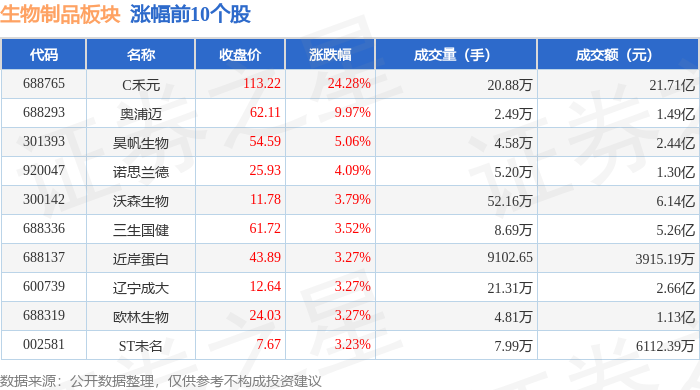
生物制品板块10月29日涨0.7%,C禾元领涨,主力资金净流出3.99亿元
Zheng Xing Xing Ye Ri Bao· 2025-10-29 08:41
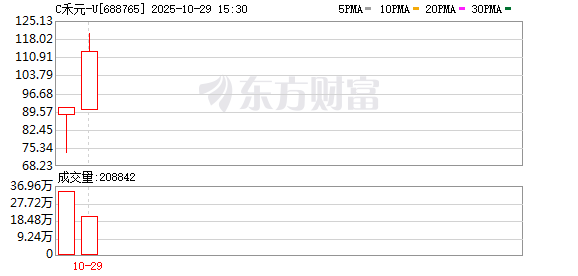
Market Overview - The biopharmaceutical sector increased by 0.7% on October 29, with C禾元 leading the gains [1] - The Shanghai Composite Index closed at 4016.33, up 0.7%, while the Shenzhen Component Index closed at 13691.38, up 1.95% [1] Top Gainers in Biopharmaceutical Sector - C禾元 (688765) closed at 113.22, with a significant increase of 24.28% and a trading volume of 208,800 shares, amounting to 2.171 billion yuan [1] - 奥浦迈 (688293) closed at 62.11, rising by 9.97% with a trading volume of 24,900 shares, totaling 149 million yuan [1] - 吴帆生物 (301393) closed at 54.59, up 5.06% with a trading volume of 45,800 shares, amounting to 244 million yuan [1] Other Notable Performers - 诺思兰德 (920047) closed at 25.93, increasing by 4.09% with a trading volume of 52,000 shares, totaling 130 million yuan [1] - 沃森生物 (300142) closed at 11.78, up 3.79% with a trading volume of 521,600 shares, amounting to 614 million yuan [1] - 三生国健 (688336) closed at 61.72, increasing by 3.52% with a trading volume of 86,900 shares, totaling 526 million yuan [1] Decliners in Biopharmaceutical Sector - 百奧泰 (688177) closed at 26.70, down 2.52% with a trading volume of 21,700 shares, totaling 57.768 million yuan [2] - 派林生物 (000403) closed at 15.73, decreasing by 2.30% with a trading volume of 159,000 shares, amounting to 251 million yuan [2] - 康华生物 (300841) closed at 74.59, down 2.06% with a trading volume of 27,800 shares, totaling 208 million yuan [2] Capital Flow Analysis - The biopharmaceutical sector experienced a net outflow of 399 million yuan from institutional investors, while retail investors saw a net inflow of 331 million yuan [2] - The sector's overall capital flow indicates a mixed sentiment, with institutional investors withdrawing funds while retail investors are actively buying [2][3] Individual Stock Capital Flow - 辽宁成大 (600739) had a net inflow of 38.8721 million yuan from institutional investors, while retail investors had a net outflow of 15.3175 million yuan [3] - C禾元 (688765) saw a net inflow of 36.5446 million yuan from institutional investors, with retail investors experiencing a net outflow of 62.1427 million yuan [3] - 康弘药业 (002773) had a net inflow of 19.6335 million yuan from institutional investors, while retail investors faced a net outflow of 26.8166 million yuan [3]


禾元生物市值超420亿,倚锋资本朱湃:生物医药早期投资受益于退出渠道多元化,稳定的IPO机制将提振市场信心
IPO早知道· 2025-10-29 05:46
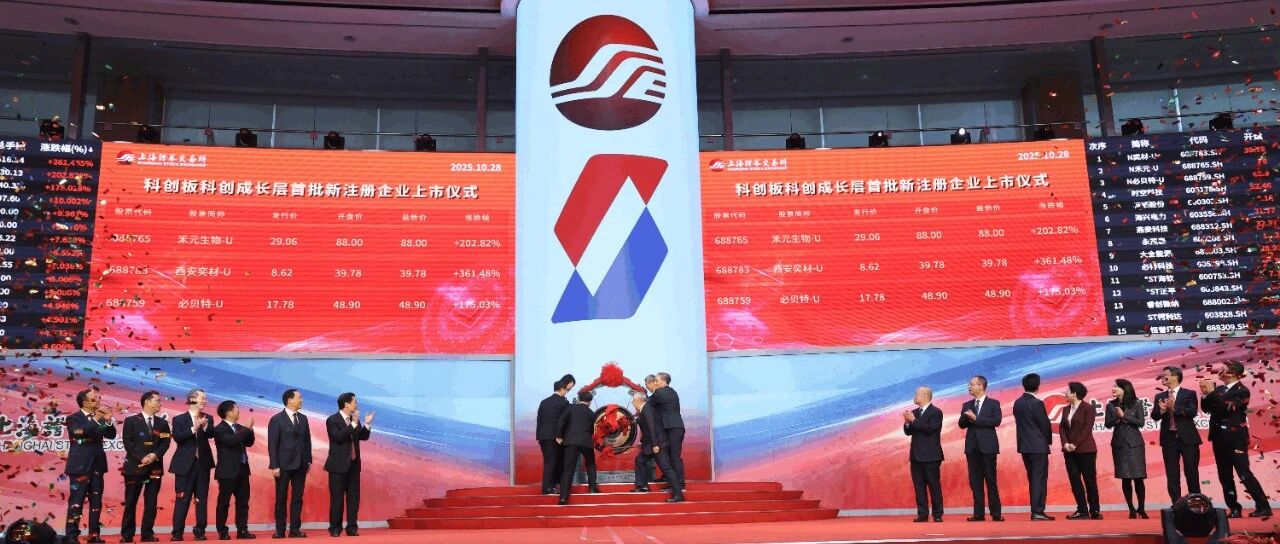
Core Viewpoint - He Yuan Bio, as a platform technology company, has greater potential than single-product companies, marking a significant breakthrough in the recombinant blood product field in China with its plant-derived recombinant human serum albumin injection approved for market [3][17]. Group 1: Company Overview - He Yuan Bio officially listed on the Sci-Tech Innovation Board on October 28, 2023, with a stock code of 688765.SH, achieving a first-day closing price of 91.10 yuan, a 213.5% increase from the issue price of 29.06 yuan [3]. - The company specializes in research and development of plant-based recombinant protein expression technology, with its core product being the recombinant human serum albumin injection (Aofumin®), which received approval from the National Medical Products Administration in July 2025 [3][17]. Group 2: Investment Insights - The CEO of Yifeng Capital, Zhu Pai, emphasized the importance of the IPO exit channel's reopening for biopharmaceutical companies, which has restored confidence in the primary market [4][8]. - The current investment strategy highlights the significance of early-stage investments, as diverse exit paths, including overseas business development (BD) transactions and state-owned capital activities, have reduced risks associated with early investments [4][19]. Group 3: Market Dynamics - The biopharmaceutical sector has seen a gradual recovery in fundraising and investment activities, driven by favorable international and domestic policies, including anticipated interest rate cuts by the Federal Reserve and supportive measures from the Chinese government [9][10]. - The reopening of the IPO window for unprofitable companies allows primary investors to focus more on the intrinsic value of companies rather than exit concerns [8][10]. Group 4: Future Strategies - Yifeng Capital's strategy for 2024 focuses on two main areas: investment in clear commercialization projects and post-investment management of nearly 100 companies, with a goal of assisting them through challenges [18][19]. - The emphasis on early-stage investments is expected to yield quicker exits, with potential returns enhanced by various exit channels, including strategic mergers and acquisitions [19].
C禾元(688765)盘中临时停牌,13时11分起恢复交易
Ge Long Hui· 2025-10-29 05:24
格隆汇10月29日|上交所:C禾元(688765)今日下午交易触及盘中临时停牌。根据有关规定,自2025年 10月29日13时01分开始暂停C禾元(688765)交易,自2025年10月29日13时11分起恢复交易。 (责任编辑:宋政 HN002) 【免责声明】本文仅代表作者本人观点,与和讯网无关。和讯网站对文中陈述、观点判断保持中立,不对所包含内容 的准确性、可靠性或完整性提供任何明示或暗示的保证。请读者仅作参考,并请自行承担全部责任。邮箱: news_center@staff.hexun.com ...