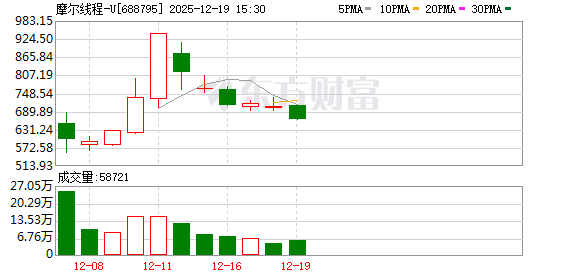
Moore Threads Technology(688795)

Search documents
摩尔线程张建中:智算集群将做到50万卡、100万卡规模
Di Yi Cai Jing· 2025-12-20 08:37
Core Viewpoint - MoE Technology is launching its first generation of GPU clusters in 2024, aiming to reach 10,000 cards this year and plans for future expansions to 100,000 cards [1] Group 1: Product Development - MoE Technology held its first MUSA Developer Conference on December 20, announcing a new GPU architecture and three new chips based on this architecture [1] - The new architecture, named Huagang, improves computing density by 50% compared to the previous generation and supports full precision calculations from FP4 to FP64 [1] - The three new chips introduced are Huashan (AI training and inference chip), Lushan (graphics rendering chip), and Changjiang (system-on-chip) [1] Group 2: Performance Metrics - The previous generation S4000 card has performance metrics of 25 TFLOPS (FP32), 49 TFLOPS (TF32), 98 TFLOPS (FP16), and 196 TOPS (INT8) with a maximum power consumption of 450W [2] - In comparison, NVIDIA's A100 chip has performance metrics of 19.5 TFLOPS (FP32), 156 TFLOPS (TF32), 312 TFLOPS (FP16), and 624 TOPS (INT8) with a maximum power consumption of 300W [2] - The new S5000 card's performance in distributed inference scenarios is reported to be approximately 2.5 times and 1.3 times that of common chips for specific tasks [3] Group 3: Market Position and Financials - MoE Technology's stock debuted on the Sci-Tech Innovation Board at a price of 114.28 CNY per share, with significant fluctuations leading to a closing price of 664.1 CNY on December 19 [5] - The company has not yet achieved profitability, with cumulative losses of 1.6 billion CNY as of June this year, but it anticipates profitability by 2027 [5]

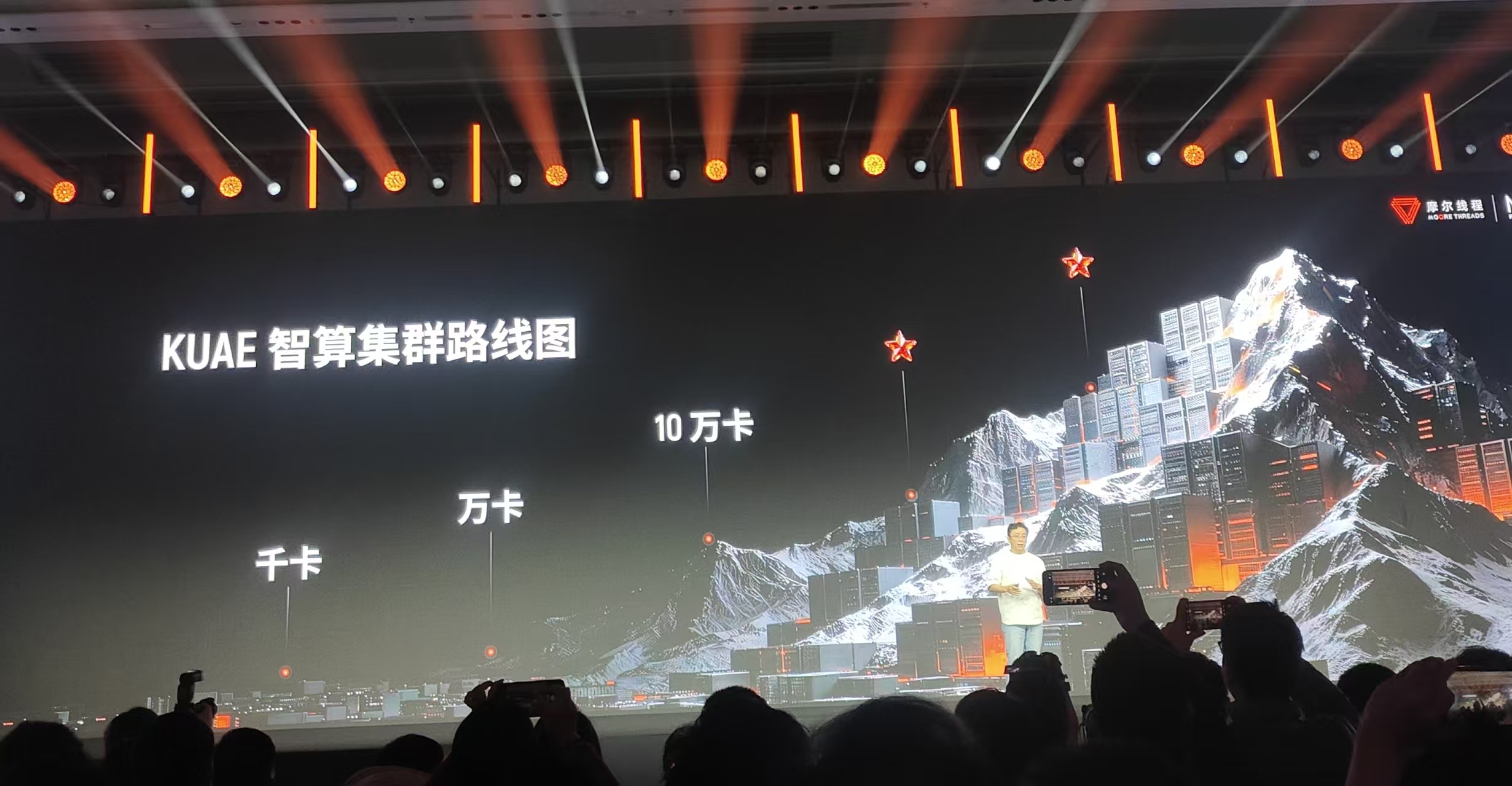
五一视界与摩尔线程深度合作 释放机器人测试训练无限可能
Ge Long Hui A P P· 2025-12-20 08:20
Group 1 - The core focus of the collaboration between Moore Threads and 51WORLD's simulation platform 51Sim is to build a next-generation physical AI simulation system based on domestic GPU computing power and advanced simulation and world model technologies [1][3] - The traditional simulation methods have limitations such as long construction cycles, high costs, and limited generalization capabilities, leading to a "confidence gap" with the real world [3] - 51Sim's approach of "4DGS reconstruction + generative world model" aims to transition simulation from manual construction to AI-driven generation, addressing the computational demands of physical AI simulation [3] Group 2 - The partnership has already achieved large-scale applications in the intelligent driving sector, supporting the closed-loop validation of end-to-end intelligent driving algorithms [3] - Moore Threads is a strategic shareholder of 51WORLD, which is aiming to become the first publicly listed company in the Physical AI sector by December 30, 2025, on the Hong Kong Stock Exchange [4] - The collaboration is expected to enhance funding for technology development and market expansion, thereby strengthening the synergy and promoting the development of the domestic GPU and Physical AI industry chain [4]
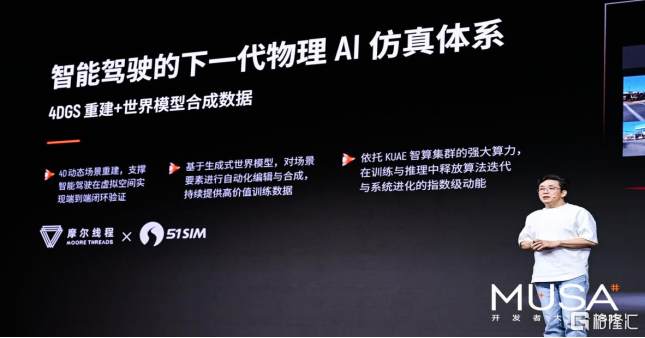
摩尔线程,重大发布!
Zheng Quan Shi Bao· 2025-12-20 07:54
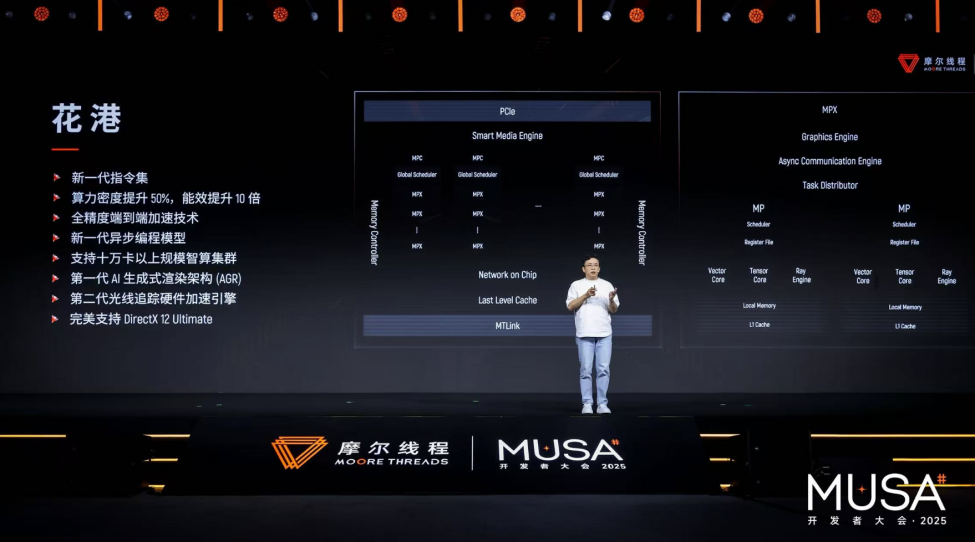
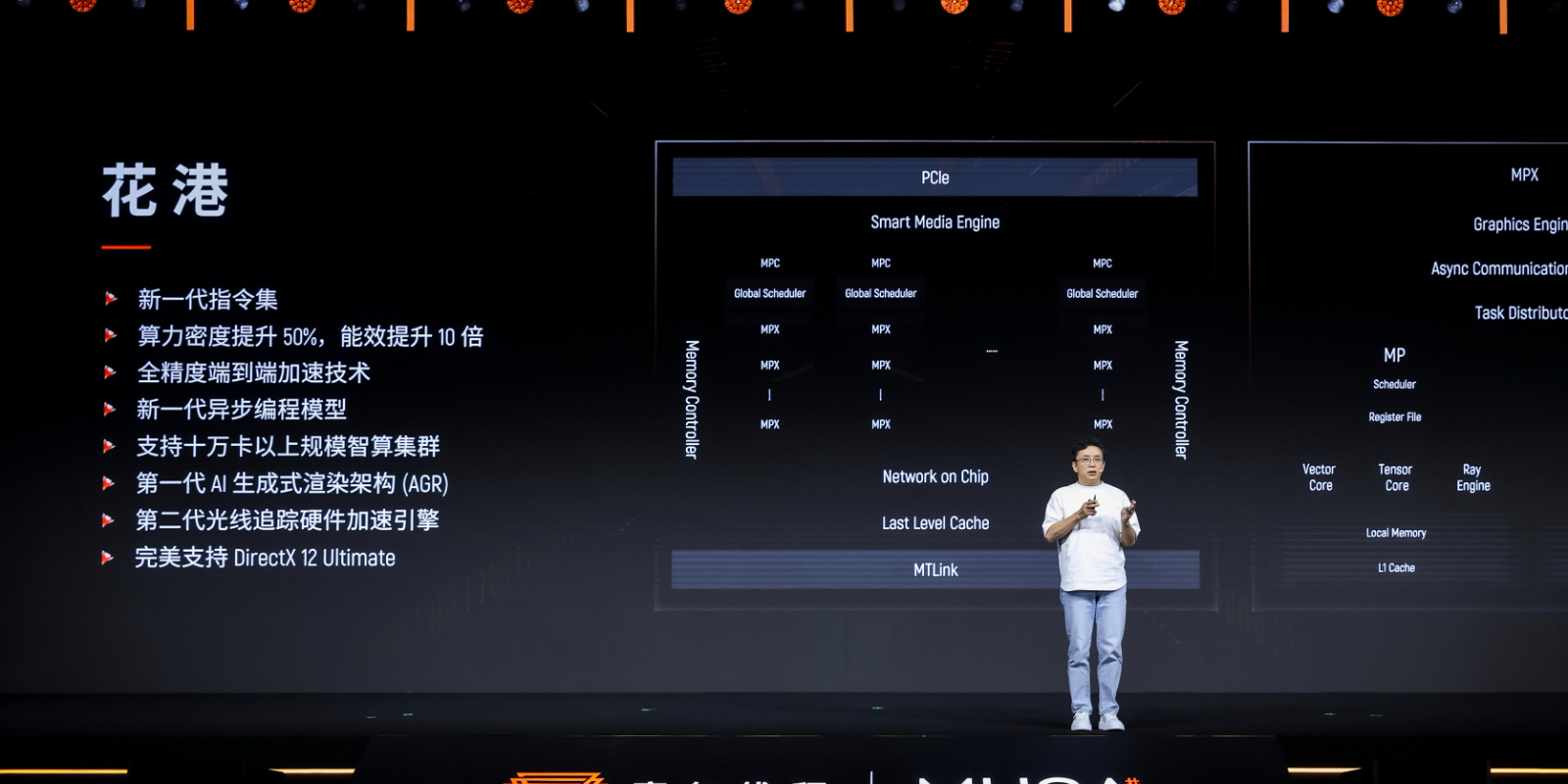
Core Viewpoint - Moores Threads has launched its new GPU architecture "Huagang" at the MUSA Developer Conference, showcasing significant advancements in computing power and energy efficiency [1][2]. Group 1: Product Launch and Features - The "Huagang" architecture features a 50% increase in computing density and a 10-fold improvement in energy efficiency, supporting large-scale intelligent computing clusters of over 100,000 cards [1][2]. - The full-featured GPU includes four main functional engines: AI computing acceleration, graphics rendering, physical simulation and scientific computing, and ultra-high-definition video encoding and decoding [1]. - The company plans to release high-performance AI training and inference chip "Huashan" and a chip focused on high-performance graphics rendering "Lushan" based on the new architecture [2]. Group 2: Market Position and Financial Performance - Moores Threads is regarded as the "Chinese version of Nvidia" and recently went public, experiencing a significant stock price increase of over 400% on its first trading day [6]. - The stock price has seen fluctuations, currently at 664.1 yuan per share, down from a peak of 940 yuan [6]. - For the first nine months of 2025, the company reported a revenue of 785 million yuan and a net loss of 724 million yuan, with projections indicating a continued net loss for the year [7].

Global Markets Brace for AI Chip Scramble, EV Slowdown, and Japan’s Economic Resurgence
Stock Market News· 2025-12-20 07:38
AI and Semiconductor Market - OpenAI has secured deals to purchase approximately 40% of the global raw, undiced DRAM wafer output until 2029, indicating a significant demand for advanced memory chips to support AI infrastructure and data centers globally [2][7] - Moore Threads Technology has emerged as a competitor to Nvidia in the AI chip market, completing a successful IPO in China with shares increasing by as much as 500%, aiming to reduce reliance on Nvidia's hardware [3][7] Global EV Market - The electric vehicle market is experiencing a slowdown, with Asian battery and car manufacturers adjusting strategies due to softening demand, high production costs, and slower consumer adoption [4][7] - Ford Motor Company is recalling over 270,000 electric and hybrid vehicles in the U.S. due to a parking function issue, which poses a roll-away risk [5][7] Japan's Corporate Landscape - Japan is undergoing significant corporate governance reforms, leading to a record $350 billion in mergers and acquisitions, indicating a shift towards improved shareholder returns and profitability [6][7] - Companies and households in Japan are reevaluating their financial strategies following a recent rate hike by the Bank of Japan [8][7] American Airlines Loyalty Program Changes - American Airlines will no longer offer AAdvantage miles or Loyalty Points for basic economy fares starting December 17, 2025, aligning its policy with competitors and impacting budget travelers [9][7]



摩尔线程公布新GPU架构和万卡集群
Guan Cha Zhe Wang· 2025-12-20 07:27
Core Insights - The article discusses the launch of new GPU products by the company Moore Threads at the first MUSA Developer Conference, highlighting advancements in GPU architecture and AI training chips [1][7]. Group 1: Product Announcements - Moore Threads unveiled its next-generation GPU architecture "Huagang," which supports full precision computing from FP4 to FP64, with a 50% increase in density and a 10-fold improvement in efficiency [7]. - The company introduced the AI training and inference chip "Huashan" and the graphics rendering chip "Lushan," along with the "Kua'a" 10,000-card computing cluster [1][7]. - The "Kua'a" computing cluster boasts a floating-point computing capability of 10 Exa-Flops, with a training utilization rate of 60% for dense models and 40% for MOE models, achieving a linear scaling efficiency of 95% [9]. Group 2: Industry Context and Challenges - The development of "sovereign AI" is emphasized as crucial for enhancing national competitiveness, focusing on achieving autonomy in computing power, algorithm strength, and ecosystem independence [2]. - The performance gap between domestic graphics cards and leading international products is narrowing, although building large-scale intelligent computing systems remains a significant challenge [2]. - The competitive landscape for GPU companies is intense, with major players like NVIDIA and Huawei holding a combined market share of 94.4% in the intelligent computing chip market, indicating a fragmented market with over 15 participants [20]. Group 3: Financial Performance and Market Outlook - Moore Threads reported a revenue of 785 million yuan and a net loss of 724 million yuan for the first three quarters of the year, with projections indicating a continued net loss in 2025 [17]. - The company’s market capitalization fluctuated, initially exceeding 400 billion yuan but currently around 310 billion yuan [17]. - The article notes that many GPU startups are experiencing significant losses, with competitors like Muxi and Biran Technology also facing financial challenges [19]. Group 4: Ecosystem Development - The CEO of Moore Threads highlighted the importance of building a user-friendly development environment to foster a robust ecosystem, which is seen as a critical competitive advantage in the GPU industry [23]. - The company aims to enhance its research and development efforts to overcome core technological challenges and deepen collaboration with ecosystem partners [23].
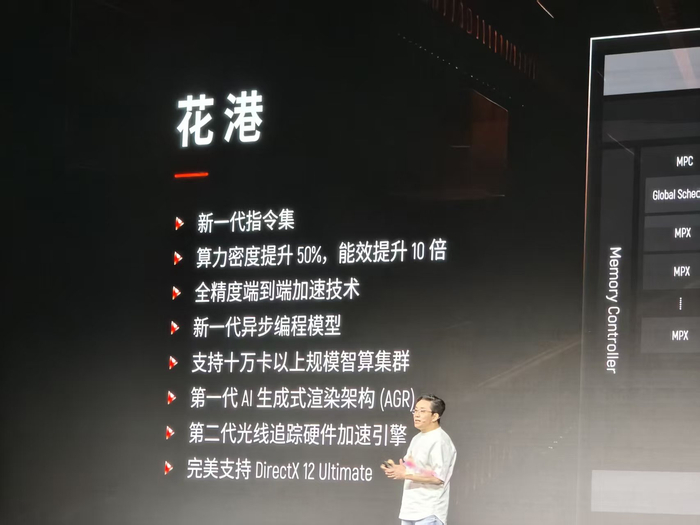
摩尔线程亮出全栈技术底牌:“花港”新架构与万卡集群冲击高端GPU市场格局
Huan Qiu Wang· 2025-12-20 07:00
Core Insights - The article highlights the significant advancements made by Moore Threads in the GPU sector, particularly through the introduction of the new "Huagang" architecture and the "Kua'e" ten-thousand card intelligent computing cluster, which supports trillion-parameter model training [2][3]. Architecture Innovations - The "Huagang" architecture showcases a 50% increase in computing density and up to 10 times improvement in efficiency, fully supporting precision calculations from FP4 to FP64. It integrates the self-developed MTLink high-speed interconnect technology, facilitating cluster expansion beyond 100,000 cards [3][5]. - Two chips have been planned based on the "Huagang" architecture: "Huashan" for AI training and inference integration, and "Lushan" aimed at high-performance graphics rendering, with performance improvements of 64 times for AI computation, 16 times for geometric processing, and 50 times for ray tracing [5]. Cluster Capabilities - The "Kua'e" ten-thousand card intelligent computing cluster has publicly disclosed key engineering efficiency metrics, achieving a model compute utilization (MFU) of 60% for dense models and 40% for mixture of experts (MOE) models, with a linear scaling efficiency of 95% and effective training time exceeding 90% [6]. Ecosystem Development - Moore Threads announced the iteration of its unified software architecture MUSA to version 5.0, with plans to gradually open-source core components, including computation acceleration libraries and system management frameworks [8]. - The "Moore Academy" platform has attracted nearly 200,000 learners and collaborates with over 200 universities nationwide, reflecting a comprehensive approach to ecosystem building through technology open-sourcing, developer tool provision, and early talent cultivation [9]. Technological Integration and Exploration - The release indicates a trend towards the deep integration of graphics, AI, and high-performance computing, with hardware-level ray tracing acceleration and the introduction of the AI generative rendering technology MTAGR 1.0 [10]. - The company is also exploring cutting-edge fields such as embodied intelligence and AI for science, showcasing its ambition to redefine the value of GPUs as a general computing platform [10]. Industry Context - The comprehensive technology showcase reflects the current stage of domestic high-end computing power development, transitioning from single-chip innovations to tackling large-scale system engineering and building a thriving application ecosystem [11]. - The efficiency disclosure of the ten-thousand card cluster signifies that domestic computing infrastructure is beginning to undergo rigorous testing in large-scale, high-load scenarios, while the architecture iteration and integration of graphics and AI demonstrate the company's intent to define the next generation of computing architecture [11].
预售价9999元,摩尔线程发布AI算力笔记本
2 1 Shi Ji Jing Ji Bao Dao· 2025-12-20 06:50
Core Insights - The article discusses the launch of the MTT AIBOOK notebook by Moore Threads, which is now available for pre-sale on JD.com at a price of 9,999 yuan for the 32GB, 1TB version [2] Product Details - The MTT AIBOOK is equipped with Moore Threads' newly developed proprietary SoC chip "Yangtze," which integrates a high-performance full-core CPU and a fully functional GPU [2] - The notebook supports MUSA unified architecture and offers heterogeneous AI computing power of 50 TOPS [2] - It is designed for development, office work, and entertainment, supporting Windows virtual machines, Linux, Android containers, and all domestic operating systems [2]
国产算力迈入“万卡”时代:摩尔线程发布新一代GPU架构,中科曙光发布万卡超集群
Jing Ji Guan Cha Wang· 2025-12-20 06:47
Core Insights - The article discusses the advancements in the domestic GPU industry, highlighting the launch of the "Huagang" architecture by Moore Threads and the "scaleX" supercluster system by Inspur, indicating a shift in focus from individual GPU performance to building scalable systems capable of handling massive computational tasks [2][6]. Group 1: Moore Threads Developments - Moore Threads unveiled its latest "Huagang" architecture, which boasts a 50% increase in computing density and a 10-fold improvement in efficiency compared to the previous generation [3]. - The "Huagang" architecture supports full precision calculations from FP4 to FP64 and introduces new support for MTFP6, MTFP4, and mixed low precision [3]. - Future chip plans include "Huashan," aimed at AI training and inference, and "Lushan," focused on high-performance graphics rendering, with "Lushan" showing a 64-fold increase in AI computing performance and a 50% improvement in ray tracing performance [4]. Group 2: Inspur Developments - Inspur's "scaleX" supercluster system, which publicly debuted, consists of 16 scaleX640 supernodes interconnected via the scaleFabric high-speed network, capable of deploying 10,240 AI accelerator cards [10]. - The scaleX system employs immersion phase change liquid cooling technology to address heat dissipation challenges, achieving a 20-fold increase in computing density per rack and a PUE (Power Usage Effectiveness) of 1.04 [11][12]. - The system supports multi-brand accelerator cards and has optimized compatibility with over 400 mainstream large models, reflecting a strategy to provide a versatile platform for various domestic computing resources [14]. Group 3: Industry Challenges and Solutions - The industry faces challenges in scaling up computational power, particularly in managing heat, power supply, and physical space limitations when deploying thousands of high-power chips in data centers [8][9]. - Both companies are addressing communication delays in distributed computing, with Moore Threads integrating a new asynchronous programming model and self-developed MTLink technology to support clusters exceeding 100,000 cards, while Inspur's scaleFabric network achieves 400 Gb/s bandwidth and sub-microsecond communication latency [12][13]. Group 4: Software Ecosystem and Compatibility - As the hardware specifications approach international standards, the focus is shifting towards optimizing the software stack, with Moore Threads announcing an upgrade to its MUSA unified architecture and achieving over 98% efficiency in core computing libraries [13]. - Inspur emphasizes the compatibility of its systems with various brands of accelerator cards, promoting an open architecture strategy that allows for coexistence of multiple chips [14].

摩尔线程发布新一代GPU架构,打造MUSA生态对标英伟达CUDA
Xin Lang Cai Jing· 2025-12-20 06:42
Core Viewpoint - The article discusses the recent developments of Moer Technology, particularly its new GPU architecture and products aimed at competing with NVIDIA in the GPU market, highlighting the importance of developer ecosystems in the GPU industry [2][5][14]. Group 1: Product Launch and Features - Moer Technology held its first MUSA Developer Conference, where it unveiled its new GPU architecture "Huagang" and several products, including the AI training and inference GPU "Huashan" and the gaming GPU "Lushan" [2][5]. - The new products are set to be mass-produced by 2026, with significant performance improvements over the previous generation, including a 50% increase in computing density and a 10-fold increase in energy efficiency [7][8]. - The "Huashan" chip reportedly surpasses NVIDIA's Hopper series in floating-point computing power, memory bandwidth, and capacity [8]. Group 2: Competitive Landscape - Moer Technology aims to challenge NVIDIA's dominance in the GPU market, with many of its team members having previously worked at NVIDIA, including CEO Zhang Jianzhong [5][6]. - Despite advancements, there remains a notable performance gap between Moer Technology's products and NVIDIA's top-tier offerings, which is critical for the company's future competitiveness [6][10]. - The current market dynamics, influenced by U.S. export restrictions, present a unique opportunity for domestic GPU manufacturers to fill the gap left by NVIDIA's limited presence in China [9]. Group 3: Ecosystem Development - The establishment of a robust developer ecosystem is crucial for Moer Technology to succeed, akin to NVIDIA's CUDA ecosystem, which is currently dominant in the industry [14][15]. - Zhang Jianzhong expressed optimism about building a competitive ecosystem around the MUSA architecture, encouraging developers to create applications that leverage their GPUs [15]. - The company acknowledges the challenges posed by NVIDIA's established ecosystem and aims to overcome these barriers through strategic ecosystem development [15].

摩尔线程推出新一代“花港”架构及芯片路线
Zhong Guo Jing Ying Bao· 2025-12-20 06:17
摩尔线程的数据显示,华山在浮点算力、访存带宽、访存容量超越某国际厂商已发售的上一代产品;相 比上一代显卡S80,庐山在3A游戏性能表现上有了15倍提升。 (文章来源:中国经营报) 12月20日,在首届MUSA开发者大会(MUSA Developer Conference)上,摩尔线程(688795.SH)创始 人、董事长兼CEO张建中发布了MUSA新架构"花港"及芯片路线图,包括基于"花港"架构的新一代高性 能芯片——华山和庐山。 张建中表示,该架构具备以下性能和特点:支持新一代指令集;算力密度提升50%,能效提升10倍;全 精度端到端加速技术;新一代异步编程模型;支持十万卡以上规模智算集群;第一代AI生成式渲染架 构(AGR)等。 ...