
PAB(000001)

Search documents
5.8万亿平安银行,副行长首秀
2 1 Shi Ji Jing Ji Bao Dao· 2025-08-26 11:19
Core Viewpoint - Ping An Bank is undergoing a significant transformation, focusing on retail banking while maintaining strong performance in corporate banking, which has become a key profit driver for the bank [2][4]. Financial Performance - As of June 30, 2025, Ping An Bank reported a net profit of 24.87 billion yuan, with corporate banking contributing over 80% of this profit [3]. - The bank's corporate deposits reached 2.37 trillion yuan, a 5.4% increase from the end of the previous year, while corporate loans grew to 1.68 trillion yuan [2][3]. Strategic Direction - The bank's corporate business is expected to continue providing solid support for performance recovery, as stated by Vice President Fang Weihao [4]. - The leadership aims to increase the proportion of younger executives in the management team to enhance the bank's adaptability and performance [8]. Leadership Changes - Fang Weihao, who has extensive experience within the Ping An Group, has been appointed as the Vice President of Ping An Bank, focusing on corporate business [2][8]. - Wang Jun, a new assistant to the president, is responsible for retail banking, indicating a strategic shift towards revitalizing this segment [5][8].


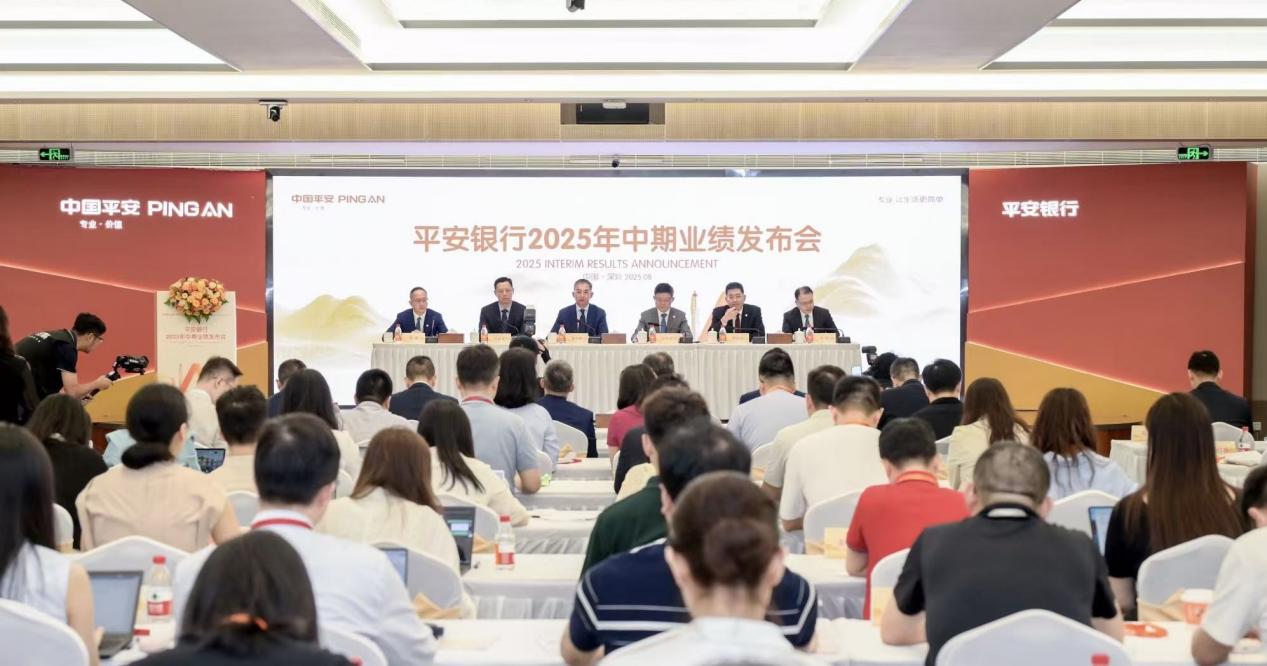
冀光恒:平安银行战略转型成效渐显 经营态势稳中有进
财联社· 2025-08-26 10:55
Core Viewpoint - Ping An Bank is committed to enhancing its operational quality and optimizing its business structure while addressing past challenges through strategic reforms, aiming for steady growth in performance and profitability [3][4]. Business Performance - In the first half of 2025, Ping An Bank achieved a revenue of 69.385 billion yuan and a net profit of 24.870 billion yuan, with a narrowing decline compared to the first quarter [4]. - The total assets increased by 1.8% year-on-year, with a focus on balancing "volume, price, and risk" [5]. - The non-performing loan generation rate decreased to 1.64%, down 16 basis points from the previous year, with a recovery of 18.6 billion yuan in non-performing assets, a 14% increase year-on-year [5]. Strategic Progress - The bank's strategic reforms are progressing as expected, with a focus on retail transformation, corporate support, and enhancing loan quality [6]. - Retail loans saw a significant improvement, with new loans for small and micro enterprises increasing by 33.6% year-on-year, and technology enterprise loans growing by 13.2% [6][7]. - Corporate loans increased by 4.7% year-on-year, with a significant reduction in funding costs, achieving an average interest rate of 1.67%, down 34 basis points from the previous year [8]. Operational Efficiency - The bank is focused on cost reduction and efficiency improvement, with a 9% year-on-year decrease in business and management expenses [9]. - The bank is leveraging its technological advantages to enhance digital transformation and AI integration [9]. Future Initiatives - Ping An Bank plans to enhance its service to the real economy, focusing on key areas such as technology innovation and green finance [10]. - The bank aims to deepen its strategic transformation, particularly in retail and corporate sectors, while maintaining a focus on risk management [11]. - The bank is committed to improving its profitability and operational performance, with a focus on high-demand economic regions [11].
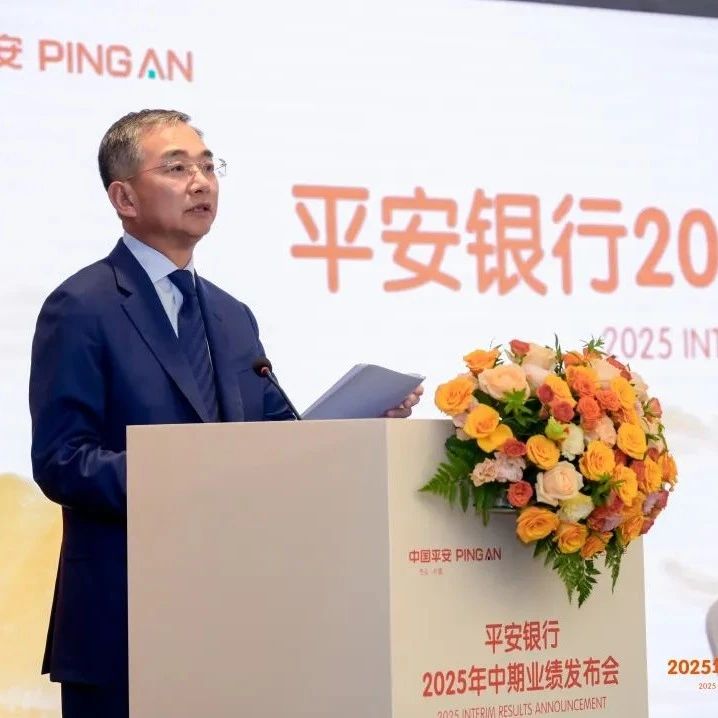
事关分红、零售业务平安银行高管最新回应
Xin Lang Cai Jing· 2025-08-26 09:09
Core Viewpoint - Ping An Bank held a mid-year performance conference on August 25, 2025, addressing key market concerns such as dividends and retail business performance [1][2] Dividend Distribution - For the first half of 2025, Ping An Bank announced a cash dividend of RMB 2.36 per share (including tax), totaling RMB 4.58 billion, maintaining the same level as last year [1] - The management indicated that the year-end dividend will depend on business performance and capital conditions, emphasizing a cautious approach to decision-making while considering future economic recovery [1] Retail Business Performance - In the first half of 2025, the retail financial business accounted for 44.8% of total revenue, a decrease from 50.7% in the same period of 2024 [2] - As of June 30, 2025, the personal loan balance was approximately RMB 17.3 trillion, down 2.3% from the end of the previous year, with credit card receivables and consumer loans contributing to this decline [2] - The management noted that over 95% of the decline in retail loan scale was attributed to credit card business, which is currently stabilizing and showing signs of recovery amid a transforming macro consumption market [2]
首提零售改革“效益优先、兼顾规模”,平安银行在释放什么信号?
Zheng Quan Shi Bao Wang· 2025-08-26 09:04
Core Viewpoint - Ping An Bank is shifting its retail strategy from high-risk, high-return products to medium-risk, medium-return products, resulting in a temporary decline in retail loan balances as the new products are being positioned [1][3][9]. Retail Business Strategy - The bank's retail asset balance has shown a slowdown in the rate of decline year-on-year and quarter-on-quarter, with a focus on optimizing the structure of its assets [3][5]. - The phrase "efficiency first, scale second" reflects the bank's approach to retail business amidst challenging macroeconomic conditions [3][4]. Loan Performance - As of June, retail financial assets accounted for 28.2%, down from 29.4% at the end of the previous year, with personal loan balances decreasing by 2.3% to approximately 17.26 trillion yuan [5][6]. - The bank's mortgage loans have seen a steady increase, with a growth of 20.1 billion yuan, while credit card receivables have decreased significantly [6][7]. Risk Management - The bank has actively reduced high-risk retail products, with "New Yi Loan" balances dropping from over 150 billion yuan to just over 10 billion yuan, and credit card balances decreasing from over 500 billion yuan to 390 billion yuan [9][10]. - The non-performing loan (NPL) ratio for personal loans improved to 1.27%, down from 1.39% at the end of the previous year, indicating effective risk management [10]. Interest Margin Management - The bank's net interest margin remains relatively stable at 1.8%, compared to the industry average of 1.56%, providing a competitive advantage [11][12]. - Cost control measures have led to a 9% reduction in operating expenses, while the retail interest rate has decreased by 27 basis points, helping to alleviate pressure on the interest margin [12].
深度 | 首提零售改革“效益优先、兼顾规模”,平安银行在释放什么信号?
券商中国· 2025-08-26 08:43
Core Viewpoint - Ping An Bank is shifting its retail strategy from high-risk, high-return products to medium-risk, medium-return products, leading to a temporary decline in retail loan balances as the new products are being positioned [1][3][4]. Group 1: Retail Strategy Adjustments - The retail asset balance of Ping An Bank has shown a slowdown in the decline of both year-on-year and quarter-on-quarter figures, indicating a structural optimization with high-risk products being cleared out [3][5]. - The bank's retail financial assets accounted for 28.2% as of June, down from 29.4% at the end of the previous year, with personal loan balances decreasing by 2.3% to approximately 17.26 trillion yuan [5][6]. - The bank's management emphasizes the need to adjust the asset structure to enhance profitability, focusing on core loans and medium-return loans [5][7]. Group 2: Performance Metrics - Key metrics indicate that credit card receivables account for over 95% of the decline in loan scale, while mortgage loans have increased by 20.1 billion yuan [6][8]. - The non-performing loan (NPL) ratio for personal loans decreased to 1.27%, reflecting a significant improvement in asset quality [10]. - The bank's retail non-performing generation has declined for six consecutive quarters, with a notable reduction in the second quarter [10]. Group 3: Risk Management and Asset Quality - The bank has actively reduced high-risk retail products, with "New Yi Loan" balances dropping from over 150 billion yuan to just over 10 billion yuan, and credit card balances decreasing from 500 billion yuan to 390 billion yuan [8][9]. - The bank is transitioning to a self-operated team for medium-risk products, aiming for a market scale of 200-300 billion yuan in the next few years [9]. - The bank's credit and other asset impairment losses have decreased, indicating a stabilization in retail operations [9]. Group 4: Interest Margin Management - Ping An Bank's net interest margin remains relatively stable at 1.8%, compared to the industry average of 1.56%, providing a competitive advantage [11][12]. - The bank has implemented cost control measures, reducing operating expenses by 9% and optimizing liability costs, which has helped mitigate the pressure on interest margins [11][12].
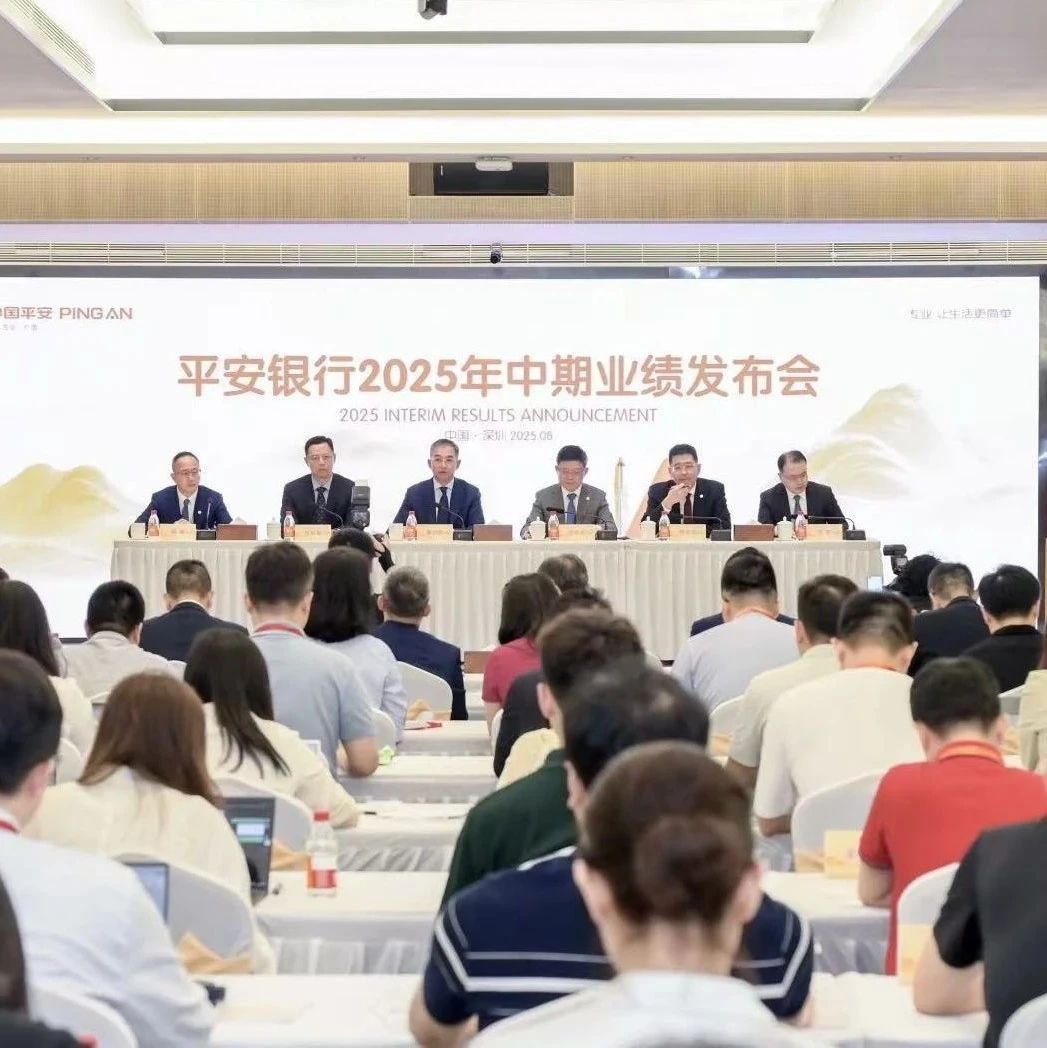
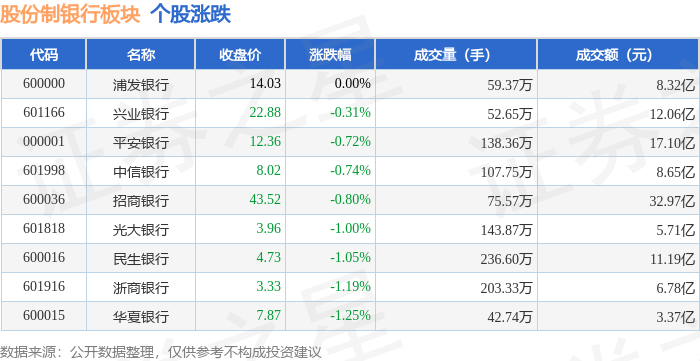
股份制银行板块8月26日跌0.64%,华夏银行领跌,主力资金净流出8100.3万元
Zheng Xing Xing Ye Ri Bao· 2025-08-26 08:36
Market Overview - On August 26, the share price of the joint-stock bank sector fell by 0.64% compared to the previous trading day, with Huaxia Bank leading the decline [1] - The Shanghai Composite Index closed at 3868.38, down 0.39%, while the Shenzhen Component Index closed at 12473.17, up 0.26% [1] Individual Bank Performance - The closing prices and changes for individual banks are as follows: - Shanghai Pudong Development Bank: 14.03, unchanged - Industrial Bank: 22.88, down 0.31% - Ping An Bank: 12.36, down 0.72% - CITIC Bank: 8.02, down 0.74% - China Merchants Bank: 43.52, down 0.80% - Everbright Bank: 3.96, down 1.00% - Minsheng Bank: 4.73, down 1.05% - Zhejiang Commercial Bank: 3.33, down 1.19% - Huaxia Bank: 7.87, down 1.25% [1] Capital Flow Analysis - The joint-stock bank sector experienced a net outflow of 81.03 million yuan from main funds, while speculative funds saw a net inflow of 114 million yuan, and retail investors had a net outflow of 32.54 million yuan [1] - Detailed capital flow for individual banks shows: - Shanghai Pudong Development Bank: Main funds net inflow of 13.2 million yuan, speculative funds net outflow of 60.72 million yuan, retail net outflow of 70.99 million yuan - CITIC Bank: Main funds net inflow of 61.73 million yuan, speculative funds net outflow of 4.00 million yuan, retail net outflow of 57.74 million yuan - Minsheng Bank: Main funds net inflow of 40.61 million yuan, speculative funds net inflow of 34.64 million yuan, retail net outflow of 75.25 million yuan - Huaxia Bank: Main funds net inflow of 34.71 million yuan, speculative funds net outflow of 0.50 million yuan, retail net outflow of 29.72 million yuan - Everbright Bank: Main funds net outflow of 29.75 million yuan, speculative funds net inflow of 37.21 million yuan, retail net outflow of 0.75 million yuan - Industrial Bank: Main funds net outflow of 44.71 million yuan, speculative funds net inflow of 72.56 million yuan, retail net outflow of 27.85 million yuan - Ping An Bank: Main funds net outflow of 54.80 million yuan, speculative funds net outflow of 0.38 million yuan, retail net inflow of 58.56 million yuan - Zhejiang Commercial Bank: Main funds net outflow of 10.40 million yuan, speculative funds net inflow of 42.15 million yuan, retail net inflow of 62.32 million yuan - China Merchants Bank: Main funds net outflow of 116 million yuan, speculative funds net inflow of 0.45 million yuan, retail net outflow of 116 million yuan [2]





深度 | 首提零售改革“效益优先、兼顾规模”,平安银行在释放什么信号?
Zheng Quan Shi Bao Wang· 2025-08-26 08:17
Core Viewpoint - Ping An Bank is shifting its retail strategy from high-risk, high-return products to medium-risk, medium-return products, indicating a focus on stability and quality over sheer volume in its retail banking operations [1][2][3] Group 1: Retail Strategy Adjustments - The bank's retail loan balance has seen a temporary decline as it transitions to medium-risk products, with a notable reduction in high-risk product offerings [1][4] - As of mid-2023, the retail financial assets proportion decreased to 28.2% from 29.4% at the end of the previous year, with personal loan balances dropping by 2.3% [4][5] - The bank's management emphasizes the importance of optimizing the structure of retail loans, focusing on core loans and medium-yield loans to enhance profitability [4][6] Group 2: Performance Metrics - Key metrics indicate a stabilization in retail loan performance, with a significant reduction in the decline of retail loan balances in the second quarter compared to the first quarter [5][6] - The bank's mortgage loans have increased by 201 billion, with a notable improvement in asset quality, as evidenced by a drop in the non-performing loan (NPL) ratio from 0.47% to 0.28% [5][8] - The overall retail loan NPL ratio stood at 1.27%, showing a reduction of 5 basis points from the previous quarter and a decrease of 12 basis points from the end of the previous year [9][10] Group 3: Risk Management and Asset Quality - The bank has actively reduced high-risk retail products, with "New Yi Dai" balances dropping from over 150 billion to just over 10 billion, and credit card balances decreasing from over 500 billion to 390 billion [8][9] - The bank's strategy includes replacing intermediary channels with a self-operated team to enhance the quality of medium-risk, medium-return products, aiming for a monthly issuance of 50-60 billion in new loans [9] - The reduction in high-risk assets has led to a significant decrease in retail NPL generation, with a reduction of nearly 10 billion in the first half of the year compared to the previous year [9][10] Group 4: Interest Margin Management - The bank's net interest margin remains relatively stable at 1.8%, compared to the industry average of 1.56%, providing a competitive edge [11][12] - Cost control measures have been implemented, with operating expenses down by 9% year-on-year, and a reduction in provision for bad debts by 16% [12] - The bank aims to maintain a higher interest margin compared to peers, targeting a competitive position within the industry [12]
事关分红、零售业务 平安银行高管最新回应
Bei Ke Cai Jing· 2025-08-26 07:30
Core Viewpoint - Ping An Bank reported a decline in both revenue and net profit for the first half of 2025, with a focus on maintaining stable dividend levels and addressing challenges in retail banking, particularly in credit card business [1][2][3]. Financial Performance - For the first half of 2025, Ping An Bank achieved operating revenue of 69.385 billion yuan, a year-on-year decrease of 10.0% - The net profit for the same period was 24.870 billion yuan, down 3.9% compared to the previous year [1]. Dividend Policy - The mid-term dividend distribution plan announced a cash dividend of 2.36 yuan per 10 shares, totaling 4.580 billion yuan, which represents 20.05% of the net profit attributable to ordinary shareholders - The mid-term dividend level is consistent with the previous year, indicating the bank's intention to maintain stability in dividend distribution [2][3]. Retail Banking Performance - Retail financial business revenue accounted for 44.8% of total revenue, down from 50.7% in the same period last year - As of June 30, 2025, the personal loan balance was approximately 1.73 trillion yuan, a decrease of 2.3% from the end of the previous year, with declines in credit card receivables and consumer loans [3][4]. Credit Card Business Challenges - The decline in retail loan scale was primarily driven by credit card business, which accounted for over 95% of the total decrease - The number of credit card accounts decreased by 3.3% to 45.3908 million as of June 30, 2025 [3][4]. Future Outlook - The bank's management indicated a focus on increasing retail loan issuance in the second half of the year while ensuring risk control - There are signs of stabilization in the credit card business, with expectations of improved performance as the macro consumption market shows signs of recovery [4].
上市公司半年报分红哪家强?一图看清
Zheng Quan Shi Bao Wang· 2025-08-26 06:21
Core Viewpoint - The article highlights the mid-year dividend announcements from A-share listed companies, indicating a positive trend in net profit growth and substantial cash dividends being distributed to shareholders [2]. Group 1: Dividend Distribution - As of August 26, 2025, a total of 2,358 A-share listed companies have disclosed their semi-annual reports, with 1,329 companies reporting year-on-year net profit growth [2]. - Among these, 389 companies announced mid-term dividend plans, with a total proposed dividend amount nearing 1,800 billion yuan [2]. Group 2: Major Dividend Payers - Notable companies with significant cash dividends include China Mobile, China Telecom, and Sinopec, each distributing over 10 billion yuan, with China Mobile leading at 540.83 billion yuan [5][7]. - Other companies with substantial dividends include Muyuan Foods (50.02 billion yuan) and Ping An Bank (45.80 billion yuan) [5][7]. Group 3: Dividend Per Share - The article lists companies with notable dividends per share, including: - Gigabit (6.60 yuan) - Ninebot (4.23 yuan) - Shuoshi Biology (3.40 yuan) - China Mobile (2.50 yuan) [10].






建银国际:将平安银行评级上调至跑赢大盘。
Xin Lang Cai Jing· 2025-08-26 04:29
Group 1 - The core viewpoint is that Jianyin International has upgraded the rating of Ping An Bank to outperform the market [1] Group 2 - The upgrade reflects positive expectations for Ping An Bank's performance in the financial sector [1]