CCHT(000661)

Search documents
长春高新技术产业(集团)股份有限公司关于境外子公司苯磺酸氨氯地平口服溶液用冻干粉在美国获批上市的公告
Shang Hai Zheng Quan Bao· 2025-07-29 17:34
Core Viewpoint - The approval of Brillian Pharma INC.'s product, a freeze-dried powder for oral solution of Amlodipine Besylate, by the FDA enhances the company's product portfolio in the U.S. market and strengthens its competitive position in the pharmaceutical industry [1][3]. Group 1: Product Information - Product Name: Amlodipine Besylate Oral Solution Freeze-Dried Powder - Brand Name: Sdamlo - Approved Indications: For hypertension in individuals aged 6 and older, and for chronic stable angina, vasospastic angina, and coronary artery disease confirmed by angiography [1][2]. Group 2: Market Context - Hypertension is a chronic condition characterized by persistently elevated arterial blood pressure, affecting 47.7% of U.S. adults aged 18 and older and 3.8% of children aged 6-17 as of August 2023 [2]. - Amlodipine is recommended as a first-line treatment for hypertension in children and adolescents, aiming to reduce the risk of organ damage and cardiovascular diseases [2]. Group 3: Impact on the Company - The product's approval will enrich Brillian Pharma's product offerings in the U.S. and enhance its competitiveness in the pharmaceutical market [3]. - The company plans to actively promote, produce, and sell the product, aiming for widespread market application and providing more treatment options for patients [3].

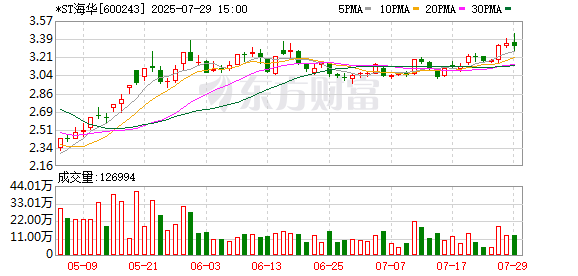
7月30日上市公司重要公告集锦:*ST海华控股子公司拟4300万元收购鲁新鼎盛100%股权
Zheng Quan Ri Bao· 2025-07-29 13:26
Group 1: Share Buybacks and Acquisitions - WuXi AppTec plans to adjust the maximum repurchase price of its shares to no more than 114.15 yuan per share from the previous limit of 90.72 yuan per share, while other details of the repurchase plan remain unchanged [2] - ST Haihua's subsidiary intends to acquire 100% equity of Lvxin Dingsheng for 43 million yuan, citing the favorable development prospects of the natural gas industry [3] - Shenneng Power plans to repurchase shares for 300 million to 400 million yuan, with a maximum repurchase price of 38 yuan per share [4] - Huaneng Technology intends to acquire 6% of Jinghe Integrated's shares for 23.93 million yuan, with a transfer price of 19.88 yuan per share [7] Group 2: Financial Performance - Shijia Photon reported a net profit of 217 million yuan for the first half of 2025, a year-on-year increase of 1712%, with revenue of 993 million yuan, up 121.12% [5] - Enhua Pharmaceutical achieved a net profit of 700 million yuan in the first half of 2025, a year-on-year increase of 11.38%, with revenue of 3.01 billion yuan, up 8.93% [13] - Guangzhi Technology reported a net profit of 23.99 million yuan for the first half of 2025, marking a turnaround from losses, with revenue of 1.02 billion yuan, up 78.2% [10] Group 3: Market Activities and Listings - Binhua Co. is planning to issue H-shares and list on the Hong Kong Stock Exchange, currently discussing specific details with relevant intermediaries [8] - Tubaobao's subsidiary, Dehua Tubaobao Investment Management, holds a 2.05% stake in Hanhai Group, which is set to be listed on the Shenzhen Stock Exchange [12] - Changchun Gaoxin's subsidiary has received FDA approval for a hypertension drug, expanding its market presence in the U.S. [13]





长春高新控股子公司药品在美国获批上市
Zheng Quan Shi Bao Wang· 2025-07-29 12:05
Group 1 - Changchun High-tech's subsidiary Brillian Pharma INC. received FDA approval for the oral solution of benzenesulfonic acid amlodipine, targeting hypertension in individuals aged 6 and above, as well as chronic stable angina and vasospastic angina in adults [1] - The prevalence of hypertension among adults in the U.S. was reported at 47.7% from August 2021 to August 2023, while the prevalence among children aged 6-17 was 3.8% [1] - Amlodipine is recommended as a first-line treatment for hypertension in children, aiming to reduce the risk of organ damage and cardiovascular diseases [1] Group 2 - The benzenesulfonic acid amlodipine oral solution is a 505B2 modified innovative drug developed for children over 6 and adults with swallowing difficulties, designed to lower blood pressure and reduce cardiovascular event risks [2] - The product is based on existing FDA-approved formulations, offering ease of use, accurate dosing, and palatability, which enhances medication adherence among pediatric patients [2] - The approval of this product is expected to strengthen Brillian Pharma's product portfolio in the U.S. market, enhancing the company's competitiveness in the pharmaceutical sector [2] Group 3 - Changchun High-tech's subsidiary, Changchun Jinsai Pharmaceutical, received approval for the injection of Fushen Qibai monoclonal antibody, a new biological product for treating acute gouty arthritis in adults [3] - The company has diversified its business into various pharmaceutical segments, including gene engineering, biological vaccines, antibody drugs, and modern traditional Chinese medicine [3] Group 4 - The company is advancing clinical trials for several new drugs, including GenSci098 for thyroid eye disease and GenSci122 for advanced solid tumors, both of which have received FDA clinical trial permissions [4] - The company plans to issue H-shares and list on the Hong Kong Stock Exchange to enhance its global strategy and international financing capabilities [4]
长春高新(000661.SZ):苯磺酸氨氯地平口服溶液用冻干粉在美国获批上市
智通财经网· 2025-07-29 09:24
Core Viewpoint - Changchun High New's subsidiary Brillian Pharma INC. has received FDA approval for the freeze-dried powder of Amlodipine Besylate oral solution, indicating a significant advancement in its product portfolio and potential market expansion [1] Group 1: Product Approval - The FDA has approved the freeze-dried powder of Amlodipine Besylate oral solution for marketing [1] - The product is indicated for hypertension in patients aged 6 and older, as well as for chronic stable angina and vasospastic angina in adults [1] - The approval supports the treatment of coronary heart disease confirmed by angiography [1]
长春高新:苯磺酸氨氯地平口服溶液用冻干粉在美国获批上市
Zhi Tong Cai Jing· 2025-07-29 09:22
Core Viewpoint - Changchun High New's subsidiary, Brillian Pharma INC., has received FDA approval for its Amlodipine Besylate Oral Solution Lyophilized Powder, indicating a significant advancement in its product portfolio and potential market opportunities in the hypertension and chronic stable angina treatment sectors [1] Group 1: Product Approval - The FDA has approved the Amlodipine Besylate Oral Solution Lyophilized Powder for use in patients aged 6 and above, as well as adults [1] - The product is indicated for the treatment of hypertension and chronic stable angina, including vasospastic angina and coronary heart disease confirmed by angiography [1]
长春高新:控股子公司药品在美国获批上市
Zheng Quan Shi Bao Wang· 2025-07-29 09:22
人民财讯7月29日电,长春高新(000661)7月29日晚间公告,近日,公司获悉,控股子公司Brillian Pharma INC.申报的苯磺酸氨氯地平口服溶液用冻干粉已获美国食品药品监督管理局(FDA)批准上市。苯 磺酸氨氯地平口服溶液用冻干粉适用于6岁以上和成人高血压,以及成人慢性稳定性心绞痛,血管痉挛 性心绞痛,经血管造影证实的冠心病。 ...
长春高新(000661.SZ):境外子公司苯磺酸氨氯地平口服溶液用冻干粉在美国获批上市
Ge Long Hui A P P· 2025-07-29 09:20
格隆汇7月29日丨长春高新(000661.SZ)公布,近日,长春高新技术产业(集团)股份有限公司获悉,控股 子公司Brillian Pharma INC.(简称"倍利年")申报的苯磺酸氨氯地平口服溶液用冻干粉已获美国食品药品 监督管理局(FDA)批准上市。 苯磺酸氨氯地平口服溶液用冻干粉是倍利年研发的一款专门针对6岁以上儿童和存在吞咽困难的成人高 血压患者的505B2改良型创新药,能够降低6岁以上儿童和成人的血压,可以减少致命和非致命心血管 事件的风险。 ...
长春高新:子公司苯磺酸氨氯地平口服溶液用冻干粉获美国FDA批准上市
Xin Lang Cai Jing· 2025-07-29 09:16
长春高新(000661.SZ)公告称,公司控股子公司Brillian Pharma INC.申报的苯磺酸氨氯地平口服溶液用冻 干粉已获美国食品药品监督管理局(FDA)批准上市。该产品适用于6岁以上和成人高血压,以及成人 慢性稳定性心绞痛,血管痉挛性心绞痛,经血管造影证实的冠心病。苯磺酸氨氯地平口服溶液用冻干粉 是倍利年研发的专门针对6岁以上儿童和存在吞咽困难的成人高血压患者的505B2改良型创新药,能够 降低6岁以上儿童和成人的血压,可以减少致命和非致命心血管事件的风险。该产品获批有利于丰富倍 利年的美国产品布局,增强公司在医药市场的竞争力。 ...
长春高新(000661) - 关于境外子公司苯磺酸氨氯地平口服溶液用冻干粉在美国获批上市的公告
2025-07-29 09:15
证券代码:000661 证券简称:长春高新 公告编号:2025-068 长春高新技术产业(集团)股份有限公司 关于境外子公司苯磺酸氨氯地平口服溶液用冻干粉 在美国获批上市的公告 本公司及董事会全体成员保证信息披露的内容真实、准确、完整,没有虚假记 载、误导性陈述或重大遗漏。 近日,长春高新技术产业(集团)股份有限公司(以下简称"公司")获悉, 控股子公司 Brillian Pharma INC.(以下简称"倍利年")申报的苯磺酸氨氯地平 口服溶液用冻干粉已获美国食品药品监督管理局(FDA)批准上市。现就相关情 况公告如下: 产品名称:苯磺酸氨氯地平口服溶液用冻干粉 商品名称:Sdamlo 获批适应症:适用于 6 岁以上和成人高血压,以及成人慢性稳定性心绞 痛,血管痉挛性心绞痛,经血管造影证实的冠心病。 二、药品的其它情况 高血压是一种以动脉血压持续升高为特征的慢性疾病,若长期控制不佳,会 对身体多个器官和系统造成严重损害,甚至引发致命性并发症。根据美国疾病控 制与预防中心 2024 年 10 月发布的数据,2021 年 8 月至 2023 年 8 月期间,美国 18 岁及以上成年人高血压患病率为 47.7%, ...
母婴消费行业点评:国家育儿补贴出台,改善母婴消费预期
Shenwan Hongyuan Securities· 2025-07-29 03:43
Investment Rating - The report rates the mother and baby consumption industry as "Overweight" [2][9] Core Insights - The introduction of a national childcare subsidy of 3,600 yuan per child per year, totaling up to 10,800 yuan per child, is expected to improve consumption expectations in the mother and baby sector [3] - The report highlights that despite a decline in birth rates over the past seven years, the overall mother and baby market has experienced a compound annual growth rate (CAGR) of over 15% from 2018 to 2024 due to consumption upgrades and refined parenting [3] - The report emphasizes the rise of domestic brands in the mother and baby sector, with significant market share gains and a return of industry influence to local brands [3] Summary by Sections National Childcare Subsidy - The national childcare subsidy program will start on January 1, 2025, providing cash subsidies to families with children under three years old, with a basic standard of 3,600 yuan per year [3] - Local governments are expected to introduce additional subsidies, creating a wave of local support for childbirth [3] Market Growth and Opportunities - The mother and baby market is projected to rebound due to improved policies and an anticipated increase in birth rates in 2024 [3] - Key sectors and companies recommended for investment include: - Fertility and reproductive health: Focus on companies like Jinxin Reproductive and Livzon Pharmaceutical [3] - Infant nutrition: Recommendations include China Feihe and Yili Group [3] - Baby appliances: Suggested investment in Bear Electric [3] - Apparel and home textiles: Companies like Semir and Anta are highlighted [3] - Baby care products: Brands such as Runben and New Page are recommended [3] Valuation Table - The report includes a valuation table with various companies in the mother and baby sector, indicating their stock prices, market capitalization, and profit forecasts for 2025, 2026, and 2027, along with corresponding investment ratings [4]