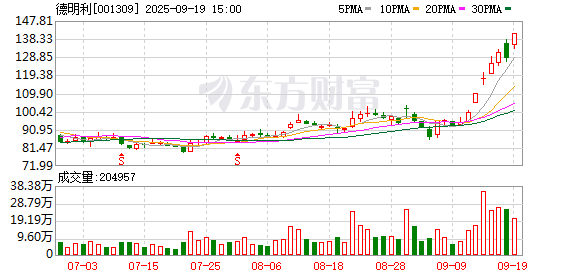
Shenzhen Techwinsemi Technology Company Limited(001309)
Search documents
德明利: 审计委员会工作细则(2025年9月)
Zheng Quan Zhi Xing· 2025-09-01 16:18
深圳市德明利技术股份有限公司 审计委员会工作细则 二〇二五年九月 深圳市德明利技术股份有限公司 审计委员会工作细则 目 录 深圳市德明利技术股份有限公司 审计委员会工作细则 深圳市德明利技术股份有限公司 审计委员会工作细则 第一章 总则 第一条 为强化公司董事会决策功能,做到事前审计、专业审计,确保董事 会对管理层的有效监督,完善公司治理结构,根据《中华人民共和国公司法》 市公司独立董事管理办法》 第四条 审计委员会委员由董事长、二分之一以上独立董事或者全体董事的 三分之一提名,并由董事会选举产生。 第五条 审计委员会设主任委员(召集人)一名,由会计专业的独立董事委 员担任,并由董事会选举产生。 第六条 审计委员会任期与董事会一致,委员任期届满,连选可以连任。期 间如有委员不再担任公司董事职务,自动失去委员资格,并由委员会根据上述第 三条至第五条的规定补足委员人数。 深圳市德明利技术股份有限公司 审计委员会工作细则 《深圳证券交易所股票上市规则》 《深圳证券交易所上 市公司自律监管指引第 1 号——主板上市公司规范运作》《深圳市德明利技术股 份有限公司章程》 (以下简称"《公司章程》")及其他有关法律、行政法 ...
德明利: 提名委员会工作细则(2025年9月)
Zheng Quan Zhi Xing· 2025-09-01 16:18
Group 1 - The core purpose of the Nomination Committee is to standardize the selection of directors and senior management personnel, optimize the composition of the board, and improve the corporate governance structure of the company [1][2] - The Nomination Committee consists of three directors, including two independent directors, and is responsible for proposing candidates for directors and senior management [3][4] - The committee is chaired by an independent director, elected by a majority of the committee members, and its term aligns with that of the board of directors [2][5] Group 2 - The Nomination Committee is tasked with formulating selection criteria and procedures for directors and senior management, reviewing candidates' qualifications, and making recommendations to the board [8][9] - The committee must submit its decisions or recommendations to the board, which must document any reasons for not adopting the committee's suggestions [9][10] - The committee is required to hold at least one meeting annually, with provisions for additional meetings as necessary [12][13] Group 3 - The decision-making process involves researching the company's needs for directors and senior management, gathering candidate information, and conducting thorough evaluations [10][11] - The committee can seek candidates from within the company, its subsidiaries, or the job market, ensuring candidates consent to their nomination [11][12] - Meeting procedures, voting methods, and record-keeping are strictly regulated to ensure transparency and accountability [15][19] Group 4 - The committee may hire external advisors for professional opinions, with costs covered by the company [16] - Confidentiality obligations are imposed on all attendees of the committee meetings regarding discussed matters [20] - The rules and procedures outlined in the guidelines are subject to relevant laws and regulations, and any conflicts will defer to those legal standards [22][25]
德明利: 会计师事务所选聘制度(2025年9月)
Zheng Quan Zhi Xing· 2025-09-01 16:18
Core Points - The article outlines the selection system for accounting firms at Shenzhen Demingli Technology Co., Ltd, aiming to standardize the hiring process and enhance financial information quality while protecting shareholder interests [1][2]. Group 1: General Principles - The selection of accounting firms must comply with relevant laws and regulations, including the Company Law and Securities Law of the People's Republic of China [1]. - The selection process requires approval from the Board of Directors and the Shareholders' Meeting, ensuring no accounting firm can be hired without shareholder consent [1][2]. Group 2: Quality Requirements for Accounting Firms - Selected accounting firms must have a fixed workplace, a sound organizational structure, and a robust internal management system [2]. - Firms must have provided audit services to at least three listed companies, demonstrating their experience and capability [2]. - Independence in auditing, good professional ethics, and sufficient resources to complete audit tasks are mandatory [2]. Group 3: Selection Procedures - The Audit Committee is responsible for drafting policies and procedures for selecting accounting firms, ensuring a competitive and fair selection process [3][4]. - The selection methods include competitive negotiations, public bidding, and other means to ensure transparency [4]. - The evaluation criteria for selecting firms include audit fees, qualifications, past performance, and quality management levels, with quality management weighted at no less than 40% [5][6]. Group 4: Supervision and Evaluation - The Audit Committee must regularly evaluate the performance of the hired accounting firms and report to the Board of Directors [10][11]. - Any significant issues or violations by the accounting firms must be reported to the Board, which may lead to penalties or termination of the contract [10][11]. Group 5: Amendments and Implementation - The selection system will be effective upon approval by the Board of Directors and will be subject to amendments as necessary [12].
德明利: 募集资金管理制度(2025年9月)
Zheng Quan Zhi Xing· 2025-09-01 16:18
Core Viewpoint - The fundraising management system of Shenzhen Demingli Technology Co., Ltd. aims to standardize the management and use of raised funds, enhance efficiency, prevent risks, and protect investor interests [1]. Group 1: General Principles - The company establishes this system based on relevant laws and regulations, including the Company Law and Securities Law, to ensure the safe and effective use of raised funds [1]. - The board of directors is responsible for the effective implementation of this system, while the finance department manages daily operations related to the raised funds [2]. Group 2: Fund Storage - The company must prudently select commercial banks to open special accounts for raised funds, ensuring that these funds are not mixed with other uses [2]. - A tripartite supervision agreement must be signed with the sponsor or independent financial advisor and the commercial bank within one month of the funds being in place [2][3]. Group 3: Fund Usage - The company must ensure that the use of raised funds aligns with the commitments made in the issuance application documents and cannot change the purpose without proper procedures [4]. - The company is required to disclose the actual use of raised funds accurately and completely, especially if there are significant impacts on the investment plans [4][5]. Group 4: Special Conditions for Fund Usage - The company can only use raised funds for specific purposes, such as main business operations, and must avoid high-risk investments [4][5]. - If there are significant changes in market conditions or if projects are delayed, the company must reassess the feasibility and expected returns of the investment projects [10][11]. Group 5: Management and Supervision - The finance department must maintain detailed records of the expenditure and investment of raised funds, while internal audits should occur at least quarterly [28]. - The board of directors must conduct a comprehensive review of the management and usage of raised funds every six months and disclose the findings [29]. Group 6: Miscellaneous Provisions - The system will take effect upon approval by the shareholders' meeting and will be interpreted by the board of directors [17].
德明利: 关联交易决策制度(2025年9月)
Zheng Quan Zhi Xing· 2025-09-01 16:18
Core Viewpoint - The article outlines the decision-making system for related party transactions of Shenzhen Demingli Technology Co., Ltd, emphasizing the need for transparency, fairness, and protection of the rights of non-related shareholders [2][3]. Group 1: General Principles - The company aims to regulate related party transactions to ensure they do not harm the interests of the company and non-related shareholders [2]. - Related party transactions must adhere to principles of honesty, equality, voluntariness, fairness, openness, and impartiality [2][3]. - Written agreements are required for related party transactions, specifying clear and concrete terms [2]. Group 2: Definition and Identification of Related Parties - Related parties include controlling shareholders, actual controllers, directors, senior management, and entities they control [3][4]. - The company must maintain a list of related parties and their relationships, which must be reported to the board of directors [4][5]. Group 3: Transaction Approval Procedures - Related party transactions must be approved by the board of directors or shareholders, with related parties abstaining from voting [6][7]. - The company must disclose related party transactions to shareholders, ensuring transparency [5][10]. Group 4: Specific Transaction Types and Thresholds - Transactions exceeding 30 million yuan or 5% of the latest audited net assets require shareholder approval [10]. - Daily operational transactions must follow specific approval processes based on their amounts [11][12]. Group 5: Financial Restrictions - The company is prohibited from providing funds to controlling shareholders or related parties without a legitimate business purpose [15][16]. - Any financial transactions must be conducted in a manner that does not compromise the company's interests [15].
德明利: 内部审计工作制度(2025年9月)
Zheng Quan Zhi Xing· 2025-09-01 16:18
Core Viewpoint - The internal audit system of Shenzhen Demingli Technology Co., Ltd. aims to enhance internal supervision and risk control, ensuring compliance with laws and regulations while protecting shareholders' rights [1][2]. Group 1: General Principles - The internal audit is conducted by the audit department to assess the effectiveness of internal controls and risk management, as well as the authenticity and completeness of financial information [1][2]. - The internal audit system is established in accordance with relevant laws, regulations, and the company's articles of association [1][2]. Group 2: Audit Organization and Personnel - The company's board of directors establishes an audit committee to guide and supervise the internal audit system [2][3]. - The audit department operates independently under the audit committee and is responsible for internal audit supervision [2][3]. - Audit personnel must possess necessary auditing knowledge and experience in finance and management [3][4]. Group 3: Responsibilities of the Audit Department - The audit department is responsible for evaluating the completeness and effectiveness of internal control systems across various company entities [4][5]. - It must report to the audit committee at least quarterly on the execution of the internal audit plan and any issues discovered [4][5]. - The audit department should assist in establishing anti-fraud mechanisms and focus on potential fraud during audits [4][5]. Group 4: Specific Audit Implementation - The audit department conducts audits on significant external investments, asset purchases and sales, guarantees, and related transactions [6][9]. - It must ensure compliance with approval procedures and evaluate the operational status of acquired assets [9][10]. - The audit department is required to audit the use of raised funds and ensure they are managed according to regulations [11][12]. Group 5: Reporting and Disclosure - The audit department must submit an annual internal audit work plan and report to the audit committee [4][5]. - The board of directors must issue an internal control evaluation report based on the audit department's findings [14][15]. - Any non-standard audit opinions from external auditors must be addressed with specific measures outlined by the board [16][17].
德明利: 内幕信息知情人登记管理制度(2025年9月)
Zheng Quan Zhi Xing· 2025-09-01 16:18
Core Viewpoint - The document outlines the insider information management system of Shenzhen Demingli Technology Co., Ltd., aiming to regulate insider information handling, enhance confidentiality, and prevent insider trading while ensuring fair information disclosure to protect investors' rights [1][2]. Summary by Sections General Principles - The system is established based on relevant laws and regulations, including the Company Law and Securities Law of the People's Republic of China, to ensure the confidentiality of insider information and prevent insider trading [1]. - The Board of Directors is responsible for managing insider information, with the Chairman as the main responsible person and the Board Secretary handling the registration and reporting of insider information [2]. Scope of Insider Information - Insider information refers to non-public information that could significantly impact the company's operations, finances, or stock market prices [3]. - Examples of insider information include major events affecting stock prices, significant changes in financial conditions, and legal actions against senior management [3][4]. Insider Information Recipients - Insider information recipients include company directors, senior management, shareholders holding over 5% of shares, and other individuals who can access insider information due to their roles [4][5]. Registration and Filing of Insider Information Recipients - The company must maintain accurate records of insider information recipients and ensure timely reporting of any changes [5][6]. - All parties involved in significant company matters must complete the insider information recipient records [6][7]. Confidentiality Management and Accountability - Insider information recipients are obligated to maintain confidentiality and are prohibited from disclosing or trading based on insider information before it is publicly disclosed [9][10]. - The company will investigate any violations of confidentiality and take appropriate disciplinary actions, including legal consequences if necessary [11][12]. Miscellaneous Provisions - The system will be effective upon approval by the Board of Directors and will be interpreted by the Board [13].
德明利: 累积投票制度实施细则(2025年9月)
Zheng Quan Zhi Xing· 2025-09-01 16:18
Core Points - The implementation rules for the cumulative voting system aim to enhance corporate governance, standardize the election of directors, and protect the interests of minority shareholders [1][2] - The cumulative voting system allows shareholders to allocate their voting rights according to their preferences when electing multiple directors [1][2] Chapter Summaries Chapter 1: General Provisions - The rules are established in accordance with relevant laws and regulations to ensure the rights of public shareholders in electing directors [1] - Cumulative voting grants shareholders voting rights equal to the number of shares they hold multiplied by the number of directors to be elected [1][2] Chapter 2: Nomination of Director Candidates - The board of directors or shareholders holding more than 1% of shares can nominate candidates for directors [2][3] - Candidates must provide detailed personal information and confirm their eligibility for the position [2][3] Chapter 3: Election and Voting of Directors - The voting process involves calculating the cumulative votes and ensuring that independent and non-independent directors are elected separately [4][5] - Shareholders can concentrate their votes on one or more candidates, but cannot exceed the number of directors to be elected [4][5] Chapter 4: Principles of Director Election - Directors are elected based on the number of votes received, with a requirement that the votes must exceed half of the valid voting rights present [5][6] - If the election fails to meet the required number of elected directors, the existing board continues to serve until a new election is organized [5][6] Chapter 5: Supplementary Provisions - The rules will take effect upon approval by the shareholders' meeting and will be interpreted by the board of directors [6]
德明利: 股东会议事规则(2025年9月)
Zheng Quan Zhi Xing· 2025-09-01 16:18
Core Points - The document outlines the rules for shareholder meetings of Shenzhen Demingli Technology Co., Ltd, emphasizing the protection of shareholder rights and the legal framework governing the meetings [1][2][3] Group 1: General Principles - The rules are established to protect the legal rights of shareholders and ensure the proper functioning of the shareholder meeting in accordance with relevant laws and the company's articles of association [1] - The company must strictly adhere to legal and regulatory requirements when convening shareholder meetings to ensure shareholders can exercise their rights [2] - The board of directors is responsible for organizing shareholder meetings diligently and on time [2] Group 2: Powers of the Shareholder Meeting - The shareholder meeting is the highest decision-making body of the company, with powers including electing directors, approving profit distribution plans, and making decisions on capital changes [1][2] - Specific powers include approving bond issuance, company restructuring, and significant asset transactions exceeding 30% of the latest audited total assets [1][2] Group 3: Convening Shareholder Meetings - The company must hold an annual shareholder meeting within six months after the end of the previous fiscal year, while temporary meetings can be called as needed [2][5] - Independent directors and shareholders holding over 10% of shares can propose the convening of temporary meetings [4][5] Group 4: Proposals and Notifications - Proposals for the shareholder meeting must fall within the powers of the meeting and comply with legal and regulatory requirements [6][7] - The company must notify shareholders of the meeting details at least 20 days in advance for annual meetings and 15 days for temporary meetings [9][10] Group 5: Meeting Procedures - The shareholder meeting can be held in person or via electronic means, ensuring accessibility for all shareholders [11][12] - Shareholders can appoint proxies to attend and vote on their behalf, with specific requirements for proxy authorization [12][13] Group 6: Voting and Resolutions - Each share carries one vote, and the company’s own shares do not have voting rights [15][16] - Resolutions require a majority or two-thirds majority depending on whether they are ordinary or special resolutions [45][46] Group 7: Record Keeping and Compliance - Meeting records must be maintained for at least ten years, detailing attendance, proposals, and voting results [48][49] - The company must comply with legal obligations regarding the execution of resolutions and ensure that shareholder rights are not infringed upon [52][53]
德明利: 对外投资决策制度(2025年9月)
Zheng Quan Zhi Xing· 2025-09-01 16:18
深圳市德明利技术股份有限公司 对外投资决策制度 二〇二五年九月 深圳市德明利技术股份有限公司 对外投资决策制度 目 录 深圳市德明利技术股份有限公司 对外投资决策制度 深圳市德明利技术股份有限公司 对外投资决策制度 第一章 总则 第一条 为规范深圳市德明利技术股份有限公司(以下简称"公司")的对外投资 行为,有效控制公司对外投资风险,提高对外投资效益,根据《中华人民共和国公司 法》 (以下简称"《公司法》")、 《中华人民共和国证券法》等法律法规和《深圳市德明 利技术股份有限公司章程》 (以下简称"《公司章程》")的有关规定,制定本《深圳市 德明利技术股份有限公司对外投资决策制度》(以下简称"本制度")。 第二条 本制度所称对外投资是指公司为获取未来收益而将一定数量的货币资金、 股权及经评估后的实物或无形资产等作价出资,对外进行各种形式的投资活动,包括 委托理财、对子公司投资等,但设立或者增资全资子公司除外。 第三条 本制度适用于公司及其控股子公司的一切对外投资行为。 对外投资同时构成关联交易的,还应执行《深圳市德明利技术股份有限公司关联 交易决策制度》的相关规定。 第四条 公司全体董事及高级管理人员应当审慎 ...