
Huangshanghuang(002695)

Search documents
卤味生意,真的不好做了
虎嗅APP· 2025-09-26 14:56
Core Viewpoint - The article discusses the challenges faced by the braised food industry, highlighting a significant decline in sales and store numbers, leading to a competitive and cost-pressured environment for both small shop owners and major brands [5][11]. Group 1: Challenges Faced by Small Shop Owners - Small shop owners like Wang Lei are experiencing increased operational costs, with rent rising from 5,500 yuan to 8,000 yuan and monthly profits dropping to around 3,000 yuan [6][9]. - Consumer sensitivity to prices has heightened, leading to reduced foot traffic and sales, with daily revenues dropping to 800 yuan [7][9]. - The market is saturated with over 20 competing braised food shops within a 500-meter radius, intensifying competition and forcing some shops to offer discounts that franchise owners cannot match [9][10]. Group 2: Performance of Major Brands - Major brands like Juewei, Zhou Hei Ya, and Huang Shang Huang reported significant revenue declines in 2024, with Juewei's revenue down 13.84% to 6.257 billion yuan and net profit down 34.04% to 227 million yuan [7][8][13]. - Despite revenue drops, some brands managed to maintain or even increase profit margins through cost-cutting measures, with Huang Shang Huang's net profit increasing by 26.9% despite a revenue decline [14][15]. - The number of stores for these major brands has decreased significantly, with Juewei closing 5,112 stores (32% reduction) and Huang Shang Huang reducing its store count by nearly 30% [15][16]. Group 3: Pricing and Consumer Sentiment - The pricing strategy of major brands has led to consumer backlash, with products priced significantly higher than traditional food items, causing many to perceive them as overpriced [17][19]. - A survey indicated that 47.2% of consumers would reduce purchases if prices increased by over 10%, reflecting a shift in consumer behavior towards seeking better value [18][24]. - The perception of braised food as a luxury item rather than an affordable snack has emerged, with social media discussions highlighting the disconnect between price and consumer expectations [17][20]. Group 4: Industry Trends and Future Outlook - The braised food industry is undergoing structural adjustments, with rising costs, intense competition, and changing consumer preferences posing significant challenges [26][25]. - The article suggests that brands need to focus on improving cost-effectiveness and product diversity to meet evolving consumer demands, particularly in the context of online shopping trends [27][28]. - The future of the industry may depend on the ability of brands to redefine their relationship with consumers and adapt to a market that increasingly values affordability and quality [29].


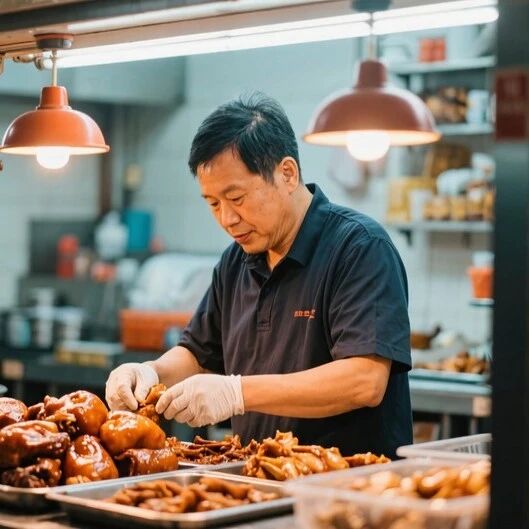
卤味行业困境:“卖得少、店变少”
3 6 Ke· 2025-09-26 03:04
Core Insights - The article highlights the significant challenges faced by the snack food industry, particularly the braised food segment, as consumer preferences shift and competition intensifies [1][3][20] Group 1: Industry Performance - The revenue of major braised food companies has declined, with companies like Juewei reporting a 13.84% drop in revenue to 6.257 billion yuan and a 34.04% decrease in net profit to 227 million yuan in 2024 [3][7] - The overall market is experiencing a downturn, with consumer traffic visibly decreasing and price sensitivity increasing among customers [3][4] - The number of stores for major brands has significantly reduced, with Juewei closing over 5,000 stores from 2024, marking a 32% decrease [9][11] Group 2: Cost and Competition - Rising operational costs, including rent and labor, have pressured profit margins, with average monthly profits for small store owners dropping to around 3,000 yuan [4][22] - Intense competition has led to price wars, with some stores offering discounts that smaller franchisees cannot match [6][22] - The industry is facing severe homogenization, with over 70% similarity in product offerings, leading to a decline in profit margins [22] Group 3: Consumer Behavior - Consumer preferences are shifting towards more affordable options, with nearly 60% of consumers indicating they would reduce their purchase frequency due to high prices [20][24] - The perception of braised food as overpriced has become prevalent, with social media discussions highlighting the lack of value for money [12][14] - The trend of DIY cooking at home is gaining traction, as consumers seek to save money and control flavors, further impacting traditional sales [22][24] Group 4: Strategic Adjustments - Industry experts suggest that companies need to refocus on value for money to regain consumer trust and market share [24] - There is a call for innovation in product offerings to meet the evolving tastes of younger consumers while maintaining classic product advantages [24] - The future of the industry may depend on how well companies can redefine their relationship with consumers in a changing market landscape [24]
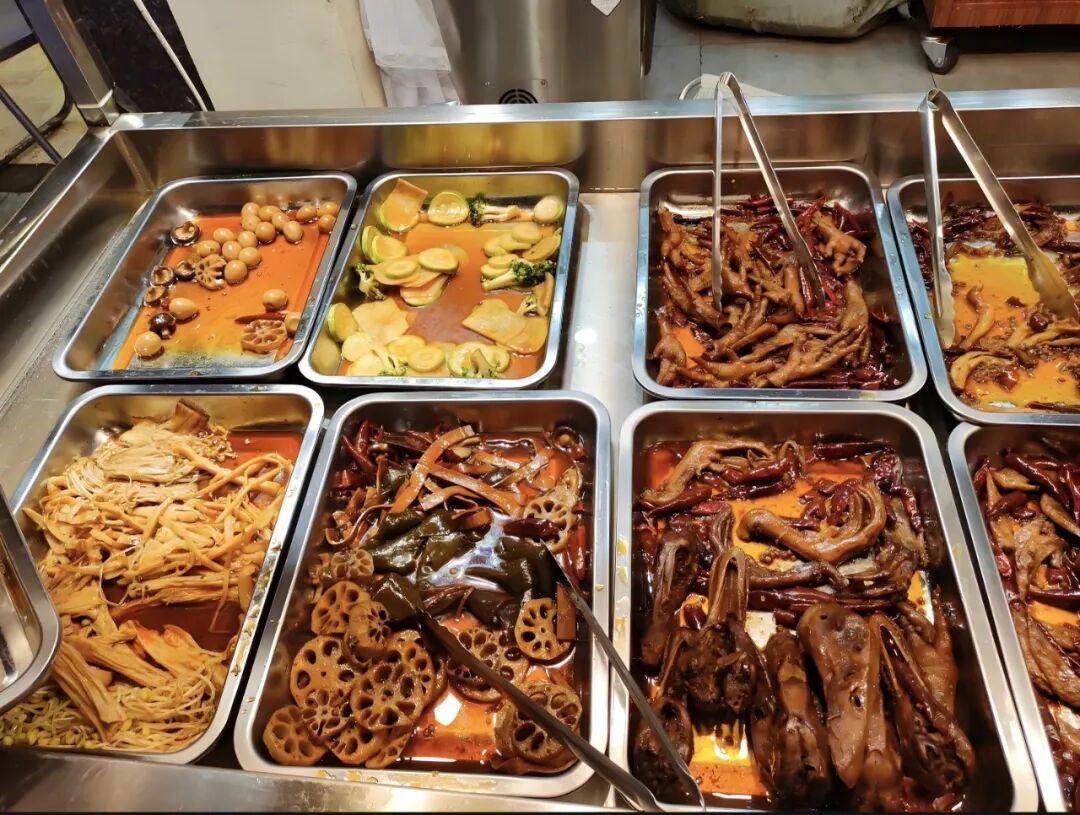
卤味生意,真的不好做了
Hu Xiu· 2025-09-26 02:48
Core Insights - The industry is facing significant challenges, with rising costs and decreasing consumer demand leading to reduced profits for operators and major brands alike [1][4][10] Group 1: Industry Performance - The revenue of major brands like Juewei, Zhou Hei Ya, and Huang Shang Huang has declined, with Juewei's revenue dropping by 13.84% to 6.257 billion yuan in 2024, and net profit down 34.04% to 227 million yuan [4][12] - The overall market is experiencing a downturn, with many small operators like Wang Lei reporting a significant drop in daily sales and profit margins [5][7] - The number of stores for major brands is decreasing sharply, with Juewei closing 5,112 stores, a 32% reduction from its peak [16][19] Group 2: Consumer Behavior - Consumers are increasingly sensitive to prices, with 47.2% indicating they would reduce purchases if prices rise by over 10% [25] - There is a shift in consumer preference towards purchasing ready-to-eat products from supermarkets, which offer lower prices and guaranteed quality [8][9] - The perception of high prices has led to a decline in consumer interest, with many referring to the brands as "expensive" and "not worth it" [23][24][29] Group 3: Competitive Landscape - The industry is experiencing severe homogenization, with over 70% similarity in product offerings among competitors, leading to price wars and reduced profit margins [42] - Major brands are opting for high pricing strategies to maintain profit margins rather than competing on volume, which is causing a loss of consumer loyalty [21][30] - The competitive environment is intensifying, with many new entrants and local shops contributing to market saturation [5][6][39] Group 4: Cost Pressures - Rising operational costs, including rent and labor, are putting additional pressure on profit margins, with costs increasing by 8% to 10% annually [41] - The cost structure of these businesses is heavily influenced by raw material prices, which account for 70% to 80% of total costs [28][29] Group 5: Future Outlook - The industry is at a critical juncture, with a need for brands to adapt to changing consumer preferences and market conditions [46][47] - There is a call for brands to return to a value-driven approach, focusing on quality and affordability to regain consumer trust [45][47] - The potential for innovation and new product development is highlighted as essential for survival in a rapidly changing market [45][46]
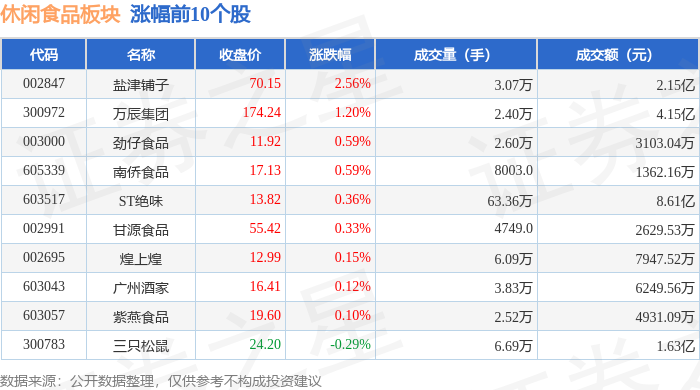
休闲食品板块9月25日涨0.74%,盐津铺子领涨,主力资金净流出828.39万元
Zheng Xing Xing Ye Ri Bao· 2025-09-25 08:37
Group 1 - The leisure food sector increased by 0.74% on September 25, with Yan Jin Pu Zi leading the gains [1] - The Shanghai Composite Index closed at 3853.3, down 0.01%, while the Shenzhen Component Index closed at 13445.9, up 0.67% [1] - Key stocks in the leisure food sector showed varied performance, with Yan Jin Pu Zi closing at 70.15, up 2.56% [1] Group 2 - The leisure food sector experienced a net outflow of 8.28 million yuan from main funds, while retail investors saw a net inflow of 22.61 million yuan [2] - Major stocks like Wan Chen Group had a net inflow of 34.23 million yuan from main funds, but a net outflow from retail and speculative funds [3] - The overall trend indicates a mixed sentiment among different types of investors within the leisure food sector [2][3]




“宠物经济”发展驶入快车道 多地释放政策红利
Zhong Guo Zheng Quan Bao· 2025-09-24 23:17
Core Insights - The "pet economy" in China is experiencing rapid growth, with policies and activities being launched to support this sector, leading to increased interest in related stocks [1] - The market size of China's pet industry has grown significantly, from 97.8 billion yuan in 2015 to 592.8 billion yuan in 2023, with a compound annual growth rate (CAGR) of 25.4% [2] - By 2025, the market is expected to reach 811.4 billion yuan, and projections suggest it could reach 1.15 trillion yuan by 2028 [2] Industry Growth Dynamics - The pet market is driven by strong demand, with a variety of companies emerging to focus on pet-related products and services [2] - Key segments such as pet food, healthcare, and cleaning products are currently the largest and fastest-growing areas within the market [3] - There is still significant room for growth in the pet industry, with potential for market size to double in the coming years [3] Policy Support - Local governments are increasingly providing policy support to boost the pet economy, with initiatives aimed at encouraging traditional industries to engage in pet product development [3][4] - Specific regions, such as Wuxi and Anhui, are implementing measures to enhance the pet economy, including promoting technological innovation and e-commerce in the sector [3] Corporate Activities - Several listed companies are actively investing in the pet sector, with notable acquisitions and the establishment of subsidiaries focused on pet food and products [5][6] - Companies like Huang Shang Huang and Three Squirrels are making strategic investments to expand their presence in the pet food market [5] - Jinhe Biological has launched a pet-focused app, indicating a trend towards integrating technology with pet care services [6]



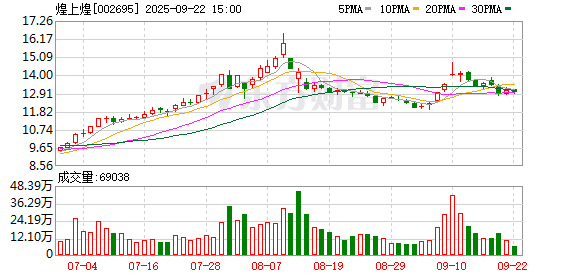
煌上煌涨2.10%,成交额5309.09万元,主力资金净流出276.38万元
Xin Lang Cai Jing· 2025-09-24 05:30
Core Viewpoint - Jiangxi Huangshanghuang Group Food Co., Ltd. has shown a significant stock price increase of 56.06% year-to-date, despite a recent slight decline in the last five trading days [1][2]. Group 1: Stock Performance - As of September 24, the stock price of Huangshanghuang rose by 2.10% to 13.14 CNY per share, with a total market capitalization of 7.351 billion CNY [1]. - The stock has experienced a trading volume of 53.09 million CNY, with a turnover rate of 0.80% [1]. - Year-to-date, the stock has seen a 56.06% increase, with a 1.79% decline in the last five trading days, a 6.57% increase over the last 20 days, and a 32.33% increase over the last 60 days [1]. Group 2: Financial Performance - For the first half of 2025, Huangshanghuang reported operating revenue of 984 million CNY, a year-on-year decrease of 7.19%, while net profit attributable to shareholders increased by 26.90% to 76.92 million CNY [2]. - The company has distributed a total of 518 million CNY in dividends since its A-share listing, with 169 million CNY distributed over the past three years [3]. Group 3: Shareholder Information - As of September 19, the number of shareholders decreased by 9.18% to 37,500, with an average of 13,648 circulating shares per person, an increase of 10.10% [2]. - The eighth largest circulating shareholder is Hong Kong Central Clearing Limited, which holds 1.4452 million shares as a new shareholder [3].
煌上煌最新股东户数环比下降9.18%
Zheng Quan Shi Bao Wang· 2025-09-22 10:15
Core Viewpoint - The company, Huangshanghuang, reported a decrease in the number of shareholders and a decline in stock price, while showing an increase in net profit for the first half of the year despite a drop in revenue [2]. Shareholder and Stock Performance - As of September 20, the number of shareholders for Huangshanghuang was 37,464, a decrease of 3,785 from the previous period (September 10), representing a decline of 9.18% [2]. - The closing price of Huangshanghuang on the reporting date was 12.97 yuan, down 0.92%, with a cumulative decline of 7.62% since the concentration of shares began [2]. - The stock experienced 3 days of increase and 5 days of decrease during this period [2]. Financing and Margin Data - As of September 19, the latest margin trading balance for the stock was 231 million yuan, with a financing balance of 230 million yuan. The financing balance increased by 15.397 million yuan during the concentration period, reflecting a growth of 7.17% [2]. Financial Performance - In the first half of the year, the company achieved operating revenue of 984 million yuan, a year-on-year decrease of 7.19%. However, net profit reached 76.9199 million yuan, marking a year-on-year increase of 26.90% [2]. - The basic earnings per share were 0.1380 yuan, and the weighted average return on equity was 2.76% [2].
卤味三巨头 最近“不太香”
Shen Zhen Shang Bao· 2025-09-22 05:56
Core Insights - The three major brands in the marinated food industry, namely Juewei, Huangshanghuang, and Zhouheiya, have reported a decline in revenue for the first half of 2025, indicating a challenging market environment [2][3] Group 1: Revenue Performance - Juewei Foods achieved a revenue of 2.82 billion yuan, a year-on-year decrease of 15.57%, with a net profit of 175 million yuan, down 40.71% [2] - Huangshanghuang reported a revenue of 984 million yuan, a decline of 7.19%, but its net profit increased by 26.9% to 76.92 million yuan [2] - Zhouheiya's revenue was 1.22 billion yuan, down 2.9%, while its net profit surged by 228% to 108 million yuan [2] Group 2: Market Challenges - Juewei is facing growth slowdown due to market saturation after previously relying on a nationwide store network and diverse product lines [2] - Huangshanghuang is experiencing challenges from a reduction in store numbers and declining single-store revenue despite profit growth [2] - Zhouheiya has optimized its operations by closing inefficient stores, leading to a decrease in total revenue but an increase in average single-store sales and net profit [2] Group 3: Emerging Competitors - New brands such as Wang Xiaolu and others are gaining market share, leveraging innovative marketing and extending consumption scenarios [3] - The rise of "hot marinated" products is attracting consumers with fresh, made-to-order experiences, contrasting with traditional "cold marinated" offerings [3] Group 4: Strategic Responses - Juewei is focusing on expanding consumption scenarios and appealing to younger consumers through frequent new product launches [4] - Huangshanghuang is seeking growth through cross-industry expansion, including acquiring a stake in a freeze-dried food company [4] - Zhouheiya is enhancing operational efficiency and service across all time periods, aiming to create a conversion loop from content marketing to in-store visits [4] Group 5: Market Outlook - The marinated food industry in China is projected to grow at a compound annual growth rate of 5.93%, reaching a market size of 356.96 billion yuan by 2024 [4] - The competition in the marinated food market is intensifying, signaling a critical point for industry restructuring and growth opportunities [4]
休闲食品板块9月19日涨0.15%,煌上煌领涨,主力资金净流出9664.43万元
Zheng Xing Xing Ye Ri Bao· 2025-09-19 08:47
Market Overview - The leisure food sector increased by 0.15% on September 19, with Huang Shang Huang leading the gains [1] - The Shanghai Composite Index closed at 3820.09, down 0.3%, while the Shenzhen Component Index closed at 13070.86, down 0.04% [1] Stock Performance - Key stocks in the leisure food sector showed varied performance, with Huang Shang Huang closing at 13.09, up 1.87%, and Yan Jin Pu Zi at 70.65, up 1.02% [1] - Other notable performers included Wan Chen Group at 171.55, up 0.88%, and Gan Yuan Food at 56.57, up 0.73% [1] Trading Volume and Value - Trading volumes and values varied across stocks, with Huang Shang Huang achieving a trading volume of 107,400 hands and a transaction value of 141 million yuan [1] - Yan Jin Pu Zi had a trading volume of 21,900 hands and a transaction value of 154 million yuan [1] Capital Flow - The leisure food sector experienced a net outflow of 96.64 million yuan from main funds, while retail funds saw a net inflow of 38.04 million yuan [2] - Speculative funds had a net inflow of 58.61 million yuan [2] Individual Stock Capital Flow - Mai Qu Er had a main fund net inflow of 8.86 million yuan, with a retail net outflow of 14.43 million yuan [3] - Huang Shang Huang saw a main fund net inflow of 6.67 million yuan, but a retail net outflow of 7.37 million yuan [3] - Other stocks like Tao Li Bread and Hei Zhi Ma also showed mixed capital flows, indicating varied investor sentiment [3]

煌上煌涨2.41%,成交额6660.11万元,主力资金净流入300.19万元
Xin Lang Zheng Quan· 2025-09-19 03:24
Group 1 - The stock price of Jiangxi Huangshanghuang Group Food Co., Ltd. increased by 2.41% on September 19, reaching 13.16 yuan per share, with a total market capitalization of 7.363 billion yuan [1] - The company has seen a year-to-date stock price increase of 56.29%, with a recent decline of 3.73% over the last five trading days [1] - As of September 10, the number of shareholders increased by 13.74% to 41,200, while the average circulating shares per person decreased by 12.08% to 12,396 shares [2] Group 2 - The main business revenue composition of Huangshanghuang includes fresh products (60.71%), rice products (31.67%), slaughter processing (4.12%), packaging products (1.97%), and others (1.49%) [2] - For the first half of 2025, the company reported operating revenue of 984 million yuan, a year-on-year decrease of 7.19%, while net profit attributable to the parent company was 76.92 million yuan, a year-on-year increase of 26.90% [2] - The company has distributed a total of 518 million yuan in dividends since its A-share listing, with 169 million yuan distributed over the past three years [3]