
ZHENGZHOU BANK(002936)

Search documents
银行继续飙涨,四大行批量突破,百亿银行ETF(512800)连续创新高,年内涨超18%登顶行业涨幅王!
Xin Lang Ji Jin· 2025-07-10 05:35
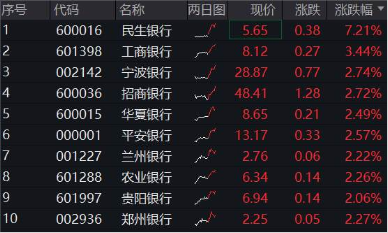
Group 1 - The banking sector continues to rise, with major banks such as ICBC, ABC, and others breaking previous highs and setting new records [1] - Minsheng Bank leads the gains with an increase of over 7%, while other banks like ICBC and CMB also show significant growth [1][2] - The Bank ETF (512800) has reached a new high since its listing, with a trading volume of 570 million yuan, indicating strong market activity [2] Group 2 - As of July 9, the Bank ETF (512800) has a fund size exceeding 12.8 billion yuan, making it the largest and most liquid among the 10 bank ETFs in the market [4] - The Bank ETF tracks the CSI Bank Index, which has seen a cumulative increase of 18.24% this year, outperforming both the CSI 300 and SSE Composite Index by 16.8 and 14.02 percentage points respectively [4][5] - Analysts suggest viewing the current bank stock rally as the beginning of a long-term trend, driven by low interest rates and the revaluation of RMB assets [5] Group 3 - Investors looking for cost-effective exposure to the banking sector are encouraged to consider the Bank ETF (512800) and its associated funds [6] - The Bank ETF passively tracks the CSI Bank Index, which includes 42 listed banks in A-shares, serving as an efficient investment tool for the overall banking sector [6]





飙涨!飙涨!再创新高
中国基金报· 2025-07-10 04:56
Market Overview - The A-share market experienced slight fluctuations, with the Shanghai Composite Index rising by 0.36% and the Shenzhen Component Index increasing by 0.02%, while the ChiNext Index fell by 0.3% [1][2] - The total trading volume across the market was 934.47 billion CNY, showing a slight decrease compared to the previous day [2] Rare Earth Sector - The rare earth sector saw significant gains, with Northern Rare Earth hitting the daily limit, closing at 27.01 CNY per share, and achieving a total market capitalization of 97.6 billion CNY [5][6] - Northern Rare Earth announced a projected net profit of 900 million to 960 million CNY for the first half of 2025, representing an increase of 1882.54% to 2014.71% year-on-year [8] - The company’s market value increased by 17.34% in the first half of the year, making it the largest in the rare earth permanent magnet industry [8] Banking Sector - Bank stocks continued to rise, with Minsheng Bank leading the gains, increasing by over 5% [10] - Major banks such as Industrial and Commercial Bank of China, Agricultural Bank of China, and China Construction Bank reached historical highs [10][12] - Analysts noted that bank stocks exhibit "weak cycle" characteristics, with stable dividend yields becoming increasingly attractive in a declining risk-free interest rate environment [16] Pharmaceutical Sector - The pharmaceutical sector, particularly innovative drug stocks, showed strong performance, with several companies hitting the daily limit [18] - Analysts highlighted that the innovative drug market is entering a phase of significant growth, driven by new product launches and expanding international market opportunities [18]





慷慨派息!工商银行、建设银行去年分红总额超千亿
Sou Hu Cai Jing· 2025-07-10 04:32
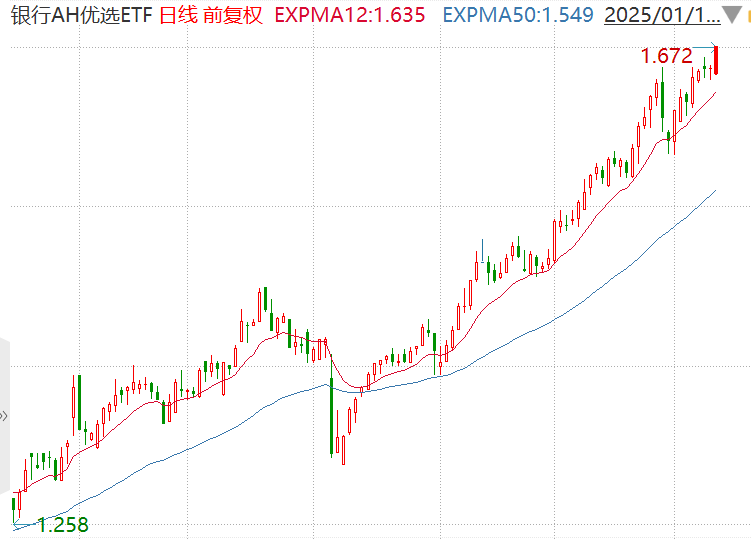
Group 1 - The banking sector continues to show strength, with major banks like Bank of China, Agricultural Bank of China, Industrial and Commercial Bank of China, and others reaching historical highs on July 10 [1] - The Bank AH Preferred ETF (517900) has seen a net inflow of 610 million yuan since the beginning of the year, with a share increase of 474%, leading among bank ETFs [3] - The total dividend payout for the 2024 fiscal year from major banks is expected to exceed 620 billion yuan, with significant contributions from the four major banks [4][5] Group 2 - Southbound funds have been actively purchasing bank stocks, with a net buy of 9.256 billion HKD on July 9, indicating strong demand [7][8] - The net buying amounts from southbound funds over the past month, three months, and year are 26.3 billion yuan, 75.5 billion yuan, and 211.5 billion yuan respectively, leading among all sectors [9] - Analysts suggest that the current banking stock market reflects a trend of value reassessment, with expectations of stable fundamentals supporting continued institutional investment [9] Group 3 - The Bank AH Index, which includes both A-shares and H-shares, has shown a cumulative increase of 101.8% since its inception, outperforming other indices [11][13] - The H-shares of 14 banks have higher dividend yields compared to their A-share counterparts, indicating a "higher yield, lower valuation" phenomenon [10][11] - The banking sector is characterized by a "weak cycle" in both fundamentals and investment, with stable dividend yields providing attractive investment opportunities [4][6]


郑州银行:今年上半年唯一下跌的银行股
凤凰网财经· 2025-07-09 13:28
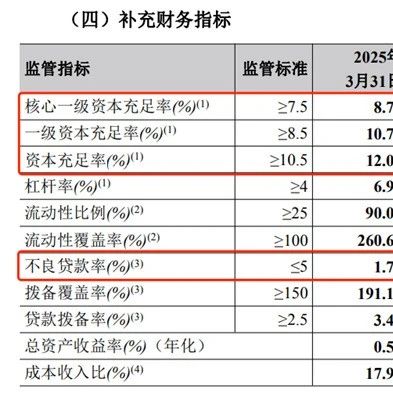
Core Viewpoint - Zhengzhou Bank's stock performance has been underwhelming compared to its peers, with a year-to-date increase of only 3.81%, placing it at the bottom among 42 A-share listed banks. Despite recent gains, the bank's overall performance remains a concern due to low dividend rates and high non-performing loan ratios [1][2][8]. Group 1: Stock Performance - As of July 8, 2023, Zhengzhou Bank's stock rose by 0.46% to 2.18 yuan, marking three consecutive days of increases [1]. - In the first half of 2023, Zhengzhou Bank was the only bank among 42 A-share banks to report a decline, with a year-to-date drop of -1.9% as of June 30 [2]. - Other banks, such as Shanghai Pudong Development Bank, saw significant increases, with a year-to-date rise of 38.29% [2]. Group 2: Dividend Policy - Zhengzhou Bank's dividend payout ratio is the lowest among A-share banks, with a proposed cash dividend of 0.20 yuan per 10 shares, translating to a total payout of approximately 182 million yuan and a dividend rate of 9.69% for 2024 [8][9]. - The bank's low dividend rate is attributed to factors such as narrowing interest margins, regulatory constraints, and a focus on retaining earnings to enhance capital adequacy [9]. - This year marks the first dividend distribution in five years, with the last being in 2019 when the bank distributed 1 yuan per 10 shares [9]. Group 3: Asset Quality - Zhengzhou Bank reported a non-performing loan (NPL) ratio of 1.79% as of the end of 2024, which is above the industry average of 1.5% and ranks second highest among A-share banks [11][12]. - The bank's NPL balance stood at 6.923 billion yuan, with significant concentrations in the real estate sector, which saw an increase in NPL ratio from 6.48% in 2023 to 9.55% in 2024 [12][13]. - The bank's financial performance showed a decline in operating income by 5.78% year-on-year to 12.877 billion yuan, while net profit increased slightly by 1.39% to 1.876 billion yuan [10][11]. Group 4: Management Changes - In early 2023, Zhengzhou Bank appointed a new president, Li Hong, while experiencing a wave of resignations among senior executives, raising concerns among investors [15][17]. - The bank attributed the high turnover to normal market dynamics and a strategic focus on optimizing governance structures [17]. Group 5: Regulatory Compliance - Despite facing challenges, Zhengzhou Bank has not received any regulatory fines in 2023, a significant improvement from previous years when it faced multiple penalties totaling over 2.8 million yuan [18]. - The bank has implemented measures to enhance compliance and has reduced executive salaries as part of its strategy to improve performance [18].
浦发银行涨超34% 郑州银行逆势下跌
Nan Fang Du Shi Bao· 2025-07-08 23:16
Core Viewpoint - The banking sector in China has shown significant performance, with the China Securities Banking Index achieving a 34.7% increase in 2024, leading all industry indices, and a further 13% rise in the first half of 2025, driven by improved fundamentals and market preferences for stable investments [4][6]. Group 1: Performance Metrics - The China Securities Banking Index had a dividend yield of approximately 5.2% as of June, contrasting with declining deposit rates [8]. - In the first half of 2025, the banking sector saw a 17.6% increase, with the share prices of major banks like Shanghai Pudong Development Bank and Qingdao Bank rising over 30% [6][7]. - Among the six major state-owned banks, Agricultural Bank of China led with a 12.7% increase, while Postal Savings Bank lagged with only a 1% rise [5]. Group 2: Investment Trends - Insurance funds have become a significant source of investment in bank stocks, with 23 A-share listed banks having insurance capital as major shareholders [9]. - Analysts suggest that the high dividend yields of bank stocks continue to attract stable capital inflows, despite some recent volatility in stock prices [4][10]. - The market is currently evaluating the sustainability of high dividend yields, focusing on profitability, valuation, and dividend stability [10]. Group 3: Market Dynamics - The banking sector has experienced internal differentiation, with state-owned banks showing varied performance; while some have maintained strong growth, others have seen declines [4][6]. - The recent increase in capital for state-owned banks has led to concerns about short-term impacts on dividend yields and earnings per share [5]. - The overall sentiment in the market remains cautious, with investors weighing the benefits of high dividends against potential valuation pressures [9][10].


A股,新信号!
Zheng Quan Shi Bao· 2025-07-08 11:39
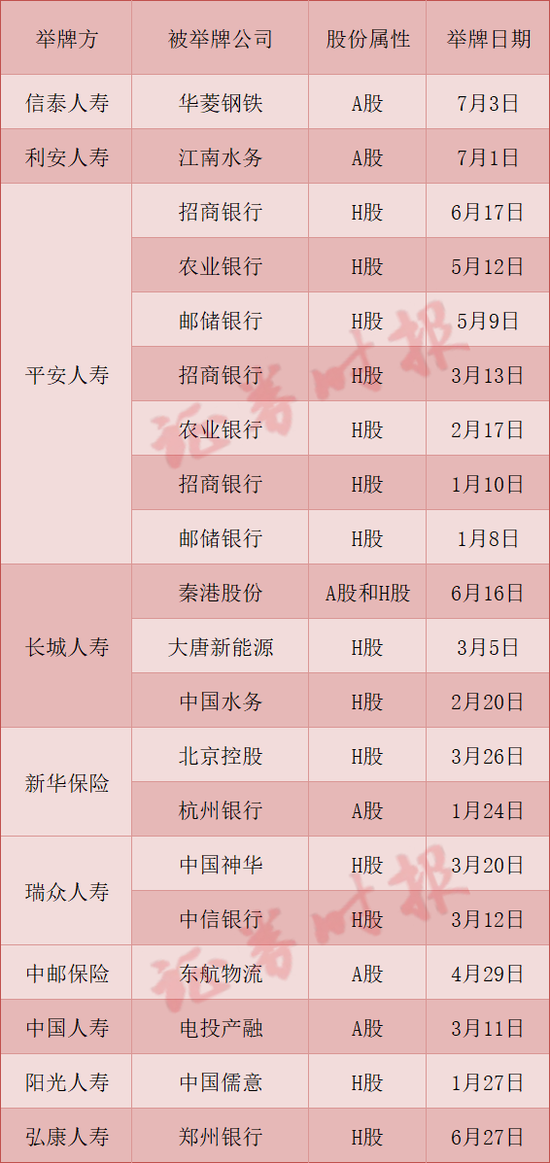
Group 1 - Insurance capital has become a significant force in the capital market, with at least 20 instances of shareholding increases in A-shares and H-shares this year, primarily targeting stable dividend-paying assets like banks and public utilities [1][2] - Recent announcements indicate that Li'an Life and Xintai Life have increased their holdings in Jiangnan Water and Hualing Steel, respectively, with Li'an Life acquiring 46.99 million shares (5.03% of total shares) and Xintai Life acquiring 343 million shares (5.00% of total shares) [2][3] - The trend of insurance capital actively participating in shareholding increases is attributed to a low interest rate environment, leading to a search for stable cash flow and strong performance companies [1][6] Group 2 - The increase in shareholding by insurance capital is seen as a response to "asset scarcity," with a focus on high-dividend equities to enhance returns and offset the pressure from low fixed-income asset yields [6][7] - Regulatory changes, such as adjustments to the equity asset ratio for insurance funds, have facilitated greater participation of insurance capital in the equity market, creating favorable conditions for shareholding increases [6][7] - The rise in shareholding activities is viewed as a positive signal for the long-term development of the capital market, potentially enhancing investor confidence and attracting more capital [7][8] Group 3 - The participation of various capital types, including financial capital, industrial capital, and private equity, in shareholding increases reflects a positive outlook on the long-term performance of the companies involved [7][8] - The concentration of insurance capital in high-dividend sectors, particularly banks, raises concerns about potential systemic risks due to high industry concentration [7][8] - Future strategies for insurance capital may involve diversifying into less cyclical and more diversified high-dividend sectors to balance returns and risks [8]


A股,新信号!
证券时报· 2025-07-08 11:28
Core Viewpoint - Insurance capital has become a significant force in the capital market, actively acquiring shares in A-share and H-share listed companies, particularly in stable dividend-paying sectors like banking and public utilities [1][5][12]. Group 1: Insurance Capital Activity - Insurance capital has made at least 20 acquisitions of listed companies this year, focusing on stable cash flow and dividend-yielding assets [1][5]. - Recent notable acquisitions include Li'an Life increasing its stake in Jiangnan Waterworks by 46.99 million shares (5.03%) and Xintai Life acquiring 343 million shares (5.00%) of Hualing Steel [4][5]. - Hongkang Life has also increased its stake in Zhengzhou Bank, reaching 6.68% after multiple acquisitions [4]. Group 2: Market Environment and Strategy - The current low-interest-rate environment has led funds to seek companies with stable cash flows and strong performance as optimal investment choices [2][14]. - The "asset shortage" phenomenon has intensified, pushing insurance capital to invest in high-dividend equities to enhance returns and offset the pressure from fixed-income assets [14][20]. - Regulatory changes, such as adjustments to insurance capital investment ratios, have facilitated greater participation of insurance funds in equity markets [13][12]. Group 3: Broader Participation - Besides insurance capital, other entities like Asset Management Companies (AMCs) and private equity firms have also engaged in share acquisitions [7][8][9]. - The involvement of various capital types, including financial and industrial capital, reflects a positive outlook on the long-term development of the capital market [17]. Group 4: Market Impact and Future Outlook - Increased share acquisitions serve as a market confidence booster, attracting more capital and promoting a virtuous cycle in the market [19]. - The concentration of insurance capital in specific sectors, particularly banking, raises concerns about potential systemic risks due to high industry concentration [20][21]. - Future strategies may involve diversifying investments into less cyclical and higher-dividend sectors to balance risk and return [21].

弘康人寿在港举牌郑州银行 年内已有6家银行获险资青睐
2 1 Shi Ji Jing Ji Bao Dao· 2025-07-08 08:16
Core Viewpoint - The insurance sector is increasingly engaging in shareholding activities, with a notable rise in the number of stakes taken in listed companies, driven by low interest rates and policy guidance [1][4]. Group 1: Insurance Companies' Shareholding Activities - Hongkang Life Insurance recently increased its stake in Zhengzhou Bank H-shares, raising its ownership from 4.75% to 5.55% after purchasing 16 million shares at a price of HKD 1.2068 per share, totaling HKD 19.31 million [2]. - Following this, Hongkang Life further increased its stake to 6.68% by acquiring an additional 23 million shares at HKD 1.1804 per share, amounting to HKD 27.14 million [2]. - The total number of banks in which insurance funds have taken stakes has reached six, including major banks like China Merchants Bank and Agricultural Bank of China [2][4]. Group 2: Investment Trends and Motivations - Analysts suggest that the preference for bank stocks is due to their low volatility, high dividends, and low valuations, making them attractive to insurance funds [4]. - The trend of insurance companies increasing their stakes is expected to continue, as they seek stable cash returns through high-dividend stocks in a low-interest-rate environment [4]. - The recent surge in shareholding activities is also linked to the need for insurance companies to enhance their return on equity (ROE) through strategic investments in quality banks [4]. Group 3: Recent Shareholding Movements - On July 3, Xintai Life Insurance acquired 3.45 million shares of Hualing Steel, bringing its total stake to 5% [5]. - Li'an Life Insurance increased its stake in Jiangnan Waterworks to 5.03% by purchasing 110,000 shares, indicating a long-term investment strategy [7]. - Changcheng Life Insurance also made headlines by acquiring shares in Qindao Port, raising its stake to 5.0005% [8].
郑州银行数字化转型结硕果 “华鹰奖”双奖彰显创新实力
Sou Hu Cai Jing· 2025-07-08 03:36
河南日报客户端记者 李鹏 据了解,此次获奖是郑州银行全面拥抱数字化转型战略的结果。作为响应做好金融"五篇大文章" 的重 要举措,郑州银行将数字金融确立为核心战略方向, 2024年12月启动数字化转型以来,秉持 "对外客户 体验第一、对内效率第一" 的理念,将数字化深度融入零售、对公、风控等核心业务条线,以科技引领 重塑业务流程、以数据驱动赋能精准营销、智能风控及场景金融创新,为高质量发展和区域经济活力提 升注入了强劲动能。 零售转型:深耕细作显成效 卓越的财富管理实践成效,接连赢得多项荣誉,郑州银行在前不久揽获普益标准第五届金誉奖"卓越投 资回报银行""卓越转型发展银行"及"卓越银行财富品牌"三项殊荣,理财产品荣膺"优秀混合类银行理财 产品"奖项;第三届联合智评金蟾奖"理财人气奖";2025第七届零售银行领导者年会金鼎奖"年度最佳零 售银行数字化转型奖"。 近日,郑州银行在第十届亚太银行发展创新大会上一举斩获"2025 年零售银行奖"和"2025 年场景金融创 新奖" 两大奖项。这一殊荣不仅是对其在零售银行和场景金融领域数字化转型成果的高度肯定,更彰显 了业界对郑州银行以科技驱动金融创新的广泛认可。 场景金融 ...
险资再买银行股,弘康人寿举牌郑州银行
Huan Qiu Lao Hu Cai Jing· 2025-07-07 08:40
Group 1 - Hongkang Life Insurance increased its stake in Zhengzhou Bank's H-shares by acquiring a total of 39 million shares, raising its ownership from 4.75% to 6.68%, triggering the mandatory disclosure requirement [1] - The total investment for this acquisition was 46.46 million HKD, with 19.31 million HKD spent on June 27 for 16 million shares at 1.2068 HKD per share, and 27.14 million HKD on June 30 for 23 million shares at 1.1804 HKD per share [1] - Zhengzhou Bank's financial performance has been declining, with operating revenues dropping from 145.8 billion CNY in 2020 to 128.8 billion CNY in 2024, and net profits decreasing from 31.68 billion CNY to 18.76 billion CNY during the same period [1] Group 2 - In 2024, Zhengzhou Bank reported a turnaround with a 1.39% increase in net profit, ending a three-year streak of negative growth [2] - For Q1 2025, Zhengzhou Bank continued its growth trend, achieving operating revenue of 3.48 billion CNY, a 2.10% year-on-year increase, and net profit of 1.02 billion CNY, up 4.98% [2] - Zhengzhou Bank announced a cash dividend of 0.20 CNY per 10 shares for the 2024 fiscal year, totaling 182 million CNY, marking its first dividend distribution in five years [2] Group 3 - The price ratio between Zhengzhou Bank's H-shares and A-shares is currently at 0.53, indicating a competitive advantage in terms of value compared to other A + H-share banks [2] - There has been a notable trend of insurance capital increasing stakes in bank stocks, with 13 instances of insurance companies acquiring H-shares of Chinese banks since the end of 2024 [2] - The banking sector is characterized by high dividend yields, ranking third among all industries, with a persistent premium over the risk-free rate represented by 10-year government bonds [3]