
PharmaBlock Sciences (Nanjing) (300725)

Search documents
药石科技(300725) - 2026年第一次临时股东会决议公告
2026-02-02 10:28
本公司及董事会全体成员保证信息披露的内容真实、准确、完整,没有虚 假记载、误导性陈述或重大遗漏。 特别提示: 证券代码:300725 证券简称:药石科技 公告编号:2026-005 南京药石科技股份有限公司 2026 年第一次临时股东会决议公告 1、本次股东会召开期间没有增加、否决或变更议案情况发生; 2、本次股东会不涉及变更前次股东会决议; 3、本次股东会采取现场投票和网络投票相结合的方式召开。 一、会议召开和出席情况 (一)会议召开情况 1、现场会议召开日期和时间:2026 年 2 月 2 日(星期一)14:00。 2、网络投票日期和时间:2026年2月2日(星期一),其中通过深圳证券交 易所交易系统进行网络投票的具体时间为2026年2月2日9:15-9:25、9:30-11:30和 13:00-15:00;通过深圳证券交易所互联网投票系统投票的具体时间为2026年2月2 日9:15-15:00。 3、现场会议地点:江苏省南京市江北新区华盛路 81 号公司 A 楼会议室。 4、会议召开方式:现场投票与网络投票相结合。 5、会议召集人:公司董事会。 6、会议主持人:董事长杨民民先生。 通过网络投票的股东 2 ...
药石科技(300725) - 药石科技2026年第一次临时股东会法律意见书
2026-02-02 10:28
北京市东城区建国门内大街 26 号新闻大厦 7 层、8 层 电话:010-88004488/66090088 传真:010-66090016 邮编:100005 北京国枫律师事务所 关于南京药石科技股份有限公司 2026 年第一次临时股东会的 法律意见书 国枫律股字[2026]A0036 号 致:南京药石科技股份有限公司(贵公司) 北京国枫律师事务所(以下简称"本所")接受贵公司的委托,指派律师出席并见 证贵公司 2026 年第一次临时股东会(以下简称"本次会议")。 本所律师根据《中华人民共和国公司法》(以下简称"《公司法》")、《中华人 民共和国证券法》(以下简称"《证券法》")、《上市公司股东会规则》(以下简称 "《股东会规则》")、《律师事务所从事证券法律业务管理办法》(以下简称"《证券法律 业务管理办法》")、《律师事务所证券法律业务执业规则(试行)》(以下简称"《证券法 律业务执业规则》")等相关法律、行政法规、规章、规范性文件及《南京药石科技股份 有限公司章程》(以下简称"《公司章程》")的规定,就本次会议的召集与召开程序、 召集人资格、出席会议人员资格、会议表决程序及表决结果等事宜,出具本法律 ...
CXO行业系列专题报告(3):小核酸突围,大服务赋能
Guoxin Securities· 2026-02-01 07:44
Investment Rating - The report maintains an "Outperform" rating for the industry [1] Core Insights - The small nucleic acid drug market is experiencing robust growth, transitioning from technology validation to accelerated commercialization, with a global market size increasing from $2.7 billion in 2019 to $4.6 billion in 2023, and projected to reach $45.7 billion by 2033, reflecting a CAGR of 26.08% [2][39] - The small nucleic acid CXO sector is benefiting from technological breakthroughs and commercialization acceleration, establishing a comprehensive CRDMO service system [2] - Key players in the small nucleic acid field include CROs with core technologies and rich project experience, such as Chengdu XianDai and Kanglong Chemical, and CDMOs with leading production capabilities like WuXi AppTec and Kailai Ying [2] Summary by Sections 1. Small Nucleic Acid Drugs - Small nucleic acid drugs encompass various types, including ASO, siRNA, and aptamers, which target gene expression for disease treatment [11][12] - These drugs offer advantages such as shorter development cycles, broad therapeutic areas, sustained efficacy, and higher success rates compared to traditional drugs [15][16] 2. Market Expansion and BD Activity - The small nucleic acid market is expanding, with significant BD transactions occurring, including a $9 billion collaboration between Wobang Pharmaceutical and Novartis, and a $2 billion platform authorization between Rebio and Boehringer Ingelheim [48] - Domestic companies are actively developing drugs targeting hyperlipidemia, hypertension, and hepatitis B, with notable progress in clinical stages [45][47] 3. CXO Empowerment in Small Nucleic Acid R&D - The CXO industry is crucial for supporting the R&D and production of small nucleic acid drugs, with a focus on enhancing delivery technologies and chemical modifications to improve drug stability and efficacy [22][26]



基金持仓重回底部,建议持续加配医药底部资产
ZHONGTAI SECURITIES· 2026-01-25 13:14
Investment Rating - The industry investment rating is maintained at "Overweight" [2] Core Insights - The report highlights that the pharmaceutical sector is showing resilience, with a focus on capturing opportunities from companies that can deliver on their growth potential. The report suggests that investors should continue to allocate to pharmaceutical bottom assets as fund holdings have returned to a low level [3][10] - The report indicates that the A-share funds' top ten holdings in the pharmaceutical sector account for 9.15%, a decrease of 1.93 percentage points from the previous period. Excluding pharmaceutical funds, the allocation drops to 3.43%, down 1.39 percentage points [3][10] - The report emphasizes the strong performance of certain pharmaceutical companies, particularly in innovative drugs and upstream life sciences, with notable profit growth forecasts for companies like Zhaoyan New Drug and Kangchen Pharmaceutical [3][10] Summary by Sections Market Dynamics - The pharmaceutical sector has outperformed the broader market, with a return of 6.66% compared to the CSI 300's 1.57% since the beginning of 2026, indicating a 5.10 percentage point advantage [14] - Recent performance shows a mixed trend, with pharmaceutical commercial, traditional Chinese medicine, and medical devices showing positive growth, while chemical pharmaceuticals and medical services have declined [10][14] Valuation Metrics - The current valuation of the pharmaceutical sector is at 23.3 times PE based on 2026 earnings forecasts, which is a premium of 11.3% compared to the overall A-share market (excluding financials) at approximately 21.0 times PE [17] - Using the TTM valuation method, the pharmaceutical sector is valued at 30.3 times PE, which is below its historical average of 34.9 times PE, indicating a relative premium of 11.2% over the broader market [17] Recommended Stocks - Key recommended stocks include WuXi Biologics, Sangfor Technologies, Tigermed, and others, with an average increase of 13.41% in January, outperforming the pharmaceutical sector by 6.74 percentage points [26][27] - The report notes that the top ten pharmaceutical stocks held by public funds include companies like Hengrui Medicine and WuXi AppTec, with a strong preference for innovative drugs and leading players in niche markets [3][10]


2025年中国医药研发外包(CRO)行业政策分析 药审改革推动行业发展提速【组图】
Qian Zhan Wang· 2026-01-23 09:08
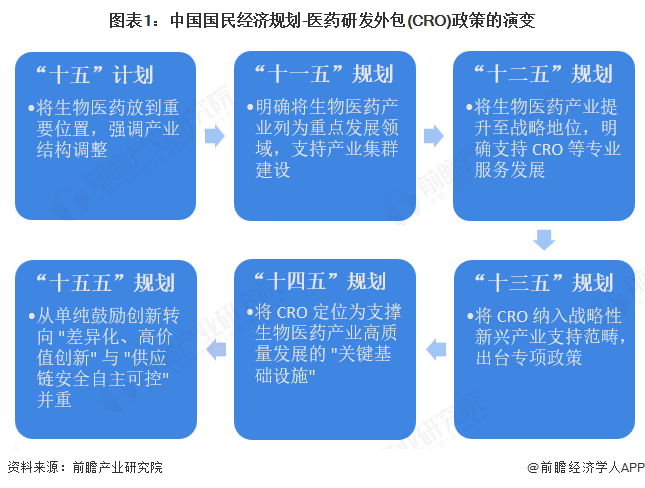
Core Viewpoint - The report highlights the significant growth and development of China's Contract Research Organization (CRO) industry, driven by a comprehensive policy framework and regulatory reforms that enhance innovation and operational efficiency in the pharmaceutical sector [1][3][9]. Group 1: Industry Overview - The main listed companies in China's CRO industry include WuXi AppTec (603259.SH), Kanglong Chemical (300759.SZ), Tigermed (300347.SZ), Kelaiying (002821.SZ), Zhaoyan New Drug (603127.SH), Jiuzhou Pharmaceutical (603456.SH), Haoyuan Pharmaceutical (688131.SH), Boteng Co., Ltd. (300363.SZ), Chengdu XianDao (688222.SH), and Yaoshi Technology (300725.SZ) [1]. - The CRO industry is recognized as a strategic emerging industry that supports pharmaceutical innovation, transitioning China from a major pharmaceutical market to a strong one [1]. Group 2: Policy Framework - The policy framework for the CRO industry is centered around the National Medical Products Administration (NMPA) and includes collaboration with other regulatory bodies such as the National Health Commission (NHC) and the Drug Administration (CDR) [3]. - Key regulatory measures include the Marketing Authorization Holder (MAH) system, implicit licensing for clinical trials, Good Laboratory Practice (GLP) and Good Clinical Practice (GCP) certifications, and priority review and approval processes [3]. Group 3: Industry Support Policies - National policies provide financial support through initiatives like the "Major New Drug Creation" program, tax reductions for high-tech enterprises, and increased deductions for R&D expenses, which lower operational costs for the industry [6]. - Local governments implement differentiated policies that align with regional industrial characteristics, including subsidies for innovative drug development and funding for CRO platform construction [6]. Group 4: Drug Review Reforms - Recent reforms in drug review processes have significantly improved approval efficiency, reducing the average clinical trial review time from 420 days to 30 days in pilot areas, and addressing a backlog of 22,000 cases [9][12]. - The definition of new drugs has shifted from "China New" to "Global New," aligning with international standards and enhancing the quality of innovation [12]. Group 5: Future Trends - The future of the CRO industry in China is expected to be driven by a robust policy framework, with trends including deeper collaboration in service models, increased application of AI and digital platforms, and a focus on specialized market segments [13]. - The competitive landscape is anticipated to evolve with the rise of domestic leaders and accelerated internationalization, benefiting from improved mechanisms for mutual recognition of clinical trial data [13].


药石科技涨2.08%,成交额1.84亿元,主力资金净流入1383.59万元
Xin Lang Cai Jing· 2026-01-21 02:55
Core Viewpoint - The stock of Yaoshi Technology has shown fluctuations in price and trading volume, with a notable increase in revenue but a decrease in net profit for the year 2025 [1][2]. Group 1: Stock Performance - On January 21, Yaoshi Technology's stock rose by 2.08%, reaching 43.67 CNY per share, with a trading volume of 1.84 billion CNY and a turnover rate of 2.11%, resulting in a total market capitalization of 10.21 billion CNY [1]. - Year-to-date, the stock price has increased by 13.25%, but it has decreased by 8.51% over the last five trading days [1]. - The stock has shown a 13.31% increase over the last 20 days and a 7.09% increase over the last 60 days [1]. Group 2: Financial Performance - For the period from January to September 2025, Yaoshi Technology reported a revenue of 1.419 billion CNY, reflecting a year-on-year growth of 25.81% [2]. - The net profit attributable to shareholders for the same period was 113 million CNY, which represents a year-on-year decrease of 13.96% [2]. Group 3: Shareholder Information - As of December 31, the number of shareholders for Yaoshi Technology was 42,500, a decrease of 1.09% from the previous period [2]. - The average number of tradable shares per shareholder increased by 1.10% to 4,770 shares [2]. - The company has distributed a total of 231 million CNY in dividends since its A-share listing, with 137 million CNY distributed over the last three years [3].
【行业深度】一文洞察2026年中国纳米微球行业发展前景及投资趋势研究报告
Sou Hu Cai Jing· 2026-01-21 02:42
Core Insights - The Chinese nanosphere industry is experiencing rapid growth, with a projected market size of approximately 4.236 billion yuan in 2024, representing a year-on-year increase of 5.40% [2][11] - Nanospheres are critical materials in high-tech products, serving as essential components in biomedicine and flat panel displays, thus being referred to as "behind-the-scenes heroes" and "bottleneck" materials [2][11] Industry Overview - Nanospheres are micron-sized spheres with nanometer-scale pore structures, characterized by high specific surface area and unique physicochemical properties, widely used in drug delivery, LCD displays, bioseparation, medical diagnostics, and optoelectronic materials [2] - They can be classified into natural biomaterials (e.g., chitosan, collagen) and synthetic polymers (e.g., PLGA, PVA) [4] Preparation Methods - Nanospheres can be prepared using various methods, including ionic crosslinking, emulsification-solvent evaporation, and microfluidic technology, each with distinct principles, applicable materials, and performance characteristics [5][7] - Ionic crosslinking is suitable for natural biomaterials and emphasizes biocompatibility, while emulsification-solvent evaporation is widely used for synthetic polymers, and microfluidic technology allows for precise control of droplet formation [7] Industry Chain - The upstream of the nanosphere industry includes raw materials such as chitosan, starch, cellulose, and various synthetic polymers, along with production equipment like high-pressure homogenizers and laser particle size analyzers [8][9] - The midstream involves the manufacturing of nanospheres, while the downstream applications include drug delivery, biopurification, in vitro diagnostics, LCD spacers, and conductive materials [8] Market Size - The market for nanospheres in China is projected to grow significantly, with the biomedicine sector utilizing uniform-sized, surface-modifiable nanospheres for high-end drug development and precise diagnostics [11]



预见2025:《2025年中国医药研发外包(CRO)行业全景图谱》(附竞争格局、行业规模等)
Qian Zhan Wang· 2026-01-21 01:09
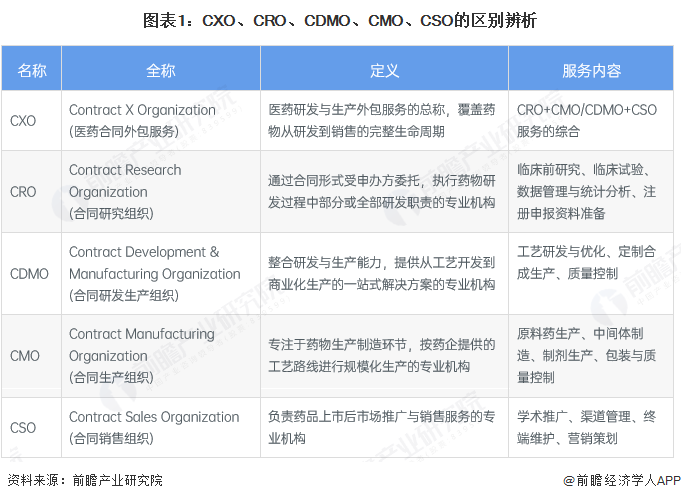
Core Insights - The CRO industry in China is experiencing significant growth, with the market size expected to expand from 90 billion yuan in 2021 to 126 billion yuan by 2024, reflecting a compound annual growth rate (CAGR) of 28%, which is substantially higher than the global average of 10% [13][26] - The industry is characterized by a clear competitive landscape, with WuXi AppTec as the dominant player, achieving revenue exceeding 20 billion yuan, while other key players include Kanglong Chemical, Tigermed, and Kelun Pharmaceutical [17][20] Industry Overview - Contract Research Organizations (CROs) are specialized entities that undertake drug development responsibilities on behalf of pharmaceutical companies, helping to reduce costs and risks while ensuring compliance [1] - The CRO industry is divided into preclinical and clinical segments, with preclinical CROs focusing on drug discovery and safety evaluations, while clinical CROs handle clinical trials and data management [1] Industry Development History - The CRO industry in China began in 1996 with the establishment of the first joint venture, and has evolved from a lack of formal organizations to a competitive landscape dominated by local leaders [9] - The industry has undergone significant changes, including the implementation of Good Clinical Practice (GCP) in 2003 and the introduction of the Marketing Authorization Holder (MAH) system, which has facilitated the growth of CRO services [11] Market Demand and Growth - The number of New Drug Applications (NDA) in China has been increasing, from 210 in 2021 to an expected 320 by 2024, driving demand for CRO services [14] - The global CRO market is projected to grow from 71 billion USD in 2021 to 90 billion USD by 2024, driven by increased healthcare demands due to aging populations and the COVID-19 pandemic [13] Competitive Landscape - The competitive structure of the Chinese CRO industry is categorized into three tiers, with WuXi AppTec leading the first tier, followed by Kanglong Chemical and Tigermed in the second tier, and smaller firms in the third tier [17] - Most companies are diversifying their services to include both CRO and CDMO (Contract Development and Manufacturing Organization) capabilities, enhancing operational efficiency [20] Regional Market Dynamics - The Yangtze River Delta region dominates the CRO market in China, accounting for approximately 43% of the market share, followed by the Beijing-Tianjin-Hebei region at 23% and the Pearl River Delta at 19% [23] Future Outlook - The Chinese CRO market is expected to continue its growth trajectory, potentially exceeding 144 billion yuan by 2028, supported by favorable policies and increasing demand for innovative therapies [26] - Despite challenges such as rising compliance costs and market saturation, the overall outlook remains positive, with expectations of sustained double-digit growth over the next five years [26]
智启未来·石见新生 药石科技AI战略大会赋能生物医药智能化新变革
Zhong Guo Jin Rong Xin Xi Wang· 2026-01-19 08:09
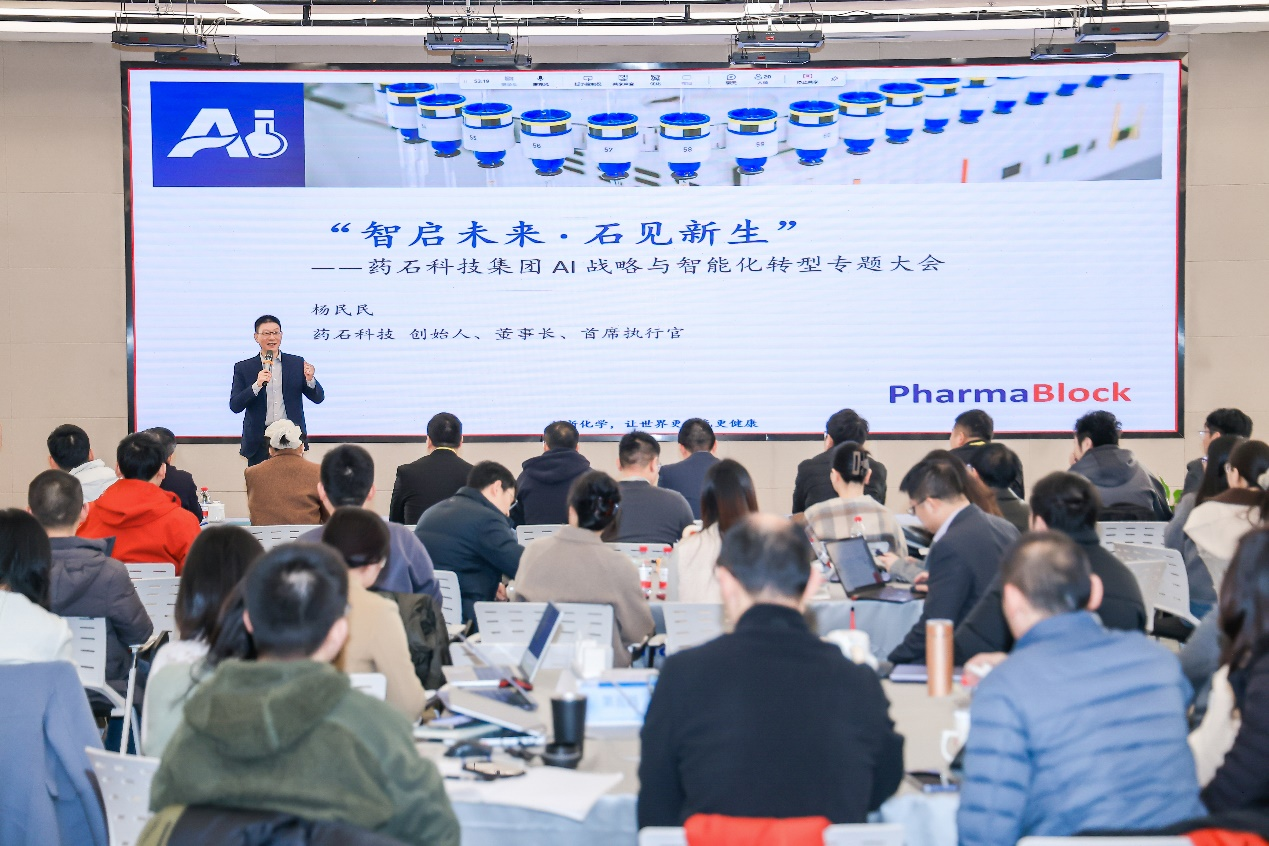
Core Insights - The conference held by Yaoshi Technology Group focused on the integration of AI in the pharmaceutical industry, aligning with national strategies for high-quality development and innovation in biomedicine [1][5] - The event gathered over a hundred participants, including executives and industry partners, to discuss AI's role in drug development, smart manufacturing, and CRDMO services [1][5] Group 1: Company Strategy - Dr. Yang Minmin, the founder and CEO, emphasized that AI empowerment is the core driving force for industry competition and highlighted the need for accurate data and streamlined business processes for successful transformation [3][4] - The company aims to lead sustainable development through green and intelligent chemical innovations, establishing dual platforms for smart R&D and manufacturing [3][4] Group 2: AI Implementation - The Chief Information Officer, Dr. Liu Heping, outlined a three-phase AI strategy: short-term foundation building, mid-term integration, and long-term leadership, focusing on data and AI as core components [4] - Solutions for drug development challenges were presented, including knowledge graph target validation and generative AI for molecular screening, creating a closed-loop DMTA system [4] Group 3: Industry Trends - Industry partners shared insights on AI's transformative impact across the pharmaceutical supply chain, highlighting advancements in decision-making, safety, efficiency, and cost reduction [5] - The conference established a consensus that AI transformation is essential, with a clear path for implementation focusing on data foundation, scenario prioritization, and ecosystem collaboration [5]
JPM亮点归纳,年报预告陆续披露,积极把握超预期机会
ZHONGTAI SECURITIES· 2026-01-19 04:40
Investment Rating - The report maintains an "Overweight" rating for the pharmaceutical and biotechnology industry [2]. Core Insights - The report highlights the ongoing performance of the pharmaceutical sector, with a focus on the upcoming annual earnings forecasts and the potential for exceeding expectations. The sector has shown a return of 7.08% since the beginning of 2026, outperforming the CSI 300 index by 4.88% [8][12]. - Key catalysts in the industry include significant partnerships and acquisitions, such as AbbVie’s $6.5 billion upfront payment for RC148 and a $1 billion collaboration between Eli Lilly and NVIDIA to accelerate AI drug development [4][10]. - The report emphasizes the importance of innovative drug chains and the AI+ theme, suggesting that these areas will continue to attract investment and yield positive results [4][5]. Summary by Sections Industry Overview - The pharmaceutical sector's total market capitalization is approximately 74,744.70 billion yuan, with a circulating market value of 68,522.64 billion yuan [2]. - The report notes that the pharmaceutical sector is currently valued at 23.4 times PE based on 2026 earnings forecasts, which is a premium of 13.7% compared to the overall A-share market [15]. Market Dynamics - The report indicates that the pharmaceutical sector has experienced a mixed performance, with medical services up by 3.29% while other segments like medical devices and traditional Chinese medicine have seen declines [8][12]. - The report also mentions that the market is transitioning to a more rational and steady growth phase, moving away from the initial volatility seen at the start of the year [4]. Key Company Performances - Notable companies such as WuXi Biologics, Sangamo Therapeutics, and Tigermed have been highlighted for their strong performance, with WuXi Biologics showing a significant increase of 26.53% in January [24]. - The report suggests continued monitoring of companies involved in AI and small nucleic acid technologies, as they are expected to lead future growth in the sector [5][9]. Investment Recommendations - The report recommends focusing on companies that are well-positioned within the innovative drug chain and AI+ sectors, as these are anticipated to provide substantial returns [4][5]. - Specific stocks recommended include WuXi Biologics, Sangamo Therapeutics, and Tigermed, which have shown promising growth trajectories [24].