
Maxwell(300751)

Search documents
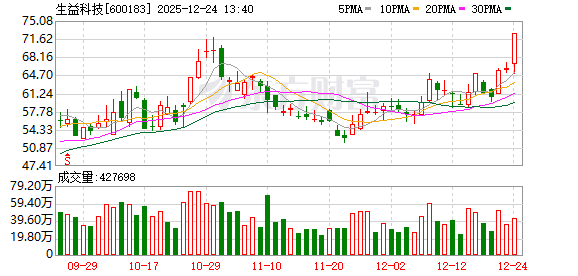
存储芯片概念震荡走强,生益科技、快克智能盘中创新高
Mei Ri Jing Ji Xin Wen· 2025-12-24 05:40
Group 1 - The storage chip sector experienced significant fluctuations, with companies like Shengyi Technology and Kuaike Intelligent reaching new highs during intraday trading [2] - Yintan Zhikong saw an increase of over 15%, indicating strong market interest and performance [2] - Other companies such as Beijing Junzheng, Xiangnong Chip Creation, Xice Testing, Nanya New Materials, Maiwei Co., Jiangbolong, and Baiao Chemical also showed upward trends [2]


协同推进先进太阳能电池量产
Su Zhou Ri Bao· 2025-12-23 01:12
苏报讯(驻吴江区记者 王英 周悦磊 通讯员 冯秋月 王恩晴)近日,江苏省科学技术厅公布2025年度江苏省创新联合体拟建设公示名单。位于吴江开发 区的苏州迈为科技股份有限公司牵头组建的江苏省先进太阳能电池和关键量产装备技术创新联合体成功入围榜单,彰显了产学研协同创新领域的硬核 实力。 江苏省先进太阳能电池和关键量产装备技术创新联合体,汇聚了产业链上下游11家优质单位,包括苏州迈正科技、苏州大学、大连理工大学、中国科 学院宁波材料技术与工程研究所、南开大学等高校院所及企业。该创新联合体围绕新型光伏电池工艺技术研究、等离子体真空镀膜技术和装备研发、 HJT异质结核心零部件和关键原材料开发、AI赋能宏量制造智能化技术研究四大领域,开展协同攻关。 作为创新联合体的牵头单位,迈为股份充分利用自身在产业链中游的"设备链主"地位,链接上下游需求,构建了一个以设备为载体、以市场为导向的 创新生态系统,将分散的创新资源整合为有序的创新链条,实现了从"单点突破"到"系统创新"的跃升,串联起从基础研究到产业化的创新全链条。其 核心运作模式是通过共享平台与资源、协同攻关和推动应用,将联合体的创新"小生态"联动成突破产业核心技术难题的" ...



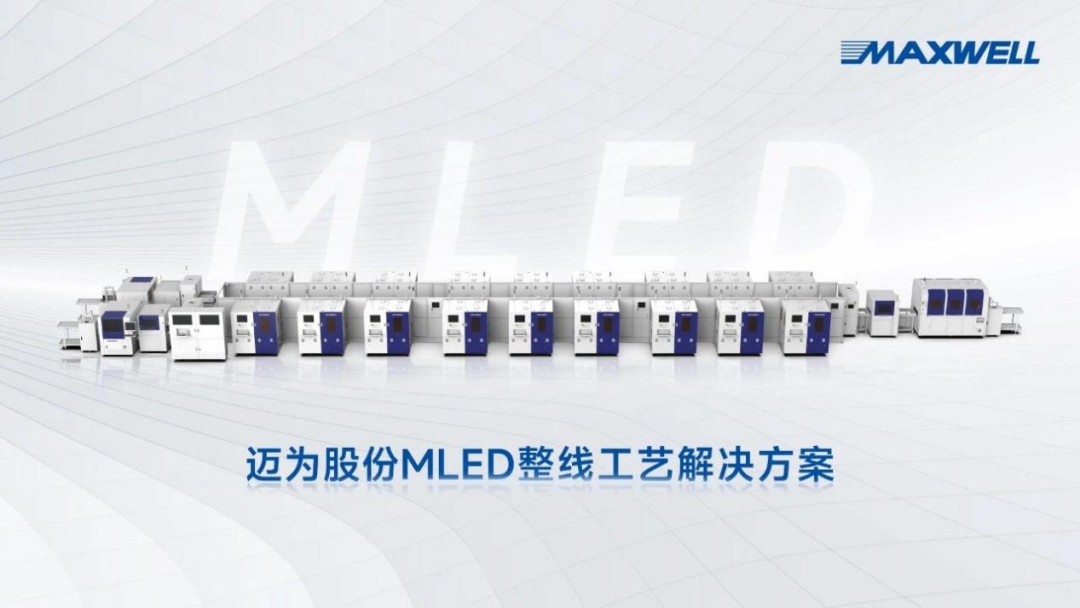
迈为股份MLED整线设备交付雷曼光电
Xin Lang Cai Jing· 2025-12-22 11:02
Core Viewpoint - The collaboration between Maiwei Co., Ltd. and Lehman Optoelectronics has progressed with the delivery of MLED production line equipment, enhancing manufacturing capabilities in the micro-pitch LED sector [1][4]. Group 1: Equipment Delivery - The MLED production line equipment was officially delivered and installed at Huizhou Lehman Optoelectronics Technology Co., Ltd., a wholly-owned subsidiary of Lehman Optoelectronics [1][5]. - The delivery ceremony was attended by key representatives from both companies, indicating a significant milestone in their partnership [1][5]. Group 2: Efficiency and Production Capacity - The overall delivery cycle was advanced by approximately one month compared to the original plan, ensuring timely support for subsequent production line construction and capacity release [2][6]. - Maiwei Co., Ltd. has introduced comprehensive production process solutions for both large-size substrates and small-size chips, capable of supporting batch production of 360mm x 360mm large substrates and 2 x 4 mil small chips, achieving zero chip damage and over 90% production line utilization [2][6]. Group 3: Strategic Collaboration - The introduction of MLED production line equipment aims to enhance Lehman Optoelectronics' manufacturing capabilities in the micro-pitch LED field, improving efficiency, yield, and cost competitiveness [4][8]. - As MLED technology penetration in the high-end display market increases, collaboration between domestic equipment manufacturers and panel manufacturers is becoming more integrated, providing a pathway for capacity construction through equipment and manufacturing synergy [4][8]. - Both companies plan to continue their collaboration on MLED process optimization and capacity enhancement, advancing display technology towards smaller pitch and higher integration [4][8].

20cm速递|上能电气交付全球最大单体储能电站变流器!迈为股份涨6.74%,创业板新能源ETF华夏(159368)上涨1.78%,机构建议岁末配置储能+固态电池!
Mei Ri Jing Ji Xin Wen· 2025-12-22 03:03
Group 1 - The A-share market opened high on December 22, 2025, with the ChiNext New Energy ETF (Hua Xia, 159368) experiencing a maximum increase of 1.78% during early trading [1] - Major stocks in the new energy sector saw significant gains, including Maiwei Co., which rose by 6.74%, and Shangneng Electric, which increased by 6.29% [1] - Shangneng Electric successfully delivered 576MW of energy storage inverters to the Khavda energy base in India, marking a significant breakthrough in the overseas energy storage market [1] Group 2 - CITIC Securities pointed out that short-term fluctuations in the A-share market are mainly influenced by external factors, such as concerns over the AI bubble in the US stock market and interest rate hikes by the Bank of Japan [2] - The ChiNext New Energy ETF (Hua Xia, 159368) is the largest ETF fund tracking the ChiNext New Energy Index, which covers various sectors including batteries and photovoltaics [2] - As of November 30, 2025, the ChiNext New Energy ETF (Hua Xia, 159368) had a total scale of 732 million yuan, with a near one-month average trading volume of 72.75 million yuan [2]
光伏HJT设备,2026年将继续爆发
Ge Long Hui· 2025-12-19 10:51
Core Insights - The U.S. photovoltaic (PV) market is experiencing a dual turning point of "demand explosion + capacity return" in 2025, driven by AI computing power expansion and a declining interest rate cycle, leading to a projected installation capacity of over 60GW in 2025 with a compound annual growth rate of 20% [1][2]. Demand Side - The U.S. renewable energy generation share is low at approximately 10%, significantly below the global average of 30%, indicating substantial room for energy structure transformation [2]. - The demand for PV is catalyzed by the electricity gap created by AI data centers and manufacturing recovery, as these centers operate continuously and require stable power sources, making PV a preferred clean energy option [2]. - The arrival of a declining interest rate cycle has amplified demand potential, as the internal rate of return (IRR) for PV projects is highly correlated with interest rates, leading to lower financing costs and increased investment willingness from developers [2]. Policy Support - The U.S. government is promoting domestic PV production through a combination of "manufacturing subsidies + trade protection," establishing a solid foundation for local capacity expansion [2]. - Although the Investment Tax Credit (ITC) for distributed projects will gradually phase out after 2027, subsidies for manufacturing remain strong, with 4 cents per cell and 7 cents per module, reducing cost pressures for domestic manufacturers [2]. Domestic Capacity and Challenges - The planned domestic PV capacity in the U.S. is set to reach 60-70GW, with approximately 40GW already in production for modules, but only single-digit capacity for cells, highlighting a significant supply gap [3]. - The U.S. PV manufacturing faces challenges such as high labor, energy, and compliance costs compared to China, necessitating the adoption of more efficient and lower-cost technologies like HJT (Heterojunction Technology) [3][4]. HJT Technology Advantages - HJT technology requires only four core processes, resulting in lower operational costs (OPEX) of $5.4-5.5 million per GW, compared to $7.2 million for TOPCon technology, with a cost difference of 2 cents per watt [4]. - Even without government subsidies, HJT can achieve a profit of 1.6 cents per watt, indicating sustainable profitability post-subsidy reduction [5]. Patent Landscape - HJT technology has a patent advantage, as its core patents expired in 2015, allowing U.S. companies to expand capacity without the risk of patent litigation, unlike TOPCon and BC technologies [8]. - Several U.S. companies have announced HJT capacity expansion plans, totaling over 30GW, expected to materialize between 2026 and 2028, providing certainty for the supply chain [8][9]. Equipment Supply Chain - The surge in HJT capacity in the U.S. will benefit Chinese equipment manufacturers, who dominate the global HJT equipment market with over 70% market share, providing a competitive edge in terms of cost and service [10]. - U.S. companies prefer Chinese equipment due to significant cost advantages (60%-70% cheaper than overseas options) and faster service response times, which are crucial for meeting rapid production ramp-up needs [10]. Investment Opportunities - The expansion of domestic PV capacity and the adoption of HJT technology create clear investment themes focused on "equipment leaders + technology support," balancing performance certainty with growth potential [11]. - Key players include: - Maiwei Co., which leads in HJT equipment with over 70% market share, benefiting from U.S. capacity expansion [11]. - Aotwei, a leader in module packaging equipment, with ongoing demand from the 40GW of installed capacity [11]. - Gaomei Co., a core supplier of HJT wafer cutting equipment, benefiting from technology upgrades and U.S. capacity expansion [11]. Auxiliary Investment Themes - The demand for low-temperature silver paste and TCO targets will rise with HJT technology, driving exports of related materials [12]. - Companies producing photovoltaic glass and encapsulants are well-positioned to meet the supply chain needs of U.S. module production, leveraging global presence and cost advantages [12].



光伏HJT设备,2026年将继续爆发
格隆汇APP· 2025-12-19 10:13
Core Viewpoint - The U.S. photovoltaic (PV) market is expected to experience a "demand explosion + capacity return" by 2025, driven by AI computing power expansion and a declining interest rate cycle, leading to a projected installation capacity of over 60GW in 2025 with a compound annual growth rate of 20% [5][6]. Demand Side - The share of renewable energy generation in the U.S. is approximately 10%, significantly lower than the global average of 30%, indicating substantial potential for energy structure transformation [7]. - The demand for PV is catalyzed by the electricity needs of AI data centers and the recovery of the manufacturing sector, as these facilities operate continuously and require stable energy sources, making PV an attractive option [7]. - The arrival of a declining interest rate cycle enhances the demand potential, as the internal rate of return (IRR) for PV projects is closely linked to interest rates, leading to lower financing costs and increased investment willingness from developers [8]. Policy Side - The U.S. government is promoting domestic PV industry localization through a combination of manufacturing subsidies and trade protection measures. Although the Investment Tax Credit (ITC) for distributed projects will gradually be phased out after 2027, subsidies for manufacturing continue to support the industry [9]. - Current domestic PV capacity planning in the U.S. is set at 60-70GW, with approximately 40GW of component capacity already in operation, but a significant gap remains in battery cell production, highlighting a structural imbalance in the industry [9]. Manufacturing Challenges - U.S. PV manufacturing faces three main pressures: high labor costs, high energy consumption, and high compliance costs, necessitating the adoption of more efficient and lower-cost technology solutions [10]. - The cost structure for U.S. manufacturing is significantly higher than that of China, with labor costs being 3.5 times higher, energy costs 2.1 times higher, and depreciation costs 1.3 times higher [11]. - The shift in market focus from capital expenditure (CAPEX) to operational expenditure (OPEX) favors technologies like Heterojunction Technology (HJT), which offers superior operational efficiency compared to traditional technologies [11]. HJT Technology Advantages - HJT technology has a unique advantage in the U.S. market due to its lack of patent barriers, as its core patents expired in 2015, allowing companies to avoid patent litigation risks [15]. - The recognition of HJT technology has led to substantial capacity expansion plans, with several U.S. companies announcing HJT capacity increases totaling over 30GW by the end of 2025 [15]. Chinese Equipment Suppliers - The expansion of HJT capacity in the U.S. will benefit Chinese PV equipment manufacturers, who hold a dominant position in the global market, particularly in HJT production line equipment [18]. - Chinese equipment suppliers, such as Maiwei, have over 70% market share in HJT equipment, providing a cost-effective solution that meets U.S. environmental and technical standards [18]. - The competitive advantages of Chinese equipment include lower prices (60%-70% of overseas equipment) and faster service response times, making them the preferred choice for U.S. manufacturers [18]. Investment Focus - The clear investment theme emerging from the U.S. PV market expansion and HJT technology adoption focuses on "equipment leaders + technology support," balancing performance certainty with growth potential [19]. - Key players include Maiwei, a leader in HJT equipment with significant market share, and Aotwei, a leader in component packaging equipment, both of which are well-positioned to benefit from the ongoing capacity expansion [20]. - Supporting lines of investment include materials and technology companies that supply low-temperature silver paste and TCO targets, which are essential for HJT technology [21].
半导体设备自主可控是当下强确定性和弹性兼备科技主线 | 投研报告
Zhong Guo Neng Yuan Wang· 2025-12-16 02:03
Group 1 - The electronic industry index increased by 1.36% during the week of December 8-12, 2025, with semiconductors leading the gain at 3.30% [1][2] - Optical optoelectronics and consumer electronics sectors experienced declines of 1.23% and 1.39% respectively [1][2] - The Federal Reserve announced a 25 basis point interest rate cut, lowering the federal funds rate target range to 3.50%-3.75%, aligning with market expectations [1][2] Group 2 - Major tech companies like Oracle and Broadcom reported earnings that fell short of expectations, leading to significant declines in the overseas tech market [1][2] - The Philadelphia Semiconductor Index dropped by 3.58%, with notable declines in stocks such as Nvidia (down 4.05%), Broadcom (down 7.77%), and Meta (down 4.33%) [1][2] - Tesla's stock increased by 0.87%, while Apple's stock saw a slight decline of 0.18% [1][2] Group 3 - The U.S. is expected to allow Nvidia to sell H200 chips to China, with a fee imposed on each chip [3] - Oracle's Q2 FY2026 earnings were below market expectations, prompting an increase in the company's full-year capital expenditure guidance by approximately $15 billion [3] - Broadcom reported Q4 revenue of $18.02 billion, a year-over-year increase of 28%, with AI semiconductor revenue projected to double to $8.2 billion [3] Group 4 - The supply-demand imbalance in the storage chip market continues, with forecasts indicating significant price increases for various types of memory chips in early 2026 [3][4] - CFM predicts that server DDR5 prices will rise over 40%, with notable increases for 96GB and above modules, and eSSD prices expected to rise by 20%-30% [3] Group 5 - The IPO progress of Changxin and the expansion of advanced logic manufacturers are highlighted as investment opportunities in semiconductor equipment [5] - Beneficiary companies include Northern Huachuang, Zhongwei Company, and others involved in semiconductor equipment [5]




迈为股份:实控人王正根质押展期3.22%公司股份
Xin Lang Cai Jing· 2025-12-15 09:12
Core Viewpoint - The announcement reveals that Wang Zhenggen, the actual controller and one of the major shareholders of Maiwei Co., Ltd., has extended the pledge of 9 million shares, indicating a significant financial maneuver related to personal funding needs and additional collateral [1] Group 1 - Wang Zhenggen has pledged 9 million shares, which accounts for 18.86% of his holdings and 3.22% of the company's total share capital [1] - Of the pledged shares, 7 million are for personal funding needs, while 2 million are for supplementary pledging [1] - The pledge's start date is December 17, 2024, with the original expiration date set for December 16, 2025, now extended to December 16, 2026 [1] Group 2 - The pledge is secured by China Merchants Securities Co., Ltd. as the pledgee [1]
光伏设备板块12月15日跌0.73%,迈为股份领跌,主力资金净流出7.9亿元
Zheng Xing Xing Ye Ri Bao· 2025-12-15 09:08
从资金流向上来看,当日光伏设备板块主力资金净流出7.9亿元,游资资金净流入1.03亿元,散户资金净 流入6.87亿元。光伏设备板块个股资金流向见下表: 以上内容为证券之星据公开信息整理,由AI算法生成(网信算备310104345710301240019号),不构成投资建议。 证券之星消息,12月15日光伏设备板块较上一交易日下跌0.73%,迈为股份领跌。当日上证指数报收于 3867.92,下跌0.55%。深证成指报收于13112.09,下跌1.1%。光伏设备板块个股涨跌见下表: ...

迈为股份(300751) - 关于控股股东部分股份质押展期的公告
2025-12-15 09:08
证券代码:300751 证券简称:迈为股份 公告编号:2025-066 关于控股股东部分股份质押展期的公告 股东名 称 是否为控 股股东或 第一大股 东及其一 致行动人 本次质押 展期数量 (股) 占其所 持股份 比例 占公司 总股本 比例 是否为 限售股 (如 是,注 明限售 类型) 是否 为补 充质 押 质押起 始日 原质押 到期日 本次质 押展期 后质押 到期日 质权人 质押 用途 王正根 是 7,000,000 14.67% 2.51% 否 否 2024/12 /17 2025/12 /16 2026/12 /16 招商证券 股份有限 公司 个人 资金 需求 王正根 是 2,000,000 4.19% 0.72% 否 是 2025/4/ 8 2025/12 /16 2026/12 /16 招商证券 股份有限 公司 补充 质押 合计 9,000,000 18.86% 3.22% 1、本次部分股份质押展期的基本情况 | | | | | | | | 已质押股份 情况 | | 未质押股份 情况 | | | --- | --- | --- | --- | --- | --- | --- | --- | --- ...