
Shenzhen Longsys Electronics (301308)

Search documents
近半主动权益基金净值新高 200多只“毛基”上岸 谁带来了开年“钱途”?
Di Yi Cai Jing· 2026-02-25 12:17
Core Viewpoint - The A-share market has experienced a significant surge, with public equity funds seeing a strong start to the year, as nearly half of these products have reached historical net asset value highs, and over 90% have achieved positive returns [1][2]. Group 1: Market Performance - The A-share market has shown a strong upward trend, with over 3,700 stocks rising and more than 100 hitting the daily limit in the last two days [6]. - The trading volume has increased significantly, surpassing 2 trillion yuan, reaching 2.48 trillion yuan [6]. - The performance of the non-ferrous metal sector has been particularly strong, with a year-to-date increase of 21.94%, and 18 constituent stocks within this sector have seen gains exceeding 50% [3]. Group 2: Fund Performance - Among 4,780 comparable active equity funds, 2,347 have achieved historical net asset value highs this year, representing 49.1% of the total [2]. - Over 90% of active equity funds have recorded positive returns since the beginning of the year, with 149 funds showing gains of over 20% [2]. - The top-performing funds, managed by the same fund manager, have achieved returns of 52.64%, 51.95%, and 46.61% respectively [2]. Group 3: Investment Strategies - Investment strategies are shifting from liquidity-driven to profit-driven, with a recommendation for investors to maintain a contrarian mindset as market leadership may rotate quickly [1]. - The focus on resource-related sectors has provided significant advantages in the current market environment, with many top-performing funds heavily invested in non-ferrous metals and technology stocks [3][4]. - Analysts suggest that the market may stabilize and recover post-Spring Festival, with emerging technologies and value stocks expected to perform well [7].





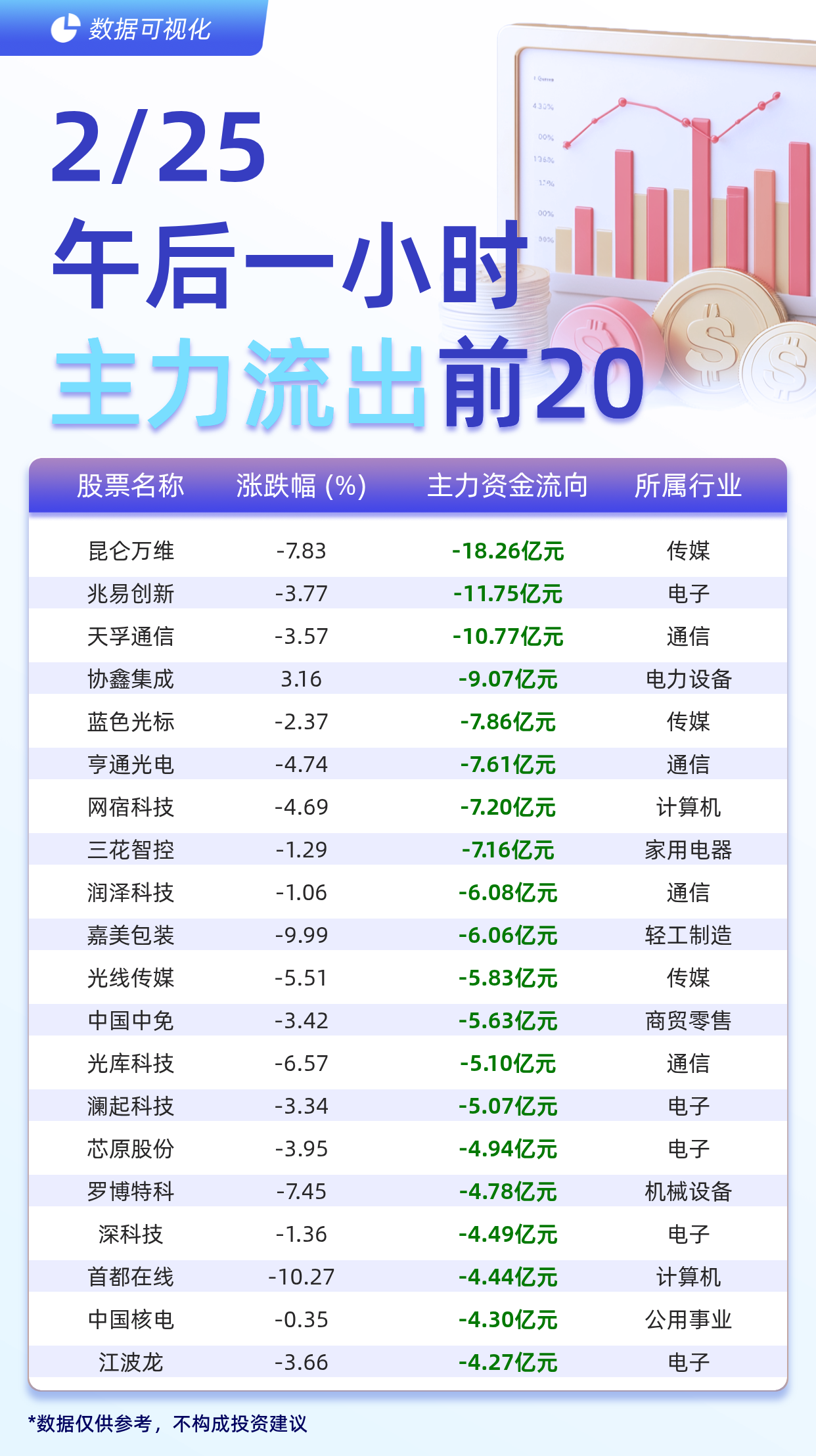
主力个股资金流出前20:昆仑万维流出18.26亿元、兆易创新流出11.75亿元
Jin Rong Jie· 2026-02-25 06:34
Group 1 - The main stocks with significant capital outflow include Kunlun Wanwei (-1.83 billion), Zhaoyi Innovation (-1.175 billion), and Tianfu Communication (-1.077 billion) [1] - The sectors affected by the capital outflow include Media, Electronics, and Communication, with notable declines in stock prices for companies like Kunlun Wanwei (-7.83%), Zhaoyi Innovation (-3.77%), and Tianfu Communication (-3.57%) [2][3] - Other companies experiencing substantial capital outflow include GCL-Poly Energy (-0.907 billion), BlueFocus (-0.786 billion), and Hengtong Optic-Electric (-0.761 billion) [1] Group 2 - The total capital outflow from the top 20 stocks indicates a trend of investor withdrawal from these sectors, particularly in Media and Electronics [1][2] - Companies like China Duty Free (-0.563 billion) and Guangku Technology (-0.510 billion) also show significant capital outflow, reflecting broader market concerns [3] - The overall market sentiment appears negative, with many stocks experiencing declines in both capital flow and stock price [2][3]







全球科技:AI 提振 NAND 需求,但亚洲模组厂商利润率或很快承压-Global Technology-AI boosts NAND demand, but Asian module maker margins may soon compress
2026-02-25 04:08
Summary of Conference Call on NAND Market Dynamics Industry Overview - The conference call focuses on the NAND memory market, highlighting the impact of AI on demand and pricing dynamics, particularly for module makers in Asia such as Phison and Longsys [1][2][4][5]. Key Points 1. NAND Demand and Pricing Dynamics - AI demand and tight supply have significantly shifted bargaining power within the memory supply chain, with consensus EPS for the memory supply chain increasing by 279% year-over-year, compared to 37% for global tech coverage [2]. - NAND OEMs have seen stock prices surge by 566% since September 2025, while module makers have only increased by 219% [2][14]. 2. Challenges for Module Makers - Module makers like Phison and Longsys are facing margin pressures due to constrained supply and weakening consumer SSD demand amid rising NAND prices [1][4][5]. - Low-cost inventory for module makers is expected to be depleted by the second half of 2026, leading to margin normalization [4][15]. 3. Downgrades and Valuation Concerns - Phison and Longsys have been downgraded to Equal-Weight (EW) due to less attractive risk-reward profiles compared to fab-owning OEMs [5][51]. - EPS forecasts for 2027 are projected to be 25-30% below consensus for these module makers, with Phison's valuation appearing stretched at 18x 2027e EPS [5][15]. 4. Preferred Investment Exposure - The report suggests a preference for fab owners and AI storage leaders over module makers, indicating that the pricing power of NAND OEMs is expected to surprise positively [6][15]. - KIOXIA's ASP outlook for 2026 has been raised from +75% YoY to over +100% YoY, supported by strong OEM negotiations [3][47]. 5. Future Outlook and Risks - The outlook for enterprise SSD (eSSD) is positive, with significant growth expected, particularly from companies like SanDisk and Micron, which are gaining market share in this segment [39][41]. - Risks include the potential for greater value capture by module makers from AI-driven enterprise SSD demand, resilient consumer demand, and the possibility of memory being viewed as a secular AI infrastructure theme rather than a cyclical commodity [34][36][37]. 6. Competitive Landscape - Phison is characterized as a technology-focused company with strong capabilities in NAND controller IC design, while Longsys is more brand-focused with a broader product range [63][64][65]. - Both companies face challenges in maintaining margins and market share as the NAND market evolves, particularly with the increasing importance of AI applications [56][65]. Additional Insights - The memory group has been re-rated due to the supercycle driven by AI demand, with fab owners benefiting more than module makers [16][17]. - The report emphasizes that while module makers may initially benefit from low-cost inventories, this advantage is not sustainable as inventories deplete [17][18]. This summary encapsulates the critical insights from the conference call regarding the NAND market, focusing on the challenges faced by module makers, the shifting dynamics due to AI demand, and the overall outlook for the industry.



A股三大指数午间休盘集体上涨,钢铁板块走强
3 6 Ke· 2026-02-25 03:48
Market Performance - The three major A-share indices collectively rose during the midday break, with the Shanghai Composite Index increasing by 1.2%, the Shenzhen Component Index rising by 1.47%, and the ChiNext Index up by 1.43% [1] Sector Performance - The steel, shipping, and chemical fertilizer sectors led the gains, with Baosteel Co., China Merchants Jinling Shipyard, and Chuanjin Nuo hitting the daily limit [1] - Conversely, the computer hardware, internet, and cultural media sectors experienced the largest declines, with Zhangyue Technology hitting the daily limit down, Capital Online dropping over 9%, and Jiangbolong decreasing over 3% [1]



港股AI应用跳水,MINIMAX跌超14%,智谱跌6%,存储芯片股走低
2 1 Shi Ji Jing Ji Bao Dao· 2026-02-25 02:41
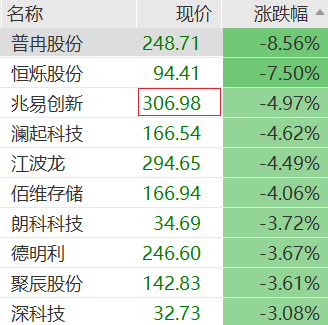
Group 1 - The AI application concept stocks in Hong Kong experienced a sharp decline, with MINIMAX-WP dropping over 14% and other companies like Zhiyu and Haizhi Technology Group falling approximately 6% [1] - In the A-share and Hong Kong markets, the storage chip concept stocks also declined, with A-share company Purun falling nearly 10% and other companies like Hengshuo, Zhaoyi Innovation, Jiangbolong, Baiwei Storage, and Shannon Chip Innovation showing significant losses [1] - The short-selling firm Citron Capital announced it has established a short position on the storage stock SanDisk, contributing to the negative sentiment in the market [1] Group 2 - Swiss asset management chief strategist Luca Paolini indicated that while chip manufacturers are thriving and AI stocks related to Google are performing well, those associated with OpenAI are struggling, suggesting a shift in investor focus from "how much growth" to "how to achieve growth" [3] - Paolini emphasized that Chinese technology companies are in a favorable position during the AI cycle, benefiting from different business models compared to their U.S. counterparts, and the advantageous environment for Chinese tech stocks is expected to continue [3]

境外上市备案监管审核视角下的制造业A to H关注的法律问题分析
Sou Hu Cai Jing· 2026-02-24 13:11
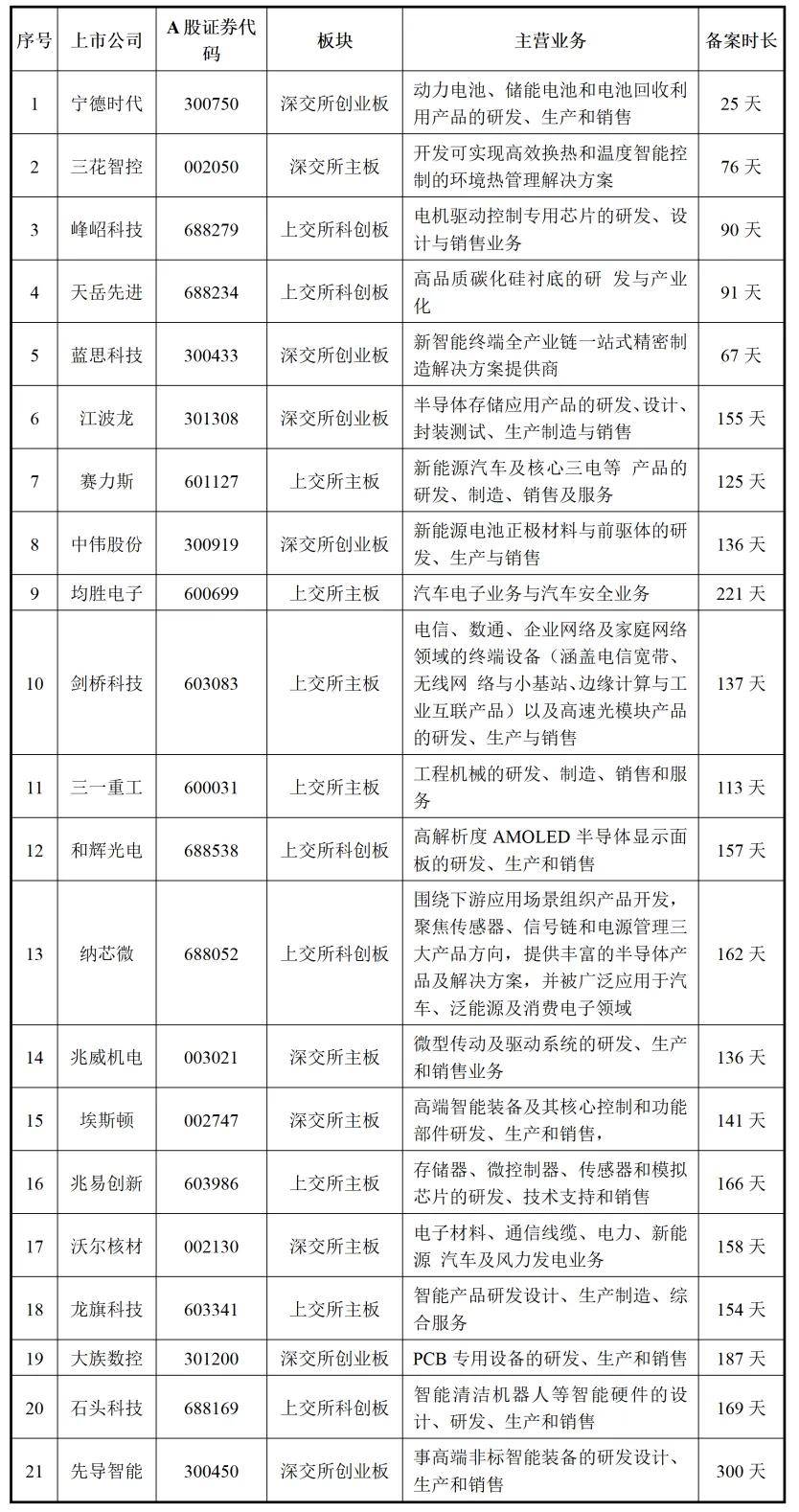
Core Viewpoint - The A to H listing model for manufacturing A-share companies is becoming a significant pathway for expanding financing channels and achieving global layout, driven by the optimization of overseas listing filing management, the recovery of the Hong Kong stock market, and the release of domestic companies' overseas financing needs [1][2]. Group 1: Overview of H-share Filing Situation in 2025 - In 2025, over 160 A-share listed companies disclosed plans for listing in Hong Kong, with more than 90 formally submitting applications to the Hong Kong Stock Exchange [2]. - By the end of 2025, 33 A-share companies received filing approval from the China Securities Regulatory Commission (CSRC), with 19 successfully achieving A+H listings, a significant increase from 3 in 2024 [2]. - The total fundraising amount for the 19 companies that successfully listed in Hong Kong reached approximately 139.99 billion HKD, with CATL alone raising 35.66 billion HKD, indicating strong recognition from overseas capital markets for high-quality domestic manufacturing enterprises [2]. Group 2: Filing Duration and Characteristics - The average filing duration for companies directly applying for Hong Kong listings in 2025 was approximately 190 days, while manufacturing A-share companies had an average duration of about 141 days, which is lower than the overall average [3]. - High-end advanced manufacturing companies experienced longer filing durations due to special regulatory matters involving core technologies and controlled items [3]. Group 3: Legal Issues and Compliance Suggestions - The filing review for A to H companies in the manufacturing sector focuses on universal legal issues such as cross-border compliance and market access, which all manufacturing companies must address [6][7]. - Specific legal concerns for high-end advanced manufacturing companies include core technology transfer and management of controlled items, necessitating tailored compliance strategies [6][16]. Group 4: Common Legal Issues in Filing Review - Key areas of regulatory focus include compliance with overseas investment and foreign exchange registration, ensuring that companies have fulfilled necessary procedures and that their funding sources are legal [8][9]. - Companies must also ensure that their business scope does not involve industries restricted or prohibited for foreign investment, as outlined in the negative list [10][11]. Group 5: Data Security and User Information Protection - With the implementation of laws regarding cybersecurity and data protection, companies involved in information content products must ensure compliance with user data collection, storage, and security management [13][14]. - The review process emphasizes the need for companies to have robust data security management systems and to comply with regulations regarding data transfer, especially if it involves cross-border data [15]. Group 6: Differentiated Regulatory Focus for High-end Advanced Manufacturing - High-end advanced manufacturing companies face unique regulatory scrutiny regarding core technology protection, management of dual-use items, and compliance with technology export regulations [16][17]. - Companies must establish comprehensive systems to protect core technologies and ensure compliance with relevant export control laws to mitigate risks associated with technology leakage and unauthorized transfers [16][17].




江波龙2月13日获融资买入5.04亿元,融资余额32.63亿元
Xin Lang Cai Jing· 2026-02-24 01:30
Group 1 - Jiangbolong's stock price increased by 3.75% on February 13, with a trading volume of 4.843 billion yuan. The margin trading data shows a financing purchase amount of 504 million yuan and a repayment of 538 million yuan, resulting in a net financing outflow of 34.8368 million yuan. The total margin balance as of February 13 is 3.295 billion yuan [1] - The financing balance of Jiangbolong is currently 3.263 billion yuan, accounting for 2.56% of the circulating market value, which is above the 90th percentile level over the past year, indicating a high level [1] - On the same day, Jiangbolong repaid 700 shares in margin trading and sold 13,100 shares, with a selling amount of approximately 3.9783 million yuan. The remaining margin balance is 31.9482 million yuan, also exceeding the 90th percentile level over the past year [1] Group 2 - As of September 30, Jiangbolong has 43,800 shareholders, an increase of 25.06% compared to the previous period. The average number of circulating shares per person is 6,260, which is a decrease of 20.04% [2] - For the period from January to September 2025, Jiangbolong achieved an operating income of 16.734 billion yuan, representing a year-on-year growth of 26.12%. The net profit attributable to the parent company is 713 million yuan, with a year-on-year increase of 27.95% [2] Group 3 - Jiangbolong has distributed a total of 302 million yuan in dividends since its A-share listing, with 104 million yuan distributed over the past three years [3] - As of September 30, 2025, Hong Kong Central Clearing Limited is the eighth largest circulating shareholder of Jiangbolong, holding 6.1139 million shares, an increase of 4.8541 million shares compared to the previous period. Several funds have exited the top ten circulating shareholders list [3]
江波龙:mSSD加速导入PC大厂 UFS4.1步入批量出货前夜
Ju Chao Zi Xun· 2026-02-16 02:56
Core Insights - The storage chip sector is experiencing a continuous increase in market demand, with Jiangbolong revealing key developments in mSSD applications, UFS4.1 product collaborations, wafer supply assurance, and storage cycle outlooks during investor discussions [1] Group 1: mSSD Development - Jiangbolong's mSSD, utilizing Wafer-level System-in-Package (SiP) technology, integrates multiple components into a single package, offering significant manufacturing cost advantages while maintaining performance comparable to traditional SSDs [3] - The mSSD is being rapidly adopted by leading PC manufacturers, with analysts noting its potential as the standard storage solution for next-generation mobile computing platforms due to increasing demands from AI PCs for space and power efficiency [3] Group 2: UFS4.1 Product Capabilities - Jiangbolong is among a few global companies capable of developing UFS4.1 products at the chip level, with its self-developed controller offering superior performance in terms of process, read/write speed, and stability compared to comparable market products [3] - UFS4.1 is positioned as a premium storage option for Tier 1 clients' flagship smart terminal models, with mass shipments expected to commence soon [3][4] Group 3: Supply Chain Resilience - Jiangbolong has established deep cooperative relationships with major wafer manufacturers and leading smart terminal device companies, paving the way for large-scale commercialization of UFS4.1 [4] - The company has signed long-term supply agreements and commercial memorandums with global wafer suppliers, enhancing its supply chain resilience amid structural tensions in storage wafer supply [5] Group 4: Market Outlook - Jiangbolong anticipates a positive trend in storage prices, driven by structural changes in demand due to AI applications and the rapid expansion of AI infrastructure, coupled with a shortage of HDD supply [5] - The company highlights that the capital expenditure recovery of storage manufacturers will have limited short-term contributions to output growth due to the lag in capacity construction cycles [5]
近50家芯片大厂最新业绩:谁在赚钱,谁还在复苏?
芯世相· 2026-02-14 04:07
Core Viewpoint - The semiconductor industry is expected to recover in 2025, with significant revenue growth driven by rising storage prices and increasing demand from data centers, leading to improved performance for major chip manufacturers [3][4]. Group 1: Semiconductor Sales and Growth - Global semiconductor sales are projected to reach $791.7 billion in 2025, a 25.6% increase from $630.5 billion in 2024, with further growth expected towards $1 trillion in 2026 [3]. - The recovery is attributed to strong demand from emerging technologies such as AI, IoT, 6G, and autonomous driving [3]. Group 2: Chip Design and IDM - Texas Instruments (TI) is expected to achieve approximately $17.68 billion in revenue for 2025, reflecting a 13% year-over-year growth, with significant contributions from industrial and automotive sectors [6]. - STMicroelectronics (ST) anticipates a revenue decline of 11% to around $11.8 billion, with Q4 showing slight improvement driven by personal electronics [8]. - NXP's revenue is projected at $12.27 billion, down 3%, with automotive and industrial sectors remaining stable [10]. - Renesas reported a revenue drop of 2% to 1.3212 trillion yen, marking its first loss in six years due to significant impairment losses [12]. - Microchip Technology expects growth in both year-over-year and quarter-over-quarter sales, with a projected revenue of $1.186 billion for Q3 2026 [12]. - Qorvo's revenue exceeded expectations at $993 million, with an 8.4% year-over-year increase [12]. - Infineon's revenue is projected at €14.662 billion, down 2%, but with strong demand in AI driving growth [14]. Group 3: Memory Chips - Samsung's revenue is expected to reach 333.6059 trillion won (approximately $233.8 billion), a 10.9% increase, with the semiconductor division achieving 130.1 trillion won in revenue [29]. - SK Hynix anticipates a record revenue of 97.15 trillion won (approximately $681.6 billion), a 47% increase year-over-year [31]. - Micron's revenue is projected to rise from $25.11 billion to $37.38 billion, with HBM chip capacity sold out for 2026 [33]. - GigaDevice expects a revenue increase of approximately 25% to 9.203 billion yuan [35]. Group 4: Wafer Foundry - TSMC's revenue is projected to reach approximately 3.8 trillion new Taiwan dollars (around $122.42 billion), a 31.6% increase, with advanced processes contributing significantly [47]. - UMC expects a slight revenue increase of 2.3% to 237.55 billion new Taiwan dollars, with a focus on mature process technologies [49]. - SMIC anticipates a record revenue of $9.3268 billion, a 16.2% increase, with improved profitability driven by increased wafer sales [51]. Group 5: Testing and Packaging - ASE Group's revenue is expected to reach 645.388 billion new Taiwan dollars, an 8.4% increase, with advanced packaging services contributing significantly [57]. - Amkor's revenue is projected at $6.71 billion, a 6% increase, with strong performance in advanced packaging and computing business [59]. Group 6: Equipment - ASML's total net sales are expected to reach €32.667 billion, a 15.6% increase, with a record order backlog reflecting strong demand for AI-related technologies [61]. - Lam Research anticipates a record year with significant growth driven by advanced process technologies [63]. Group 7: Distribution - WPG Holdings expects a revenue of 999.12 billion new Taiwan dollars, a 13.4% increase, driven by AI and high-performance computing demand [66]. - WPG's revenue is projected to exceed 1 trillion new Taiwan dollars, marking a significant milestone [68].



江波龙股价异动:业绩超预期与存储周期反转驱动
Jing Ji Guan Cha Wang· 2026-02-14 02:38
Core Viewpoint - The stock price of Jiang Bolong (301308) experienced significant fluctuations, closing at 303.69 yuan on February 13, 2026, with a rise of 3.75% and a trading volume of 4.843 billion yuan, reflecting a year-to-date increase of 24.04%, despite a recent 14.09% pullback over the last 20 trading days. The stock movement is driven by strong performance forecasts and technological advancements in the company [1][2][4]. Financial Performance - The company's 2025 earnings forecast indicates a net profit attributable to shareholders of 1.25 billion to 1.55 billion yuan, representing a year-on-year increase of 150.66% to 210.82%. The non-GAAP net profit is expected to grow by 578.51% to 710.60%. The fourth quarter alone is projected to yield a non-GAAP net profit of 650 million to 870 million yuan, with a quarter-on-quarter growth of 45.83% to 95.09%, primarily due to a rebound in storage prices and surging demand for AI servers [1]. Business and Technology Development - The company has deployed over 100 million self-developed main control chips, with the UFS 4.1 main control chip completing tape-out and nearing mass production. Revenue from enterprise storage business increased by 138.66% year-on-year in the first three quarters of 2025, with a higher proportion of high-end products improving the gross profit structure. Products such as AI server storage and automotive-grade UFS have passed certification from leading clients, entering high-growth market segments [2]. Capital Situation - On February 13, there was a net inflow of 499 million yuan from major funds, although the stock price experienced an 8.73% fluctuation over the past five days. Previously, shareholders reduced their holdings by transferring 12.57 million shares, accounting for 3% of the total share capital, at a transfer price of 212.09 yuan per share, which was a 36.92% discount to the market price at that time, creating short-term sentiment pressure [3]. Company Valuation - The current stock price has retraced approximately 22% from the January 29 high of 389 yuan. The KDJ indicator's J value has risen to 55.19, while the MACD remains in a bearish zone but shows a convergence in the downtrend. The price-to-earnings ratio (TTM) stands at 194.52 times, significantly higher than the industry average, indicating market divergence regarding the sustainability of the cycle. The stock price fluctuations are a result of high growth in earnings, technological breakthroughs, and short-term pressures from capital and valuation [4].