
adidas(ADDYY)

Search documents
有消费者称阿迪达斯羽绒服由雪中飞代工,引发品牌溢价与品质争议
Xi Niu Cai Jing· 2025-10-24 12:09
Core Insights - Consumers have raised concerns about the authenticity of Adidas products, specifically regarding a down jacket purchased through a live-streaming platform, which was allegedly produced by a third-party manufacturer, Xuezhongfei [2] - Adidas customer service stated that they do not have information on whether products are outsourced or the details of the manufacturing facilities, emphasizing that all products are shipped directly from warehouses [2] - The incident highlights a growing consumer skepticism towards brand value versus product quality, with many feeling that they are paying for a brand label rather than the actual product quality [3] Company Analysis - The incident reflects a broader trend in the apparel industry where outsourcing production to qualified manufacturers is common, allowing brands to focus on design and marketing while reducing manufacturing costs [2] - The pricing comparison between Adidas and Xuezhongfei shows that while both brands have similar price points, Xuezhongfei's products offer higher fill power in their down jackets, raising questions about the value proposition of Adidas products [2] - The ongoing debate about brand premium versus product quality suggests that Adidas may need to better align its brand image with consumer expectations to avoid future controversies [3]


TD COWEN:将阿迪达斯目标价上调至201欧元
Ge Long Hui· 2025-10-24 05:13
Group 1 - Investment bank TD COWEN raised the target price for Adidas from €190 to €201 [1]
雪中飞代工羽绒服惹争议,但阿迪达斯已经上调全年预期
Guan Cha Zhe Wang· 2025-10-23 12:24
Core Viewpoint - Adidas has shown a recovery trend in performance despite global economic challenges, with a 12% revenue growth in Q3, leading to an upward revision of its annual performance forecast [1][2]. Group 1: Financial Performance - Adidas reported a Q3 revenue of €6.63 billion, up from €6.44 billion in the same period last year, marking a 12% increase after excluding currency effects [1]. - The company’s gross margin improved by 0.5 percentage points to 51.8%, and operating profit surged to €736 million, up from €598 million year-on-year, with the operating margin increasing from 9.3% to 11.1% [1]. - For the full year, Adidas now expects operating profit to reach approximately €2 billion, up from previous estimates of €1.7 billion to €1.8 billion [1]. Group 2: Market Strategy and Adaptation - In response to increased costs from U.S. tariff hikes, Adidas has implemented price increases across its product lines, with the Samba sneaker's price rising from $90 to $100 [2]. - The company has refocused on its core brand values and product innovation, revitalizing classic shoe models and expanding retro product lines [2]. - Adidas showcased its brand innovation at Shanghai Fashion Week, emphasizing three dimensions: speed in sports, rhythm of the East, and self-expression in street culture [2]. Group 3: Manufacturing and Supply Chain - Adidas has shifted to a model where 95% of its products sold in China are locally manufactured, reflecting a strategic focus on local production and design [4]. - The company has faced scrutiny over its use of OEM partners, such as Snow Flying, for producing down jackets, which has sparked consumer discussions about brand value versus manufacturing practices [4][5]. - The use of OEM models allows Adidas to concentrate on brand building and marketing while leveraging specialized manufacturers for production [5][6].

阿迪达斯回应羽绒服代工争议 波司登该项业务年收超33亿元
Nan Fang Du Shi Bao· 2025-10-23 11:01
Core Viewpoint - The controversy surrounding Adidas down jackets being produced by OEMs such as Xuezhongfei and Bosideng has sparked significant consumer debate regarding brand pricing versus product quality [2][3][5] Group 1: Adidas and OEM Relationships - Adidas confirmed its collaboration with Xuezhongfei for manufacturing but did not address the pricing concerns directly [2][3] - Consumers have noted significant differences in product specifications between Adidas and its OEM counterparts, leading to questions about the value of paying a premium for the brand [3][5] - The Adidas jackets sold at higher prices often have lower specifications compared to similar products from Xuezhongfei, raising concerns about brand value versus product quality [3][5] Group 2: Consumer Reactions - Consumer responses are divided; some prefer to buy directly from OEMs like Xuezhongfei for better value, while others accept the brand's premium for perceived quality and design [5][7] - The lack of transparency regarding the OEM relationships and product specifications has led to confusion and dissatisfaction among some consumers [5][10] Group 3: Market Context and Brand Strategy - The practice of outsourcing production to local manufacturers is common among international brands like Adidas and Nike, which do not operate their own factories in China [7][10] - Adidas has reported that over 60% of its products sold in China are locally manufactured, highlighting the importance of the Chinese market, which accounts for approximately 15% of its global revenue [8][10] - The brand's strategy includes significant investment in brand image, technology, and marketing, which contributes to its pricing structure [7][10] Group 4: Bosideng's Role in the Market - Bosideng, a leading domestic down jacket manufacturer, derives about 13% of its revenue from OEM production, indicating the significance of this business model in its overall strategy [9][10] - The company has seen substantial growth in its OEM business, with a reported revenue increase of 26.4% year-on-year for its OEM segment [9][10] - Bosideng's success is attributed to its strong manufacturing capabilities and reputation, which also benefits its OEM partnerships [9][10]
阿迪达斯回应羽绒服代工争议,波司登该项业务年收超33亿元
Nan Fang Du Shi Bao· 2025-10-23 10:50
Core Viewpoint - The controversy surrounding Adidas down jackets being produced by domestic OEMs like Xuezhongfei has sparked significant consumer debate regarding brand pricing versus product quality [2][4][8] Group 1: Adidas and OEM Relationships - Adidas confirmed its collaboration with Xuezhongfei for manufacturing but did not address the pricing concerns directly [2] - Consumers have noted significant differences in product specifications between Adidas and Xuezhongfei's products, despite similar pricing [4] - The majority of Adidas products sold in China are manufactured locally, with over 60% produced by domestic teams and 95% made in China [8][9] Group 2: Consumer Reactions - Consumer responses are divided; some prefer to buy directly from Xuezhongfei for better value, while others accept the brand's premium for perceived quality and design [4][8] - The lack of transparency regarding the OEM relationships and product specifications has led to confusion and dissatisfaction among consumers [12] Group 3: Industry Context - The practice of outsourcing production to local manufacturers is common among international brands like Adidas and Nike, which do not operate their own factories in China [5][6] - The controversy reflects broader issues of global supply chain dynamics and consumer awareness regarding product sourcing and pricing [12] Group 4: Financial Performance - Adidas reported a revenue of €7.98 billion in the Greater China region, with a year-on-year growth of 11% [9] - The OEM business is a significant revenue source for companies like Bosideng, contributing approximately 13% to its total income, with a notable increase in revenue from this segment [12]
阿迪达斯让雪中飞代工很没良心吗?
半佛仙人· 2025-10-23 04:10
Core Viewpoint - The article emphasizes the quality and integrity of Adidas in choosing to collaborate with a reputable Chinese manufacturer, Snow Flying, for its products, highlighting that this choice reflects a commitment to quality over cost-cutting measures often seen in the industry [3][4][7]. Group 1: Manufacturing Quality - Adidas' decision to use Snow Flying, a well-established Chinese apparel manufacturer, is portrayed as a sign of quality, contrasting with cheaper alternatives from Southeast Asian factories [3][4]. - The article argues that the perception that OEM (Original Equipment Manufacturer) products are inferior is a misconception, as many high-quality brands utilize OEM manufacturing without compromising on quality [5][6]. Group 2: Chinese Manufacturing Capabilities - The article asserts that Chinese manufacturers, particularly in the apparel sector, have developed significant expertise and technology over the past 30 years, making them leaders in the field [7]. - It highlights that the best materials and manufacturing techniques are often sourced from China, with specific examples such as the high-quality denim produced in Changzhou [7]. Group 3: Cost and Quality Relationship - The relationship between the cost paid by brands to manufacturers and the quality of the final product is emphasized, indicating that higher investment leads to better quality outcomes [6][7]. - The article suggests that many brands avoid using Chinese manufacturing not due to a lack of quality, but because they cannot afford the higher costs associated with reputable manufacturers [7].
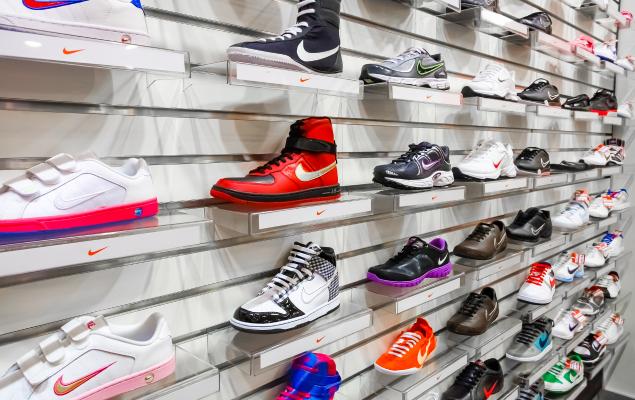
NIKE vs. adidas: Which Stock Leads the Global Sportswear Race?
ZACKS· 2025-10-22 18:00
Core Insights - The competitive landscape of athletic apparel is dominated by NIKE, Inc. and adidas AG, each with distinct strategies and market positioning [1][3] - NIKE leads the global sportswear market, driven by innovation and a strong brand ecosystem, while adidas focuses on performance, lifestyle, and sustainability [2][9] NIKE Overview - NIKE holds the largest share of the global athletic footwear and apparel market, supported by its "Sport Offense" operating model that enhances product innovation [4][8] - The brand's cultural relevance and athlete endorsements solidify its status as a performance and lifestyle brand, contributing to its market share and pricing power [5][8] - NIKE's digital transformation and channel strategy prioritize full-price sales and data-driven engagement, with a focus on collaborations to attract younger consumers [6][7] adidas Overview - adidas is Europe's sportswear leader and ranks second globally, leveraging a diversified portfolio and a dual-brand strategy to appeal to various consumer segments [9][10] - The "Own the Game" turnaround strategy emphasizes brand desirability, direct-to-consumer acceleration, and operational excellence, enhancing supply-chain efficiency [12][14] - adidas's digital platforms and marketing collaborations, including partnerships with celebrities, are driving relevance among younger demographics [13][14] Financial Performance and Valuation - The Zacks Consensus Estimate for NIKE's fiscal 2026 sales indicates a modest growth of 0.4%, with a significant EPS decline of 23.6% [15] - NIKE's forward price-to-sales (P/S) multiple is 2.13X, below its five-year median of 3.1X, while adidas's forward P/S multiple is 1.28X, also below its median of 1.56X [22][25] - adidas shows steady recovery with double-digit sales growth in key markets, supported by an improving gross margin and disciplined cost management [14][19] Investment Outlook - adidas is positioned as a more compelling investment choice due to its growth momentum, attractive valuation, and strategic repositioning [26][27] - Recent estimate revisions reflect increased investor optimism around adidas's earnings potential, making it an appealing entry point for long-term investors [27][28]

阿迪达斯千元夹克被指像东北大花袄
2 1 Shi Ji Jing Ji Bao Dao· 2025-10-22 10:22
(原标题:阿迪达斯千元夹克被指像东北大花袄) 据羊城晚报报道,阿迪达斯近日与英国Liberty London联名,推出最新联名款女士绗缝夹克。该款为运 动生活系列女装,采用日本直邮模式,仅在天猫国际自营渠道发售(专享券后1228元),天猫官方旗舰 店无售。 这种将传统服装元素拆解、重组的玩法,是时尚圈的潮流延续,但对于普通消费者来说,"难评"的背后 是审美惯性的冲击,难免引发了不少网友的热议:有人看到899元的价格直呼"农贸市场89(元)不能更 多",调侃"阿迪你盯上我奶奶退休金了";也有网友表示"不理解但尊重"。 ...
网友购买阿迪达斯羽绒服,却发现竟是雪中飞代工,怎样看这一现象?
Xin Lang Cai Jing· 2025-10-22 02:24
Core Viewpoint - The recent revelation that a consumer's expensive Adidas down jacket was actually produced by a local OEM has sparked discussions about brand value and consumer awareness in the context of modern commercial practices [2][4]. Group 1: OEM Phenomenon - The phenomenon of OEM (Original Equipment Manufacturer) is not new, as consumers have long been aware of the existence of cheaper alternatives produced by OEMs for well-known brands [3][6]. - The practice of OEM is widespread across various industries, not just in clothing, and is considered a core model of modern commerce [3][4]. - Notable OEM manufacturers, such as Shenzhou International, have been recognized for producing garments for major global brands like Nike, Uniqlo, and Adidas since around 2005 [3]. Group 2: Brand Premium Logic - The advantages of the OEM model include economies of scale and specialization, allowing brands to focus on design and marketing while manufacturers handle production, thus reducing costs and increasing efficiency [4]. - Consumers often pay a premium for brands not necessarily for product quality but for trust and identity associated with the brand [4]. Group 3: Consumer Choices - Consumers have become more discerning, often opting for lower-priced alternatives from OEMs instead of paying high prices for branded products [6]. - The trend of "tag peeling," where consumers check the origin of products to avoid being misled, has become common, reflecting a shift towards more rational purchasing decisions [6]. - Ultimately, the decision to pay a brand premium depends on individual preferences, with some valuing brand prestige while others prioritize cost-effectiveness [6].
运动巨头CEO竞相访华:耐克比阿迪达斯低调
2 1 Shi Ji Jing Ji Bao Dao· 2025-10-22 01:08
Group 1 - The importance of the Chinese market for global sports giants is increasing, as evidenced by the frequency of visits by top executives [1][2] - Adidas CEO Bjoern Gulden expressed confidence in the Chinese market, noting that 95% of products sold in China are "made in China" and that there is a growing trend towards original Chinese designs [1][2] - Nike's Greater China revenue declined by 10% to $1.512 billion (approximately 10.775 billion RMB) for the latest fiscal quarter ending August 31, 2025, while Adidas reported a revenue increase of 11% to €798 million (approximately 6.653 billion RMB) in the same period [2] Group 2 - Nike's Greater China market share is 13.3%, while Adidas holds 13.4%, indicating a competitive landscape where both brands are closely matched [2] - Despite the revenue decline, Nike remains the market leader with a share of 16.2%, followed by Anta at 10.5% and Li Ning at 9.4%, while Adidas has fallen to a 2024 market share of 8.7% [2] - The rise of domestic brands is posing a significant challenge to international players like Nike and Adidas [4][5]