adidas(ADDYY)

Search documents
新消费派|携手12所高校成立体育公社 阿迪达斯连续出招拥抱中国“Z世代”
Xin Hua Cai Jing· 2025-11-22 09:49
Core Insights - Adidas has established a university sports community in collaboration with 12 prestigious Chinese universities to empower the younger generation through sports [1][3] - The Chinese market is recognized as a crucial growth engine for Adidas, with expectations for the sports consumption market to reach 2.8 trillion yuan by 2025 [2] - The company aims to deepen its connection with the "Z generation" by focusing on personalized and emotional engagement in its marketing strategies [2][5] Market Characteristics - The Chinese sports consumption market is projected to grow significantly, with the sports equipment market expected to reach 602.1 billion yuan [2] - The shift in consumer demand from functional satisfaction to personalization and emotional resonance presents opportunities for innovation in sports brands [2] - China's advanced supply chain and digital economy facilitate rapid product development and precise market reach [2] Strategic Initiatives - The establishment of the Adidas University Sports Community aims to support campus sports and resonate with young consumers [3] - Adidas has provided professional equipment support to various sports teams at Tsinghua University and other institutions to enhance their competitive levels [3][4] - The company is focusing on product innovation that aligns with the preferences of the younger demographic, such as specialized training apparel and pet-related products [4] Future Plans - Adidas plans to expand into emerging sports areas like street dance and hiking, creating social engagement opportunities for young consumers [5] - The company has achieved ten consecutive quarters of growth in the Greater China region, driven by localized operations and strategic resource allocation [5] - Future initiatives include leveraging the FIFA World Cup in 2026 to enhance its football offerings and expanding its presence in key regions like the Greater Bay Area [5]

adidas Stock: A Beaten-Down Champion Poised For Another Run (OTCMKTS:ADDYY)
Seeking Alpha· 2025-11-16 07:14
Core Insights - The article discusses the competitive landscape between adidas AG and its U.S. competitor Nike, Inc., emphasizing the importance of economic moats and long-term performance potential in investment analysis [1]. Company Analysis - The focus is on high-quality companies that can outperform the market due to their competitive advantages and defensibility [1]. - The analysis includes a broad range of companies, from large-cap to small-cap, primarily in the European and North American markets [1]. Academic Background - The author has a Master's Degree in Sociology with a focus on organizational and economic sociology, and a Bachelor's Degree in Sociology and History, which informs the analytical approach [1].


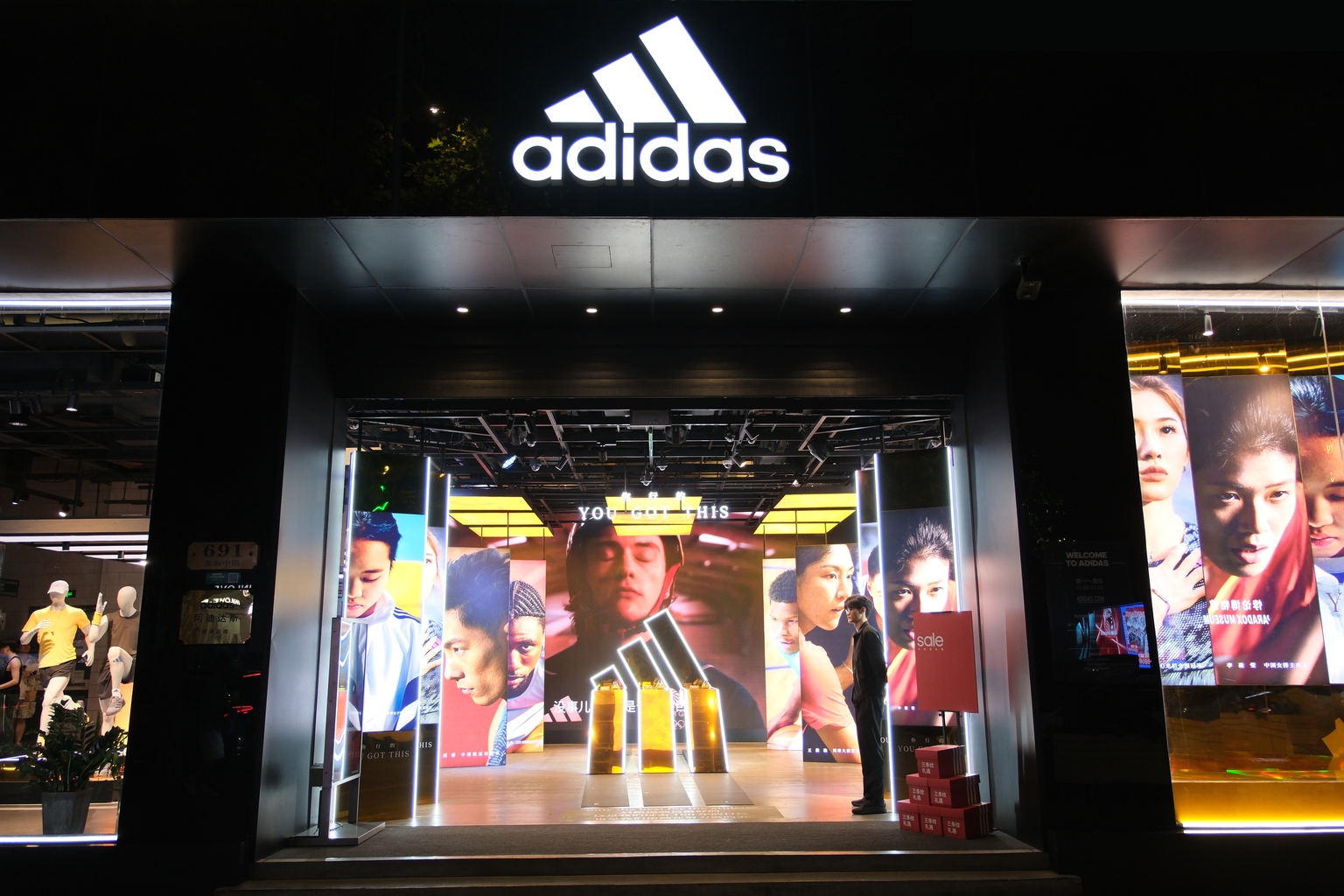
收获单季最强财报后,阿迪达斯“冰火两重天”
3 6 Ke· 2025-11-13 11:42
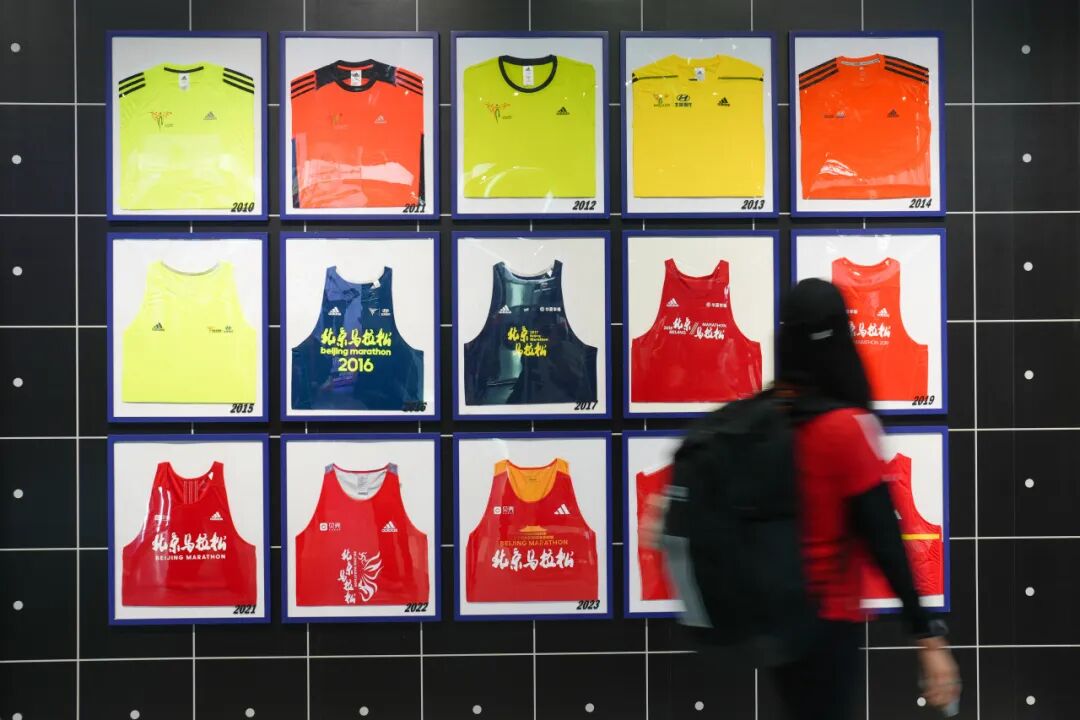
Core Viewpoint - Adidas reported its strongest quarterly earnings ever, with a revenue of €6.63 billion for Q3 2025, marking a 12% year-on-year increase in currency-neutral terms, yet the stock price fell over 10% post-announcement, indicating market disappointment despite strong performance [1][14][16]. Financial Performance - Adidas achieved a record quarterly revenue of €6.63 billion, the highest in its history, with a 12% year-on-year growth in currency-neutral terms [1]. - The running segment, particularly the ADIZERO series, saw revenue growth exceeding 30% year-on-year [1]. - The company raised its revenue and profit forecasts for FY 2025, expecting double-digit revenue growth and operating profit to rise to €2 billion, up from a previous estimate of €1.7 to €1.8 billion [13][16]. Market Reaction - Following the earnings report, Adidas's stock price dropped over 10%, marking its largest single-day decline since late July [1][14]. - The stock's decline was attributed to revenue figures falling short of market consensus expectations, with actual revenue of €6.63 billion compared to a forecast of €6.71 billion [16]. - The North American market underperformed, with a 5% year-on-year revenue decline when adjusted for currency, and only a 1% increase in currency-neutral terms, making it the worst-performing region [11][16]. Strategic Initiatives - Adidas's partnership with major marathon events, such as the Beijing Marathon, highlights its commitment to the running segment and local market engagement [2][4]. - The company has emphasized localization in its strategy, with over 60% of products sold in China designed by local teams and 95% manufactured locally [8][10]. - Adidas is relocating its Greater China headquarters to a larger facility, reflecting its focus on the Chinese market [10]. Competitive Landscape - In comparison to Nike, Adidas has shown stronger performance in the Greater China market, with a 10% year-on-year revenue growth, while Nike's revenue in the same region declined [11][12]. - Both Adidas and Nike are undergoing transitions following CEO changes, with Adidas currently outperforming Nike in the Chinese market [11][12].
阿迪耐克抢跑,运动品牌世界杯营销战端开启
Xin Lang Cai Jing· 2025-11-11 00:11
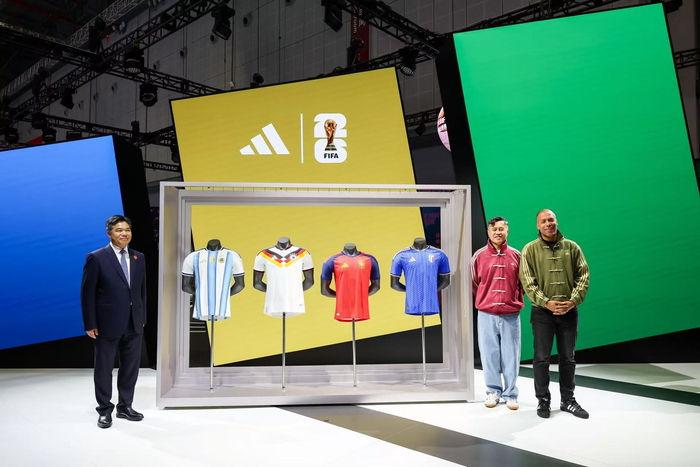
Core Viewpoint - The marketing competition among sports brands has intensified ahead of the 2026 FIFA World Cup, with Adidas showcasing its new jerseys and official match ball at the China International Import Expo, aiming to leverage the event's global appeal to enhance consumer engagement and brand loyalty [1][3][8]. Group 1: Adidas Marketing Strategy - Adidas has unveiled jerseys for national teams including Germany, Argentina, Spain, and Italy, incorporating classic elements and climate-adaptive technology for the North American conditions [1][3]. - The company has sponsored 22 teams and aims to use technology to enhance player performance while also fostering a deeper love for football among fans through exclusive gear [3][4]. - Adidas' CEO has indicated a shift towards blending fashion with football, planning to launch a second away jersey that emphasizes style and cultural connection [4]. Group 2: Competitor Activities - Nike has introduced Aero-FIT cooling technology for its national team jerseys and has launched a promotional campaign featuring top players to build anticipation for the World Cup [4][6]. - PUMA has signed a long-term partnership with the Portuguese Football Association, planning to provide gear for all teams, reflecting confidence in the upcoming World Cup [6]. - Under Armour is focusing on coaching staff, having appointed Arsenal's head coach as a brand ambassador, indicating its strategy to establish a foothold in a market dominated by larger brands [6]. Group 3: Marketing Insights and Trends - According to Guoxin Securities, effective brand marketing is crucial for establishing long-term consumer recognition, with a noted correlation between marketing expenditure and brand performance [6][7]. - Adidas' marketing spending has historically been around 12% of revenue, with a recent focus on digital channels leading to a decline in brand heat, while a return to sports marketing during the 2022 World Cup resulted in over 50% growth in football category sales [7]. - The 2026 World Cup is expected to be the largest and most inclusive, with ticket sales exceeding 1 million, indicating significant consumer interest and potential for brand engagement [7][8].
望远镜系列25之adidasFY2025Q3经营跟踪:收入符合预期,上调全年指引
Changjiang Securities· 2025-11-10 15:20
Investment Rating - The investment rating for the industry is "Positive" and is maintained [6]. Core Insights - In FY2025Q3 (July 1, 2025 - September 30, 2025), the company achieved revenue of €6.63 billion, representing an 8% year-over-year increase at constant exchange rates. The revenue performance was in line with expectations, with the Adidas brand revenue increasing by 12% [2][4]. - The gross profit margin improved by 0.5 percentage points to 51.8%, driven by lower product and transportation costs, improved business mix, and strong sales [2][4]. - Operating profit margin increased by 1.8 percentage points to 11.1%, while the net profit margin rose by 0.1 percentage points to 7.0% [2][4]. Revenue Breakdown - By region, the Adidas brand saw revenue growth across all markets: Europe (+9%), North America (+1%), Emerging Markets (+11%), Japan/Korea (+6%), and Greater China (+6%). The Adidas brand revenue in these regions grew by 12%, 8%, 13%, 11%, and 10% respectively [5]. - By channel, all channels for the Adidas brand experienced double-digit growth: wholesale (+10%), DTC (+14%), self-operated stores (+13%), and e-commerce (+15%) [5]. - By product category, both footwear and apparel for the Adidas brand achieved double-digit growth, with footwear up by 11% and apparel by 16%. Accessories saw a modest increase of 1% [5]. Inventory and Guidance - As of FY2025Q3, the company's inventory increased by 21% year-over-year to $5.47 billion, attributed to a low base last year and pre-purchases for the World Cup, which is expected to support revenue growth [11]. - The company raised its full-year guidance, projecting a 9% year-over-year revenue increase for FY2025 at constant exchange rates, with the Adidas brand expected to achieve double-digit growth. Operating profit is forecasted to be €2 billion, up from a previous estimate of €1.7 to €1.8 billion [11].
以“中国研发”为突破,外资借进博布局全球贸易
Di Yi Cai Jing· 2025-11-08 11:52
Group 1: Core Insights - The China International Import Expo (CIIE) serves as a platform for understanding the transformation of foreign investment in China, highlighting the shift from merely importing to local production and R&D [1] - Amid global uncertainties, China's commitment to "openness and development" is increasingly evident, making it a key player in global trade [1] Group 2: Global Competitiveness - Companies like Zeiss emphasize the importance of China's complete and responsive supply chain as a critical support for enhancing global competitiveness [2] - Zeiss is dynamically adjusting its global supply chain to minimize tariff impacts, moving parts of its supply chain from the U.S. to Germany and from Germany to China [2][3] - China has become Zeiss's largest market, contributing nearly 20% to the group's revenue, with ongoing discussions about local procurement standards [3] Group 3: Localization and Innovation - Companies are increasingly focusing on localizing their operations in China, with a shift from "local manufacturing" to "local R&D" and "local decision-making" [5] - Adidas has achieved over 60% of its products in China being designed by local teams, leading to significant growth in the Greater China region [8] - The collaboration between Japanese and Chinese teams in companies like Kao Group highlights the importance of local R&D in meeting diverse consumer needs [11] Group 4: Supply Chain Resilience - The establishment of local production bases, such as Schott's facility in Zhejiang, enhances supply security and benefits from China's supply chain advantages [4] - Schott's revenue in China reached approximately 2.42 billion RMB, reflecting a 3% growth after excluding exchange rate factors [10] - The new production line for Schott in Suzhou aims to support the innovation of the Chinese automotive industry, particularly in electric vehicles [10] Group 5: Sustainability and Innovation - SKF's commitment to achieving net-zero emissions by 2030 aligns with China's dual carbon goals, showcasing a commitment to sustainable manufacturing practices [12] - The introduction of SKF's near-zero carbon bearings at the CIIE demonstrates the company's focus on innovative and sustainable solutions [11][12]
阿迪达斯亮相进博会:以顶尖产品拥抱中国机遇 2026年FIFA世界杯产品全场吸睛
Zheng Quan Ri Bao Wang· 2025-11-07 06:45
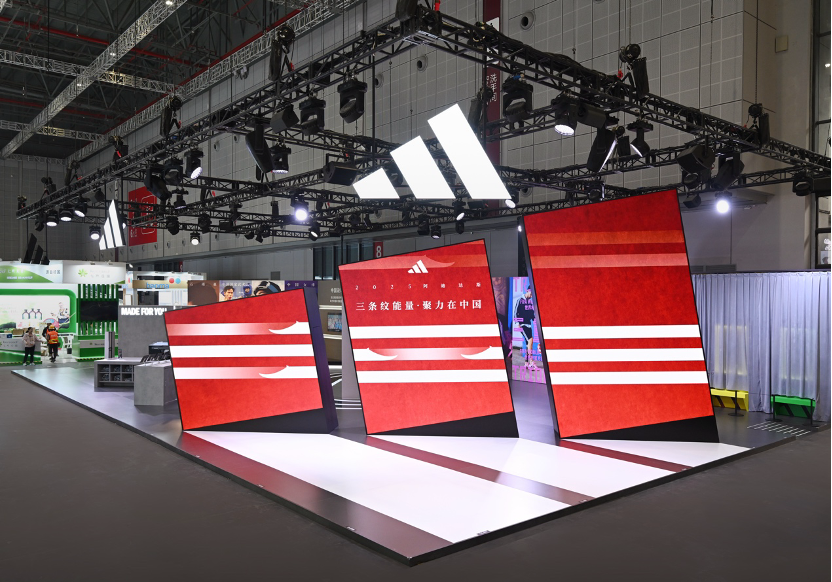
Core Insights - Adidas has showcased its commitment to the Chinese market by participating in the China International Import Expo for the fourth time, emphasizing its strategy of "In China, For China" [1][4] - The company has introduced innovative products and localized designs, aiming to meet the evolving demands of Chinese consumers while promoting high-quality development in the sports industry [1][4] Group 1: Event Participation and Strategy - Adidas highlighted its theme "Three Stripes Energy, Powering in China" at the expo, featuring a dedicated area for the FIFA World Cup and showcasing technological innovations in running shoes [1] - The global sales head of Adidas expressed the company's intention to continue collaborating with the Chinese government, athletes, consumers, and partners to leverage opportunities in China's sports sector [1][4] Group 2: Product Innovations - At the expo, Adidas unveiled the home jerseys for the German, Argentine, Spanish, and Italian national teams for the 2026 FIFA World Cup, emphasizing their design inspirations from history and culture [2] - The new jerseys incorporate Adidas' CLIMACOOL technology, designed to help players adapt to varying climate conditions during the World Cup [2] Group 3: Technological Advancements - The official match ball for the 2026 FIFA World Cup, named "Trionda," features a revolutionary four-panel structure and advanced side chip system for precise flight trajectories and real-time data collection [3] - This innovation aims to enhance the accuracy of officiating in matches, providing a smoother experience for fans [3] Group 4: Localized Design and Market Engagement - Over 60% of Adidas products sold in China are designed by local teams, reflecting the company's commitment to "China Creation" and local market needs [3] - Recent product lines, such as New Chinese Style and Future of Style, have gained popularity among domestic consumers and attracted interest from international markets, particularly in Japan and South Korea [3]
第八届进博会倒计时 阿迪达斯这个“球星”超抢眼
Zheng Quan Ri Bao Wang· 2025-11-04 06:45
Core Insights - Adidas aims for 100% local resonance in China, focusing on sports events, technological innovation, and local cultural creation [1][2] Group 1: Event Participation - Adidas will showcase at the 8th China International Import Expo (CIIE) from November 5 to 10, emphasizing the theme "Three Stripes Energy, Powering in China" [2] - The company will feature three main exhibition areas and an experience zone, highlighting its sports technology innovations and progress in China [2] Group 2: Product Launches - The official match ball for the 2026 FIFA World Cup, named "TRIONDA," was globally launched on October 3, with Adidas presenting it at the CIIE [3] - Adidas will also globally unveil World Cup jerseys at the event, marking the first appearance of several teams' home jerseys in China [3] Group 3: Youth Engagement - Adidas recognizes the importance of nurturing young talent in football, as demonstrated by its sponsorship of the National Youth Campus Football League (CHFL), which garnered significant attention [3] - The finals of the CHFL attracted over 10,000 fans, showcasing the connection between youth players and the sport [3] Group 4: Technological Innovations - The "CHASING 100" project, featuring the adidas ADIZEROEVO PRIME X shoes, will debut at the expo, highlighting a significant achievement in ultra-distance running [4] - The project culminated in a record-breaking performance by South African athlete Sibusiso Kubheka, who completed 100 kilometers in under 6 hours [4] Group 5: Product Performance - The ADIZERO 0 series has been instrumental in athletic success, with athletes winning over half (51%) of the championships in the top 50 global track and road running events in 2024 [6] - The series has also broken seven world records in road running and track events this year, demonstrating its effectiveness [6] Group 6: Local Cultural Integration - The Shanghai Creative Center (CCS) celebrates its 20th anniversary, showcasing "Honorary Home" and "Chinese Creative Workshop" at the expo, reflecting on the rise of Chinese sports and consumer trends [7] - The "Honorary Home" section features top-tier equipment created for Chinese athletes, while the "Chinese Creative Workshop" highlights modern design interpretations of Chinese philosophy and culture [7]
阿迪达斯在中国:不止95%本土制造,更要100%本土共鸣
Sou Hu Wang· 2025-11-03 13:36
Core Insights - The relationship between Adidas and the Chinese market can be summarized as "mutual pursuit," highlighted by CEO Bjoern Gulden's recent visit to China, marking his fourth trip and first as a formal member of the Shanghai Municipal Advisory Council [1][3] - Adidas continues to emphasize its strategic importance in China, showcasing its commitment through various initiatives, including a fashion show that blends sports and street culture [3][9] - The company reported record revenue of €6.63 billion for Q3 2025, driven by double-digit growth across all markets and categories, with a notable increase in operating profit and gross margin [9][11] Group 1: Strategic Engagement - Gulden's participation in high-level meetings and events in China signals Adidas's intent to deepen its engagement with local stakeholders [1][3] - The "POWER OF THREE" series event in Shanghai reflects the brand's strategy to resonate with local consumers through creative collaborations [3][9] Group 2: Financial Performance - Adidas achieved a historic quarterly revenue of €6.63 billion, marking a 12% growth driven by strong performance across various product categories [9][11] - The operating profit reached €736 million, with a gross margin increase of 0.5 percentage points to 51.8% [9][11] Group 3: Localization Strategy - Adidas's localization strategy focuses on understanding and resonating with Chinese consumers, emphasizing the importance of local insights in product development [12][15] - The company has established a creative center in Shanghai to foster local design and collaboration with local artists and athletes [20][29] Group 4: Supply Chain and Innovation - Adidas is enhancing its flexible supply chain capabilities to address inventory challenges, implementing an "end-to-end" model to streamline operations [31][32] - The company has invested in a new distribution center in Suzhou, capable of processing over one million items daily, with over 95% of products sold in China being locally manufactured [31][32] Group 5: Cultural Resonance - Adidas aims to create emotional connections with consumers through its branding and community engagement initiatives, such as sponsoring local sports events and youth programs [41][44] - The brand's new slogan "YOU GOT THIS" reflects its commitment to inclusivity and encouraging a love for sports among young people [39][41] Group 6: Future Outlook - Adidas is focused on maintaining its growth trajectory in China, with plans for continued investment in local design and supply chain capabilities [11][50] - The company recognizes the importance of cultural identity and aims to position "Chinese design" as a global trendsetter [29][50]

找雪中飞代工羽绒服,阿迪达斯做错了吗?
3 6 Ke· 2025-11-03 12:51
Core Viewpoint - Adidas faces backlash from consumers over high-priced down jackets produced by a third-party manufacturer, Snow Flying, which offers similar products at lower prices, raising questions about brand premium and consumer awareness [1][2][5] Financial Performance - Adidas reported third-quarter revenue of €6.6 billion, a 3% year-on-year increase, and operating profit of €736 million, up 23% [1][6] - In the Greater China region, third-quarter revenue reached €947 million, marking a 10% year-on-year growth and achieving ten consecutive quarters of growth [1][8] - The company has raised its annual performance forecast despite the ongoing controversy [8][12] Market Position and Competition - Adidas has seen a resurgence in the Chinese market after a decline due to the Xinjiang cotton controversy, but faces strong competition from local brands like Anta and Li Ning, which have surpassed Adidas in revenue and market share [1][6][15] - Adidas's market share in China has dropped from 15% in 2021 to 8.7% in 2024, while local brands continue to grow [15][16] Consumer Sentiment and Brand Strategy - Consumer complaints about product quality and service have surged, with over 25,000 complaints on platforms like Black Cat Complaints, primarily focused on quality issues [4][5] - The shift in consumer focus towards value for money over brand prestige is evident, with a significant increase in consumers prioritizing product pricing [16] - Adidas has adapted its strategy by positioning itself as a fashion brand and engaging popular celebrities for endorsements, which has helped regain consumer interest [9][11] Industry Trends - The use of third-party manufacturing is common in the industry, allowing brands like Adidas to reduce costs, but it can negatively impact brand image if consumers feel misled about product origins [5][12] - The overall sportswear market in China is projected to grow from ¥542.5 billion in 2024 to ¥598.9 billion by the end of 2025, indicating a competitive landscape for all brands [12][16]