AMD(AMD)

Search documents
美国科技股集体飘红,特朗普旗下公司大涨超40%,比特币盘中跌破85000美元
2 1 Shi Ji Jing Ji Bao Dao· 2025-12-18 23:29
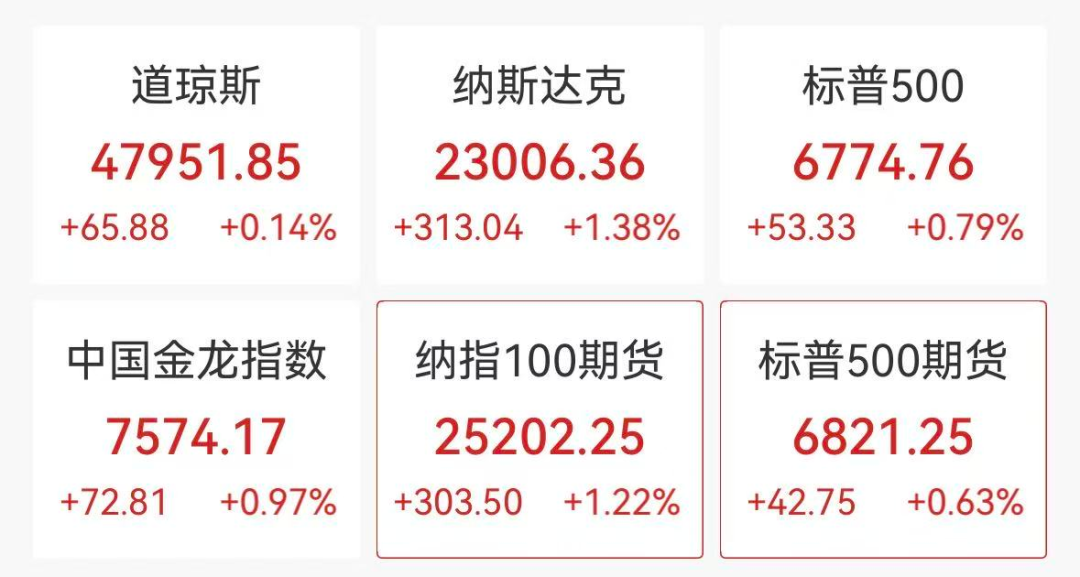
Group 1: Technology Stocks Performance - Major tech stocks experienced a collective rise, with Tesla increasing over 3%, Amazon and Facebook rising over 2%, and Google and Nvidia gaining nearly 2% [2] - Chip stocks saw widespread gains, with Micron Technology up over 10%, TSMC rising nearly 3%, and ASML increasing over 2% [2] Group 2: Individual Stock Movements - Micron Technology's stock price reached $248.55, reflecting a 10.21% increase [3] - Tesla's stock price was $483.37, marking a 3.45% rise [3] - Amazon's stock price was $226.76, with a 2.48% increase [3] - Facebook's stock price was $664.45, showing a 2.30% rise [3] - Nvidia's stock price was $174.14, reflecting a 1.87% increase [3] - AMD's stock price was $201.06, with a 1.49% rise [3] Group 3: Chinese Stocks and Indices - The Nasdaq Golden Dragon China Index rose by 0.97%, indicating a positive trend for Chinese stocks [2] - Individual Chinese stocks such as BOSS Zhipin increased over 5%, while XPeng Motors and Hesai Technology rose nearly 3% [2] Group 4: Trump Media Technology Group - Trump Media Technology Group's stock surged over 40% following the announcement of a merger agreement with TAE Technologies, expected to complete by mid-2026 [4] Group 5: Commodity Prices - WTI crude oil futures closed up 0.38% at $56.15 per barrel, while Brent crude oil futures rose 0.23% to $59.82 per barrel [5] - COMEX gold futures fell 0.23% to $4363.9 per ounce, and COMEX silver futures dropped 2.17% to $65.45 per ounce [6] Group 6: Cryptocurrency Market - Major cryptocurrencies experienced declines, with Bitcoin dropping below $85,000, currently priced at $85,340 per coin [7][8] - Over the past 24 hours, more than 160,000 traders faced liquidation, totaling approximately $549 million [8] Group 7: Economic Indicators - The U.S. Consumer Price Index (CPI) for November rose 2.7% year-on-year, down from 3% in September, with food prices increasing by 2.6% and energy prices by 4.2% [9] - The core CPI, excluding food and energy, increased by 2.6% year-on-year [9] - The probability of a 25 basis point rate cut by the Federal Reserve in January is 26.6%, with a 73.4% chance of maintaining current rates [9]





美国科技股集体飘红,特朗普旗下公司大涨超40%,比特币盘中跌破85000美元
21世纪经济报道· 2025-12-18 23:23
Market Performance - The three major U.S. stock indices closed higher, with the Dow Jones up 0.14%, the S&P 500 up 0.79%, and the Nasdaq up 1.38% [1] - Major tech stocks saw collective gains, with Tesla rising over 3%, Amazon and Facebook up over 2%, and Google and Nvidia nearly 2% [3] Semiconductor Sector - Semiconductor stocks generally rose, with Micron Technology increasing over 10%, TSMC up nearly 3%, and ASML up over 2% [3] - Notable price movements included Micron at $248.55 (+10.21%), Tesla at $483.37 (+3.45%), and Amazon at $226.76 (+2.48%) [4] Chinese Stocks - The Nasdaq Golden Dragon China Index rose by 0.97%, with individual stocks like BOSS Zhipin up over 5% and XPeng Motors and Hesai Technology nearly 3% [3] Trump Media Technology Group - Trump Media Technology Group's stock surged over 40% following the announcement of a merger agreement with TAE Technologies, expected to complete by mid-2026 [5] Commodity Prices - WTI crude oil futures rose by 0.38% to $56.15 per barrel, while Brent crude increased by 0.23% to $59.82 per barrel [5] - COMEX gold futures fell by 0.23% to $4363.9 per ounce, and silver futures dropped by 2.17% to $65.45 per ounce [5] Cryptocurrency Market - Major cryptocurrencies experienced declines, with Bitcoin dropping below $85,000, currently at $85,340, reflecting a 0.84% decrease [6] - The total market saw over 160,000 liquidations in the past 24 hours [5] Inflation Data - The U.S. Consumer Price Index (CPI) for November rose by 2.7% year-on-year, down from 3% in September, with food prices up 2.6% and energy prices up 4.2% [7] - The core CPI, excluding food and energy, increased by 2.6% year-on-year [7] Federal Reserve Outlook - The probability of a 25 basis point rate cut by the Federal Reserve in January is 26.6%, with a 73.4% chance of maintaining current rates [8] - By March, the cumulative probability of a 25 basis point cut rises to 46.8% [8]



Cantor Keeps Overweight on AMD Despite Target Cut, Citing Strong AI Tailwinds
Yahoo Finance· 2025-12-18 22:53
Advanced Micro Devices, Inc. (NASDAQ:AMD) is included among the 12 Best Long Term US Stocks to Buy Now. Cantor Keeps Overweight on AMD Despite Target Cut, Citing Strong AI Tailwinds On December 16, Cantor Fitzgerald cut its price target on Advanced Micro Devices, Inc. (NASDAQ:AMD) to $300 from $350 while keeping an Overweight rating on the stock. The firm says the semiconductor index is set up to lead the broader market after beating the S&P 500 by about 30 points in 2025. Early momentum from the AI buil ...

Most Attractive AI Bet Today? For Me, It's AMD
Seeking Alpha· 2025-12-18 19:31
Core Viewpoint - The article expresses skepticism towards "AI stocks," emphasizing a preference for fundamental analysis over valuation multiples like P/E ratios [1] Group 1: Investment Philosophy - The company has managed investments since 1999, gaining insights through various market cycles [1] - The focus is on uncovering mispriced assets that the market has overlooked, guided by a fundamentals-first approach [1] - While acknowledging the importance of sentiment and technicals in today's algorithm-driven investment environment, the company prioritizes fundamental analysis [1]

Dow Jones Today: Stock Indexes Jump After Inflation Data Comes in Cooler Than Expected; Dow, S&P 500 Poised to Snap 4-Session Skids; Gold Sets Record
Investopedia· 2025-12-18 17:00
Corporate News - Shares of Broadcom (AVGO) and Oracle (ORCL) rebounded more than 1% in premarket trading after closing down 4.5% and 5.4% respectively [3] - AI chipmakers Nvidia (NVDA) and Advanced Micro Devices (AMD) also saw a recovery, with shares up more than 1% in premarket trading after finishing down 3.8% and 5.3% [3] - Micron Technology (MU) shares surged over 10% following earnings that exceeded analysts' expectations, driven by increased demand for AI hardware [4] - Tesla (TSLA) shares advanced about 1.5% in premarket trading after a 4.6% drop the previous day [4] - Nike (NKE) and FedEx (FDX) shares rose 0.8% and 0.6% respectively ahead of their quarterly results scheduled for later today [4]



Which Stock To Rally Next: Micron Or AMD?
Forbes· 2025-12-18 16:05
Core Viewpoint - Micron Technology (MU) presents a more favorable investment opportunity compared to Advanced Micro Devices (AMD) due to superior revenue growth, profitability, and lower valuation metrics [2]. Financial Performance Comparison - MU's quarterly revenue growth is reported at 46.0%, while AMD's is at 35.6% [2]. - Over the last 12 months, MU's revenue growth reached 48.9%, significantly higher than AMD's 31.8% [2]. - MU's last twelve months (LTM) margin stands at 26.2%, compared to AMD's 9.4%, indicating better profitability for MU [2]. Valuation Metrics - A side-by-side examination of financial metrics reveals that MU outperforms AMD in terms of growth, margins, momentum, and valuation ratios [3].
Better Semiconductor Stock for 2026: AMD vs. Intel
Yahoo Finance· 2025-12-18 15:50
Core Insights - AMD is expected to gain market share in CPUs by transitioning to a 2-nanometer process node, with its Zen 6 CPU being the first on TSMC's 2nm node, enhancing performance while managing power consumption [1] - AMD's market share in PC CPUs rose by 1.4 percentage points to 25.4% and in server CPUs by 3.6 points to 27.8% in Q3 2025 [2] - Revenue for AMD increased by 35% year-over-year in the first three quarters of 2025, with net income rising by 244% to $2.8 billion [3] - The semiconductor industry is projected to grow by 26% in 2026, reaching $975 billion, benefiting companies like AMD and Intel [4] - AMD anticipates annualized revenue growth of over 35% for the next three to five years, up from 21% in the past five years, and expects operating margins to rise to 35% [8] AMD Specific Insights - AMD's 2nm chips will support a broader range of AI workloads, with the data center market opportunity expected to grow at over 40% annually for the next five years [7] - Shipments of AI PCs are projected to increase by 83% in 2026, contributing to AMD's growth [7] - Analysts predict a 62% increase in AMD's earnings for 2026, significantly higher than the 20% growth expected in 2025 [9] - AMD's stock has risen by 72% in 2025, driven by strong demand for its chips across various sectors [4] Intel Specific Insights - Intel's share price increased by 87% in 2025 due to positive developments and investments from major firms [10] - The company has a strong cash position of nearly $31 billion, allowing for increased production capacity [11] - Intel's revenue is expected to grow by 2.5% in 2026, with a projected earnings increase of 76% due to cost-saving measures [15] - Despite a forecasted 1% revenue drop in 2025, Intel is expected to post an adjusted profit of $0.34 per share [14] Comparative Insights - Both AMD and Intel are on track for healthy earnings growth in 2026, but AMD's growth is driven by revenue and earnings increases, while Intel's is primarily from cost optimization [16] - AMD is considered a more attractive investment compared to Intel based on current valuations and growth prospects [16]
The Anti-Nvidia Trade Has 3 Irrational Flaws
Seeking Alpha· 2025-12-18 15:11
Core Insights - The article highlights the expertise of Uttam, a growth-oriented investment analyst focusing on the technology sector, particularly in semiconductors, artificial intelligence, and cloud software [1] - Uttam's research extends to other sectors such as MedTech, Defense Tech, and Renewable Energy, indicating a broad analytical scope [1] - The Pragmatic Optimist Newsletter, co-authored by Uttam and his wife, is recognized and cited by major publications like the Wall Street Journal and Forbes, showcasing its influence in the investment community [1] - Prior to his current role, Uttam gained significant experience in Silicon Valley, leading teams at major technology firms including Apple and Google, which adds credibility to his analyses [1] Sector Focus - The primary sectors of focus for Uttam's equity research include semiconductors, artificial intelligence, and cloud software, which are critical areas for growth in the technology industry [1] - The inclusion of MedTech, Defense Tech, and Renewable Energy in his research portfolio suggests a strategic approach to identifying diverse investment opportunities across various high-growth sectors [1]
美股期货涨幅扩大 科技股盘前走高
Ge Long Hui A P P· 2025-12-18 14:04
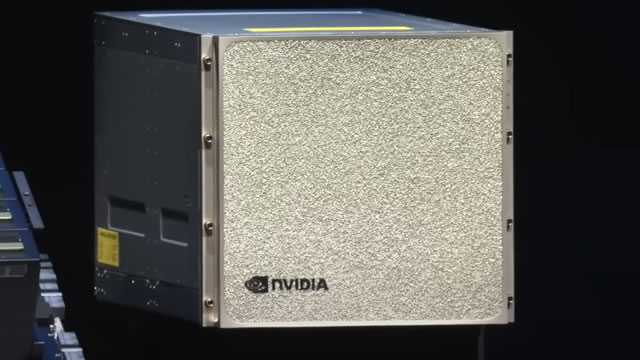
Core Viewpoint - U.S. stock futures are showing positive movement, with the Dow Jones futures up by 0.54%, S&P 500 futures up by 0.83%, and Nasdaq 100 futures up by 1.40% [1] Group 1: Market Performance - U.S. technology stocks are rising in pre-market trading, with Nvidia shares increasing by over 2% and AMD shares rising by over 3% [1]
股票市场概览:资讯日报:大型科技股拖累标普500指数四连跌-20251218
Guoxin Securities Hongkong· 2025-12-18 13:17
Market Overview - The S&P 500 index has experienced four consecutive declines, primarily driven by large technology stocks[1] - Major U.S. indices collectively fell, with the Nasdaq down nearly 2%[9] - The S&P 500 closed at 6,800, reflecting a decline of 1.16% for the day and a year-to-date increase of 14.28%[3] Hong Kong Market Performance - The Hong Kong stock market showed a significant recovery in the afternoon, with major indices rebounding after two consecutive days of decline[9] - Large technology stocks such as Meituan and Kuaishou rose nearly 2%, while Tencent and Alibaba increased over 1%[9] - The financial sector saw a collective rise, with China Life Insurance up over 4% and CITIC Securities up over 3%[9] Sector Highlights - Precious metals stocks strengthened, with China Silver Group rising over 7% due to a weaker dollar and expectations of interest rate cuts, pushing silver prices above $66 per ounce[9] - The aviation sector saw gains, with China Southern Airlines up over 5% as ticket bookings surged ahead of the New Year holiday[9] - The lithium battery sector also rose, driven by a significant increase in lithium carbonate futures prices, with Tianqi Lithium up 5.83%[9] Economic Indicators - Japan's November exports grew by 6.1% year-on-year, exceeding market expectations, with a trade surplus of 322.2 billion yen[13] - The U.S. Treasury yields have shown fluctuations, impacting market sentiment and investment strategies[18]