AstraZeneca(AZN)

Search documents
ASH数据催化临近,关注血液病与商保目录受益标的
Great Wall Glory Securities· 2025-12-02 08:09
Investment Rating - The investment rating for the industry is "Positive" and the rating has been maintained [2] Core Views - The pharmaceutical and biotechnology industry index experienced a decline of 4.40%, ranking 23rd among 31 primary industries, underperforming the CSI 300 index which fell by 2.19% [6][18] - The valuation of the pharmaceutical and biotechnology industry as of November 28, 2025, is a PE (TTM overall method, excluding negative values) of 29.46x, down from 30.89x in the previous period, indicating a downward trend and below the average [22] - The report highlights potential beneficiaries from the upcoming ASH data, particularly in blood diseases and companies with solid grassroots channels, as well as those with differentiated advantages in oncology, autoimmune, and rare disease products [10] Summary by Sections Industry Review - The pharmaceutical and biotechnology industry index fell by 4.40%, with chemical preparations and medical devices showing declines of 2.86% and 2.95% respectively, while offline pharmacies and vaccines saw larger declines of 8.22% and 6.42% [6][18] - The PE ratio for the pharmaceutical and biotechnology industry is 29.46x, with the highest valuations in the vaccine (47.56x), hospital (41.17x), and medical device (36.77x) sectors, while pharmaceutical circulation has the lowest at 14.58x [22] Important Industry News - The National Administration of Traditional Chinese Medicine and the National Healthcare Security Administration released a directory for traditional Chinese medicine diseases suitable for disease-based payment [26][27] - AstraZeneca's drug "Durvalumab" received FDA approval for a new indication in perioperative treatment of gastric cancer [32] - Otsuka Pharmaceutical's new drug for IgA nephropathy, "Sibeprenlimab," has been approved by the FDA [38] - Bayer's first-in-class lung cancer drug "Sevabertinib" has been approved by the FDA for specific patient populations [40] Investment Recommendations - Focus on innovative pharmaceutical companies that may benefit from the medical insurance or commercial insurance directories, blood cancer targets with imminent ASH data releases, and biotech and CXO leaders with solid technology platforms and international collaboration expectations [10]


The Trump Market: A Rollercoaster of “Winning” (and Occasional Panic)
Stock Market News· 2025-12-02 06:00
Market Volatility and Tariffs - The introduction of new tariffs by President Trump in April 2025 led to significant declines in global stock markets, with the S&P 500 dropping below 5,000 points and European indices like Germany's DAX and France's CAC 40 falling by 10% and 6.6% respectively in a single session [2][3] - The International Monetary Fund (IMF) estimated that a 20% tariff rate could reduce global growth by more than 1% through 2026 and contribute between 0.6 to 1 percentage point to core inflation [3] Company-Specific Developments - Costco is suing the Trump administration for a refund on tariffs, with analysts suggesting it could be a "tariff winner" despite a 2% drop in its stock after mixed Q2 earnings [4] - Costco's stock has fallen less than 1% in 2025, outperforming the S&P 500, which has seen a 15% decline year-to-date [4] UK Pharma Deal - The US and UK reached a deal on December 1, 2025, to establish zero tariffs on British pharmaceutical products, but Britain will pay 25% more for new U.S. medicines [5] - Market reactions to this deal were muted, with shares of UK drugmakers GSK and AstraZeneca showing little change [5] Spain's Defense Spending - Spain faces potential tariffs due to its reluctance to meet a 5% of GDP defense spending target set by President Trump, highlighting the use of trade penalties as leverage for military budgets [7] Federal Reserve Leadership Speculation - Speculation surrounding the next Federal Reserve Chair has introduced volatility into various markets, with expectations of faster rate cuts under a new, potentially more dovish chair [9] Trump Media & Technology Group - Trump Media & Technology Group (DJT) has seen its stock decline significantly, trading near $11 as of November 2025, with forecasts for December ranging widely from $15 to $67.83 [10] Overall Market Trends - On December 1, 2025, U.S. stocks experienced declines, with the Dow Jones down 0.9% and the S&P 500 down 0.5%, attributed to rising Treasury yields and expectations regarding the Federal Reserve [11] - The market remains characterized by volatility driven by political developments and tariff threats, indicating a challenging environment for investors [12]


Trump admin strikes zero tariff pharmaceutical deal with Britain — a move welcomed by drugmakers
New York Post· 2025-12-01 17:37
Core Points - The United States and Britain have reached a deal to eliminate tariffs on British pharmaceutical products and medical technology in exchange for increased spending on US medicines and a revision of drug valuation methods [1][2] - The UK will increase the net price it pays for new US medicines by 25%, while UK-made medicines and medical technology will be exempt from certain tariffs [1][5] - The UK's NICE will raise its cost-effectiveness threshold for new drugs from £30,000 ($39,789) to £35,000, allowing for better alignment with the pharmaceutical industry's economic environment [3] Industry Impact - The British pharmaceutical industry group ABPI believes the deal will enhance access to new medicines for British patients and attract investment from drugmakers [6] - Shares of UK-based drugmakers GSK and AstraZeneca remained stable following the announcement, indicating limited immediate market reaction [6] - Bristol Myers Squibb anticipates investing upwards of $500 million in the UK over the next five years due to the commitments made under the deal [12] Regulatory Changes - The agreement includes a commitment from Britain to reduce the rebate rate under the voluntary pricing scheme to 15% by 2026, addressing a point of contention between the pharmaceutical sector and the government [11] - The revised NICE framework will apply to all new medicines, not just those from the US, but will not impact the pricing of existing treatments [3] Economic Context - Pharmaceuticals constitute a significant portion of UK exports to the US, making up one-fifth of all UK exports by value, which positions the UK favorably in international trade [13] - The deal is seen as a step towards creating a more attractive environment for life sciences in the UK, which has faced criticism for its challenging operating conditions [10][7]

BREAKING: Trump strikes major deal with UK on drug pricing
Youtube· 2025-12-01 15:15
Core Point - The announcement details a new pharmaceutical deal between the United States and the United Kingdom aimed at reducing healthcare costs through price adjustments and tariff eliminations [1][2][3][4] Group 1: Agreement Details - The United Kingdom will pay 25% more for new medicines, which is expected to lead to savings in the United States [2][3] - The U.S. will not impose Section 232 tariffs on pharmaceuticals and related technologies imported from the United Kingdom [2][3] Group 2: Implications - This agreement is viewed as a step towards lowering healthcare prices by reducing pharmaceutical costs in the U.S. [4] - The arrangement is characterized as a reciprocal deal, where the U.K. accepts higher prices in exchange for lower tariffs, benefiting both parties [3]

扩大产能加码研发 外资企业“链”上深耕中国市场
Zhong Guo Zheng Quan Bao· 2025-11-30 23:36
Core Insights - Foreign companies are deepening their commitment to the Chinese market through investments in production capacity and R&D centers, reflecting a long-term strategy to enhance local manufacturing and collaboration with Chinese clients [1][2][4]. Group 1: Expansion of Production Capacity - Alleima has officially launched its second-phase factory in Jiangsu, China, emphasizing its long-term commitment to the Chinese market and improved supply reliability [1]. - Korean company Ailotte signed a contract to invest approximately 50 million yuan in a semiconductor vacuum pump manufacturing base in Xi'an, enhancing its service capabilities for Chinese clients [2]. - AstraZeneca announced an additional investment of about 136 million USD to expand its production capacity in Qingdao, showcasing its confidence in the Chinese market [2]. Group 2: Establishment of R&D Centers - Porsche has opened its first strategic overseas R&D center in Shanghai, aiming to integrate German engineering with China's digital future and significantly reduce its R&D cycle from years to months [3]. - Johnson & Johnson established its first "industry-academia-research-use" innovation center in Beijing, focusing on advanced medical technologies such as AI and digital surgical assistance [3]. Group 3: Positive Outlook on the Chinese Market - The vast and continuously upgrading consumer market in China is a fundamental attraction for foreign investment, with over 1.4 billion people contributing to its status as the world's second-largest consumer market [4][5]. - The comprehensive industrial ecosystem in China provides essential support for foreign companies, facilitating a "one-stop" solution from raw materials to logistics [5]. - The alignment of China's industrial innovation support with the strategic needs of foreign enterprises is seen as a significant advantage for companies aiming for high-quality development in sectors like healthcare [5].

AstraZeneca or Merck: Which Oncology Giant Has the Edge?
ZACKS· 2025-11-27 15:46
Core Insights - AstraZeneca (AZN) and Merck (MRK) are both leading global pharmaceutical companies with strong oncology portfolios, with oncology driving over 60% of Merck's revenues and around 43% for AstraZeneca [1][2][3] Group 1: Company Performance - Merck's Keytruda generated $23.3 billion in sales in the first nine months of 2025, reflecting an 8% year-over-year increase, and is a key driver of revenue growth [4][9] - AstraZeneca's oncology sales rose 16% in the first nine months of 2025, contributing to its overall revenue growth [2][12] - AstraZeneca aims for $80 billion in revenues by 2030, supported by 20 planned medicine launches, with several new products already contributing to growth [14][30] Group 2: Product Pipeline and Acquisitions - Merck's pipeline has nearly tripled since 2021, with plans to launch around 20 new vaccines and drugs, including Capvaxive and Winrevair, which have strong revenue potential [6][28] - AstraZeneca has launched several new drugs that are performing well, offsetting losses from mature brands, and expects to achieve a mid-30s percentage core operating margin by 2026 [14][16] Group 3: Market Challenges - Both companies face pressures from declining legacy brands and increasing competition, particularly Merck's reliance on Keytruda, which will lose exclusivity in 2028 [10][11][29] - AstraZeneca is dealing with generic competition affecting key drugs and challenges related to U.S. oncology sales due to policy changes [16][17] Group 4: Financial Estimates and Valuation - The Zacks Consensus Estimate for AstraZeneca's 2025 sales and EPS indicates an 8.7% and 11.9% year-over-year increase, respectively [18] - Merck's 2025 sales and EPS estimates imply a 1.0% and 17.4% year-over-year increase, respectively, with recent EPS estimates showing a slight increase [20][21] - AstraZeneca's stock has risen 42.5% year-to-date, outperforming the industry, while Merck's stock has increased by 5.2% [22][24] Group 5: Dividend and Valuation Comparison - AstraZeneca's dividend yield is 1.08%, while Merck's is higher at 3.1%, indicating a more attractive income for Merck [25] - From a valuation perspective, AstraZeneca trades at a higher price/earnings ratio of 18.28 compared to Merck's 11.85, suggesting Merck may be undervalued [24]


阿斯利康等外资巨头加码投资北京,商务部:持续优化投资环境
Nan Fang Du Shi Bao· 2025-11-27 10:13
Core Points - Several foreign companies, including AstraZeneca, are increasing investments in Beijing and China [1] - The Ministry of Commerce is implementing measures to support foreign enterprises and improve the business environment [3] Group 1: Investment Promotion - The Ministry of Commerce, along with relevant departments, is actively promoting investment opportunities in China through various activities [3] - During the recent China International Import Expo, the Ministry hosted several key events, where foreign companies expressed confidence in the Chinese economy and are focusing on localization, digitalization, and green transformation [3] Group 2: Business Environment Optimization - The Ministry of Commerce plans to continue optimizing the investment environment for foreign enterprises by addressing their needs and converting them into government services [4] - There will be an emphasis on expanding market access in the service sector, particularly in telecommunications and healthcare, while addressing specific market entry challenges faced by foreign companies [4] Group 3: Structural Reforms - The Ministry will deepen reforms in the foreign investment promotion system and enhance the role of bilateral investment promotion mechanisms [4] - National-level economic development zones and free trade pilot zones will be leveraged to create favorable conditions for foreign investment in China [4]
Why Medicare price negotiations matter for Novo Nordisk, AstraZeneca, and other European pharma companies
CNBC· 2025-11-26 17:18
Core Insights - Drug pricing is a significant concern for pharmaceutical companies and investors, particularly in light of the Inflation Reduction Act and President Trump's push for lower medicine prices [1][11] - The U.S. market is crucial for large-cap pharmaceutical companies due to higher prices for branded medicines, with a substantial portion of their sales originating from this market [7] Drug Pricing Legislation - The Inflation Reduction Act (IRA), enacted in 2022, allows the Centers for Medicare & Medicaid Services (CMS) to negotiate drug prices for Medicare patients, impacting global pharmaceutical companies [2][4] - Newly negotiated prices for 15 blockbuster drugs, including significant discounts for Novo Nordisk's Ozempic (71% discount) and GSK's Trelegy (73% discount), are set to take effect in 2027, with overall discounts ranging from 38% to 85% [4][9] Company Responses and Market Reactions - European pharmaceutical companies, including AstraZeneca and Novo Nordisk, are making substantial U.S. investments to adapt to the changing market dynamics and pricing pressures [3][11] - Stock market reactions have been muted, with AstraZeneca and GSK shares rising less than 1%, while Novo shares increased by 4.7% following the announcement of price negotiations [8][9] Future Considerations - The CMS is expected to publish a list of 15 drugs selected for negotiations for 2028 by February 1, 2026, indicating ongoing scrutiny and potential changes in drug pricing [9] - Companies are exploring ways to mitigate the impact of price reductions, including voluntary price cuts and investments in U.S. manufacturing to avoid tariffs [11][13]


Medicare Announces Price Cuts For 15 Drugs— Novo Nordisk's Wegovy And Ozempic To Cost $274 A Month - AstraZeneca (NASDAQ:AZN), Eli Lilly (NYSE:LLY)
Benzinga· 2025-11-26 10:11
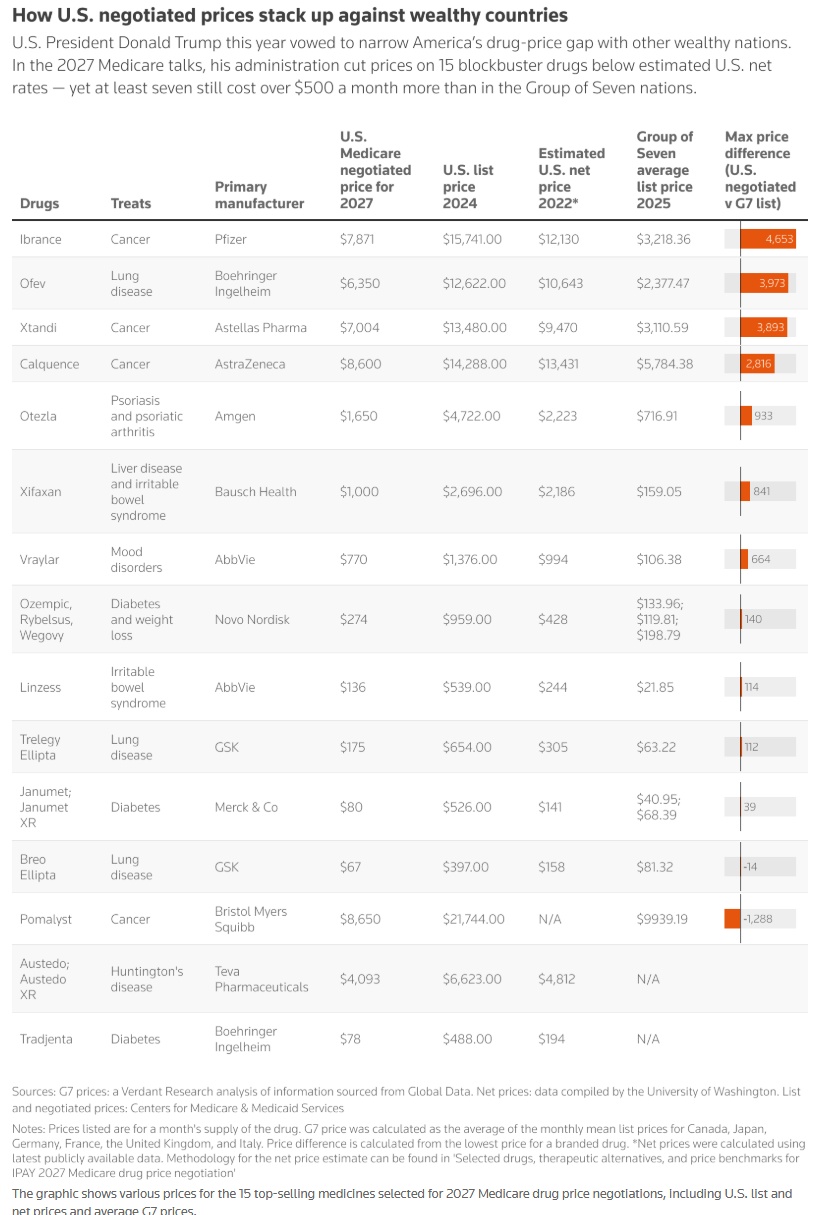
Core Insights - The U.S. Centers for Medicare and Medicaid Services (CMS) has negotiated lower prices for 15 high-cost medications, leading to significant annual savings on prescription expenses [1][3] - The new prices, effective in 2027, include a monthly cost of $274 for Novo Nordisk's GLP-1 drug, semaglutide, marketed as Wegovy, Ozempic, and Rybelsus [2] - Other drugs, such as AstraZeneca's Calquence, Boehringer's Ofev, and Pfizer's Ibrance, have seen price reductions of 40%-50% from their estimated net prices, with Medicare enrollees expected to save approximately $685 million in out-of-pocket costs and Medicare itself saving $12 billion [3] Drug Price Reductions - The changes are part of the Inflation Reduction Act (IRA) signed into law by former President Joe Biden, aimed at reducing drug costs for Medicare beneficiaries [4] - The pharmaceutical industry has faced pressure to lower drug prices, with recent agreements to reduce costs for weight-loss drugs like Zepbound and Wegovy, bringing patient costs down to $50–$350 per month from over $1,000 [5] - Pfizer was the first company to reach an agreement under the Trump administration to align U.S. drug prices with the lowest prices in other developed countries [6]


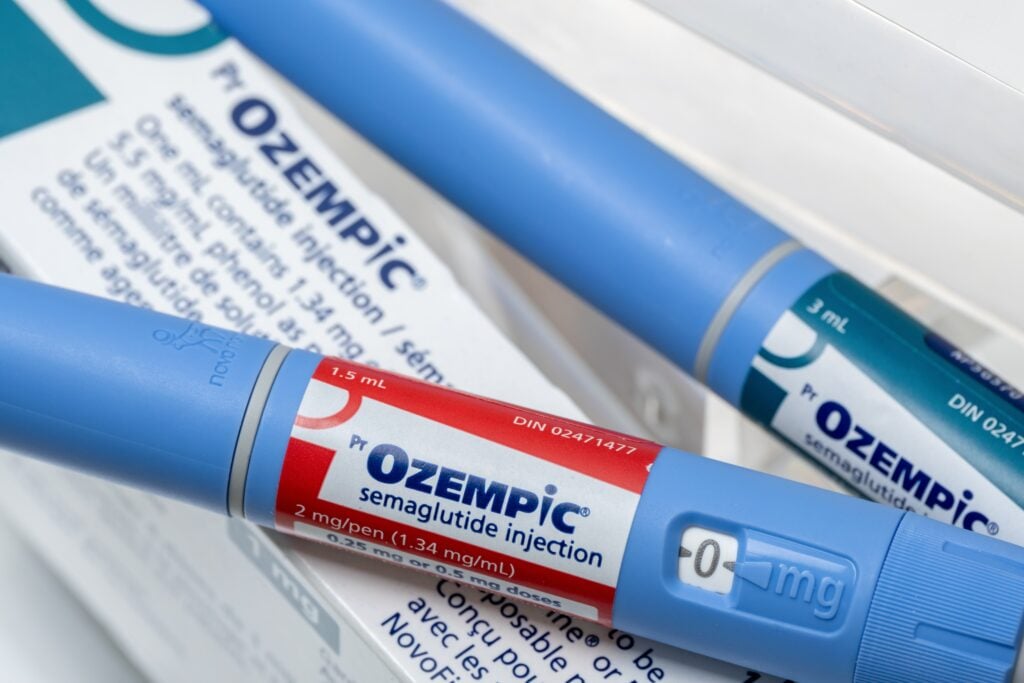
从“减肥神药”覆盖到抗癌药!“美国版集采”来势汹汹 将削减36%支出
Zhi Tong Cai Jing· 2025-11-26 08:37
Core Insights - The recent Medicare negotiations are expected to save approximately 36% on the prices of 15 high-cost drugs, translating to around $8.5 billion in net reimbursement costs [1][3][10] - The new prices will take effect in 2027, with significant reductions for popular drugs like semaglutide, which will drop over 70% to about $274 per month [1][4] - The negotiations are part of the Inflation Reduction Act signed by President Biden in 2022, which allows Medicare to negotiate drug prices for the first time [2][11] Drug Price Reductions - The estimated net prices for drugs like Calquence, Ofev, and Ibrance have been reduced by over $4,000 each in the latest negotiations [2][4] - The new pricing for other drugs includes Trelegy Ellipta at $175 (down from $654) and Linzess at $136 (down from $539) [4][10] - The average negotiated prices for these drugs are still higher than those in the Group of Seven (G7) nations, with some drugs costing over $500 more than their G7 counterparts [7][11] Comparison with Previous Negotiations - The 36% savings in the current negotiations surpasses the 22% savings achieved in the previous year's negotiations for 10 different drugs [3][10] - The pricing strategy has become more efficient, with newer products potentially having greater flexibility in pricing [4][10] Industry Response - The pharmaceutical industry has expressed strong opposition to government price negotiations, arguing that such policies are detrimental [5][10] - Industry representatives claim that government pricing policies like the Inflation Reduction Act and the Most-Favored-Nation pricing are misguided [5][12] Future Implications - The Medicare negotiations are expected to influence other payers to seek similar pricing from drug manufacturers [10] - Future negotiations will include an additional 15 drugs, with discussions set to begin in February [12]