
BioNTech SE(BNTX)

Search documents
BMY Collaborates for Oncology Drug: Will This Boost Its Portfolio?
ZACKS· 2025-06-06 14:21
Core Insights - Bristol Myers Squibb (BMY) has entered a strategic collaboration with BioNTech (BNTX) for the co-development and co-commercialization of the bispecific antibody BNT327, targeting multiple solid tumor types [1][9]. Company Developments - BNT327 is a next-generation bispecific antibody that targets PD-L1 and VEGF-A, currently in trials with over 1,000 patients, including phase III studies for extensive stage small cell lung cancer (ES-SCLC) and non-small cell lung cancer (NSCLC) [2][4]. - BMY will make an upfront payment of $1.5 billion to BioNTech, with additional non-contingent anniversary payments of $2 billion through 2028, and up to $7.6 billion in potential milestone payments [3][9]. Financial Performance - BMY's shares have declined by 13.6% year-to-date, compared to a 3.3% decline in the industry [8]. - The company is trading at a price/earnings ratio of 7.31x forward earnings, lower than its historical mean of 8.55x and the large-cap pharma industry's average of 14.95x [10]. Earnings Estimates - The Zacks Consensus Estimate for BMY's 2025 earnings per share has increased to $6.85 from $6.75 over the past 60 days, while the estimate for 2026 has decreased [11].


21亿→111亿美元,跨国药企“转手”中国创新药,谁赚了?
第一财经· 2025-06-03 14:29
Core Viewpoint - The recent $11.1 billion deal between Bristol-Myers Squibb (BMS) and BioNTech for the development of the dual-specific antibody BNT327 has sparked significant interest in the pharmaceutical industry, raising questions about the valuation of Chinese innovative drugs in the global market [3][4]. Group 1: Transaction Details - BMS will pay BioNTech an upfront payment of $1.5 billion and up to $7.6 billion in additional milestone payments, potentially bringing the total deal value to $11.1 billion [4]. - BNT327 is currently undergoing multiple Phase III clinical trials, with over 1,000 patients enrolled, targeting various solid tumors [6]. - BioNTech acquired BNT327 from Chinese biotech firm Primus Biotech in two transactions, totaling a potential deal value of $2.005 billion [7]. Group 2: Market Dynamics - The PD-L1/VEGF dual antibody market has gained traction due to its potential to outperform existing therapies, leading to increased interest from major pharmaceutical companies [9]. - The "Newco" model of licensing, where smaller biotech firms sell rights to intermediaries who then resell to larger companies, is becoming more prevalent in the industry [11][12]. - The perception that Chinese innovative drugs are being sold at a loss is challenged by the evolving market conditions and the associated risks at the time of the original transactions [8][12]. Group 3: Future Outlook - As Chinese biotech firms gain recognition for their innovative capabilities, the negotiation power and trust with multinational companies are expected to improve, potentially leading to higher valuations in future transactions [13].

深度|不到21亿美元出售的国产创新药,又被跨国药企百亿美元拿下,谁赚了?
Di Yi Cai Jing· 2025-06-03 12:02
Group 1 - BioNTech and Bristol-Myers Squibb (BMS) have reached a significant deal with a potential total value of $11.1 billion for the development and commercialization of the bispecific antibody candidate BNT327 [1][3] - BioNTech will receive an upfront payment of $1.5 billion from BMS, along with up to $7.6 billion in additional milestone payments, making the total potential deal value substantial [3][5] - The BNT327 drug, originally developed by a Chinese biotech company, is currently undergoing multiple Phase III clinical trials, indicating its potential for significant market impact [3][6] Group 2 - The initial acquisition of BNT327 by BioNTech involved two transactions with the original developer, Pumice Biotech, totaling approximately $2.005 billion, highlighting BioNTech's role as an intermediary in the transaction [4][5] - The price disparity between the initial acquisition and the subsequent sale to BMS raises questions about the valuation of Chinese innovative drugs in the global market [6][9] - The emergence of the "Newco" model in pharmaceutical transactions allows smaller biotech firms to license products to intermediaries, who then negotiate higher prices with larger pharmaceutical companies [8][9] Group 3 - The PD-L1/VEGF bispecific antibody market is gaining traction, with increasing interest from major pharmaceutical companies due to its potential to outperform existing therapies [6][7] - The competitive landscape for PD-1/L1 therapies is evolving, with new clinical data suggesting that PD-1/VEGF bispecific antibodies may become foundational in immunotherapy [7][9] - The overall trend in China shows a surge in licensing-out transactions, with a record number of deals and total amounts, indicating a growing recognition of the value of Chinese innovative drugs [8][9]

异动盘点0603|光大控股此前投资稳定币巨头,狂飙21%;汽车股回暖、医药股走强;BioNTech获91亿天价并购
贝塔投资智库· 2025-06-03 04:00
Group 1: Stock Movements and Market Reactions - JunDa Co., Ltd. (02865) fell by 12.69% due to weak fundamentals, expected shareholder sell-off, and cash flow concerns [1] - Rongchang Biopharmaceutical (09995) rose by 4.61% after ASCO announced positive data for RC108 combined with vorinostat, enhancing its commercialization prospects [1] - Datang Gold (08299) increased by 7.27% as it partnered with Wuxi to develop AI mining applications, benefiting from gold's safe-haven demand [1] - Kanglong Chemical (03759) gained 4.35% by investing in a biopharmaceutical fund, strengthening its investment ecosystem [1] - Automotive stocks surged following a significant increase in May's new energy vehicle sales, with Li Auto (2015) rising nearly 6% and Great Wall Motors (2333) up over 3% [1] - Gold stocks led the market as COMEX gold prices returned to $3,400, with Goldman Sachs predicting $4,200, driven by geopolitical tensions [1] Group 2: Company-Specific Developments - Changfei Optical Fiber (06869) rose by 8.34% as its Wuhan base began mass production of 6-inch silicon carbide wafers, achieving a 97% yield rate [2] - China Shipbuilding Defense (00317) increased by 7.58% after securing the highest global new orders from January to April, with Q1 net profit up 1,099% [2] - Hengrui Medicine (00013) rose by 5.09% as SACHI III phase data met expectations, opening up market space for MET amplification lung cancer treatment [2] - Lepu Medical Technology (02157) gained 5.76% following positive ASCO data for its ADC drug MRG003, boosting approval expectations for nasopharyngeal carcinoma [2] - Aidi Kang Holdings (09860) increased by 5.2% after acquiring Suzhou Yuande Youqin to enhance blood disease diagnostics [2] - NetDragon (00777) rose by 5.82% due to its collaboration with Thailand on an AI education platform, attracting investor interest [2] Group 3: Notable Market Trends - China Everbright Holdings (00165) surged over 21% following the enactment of Hong Kong's stablecoin regulations, with Circle's IPO expectations boosting related equity valuations [3] - iFlytek Medical (02506) rose by 6.62% as its medical AI model demonstrated superior accuracy, supported by favorable policies [3] - MicroPort NeuroTech (02172) increased by 9.59% as it initiated clinical research on brain-machine interfaces, benefiting from policy incentives [3] - Longpan Technology (02465) rose by 14.9% after its subsidiary signed a $7.1 billion contract with Yiwei Lithium Energy for lithium iron phosphate [4] - Hansoh Pharmaceutical (03692) gained 3.85% after reaching a global licensing agreement with Regeneron, receiving an $80 million upfront payment [4] Group 4: U.S. Market Highlights - Steel and aluminum stocks surged over 10%-28% as Trump proposed increasing steel tariffs to 50%, benefiting domestic companies [5] - Blueprint Medicines (BPMC.US) rose by 26% following Sanofi's $9.1 billion acquisition, enhancing its rare disease pipeline [5] - BioNTech (BNTX.US) increased by 18% due to a collaboration with Bristol-Myers Squibb, securing a $1.5 billion upfront payment [5] - Applied Digital (APLD.US) surged by 48.46% after signing a $7 billion AI data center lease, validating its business model [5] - Tempus AI (TEM.US) rose by 15% as it launched an AI medical innovation plan, attracting investor interest [7]

BioNTech不到十亿美元收购中国公司获得的药,转手卖了超百亿美元
Di Yi Cai Jing· 2025-06-03 03:56
Core Insights - Chinese biotechnology companies are leading the development of PD-L1/VEGF bispecific antibody drugs, with BMS partnering with BioNTech to commercialize a next-generation cancer immunotherapy [1][5] - BioNTech acquired the drug BNT327 from a Chinese company for less than $1 billion, and within six months, it was sold for over $11 billion [1][3] Group 1: Company Developments - BMS plans to invest up to $11.1 billion in collaboration with BioNTech to develop and commercialize BNT327, a bispecific antibody targeting PD-L1 and VEGF-A for various solid tumors [1][4] - BNT327 is currently undergoing clinical trials as a first-line treatment for extensive-stage small cell lung cancer and non-small cell lung cancer, with over 1,000 patients treated so far [4] Group 2: Market Impact - The announcement of the BMS and BioNTech deal led to a more than 20% increase in BioNTech's stock price and a nearly 30% rise in Instil Bio's stock price, indicating strong market interest in PD-L1/VEGF bispecific antibodies [5] - PD-L1/VEGF bispecific antibodies are becoming a hot research area in the pharmaceutical industry, with potential to replace Merck's Keytruda, which is projected to generate $29.5 billion in sales for the fiscal year 2024 [5] Group 3: Clinical Data and Collaborations - Recent clinical trial results from Kangfang Biotech and Summit Therapeutics showed that their PD-1/VEGF bispecific antibody, ivonescimab, reduced the risk of disease progression or death by 48% in previously treated patients with EGFR-mutant non-squamous non-small cell lung cancer [5] - Pfizer announced a collaboration with China's 3SBio for the PD-1/VEGF bispecific antibody SSGJ-707, with an upfront payment of $1.25 billion and potential milestone payments of up to $4.8 billion [6]
未知机构:创新药旗手炸裂BMS和BioNTech其从中国购买PDL1xVEGF双抗-20250603
未知机构· 2025-06-03 01:45
Summary of Conference Call Records Industry and Company Involved - The conference call discusses the innovative drug sector, specifically focusing on collaborations between Bristol-Myers Squibb (BMS) and BioNTech, as well as the research results from Kangfang Biopharmaceuticals [1][2][3]. Core Points and Arguments - **BMS and BioNTech Collaboration**: BMS and BioNTech have entered a significant partnership to develop and commercialize the bispecific antibody candidate BNT327 (PM8002), with an initial payment of $1.5 billion and a total package worth $11.1 billion [1][2]. - **Future Payments**: BMS will pay an additional $2 billion in non-contingent annual payments by 2028, and BioNTech could receive up to $7.6 billion in milestone payments related to development, regulatory, and commercial achievements [2]. - **Kangfang Biopharmaceuticals' HARMONi Study**: The study shows that AK112, a PD-1/VEGF bispecific antibody, significantly extends progression-free survival (PFS) for patients with EGFR-mutant non-small cell lung cancer (NSCLC) compared to chemotherapy alone, with a hazard ratio (HR) of 0.52 and a p-value less than 0.00001, indicating a 48% reduction in the risk of disease progression or death [3][4]. - **Global Recognition of Chinese Clinical Trials**: The successful replication of domestic clinical data overseas suggests that the quality of Chinese clinical trials is increasingly recognized by international pharmaceutical companies [4]. Additional Important Content - **Potential of Chinese Innovative Drugs**: The lower R&D costs, faster clinical trial speeds, and increasing innovation capabilities of Chinese pharmaceutical companies are expected to enhance the global competitiveness of domestic innovative drugs [5]. - **Recommended Stocks**: The report suggests focusing on several stocks in the innovative drug sector, including Qianhong Pharmaceutical, Hengrui Medicine, and others, indicating potential for significant growth [1][5].

深夜,美钢铁股暴涨!特朗普宣布加税!
Zheng Quan Shi Bao· 2025-06-02 15:17
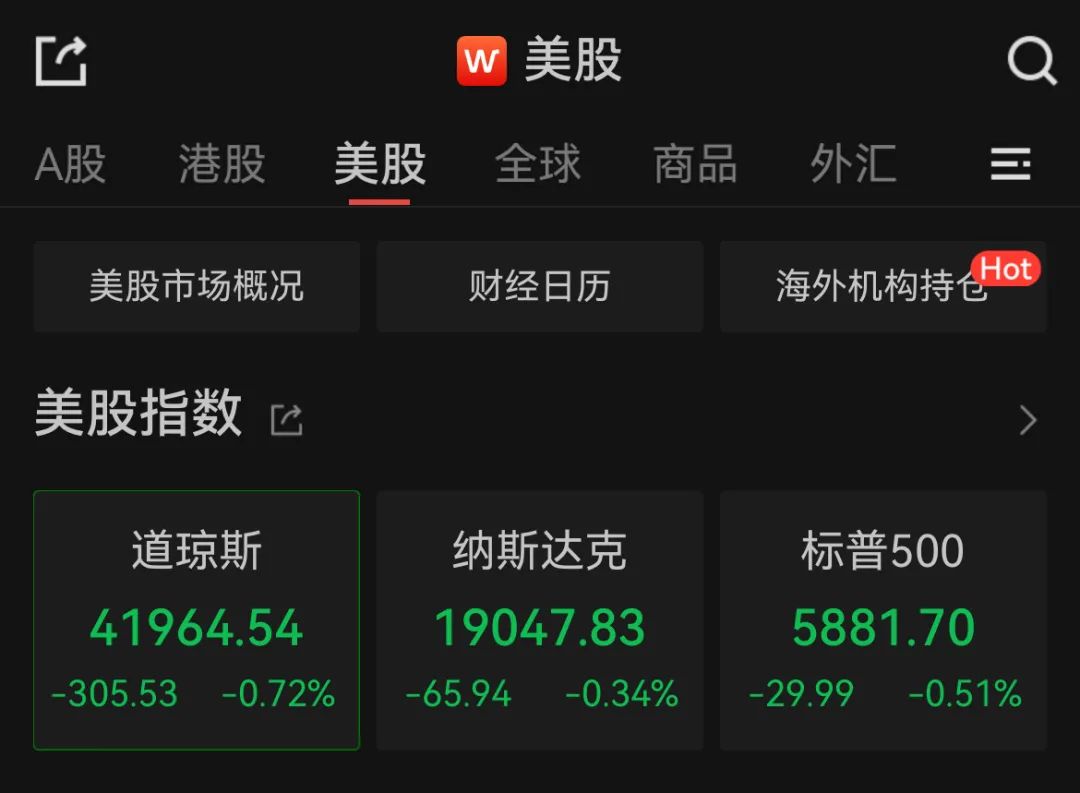
Market Overview - US stock indices opened lower on Monday, with the Dow Jones down 0.43%, Nasdaq down 0.25%, and S&P 500 down 0.30%. The Dow Jones index fell below 42,000 points, closing at 41,964.54, down 0.72% for the day [1] Manufacturing Sector - US factory activity has contracted for the fourth consecutive month in May, with the ISM manufacturing index decreasing by 0.2 percentage points to 48.5. The import index dropped to its lowest level in 16 years, down 7.2 points to 39.9, marking one of the largest monthly declines on record [3] - The export index reached a five-year low, potentially reflecting retaliatory tariffs imposed by other countries on US producers. The supplier delivery index rose to its highest level since June 2022, indicating extended delivery times [3] - The report highlighted the impact of increased tariffs on demand, with new orders shrinking for the fourth consecutive month and backlogs decreasing at the slowest pace since September 2022 [3] Steel Industry - Steel stocks saw significant gains, with Cleveland-Cliffs up 23.3%, Steel Dynamics up 12.5%, and Nucor up 13.5%. This surge followed President Trump's announcement to raise the import tariff on steel from 25% to 50% [3] Biopharmaceutical Sector - BioNTech shares rose by 12.3% following a $11.1 billion collaboration agreement with Bristol-Myers Squibb. Blueprint Medicines experienced a 26.3% increase after agreeing to be acquired by Sanofi for approximately $9.5 billion [4]



BioNTech and Bristol Myers Squibb Announce Global Strategic Partnership to Co-Develop and Co-Commercialize Next-generation Bispecific Antibody Candidate BNT327 Broadly for Multiple Solid Tumor Types
Globenewswire· 2025-06-02 10:45
Core Viewpoint - BioNTech and Bristol Myers Squibb have entered into a collaboration for the global co-development and co-commercialization of BioNTech's investigational bispecific antibody BNT327, targeting various solid tumor types [1][3]. Company Overview - BioNTech is a biopharmaceutical company focused on developing novel immunotherapies for cancer and other serious diseases, utilizing a range of therapeutic modalities including mRNA cancer immunotherapies and antibody-drug conjugates [9]. - Bristol Myers Squibb is a global biopharmaceutical company dedicated to discovering and delivering innovative medicines for serious diseases [15]. Product Details - BNT327 is a next-generation bispecific antibody that targets PD-L1 and VEGF-A, currently in trials with over 1,000 patients treated, including Phase 3 trials for extensive stage small cell lung cancer and non-small cell lung cancer [2][8]. - The mechanism of BNT327 aims to restore T cell function against tumor cells while neutralizing VEGF-A to counteract the tumor's immunosuppressive environment [5][7]. Financial Terms of Collaboration - Bristol Myers Squibb will make an upfront payment of $1.5 billion to BioNTech, with a total of $2 billion in non-contingent anniversary payments through 2028, and BioNTech could receive up to $7.6 billion in additional milestone payments [4][6]. - The development and manufacturing costs will be shared equally between BioNTech and Bristol Myers Squibb, with profits and losses also split 50:50 [4][6]. Clinical Development Plans - The collaboration will involve a broad clinical development program for BNT327 across multiple solid tumor types, with plans for additional trials in triple-negative breast cancer by the end of 2025 [2][8]. - More than 20 clinical trials are ongoing or planned to evaluate BNT327 as a monotherapy or in combination with other treatments targeting various oncogenic pathways [8].

美国将不再建议健康儿童和孕妇常规接种新冠疫苗
Di Yi Cai Jing· 2025-05-28 08:35
FDA表示,针对新变异株开发的疫苗需要重新经过批准审查后才能上市。此前,FDA通常每年仅根据简单的测试结果(表明疫苗能够引发足够强的抗体反 应),就能批准新冠疫苗可在所有美国人群中接种。 另据最新发表在《新英格兰医学杂志》上的一篇论文,FDA根据患者感染新冠后发展为重症的风险,建议采用不同的证据标准对疫苗进行审批。 FDA在论文中表示:"FDA新的新冠疫情的管理理念体现了监管灵活性与对金标准科学承诺之间的平衡。FDA将批准针对高危人群的疫苗,同时要求低危人 群获得可靠的金标准数据。" FDA上周公布了一项未来新冠疫苗加强剂的新监管指南,为健康的美国人接种疫苗制定了更严格的审批标准。 当地时间5月27日,美国卫生与公众服务部(HHS)部长小罗伯特·F·肯尼迪宣布,将不再建议健康儿童和孕妇常规接种新冠疫苗。 美国疾病控制与预防中心(CDC)此前建议,所有6个月及以上的婴儿都应接种新冠疫苗。 就在一周前,美国食品药品监督管理局(FDA)宣布,该机构计划将新冠疫苗的使用范围限制在老年人、儿童和患有基础疾病的成人。 FDA上周公布了一项未来新冠疫苗加强剂的新监管指南,为健康的美国人接种疫苗制定了更严格的审批标准。 FD ...


BioNTech to Present Progress Across Diversified Oncology Pipeline at the 2025 ASCO Annual Meeting
Globenewswire· 2025-05-27 12:15
Core Insights - BioNTech will present clinical trial data from its oncology portfolio at the ASCO Annual Meeting, showcasing progress in mRNA cancer immunotherapies, next-generation immunomodulators, and targeted therapies [1][4] Group 1: Clinical Trial Highlights - The company is advancing over 20 active Phase 2 and 3 clinical trials, focusing on investigational mRNA cancer immunotherapies and the next-generation immunomodulator BNT327 [4] - BNT327, an investigational anti-PD-L1xVEGF-A antibody, will have three presentations detailing data from ongoing clinical trials, including a Phase 2 trial for malignant mesothelioma and Phase 3 trials for small cell lung cancer [5][8] - Data on BNT324/DB-1311, a B7H3-targeted ADC candidate, will be presented, indicating early clinical activity in heavily pre-treated castration-resistant prostate cancer [5][8] Group 2: Future Directions - BioNTech aims to become a diversified multi-product oncology company, with multiple data readouts expected in 2025 and 2026 [4] - The company emphasizes the potential of its assets to improve patient outcomes through innovative therapeutic modalities [2][4] - The presentations at ASCO are part of BioNTech's strategy to shape the future of cancer medicine through complementary mechanisms and innovative molecules [2]