Chagee(CHA)

Search documents
中国移动、中国联通、中国电信,同日公告
Xin Lang Cai Jing· 2026-02-01 12:03
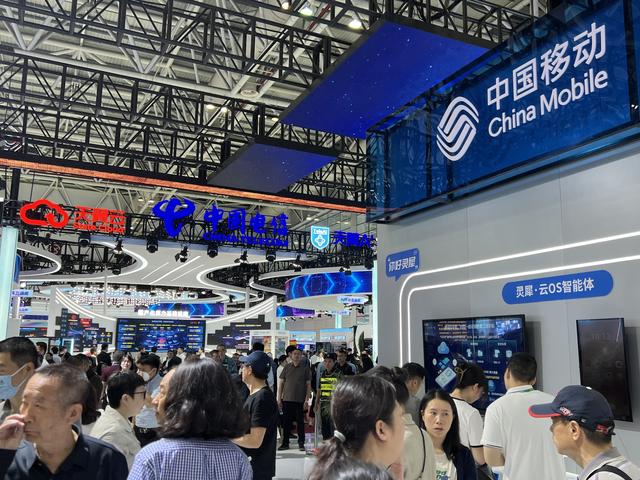
中国电信2月1日公告,近日,中华人民共和国财政部、国家税务总局发布《关于增值税征税具体范围有 关事项的公告》,规定自2026年1月1日起,在中华人民共和国境内,利用固网、移动网、卫星、互联 网,提供手机流量服务、短信和彩信服务、互联网宽带接入服务的业务活动适用的税目由增值电信服务 调整为基础电信服务,对应增值税税率由6%调整至9%。本次增值税税目适用范围调整,将对公司收入 和利润产生影响。公司将全面实施云改数转智惠战略,加快科技型企业建设,全面推进AI+行动,持续 打造"算力+平台+数据+模型+应用"的一体化智能云服务,加快培育发展新动能,推动提质降本增效, 持续推进企业高质量发展。 来源 | 智通财经综合证券时报网 审核 | 卢长银 编辑 | 王晓娇 中国移动、中国联通、中国电信,同日公告 中国移动2月1日公告,近日,中华人民共和国财政部、国家税务总局发布了《关于增值税征税具体范围 有关事项的公告》,规定自2026年1月1日起,在中华人民共和国境内,利用固网、移动网、卫星、互联 网,提供手机流量服务、短信和彩信服务、互联网宽带接入服务的业务活动适用的税目由增值电信服务 调整为基础电信服务,对应增值税税率由6 ...


三大运营商集体公告:将对收入利润产生影响
Guan Cha Zhe Wang· 2026-02-01 09:57
中国电信今日公告称,近日,中华人民共和国财政部、国家税务总局发布《关于增值税征税具体范围有 关事项的公告》(财政部 税务总局公告2026年第9号),规定自2026年1月1日起,在中华人民共和国境 内,利用固网、移动网、卫星、互联网,提供手机流量服务、短信和彩信服务、互联网宽带接入服务的 业务活动适用的税目由增值电信服务调整为基础电信服务,对应增值税税率由6%调整至9%。本次增值 税税目适用范围调整,将对公司收入和利润产生影响。 本文系观察者网独家稿件,未经授权,不得转载。 中国移动今日公告称,近日,中华人民共和国财政部、国家税务总局发布《关于增值税征税具体范围有 关事项的公告》(财政部 税务总局公告2026年第9号),规定自2026年1月1日起,在中华人民共和国境 内,利用固网、移动网、卫星、互联网,提供手机流量服务、短信和彩信服务、互联网宽带接入服务的 业务活动适用的税目由增值电信服务调整为基础电信服务,对应增值税税率由6%调整为9%。此次税目 适用范围调整,将对公司收入及利润产生影响。 中国联通今日公告称,近日,中华人民共和国财政部、国家税务总局发布《关于增值税征税具体范围有 关事项的公告》(财政部 税务 ...



总量向好、增收乏力 通信业仍处转型阵痛期
Zhong Guo Jing Ying Bao· 2026-01-30 19:33
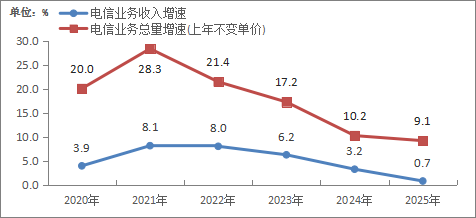
随着2025年成绩单的正式出炉,中国通信业走到新的十字路口。 中经记者 谭伦 北京报道 2026年1月28日,工业和信息化部(以下简称"工信部")正式发布2025年通信业统计公报。公报显示, 2025年,按照上年价格计算,我国电信业务总量同比增长9.1%,较国内生产总值(GDP)增速高出4.1 个百分点,为拉动经济增长作出积极贡献。 与此同时,网络基础设施继续完善。公报显示,截至2025年年底,我国5G基站数达483.8万个,占移动 电话基站数比重达37.6%,平均每万人拥有5G基站34.4个,高于"十四五"规划发展主要目标8.4个;国内 移动电话用户规模达18.27亿户,普及率达130部/百人,较全球平均水平(107.5部/百人)高出22.5个百 分点。 其中,5G移动电话用户数达12.04亿户,年净增达1.9亿户,在移动电话用户中占比超六成,约为 65.9%,达全球平均水平的2.1倍,占比较上年年末提高9.2个百分点。此外,5G-A、万兆网络试点部 署,5G RedCap基站数达206.4万个,5G-A覆盖超330个城市,首批168个小区、工厂和园区的万兆光网 试点部署顺利开展。 但是,电信业务收入增速却 ...


工信部:2025年我国电信业务收入累计完成1.75万亿元 比上年增长0.7%
智通财经网· 2026-01-28 06:36
智通财经APP获悉,工信部统计数据显示,经初步核算,2025年我国电信业务收入累计完成1.75万亿 元,比上年增长0.7%。按照上年价格计算的电信业务总量同比增长9.1%。2025年,完成固定互联网宽 带接入业务收入2896亿元,比上年增长5.9%,在电信业务收入中占比由上年的15.9%提升至16.5%,拉 动电信业务收入增长0.9个百分点。2025年,完成移动数据流量业务收入6097亿元,比上年下降3.1%, 在电信业务收入中占比由上年的36.2%降至34.8%。 经初步核算,2025年电信业务收入累计完成1.75万亿元,比上年增长0.7%。按照上年价格计算的电信业 务总量同比增长9.1%。 (注:自2020年起电信业务总量开始采用上年不变价计算方法) 新兴业务收入小幅增长。2025年,完成云计算、大数据、移动物联网、数据中心等新兴业务收入4508亿 元,比上年增长4.7%,在电信业务收入中的占比由上年的25%提升至25.7%,拉动电信业务收入增长1.2 个百分点。其中,云计算、大数据、移动物联网业务收入比上年分别增长2.9%、7.8%和4.9%。 原文如下: 2025年通信业统计公报 2025年,工业和信 ...
让Agent画思维导图稳固长期记忆:新框架实现稳定长期学习,准确率提升38%
量子位· 2026-01-26 10:14
Core Insights - The article discusses the limitations of traditional Retrieval-Augmented Generation (RAG) systems in supporting long-term memory and continuous learning for AI agents, highlighting the need for a more structured memory framework [2][10][43] - A new memory framework called TeleMem, developed by the China Telecom Artificial Intelligence Research Institute, is introduced, which utilizes a Directed Acyclic Graph (DAG) to enhance memory organization and support sustainable learning [3][11][43] Limitations of Traditional RAG - Traditional RAG systems face structural bottlenecks in long-term memory management and continuous learning capabilities [2] - They struggle with expressing temporal sequences, causal relationships, and state evolution, leading to issues like memory drift and knowledge forgetting as historical data scales [5][10] - The fragmented memory structure limits the agent's learning ability and behavioral stability, especially in long-term interactions [3][8] TeleMem Framework - TeleMem redefines memory organization by structuring historical memories into a DAG, allowing for cumulative, retrievable, and evolvable memory [3][11] - Each node in the DAG represents a stable memory state, while edges denote explicit semantic and causal dependencies, ensuring a coherent learning trajectory [12][13] - The framework supports a dual-layer update mechanism for representation and indexing, allowing for efficient memory management and retrieval [20][21] Performance and Results - In tests on the ZH-40 benchmark, TeleMem achieved an accuracy of 86.33%, improving by approximately 38 percentage points over the RAG baseline [38] - The system significantly reduces inference costs and latency, enabling support for thousands of dialogue rounds without being limited by the model's context window [41][42] Future Trends - The development of TeleMem signifies a shift in agent capabilities from mere retrieval systems to structured memory and continuous learning mechanisms [43][44] - Future intelligent agents will require traceable cognitive evolution paths, sustainable long-term memory, and explainable context retrieval to enhance their learning and decision-making processes [46][47]

Ademi LLP Investigates Claims of Securities Fraud against Chagee Holdings Limited
Prnewswire· 2026-01-20 22:31
MILWAUKEE, Jan. 20, 2026 /PRNewswire/ -- Ademi LLP is investigating possible securities fraud claims against Chagee Holdings Limited (NASDAQ: CHA). The investigation results from inaccurate statements Chagee may have made regarding its business operations and prospects. Click here to join our investigation or to obtain additional information, or contact us at [email protected] or toll-free: 866-264-3995. There is no cost or obligation to you. The investigation focuses on Chagee's representations with respe ...

一颗甜瓜甜了家乡 一片大棚富了乡亲
Xin Lang Cai Jing· 2026-01-20 21:55
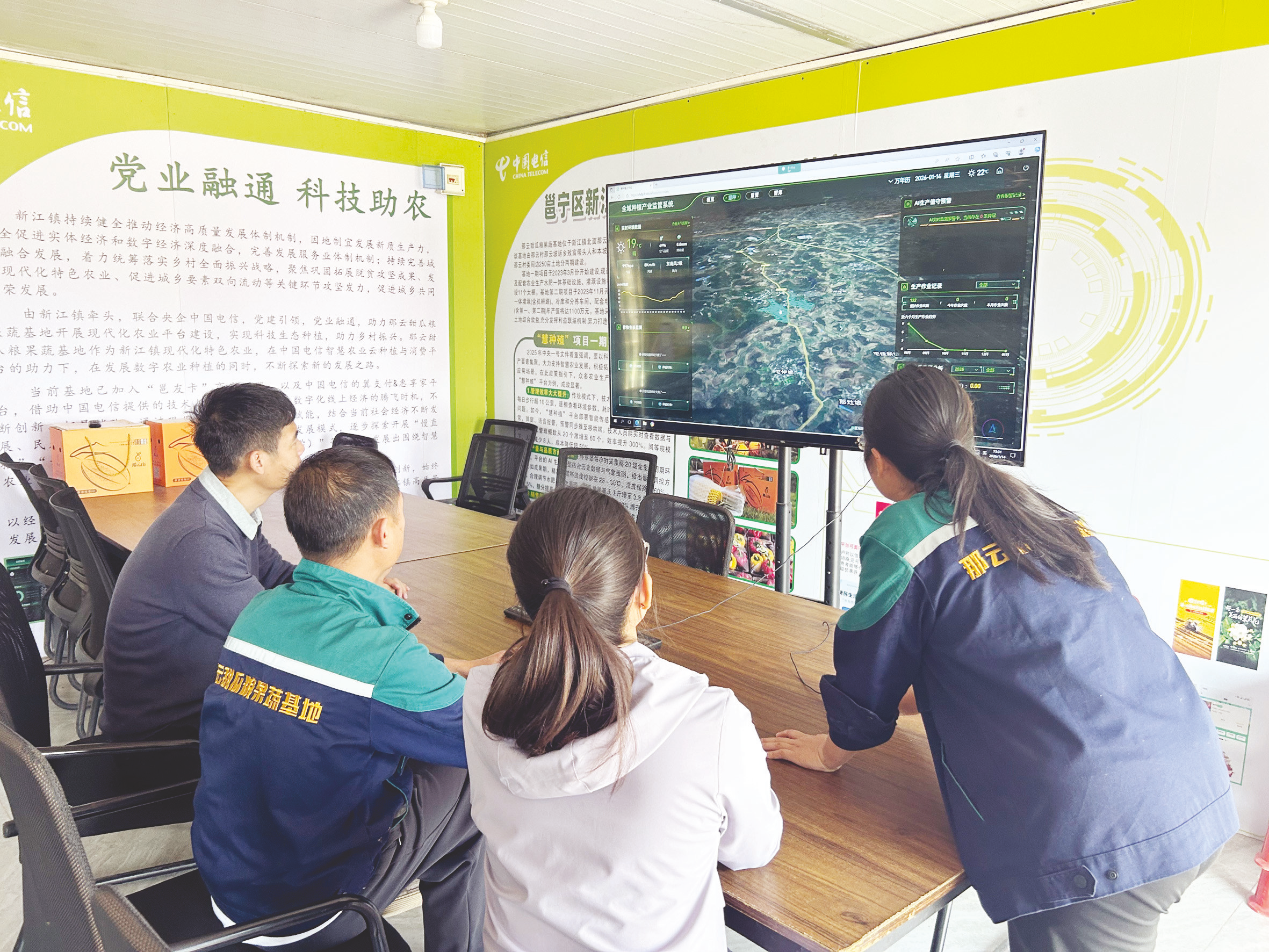
Core Insights - The article highlights the integration of technology in modern agriculture to promote rural revitalization and economic development in Xinjiang Town, focusing on the "Nayun Sweet Melon" brand and its impact on local farmers [2][4][6]. Group 1: Economic Development - Xinjiang Town is enhancing its economic development mechanisms to promote high-quality growth, focusing on the integration of the real economy and digital economy [2]. - The "Nayun Sweet Melon" base, supported by China Telecom, is a key player in modern agricultural platform construction, utilizing smart agriculture technologies [2][4]. Group 2: Agricultural Innovation - The base employs advanced technology for monitoring and managing greenhouse conditions, leading to improved crop yields and quality [5]. - The first batch of sweet melons was successfully marketed in May 2023, achieving significant economic benefits and expanding its market reach to regions like the Yangtze River Delta and Pearl River Delta [5]. Group 3: Community Impact - The initiative has encouraged local farmers to participate in the cooperative, with over a hundred households benefiting from various income channels, including land transfer and cooperative farming [5]. - The village's collective economic income surpassed 500,000 yuan for the first time in 2023, demonstrating the positive impact of the agricultural project on the local economy [5]. Group 4: Future Prospects - The brand aims to enhance its recognition and explore agritourism opportunities to further increase local economic benefits and support community wealth [6].
Chagee Shareholders are Encouraged to Reach Out to Johnson Fistel for More Information about Potentially Recovering Their Losses
TMX Newsfile· 2026-01-20 14:06
Core Viewpoint - Johnson Fistel, PLLP is investigating potential violations of securities laws by Chagee Holdings Limited and its executives regarding misrepresentation or failure to disclose information to investors [1] Group 1: Investigation Details - The investigation focuses on the losses suffered by investors and the possibility of recovering these losses under federal securities laws [1] - Investors who purchased Chagee securities and experienced losses are encouraged to join the investigation [2] Group 2: Whistleblower Information - Individuals with nonpublic information about Chagee are advised to consider assisting the investigation or utilizing the SEC Whistleblower program, which may offer rewards of up to 30% of any successful recovery [3] Group 3: About Johnson Fistel, PLLP - Johnson Fistel, PLLP is a nationally recognized shareholder rights law firm with multiple offices across the United States, representing both individual and institutional investors in securities class action lawsuits [4]

餐饮、潮玩及家电行业周报-20260118
Haitong Securities International· 2026-01-18 14:34
Investment Rating - The report assigns an "Outperform" rating to several companies including Pop Mart, Anta Sports, Huazhu Group, Li Ning, Miniso, Atour Group, and Xtep International, with target prices ranging from 6.99 to 354.00 [1]. Core Insights - The integration of AI and advertising models is gradually taking effect, with Generative Engine Optimization (GEO) expected to dominate the traffic competition in the AI-driven search era. The GEO market is projected to grow significantly, with a forecasted global market size of USD 11.2 billion in 2025, reaching USD 100.7 billion by 2030 [3][13]. - Key companies in the sector, such as Qingmu Technology, are actively developing their e-commerce ecosystems and leveraging proprietary systems to enhance their market position [4]. Company Performance - Top performers this week include Guoquan (+11.9%), Haidilao (+10.7%), Nayuki (+6.5%), SuperHi (+5.4%), and Hisense (+3.8%). Conversely, underperformers include JS Global Life (-4.6%), Roborock (-5.2%), TCL Electronics (-6.3%), Chagee (-8.2%), and Pop Mart (-9.3%) [6][14]. - Haidilao has appointed Zhang Yong as CEO, aiming to bring new perspectives and enhance board efficiency [8][15]. Industry Dynamics - Qdama and YUEN KEE FOOD have submitted listing applications to the Hong Kong Stock Exchange, with projected revenues showing growth [11][12]. - Big Catering has also submitted a listing application, with significant revenue growth reported for 2024 and Q3 2025 [12].

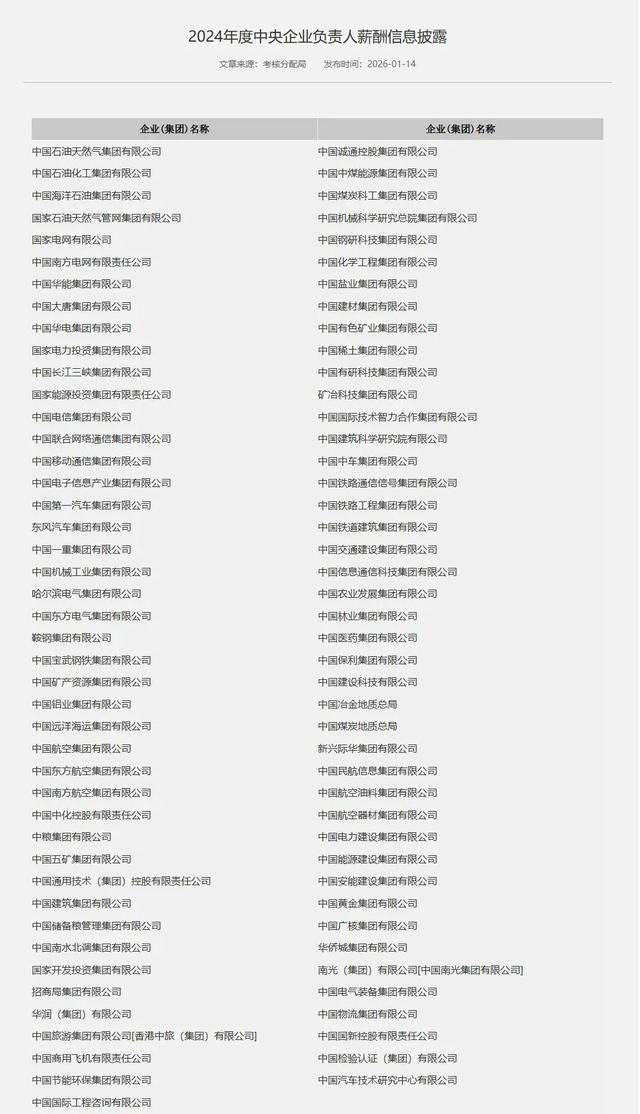
国资委公开80多家央企负责人薪酬
Sou Hu Cai Jing· 2026-01-17 13:14
Core Viewpoint - The State-owned Assets Supervision and Administration Commission (SASAC) disclosed the salary information of over 80 central enterprise leaders for the year 2024, indicating a stable salary range without extreme high salaries, showcasing significant industry differentiation [1][5]. Group 1: Salary Disclosure - The disclosure of salary information is part of SASAC's ongoing efforts to enhance transparency in key areas and respond to public concerns [2]. - The overall salary of central enterprise leaders in 2024 remains within a stable range, characterized by "top leaders leading, median concentration, and low compliance," with no extreme high salary phenomena observed [5]. Group 2: Salary Rankings - The top tier of salaries is dominated by leaders from telecommunications and energy central enterprises, with China Mobile's former chairman Yang Jie leading with a pre-tax salary of 1.2582 million yuan, followed by China Telecom and China Unicom chairmen with salaries of 1.2160 million yuan and 1.2101 million yuan respectively [6]. - In the energy sector, PetroChina's chairman Dai Houliang and general manager Hou Qijun both have an annual salary of 978,500 yuan, ranking first among energy central enterprises [7]. - Other notable salaries include China Huaneng Group's chairman Wen Shugang at 961,700 yuan and State Power Investment Corporation's chairman Yu Bing at 953,700 yuan, both of whom are also in the top tier [8]. Group 3: Salary Distribution - The second tier includes core central enterprises in electricity, construction, and automotive industries, with notable figures such as State Grid's chairman Zhang Zhigang earning 735,000 yuan and China National Nuclear Corporation's chairman Yang Changli earning 930,000 yuan [15]. - The third tier consists of central enterprises with strong public welfare attributes, such as China Forestry Group's chairman Shan Zhongli and Overseas Chinese Town Group's chairman Zhang Zhenggao, both earning 438,500 yuan, which is below the average level for central enterprises [16]. Group 4: Salary Variability - Within the same industry, the salary differences among central enterprise executives are manageable, with the highest annual salary for energy central enterprise chairmen (PetroChina at 978,500 yuan) and the lowest (National Pipeline Network at 872,900 yuan) showing a difference of about 100,000 yuan [20].