
Costco(COST)

Search documents
Costco第一财季营收超预期增长8.2%,线上销售额飙升20% | 财报见闻
Hua Er Jie Jian Wen· 2025-12-12 04:51
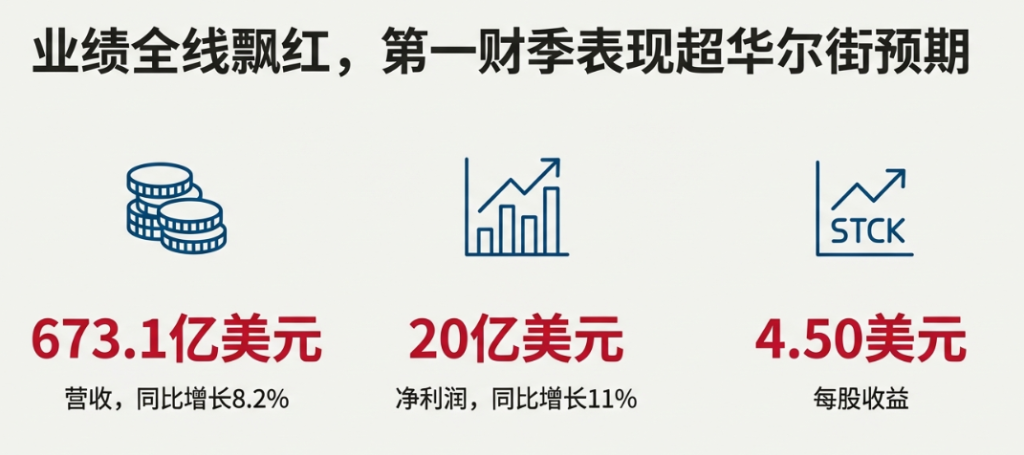
Core Viewpoint - Costco's first-quarter performance exceeded Wall Street expectations, driven by online sales growth and new store openings, with revenue increasing by 8.2% year-over-year [1][5]. Revenue Growth - The company reported first-quarter revenue of $67.31 billion, an 8.2% increase compared to the previous year, surpassing Wall Street forecasts [5][7]. - Comparable sales growth was 6.4%, with the U.S. market contributing 5.9%, indicating a focus on value rather than a significant increase in consumer spending power [6]. Profitability - Quarterly profit growth exceeded expectations, with net income reaching $2 billion, an 11% year-over-year increase [7]. - Earnings per share were reported at $4.50, also above Wall Street estimates [7]. E-commerce Performance - E-commerce sales surged by 20.5%, with website traffic increasing by 24% and app traffic skyrocketing by 48%, indicating successful online transformation [7][8]. - Black Friday saw record non-food orders exceeding $250 million, showcasing strong performance during the holiday shopping season [10]. Membership Expansion - Paid membership increased to 81.4 million, a 5.2% year-over-year rise, with a renewal rate of 92.2% in the U.S. and Canada [7][10]. - Membership fee increases implemented in September began contributing to profits [6][7]. Store Expansion Plans - The company opened 8 new warehouse stores in the first quarter, bringing the global total to 921, with plans to open over 30 new stores annually [7][16]. - This aggressive expansion strategy is seen as essential for maintaining growth in a cautious retail environment [16]. Cost Management and Challenges - Approximately one-third of U.S. sales come from imported goods, leading to challenges due to rising tariffs [11]. - The company is actively seeking ways to mitigate tariff impacts, including increasing domestic sourcing and adjusting product categories [11][12]. - The CEO emphasized the importance of the Kirkland Signature private label in managing supply chain costs [12].


Costco's Digital Sales Surge 21% as Members Maintain Spending
PYMNTS.com· 2025-12-12 01:28
Core Insights - Costco's fiscal first quarter demonstrated strong digital transformation with double-digit growth in digital comparable sales and increased app engagement, indicating member spending consistency despite economic uncertainty [1][2] Sales Performance - The company reported net sales growth of 7.2% to nearly $66 billion, with comparable sales increasing by 6.4% [2] - Digitally enabled comparable sales surged by 21%, while U.S. comparable sales rose by 5.9%, ticket sizes increased by 3.2%, and traffic grew by 2.6% [2] Membership Growth - Paid memberships reached 81.4 million, up 5.2%, and cardholders totaled nearly 146 million, up 5.1% [3] - Management anticipates over 30 net new store openings annually [3] Digital Initiatives - CEO Ron Vachris highlighted advancements in technology, including scanning memberships at entry and the Costco digital wallet, which improved member experience and productivity, with checkout speed enhancements of up to 20% in early adopters [4] - Digital sales growth was driven by increased app traffic (over 40%) and a 24% rise in eCommerce site traffic, alongside a 13% increase in average eCommerce order values [4] Consumer Behavior - Fresh grocery sales experienced mid- to high single-digit growth, with meat sales showing double-digit increases, and Kirkland Signature private label products outpacing overall sales growth [5] Pharmacy Operations - AI is utilized in the pharmacy inventory system to compare drug pricing and autonomously reorder inventory, achieving over 98% in-stock rates and mid-teen growth in pharmacy scripts filled [6] Future Technology Initiatives - The company is focusing on enhancing core systems to support future growth, with expectations that digital sales will continue to outpace overall sales as more members engage digitally [7][9] - CFO Millerchip noted the potential for retail media to deliver personalized communication at scale, indicating early successes but recognizing it as an ongoing opportunity [8][9]

开市客首季业绩超预期 美国同店销售额同比增长5.9%
Ge Long Hui A P P· 2025-12-12 01:23
Core Insights - Costco reported a revenue increase of 8.3% year-over-year to $67.3 billion, surpassing the expected $67.1 billion [1] - Net income rose by 11% year-over-year to $2 billion, with earnings per share at $4.50, exceeding the forecast of $4.27 [1] - Same-store sales in the U.S. grew by 5.9%, while global sales increased by 6.4%, and online sales surged by 20.5% [1] - Membership renewal rate slightly declined from 89.8% at the end of fiscal year 2025 to 89.7% [1]
Dow, S&P 500 and Russell 2000 Close at New Highs
ZACKS· 2025-12-12 00:41
Market Overview - Three of the four major indexes reached new closing highs, with the Dow gaining +646 points (+1.34%), S&P 500 increasing +14 points (+0.21%), and Russell 2000 rising +31 points (+1.21%) [1] - The tech-heavy Nasdaq experienced a slight dip of -60 points (-0.25%) due to concerns over Oracle's recent performance, indicating potential challenges in the AI sector [2] Company Earnings Reports - Broadcom (AVGO) reported fiscal Q4 earnings of $1.95 per share, exceeding the Zacks consensus of $1.87, with revenues of $18.02 billion surpassing the $17.50 billion estimate. AI semiconductor revenue grew +74% year over year [3] - Broadcom raised its fiscal Q1 revenue guidance to $19.1 billion, with AI semiconductor business expected to generate $8.2 billion next year, doubling from the previous year [4] - Costco (COST) reported mixed fiscal Q1 results, with earnings of $4.50 per share exceeding the $4.26 consensus, but sales of $65.98 billion fell short of the $67.33 billion estimate, leading to a marginal decline in shares [5] - Lululemon (LULU) shares rose over +10% following a strong Q3 earnings report, with earnings of $2.39 per share and revenues of $2.6 billion, surpassing analyst expectations of $2.48 billion [6]



Compared to Estimates, Costco (COST) Q1 Earnings: A Look at Key Metrics
ZACKS· 2025-12-12 00:01
Core Insights - Costco reported revenue of $67.31 billion for the quarter ended November 2025, reflecting an 8.3% increase year-over-year, with EPS at $4.34 compared to $3.82 in the same quarter last year [1] - The revenue slightly missed the Zacks Consensus Estimate of $67.33 billion by 0.03%, while the EPS exceeded the consensus estimate of $4.26 by 1.88% [1] Financial Performance Metrics - Comparable sales for the total company were 6.4%, surpassing the seven-analyst average estimate of 6.1% [4] - The number of warehouses worldwide reached 923, exceeding the average estimate of 921 by six analysts [4] - Membership fees totaled $1.33 billion, slightly above the estimated $1.31 billion by eight analysts [4] Regional Performance - Comparable sales in the U.S. were 5.9%, compared to the average estimate of 5.7% by four analysts [4] - Comparable sales in Canada were 9%, exceeding the average estimate of 7.8% by four analysts [4] - Comparable sales for Other International markets were 8.8%, surpassing the average estimate of 8.3% by three analysts [4] Stock Performance - Costco shares returned -4.3% over the past month, while the Zacks S&P 500 composite increased by 0.9% [3] - The stock currently holds a Zacks Rank 3 (Hold), indicating potential performance in line with the broader market [3]
开市客(COST.US)Q1业绩超预期但市场反应平淡 会员续费率持续放缓及估值高企惹担忧
智通财经网· 2025-12-11 23:52
Core Viewpoint - Costco's Q1 FY2026 performance exceeded market expectations, showcasing strong sales growth despite economic challenges [1][2]. Financial Performance - Q1 revenue reached $67.31 billion, a 6.4% year-over-year increase, surpassing the expected $67.14 billion [1]. - Net sales amounted to $65.98 billion, up 8.2% year-over-year [1]. - Membership fees increased to $1.33 billion, reflecting a 14.0% growth [1]. - Net profit was $2.00 billion, a rise of 11.3% year-over-year, with diluted earnings per share at $4.50, exceeding the forecast of $4.27 [1]. - Same-store sales grew by 6.4%, with U.S. same-store sales up 5.9% [1]. E-commerce and Consumer Trends - E-commerce sales surged by 20.5%, driven by consumer demand for gifts and decorations during the holiday season [2]. - The quarter saw double-digit year-over-year growth in sales of gold, jewelry, small electronics, and clothing [2]. - The company is expanding its e-commerce operations and enhancing in-store experiences to improve customer satisfaction [2]. Membership and Renewal Rates - Membership renewal rates have shown signs of slowing, with a decrease from 90.2% to 89.8% in Q4 FY2025, and a slight drop to 89.7% in Q1 FY2026 [3]. - The decline in renewal rates is attributed to more online registrations, which have a lower average renewal rate [3]. Operational Challenges and Cost Management - Concerns exist regarding the impact of tariffs on Costco's operating costs and profit margins, with the company being a significant litigant against the Trump administration over tariff issues [4]. - Despite these challenges, Costco's Q1 gross margin remained stable at 11.32% year-over-year [4]. - The company is implementing various measures to mitigate tariff impacts, including increasing private label promotions and sourcing from countries with lower tariff rates [4].
Costco (COST) Q1 Earnings Surpass Estimates
ZACKS· 2025-12-11 23:26
Core Insights - Costco reported quarterly earnings of $4.34 per share, exceeding the Zacks Consensus Estimate of $4.26 per share, and showing an increase from $3.82 per share a year ago, resulting in an earnings surprise of +1.88% [1] - The company posted revenues of $67.31 billion for the quarter ended November 2025, slightly missing the Zacks Consensus Estimate by 0.03%, but up from $62.15 billion year-over-year [2] - Costco's stock has underperformed, losing about 4.6% since the beginning of the year, compared to the S&P 500's gain of 17.1% [3] Earnings Outlook - The current consensus EPS estimate for the upcoming quarter is $4.47 on revenues of $69.05 billion, and for the current fiscal year, it is $20.00 on revenues of $296.35 billion [7] - The estimate revisions trend for Costco was mixed ahead of the earnings release, resulting in a Zacks Rank 3 (Hold) for the stock, indicating expected performance in line with the market [6] Industry Context - The Retail - Discount Stores industry, to which Costco belongs, is currently in the top 17% of over 250 Zacks industries, suggesting a favorable outlook compared to the bottom 50% [8]

Costco(COST) - 2026 Q1 - Earnings Call Transcript
2025-12-11 23:02
Financial Data and Key Metrics Changes - Net income for Q1 2026 was $2.001 billion, or $4.50 per diluted share, up from $1.798 billion, or $4.04 per diluted share in Q1 2025, reflecting a 13.6% growth excluding discrete tax items [14][15] - Net sales increased by 8.2% to $65.98 billion from $60.99 billion in the previous year, with comparable sales growth of 6.4% [15][16] - Membership fee income rose to $1.329 billion, a 14% increase year-over-year, driven by membership growth and upgrades [16][17] Business Line Data and Key Metrics Changes - Digital sales showed strong growth with digitally enabled comparable sales up 20.5% [15][25] - Fresh sales increased mid to high single digits, with double-digit growth in meat categories [22][23] - Non-foods had comparable sales in the mid-single digits, with significant growth in categories like gold jewelry and health and beauty [23][24] Market Data and Key Metrics Changes - Traffic increased by 3.1% worldwide, and average transaction size rose by 3.2% [15] - The U.S. and Canada renewal rate was 92.2%, slightly down from the previous quarter, while the worldwide rate was 89.7% [17] - Digital engagement metrics showed website traffic up 24% and app traffic up 48% [25][77] Company Strategy and Development Direction - The company plans to open 30+ new warehouses annually in the future, with a total of 921 warehouses worldwide [5][6] - A focus on technology integration aims to enhance member experience and operational efficiency, including AI applications in inventory management [10][56] - The company is committed to maintaining competitive pricing while investing in technology and member services [34][56] Management's Comments on Operating Environment and Future Outlook - Management expressed confidence in consistent sales growth patterns despite some monthly fluctuations due to external factors [39] - The company is optimistic about future warehouse openings and market expansion, particularly in Europe and Asia [84] - Inflation trends remain stable, with mixed impacts across different product categories [27][28] Other Important Information - Capital expenditures for Q1 were approximately $1.53 billion, with an estimated total of $6.5 billion for the fiscal year [20][22] - The company reported record sales in various categories during the holiday season, indicating strong consumer demand [22][26] Q&A Session Summary Question: Observations on Costco's willingness to embrace technology - Management acknowledged a focus on technology and operational efficiency, emphasizing that maintaining low prices for members remains a priority [33][34] Question: Concerns about traffic and the need to invest in price - Management noted consistent member behavior and emphasized the importance of delivering value and quality to maintain membership growth [39][41] Question: Warehouse openings and membership strategies - Management indicated that upcoming openings will include a mix of infill and new market locations, with a focus on driving top-line sales [47][48] Question: Retail media and digital advertising opportunities - Management highlighted the potential of retail media as a growth area while ensuring that value for members remains the primary focus [51][52] Question: AI applications in business - Management expressed excitement about AI's potential to enhance procurement and supply chain efficiency, alongside improving member experiences [56][57] Question: SG&A leverage and productivity dynamics - Management discussed challenges in achieving SG&A leverage due to higher healthcare costs and investments in employee agreements, but noted positive productivity trends [92][93]
Costco(COST) - 2026 Q1 - Earnings Call Transcript
2025-12-11 23:02
Financial Data and Key Metrics Changes - Net income for Q1 2026 was $2.001 billion, or $4.50 per diluted share, up from $1.798 billion, or $4.04 per diluted share in Q1 2025, reflecting a 13.6% growth excluding discrete tax items [14][15] - Net sales increased by 8.2% to $65.98 billion from $60.99 billion in the previous year, with comparable sales growth of 6.4% [15][16] - Membership fee income rose to $1.329 billion, a 14% increase year over year, driven by membership growth and fee increases [16][17] Business Line Data and Key Metrics Changes - Digital sales saw a significant increase, with digitally enabled comparable sales growing by 20.5% [15][25] - Fresh sales were up mid to high single digits, with double-digit growth in meat categories [22][24] - Non-foods had comparable sales in the mid-single digits, with strong performance in categories like gold jewelry and health and beauty [23][24] Market Data and Key Metrics Changes - Traffic increased by 3.1% worldwide, and average transaction size rose by 3.2% [15] - The U.S. and Canada renewal rate was 92.2%, and the worldwide rate was 89.7%, both slightly down from the previous quarter [17] - Digital engagement metrics showed a 24% increase in website traffic and a 48% increase in app traffic [25][78] Company Strategy and Development Direction - The company plans to open 30-plus new warehouses annually in the future, with a total of 921 warehouses worldwide [5][6] - A focus on technology integration aims to enhance member experience and operational efficiency, including AI applications in inventory management [10][56] - The company is committed to maintaining competitive pricing while investing in technology and member services [34][54] Management's Comments on Operating Environment and Future Outlook - Management expressed confidence in consistent sales growth patterns despite some monthly fluctuations due to external factors [39] - The company is optimistic about future expansion opportunities, particularly in international markets [64][84] - Management acknowledged challenges with healthcare costs impacting productivity but remains focused on leveraging SG&A in the future [92][93] Other Important Information - Capital expenditures for Q1 were approximately $1.53 billion, with an estimated $6.5 billion for the full year [20][22] - The company reported record sales in various categories during the holiday season, including a significant increase in food court sales [22][27] - The company continues to adapt its product assortment to mitigate tariff impacts and enhance value for members [28][29] Q&A Session Summary Question: Observations on Costco's willingness to embrace technology and reinvestment strategies - Management confirmed a focus on technology integration and emphasized the importance of maintaining competitive pricing for members [32][34] Question: Concerns about traffic and the need to invest in pricing - Management noted consistent sales growth patterns and emphasized the importance of delivering value and quality to members [39][41] Question: Membership growth strategies with upcoming warehouse openings - Management indicated a balanced approach to new openings, focusing on both established and new markets [46][48] Question: Insights on retail media and digital advertising opportunities - Management acknowledged the potential of retail media and emphasized the importance of enhancing member experience through targeted marketing [50][52] Question: Warehouse openings and remodel philosophy - Management highlighted a strong pipeline for international growth and discussed the significant uplift from warehouse relocations and remodels [84][86] Question: Dynamics of SG&A leverage and productivity outlook - Management discussed headwinds affecting productivity, including healthcare costs, but expressed optimism about future leverage opportunities [92][93]
Costco(COST) - 2026 Q1 - Earnings Call Transcript
2025-12-11 23:00
Financial Data and Key Metrics Changes - Net income for Q1 2026 was $2.001 billion, or $4.50 per diluted share, up from $1.798 billion, or $4.04 per diluted share in Q1 2025, reflecting a growth of 11.3% [12] - Net sales increased by 8.2% to $65.98 billion from $60.99 billion in the same quarter last year [13] - Comparable sales grew by 6.4%, with digital sales showing a significant increase of 20.5% [13][24] - Membership fee income rose to $1.329 billion, a 14% increase year over year [14] Business Line Data and Key Metrics Changes - Fresh sales were up mid to high single digits, with double-digit growth in meat categories [20] - Non-foods had comparable sales in the mid-single digits, with strong performance in health and beauty, gold jewelry, and small appliances [21] - Pharmacy scripts filled grew in the mid-teens, contributing to improved margins [9][10] Market Data and Key Metrics Changes - Traffic increased by 3.1% worldwide, and average transaction size rose by 3.2% [13] - The U.S. and Canada renewal rate was 92.2%, with a slight decline in overall renewal rates due to an increase in online memberships [16][52] Company Strategy and Development Direction - The company plans to open 30-plus new warehouses annually in the future, with a total of 921 warehouses worldwide [4][5] - Digital initiatives focus on enhancing member experience and driving sales through technology, including AI integration in inventory management [9][10][45] - The company aims to maintain its reputation for low prices while investing in technology and member engagement [31][42] Management's Comments on Operating Environment and Future Outlook - Management expressed confidence in consistent sales growth and member engagement despite some monthly fluctuations [34][35] - The company is optimistic about future warehouse openings and market expansion, particularly in international markets [49][58] - Inflation trends are expected to remain stable, with mixed impacts across different product categories [26][64] Other Important Information - Capital expenditures for Q1 were approximately $1.53 billion, with an estimated total of $6.5 billion for the fiscal year [19][20] - The company reported record sales in its food court and e-commerce business during the holiday season [20][25] Q&A Session Summary Question: Has Costco embraced technology and different retail modes more under current management? - Management confirmed a focus on technology and operational efficiency, emphasizing that maintaining low prices remains a priority [30][31] Question: Are there concerns about traffic and the need to invest in pricing? - Management noted consistent member behavior and sales patterns, indicating no immediate concerns about traffic [32][35] Question: What is the outlook for warehouse openings and membership strategies? - Management indicated a balanced approach to openings, focusing on both established and new markets [39][40] Question: How is Costco leveraging digital engagement and logistics? - Management highlighted significant growth in digital traffic and ongoing enhancements to the digital experience for members [55] Question: What are the dynamics affecting SG&A leverage? - Management discussed headwinds from healthcare costs and investments in employee agreements impacting productivity [60][62] Question: How is inflation impacting sales and pricing strategies? - Management confirmed mixed inflation impacts across categories, with a focus on maintaining value for members [64][65]