Ericsson(ERIC)

Search documents
进博观察:绿色与数字双轮驱动:全球产业链的重塑与升级
Huan Qiu Wang· 2025-11-09 01:43
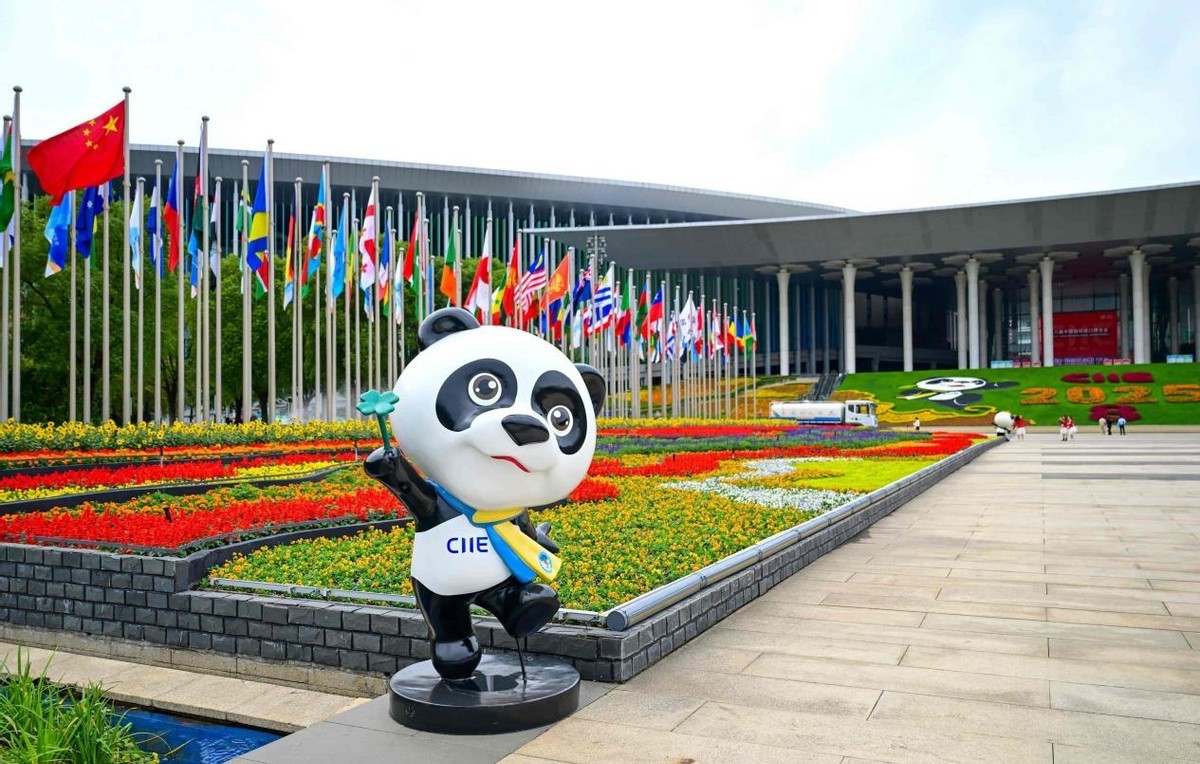
Core Insights - The 8th China International Import Expo (CIIE) emphasizes China's commitment to high-level opening-up and serves as a platform for global enterprises to collaborate on high-quality development, focusing on "digital intelligence" and "green low-carbon" as dual driving forces for future economic growth [1][20]. Green Development - Green development has become an inherent behavior for companies, evident in their exhibition designs and operational details at the CIIE [2]. - DHL showcases its "GoGreen Plus" service, which utilizes sustainable aviation fuel to significantly reduce Scope 3 emissions, with over half of its Chinese customers opting for this service by September 2023 [2][5]. - Procter & Gamble (P&G) reports a 60% reduction in greenhouse gas emissions (Scope 1 and 2) compared to 2010 levels, with a goal of 65% by 2030, and over 99% of its global operations powered by renewable electricity [5][6]. - Michelin introduces a tire made from 71% sustainable materials, including organic materials like rice husks and orange peels, marking a nearly 50% increase in sustainable material usage since 2021 [8][10]. Digital Empowerment - Digital technology is positioned as a key driver for industrial upgrades, with companies like Zeiss and Ericsson showcasing innovations in AI and connectivity to enhance manufacturing and logistics efficiency [15][17]. - DHL demonstrates automation in logistics, including the use of robotic arms and autonomous guided vehicles (AGVs) to improve operational efficiency and safety in package handling [19]. Industry Trends - The integration of digital and green initiatives is reshaping global supply chains, with companies leveraging technology to enhance resource efficiency and accelerate green transitions [20]. - The CIIE serves as a testing ground for global enterprises to share opportunities and co-create future rules, highlighting the importance of collaboration in achieving sustainable development goals [20].


欧盟电信巨头呼吁放宽并购规则以鼓励投资
Shang Wu Bu Wang Zhan· 2025-11-08 16:59
Core Points - Major European telecom companies are urging the European Commission to relax merger rules to boost investment in digital infrastructure and enhance competitiveness against US and Asian rivals [1] - The CEOs of Deutsche Telekom, Orange, Telefónica, TIM, Vodafone, Nokia, and Ericsson have expressed their concerns in a joint letter to the Commission President, highlighting the need for bold actions to address scale requirements [1] - The upcoming Digital Networks Act, expected to be proposed in November, aims to promote the development of digital infrastructure in Europe, but has faced internal opposition within the European Commission [1] Group 1 - European telecom companies are advocating for changes in merger regulations to facilitate investment [1] - The Digital Networks Act is seen as a critical opportunity for the industry to enhance competitiveness [1] - Internal opposition within the European Commission poses challenges to the proposed legislation [1]




连续8年亮相进博会 爱立信深化在华业务合作
Xin Lang Cai Jing· 2025-11-07 12:30
Core Viewpoint - Ericsson has participated in the China International Import Expo for eight consecutive years, emphasizing its commitment to the Chinese market and its role in the development of 5G technology in China [1] Group 1: Company Commitment - Ericsson's China President, Fang Ying, highlighted the company's long-standing presence in China, marking the 75th anniversary of diplomatic relations between China and Sweden [1] - The company aims to deepen its business cooperation in China, leveraging the country's high-level openness to foster a new future in the digital economy [1] Group 2: Technological Innovation - Since the initiation of 5G construction in China, Ericsson has focused on technological innovation, providing unique value to its operator partners through global insights and practices [1] - The company showcased a series of differentiated connection service use cases and demonstrations at the expo, highlighting over 80 different business models, including B2C, B2B2C, and B2B [1] Group 3: Future Developments - Ericsson presented its achievements in integrating AI with network technology, which is foundational for the future of mobile communication [1] - The exhibition included high-performance hardware enabled by Ericsson's silicon technology, distributed AI unit base station intelligent boards, and 5G private network use cases focused on high-end manufacturing [1]
Vonage Named North America Rising Star Partner of the Year by Verint
Prnewswire· 2025-11-06 13:30
Core Insights - Vonage has been recognized as the North America Rising Star Partner of the Year at the Verint Engage 2025 conference for its excellence in customer success and its effective use of AI-driven solutions [1][2]. Group 1: Partnership and Recognition - The award highlights Vonage's role in enhancing customer engagement and delivering significant value through its partnership with Verint [2][4]. - The collaboration between Verint and Vonage integrates Verint's AI-driven Customer Experience Automation Platform with Vonage Contact Center, providing a comprehensive solution for enterprises [3][4]. Group 2: Business Outcomes - The partnership aims to improve workforce capacity, increase revenue, and enhance customer experience through AI-powered business outcomes [1][3]. - Vonage's technology portfolio, which includes Network APIs, CPaaS, CCaaS, and UCaaS solutions, supports enterprises in reimagining digital interactions [5].

Ericsson: The Undervalued Backbone Of Global Connectivity
Seeking Alpha· 2025-11-06 13:17
Group 1 - Ericsson operates in a volatile telecommunications sector, focusing on structure rather than promises [1] - The company has a long-term investment philosophy that emphasizes underfollowed or undervalued companies, as well as established leaders with emerging structural value [1] Group 2 - The article does not provide specific financial data or performance metrics related to Ericsson or the telecommunications industry [2][3]

ERIC vs. IDCC: Which Stock Is the Better Value Option?
ZACKS· 2025-11-04 17:41
Core Insights - Investors interested in Wireless Equipment stocks are evaluating Ericsson (ERIC) and InterDigital (IDCC) for potential undervaluation opportunities [1] Valuation Metrics - Both Ericsson and InterDigital currently hold a Zacks Rank of 2 (Buy), indicating positive earnings estimate revisions and an improving earnings outlook for both companies [3] - Key valuation metrics for ERIC include a forward P/E ratio of 14.52 and a PEG ratio of 1.72, while IDCC has a forward P/E of 28.17 and a PEG ratio of 1.88 [5] - ERIC's P/B ratio stands at 3.19, compared to IDCC's P/B of 9.28, suggesting that ERIC is more undervalued based on these metrics [6] - The Value grades for the two companies are B for ERIC and D for IDCC, indicating that ERIC is currently the superior value option [6]


Competition law vs patent rights: NCLAT rules CCI has no power to probe patented product disputes; upholds case against Swiss drugmaker Vifor
The Times Of India· 2025-11-02 16:13
Core Viewpoint - The National Company Law Appellate Tribunal (NCLAT) ruled that the Competition Commission of India (CCI) lacks jurisdiction to investigate disputes related to patented products, affirming that the Patent Act takes precedence over the Competition Act in such cases [4][6]. Summary by Sections Legal Context - The NCLAT dismissed an appeal against a CCI order that closed a complaint against Vifor International, stating that the CCI does not have the authority to examine allegations against the company due to the jurisdictional limitations established by previous court rulings [4][6]. - The tribunal referenced the Delhi High Court's decision in the case of Telefonaktiebolaget LM Ericsson, which established that the Patent Act overrides the Competition Act [5][6]. Case Details - The complaint was filed by Swapan Dey, CEO of a hospital providing free dialysis services, who alleged that Vifor's conduct made Ferric Carboxymaltose (FCM) injections unaffordable and inaccessible [5][6]. - The CCI had previously closed the case on October 25, 2022, finding no prima facie contravention under the relevant sections of the Competition Act [5][6]. Patent Information - Vifor International held the patent for FCM, a drug used to treat Iron Deficiency Anaemia, which was granted on June 25, 2008, and expired on October 21, 2023, allowing for its free manufacture and sale [5][6]. - The NCLAT noted that while the patent's expiry allowed the drug to enter the public domain, the jurisdictional question remained whether the CCI could have examined the issue while the product was still under patent protection [6].
Aduna, Deutsche Telekom, mBank and Vonage Join Forces at World Banking Forum to Showcase the Future of Banking Security
Prnewswire· 2025-10-30 07:00
Core Insights - The collaboration among Vonage, Aduna, Deutsche Telekom, and mBank at the World Banking Forum aims to leverage mobile networks, APIs, and AI to enhance banking security and customer experience [1][3][6] Group 1: Industry Collaboration - The World Banking Forum in Athens gathers senior banking executives and technology leaders to discuss technological innovations in banking [1] - The partnership focuses on the integration of 5G, Network APIs, and AI to improve fraud prevention and redefine customer interactions in financial services [3][4] Group 2: Fraud Prevention and Cybersecurity - The rise of digital channels has led to an increase in fraud, with cybercrime damages projected to reach $11.9 trillion annually by 2026, necessitating advanced fraud protection strategies [2] - The collaboration aims to address current security challenges by embedding mobile network capabilities into banking applications, enhancing customer interactions while reducing fraud [3][4] Group 3: Technological Innovation - Aduna acts as an aggregator of telecom network capabilities, providing banks like mBank access to real-time verified network data, which facilitates seamless customer experiences and fraud reduction [4][6] - Vonage's Network APIs enable developers to create solutions for banks that automate verification processes, enhancing security and transforming customer experiences [6][10] Group 4: Company Profiles - mBank is Poland's fifth largest universal banking group, servicing approximately 4.7 million retail clients and 36.8 thousand corporate clients, with a focus on innovative digital banking solutions [7] - Aduna is a joint venture among leading telecom operators and Ericsson, aimed at accelerating innovation through standardized network APIs [8]
AI Conversation Engine Orum Chooses Vonage APIs to Power Its Platform
Prnewswire· 2025-10-29 13:00
Core Insights - Vonage has integrated its APIs into Orum's platform, enhancing customer interactions and supporting Orum's global expansion [1][4] - Orum utilizes Vonage's Voice API to manage over 7 million voice minutes monthly and acquires over 100,000 phone numbers each month, facilitating rapid scaling [2][4] - The integration of Vonage's Video API allows for real-time coaching and collaboration, improving productivity for distributed sales teams [3][4] Company Overview - Orum is an AI Conversation Engine that serves over 1,300 revenue teams, focusing on smarter dials and AI-driven coaching to boost sales [5] - Vonage, a subsidiary of Ericsson, provides technology that empowers enterprises and developers, facilitating digital transformation through its AI-powered platforms [6][7] Market Impact - Orum's operations now extend to over 160 countries across various industries, including financial services and ecommerce, leveraging Vonage's communication capabilities for international scalability [4] - The partnership with Vonage positions Orum to enhance customer experiences and operational efficiency in competitive markets [4]

欧洲科技股业绩“碾压”预期,AI浪潮成最强引擎
智通财经网· 2025-10-27 07:05
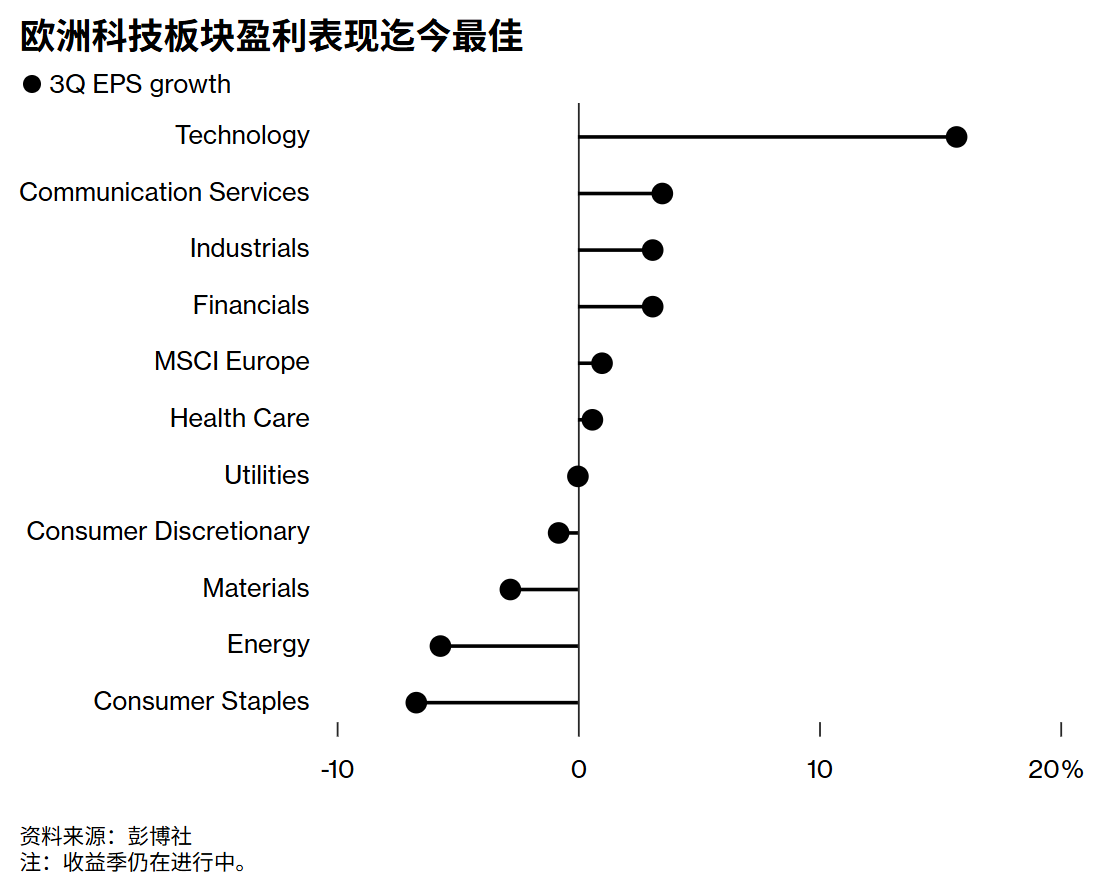
Group 1: Core Insights - The expansion of artificial intelligence (AI) investments is reshaping the European technology landscape, with companies reporting third-quarter earnings significantly exceeding market expectations [1] - The MSCI Europe Technology Index shows a 16% year-over-year increase in earnings per share for its constituents, with over 86% of the reported earnings surpassing the previous quarter's expected growth of 4.2% [1] Group 2: Company Performance - ASML, a leading semiconductor equipment manufacturer, reported a substantial increase in orders due to accelerated AI infrastructure spending, alleviating market concerns about an economic slowdown [3] - BE Semiconductor Industries NV also exceeded expectations in orders and profits, driven by AI-related demand in Asia [3] - SAP SE provided a mixed outlook for its core cloud business but reassured investors with discussions on the growing application of AI, emphasizing its role as a key growth enabler [3] - Ericsson's profit surged due to the divestment of its call routing business, while Nokia's third-quarter profits exceeded expectations, primarily benefiting from AI and cloud customer demand [3] Group 3: Market Trends - Analysts believe that the AI supercycle is driving demand for fiber access, data center connectivity, and transmission networks, improving Nokia's sales outlook, with the U.S. market emerging as a key growth area [4] - The market's bullish sentiment towards AI is spilling over into Europe, leading to upward revisions in earnings expectations for companies directly benefiting from AI infrastructure investments [4] Group 4: Challenges and Outlook - European tech giants face supply chain challenges due to escalating U.S.-China trade tensions, which have disrupted the semiconductor supply chain and worsened the operating environment [8] - Companies like STMicroelectronics and Texas Instruments indicated that automotive and industrial customers are delaying orders, with potential impacts from the Dutch government's takeover of the Chinese chipmaker Nexperia [8] - Despite these challenges, AI is still viewed as a core driver of long-term growth, with expectations that announced AI chip deals will gradually penetrate the supply chain and convert into actual orders, sustaining growth momentum beyond 2026 [8]