Ericsson(ERIC)

Search documents
Ericsson enters into strategic partnership with LotusFlare to accelerate adoption of network APIs
Prnewswire· 2025-12-03 07:17
Core Insights - Ericsson has announced a strategic partnership with LotusFlare, acquiring a minority stake in the software development company that focuses on telecommunications and enterprise solutions [1][5] - The partnership aims to enhance Ericsson's capabilities in exposing and monetizing advanced network features through APIs, leveraging LotusFlare's DNO Cloud platform [2][5] Company Overview - LotusFlare, founded in 2014 and headquartered in Santa Clara, California, employs 500 people globally and specializes in cloud-native commerce and monetization solutions [1][6] - The DNO Cloud platform by LotusFlare provides consent management and digital commerce solutions, facilitating a Network API Exposure Layer for monetizing network capabilities [2][6] Strategic Objectives - The collaboration will produce common solution blueprints for typical integration scenarios, including API access and consent management, to accelerate the journey of Communication Service Providers (CSPs) towards Network API monetization [2][5] - The partnership is expected to unlock new market opportunities and enhance the development of critical network asset monetization capabilities for CSPs globally [3][5] Industry Impact - The combination of Ericsson's high-performance networks with LotusFlare's capabilities is anticipated to accelerate CSPs' ability to leverage new network capabilities, particularly in the context of 5G and AI [3] - Vonage, a part of Ericsson, will utilize the enhanced API supply to enable developers and enterprises to create network-powered solutions, turning advanced connectivity into a competitive advantage [3]



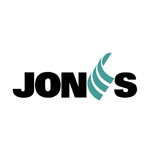
中石科技:长期服务于H客户、中兴、爱立信、诺基亚、思科、菲尼萨等头部通讯终端设备制造商
Mei Ri Jing Ji Xin Wen· 2025-12-02 04:02
Core Viewpoint - The company, Zhongshi Technology, confirmed its collaboration with major telecommunications equipment manufacturers, including ZTE, Ericsson, Nokia, Cisco, and Finisar, in the digital infrastructure sector [2]. Group 1 - The company provides key products in the digital infrastructure industry, such as thermal interface materials, heat pipes, uniform heat plates, thermal modules, EMI shielding materials, and environmental sealing materials [2]. - The company has a long-term service relationship with leading clients in the telecommunications sector [2].



ERIC or IDCC: Which Is the Better Value Stock Right Now?
ZACKS· 2025-11-20 17:41
Core Insights - Investors are evaluating the value opportunities in Wireless Equipment stocks, specifically comparing Ericsson (ERIC) and InterDigital (IDCC) [1] Valuation Metrics - Both Ericsson and InterDigital currently hold a Zacks Rank of 2 (Buy), indicating positive earnings estimate revisions and improving earnings outlooks [3] - Ericsson has a forward P/E ratio of 12.90, while InterDigital has a forward P/E of 23.89, suggesting that Ericsson may be undervalued compared to InterDigital [5] - The PEG ratio for Ericsson is 1.53, and for InterDigital, it is 1.59, indicating similar expected earnings growth rates [5] - Ericsson's P/B ratio is 2.9, compared to InterDigital's P/B of 7.87, further supporting the notion that Ericsson is the more attractive value option [6] - Based on these valuation metrics, Ericsson has earned a Value grade of A, while InterDigital has a Value grade of C, reinforcing the conclusion that Ericsson presents a superior value opportunity [6]


Vonage Receives Triple Recognition from Juniper Research for its APIs
Prnewswire· 2025-11-20 13:30
Core Insights - Vonage has been recognized as an Established Leader in three reports by Juniper Research, highlighting its innovations in API products and market leadership [1][2][3] Group 1: Market Recognition - Vonage received triple recognition from Juniper Research for its API product innovations in the Network APIs Market, Global Mobile Identity Market, and A2P & Business Messaging [1] - The company is noted for its advanced technologies and tools that enhance digital experiences, reinforcing its market leadership position [4] Group 2: API Innovations - Juniper Research emphasizes Vonage's introduction of Network APIs, such as Silent Authentication and SIM Swap, which address the complexities of APIs and support digital transformation [2] - Vonage's Fraud Prevention APIs are highlighted for providing secure authentication solutions, particularly beneficial for industries like financial services that are prone to fraud [2] Group 3: Communication Solutions - The A2P & Business Messaging Report recognizes Vonage's extensive network reach and its diverse portfolio of Communications APIs, including SMS and rich messaging solutions like RCS and WhatsApp [3] - Vonage's ecosystem partnerships are credited as a significant factor in its market leadership, enhancing its service offerings [3]

Ericsson Mobility Report: differentiated connectivity services gaining momentum
Prnewswire· 2025-11-20 07:19
Core Insights - The deployment of 5G Standalone (5G SA) networks has significantly increased the number of communications service providers (CSPs) offering differentiated connectivity models, particularly through network slicing [1][2][4] Group 1: 5G Standalone Deployment - More than 90 CSPs have launched or soft-launched 5G SA networks, marking an increase of approximately 30 CSPs from the previous year and 20 from the June 2025 report [2] - 118 cases of network slicing have been identified across 56 CSPs, with 65 of these cases moving into commercial services [2][3] - In 2025, 21 out of the 65 commercial offerings were launched, indicating a strong trend towards commercial deployment [3] Group 2: Future Projections - The November 2025 Ericsson Mobility Report forecasts that global 6G subscriptions will reach 180 million by the end of 2031, with significant early uptake expected in leading markets [5][6] - Enhanced mobile broadband is projected to exceed 6.4 billion 5G subscriptions by the end of 2031, accounting for about two-thirds of all mobile subscriptions [6][9] - By the end of 2025, 5G subscriptions are expected to surpass 2.9 billion, representing about one-third of all current mobile subscriptions, with a year-on-year increase of 600 million [7] Group 3: Data Traffic and Connectivity - Mobile network data traffic grew by 20% from Q3 2024 to Q3 2025, driven primarily by growth in mainland China and India, with an annual average growth forecast of 16% through 2031 [8] - By the end of 2025, 5G networks are expected to manage 43% of all mobile data, up from 34% the previous year, with a forecast increase to 83% by 2031 [10] - Approximately 1.4 billion people are expected to access Fixed Wireless Access (FWA) broadband by the end of 2031, with 90% of this access via 5G [10]

这类芯片,新大门开启
半导体行业观察· 2025-11-18 01:40
Core Viewpoint - The article discusses the ongoing challenges and dynamics in the RAN (Radio Access Network) chip market, highlighting the reliance on a few major suppliers and the implications of geopolitical factors on market competition [2][3]. Group 1: Market Dynamics - The RAN chip market is dominated by a few players, specifically Ericsson, Nokia, and Samsung, which limits competition for telecom operators [3]. - The revenue for RAN products was approximately $45 billion in 2022, projected to decline to $35 billion by 2024, indicating a shrinking market [3]. - The introduction of Open RAN has not significantly increased chip diversity, leading to a reliance on a limited number of manufacturers [3]. Group 2: Technological Shifts - Virtual RAN (vRAN) is gaining traction, with its share expected to double from 10% in 2023 to over 20% by 2028, potentially impacting the custom chip market [5]. - Ericsson continues to invest heavily in ASIC (Application-Specific Integrated Circuit) development, but the shift towards vRAN may affect the returns on this investment [6][7]. - Samsung is rapidly moving towards vRAN solutions, with its products showing improved performance and reduced costs compared to traditional RAN [7]. Group 3: Competitive Landscape - Intel remains a key partner for both Ericsson and Samsung, while Nokia relies on Marvell for its RAN products [3][7]. - AMD is positioned as a potential alternative to Intel, with its financial performance significantly better than Intel's, but challenges remain regarding hardware integration [9]. - Nvidia's recent investment in Nokia indicates a strategic move to support RAN software development, although there are concerns about the cost and energy efficiency of Nvidia's GPUs [12][13].


八赴进博会!爱立信解码5G转型:从“卖流量”到“卖服务”的产业新路径
Huan Qiu Wang· 2025-11-14 04:17
Core Insights - Ericsson has participated in the China International Import Expo for the eighth consecutive year, showcasing over 80 differentiated connectivity cases and the latest achievements in AI and network integration [1] - The company emphasizes a shift from "selling connectivity" to "selling services" to address the revenue challenges faced by operators in the 5G era [3][4] - Ericsson anticipates achieving 6G commercial deployment around 2030, with a core network evolution based on 5G SA [3][12] Differentiated Connectivity - The essence of differentiated connectivity is to provide customized services based on specific application and user needs, moving away from the homogeneous service model of 4G [3][4] - This model allows users to pay for enhanced experience, predictability, and control, similar to subscription services in other industries [4] AI and Network Integration - AI is positioned as a critical technology for enabling differentiated connectivity, with Ericsson advocating for a dual empowerment approach: "Networks for AI" and "AI for Networks" [5] - AI can predict over 95% of network failures, improve spectrum and capacity efficiency by approximately 15%, and reduce energy consumption by 14% [7] 5G Private Networks - Ericsson is focusing on 5G private networks for the B2B market, with successful implementations in high-end manufacturing scenarios, such as Airbus production facilities [8] - The unique value of 5G private networks is highlighted through specific applications, such as remote control of torque parameters in manufacturing [8] Emerging Devices and Market Trends - New devices like embodied intelligence and AI glasses have specific network requirements, such as higher uplink bandwidth and low latency for real-time interactions [9] - The future is expected to see a cluster of AI-based applications and devices driving network demand, creating a positive feedback loop between devices and networks [11] Market Opportunities and Challenges - China is recognized as a leading market in 5G SA construction and B2B application exploration, but faces challenges in nationwide deployment due to its vast territory and large user base [12] - The promotion of eSIM technology in China is seen as gradual, requiring consideration of consumer acceptance and market dynamics [12] Conclusion - Ericsson views China not only as a significant market but also as a source of innovation, aiming to leverage differentiated connectivity and AI integration to transition the mobile communication industry from "scale leadership" to "value leadership" [12]

Vonage Recognized by Metrigy MetriStar for Standout Contact Center and CPaaS Solutions
Prnewswire· 2025-11-13 13:30
Core Insights - Vonage has been recognized with two MetriStar Awards for its excellence in customer success and innovation in the Contact Center as a Service (CCaaS) and Communications Platform as a Service (CPaaS) sectors, highlighting its commitment to helping businesses succeed through technology [1][4] CCaaS Insights - Vonage achieved the highest overall score in CCaaS, with a first contact resolution rate exceeding 68%, demonstrating its effectiveness in empowering businesses in a competitive market [2] - The Vonage Contact Center (VCC) has been noted for its ability to streamline customer interactions, leading to an above-average customer satisfaction score, with 76% of users reporting that their leadership now views the contact center as a value center [2][3] CPaaS Insights - Vonage's CPaaS platform has been recognized for providing developers and businesses with tools to integrate voice, messaging, and video capabilities, along with advanced features like fraud protection [3][4] - Customers using Vonage's CPaaS have experienced faster delivery of customer notifications, enhancing operational efficiency and customer satisfaction [3] Company Commitment - Vonage emphasizes its dedication to enabling customer success through transformational communication technologies, with a focus on innovation and meeting customer needs [4][5] - The MetriStar Awards are based on independent research and customer feedback, recognizing technology providers that excel in customer experience and business outcomes [4]

对话爱立信高管:以“差异化连接”破局5G商业变现
Xin Lang Cai Jing· 2025-11-10 12:24
Core Insights - Ericsson showcased its latest advancements in AI-enabled networks, differentiated connectivity, and energy-efficient network products at the 8th China International Import Expo, addressing the telecom industry's revenue growth challenges and proposing differentiated connectivity as a solution [1] Group 1: 5G Commercial Challenges - The current 5G technology has strong capabilities, but operators are still using traditional revenue models from the 4G era, primarily focused on selling data, leading to homogenized services [2] - Global operators are facing stagnant ARPU (Average Revenue Per User) growth, with major Chinese operators' ARPU values also remaining flat despite high network infrastructure maturity [2] - Ericsson's solution to this challenge is differentiated connectivity, which involves packaging 5G capabilities to provide customized services for various application scenarios, shifting from "selling connectivity" to "selling services" [2] Group 2: AI and Network Integration - Despite the monetization challenges, Ericsson sees significant opportunities from AI, emphasizing that AI is essential for the industry [3] - The concept of "Networks for AI" and "AI for Networks" aims to enhance network adaptability for AI applications while leveraging AI to tackle increasing network complexities [3] - AI can predict over 95% of network faults, improve spectrum and capacity efficiency by approximately 15%, and reduce energy consumption by 14% [3] Group 3: Future Outlook on 6G - Ericsson executives indicated that the timeline for 6G is around 2030, with differentiated connectivity being a necessity not only for 5G but also for future 6G [4] - The evolution of 6G will be based on an independent 5G SA core network, and operators are encouraged to transition from NSA to SA to maximize network value and prepare for 6G [4]
进博会上的通信产业:中企秀 6G,外企拓市场
Di Yi Cai Jing· 2025-11-09 05:49
Core Insights - The event showcased advancements in communication technology, particularly in AI and 5G-A, with international vendors aiming to penetrate the Chinese market while Chinese companies presented their visions for 6G and AI applications [1] Group 1: 6G and Communication Technology - ZTE presented its "6G Space-Ground Integrated" theme, demonstrating key technological breakthroughs in space-ground integrated communication and conducting multiple NTN technology trials with domestic operators and satellite companies [2] - ZTE aims to support the intelligent upgrade of various industries by providing ultra-large bandwidth, low latency, and high reliability through all-optical networks, establishing a solid foundation for connectivity [2] Group 2: Global Computing Network Infrastructure - China Mobile International showcased its global computing network infrastructure centered around "road-station-island," with over 100 submarine and land cable resources and a total international transmission bandwidth of 310T [4] - The company plans to deliver a data center in Hong Kong by early 2026, featuring over 10,000 cabinets and designed to support supercomputing capabilities [6] Group 3: AI and 5G Commercialization - Ericsson and Nokia focused on current market opportunities, with both companies presenting AI-enabled products and solutions at the event [7] - Nokia's wireless private network solutions aim to facilitate rapid deployment and intelligent operations across various scenarios, emphasizing sustainability [7] - Ericsson highlighted the potential for differentiated connectivity driven by AI, which could accelerate 5G commercialization and influence future 6G applications [12]