
Ford Motor(F)

Search documents
韩企63亿电池材料工厂暂停建设!
起点锂电· 2025-06-13 10:15
Group 1 - EcoPro BM announced the suspension of its CAD 1.2 billion battery materials factory project in Quebec, Canada, due to uncertainties in the electric vehicle and battery industry, as well as challenges from U.S. tariff policies [1] - The factory, a joint venture between EcoPro BM, SK On, and Ford, was expected to produce 45,000 tons of nickel-cobalt-manganese battery cathode active materials annually, sufficient to supply approximately 225,000 Ford electric vehicles [1] - The factory's production was initially scheduled to start in the first half of 2026, but faced multiple delays, including a pause in construction due to contractor issues and a redesign of the factory [1][2] Group 2 - Ford, a key investor and potential customer for the factory, withdrew its investment in November, further increasing uncertainty surrounding the project [2] - In April, Ford delayed the production timeline for its electric SUVs from 2025 to 2027, citing slower-than-expected growth in electric vehicle demand [2] - In July, Ford announced a shift in its Canadian factory's production focus from electric vehicles to gasoline-powered versions of its flagship F-series trucks, raising concerns about the factory's future [3]



突发!63亿电池材料工厂暂停建设!
鑫椤锂电· 2025-06-13 08:04
Core Viewpoint - EcoPro BM has announced the suspension of its CAD 1.2 billion (approximately RMB 6.3 billion) battery materials factory project in Quebec, Canada, due to uncertainties in the electric vehicle and battery industry, compounded by challenges from U.S. tariff policies [1]. Group 1: Company Overview - EcoPro BM is a subsidiary of South Korea's EcoPro, established in May 2016, specializing in the production of lithium battery cathode materials, including NCA and NCM [1]. - The Quebec cathode materials factory is a joint venture between EcoPro BM, SK On, and Ford, with plans to produce 45,000 tons of nickel-cobalt-manganese battery cathode active materials annually, sufficient to supply approximately 225,000 Ford electric vehicles [1]. Group 2: Project Developments - The factory was initially scheduled to begin mass production in the first half of 2026, but faced delays due to issues in selecting a construction contractor, leading to a temporary suspension in April 2024 [1]. - The factory was halted again in August 2024, with the official reason cited as "factory redesign" [1]. Group 3: Market Dynamics - Ford, a key investor and potential customer for the factory, withdrew its investment in November 2024, further increasing uncertainty surrounding the project [2]. - In April 2024, Ford had already postponed the production timeline for its electric SUVs from 2025 to 2027, citing slower-than-expected growth in electric vehicle demand [2]. - In July 2024, Ford announced a shift in production plans for its Canadian factory, opting to produce gasoline-powered versions of its flagship F-series trucks instead of electric vehicles [2].

突发!63亿电池材料工厂暂停建设!
鑫椤锂电· 2025-06-13 08:03
Core Insights - EcoPro BM, a South Korean battery materials manufacturer, announced a suspension of its CAD 1.2 billion (approximately RMB 6.3 billion) battery materials factory project in Quebec, Canada, due to uncertainties in the electric vehicle and battery industry, compounded by challenges from U.S. tariff policies [1][2] Group 1: Company Overview - EcoPro BM specializes in the production of lithium battery cathode materials and is a subsidiary of EcoPro, established in May 2016. Its main products include NCA and NCM cathode materials [1] - The Quebec factory was a joint investment by EcoPro BM, SK On, and Ford, with plans to produce 45,000 tons of nickel-cobalt-manganese battery cathode active materials annually, sufficient to supply approximately 225,000 Ford electric vehicles [1] Group 2: Project Developments - The factory was initially scheduled to begin production in the first half of 2026, but faced delays due to issues in selecting a construction contractor, leading to a temporary suspension in April 2024, which was later resumed [1] - In August 2024, the factory was halted again for "factory redesign," indicating ongoing uncertainties surrounding the project [1][2] Group 3: Market Context - Ford, as both an investor and potential customer, withdrew its investment in November 2024, further increasing uncertainty regarding the factory's future [2] - In April 2024, Ford had already delayed the production timeline for its electric SUVs from 2025 to 2027, citing slower-than-expected growth in electric vehicle demand [2] - In July 2024, Ford announced a shift in its Canadian factory's production focus from electric vehicles to gasoline-powered versions of its flagship F-series trucks [2]
全球多家车企因稀土短缺拉响停产警报 专家:跨国车企或调整供应链布局
Mei Ri Jing Ji Xin Wen· 2025-06-12 15:23
Core Viewpoint - Multiple automotive companies are facing a "panic" due to a shortage of rare earth materials, which are critical for automotive production, particularly in electric vehicles [1][2][4]. Group 1: Impact on Automotive Production - Suzuki has temporarily halted operations on some production lines in Japan due to delays in receiving rare earth component shipments from China, affecting automotive electronic systems and engine parts [1]. - The Indian automotive industry is at risk, with major manufacturers like Tata, Maruti Suzuki, and Mahindra having only three days' worth of rare earth magnet inventory left, potentially leading to widespread production halts [2]. - Ford has also paused production of its Explorer SUV due to similar rare earth shortages [2]. Group 2: Export Control Measures - The Chinese Ministry of Commerce announced export control measures on seven types of rare earth materials, effective from April 4, which has led to significant delays in obtaining export licenses for these materials [1][3]. - Only 25% of the rare earth export license applications submitted by European component manufacturers have been approved since April, causing production delays and temporary shutdowns in some European automotive companies [2]. Group 3: Importance of Rare Earth Elements - Rare earth elements play a crucial role in automotive manufacturing, especially in electric vehicles, where materials like neodymium-iron-boron significantly enhance power density, acceleration, and range [4][5]. - Each pure electric vehicle consumes 5 to 10 kg of neodymium-iron-boron, while plug-in hybrid vehicles consume 2 to 3 kg [4]. Group 4: Supply Chain Adjustments - In response to the rare earth crisis, multinational automotive companies may consider adjusting their supply chains to produce rare earth-related components in China to leverage local supply chain advantages [6]. - Companies like Tesla, Ford, and Toyota are accelerating the development of technologies to reduce reliance on rare earth magnets, with Toyota working on "rare earth-free motors" [6]. Group 5: Strategic Cooperation and Inventory Management - Experts suggest that multinational companies should maintain strategic cooperation with China rather than rush to restructure supply chains, which could incur higher costs [7]. - Increasing inventory and optimizing supply chain management for raw materials are recommended strategies to mitigate the impact of such crises [7].


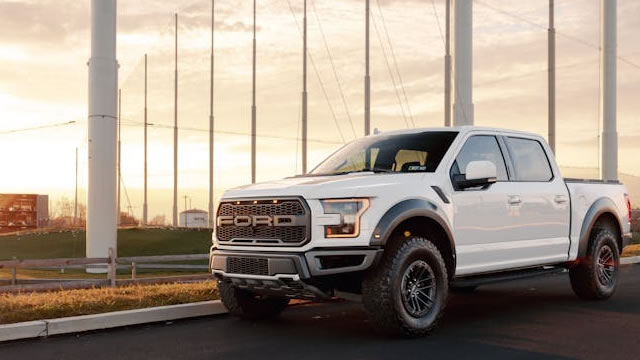
Ford Motor: Solid EV Momentum
Seeking Alpha· 2025-06-12 07:27
Core Insights - Ford Motor Company's stock price has remained around $10 since August 2024, despite growth in electric vehicle (EV) sales and a significant moderation in inflation, which is expected to lead to profit upside [1] Group 1: Company Performance - The stock price of Ford has been stable at approximately $10 since August 2024 [1] - The company is experiencing growth in its electric vehicle sales [1] - Moderation in inflation is contributing to potential profit increases for Ford [1]
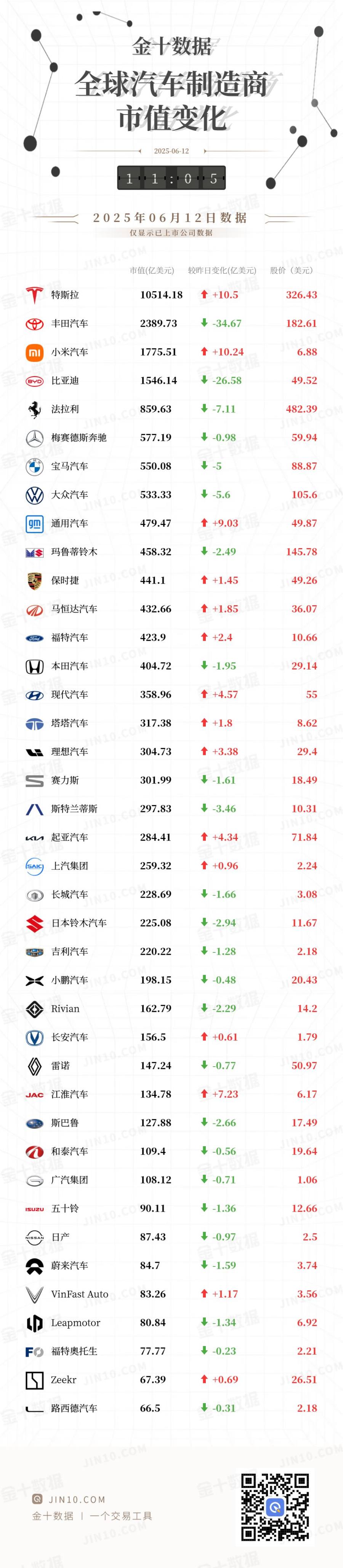
金十图示:2025年06月12日(周四)全球汽车制造商市值变化
news flash· 2025-06-12 03:11
Market Capitalization Changes - Tesla's market capitalization reached $105.14 billion, with an increase of $1 billion from the previous day, and its stock price is $326.43 [3] - Toyota's market capitalization is $238.97 billion, showing a decrease of $34.67 million, with a stock price of $182.61 [3] - Xiaomi Auto's market capitalization is $177.55 billion, increasing by $10.24 million, with a stock price of $6.88 [3] - BYD's market capitalization is $154.61 billion, decreasing by $26.58 million, with a stock price of $49.52 [3] - Ferrari's market capitalization is $85.96 billion, decreasing by $7.11 million, with a stock price of $482.39 [3] Other Notable Companies - General Motors has a market capitalization of $47.95 billion, increasing by $9.03 million, with a stock price of $49.87 [4] - Ford's market capitalization is $42.39 billion, increasing by $2.4 million, with a stock price of $10.66 [4] - Hyundai's market capitalization is $35.90 billion, increasing by $4.57 million, with a stock price of $22 [4] - Kia's market capitalization is $28.44 billion, increasing by $4.34 million, with a stock price of $71.84 [4] - Nissan's market capitalization is $8.74 billion, decreasing by $0.97 million, with a stock price of $2.50 [5]




Ford (F) Conference Transcript
2025-06-11 13:00
Summary of Ford Conference Call - June 11, 2025 Company Overview - **Company**: Ford Motor Company (F) - **Event**: DB Global Auto Conference - **Date**: June 11, 2025 Key Points Industry and Market Position - Ford is positioned as a relative beneficiary amidst significant shifts in U.S. policy affecting the auto industry [9] - Over 80% of vehicles sold in the U.S. are manufactured domestically, providing Ford with a competitive advantage [10][11] - Ford's strategy is a continuation of its commitment to U.S. manufacturing, allowing for flexibility in market competition [12] Growth and Market Share - Ford aims to grow market share profitably, emphasizing the importance of balancing growth with profitability [15] - The "From America, For America" campaign was launched to provide employee pricing to customers, enhancing Ford's market presence [17] - Ford achieved a 14.7% market share in the U.S., a 1.9 percentage point increase year-over-year, with strong performance in its truck portfolio [18][19] - The Bronco family sold around 30,000 units, and the Expedition saw a 45% increase in sales [20] Ford Pro Business - Ford Pro is focused on growing its connected vehicle services and software offerings, which are essential for maintaining competitive advantages [22] - The Pro business has the widest vehicle lineup in the commercial sector, enhancing its market leadership [23] - Ford aims for 20% of profits in Pro to come from parts and services, diversifying revenue streams [26] Cost Management and Warranty Improvements - Ford has made significant progress in reducing costs, with a reported $1 billion year-over-year improvement [31] - The company is focusing on systemic changes to improve warranty costs and overall operational efficiency [28][33] - Mobile service initiatives have resulted in over 1.5 million services performed, enhancing customer satisfaction [27] Tariff Impact and Pricing Strategy - Ford anticipates a $2.5 billion headwind from tariffs but plans to offset this with cost actions [37] - The company is actively analyzing market conditions to adjust pricing strategies effectively [40] - Ford is balancing production, pricing, and competitiveness to ensure profitability [41] Electric Vehicle (EV) Strategy - Ford has been the second-largest automaker in EV sales in the U.S. over the past three years, with the Mach-E and Lightning leading the charge [48] - The company is launching new EV models in Europe, including the Capri and Explorer, which are expected to be more profitable than existing models [49][51] - Ford is focusing on educating customers about the best powertrain options for their needs, including gas, hybrid, and electric vehicles [52] European Market Dynamics - Ford Pro's commercial business in Europe has grown year-over-year, despite a softening overall market [56] - The company is adapting to regulatory compliance and pricing pressures in Europe, with a focus on maintaining a balanced pricing strategy [95][98] China Market Role - Ford views China as an export hub and is leveraging its joint ventures to enhance profitability and market presence [64][66] - The company is learning from the rapid integration of AI and customer experience innovations in the Chinese market [68] Autonomy and Advanced Driver Assistance Systems (ADAS) - Ford is developing its Level 2 and Level 3 autonomy solutions in-house, with a focus on customer trust and integration into commercial applications [74][76] - The company is evaluating partnerships to enhance its autonomy technology and customer value [80][82] Formula 1 Involvement - Ford's entry into Formula 1 is seen as a strategic move to enhance technological know-how and brand exposure [86][90] - The partnership with Red Bull aims to leverage racing technology for improvements in mainstream vehicles [88][89] Additional Insights - Ford is committed to addressing cost challenges while enhancing its product offerings and customer service [62] - The company is focused on long-term sustainability and profitability through strategic capital allocation and market adaptability [51][52]
金十整理:5月通胀还好吗?多家知名企业宣布在美实施涨价策略
news flash· 2025-06-11 07:38
Core Viewpoint - Multiple well-known companies in the U.S. are implementing price increases in May, indicating a trend of rising costs across various sectors. Group 1: E-commerce and Retail - E-commerce giants Temu and Shein issued nearly identical price increase notifications [1] - Retail giants Walmart and Macy's announced price hikes in May [1] - Toy manufacturer Mattel announced price increases for certain products in the U.S. in early May [1] Group 2: Apparel and Footwear - Nike announced price increases for athletic shoes priced between $100 and $150, with a maximum increase of $5 [1] - Apparel brand Ralph Lauren plans to raise prices more significantly than initially planned to offset tariff impacts [1] Group 3: Technology and Automotive - Microsoft raised the suggested retail prices for its Xbox consoles and controllers globally in early May [1] - Ford increased the prices of three models produced in Mexico, with the highest increase reaching $2,000 [1] - Subaru announced price hikes for several models, effective in June [1] Group 4: Tools and Consumer Goods - Tool manufacturer Stanley Black & Decker raised prices in April and plans to increase them again in the third quarter [1] - Procter & Gamble indicated that it may need to pass price increases onto consumers, with potential price hikes visible as early as July [1]





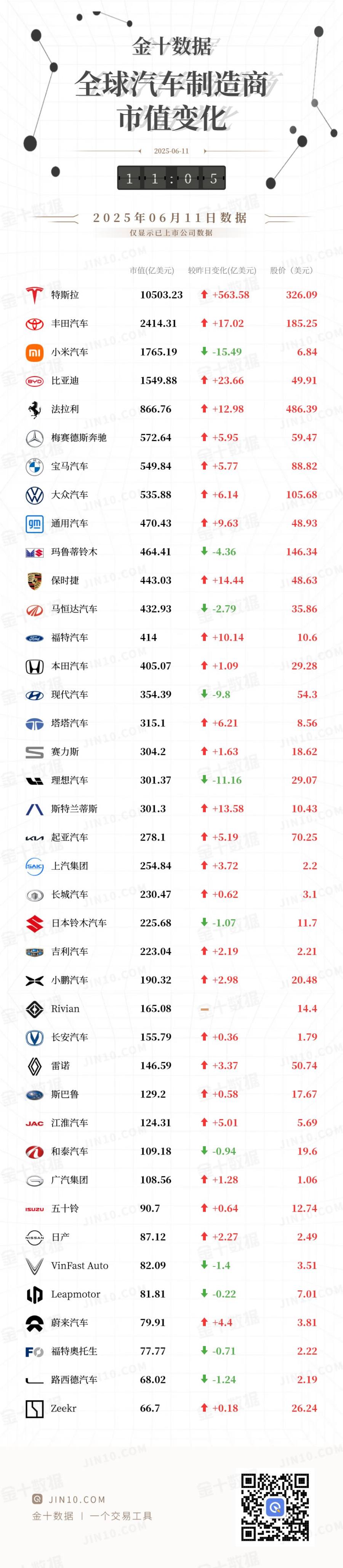
金十图示:2025年06月11日(周三)全球汽车制造商市值变化
news flash· 2025-06-11 03:14
Group 1 - Toyota leads the automotive market with a value of 2414.31 billion, showing an increase of 17.02% [2] - BYD follows with a value of 1549.88 billion, reflecting a growth of 23.66% [2] - Ferrari has a market value of 866.76 billion, up by 12.98% [2] Group 2 - General Motors is valued at 470.43 billion, with a growth of 9.63% [3] - Ford has a market value of 414 billion, increasing by 10.14% [3] - Honda's value stands at 405.07 billion, with a slight increase of 1.09% [3] Group 3 - Changan Automobile is valued at 155.79 billion, with a minor increase of 0.36% [4] - Nissan has a market value of 87.12 billion, showing an increase of 2.27% [4] - NIO's value is at 79.91 billion, reflecting a growth of 4.4% [4]



摩根士丹利:全球电动汽车追踪-中国的电动化主导时代
摩根· 2025-06-11 02:16
Investment Rating - Industry View: In-Line [5] Core Insights - Global electric vehicle (EV) sales increased by 38% year-over-year (y/y) in April 2025, with China leading the growth at 51% y/y [1] - Tesla's global sales decreased by 17% y/y, with a notable decline of 15% y/y in the US market [1][8] - The top battery electric vehicle (BEV) manufacturers globally include BYD, Geely, and GM, while Tesla's market share has dropped significantly [7][27] Summary by Sections Global BEV Sales - Total global BEV sales reached 1,079,716 units in April 2025, marking a 38% increase y/y but a decrease of 11% from the previous month [7] - The leading BEV manufacturers in April 2025 were BYD (181k sales), Geely (101k sales), and GM (96k sales) [7][22] - Tesla's market share in the global BEV market fell to 7.9% in April 2025, down from 12.3% the previous month [7][27] Regional Performance - In the US, BEV sales decreased by 4% y/y to 95,427 units in April 2025, with an EV penetration rate of approximately 6.5% [14] - European BEV sales increased by 30% y/y to 214,288 units, with a penetration rate of around 19.9% [14] - China saw a significant increase in BEV sales, up 51% y/y to 662,541 units, with a penetration rate of about 30.2% [14] Top BEV Models - The top-selling BEV models globally in April 2025 included the Tesla Model Y (57k sales), BYD Seagull/Dolphin Mini (38k sales), and Wuling HongGuang Mini (36k sales) [30] - The total sales of the top 20 BEV models accounted for 41% of the total BEV sales in April 2025 [30] Battery Deployment - Total MWh deployed in April 2025 increased by 32% y/y to 66,771 MWh [11] - The top five cell suppliers deployed a combined 49,858 MWh in April 2025, compared to 38,889 MWh the previous year [11] Market Share Dynamics - Tesla's share of the US BEV market decreased from 46.0% last year to 41.0% in April 2025 [8] - The market share of other manufacturers such as BYD and GM has been increasing, indicating a shift in competitive dynamics within the industry [24][27]
