
Faraday Future(FFIE)

Search documents
1.19美元横扫美国!蜜雪冰城洛杉矶“亮剑”,贾跃亭转型暗藏大棋
Sou Hu Cai Jing· 2026-01-06 22:38
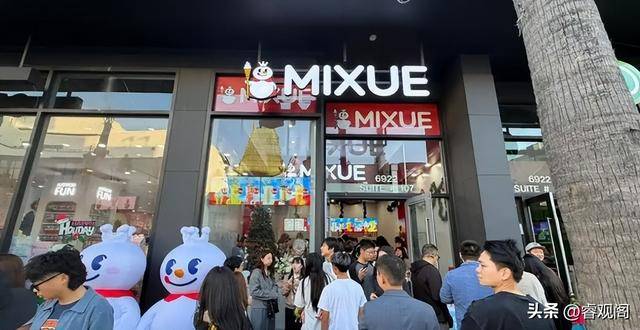
Group 1: Core Insights - The opening of the first overseas store of Mixue Ice Cream in Hollywood, priced at $1.19, has attracted significant consumer interest, showcasing a successful business model [1][3] - Mixue Ice Cream's pricing strategy is significantly lower than local competitors, with prices ranging from $1.19 to $4.99, leveraging a robust supply chain in China to maintain low operational costs [3][5] - The company's profitability is primarily driven by the sale of standardized supplies to franchisees, accounting for over 70% of its profits, which allows for a low-price strategy to attract customers [5][7] Group 2: Supply Chain and Operational Strategy - Mixue Ice Cream has established approximately 4,700 stores across 13 countries, supported by its own factory in Henan, China, which enables cost-effective production of equipment and supplies [3][5] - The company employs a model of "low front-end pricing to drive traffic, while making profits from back-end supplies," which has been successfully replicated from its operations in China to the U.S. market [5][17] - Localized marketing strategies, such as "snow king street flash" and "theme song challenges," have helped Mixue quickly gain popularity in the U.S. [7] Group 3: Industry Comparisons - The strategic shift of Jia Yueting's Faraday Future from a fully American production model to a "Chinese components + American assembly" approach reflects a similar reliance on Chinese supply chains as seen with Mixue Ice Cream [9][17] - The automotive industry faces more complex engineering challenges compared to the standardized product offerings of Mixue Ice Cream, making it harder for Faraday Future to establish a competitive edge solely through assembly [24][26] - While both companies benefit from the advantages of the Chinese supply chain, the automotive sector's need for core technological advancements remains a significant barrier for long-term competitiveness [26]


蜜雪冰城在美国的赚钱法子,被贾跃亭学去了?
Sou Hu Cai Jing· 2026-01-05 00:15
Core Insights - The opening of the first North American store by Mixue Ice City in Hollywood, Los Angeles, symbolizes the entry of Chinese consumer brands into the global market with disruptive business models [1] - Mixue Ice City's pricing strategy, featuring ice cream at $1.19 and meal sets at $3.99, aims to create waves in the local tea beverage market, leveraging a highly integrated supply chain driven by China for profit maximization [1][3] - Faraday Future, led by Jia Yueting, has shifted its strategy from building an electric vehicle supply chain from scratch in the U.S. to a "China parts + U.S. assembly" model, mirroring Mixue's operational logic [1][8] Group 1: Mixue Ice City - Mixue Ice City has maintained a core strategy of "extreme cost performance" since its establishment in 1997, achieving profitability through centralized factories, standardized equipment, and comprehensive supply chain control [2] - Over 70% of Mixue's profits come from selling standardized consumables to franchisees, rather than beverage sales, allowing for low pricing in high-cost areas like Hollywood [3] - The core equipment and packaging materials are produced in China, significantly reducing costs compared to local alternatives, while the U.S. operations focus on light front-end functions [3][5] Group 2: Faraday Future - Jia Yueting's transition to a lighter asset model for Faraday Future reflects a realization of the high costs and inefficiencies of building a complete electric vehicle supply chain in the U.S. [8][10] - The new strategy involves using existing Chinese supply chains for core components, with final assembly and testing conducted in the U.S., significantly shortening development cycles [10][11] - This approach allows for competitive pricing in the mid-range electric vehicle market, with manufacturing costs projected around $35,000 per vehicle [10] Group 3: Comparative Analysis - Both Mixue Ice City and Faraday Future exhibit a similar operational model in the U.S., focusing on leveraging China's manufacturing efficiency as a competitive advantage [11] - This "reverse globalization" strategy minimizes initial investments and accelerates product launches while maintaining cost flexibility and mitigating geopolitical risks [11][12] - The success of Mixue Ice City and the strategic shift of Faraday Future highlight a broader evolution in the globalization path of Chinese enterprises, moving from mere manufacturing to becoming integral players in global supply chains [12][13]


盘前:纳指期货跌0.1% 美联储会议纪要今日驾到
Xin Lang Cai Jing· 2025-12-30 13:40
Market Overview - The stock market struggled to gain momentum in the last trading days of the year, with the Dow futures down 0.06%, S&P 500 futures down 0.07%, and Nasdaq futures down 0.10% [1][16] - The European Stoxx 600 index rose 16% this year, reaching historical highs, with the banking sector leading gains, up 65%, potentially marking the largest annual increase since 1997 [17] Global Market Sentiment - Despite recent lackluster performance, global stock markets are expected to achieve their third consecutive annual increase, with the MSCI global stock index up approximately 21% for 2025 [3][19] - Historical data shows that the index has averaged a 1.4% increase in January over the past ten years, with six instances of growth [3][19] Currency and Economic Indicators - The US dollar is on track for its worst annual performance since 2017, with a decline of nearly 10% and a projected drop of 9.6% for the year [4][20] - The dollar index recently stood at 98.03, close to a three-month low, influenced by expectations of Federal Reserve rate cuts and concerns over fiscal deficits [4][20] Economic Projections - Goldman Sachs forecasts strong economic growth resilience in the US for 2025, with expectations for faster growth in 2026 due to tax cuts and favorable financial conditions [7][22] - Despite recent stagnation in the non-farm employment market, factors such as AI data center construction and significant tax refunds are expected to boost economic momentum [23] Company-Specific Movements - Mining stocks saw pre-market gains, with Harmony Gold up 3.76%, Pan American Silver up 3.02%, and several others also showing significant increases [23] - Tesla's stock rose over 1% in pre-market trading amid expectations for the upcoming release of its Optimus project [24] - Applied Digital surged over 30% in pre-market trading due to plans to spin off its cloud business and merge with EKSO [25] - Chinese concept stocks also saw pre-market increases, with Baidu up over 5% and Vipshop up over 2% [27]


贾跃亭的「最后一搏」:法拉第未来新车下线,是重生还是续命?
3 6 Ke· 2025-12-25 07:11
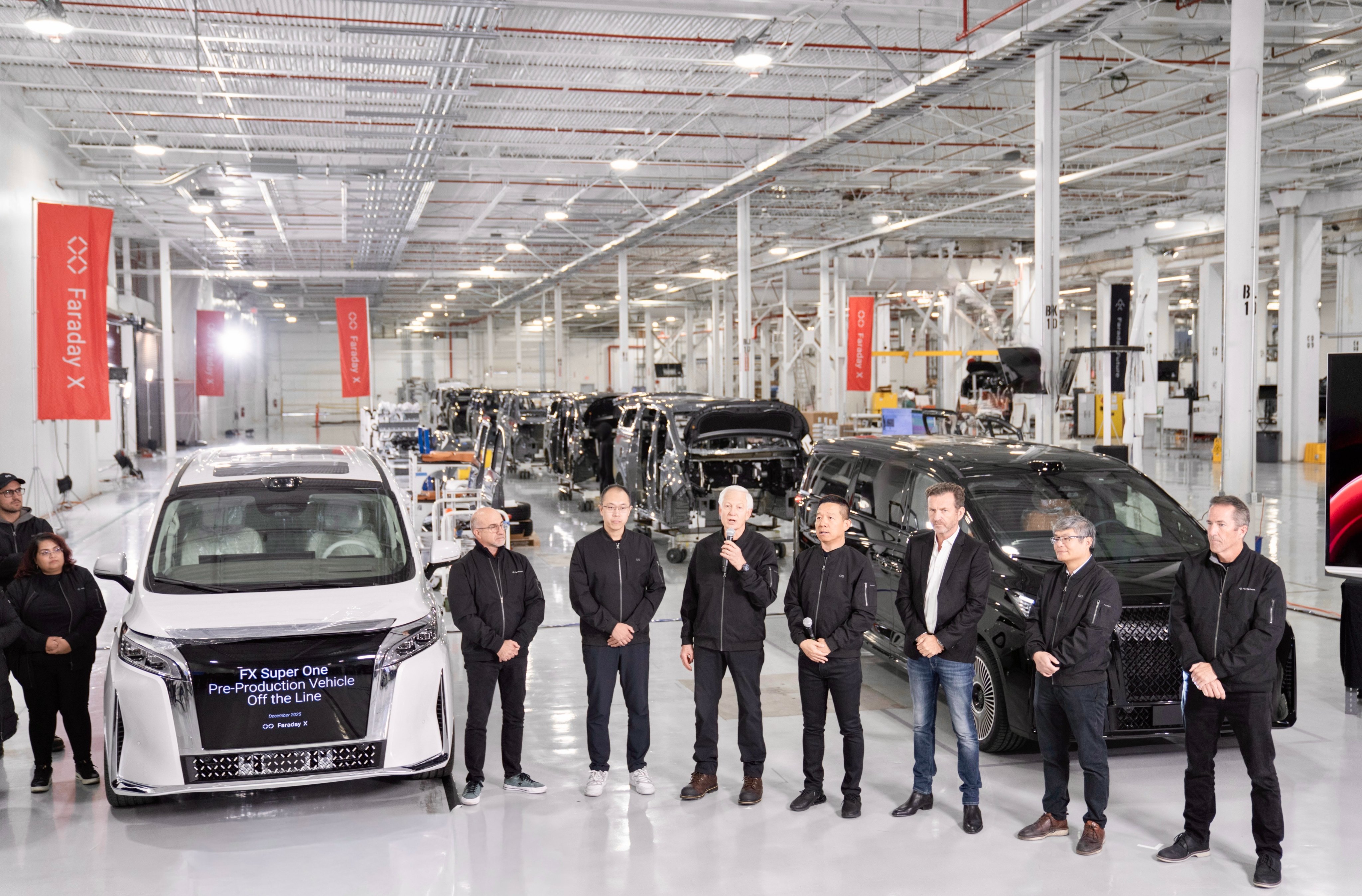
Core Viewpoint - Faraday Future's founder Jia Yueting announced the successful offline production of the FX Super One pre-production vehicle, marking it as the first mass-market model following the FF 91. The company also completed deliveries of two vehicles in the UAE and the US, setting a new delivery record [1][4]. Group 1: Market Response and Pricing - Following the announcement, Faraday Future's stock price rose by 10% on the same day, with a further increase of 1.6% in pre-market trading the next day, indicating a strong market reaction to the pre-production vehicle [4]. - The FX Super One is priced at 309,000 AED (approximately 590,375.4 RMB) for the high-end Max version, which is significantly higher than the target price range of $20,000 to $80,000 (approximately 140,000 to 570,000 RMB) for the second brand focused on AI EVs [4][5]. - The company has reportedly secured over 13,000 legally binding paid pre-orders for the FX Super One, suggesting initial market interest [4][15]. Group 2: Challenges and Concerns - The FX Super One faces challenges in converting pre-orders into actual sales, particularly among individual consumers who may be hesitant to invest nearly 600,000 RMB in a brand still struggling with delivery issues [5][16]. - Faraday Future's previous model, the FF 91, has seen limited success, with cumulative deliveries failing to exceed 100 units since its launch, raising concerns about brand loyalty and market acceptance [6][10]. - The company has acknowledged the potential for continued significant losses, which could hinder its ability to achieve and maintain profitability [10][20]. Group 3: Strategic Adjustments and Future Outlook - Faraday Future's strategy appears to be shifting, with a focus on the FX Super One as a potential savior for the company, especially given the significant financial pressures it faces [10][21]. - The FX Super One's development was notably rapid, taking just over a year from concept to production, which reflects a strategic pivot in the company's approach [13][15]. - The success of the FX Super One is critical for Faraday Future's survival, as it relies heavily on the vehicle's performance to generate cash flow and restore investor confidence [21][24]. Group 4: Financial Context - As of Q3 2025, Faraday Future reported an operating loss of $206.8 million (approximately 1.468 billion RMB), with total liabilities around $271 million and founder Jia Yueting's personal debts estimated at $2 billion [17][20]. - The company has been primarily sustained through financing, with recent rounds of funding aimed at supporting the FX Super One's launch and production [20][21]. - The upcoming CES event in January 2026 will be a critical moment for the company, as it plans to unveil detailed production and delivery timelines for the FX Super One, which will significantly impact market confidence [25][26].
FF向拉斯海马创新城交付FX Super One并签署合作谅解备忘录
Ge Long Hui A P P· 2025-12-24 04:40
Core Viewpoint - Faraday Future (FF) has delivered the FX Super One to Ras Al Khaimah Innovation City and signed a strategic, non-binding memorandum of understanding for collaboration in AI, Web3, and embodied intelligence fields [1] Group 1 - The delivery of the FX Super One marks a significant step in FF's operational strategy [1] - The memorandum of understanding indicates a commitment to explore innovative technologies and partnerships [1] - Collaboration areas include advanced technologies such as AI and Web3, which are critical for future growth [1]
回看贾跃亭造车的十年残梦
3 6 Ke· 2025-12-22 01:33
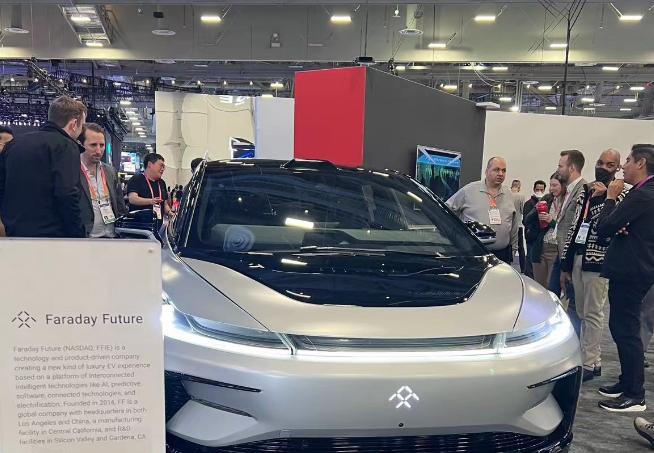
Core Viewpoint - The article discusses the rise and fall of Faraday Future (FF) and its founder Jia Yueting, highlighting the missed opportunities in the electric vehicle (EV) market and the challenges faced by the company over the past decade [3][5][20]. Group 1: Company Overview - FF was initially launched with high expectations at CES 2016, showcasing the FF Zero 1 concept car, which generated significant media attention [1][3]. - Despite the initial excitement, FF has struggled to deliver on its promises, with production delays and a lack of market presence leading to a perception of failure [3][5]. Group 2: Technological Challenges - FF's technological ambitions were ambitious but ultimately unfocused, leading to a failure to integrate and deliver viable products to the market [6][8]. - The company attempted to assemble a strong technical foundation but ended up with a disjointed array of technologies that did not translate into successful vehicle production [8][11]. Group 3: Strategic Missteps - FF's strategy of integrating its automotive business into a broader ecosystem, similar to its other ventures, did not materialize as expected, leading to financial strain and operational challenges [9][11]. - The company diverted funds from its automotive ambitions to support its broader ecosystem, which ultimately hindered its ability to establish a sustainable automotive business [11][12]. Group 4: Market Positioning - FF's shift in market positioning from affordable vehicles to high-end luxury cars, driven by financial constraints, resulted in missed opportunities in the growing EV market [13][15]. - The FF 91 2.0 Futurist Alliance was launched at a price of $309,000, significantly higher than the mainstream EV market, which is concentrated in the $30,000 to $60,000 range [15]. Group 5: Industry Context - The article contrasts FF's struggles with the success of other Chinese EV manufacturers, which have capitalized on the domestic market's growth and technological advancements [20]. - FF's reliance on the U.S. market and supply chain has proven detrimental, especially as the Chinese EV market matured and offered significant growth opportunities [16][18].
2000台新车订单落袋,贾跃亭一夜翻身!
商业洞察· 2025-12-18 09:23
Core Viewpoint - The article discusses the recent positive developments for Faraday Future (FF) and its founder Jia Yueting, highlighting significant orders and strategic shifts that indicate a potential turnaround for the company in the competitive electric vehicle market [4][12][32]. Group 1: Recent Developments - Jia Yueting announced a significant contract with Golden Hill Investment LLC for 2,000 units of the FX Super One, with all non-refundable deposits already received [4][6][7]. - This order marks a successful entry into the Florida market, a key state for electric vehicle consumption in the U.S. [7]. - FF has completed six out of eight planned state expansions ahead of schedule [8]. Group 2: Business Model and Strategy - The company is utilizing a co-creation ecosystem and direct online sales model, which is a departure from traditional dealership models, allowing for reduced marketing and sales costs [9][18]. - FF is focusing on high-end markets, targeting luxury vacation rentals and time-sharing, which aligns with the needs of affluent consumers [18]. - The B2B2C sales approach allows FF to reach target users quickly through partnerships, effectively turning scenarios into sales channels [18]. Group 3: Financial Performance and Challenges - FF reported an operating loss of $206.8 million (approximately 1.468 billion RMB) for the third quarter [20]. - Jia Yueting aims to achieve a market valuation of $10 billion to address domestic debts, with a commitment to repay all debts by the end of 2026 [21][26]. - The company has restructured its debts under U.S. law and is taking concrete steps to manage domestic guarantees [23]. Group 4: Future Outlook - The recent orders and business developments lend credibility to Jia Yueting's previous claims of returning to China and resolving debt issues [26]. - The article suggests that the current trajectory of FF, including its strategic focus on the U.S. market, may be the best path forward for the company [30].

这家新势力开始向阿联酋供货,能否迎来“翻身”机会?
Zhong Guo Qi Che Bao Wang· 2025-12-18 03:40
Core Viewpoint - Faraday Future (FF) is making significant strides in the Middle East market, particularly with the upcoming delivery of the FX Super One, which is seen as a potential turning point for the company amid ongoing financial challenges [2][8]. Group 1: Strategic Developments - FF has signed a strategic cooperation agreement with Ras Al Khaimah Innovation City to enhance collaboration in the fields of new energy and smart mobility, supporting the establishment of a regional ecosystem [2]. - The company has established a regional production and operations center in Ras Al Khaimah, which will support the production and operation of both FF and FX brands, with plans for expansion to increase local production capacity [2][4]. - FF appointed Shahryar Oveissi as a senior strategic advisor to strengthen its team in the Middle East, focusing on investor relations and government affairs [3]. Group 2: Market Positioning and Product Offering - FF's market strategy includes a dual approach: the flagship FF 91 targeting the high-end luxury market and the FX series aimed at the mass market, with the FX Super One being a key product [5]. - The FX Super One is positioned as a "first-class AI MPV" with a range exceeding 600 kilometers and advanced features, indicating strong demand in the Middle East for high-end electric vehicles [5][6]. Group 3: Financial Performance and Challenges - Despite recent successes, FF reported an operating loss of $206.8 million for Q3 2025, primarily due to R&D and expansion costs, although financing capabilities have improved with a 144% increase in cash inflow [7]. - The company has received over 11,000 legally binding pre-orders for the FX Super One, indicating a positive commercial outlook [7]. - Challenges remain in production capacity, financial stability, and brand image, which need to be addressed for FF to achieve profitability [8][9].

这家新势力发布未来五年产销规划,透露了怎样的玄机?
Zhong Guo Qi Che Bao Wang· 2025-12-09 07:18
Core Insights - Faraday Future (FF) has announced an ambitious production and sales target of 400,000 to 500,000 vehicles over the next five years, despite having delivered fewer than 20 vehicles in the past decade [3][4] - The company aims to focus on the FX brand, particularly the FX Super One priced between $150,000 and $250,000, and the FX4 targeting the mainstream U.S. family car market under $30,000, hoping to replicate the success of Tesla's Model Y [3][4] Production and Financial Challenges - FF's previous flagship model, the FF91, has seen dismal sales, with fewer than 20 units delivered by October 2025, leading to a significant reduction in its production capacity to 12,000 units per year [4] - The FX brand is expected to account for over 90% of FF's sales targets, while the FF91 will serve primarily as a technological benchmark [4] - Financially, FF is in a precarious position, with only $13.26 million in cash reserves as of Q2 2025, and a net loss of $48.1 million in the same quarter, raising concerns about its sustainability [5][6] Market Positioning and Strategy - The introduction of the FX brand is seen as a potential lifeline for FF, but there are concerns about the viability of this strategy given the company's financial instability [5][6] - FF's revenue structure is heavily reliant on non-automotive income, with over 80% of its revenue coming from California's zero-emission credits and technology licensing, indicating a lack of robust automotive sales [6] - The company's initial positioning of the FF91 as a super-luxury electric vehicle failed to resonate with consumers, highlighting the importance of understanding market demands and consumer expectations [7][8] Industry Implications - The challenges faced by FF serve as a cautionary tale for the automotive industry, emphasizing the need for effective financial management and a sustainable business model [8] - The competitive landscape for electric vehicles is expected to intensify over the next five years, making it crucial for companies to not only set ambitious targets but also to execute them effectively [8]
8点1氪|盒马回应“草莓蛋糕制作中将糖放成盐”;万达集团被恢复执行17亿;国家税务总局:严禁平台向“小哥”转嫁涉税义务
3 6 Ke· 2025-12-09 00:02
Group 1 - Hema acknowledged issues with strawberry cakes sold, affecting approximately 60 units across 7 stores due to ingredient handling errors [2] - Wanda Group has a new enforcement order for over 1.7 billion yuan, with over 6.9 billion yuan in total enforcement amounts against the company [2] - The State Taxation Administration prohibits platform companies from shifting tax obligations to gig workers, ensuring they are not overcharged [3][9] Group 2 - PepsiCo plans to reduce its product variety in the U.S. market by nearly 20% by early next year, aiming to cut operational costs and enhance efficiency [5] - The price of three-valent flu vaccines has dropped to 5.5 yuan, attributed to intense competition and oversupply in the vaccine market [8] - Paramount has proposed a cash acquisition offer of $30 per share for Warner Bros. Discovery, valuing the company at $108.4 billion [7] Group 3 - Faraday Future's board approved a five-year plan to produce 400,000 to 500,000 vehicles, with the first batch of FX Super One vehicles set to roll off the production line [13] - The International Monetary Fund (IMF) has officially launched its Shanghai Regional Center to enhance cooperation with the Asia-Pacific region [12] - The U.S. government announced a $12 billion aid package for farmers affected by tariff policies, addressing the negative impact on agricultural markets [14]


