
Alphabet(GOOG)

Search documents
2025 AI 年度复盘:读完200篇论文,看DeepMind、Meta、DeepSeek ,中美巨头都在描述哪种AGI叙事
3 6 Ke· 2026-01-12 08:44
Core Insights - The article discusses the evolution of artificial intelligence (AI) in 2025, highlighting a shift from merely increasing model parameters to enhancing model intelligence through foundational research in areas like fluid reasoning, long-term memory, spatial intelligence, and meta-learning [2][4]. Group 1: Technological Advancements - In 2025, significant technological progress was observed in fluid reasoning, long-term memory, spatial intelligence, and meta-learning, driven by the diminishing returns of scaling laws in AI models [2][3]. - The bottleneck in current AI technology lies in the need for models to not only possess knowledge but also to think and remember effectively, revealing a significant imbalance in AI capabilities [2][4]. - The introduction of Test-Time Compute revolutionized reasoning capabilities, allowing AI to engage in deeper, more thoughtful processing during inference [6][10]. Group 2: Memory and Learning Enhancements - The Titans architecture and Nested Learning emerged as breakthroughs in memory capabilities, enabling models to update their parameters in real-time during inference, thus overcoming the limitations of traditional transformer models [19][21]. - Memory can be categorized into three types: context as memory, RAG-processed context as memory, and internalized memory through parameter integration, with significant advancements in RAG and parameter adjustment methods [19][27]. - The introduction of sparse memory fine-tuning and on-policy distillation methods has mitigated the issue of catastrophic forgetting, allowing models to retain old knowledge while integrating new information [31][33]. Group 3: Spatial Intelligence and World Models - The development of spatial intelligence and world models was marked by advancements in video generation models, such as Genie 3, which demonstrated improved physical understanding and consistency in generated environments [35][36]. - The emergence of the World Labs initiative, led by Stanford professor Fei-Fei Li, focused on generating 3D environments based on multimodal inputs, showcasing a more structured approach to AI-generated content [44][46]. - The V-JEPA 2 model introduced by Meta emphasized predictive learning, allowing models to grasp physical rules through prediction rather than mere observation, enhancing their understanding of causal relationships [50][51]. Group 4: Reinforcement Learning Innovations - Reinforcement learning (RL) saw significant advancements with the rise of verifiable rewards and sparse reward metrics, leading to improved performance in areas like mathematics and coding [11][12]. - The GPRO algorithm gained popularity, simplifying the RL process by eliminating the need for a critic model, thus reducing computational costs while maintaining effectiveness [15][16]. - The exploration of RL's limitations revealed a ceiling effect, indicating that while RL can enhance existing model capabilities, further breakthroughs will require innovations in foundational models or algorithm architectures [17][18].




【环球财经】谷歌联合沃尔玛等零售商扩展AI模型购物功能
Xin Hua She· 2026-01-12 07:35
Group 1 - Google announced a collaboration with major retailers like Walmart to enhance its Gemini AI model's shopping capabilities, transforming it from a "smart assistant" to a "virtual merchant" capable of completing transactions directly [2] - The Gemini application will introduce an "instant checkout" feature, allowing consumers to purchase products from select retailers within the chat interface without needing to navigate away from the app [2] - Walmart's incoming president and CEO, John Furner, stated that the shift from traditional web or app searches to "agent-driven commerce" represents a significant evolution in the retail industry [2] Group 2 - The announcement was made at the National Retail Federation's annual conference, which is expected to attract around 40,000 attendees from the retail and technology sectors, with a focus on AI's application in e-commerce and its impact on consumer behavior [3] - Companies like Google, OpenAI, and Amazon are competing to develop AI shopping tools, aiming to establish chatbots as new entry points for e-commerce [3] - Google's Gemini AI shopping features will initially be available only to U.S. users, with plans to expand to international markets in the coming months [3]

谷歌回应AI生成健康信息不准确:已移除部分摘要并承诺改进
Huan Qiu Wang· 2026-01-12 06:32
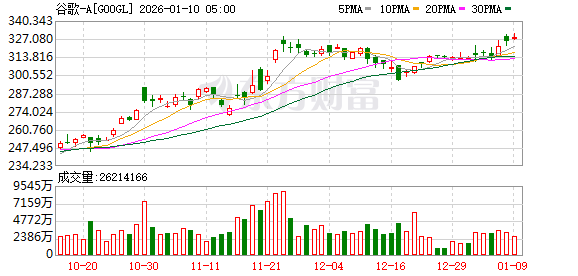
【环球网科技综合报道】1月12日消息,《卫报》调查发现谷歌一些人工智能生成的健康摘要信息存在虚假和误导性,使人们面临伤害风险,随后谷歌删除 了部分此类摘要。 据此前报道,《卫报》发现,用户输入"肝功能血液检查的正常范围是多少"会得到大量数字,几乎没有任何背景信息,也没有考虑患者的国籍、性别、种族 或年龄。 专家表示,谷歌人工智能概览中定义的"正常"可能与实际的正常标准存在巨大差异。这些概览可能导致重症患者误以为自己检测结果正常,从而忽略后续的 医疗检查。 调查结束后,该公司已删除了针对"肝血检查正常范围是多少"和"肝功能检查正常范围是多少"这两个搜索词的 AI 概览。 谷歌发言人表示:"我们不对搜索中的个别内容移除事件发表评论。如果人工智能概览缺少某些上下文信息,我们会努力进行全面改进,并在适当情况下根 据我们的政策采取行动。"(思瀚) ...
2025人工智能发展现状报告:超级智能与中美大模型PK,限制与超越 | 企服国际观察
Tai Mei Ti A P P· 2026-01-12 05:39
Core Insights - The report predicts that Chinese research institutions will surpass the US in frontier AI model research by 2025, with open AI agents gaining further research attention and AI-generated fraud videos prompting international discussions on AI safety [2][28] - The competition between open-source and closed-source models remains intense, with leading models like GPT-5 and Gemini 2.5 Pro still being closed-source, while Chinese open-source models are gaining traction [5][6] - AI applications are rapidly proliferating across industries, with significant revenue growth expected in sectors like audio-visual, virtual avatars, and image generation by 2025 [18][22] AI Model Development - The release of GPT-o1 is expected to ignite a wave of deep reasoning model development, with major players like Meta defining "superintelligence" [3] - Despite a lack of breakthroughs in foundational models from China, the country is becoming competitive in the open-source model space, with models like DeepSeek and Qwen emerging [6][9] - Recent improvements in reasoning models are questioned, as they may fall within the error range of baseline models, indicating limited real progress [9][11] AI Agent Frameworks - The development of AI agent frameworks is accelerating, with numerous options available beyond LangChain, including AutoGen and MetaGPT [13] - AI agents are evolving to incorporate memory capabilities, enhancing their coherence and operational efficiency [13] Industry Trends - AI-first companies are outpacing their SaaS counterparts in revenue, with increased enterprise spending expected as AI adoption rises [18][22] - The browser is becoming a new battleground for AI applications, with major companies integrating AI assistant features [21] Labor Market Impact - AI automation is not diminishing the demand for cognitive labor, with the labor market adapting to changes since the emergence of ChatGPT [28] - Entry-level positions, particularly in software and customer service, are most affected by AI technologies, leading to a decline in job openings in these areas [25] Policy and Regulation - The US is pursuing an "AI-first" strategy while China accelerates its domestic chip manufacturing, intensifying the AI competition between the two nations [28][31] - Regulatory measures in the US are becoming less prominent amid significant investment waves, with the FTC increasingly concerned about "reverse" mergers in the tech sector [31][35] Security Concerns - AI safety policies are shifting, with external safety research funding being significantly lower than global AI R&D spending, raising concerns about the prioritization of safety measures [36][39] - Cyberattack capabilities are rapidly advancing, with AI-generated threats becoming a major challenge for cybersecurity [39]




谷歌联合沃尔玛等零售商扩展AI模型购物功能
Xin Hua She· 2026-01-12 04:40
美国谷歌公司11日表示,将与沃尔玛公司等大型零售商合作,扩展其"双子座"人工智能(AI)模型的购 物功能,推动双子座应用从"智能助手"升级为可直接完成交易的"虚拟商家"。 谷歌、开放人工智能研究中心(OpenAI)和亚马逊等企业正竞相开发AI购物工具,力图把聊天机器人 打造为新的电商入口。去年10月,OpenAI与沃尔玛宣布类似合作,称将允许人工智能聊天机器人 ChatGPT的用户通过"即时结账"功能购买沃尔玛网站上除生鲜外的大部分商品。 谷歌表示,"双子座"人工智能模型的购物功能初期仅面向美国用户开放,未来数月将扩展至国际市场。 (文章来源:新华社) 据介绍,双子座应用将引入"即时结账"功能,消费者在聊天界面内即可从部分商家完成商品购买,无需 打开该应用以外的界面。 沃尔玛候任总裁兼首席执行官约翰·弗纳表示,从传统网页或应用搜索向"智能体主导的商业"转变,代 表零售业的下一次重要演进。 相关消息在11日开幕的美国全国零售商联合会年度大会上发布。大会在纽约举行,预计将吸引约4万名 来自零售和科技行业的参会者。业内人士认为,AI在电子商务领域的应用及其对消费者行为的影响将 成为会议焦点。 ...
Walmart Teams With Google to Promote ‘Agent-Led Commerce'
PYMNTS.com· 2026-01-12 03:56
Core Insights - Walmart has initiated a partnership with Google to enhance its retail experience through the Universal Commerce Protocol and the Gemini AI tool, marking a significant shift towards agent-led commerce in retail [2][3] Group 1: Partnership Details - The collaboration aims to integrate Walmart and Sam's Club products into Google's Gemini, allowing for a more intuitive and personalized shopping experience for customers [2][3] - Customers linking their accounts will receive recommendations for complementary items based on past purchases and can benefit from Walmart+ and Sam's Club memberships [4] Group 2: AI Integration - Walmart is positioning AI not just as a utility but as a new interface for guiding product discovery, moving away from traditional search methods [5] - The appointment of AI specialist Shishir Mehrotra to Walmart's board signifies a strategic commitment to embedding AI leadership in decision-making processes [6][7]

AI进入「拼爹」的时代
创业邦· 2026-01-12 03:27
Core Viewpoint - The AI industry is increasingly dominated by major tech giants like Google, Microsoft, and ByteDance, making it difficult for smaller companies to compete effectively [6][9][10]. Group 1: Competitive Landscape - Major players such as Google and Microsoft are leveraging their vast resources to enhance their AI offerings, with Google's Gemini surpassing OpenAI's ChatGPT in various evaluations [10][12]. - Smaller AI companies like Manus and Kimi are struggling to maintain their market positions as they face overwhelming competition from these tech giants [10][11]. - The integration of AI into widely used applications, such as Google's embedding of Gemini into Android and Microsoft's integration of AI into Office, creates a significant barrier for smaller firms [10][12]. Group 2: Resource Dependency - The success of AI applications is heavily reliant on the backing of large corporations, as smaller companies lack the necessary resources and ecosystem integration to thrive [11][12]. - AI startups often find it challenging to monetize their technologies compared to larger firms that can bundle services and leverage existing customer bases [15][18]. - The financial struggles of AI startups are evident, with many facing increasing losses and limited paths to profitability [24][25]. Group 3: Monetization Strategies - Larger companies can implement diverse monetization strategies, such as bundling AI services with existing products, which enhances their revenue potential [15][18]. - Smaller companies often lack the ability to create similar attractive packages, limiting their monetization options to straightforward subscription models [21][20]. - The competitive pricing landscape for AI subscriptions is constrained, making it difficult for startups to charge premium prices [21][23]. Group 4: Acquisition Trends - The trend of larger companies acquiring smaller AI firms is becoming more prevalent, as seen with Meta's acquisitions of Scale and Manus, which can provide these startups with enhanced capabilities and market access [27][28]. - Acquired companies can benefit from the resources and infrastructure of their parent companies, allowing them to operate more effectively within the market [27][28]. - The desire for independence among some AI firms, like OpenAI, complicates the landscape, as they aim to establish themselves as major players rather than being absorbed by larger entities [28].



离谱!印度强要手机厂商核心源代码,全球巨头就差直接骂人了。网友:这是要明抢啊
程序员的那些事· 2026-01-12 02:58
Core Viewpoint - The Indian government is pressuring Apple to provide the source code of iOS as part of a new security standard proposal, which is unlikely to be realized due to strong opposition from major tech companies [1][3]. Group 1: Government Proposal - The Indian government is preparing a new security standard plan that includes 83 items across various fields [3]. - The proposal requires tech companies to notify the government of major updates, retain security audit logs for 12 months, regularly prompt users to review permissions, and submit source code to government-designated labs for testing and vulnerability assessment [3]. Group 2: Industry Response - Major companies like Apple, Samsung, Google, and Xiaomi have collectively opposed the new regulations, arguing that source code is a core business secret and its disclosure could jeopardize technological security [4]. - The Indian industry organization MAIT has directly opposed the requirements, stating that they are impractical and has requested the government to withdraw the proposal [4]. - Concerns have been raised regarding the 12-month log storage and mandatory malware scanning, which could either consume phone storage or significantly drain battery life [4].



HERE 与 TomTom 在 2026 年定位平台竞争力评估指数中脱颖而出,成为先锋
Counterpoint Research· 2026-01-12 02:45
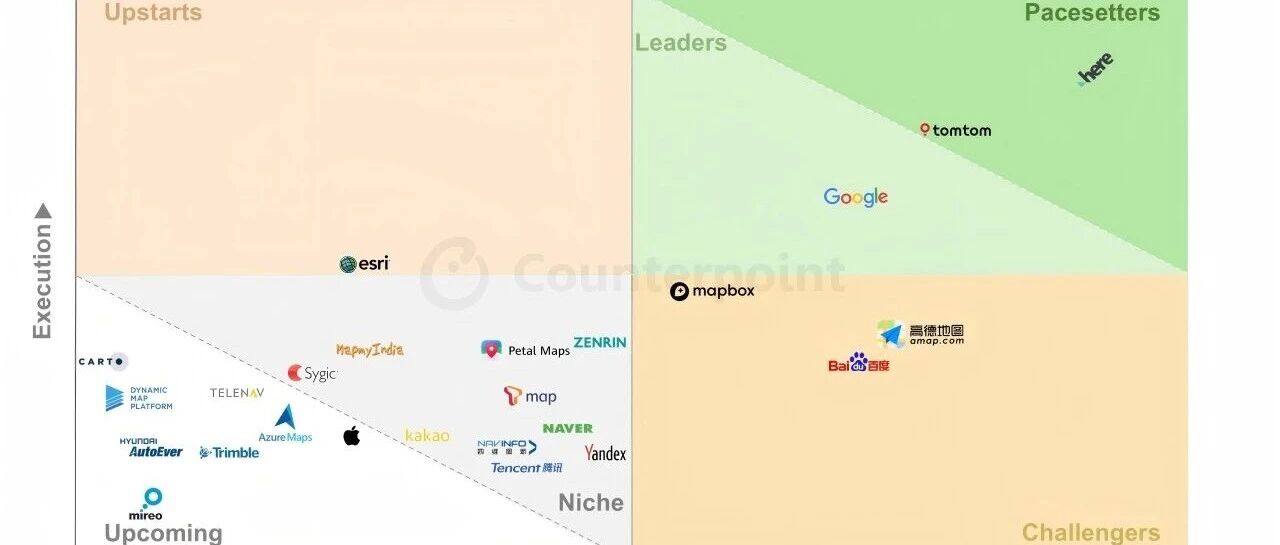
Core Insights - The article discusses the findings of the "2026 Positioning Platform Competitiveness Assessment Report" by Counterpoint Research, highlighting HERE and TomTom as "Pacesetters" in the positioning platform competitiveness index [4][7] - The report emphasizes the transformation of positioning platforms from traditional mapping solutions to AI-driven data platforms, enhancing user experience through real-time intelligence and personalized services [4][5] Group 1: Positioning Platform Competitiveness - HERE and TomTom are recognized as "Pacesetters" in the positioning platform competitiveness index, while Google is categorized as a "Leader" [4][7] - Baidu, Gaode, and Mapbox are classified as "Challengers" due to their strong platform capabilities but limited market coverage [4][8] - ESRI is noted as an "Upstart" for its execution capabilities, although it still lags behind leading companies in certain dimensions [4] Group 2: HERE's Performance - HERE excels in both platform capability and execution, supported by a comprehensive service product portfolio and a robust partner ecosystem across various verticals like automotive and logistics [5] - The company is leading the transition towards software-defined vehicles (SDVs) and collaborates closely with automakers to guide their transformation [5] - HERE is increasing its R&D investment in product technology and innovation, particularly in AI solutions for the automotive and logistics sectors [5] Group 3: TomTom's Innovations - TomTom has made significant strides with its Orbis map in 3D visualization and traffic analysis, earning its place alongside HERE as a "Pacesetter" [5] - The company is the second global entity, after Google, to launch a Model Context Protocol (MCP) server, facilitating rapid deployment of navigation systems for automakers [5] Group 4: Market Dynamics - The proliferation of location-aware AI features like "search" and "nearby" is leading to hyper-localized and highly personalized user experiences becoming mainstream [7] - Google Maps benefits from its strong core mapping capabilities and vast crowdsourced data from billions of monthly active users, solidifying its "Leader" status [8] - Baidu and Gaode are recognized as regional leaders in China, while Mapbox stands out for its developer-centric approach, offering customizable SDKs for users focused on personalization and visualization [8]

美科技七巨头星光暗淡 彭博:2025多数跑输大盘 主导地位动摇
Feng Huang Wang· 2026-01-12 02:35
股市对科技七巨头的热情正在降温 市场依旧对科技七巨头保持乐观的一个因素是,他们的估值水平相对适中。科技七巨头指数基于未来12 个月预期盈利的市盈率为29倍,远低于本十年前期的40多倍。目前,标普500指数的预期市盈率为22 倍,纳斯达克100指数为25倍。(作者/箫雨) 自2022年美联储开始加息以来,美国"科技七巨头"(Magnificent 7)首次出现大多数公司表现跑输标普 500 指数的情况。尽管2025年科技七巨头指数上涨25%,跑赢标普500指数的16%涨幅,但这主要是由于谷 歌母公司Alphabet、英伟达的巨大涨幅带动了整体指数上涨。 "市场并非一刀切。如果你只是单纯买入整个组合,表现不佳的股票可能会抵消表现出色股票的收 益。"Natixis投资管理解决方案公司首席投资组合策略师杰克·亚纳西维奇(Jack Janasiewicz)指出,该公 司管理着1.4万亿美元资产。 过去三年,科技巨头引领了美国牛市。自2022年10月牛市行情启动以来,仅英伟达、Alphabet、微软和 苹果四家公司就贡献了标普500超过三分之一的涨幅。然而,随着市场对标普500指数其他成分股的兴趣 升温,投资者对这些科技 ...