
Intel(INTC)

Search documents
Intel Stock To $25?
Forbes· 2025-11-17 13:55
Core Viewpoint - The current evaluation suggests it may be an appropriate time to sell Intel (INTC) stock due to its weak financial performance and the stock's significant increase this year [1][3]. Financial Performance - Intel's market capitalization stands at $160 billion, with revenues declining from $54 billion to $53 billion over the last year, reflecting a decrease of 1.5% [5][7]. - The company has experienced an average revenue contraction of 7.6% over the past three years [7]. - Quarterly revenues increased by 2.8% to $14 billion in the latest quarter compared to $13 billion a year earlier [7]. - Operating income for the last 12 months was reported at -$104 million, resulting in an operating margin of -0.2% [8]. - Intel recorded a net income of approximately $198 million, reflecting a net margin of about 0.4% [8]. Debt and Financial Stability - Intel's debt was reported at $47 billion, with a debt-to-equity ratio of 28.8% [9]. - The company holds $31 billion in cash (including cash equivalents), leading to a cash-to-assets ratio of 15.1% [9]. Market Position and Valuation - Intel is losing market share in both the PC and server CPU markets, and its foundry business has not yet gained traction [3]. - The stock is considered unattractive due to its moderate valuation, which does not adequately reflect the company's operational weaknesses [3]. - The target price for INTC stock is set at $25, indicating a pessimistic outlook [3]. Historical Stock Performance - INTC stock has dropped 63.3% from its peak of $68.26 on April 9, 2021, to $25.04 on October 11, 2022, while the S&P 500 saw a peak-to-trough decline of 25.4% during the same period [12]. - The highest point reached since then was $50.76 on December 27, 2023, with the current trading price at $35.52 [12]. - Historical declines include a 34.8% drop from a high of $68.47 on January 24, 2020, to $44.61 on March 16, 2020, and a 56.8% decline from a high of $27.98 on December 6, 2007, to $12.08 on February 23, 2009 [12].


莱迪思Q3财报一览:计算和通讯业务持续高增长,预计明年AI营收占比约25%
Xin Lang Cai Jing· 2025-11-17 13:37
Core Viewpoint - The company, Lattice Semiconductor, has shown signs of recovery in its Q3 financial performance, with revenue growth and improved profitability metrics, despite challenges in the broader FPGA market [3][5][9]. Financial Performance - Q3 revenue reached $133 million, marking a year-over-year increase of 4.9% and a quarter-over-quarter increase of 7.6%, ending a streak of seven consecutive quarters of year-over-year declines [3]. - GAAP gross margin was 67.9%, down 1.1 percentage points year-over-year and 0.5 percentage points quarter-over-quarter [3]. - Non-GAAP operating profit was $38.7 million, up 14.7% year-over-year and 13.6% quarter-over-quarter, with a Non-GAAP operating margin of 29% [3]. - Non-GAAP net profit was $38.2 million, reflecting a year-over-year increase of 17.2% and a quarter-over-quarter increase of 17.1%, with a Non-GAAP net margin of 28.6% [3]. - The company repurchased $15 million worth of shares in Q3, continuing a buyback program for 20 consecutive quarters [3]. Market Position and Outlook - Lattice competes in the low-power FPGA segment, holding the top position in global shipments, while facing challenges from larger competitors like AMD and Intel [3][5]. - The company anticipates continued revenue growth in Q4, with guidance of $138 to $148 million, representing a year-over-year increase of 18% to 26% [16]. - The booking rate reached a six-quarter high, with orders extending into the first half of the following year [3]. Business Segments - The industrial and automotive segment generated $50.3 million in revenue, down 7% year-over-year but up 6% quarter-over-quarter, with expectations for inventory normalization by year-end [10]. - The communications and computing segment saw revenue of $74 million, up 21% year-over-year and 8% quarter-over-quarter, driven by growth in general and AI server use cases [10]. - Consumer revenue was $9 million, down 24% year-over-year, continuing a five-quarter decline [10]. Product Development - Lattice's product lines include two FPGA hardware platforms and a software development platform, with new product revenue expected to exceed high-teens percentage by 2025 [12][14]. - The company is focusing on the Nexus series for data center applications and the Avant series for industrial and automotive markets, with significant growth anticipated in 2026 and 2027 [14]. AI Exposure - The company projects that AI-related revenue will account for a high-teens percentage by 2025 and mid-20s percentage by 2026, with products being increasingly adopted in data center applications [16]. - Management highlights the potential for low-power FPGAs to gain traction in the AI semiconductor landscape, particularly in ultra-large cloud service providers [17]. Future Projections - The new financial target model anticipates revenue growth of 15-20% over the next 3 to 4 years, with gross margins expected to reach the low 70s [18]. - The company expects to generate over $600 million in revenue by 2026, with a Non-GAAP net profit of $200 million [18][19].


Intel Stock Is Soaring and This Strategic Partner Could Be Next
Yahoo Finance· 2025-11-17 12:30
Group 1 - Intel's stock has increased by 83% over the past three months, positively impacting semiconductor investors and its partner Synopsys [2] - Intel's business challenges are evident, with the Client Computing Group (CCG) and Data Center and AI (DCAI) performing well, while the Intel Foundry segment faces difficulties [3][6] - The foundry business is crucial for Intel's growth, as it shifts to offering manufacturing services to external customers [4] Group 2 - Intel CEO Lip-Bu Tan indicated a more cautious approach moving forward, focusing on capacity growth based on volume commitments and tangible milestones [5] - Recent operational changes include halting manufacturing projects in Poland and Germany, slowing construction in Ohio, and relocating Costa Rica operations to Vietnam and Malaysia [5] - Synopsys' weak results in the Design Intellectual Property (IP) business are linked to challenges at a major foundry customer, likely Intel [7][8]

苹果、高通或考虑采用英特尔先进封装技术
Ju Chao Zi Xun· 2025-11-17 12:28
Core Viewpoint - Intel's EMIB advanced packaging technology is gaining attention from Apple and Qualcomm, being considered a viable alternative to TSMC's products [1] Group 1: Company Interest - Apple has recently posted job openings for DRAM packaging engineers, specifically seeking experience in advanced packaging technologies such as CoWoS, EMIB, SoIC, and PoP [1] - Qualcomm is also looking for a product management director for its data center business, with a requirement for familiarity with Intel's EMIB technology [1] Group 2: Technology and Market Position - Intel's CEO and executives have emphasized that their Foveros and EMIB technologies have attracted interest from multiple customers and are capable of large-scale production [1]
「美股盘前」谷歌涨超5%;马斯克警告比尔·盖茨;美银预警:标普500深度回调或达10%
Mei Ri Jing Ji Xin Wen· 2025-11-17 11:21
Group 1 - Major stock indices are showing positive trends, with Dow futures up 0.14%, S&P 500 futures up 0.50%, and Nasdaq futures up 0.79% [1] - Prominent tech stocks are also rising, with Tesla up over 1%, Amazon up over 1%, and Micron Technology up over 2% [1] - Chinese concept stocks are experiencing gains, with JD.com up 1.26%, Baidu up 1.17%, Futu up 2.54%, and NIO up 1.46% [1] Group 2 - Google shares rose over 5% after Berkshire Hathaway disclosed a new position in Alphabet, purchasing 17.85 million shares, making it the 10th largest holding [1] - Alibaba's stock increased by over 3% following the launch of its Qwen-based Qianwen app, which aims to enhance user interaction and service across various life scenarios [1] Group 3 - Elon Musk warned Bill Gates to close his short position on Tesla, which he has held for nearly eight years, citing the negative impact on investor confidence [2] - SoftBank's Q3 holdings in U.S. stocks increased to $26 billion, up 4% from the previous quarter, while it exited positions in Oracle and Cipher Mining, and initiated a new position in Intel with approximately 86.96 million shares valued at $2.9 billion [2] Group 4 - The Saudi Public Investment Fund (PIF) significantly reduced its U.S. stock holdings in Q3, decreasing from approximately $23.8 billion to $19.4 billion, marking an 18% decline and the lowest level in two years [3] - Bank of America issued a warning regarding potential risks for the S&P 500, suggesting a possible correction of up to 10% as market breadth deteriorates [3]


Billionaire David Tepper Just Sold Out of Intel and Piled Into This Consumer Goods Giant That's Been Hit By Tariffs
The Motley Fool· 2025-11-17 08:25
Group 1: David Tepper's Investment Moves - David Tepper, a prominent hedge fund manager, has trimmed several AI and technology-related stocks while increasing his stake in consumer discretionary stocks, particularly Whirlpool [2][3][5] - Tepper completely sold out of Intel and Oracle, both of which saw significant stock price increases in Q3, with Intel rising about 50% and Oracle by approximately 40% [4][5] Group 2: Whirlpool's Stock Performance - Whirlpool has experienced a significant decline in stock price, down 75% from its 2021 highs and 40% year-to-date, which may present a value opportunity for investors [6][7] - The company's operating income has decreased from approximately $2.5 billion during the pandemic housing boom to just over $800 million currently, reflecting the decline in stock price [9] Group 3: Market Conditions Impacting Whirlpool - The decline in Whirlpool's sales is attributed to a post-pandemic housing bust, with homeowners reluctant to move and prospective buyers priced out of the market, leading to a slowdown in housing sales [8] - Tariffs imposed this year have negatively impacted Whirlpool, as foreign competitors have increased their sales to U.S. retailers, who have pre-purchased foreign items to avoid tariffs, thus reducing orders for Whirlpool's domestically produced goods [11][12] Group 4: Future Outlook for Whirlpool - Tepper's investment in Whirlpool suggests a belief in a potential recovery, as the CEO indicated that the full impact of tariffs would only take effect recently, which may lead to increased purchasing of Whirlpool products [13][14] - A housing recovery could serve as a catalyst for improved sales and earnings for Whirlpool, contingent on factors such as moderating long-term interest rates and homeowners beginning to sell their properties [14]


软银Q3持仓:T-Mobile US(TMUS.US)为头号重仓股 建仓英特尔(INTC.US)、清仓甲骨文(ORCL.US)
智通财经网· 2025-11-17 08:04
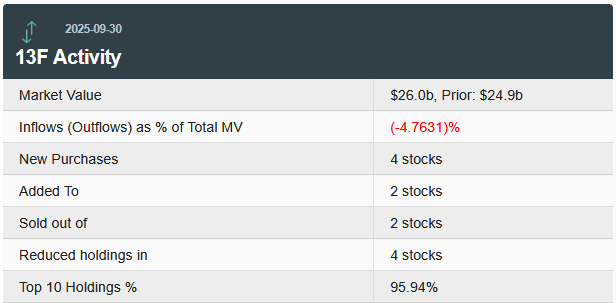
Core Insights - SoftBank's total market value of U.S. stock holdings reached $26 billion for Q3 2025, up 4% from $24.9 billion in the previous quarter [1][2] - The top ten holdings accounted for 95.94% of the total portfolio value [2] Holdings Activity - New Purchases: 4 stocks [2] - Added to Existing Positions: 2 stocks [2] - Sold Out of: 2 stocks [2] - Reduced Holdings in: 4 stocks [2] Top Holdings - T-Mobile US (TMUS) is the largest holding with approximately 45.17 million shares valued at about $10.81 billion, representing 41.64% of the portfolio, with a decrease of 29.26% in shares held [3][5] - NVIDIA (NVDA) is the second-largest holding with approximately 32.11 million shares valued at $6 billion, accounting for 23.07% of the portfolio, with an increase of 5.19% in shares held [3][5] - Intel (INTC) is a new addition with approximately 86.96 million shares valued at $2.92 billion, making up 11.23% of the portfolio [3][6] - Symbotic (SYM) holds approximately 39.83 million shares valued at $2.15 billion, representing 8.27% of the portfolio, with no change in shares held [3][6] - Webtoon Entertainment (WBTN) has approximately 31.43 million shares valued at $610 million, accounting for 2.35% of the portfolio, with no change in shares held [4][6] Recent Transactions - SoftBank sold all its shares in NVIDIA, cashing out approximately $5.8 billion [3] - New positions were established in Klarna Group, Ambiq Micro, and Concorde International Group [6] - SoftBank completely exited positions in Cipher Mining and Oracle [6] - Significant reductions were made in holdings of Nu Holdings, Metsera, and Lemonade, while a substantial increase was noted in Full Truck Alliance [6][8]


英特尔先进封装,被苹果高通看上
半导体行业观察· 2025-11-17 01:26
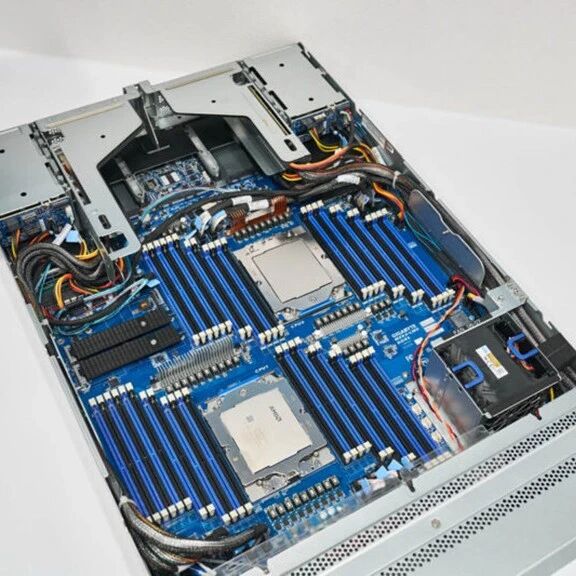
Core Viewpoint - Intel is lagging in chip business but has competitive options in advanced packaging technology, which is becoming essential in the supply chain as demand for powerful computing solutions grows rapidly [2][7]. Group 1: Advanced Packaging Technology - Advanced packaging solutions have become indispensable in the supply chain, with companies like AMD and NVIDIA integrating multiple chips into single packages to enhance chip density and platform performance [2]. - Intel's EMIB (Embedded Multi-Die Interconnect Bridge) technology connects multiple chipsets within a single package without the need for large intermediary layers, making it a viable alternative to TSMC's CoWoS [4]. - Intel also offers Foveros Direct 3D packaging technology, which utilizes TSV (Through-Silicon Via) for stacking on substrates, recognized as one of the industry's most esteemed solutions [4]. Group 2: Market Demand and Competition - Companies like Qualcomm and Apple are actively seeking talent skilled in Intel's EMIB technology, indicating a strong demand for advanced packaging expertise in the industry [2]. - Intel's advanced packaging solutions are seen as a strategic move for companies like Apple, Qualcomm, and Broadcom, especially as TSMC faces capacity bottlenecks due to high order volumes from competitors like NVIDIA and AMD [7]. - NVIDIA's CEO has praised Intel's Foveros technology, suggesting a promising market outlook for Intel's advanced packaging solutions, despite recruitment listings not guaranteeing adoption [9].

取消一个处理器,英特尔更新芯片路线图
半导体行业观察· 2025-11-17 01:26
Core Insights - Intel has removed the next-generation 8-channel "Diamond Rapids" processors from its roadmap, focusing instead on 16-channel memory configurations for future server processors [2][13] - The transition to 16-channel memory is expected to be completed by the second half of 2026, aligning with the needs of future AI cluster builds [2][3] - Intel's Xeon 6700P series remains popular due to its cost-effectiveness and lower configuration costs compared to AMD EPYC processors [11][12] Summary by Sections Product Roadmap Changes - Intel's new leadership in the data center division has led to a significant change in the roadmap, with the 8-channel "Diamond Rapids" being removed [2][13] - The focus will now be on 16-channel processors, which will provide advantages for various customer applications [13] Memory Configuration and Performance - The shift from 12-channel to 16-channel memory is seen as a necessary evolution, with 16-channel configurations expected to offer similar memory capacity as 8-channel designs [12][14] - The 12-channel memory design previously offered a 50% theoretical bandwidth increase over 8-channel designs, but 8-channel platforms allow for more DIMM slots, enhancing memory capacity [5][7] Competitive Landscape - Intel's Xeon 6700 series is favored for its cost-effectiveness, allowing for configurations that do not require high core counts, thus appealing to a broader range of users [11][12] - The upcoming Granite Rapids-WS series is expected to compete aggressively with AMD's Threadripper 9000WX series, with specifications that may lead to a shift in market share [16][17] Future Developments - Intel is preparing to launch Granite Rapids-WS processors, which are anticipated to have up to 128 cores, enhancing its competitive position in the workstation market [16][17] - The performance of Granite Rapids-WS is expected to surpass that of AMD's EPYC processors, indicating a potential shift in the competitive dynamics of the server market [17][19]
H2原厂削减NAND供应量,持续关注存储价格涨势
Xinda Securities· 2025-11-16 06:11
Investment Rating - The industry investment rating is "Positive" [2] Core Insights - The electronic sub-industry experienced a pullback this week, with the Shenwan Electronics Secondary Index showing year-to-date changes: Semiconductors (+40.76%), Other Electronics II (+51.96%), Components (+85.55%), Optical Electronics (+5.55%), Consumer Electronics (+42.36%), and Electronic Chemicals II (+38.09%). This week, the changes were: Semiconductors (-3.97%), Other Electronics II (-2.29%), Components (-9.25%), Optical Electronics (-1.25%), Consumer Electronics (-6.18%), and Electronic Chemicals II (-2.44%) [9][11] - Major North American stocks showed mixed performance this week, with notable changes including Apple (+1.47%), Tesla (-5.86%), Qualcomm (+1.81%), and Micron Technology (+3.74%) [11] - NAND supply has been reduced by major manufacturers in the second half of the year, which is expected to further increase storage prices. Samsung, SK Hynix, Kioxia, and Micron have all cut their NAND Flash supply, potentially exacerbating supply-demand imbalances and driving prices up. Samsung has lowered its NAND wafer production target to 4.72 million units, a year-on-year decrease of 7% [2][3] - Capital expenditure (Capex) for storage leaders remains conservative, with expansions primarily directed towards high-value areas such as AI. DRAM Capex is projected to reach $53.7 billion in 2025 and $61.3 billion in 2026, a year-on-year increase of 14%. NAND Flash Capex is expected to be $21.1 billion in 2025, with a slight increase to $22.2 billion in 2026, a year-on-year increase of 5% [2][3] Summary by Sections - **Market Tracking**: The electronic sub-industry has seen a pullback this week, with various segments experiencing different levels of decline [9][11] - **Stock Performance**: Key North American stocks have shown varied performance, with some gaining and others losing value [11] - **NAND Supply and Pricing**: Major manufacturers are reducing NAND supply, which is likely to lead to further price increases [2][3] - **Capital Expenditure Trends**: Storage companies are adopting a conservative approach to Capex, focusing on high-value products [2][3]


