
Coca-Cola(KO)

Search documents
58% of Warren Buffett's $292 Billion Portfolio Is Being Wagered on 4 Unstoppable Stocks
The Motley Fool· 2025-07-18 07:51
Core Insights - Warren Buffett, CEO of Berkshire Hathaway, has achieved a cumulative return of nearly 5,800,000% on Class A shares over 60 years, significantly outperforming the S&P 500 by almost 140 times [2] - Buffett's investment strategy focuses on concentrating capital in a few high-conviction stocks, with 58% of Berkshire's $292 billion portfolio invested in just four major holdings [5] Group 1: Major Holdings - Apple is the largest holding at $62.6 billion, representing 21.5% of invested assets, although Buffett has sold 67% of his stake since September 2023 [6][7] - American Express is the second-largest holding at $48.7 billion, accounting for 16.7% of invested assets, benefiting from its dual role as a payment processor and lender [12][13] - Bank of America is the third-largest holding at $29.7 billion, making up 10.2% of invested assets, with Buffett selling shares due to profit-taking and expectations of declining interest rates [16][17] - Coca-Cola is the fourth-largest holding at $27.8 billion, representing 9.5% of invested assets, known for its stable cash flow and strong brand loyalty [21][22] Group 2: Investment Rationale - Buffett values companies with sustainable competitive advantages, as seen in his long-term investments in Apple, American Express, Bank of America, and Coca-Cola [4][21] - The investment in Apple is supported by its strong consumer loyalty and growth in subscription services, despite stagnant device sales [8][10] - American Express attracts high-earning clientele, which helps mitigate risks during economic downturns [15] - Coca-Cola's geographic diversity and consistent cash flow make it a reliable investment, with a significant yield on cost due to a low cost basis [23][25]



可口可乐改配方背后,是一场已持续40年的甜味剂暗战
Qi Lu Wan Bao Wang· 2025-07-18 07:12
Core Viewpoint - The announcement by former President Trump regarding Coca-Cola potentially switching back to real cane sugar in its U.S. products has sparked significant attention and concern within the industry, particularly affecting corn syrup manufacturers like Archer-Daniels-Midland, whose stock dropped by 8% in after-hours trading [2]. Group 1: Historical Context and Ingredient Changes - Coca-Cola originally used cane sugar as the sole sweetener in its classic formula until the 1980s when high fructose corn syrup (HFCS) began to replace it due to lower production costs influenced by U.S. corn subsidy policies [3][5]. - By the 1980s, nearly 40% of added sugars in the U.S. market were HFCS, leading Coca-Cola to switch its U.S. formula to HFCS while maintaining flexibility for other products [3][5]. Group 2: Market Variations and Consumer Preferences - In contrast to the U.S. market, countries like Mexico, the UK, and Australia still use cane sugar in Coca-Cola, creating a unique consumer preference for the "Mexican Coke," which is often sold at a premium due to its nostalgic value [7]. - The flavor profiles of cane sugar and HFCS differ significantly, with HFCS providing a quick sweetness and cane sugar offering a more prolonged, nuanced taste experience [7][8]. Group 3: Economic and Supply Chain Considerations - Transitioning back to cane sugar would significantly increase production costs for Coca-Cola, potentially leading to higher retail prices and reduced market competitiveness [9]. - The existing supply chain for HFCS is well-established, and switching to cane sugar would require substantial adjustments, including sourcing new suppliers and modifying processing equipment [9][10]. - The HFCS industry supports approximately 120,000 jobs, and a shift to cane sugar could result in a 3%-5% reduction in these positions, impacting the livelihoods of many in the food manufacturing sector [9]. Group 4: Political and Consumer Resistance - The U.S. agricultural subsidy structure heavily favors corn production, with about 60% of agricultural subsidies allocated to corn and other grains, complicating any potential shift to cane sugar [10]. - Consumer taste preferences have evolved, and while some may long for the original formula, many have adapted to the HFCS version, creating uncertainty about market acceptance of a potential switch back to cane sugar [10][11].
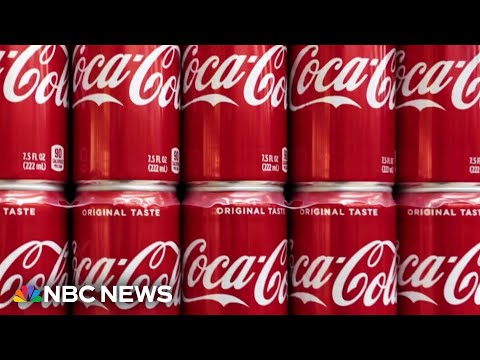
President Trump seeks to switch Coca-Cola from corn syrup to cane sugar
NBC News· 2025-07-18 03:30
Market Trends & Industry Dynamics - President Trump's influence on Coca-Cola potentially leading to a switch to real cane sugar in the US, moving away from corn syrup used since the early 1980s [2] - The potential switch is linked to the health secretary's "Make America Healthy Again" campaign, targeting additives like high fructose corn syrup [5] - The corn lobby opposes the move due to potential harm to corn farmers and constituents [9] Investment Opportunities & Potential Risks - Switching to cane sugar could cost Coca-Cola hundreds of millions, potentially billions of dollars due to supply chain changes, bottling, distribution, and labeling [7] - The US does not produce enough cane sugar, necessitating imports, potentially from countries like Brazil, which could be affected by tariffs upwards of 50% [8][10] - Corn refiners in the US may face significant problems if Coca-Cola switches to cane sugar [9] Company Strategy & Business Decisions - Coca-Cola has neither confirmed nor denied the switch, stating "more details on new innovative offerings coming soon" [3] - The decision to use high fructose corn syrup since 1985 was driven by subsidies for corn farmers, making it a cheaper option [6] - The change would require a significant overhaul of Coca-Cola's supply chain, including new suppliers and labeling [7]
硅谷观察:特朗普终于得到交口称赞,可乐要改回配料了!
新浪财经· 2025-07-18 01:13
Core Viewpoint - The article discusses President Trump's unexpected announcement that Coca-Cola will consider using cane sugar as a sweetener in the U.S., which has sparked significant public interest and debate about the implications of this change [2][3]. Group 1: Coca-Cola's Sweetener History - Coca-Cola originally used cane sugar in its formula since the 19th century but switched to high fructose corn syrup (HFCS) in the late 1970s due to cost factors [3][13]. - The U.S. market has seen a long-standing preference for HFCS due to government subsidies for corn, making it cheaper than cane sugar [16][27]. Group 2: Political and Economic Implications - Trump's push for Coca-Cola to revert to cane sugar is seen as a move that could disrupt the established corn syrup industry, which has significant political backing [26][27]. - The potential switch to cane sugar could lead to increased costs for Coca-Cola, affecting product pricing and possibly leading to job losses in the corn syrup sector [26][27]. Group 3: Consumer Preferences and Health Concerns - Many consumers still associate cane sugar with a more authentic taste, despite the long-term use of HFCS in the U.S. [20][24]. - There are ongoing debates about the health implications of HFCS versus cane sugar, with some studies linking HFCS to obesity and other health issues [23][24]. Group 4: Market Variations - Coca-Cola uses different sweeteners in various markets based on local costs and consumer preferences, with cane sugar being favored in regions like Mexico due to lower costs [15][16]. - The article highlights that the choice of sweetener is largely driven by economic factors rather than purely consumer health concerns [15][27].
8点1氪:特朗普称想让可口可乐配方改回蔗糖;宗庆后未在香港汇丰银行为三子女设立信托;蜜雪冰城旗下幸运咖下半年主战场转向一二线城市
36氪· 2025-07-18 00:03
Group 1 - President Trump is in discussions with Coca-Cola to revert the sweetener in its U.S. cola formula back to cane sugar, which he claims is a "better" choice [1][2] - Coca-Cola stated that any changes to the formula will only apply to the U.S. market and not to China, and they will soon announce details about "innovative products" [2][3] - Currently, Coca-Cola uses corn syrup as the sweetener in its U.S. products, and it remains unclear if they will modify the existing formula or introduce new products [2] Group 2 - The founder of Wahaha, Zong Qinghou, has not established a trust for his three children at HSBC in Hong Kong, despite previous rumors [4][5] - A lawsuit filed in Hong Kong did not mention any trust-related information, and the core content of the lawsuit included a transfer of $1.085 million from an HSBC account without specifying its origin [3][5] Group 3 - Lucky Coffee, a subsidiary of Mixue Ice Cream, aims to reach 10,000 stores by 2025, with nearly 7,000 stores currently, focusing on first and second-tier cities for expansion [4][5] - The average product price at Lucky Coffee is between 6-8 yuan, and they plan to strengthen their presence in urban commercial streets [4][5] - Lucky Coffee's expansion strategy has shifted from lower-tier markets to more competitive urban areas, with a goal of achieving a 150% growth rate if targets are met [4] Group 4 - The beverage brand Dayao has been acquired by KKR, with the deal for 85% of its shares now moving forward after the public notice period [6] - Following the acquisition, Dayao plans to focus on national and potentially international expansion while maintaining a stable management team [6] Group 5 - The Chinese government has discovered a new rare earth mineral named "Ned Yellow River Mineral," which has been approved for naming by the International Mineralogical Association [11] - This new mineral is characterized by a unique enrichment of neodymium, which is in high demand for applications in electric vehicles, wind power, and electronics [11]

8点1氪|特朗普称想让可口可乐配方改回蔗糖;宗庆后未在香港汇丰银行为三子女设立信托;蜜雪冰城旗下幸运咖下半年主战场转向一二线城市
3 6 Ke· 2025-07-18 00:02
Group 1 - Coca-Cola is discussing with President Trump about potentially changing its U.S. product formula back to cane sugar, but the company clarified that any changes will only apply to the U.S. market and not China [2][3] - Coca-Cola plans to announce more details about "innovative products" soon, but it remains unclear if they will modify existing formulas or launch new products [2][3] - The company currently uses corn syrup in its U.S. products [2] Group 2 - The founder of Wahaha, Zong Qinghou, has not established a trust for his three children at HSBC in Hong Kong, despite previous rumors [3][5] - A lawsuit filed in Hong Kong does not mention any trust-related information, and it remains unclear if the HSBC account in question is related to a trust [3] Group 3 - Lucky Coffee, a subsidiary of Mixue Ice Cream, aims to reach 10,000 stores by 2025, with nearly 7,000 stores currently, focusing on first and second-tier cities for expansion [4][5] - The average product price for Lucky Coffee is between 6-8 yuan, and the company has seen significant growth since its establishment in 2017 [4] Group 4 - The beverage brand Dayao Soda is in the process of being acquired by KKR, with the transaction expected to be completed within the year [5] - Dayao's management team remains stable, and the company plans to continue its national and youth-oriented strategies post-acquisition [5] Group 5 - The Chinese government has discovered a new rare earth mineral named "Neodymium Yellow River Mineral," which has been approved for naming by the International Mineralogical Association [11] - Neodymium is a key component in high-performance permanent magnets, which are in high demand in sectors like electric vehicles and wind power [11]

硅谷观察:特朗普终于得到交口称赞,可乐要改回配料了!
Xin Lang Ke Ji· 2025-07-17 23:23
美国总统就是为所欲为。 美国总统特朗普素以反复无常与不可预测著称。但这一次,他的强势施压却收获了一片叫好。甚至有诸 多网友评论,这是他们第一回给特朗普叫好,这位争议不断的总统总算干了一件正经事。当然,也有网 友指出,总统显然在转移舆论视线,以逃避最近的性侵大亨"爱泼斯坦客户名单"事件。 昨天特朗普突然宣布,在他的要求下,可口可乐已经同意在美国重新使用蔗糖作为经典可乐的甜味剂。 这消息来得太过突然,以至于频繁爆料政治消息的媒体甚至没有得到半点风声。 "我一直在与可口可乐讨论在美国使用真正的蔗糖生产可乐,他们已经同意这样做,"特朗普在其Truth Social平台上发文称。"我要感谢可口可乐管理层的所有负责人。这将是他们的一个非常好的举措——你 们会看到的。蔗糖就是更好!" 这话一出,美国社交网络沸腾了。难道可口可乐真的要改回蔗糖了吗?可口可乐的原始配方可追溯至 19 世纪,一直是使用蔗糖,但从上世纪七十年代末开始,可口可乐美国开始转用玉米糖浆,并在八十 年代完全放弃蔗糖。 两个老年可乐死忠 众所周知,特朗普和巴菲特是可口可乐的超白金用户。虽然可口可乐并没有给他们广告费,但是两位政 商领袖从来都是拿着可乐在万众瞩 ...
Why Coca-Cola (KO) Outpaced the Stock Market Today
ZACKS· 2025-07-17 22:46
Group 1: Stock Performance - Coca-Cola (KO) closed at $70.59, marking a +1.91% move from the prior day, outperforming the S&P 500's daily gain of 0.54% [1] - Over the past month, Coca-Cola shares appreciated by 0.09%, while the Consumer Staples sector experienced a loss of 1.49% [1] Group 2: Earnings Forecast - Coca-Cola is expected to release earnings on July 22, 2025, with a predicted EPS of $0.83, indicating a 1.19% decline compared to the same quarter last year [2] - The consensus estimate for revenue is $12.59 billion, reflecting a 1.86% increase compared to the previous year [2] Group 3: Fiscal Year Projections - For the entire fiscal year, earnings are projected at $2.97 per share and revenue at $48.26 billion, representing changes of +3.13% and +2.55% from the prior year [3] - Recent changes to analyst estimates indicate positive sentiment regarding Coca-Cola's business and profitability [3] Group 4: Zacks Rank and Valuation - Coca-Cola currently holds a Zacks Rank of 2 (Buy), with a history of outperforming the market [5] - The company is trading at a Forward P/E ratio of 23.36, which is a premium compared to the industry average of 17.88 [6] - Coca-Cola's PEG ratio stands at 3.63, compared to the industry average of 2.56 [6] Group 5: Industry Context - The Beverages - Soft drinks industry is part of the Consumer Staples sector, with a Zacks Industry Rank of 81, placing it in the top 33% of all industries [7] - Strong individual industry groups, as measured by the Zacks Industry Rank, tend to outperform weaker groups by a factor of 2 to 1 [7]
可口可乐宣布季度股息为每股51美分
news flash· 2025-07-17 18:51
Group 1 - The company announced a quarterly dividend of $0.51 per share [1]