
Lilly(LLY)

Search documents
古根海姆上调礼来目标价至1036美元
Ge Long Hui· 2025-11-07 03:36
Core Viewpoint - Guggenheim raised the price target for Eli Lilly from $948 to $1036 while maintaining a "Buy" rating [1] Group 1 - The new price target reflects a positive outlook on Eli Lilly's performance in the market [1] - The adjustment indicates confidence in Eli Lilly's growth potential and future earnings [1]

US stock market today: Nasdaq dropped 1.9%, S&P 500 lost 1.1%, Dow slipped 0.8% — What led to Wall Street turning red and why Tesla, Nvidia, Amazon, and Palantir sank
The Economic Times· 2025-11-07 02:33
Market Overview - Market sentiment has turned cautious following the announcement of 153,074 job cuts in October, the highest for that month since 2003, raising concerns about the labor market's strength [1][22] - The Nasdaq dropped 1.9%, the S&P 500 lost 1.1%, and the Dow Jones Industrial Average slipped 0.8%, indicating a pullback from tech-heavy positions amid concerns over AI valuations and weak job data [22] - Treasury yields softened, with the 10-year yield falling to 4.09% from 4.16%, and the US dollar index weakened by 0.5% to 99.69, reflecting fading confidence in the currency [1][11] Company Performance - Tesla (TSLA) stock fell 3.5% ahead of a crucial shareholder vote on CEO Elon Musk's pay package and governance proposals, with results expected soon [3][13] - Datadog (DDOG) shares surged 23% after reporting Q3 earnings per share of $0.55, exceeding analyst estimates, and a revenue increase of 28% year-over-year to $885.7 million, driven by AI-related customer growth [4][14][15] - Bumble (BMBL) shares plummeted 25% following a 16% decline in total paying users to 3.57 million and a 10% drop in revenue to $246.2 million, with management warning of weak Q4 projections [6][16][17] Earnings Season Insights - Companies missing earnings expectations have seen their stocks decline by an average of 5% around earnings days, nearly double the five-year average of 2.6% [7][23] - Firms that beat forecasts gained only 0.1%, significantly below historical norms, indicating investor fatigue after months of elevated valuations [7][18] Policy and Economic Developments - President Trump announced a plan for Medicare to cover GLP-1 weight-loss drugs for as little as $50 a month, impacting companies like Novo Nordisk (NVO) and Eli Lilly (LLY) [8][20][19] - Rising inflation continues to pressure household budgets, with 45% of US workers lacking emergency savings and 67% living paycheck to paycheck, up four percentage points from 2024 [10][21][22]



Eli Lilly CEO talks deal to cut medication prices with the Trump administration
NBC News· 2025-11-07 01:21
Agreement Overview - Eli Lilly has reached an agreement with the Trump Administration to provide its weight loss medication, Zepbound, to Medicare beneficiaries for $50 per month, a significant reduction from the current out-of-pocket cost of $500 per month [3][4] - The agreement also includes a commitment from the Trump Administration to expedite the FDA approval of Eli Lilly's oral GLP-1 medication, orforglipron [19][20] - In return for lower prices, Eli Lilly anticipates increased volume and broader access to its medications [22] Pricing and Access - The $50 per month price point will be available to all Medicare beneficiaries [4] - Eli Lilly plans to offer the same pricing to states for Medicaid beneficiaries, of which there are 90 million people [6] - The company also intends to introduce new offers for Zepbound and orforglipron in the private market and ACA plans [7] Manufacturing and Supply - Eli Lilly has invested $27 billion in U S plants and factories and hired tens of thousands of workers to address manufacturing shortages and ensure sufficient supply of its medications [11] - The company is confident in its ability to supply the increased demand resulting from the agreement [11] International Pricing - Eli Lilly acknowledges that Americans have been paying more for medications than people in other wealthy countries [14] - The company has agreed to equalize prices for weight loss medications like Zepbound and for all new medicines going forward [14] - Eli Lilly seeks government support to improve trade terms with European countries, which currently force the company to lower its prices [15][16] Impact and Future Outlook - Eli Lilly estimates that the agreement could benefit 30 to 40 million people in Medicare alone [26] - The company aims to expand access to its weight loss medications to the vast majority of Americans at low out-of-pocket costs [27] - The company believes this deal will significantly address the chronic disease crisis in Medicare [3]
OpenAI高管言论引发风暴,AI板块再遭抛售!纳指跌近2%
Xin Lang Cai Jing· 2025-11-07 00:16
Core Viewpoint - The recent comments from OpenAI executives regarding seeking government backing for their investments have sparked significant market reactions, leading to declines in major tech stocks and raising concerns about an "AI bubble" [1][3][6]. Market Reaction - The S&P 500 index fell by 1.12% to 6720.32 points, the Nasdaq Composite dropped by 1.9% to 23053.99 points, and the Dow Jones Industrial Average decreased by 0.84% to 46912.3 points [2]. - Major tech stocks led the decline, with Nvidia down 3.65%, Tesla down 3.5%, and Microsoft experiencing a seven-day losing streak [2][8]. OpenAI's Clarification - OpenAI's CFO Sarah Friar initially suggested the need for a financial ecosystem involving banks, private equity, and federal government support for their chip investments, which was misinterpreted as seeking government guarantees [2][4]. - Following the backlash, both Friar and CEO Sam Altman clarified that OpenAI does not intend to seek government backing for its infrastructure investments and emphasized that if the company fails, it should be allowed to fail [6][7]. Future Projections - Altman projected that OpenAI's annual revenue is expected to exceed $20 billion, potentially reaching "hundreds of billions" by 2030, with plans to launch enterprise-level products and expand into consumer electronics and robotics [6]. - Altman also suggested that the government should establish a "national strategic computing reserve" to sign power procurement agreements for public benefit, rather than to support private companies [6]. Employment Impact - The Challenger report indicated that U.S. employers cut over 150,000 jobs in October, the highest number in over two decades, influenced by cost-cutting measures and the adoption of AI [8].


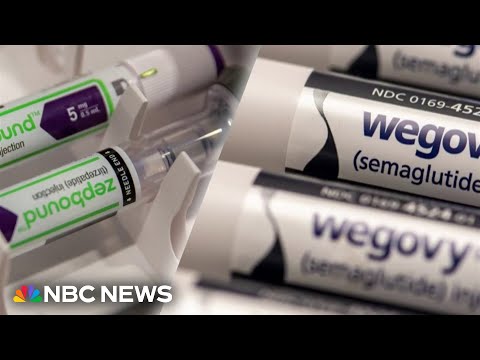
Trump announces deal to lower cost of weight loss drug
NBC News· 2025-11-07 00:15
Tonight, President Trump announcing a deal with drug makers Eli Liy and Novo Nordisk aimed at lowering the cost of popular weight loss drugs Zepbound and WGOI. >> This is tremendous savings for >> and also making this announcement about the federal government's role in making those drugs more accessible for patients who meet certain medical criteria. >> Medicare and Medicaid will finally cover the cost of these weight loss drugs for millions of patients suffering from obesity.Later next year, the White Hous ...
特朗普官宣:减肥药降价
财联社· 2025-11-07 00:13
Core Viewpoint - The U.S. government has reached a drug price control agreement with Eli Lilly and Novo Nordisk, allowing discounted drugs to be sold through the "TrumpRx" direct sales channel [1] Group 1: Agreement Details - Novo Nordisk's semaglutide injection price will drop from $1,350 per month to an average of $350 [7] - Eli Lilly's tirzepatide injection and the pending oral drug (Orforglipron) will decrease from $1,086 per month to an average of $346 [7] - If the FDA approves the oral version of semaglutide or other oral drugs from both companies, pricing will start at $150 per month [7] Group 2: Insurance Coverage and Financial Implications - Medicare and Medicaid will reimburse obesity medications for the first time, representing a "price for volume" trade for both companies [8] - Under U.S. insurance coverage, all doses of Novo Nordisk and Eli Lilly's GLP-1 injections will be priced at $245, with beneficiaries paying only $50 per month after reimbursement [9] - The GLP-1 injections will also be priced at $245 in the "TrumpRx" channel over the next two years [10] Group 3: Additional Commitments and Investments - Novo Nordisk has committed to invest an additional $10 billion in the U.S., including local production of the oral semaglutide once approved [11] - The agreement is expected to have a "low single-digit" negative impact on global sales growth in 2026 [11] - Both companies will receive a three-year grace period from tariffs on drug imports following the agreement with the White House [12]
英伟达↓3.65%、特斯拉↓3.5%、苹果↓0.1%、微软↓1.98%、谷歌↑0.2%、亚马逊↓2.86%、Meta↓2.67%
财联社· 2025-11-06 23:45
Core Viewpoint - The article discusses the recent decline in major tech stocks due to concerns over the U.S. job market and misinterpretations of OpenAI executives' statements regarding government backing for AI investments [1][3]. Group 1: OpenAI's Financial Strategy - OpenAI's CFO, Sarah Friar, indicated the company is seeking a financial ecosystem involving banks, private equity, and federal government guarantees to support its substantial chip investments [2]. - Following public backlash, Friar clarified that OpenAI is not seeking government guarantees for its infrastructure investments, and the term "backstop" was misinterpreted [3][6]. - CEO Sam Altman emphasized that OpenAI does not intend to seek government backing and is prepared to face failure without federal support, while projecting annual revenues to exceed $20 billion and potentially reach "hundreds of billions" by 2030 [6]. Group 2: Market Reactions and Employment Trends - The Challenger report revealed that U.S. employers cut over 150,000 jobs in October, marking the highest number of layoffs in that month in over two decades, influenced by cost-cutting and AI adoption [8]. - The tech sector is experiencing greater labor market risks compared to 2022, as layoffs are not being absorbed by other industries as quickly as before [8]. Group 3: Stock Performance - Major tech stocks saw declines, with Nvidia down 3.65%, Apple down 0.14%, and Microsoft down 1.98%, among others, reflecting the overall market sentiment [9]. - Duolingo, a language learning platform, experienced a significant drop of 25% due to disappointing earnings guidance, while an unnamed food delivery platform fell 17.45% for similar reasons [11]. - Chinese stocks showed mixed performance, with Alibaba up 1.69% and JD down 0.28%, indicating varied investor sentiment in the Chinese market [12].

隔夜美股 | 三大指数齐跌 小鹏汽车(XPEV.US)逆市涨超9.6%
智通财经网· 2025-11-06 22:29
Market Overview - Major U.S. indices experienced declines, with the Dow Jones down 398.7 points (0.84%) to 46,912.3, the Nasdaq down 445.81 points (1.9%) to 23,053.99, and the S&P 500 down 75.97 points (1.12%) to 6,720.32 [1] - European markets also saw declines, with Germany's DAX30 down 346.58 points (1.44%) to 23,702.29, the UK's FTSE 100 down 68.03 points (0.70%) to 9,709.05, and France's CAC40 down 109.46 points (1.36%) to 7,964.77 [2] Commodities - Crude oil prices fell slightly, with NYMEX light crude down $0.17 to $59.43 per barrel (0.29%) and Brent crude down $0.14 to $63.38 per barrel (0.22%) [2] Cryptocurrency - Bitcoin dropped over 2.5% to $101,211.6, while Ethereum fell over 3% to $3,320.34 [3] Precious Metals - Spot gold saw a minor decline of 0.05% to $3,977.22. The World Gold Council reported that global gold ETFs experienced a net inflow of $8.2 billion in October, raising total assets under management to a record high of $503 billion [4] Macroeconomic News - The Federal Reserve's Cleveland President, Harker, expressed opposition to further rate cuts, citing persistent inflation risks and a lack of compelling reasons for additional policy actions [5] - The Bank of England maintained its interest rate at 4%, but indicated that rate cuts may be forthcoming as inflation is expected to peak and stabilize slightly above 2% in the next two years [6] Company News - Google announced the upcoming launch of its most powerful AI chip, Ironwood, which is expected to be four times faster than its predecessor and is aimed at AI companies [7][8] - Former President Trump announced agreements with pharmaceutical companies Eli Lilly and Novo Nordisk to reduce the prices of popular weight loss drugs, with prices for some medications dropping by approximately $50 [9] - UBS adjusted its price targets for Arm from $200 to $195 and Qualcomm from $175 to $185 [10]


特朗普宣布与礼来(LLY.US)、诺和诺德(NVO.US)达成协议 降低减肥药价格
智通财经网· 2025-11-06 22:29
Core Points - The U.S. government has reached an agreement with Eli Lilly (LLY.US) and Novo Nordisk (NVO.US) to significantly reduce the prices of GLP-1 weight loss drugs in the Medicare, Medicaid, and self-pay markets, aiming to enhance accessibility for millions of Americans [1][2] - Current prices for GLP-1 drugs range from $500 to $1,000 per month, but under the new agreement, prices will be lowered to between $149 and $350 per month, with Medicare and Medicaid beneficiaries being the first to benefit [1][2] - The agreement includes a commitment from the government to provide a three-year tariff exemption for the companies, with Novo Nordisk pledging an additional $10 billion investment in the U.S. [3] Pricing Details - The oral GLP-1 weight loss drug currently under development will be priced at $149 per month for Medicare and Medicaid, while injectable versions will be approximately $245 per month [2] - Eli Lilly's Zepbound will be available at $299 per month for the lowest dose and $449 for higher doses in the self-pay market [2] - A cap of $50 per month on out-of-pocket costs for Medicare patients is set to significantly reduce the financial burden on elderly patients [2] Market Impact - The price reduction is expected to improve drug accessibility for approximately 40 million Medicare beneficiaries, along with millions of self-pay users [3] - Deutsche Bank analysts estimate that if the price cap is set at $150 per month, Eli Lilly's oral GLP-1 drug orforglipron could potentially add 15 million new patients, compared to the current 2.7 million patients using Zepbound [3] - This agreement is viewed as a critical milestone in the government's drug pricing reform efforts, following previous initiatives involving major pharmaceutical companies like Pfizer (PFE.US) and AstraZeneca (AZN.US) [3]
Eli Lilly expects US FDA approval for oral obesity drug in March 2026
Reuters· 2025-11-06 21:48
Core Insights - Eli Lilly anticipates approval from the U.S. Food and Drug Administration for its experimental oral obesity drug, orforglipron, by March 2026 [1] Company Summary - The chief executive of Eli Lilly provided the timeline for the expected FDA approval of orforglipron, indicating the company's confidence in the drug's potential [1]
